
Report Feature
Marine Pharmaceutical Market Trends and Forecast
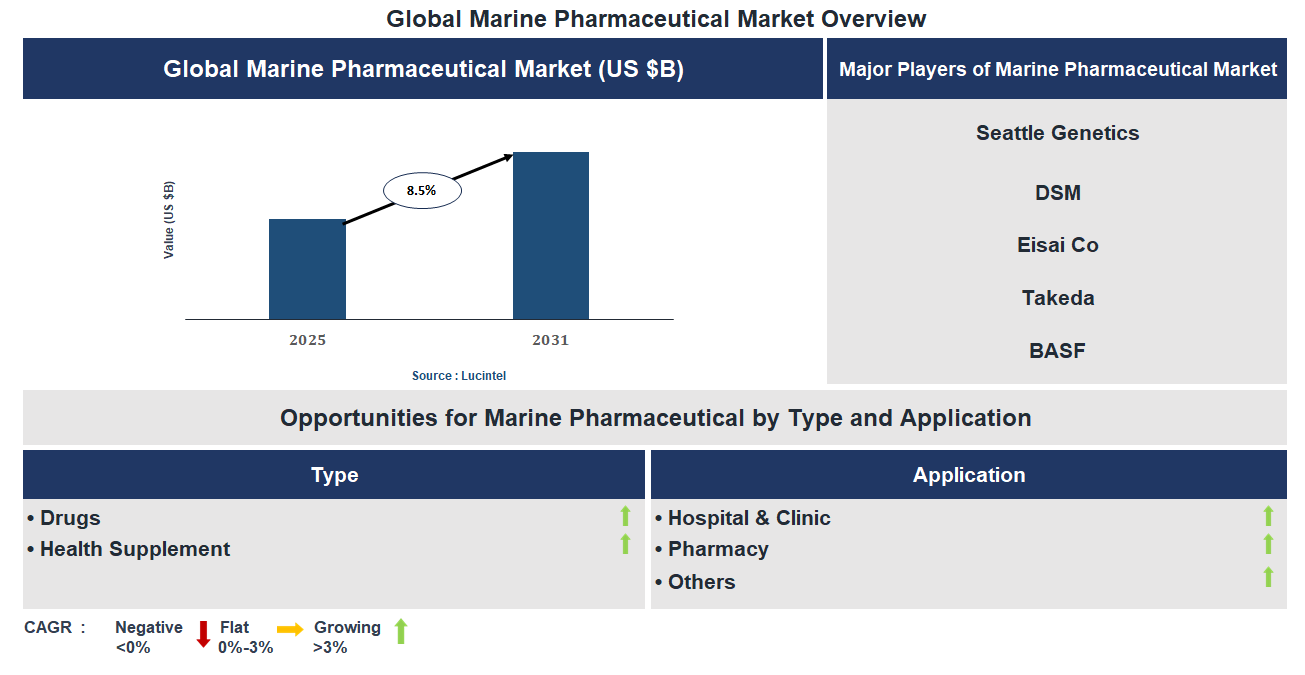
The future of the global marine pharmaceutical market looks promising with opportunities in the hospital & clinic and pharmacy markets. The global marine pharmaceutical market is expected to grow with a CAGR of 8.5% from 2025 to 2031. The major drivers for this market are the increasing marine biotechnology investments, the rising prevalence of chronic diseases, and the growing demand of natural products.• Lucintel forecasts that, within the type category, drug is expected to witness higher growth over the forecast period.
• Within the application category, hospital & clinic is expected to witness higher growth.
• In terms of region, APAC is expected to witness the highest growth over the forecast period. Gain valuable insights for your business decisions with our comprehensive 150+ page report. Sample figures with some insights are shown below.
Emerging Trends in the Marine Pharmaceutical Market
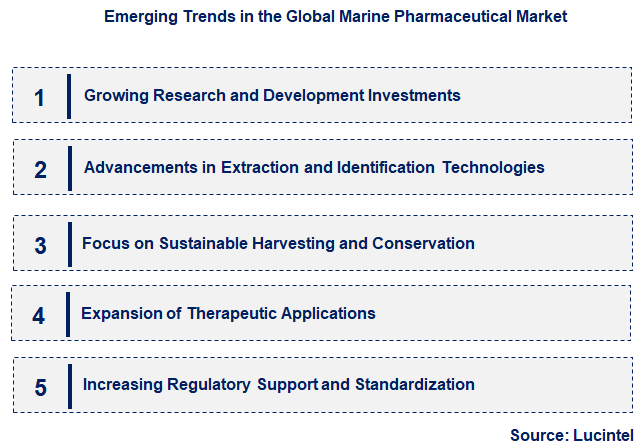
The marine pharmaceutical market is experiencing rapid growth driven by technological advancements, increasing research investments, and a rising demand for novel therapeutics derived from marine organisms. As global health challenges evolve, the industry is focusing on sustainable harvesting, innovative extraction techniques, and expanding applications across various medical fields. These developments are transforming the landscape of marine-based drug discovery, making it more efficient and environmentally conscious. The following key trends highlight the major shifts shaping this market, reflecting its dynamic nature and promising future.• Growing Research and Development Investments: Increased funding from governments and the private sectors is accelerating marine drug discovery. This trend enables the exploration of diverse marine species for bioactive compounds, leading to the development of novel pharmaceuticals. Enhanced R&D efforts are also fostering collaborations between academia and industry, which streamline the translation of marine bioresources into market-ready drugs. As a result, the pipeline of marine-derived therapeutics is expanding, promising new treatment options for various diseases and boosting market growth.
• Advancements in Extraction and Identification Technologies: Innovative techniques such as genomics, metabolomics, and high-throughput screening are revolutionizing how marine bioactives are identified and extracted. These technologies improve efficiency, reduce costs, and enable the discovery of rare compounds from complex marine ecosystems. The ability to rapidly analyze marine organisms accelerates drug development timelines and enhances the precision of bioactive compound identification. Consequently, these technological advancements are making marine pharmaceuticals more accessible and commercially viable.
• Focus on Sustainable Harvesting and Conservation: Environmental concerns and regulatory pressures are prompting the industry to adopt sustainable practices. Cultivation of marine organisms, aquaculture, and synthetic biology are emerging as alternatives to wild harvesting, ensuring resource availability without damaging ecosystems. This shift not only preserves marine biodiversity but also aligns with global sustainability goals. Sustainable practices are gaining support from policymakers and consumers, fostering a responsible approach to marine pharmaceutical development and ensuring long-term market viability.
• Expansion of Therapeutic Applications: Marine-derived compounds are finding new applications across a broad spectrum of medical fields, including oncology, anti-inflammatory, antiviral, and neuroprotective therapies. The unique chemical structures of marine bioactives offer promising leads for drug development. As research uncovers more bioactivities, the market is witnessing diversification, with marine pharmaceuticals increasingly integrated into mainstream medicine. This expansion enhances market size and attracts investment, positioning marine pharmaceuticals as vital contributors to future healthcare solutions.
• Increasing Regulatory Support and Standardization: Governments and international agencies are establishing guidelines and regulatory frameworks to facilitate marine pharmaceutical development. Standardization of extraction, testing, and quality control processes ensures safety and efficacy, boosting industry confidence. Regulatory support accelerates clinical trials and market approval processes, reducing time-to-market for new drugs. This trend fosters a more predictable environment for investors and developers, encouraging innovation and commercialization in the marine pharmaceutical sector. In summary, these trends are collectively reshaping the marine pharmaceutical market by fostering innovation, promoting sustainability, and expanding therapeutic horizons. They are driving increased investment, technological progress, and regulatory clarity, which together are unlocking the vast potential of marine bioresources. As a result, the market is poised for significant growth, offering new opportunities for healthcare advancements and sustainable development.
Recent Development in the Marine Pharmaceutical Market
The marine pharmaceutical market has experienced significant growth driven by advancements in biotechnology, increasing research into marine bioresources, and rising demand for novel therapeutics. As the industry evolves, key developments are shaping its future trajectory, influencing innovation, regulatory frameworks, and market dynamics. These developments reflect a broader trend of harnessing marine biodiversity for medical applications, offering promising solutions for various health conditions. The following are five key recent developments that are impacting this market, highlighting the sectors rapid progression and potential for future growth.• Expansion of Marine Biodiversity Research: This development involves increased exploration and cataloging of marine organisms for pharmaceutical potential. It has led to the discovery of novel bioactive compounds, expanding the pipeline of marine-derived drugs. The impact includes enhanced innovation in drug development and diversification of therapeutic options, attracting investments and fostering collaborations between research institutions and pharmaceutical companies.
• Advances in Marine Biotechnology Techniques: Innovations such as genomics, proteomics, and metabolomics have improved the ability to identify and synthesize marine bioactives efficiently. These technological advancements accelerate drug discovery processes, reduce development costs, and improve success rates. Consequently, they are making marine pharmaceuticals more commercially viable and speeding up the time-to-market for new drugs.
• Regulatory Framework Enhancements: Governments and international agencies are updating policies to facilitate marine pharmaceutical research and commercialization. Streamlined approval processes and clear guidelines have reduced barriers for new marine-derived drugs. This development encourages investment, promotes innovation, and ensures safety and efficacy standards, ultimately boosting market confidence and growth.
• Strategic Collaborations and Partnerships: There has been a rise in collaborations between academia, biotech firms, and large pharmaceutical companies. These partnerships facilitate resource sharing, joint research initiatives, and faster commercialization of marine bioactives. The impact includes increased innovation capacity, reduced R&D costs, and accelerated product development timelines, strengthening the market’s competitive edge.
• Growing Investment and Funding: Increased funding from government agencies, venture capitalists, and private investors is supporting marine pharmaceutical research. This influx of capital enables extensive exploration, technology development, and clinical trials. The resulting boost in financial resources accelerates market growth, encourages startups, and fosters a competitive environment for marine-based therapeutics. In summary, these developments are collectively propelling the marine pharmaceutical market forward by fostering innovation, streamlining regulatory processes, and attracting investments. They are expanding the pipeline of marine-derived drugs, reducing time-to-market, and increasing market confidence. As a result, the industry is poised for substantial growth, offering new therapeutic solutions and strengthening its position within the global pharmaceutical landscape.
Strategic Growth Opportunities in the Marine Pharmaceutical Market
The marine pharmaceutical market is experiencing rapid growth driven by increasing demand for novel bioactive compounds derived from marine organisms. Advances in biotechnology, rising investments in marine research, and the expanding application scope across healthcare sectors are fueling this expansion. Key applications such as pharmaceuticals, nutraceuticals, cosmeceuticals, and research are presenting significant opportunities for market players. These developments are shaping a competitive landscape focused on innovation, sustainability, and strategic collaborations. As the industry evolves, understanding the most promising growth avenues becomes essential for stakeholders aiming to capitalize on emerging trends and maximize their market share.• Marine-derived Pharmaceuticals: Marine organisms offer unique bioactive compounds with potential therapeutic applications, especially in cancer, infectious diseases, and inflammation. This growth opportunity is expected to lead to new, effective medications, boosting market revenues and encouraging further research investments.
• Nutraceutical Development: Marine bioactives such as omega-3 fatty acids and antioxidants are increasingly incorporated into dietary supplements. This trend enhances market growth by meeting consumer demand for natural, health-boosting products and expanding product portfolios.
• Cosmeceuticals Innovation: Marine extracts are gaining popularity in skincare products due to their anti-aging and skin-repair properties. This application drives market expansion by attracting cosmetic companies seeking natural, effective ingredients.
• Marine Biotechnology Research: Increased research efforts are uncovering new marine species and bioactive compounds, fostering innovation in drug development. This opportunity enhances the pipeline of novel therapeutics and attracts investments in marine biotech startups.
• Strategic Collaborations and Licensing: Collaborations facilitate access to marine resources and expertise, accelerating product development. This growth avenue improves market competitiveness and encourages knowledge sharing, leading to faster commercialization of marine-derived products. In summary, these key growth opportunities are significantly impacting the marine pharmaceutical market by fostering innovation, expanding application areas, and attracting investments. They are driving market expansion, encouraging sustainable practices, and positioning the industry for long-term growth and competitiveness.
Marine Pharmaceutical Market Driver and Challenges
The marine pharmaceutical market is influenced by a complex interplay of technological, economic, and regulatory factors. Advances in biotechnology and marine research have unlocked new possibilities for discovering novel bioactive compounds from marine organisms. Economic growth in emerging markets increases demand for innovative healthcare solutions, while stringent regulatory frameworks ensure safety and efficacy, but can also pose barriers to market entry. Additionally, environmental concerns and sustainability issues impact sourcing practices. These drivers and challenges collectively shape the trajectory of the marine pharmaceutical industry, influencing innovation, investment, and market expansion. Understanding these factors is essential for stakeholders aiming to capitalize on opportunities while navigating potential obstacles. The factors responsible for driving the marine pharmaceutical market include:• Technological Advancements: The development of sophisticated extraction and screening technologies enables researchers to identify and isolate bioactive compounds more efficiently. Innovations such as genomics, metabolomics, and high-throughput screening accelerate drug discovery processes, reducing time and costs. These technological improvements open new avenues for discovering novel marine-derived pharmaceuticals, attracting investments, and fostering industry growth. As technology continues to evolve, the ability to explore previously inaccessible marine species and compounds will further expand the market’s potential.
• Rising Prevalence of Chronic Diseases: The increasing incidence of chronic conditions such as cancer, cardiovascular diseases, and neurological disorders drives demand for innovative therapeutics. Marine bioactive compounds often possess unique pharmacological properties, making them promising candidates for new drug development. The need for more effective and less toxic treatments encourages pharmaceutical companies to explore marine sources, fueling market growth. This trend underscores the importance of marine pharmaceuticals in addressing unmet medical needs and improving patient outcomes.
• Growing Investment and Funding: Governments, private investors, and research institutions are increasingly investing in marine biotechnology and pharmaceutical research. Funding initiatives support exploration, sustainable harvesting, and drug development activities. This financial backing accelerates research projects, facilitates collaborations, and enhances infrastructure, thereby expanding the market. The influx of investment also encourages startups and established companies to innovate, fostering a competitive environment that propels industry advancement.
• Regulatory Support and Frameworks: Evolving regulatory policies aimed at facilitating marine drug development and approval processes positively impact the market. Agencies are establishing guidelines for marine-derived pharmaceuticals, streamlining clinical trials, and providing incentives for innovation. Such regulatory support reduces barriers to market entry and encourages research activities. A clean and supportive regulatory environment enhances confidence among investors and developers, promoting sustainable growth within the industry.
• Increasing Marine Biodiversity Exploration: The vast and largely unexplored marine ecosystems offer a rich source of novel bioactive compounds. Advances in marine exploration technologies, such as deep-sea submersibles and remote sensing, enable scientists to discover new species and chemical entities. This biodiversity exploration is crucial for identifying potential drug candidates, thereby expanding the pipeline of marine pharmaceuticals. The ongoing discovery of marine organisms with therapeutic potential sustains industry interest and investment, ensuring a continuous flow of innovative products. The challenges facing this marine pharmaceutical market include:
• Environmental and Sustainability Concerns: Overharvesting of marine organisms for pharmaceutical purposes can threaten marine ecosystems and biodiversity. Unsustainable practices may lead to ecological imbalance and loss of species, raising ethical and environmental issues. Regulatory agencies are increasingly emphasizing sustainable sourcing, which can complicate supply chains and increase costs. Balancing the need for drug discovery with environmental conservation remains a significant challenge, requiring innovative approaches such as synthetic biology and aquaculture.
• Complex and Lengthy Regulatory Processes: Despite regulatory support, approval pathways for marine pharmaceuticals are often complex and time-consuming. The novelty of marine compounds means limited precedents, leading to rigorous safety and efficacy evaluations. Lengthy clinical trials and approval procedures delay market entry and increase costs for developers. Navigating diverse regulatory frameworks across countries adds further complexity, potentially hindering global commercialization efforts.
• High Research and Development Costs: Developing marine-derived pharmaceuticals involves substantial investment in research, exploration, and clinical testing. The high costs associated with sourcing, compound isolation, and validation can be prohibitive, especially for smaller companies. Additionally, the uncertain success rate of drug development projects increases financial risks. Securing funding and managing R&D expenses are ongoing challenges that can limit innovation and market expansion. In summary, the marine pharmaceutical market is shaped by significant technological innovations, rising disease prevalence, increased investments, supportive regulations, and rich marine biodiversity. However, environmental sustainability concerns, regulatory complexities, and high R&D costs pose notable challenges. These factors collectively influence the pace of industry growth, requiring stakeholders to balance innovation with responsible practices. Strategic navigation of these drivers and challenges will determine the market’s future trajectory, impacting its ability to deliver novel therapeutics and sustain long-term growth.
List of Marine Pharmaceutical Companies
Companies in the market compete on the basis of product quality offered. Major players in this market focus on expanding their manufacturing facilities, R&D investments, infrastructural development, and leverage integration opportunities across the value chain. With these strategies marine pharmaceutical companies cater increasing demand, ensure competitive effectiveness, develop innovative products & technologies, reduce production costs, and expand their customer base. Some of the marine pharmaceutical companies profiled in this report include-• Seattle Genetics
• DSM
• Eisai Co
• Takeda
• BASF
• Amway
• Pfizer
• Pelagia
• Pharma Mar
• Croda
Marine Pharmaceutical Market by Segment
The study includes a forecast for the global marine pharmaceutical market by type, application, and region.Marine Pharmaceutical Market by Type [Value from 2019 to 2031]:
• Drugs
• Health Supplement
Marine Pharmaceutical Market by Application [Value from 2019 to 2031]:
• Hospital & Clinic
• Pharmacy
• Others
Marine Pharmaceutical Market by Region [Value from 2019 to 2031]:
• North America
• Europe
• Asia Pacific
• The Rest of the World
Country Wise Outlook for the Marine Pharmaceutical Market
The marine pharmaceutical market has experienced significant growth driven by advancements in biotechnology, increased research funding, and rising demand for novel therapeutics derived from marine organisms. Countries are investing heavily in marine bioprospecting and sustainable harvesting techniques to unlock the potential of marine bioresources. Innovations in extraction methods and drug development processes are accelerating the pipeline of marine-derived pharmaceuticals. Regulatory frameworks are evolving to support commercialization, while collaborations between academia and industry are fostering innovation. These developments reflect a global shift towards harnessing marine biodiversity for medical breakthroughs, positioning the market for substantial expansion in the coming years.• United States: The US leads in marine pharmaceutical research, with substantial investments from government agencies like NIH and private firms. Recent advancements include the discovery of novel compounds from deep-sea organisms and the development of targeted therapies for cancer and infectious diseases. Regulatory support and a robust biotech ecosystem have accelerated clinical trials and commercialization efforts. The US also emphasizes sustainable harvesting practices to protect marine ecosystems while expanding its pharmaceutical portfolio.
• China: China has rapidly increased its focus on marine bioprospecting, establishing dedicated research centers and increasing funding for marine biotechnology. Recent developments include the identification of new bioactive compounds from marine sponges and algae, with several candidates entering clinical trials. The government promotes collaborations between academia and industry to commercialize marine-derived drugs, aiming to become a global leader in marine pharmaceuticals. Sustainable harvesting and environmental protection are also prioritized to ensure long-term resource availability.
• Germany: Germanys marine pharmaceutical sector benefits from strong research institutions and a focus on sustainable marine resource utilization. Recent innovations include the development of marine-derived anti-inflammatory and anticancer agents. German companies are investing in biotechnological techniques such as genomics and metabolomics to discover new compounds. The country also emphasizes regulatory compliance and environmental sustainability, fostering a conducive environment for pharmaceutical development and commercialization.
• India: India is increasingly investing in marine biotechnology, with government initiatives supporting marine bioprospecting and research. Recent developments include the discovery of bioactive compounds from marine bacteria and mollusks, with some progressing toward clinical evaluation. The country aims to leverage its extensive coastline and marine biodiversity to develop affordable pharmaceuticals. Efforts are underway to establish dedicated marine research centers and promote public-private partnerships to accelerate drug discovery and commercialization.
• Japan: Japan continues to be a leader in marine pharmaceutical research, focusing on bioactive compounds from marine microorganisms and algae. Recent advancements include the development of marine-derived drugs for neurodegenerative diseases and cancer. Japan emphasizes sustainable harvesting and conservation of marine resources while fostering innovation through collaborations between academia and industry. The country also invests in advanced biotechnologies like synthetic biology to enhance drug discovery processes, maintaining its position at the forefront of the global marine pharmaceutical market.

Features of the Global Marine Pharmaceutical Market
Market Size Estimates: Marine pharmaceutical market size estimation in terms of value ($B). Trend and Forecast Analysis: Market trends (2019 to 2024) and forecast (2025 to 2031) by various segments and regions. Segmentation Analysis: Marine pharmaceutical market size by type, application, and region in terms of value ($B). Regional Analysis: Marine pharmaceutical market breakdown by North America, Europe, Asia Pacific, and Rest of the World. Growth Opportunities: Analysis of growth opportunities in different types, applications, and regions for the marine pharmaceutical market. Strategic Analysis: This includes M&A, new product development, and competitive landscape of the marine pharmaceutical market. Analysis of competitive intensity of the industry based on Porter’s Five Forces model.
FAQ
Q1. What is the growth forecast for marine pharmaceutical market? Answer: The global marine pharmaceutical market is expected to grow with a CAGR of 8.5% from 2025 to 2031. Q2. What are the major drivers influencing the growth of the marine pharmaceutical market? Answer: The major drivers for this market are the increasing marine biotechnology investments, the rising prevalence of chronic diseases, and the growing demand of natural products. Q3. What are the major segments for marine pharmaceutical market? Answer: The future of the marine pharmaceutical market looks promising with opportunities in the hospital & clinic and pharmacy markets. Q4. Who are the key marine pharmaceutical market companies? Answer: Some of the key marine pharmaceutical companies are as follows:• Seattle Genetics
• DSM
• Eisai Co
• Takeda
• BASF
• Amway
• Pfizer
• Pelagia
• Pharma Mar
• Croda Q5. Which marine pharmaceutical market segment will be the largest in future? Answer: Lucintel forecasts that, within the type category, drug is expected to witness higher growth over the forecast period. Q6. In marine pharmaceutical market, which region is expected to be the largest in next 5 years? Answer: In terms of region, APAC is expected to witness the highest growth over the forecast period. Q7. Do we receive customization in this report? Answer: Yes, Lucintel provides 10% customization without any additional cost.
Table of Contents
List of Figures
List of Tables
Methodology
- In-depth interviews of the major players in this market
- Detailed secondary research from competitors’ financial statements and published data
- Extensive searches of published works, market, and database information pertaining to industry news, company press releases, and customer intentions
- A compilation of the experiences, judgments, and insights of Lucintel’s professionals, who have analyzed and tracked this market over the years.


Buy Now
Choose a license that fits your team. Instant PDF delivery.
Prices exclude taxes. Instant delivery. Custom licensing available on request.
Key Questions
- • What are some of the most promising, high-growth opportunities for the marine pharmaceutical market by type (drugs and health supplement), application (hospital & clinic, pharmacy, and others), and region (North America, Europe, Asia Pacific, and the Rest of the World)?
- • Which segments will grow at a faster pace and why?
- • Which region will grow at a faster pace and why?
- • What are the key factors affecting market dynamics? What are the key challenges and business risks in this market?
- • What are the business risks and competitive threats in this market?
- • What are the emerging trends in this market and the reasons behind them?
- • What are some of the changing demands of customers in the market?
- • What are the new developments in the market? Which companies are leading these developments?
- • Who are the major players in this market? What strategic initiatives are key players pursuing for business growth?
- • What are some of the competing products in this market and how big of a threat do they pose for loss of market share by material or product substitution?
- • What M&A activity has occurred in the last 5 years and what has its impact been on the industry? For any questions related to Marine Pharmaceutical Market, Marine Pharmaceutical Market Size, Marine Pharmaceutical Market Growth, Marine Pharmaceutical Market Analysis, Marine Pharmaceutical Market Report, Marine Pharmaceutical Market Share, Marine Pharmaceutical Market Trends, Marine Pharmaceutical Market Forecast, Marine Pharmaceutical Companies, write Lucintel analyst at email: helpdesk@lucintel.com. We will be glad to get back to you soon.


