
Market Report · May 18, 2026

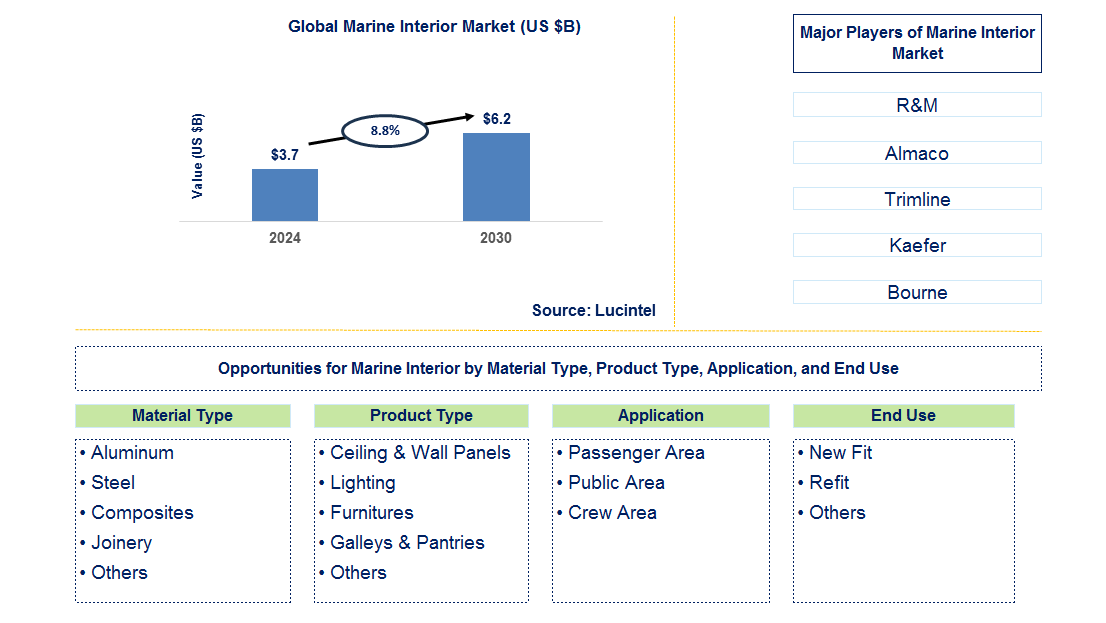
Key data points: The market size in 2030 = $6.2 billion, growth forecast = 8.8% annually for the next 6 years. Scroll below to get more insights. This market report covers trends, opportunities, and forecasts in the global marine interior market to 2030 by material type (aluminum, steel, composites, joinery, and others), product type (ceiling & wall panels, lighting, furnitures, galleys & pantries, and others), application (passenger area, public area, and crew area), end use (new fit, refit, and others), and region (North America, Europe, Asia Pacific, and the Rest of the World)
We'll send your sample report shortly.
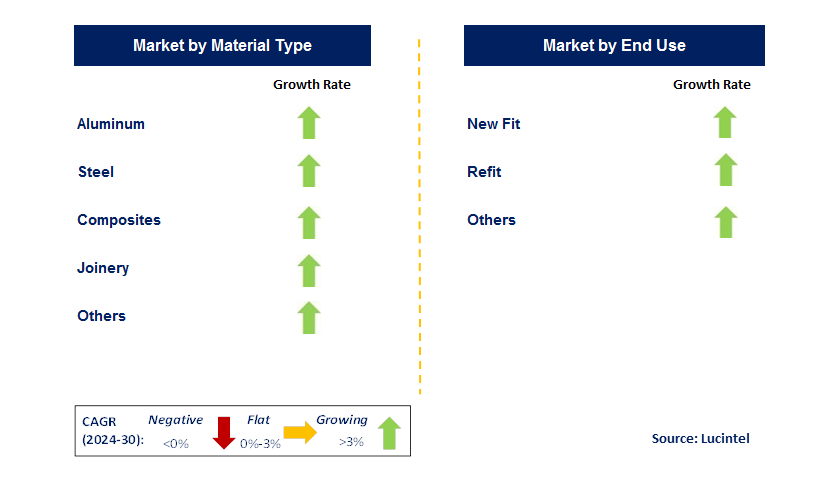
• Lucintel forecasts that, within the material type category, composites is expected to witness the highest growth over the forecast period due to its significant potential for weight reduction and the creation of complex shapes.
• Within the end use category, refit is expected to witness the higher growth.
• In terms of regions, Europe will remain the largest region over the forecast period due to existence of major manufacturers in the region. A more than 150-page report is developed to help in your business decisions.
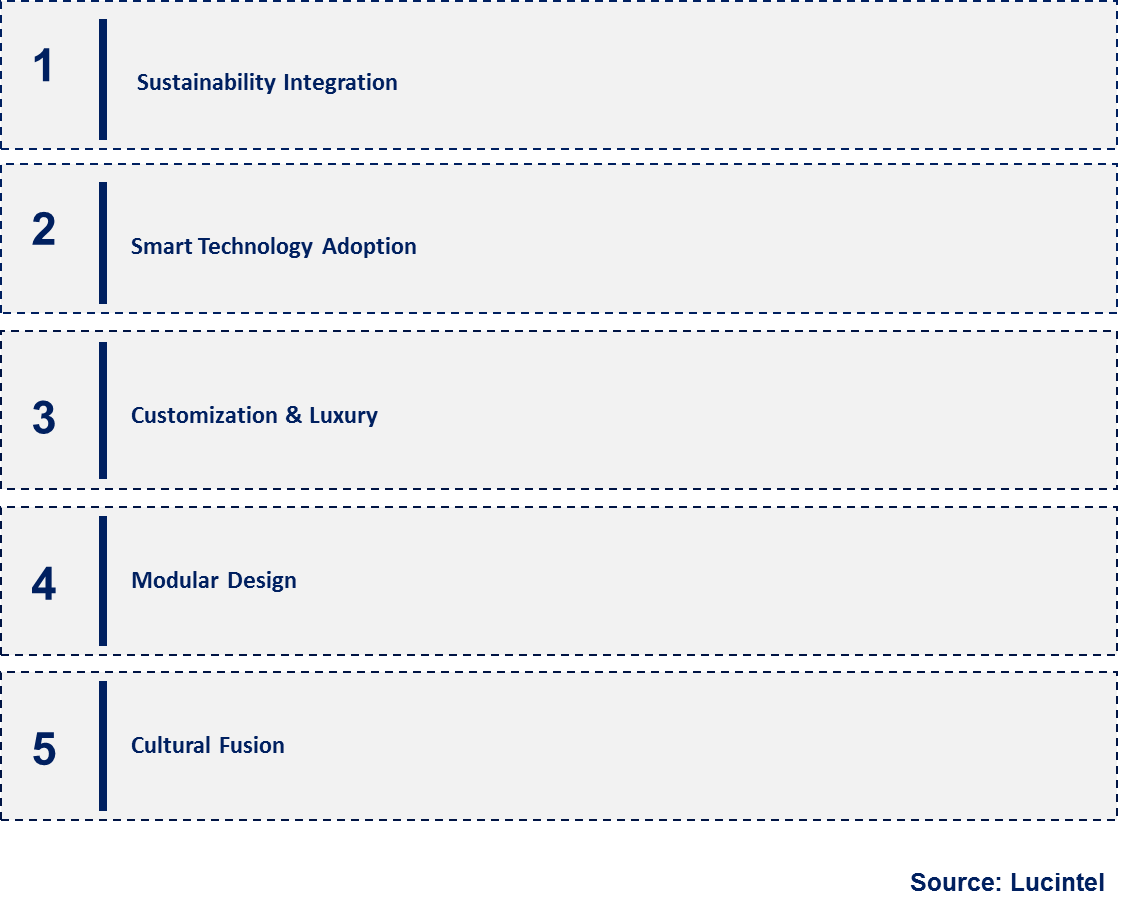
• Sustainability Integration: The trend toward incorporating sustainable materials and energy-efficient technologies into marine interiors is becoming stronger. This shift is driven by increased awareness of environmental protection and stricter regulations, which are pushing manufacturers to adopt eco-friendly practices such as the use of recycled plastics and low-emission coatings. These efforts aim to reduce the overall ecological footprint of maritime vessels.
• Smart Technology Adoption: Marine interiors are being transformed through the integration of smart technology, including automation systems that control electrical devices within living spaces, IoT connectivity, and smart lighting. These advancements enable remote monitoring and control of various interior aspects, enhancing user comfort, safety, and operational efficiency.
• Customization and Luxury: The yacht sector has seen rising demand for custom-designed marine interiors. Customers seek personalized designs that suit their tastes and lifestyles, leading to the increased use of premium materials, sophisticated ornamentations, and unique customization options to create luxurious spaces.
• Modular Design: Modular interiors are becoming a trend due to their adaptability and efficiency. This trend allows for easy changes to interior spaces without significant difficulty or cost, optimizing their use based on specific needs or preferences. As a result, marine interiors are more durable and flexible, as modular components can be replaced easily.
• Cultural Fusion: Modern marine interiors are incorporating traditional cultural motifs, as seen in markets like India and China. This approach blends local craftsmanship with a focus on aesthetics, while remaining functional. In particular, there has been a growing use of traditional themes in high-tech marine interiors in markets like China and Japan. These developments are reshaping marine interior market trends and challenges. Technological advances are making vessels more functional and comfortable, while sustainability programs are promoting the use of green materials and practices. Economic prosperity and increasing affluence have fueled the demand for luxury customization, driving the market toward high-end, individualized solutions. However, rising material costs and regulatory compliance challenges impact profitability and design strategies. As a result, the marine interior industry is evolving into a more ecologically responsible sector, where technology-driven innovation is essential for survival in a highly competitive market.
• Technological Advancements: Automation and smart systems have seen tremendous growth, particularly when integrated into a single system. Innovations like IoT-enabled devices have improved comfort and ergonomics for both commercial vessels and luxury yachts by increasing efficiency. These advancements are visible in all major markets, ranging from commercial ships to luxury yachts.
• Sustainability Focus: There is a growing concern for sustainability among marine interior designers. Manufacturers are using environmentally friendly materials and energy-saving technologies to minimize pollution. For instance, some manufacturers are choosing low-emission coatings and recycled materials, which align with global environmental goals and regulations.
• Customization and Luxury: More luxury boat owners are seeking tailor-made, luxurious interiors. This demand for personalized designs, which reflect individual tastes, has led to increased sales of luxury yachts. The growing demand for high-end materials and innovative designs contributes to the development of opulent marine interiors.
• Modular and Flexible Designs: The popularity of modular designs is rising due to their flexibility and efficiency. Modular designs allow easy customization and alterations of interior spaces, making them adaptable to dynamic needs and preferences. This approach also extends the product lifecycle by reducing the need for complete replacements.
• Cultural and Aesthetic Integration: The integration of cultural elements into marine interiors is becoming more common. Traditional motifs are merging with contemporary functional designs, creating aesthetically pleasing interiors that also hold cultural significance. This trend is particularly noticeable in regions with rich cultural heritage, where it enhances the appeal of vessels in these markets. In summary, the marine interior industry is experiencing significant transformation, driven by innovation, sustainability, and evolving consumer demands. Technological advancements, particularly in automation and smart systems, are enhancing functionality and user experience. The growing emphasis on eco-friendly materials aligns with global environmental standards. These trends are pushing the market toward high-end, bespoke solutions, as increasing wealth levels drive the demand for personalized luxury marine interiors. However, challenges such as rising material costs and regulatory compliance must be addressed to maintain competitiveness.
• Luxury Yachts: The luxury yacht segment stands out as a major growth opportunity, driven by rising income levels and demand for customized leisure activities. Affluent individuals seek custom-designed rooms made from high-quality materials and equipped with modern appliances. As builders offer more personalized and lavish options, demand for high-end marine solutions is expected to increase.
• Commercial Vessels: Opportunities are emerging in the commercial vessel market, driven by the need for operational efficiency and improved safety. Modern materials and modular designs are making commercial vessels more functional and durable. Smart technology is also being integrated into this sector to optimize vessel operations and reduce maintenance costs.
• Recreational Boats: The recreational boating market is growing as more people seek leisure activities on the water. There is increasing demand for affordable yet stylish marine interiors that are functional. Efficient use of space and cost-effective materials have made recreational boats more appealing to a wider audience, boosting market growth.
• Luxury Cruise Liners: The luxury cruise ship industry is also growing, with an emphasis on improving passenger comfort and onboard experiences. Investment in high-end interior design, entertainment systems, and luxurious accommodations is driving the growth of this sector. The expanding tourism industry and the demand for luxury cruise experiences are contributing to this growth.
• Environmental Regulations Compliance: The increasing need for compliance with strict environmental regulations offers opportunities for providers of eco-friendly solutions. Innovation in sustainable materials and energy-efficient systems is key as regulations become more stringent. Companies that lead in sustainability will be well-positioned to profit from growing demand for green marine products. In conclusion, the marine interior market is set for dynamic growth. Luxury yachts, commercial vessels, and recreational boats are all benefiting from consumer demand for high-end, functional, and customizable products. Additionally, environmental regulations are encouraging sustainable practices, creating further opportunities for innovation. The sector is becoming more diverse and focused on sustainability, requiring continuous learning and adaptation to meet changing consumer needs and regulatory demands.
• Technological Innovation: Technology advancements, such as smart systems and automation, are among the leading forces behind the development of marine interiors. These innovations improve functionality, security, and comfort within the boat cabin, and their integration into marine designs is driving market growth.
• Sustainability and Regulatory Compliance: Environmental concerns are a significant driver of the market. As ecological regulations become stricter, there is greater use of sustainable materials and energy-saving technologies. Consumer interest in environmentally friendly products is also growing. Manufacturers must comply with these regulations to avoid losing market share in the green interior industry.
• Economic Growth and Affluence: Increased income levels in emerging markets are driving demand for luxury and high-end marine interiors. As disposable incomes rise, more consumers are purchasing premium marine products, leading to growth in the luxury yacht and cruise liner markets.
• Customization Trends: The demand for bespoke marine interiors has led to innovations in design and materials. Consumers are willing to spend more on tailored, high-quality interior fittings, particularly for premium yachts and luxury cruises. This trend has contributed to growth in these segments. Challenges in the marine interior market include:
• Material and Design Costs: Rising material costs and complex designs pose challenges to the industry. As demand for durable, high-quality components grows, maintaining profitability becomes more difficult. Manufacturers must balance price volatility with product specifications to stay competitive. In summary, technological advancements, sustainability pressures, economic growth, and changing consumer preferences are reshaping the marine interior market. While there are significant growth opportunities, challenges such as rising material costs and regulatory compliance must be addressed to remain competitive.
• R&M
• Almaco
• Trimline
• Kaefer
• Bourne
• Mivan Marine
• Oy Lautex
• Forbo Flooring Systems
• YSA Design
• AROS Marine
• Aluminum
• Steel
• Composites
• Joinery
• Others
• Ceiling & Wall Panels
• Lighting
• Furnitures
• Galleys & Pantries
• Others
• Passenger Area
• Public Area
• Crew Area
• New Fit
• Refit
• Others
• North America
• Europe
• Asia Pacific
• The Rest of the World
• United States: The US marine interior sector is experiencing increased demand for green materials and smart technologies, driven by a focus on sustainability and energy conservation. Manufacturers are incorporating sophisticated automation systems and energy-saving solutions into vessel interiors to meet the rising demand for eco-friendly options. Luxury yacht builders are also adding customized, high-end features to meet the expectations of wealthy clients.
• China: China's marine interior market is rapidly growing due to increased domestic production and a focus on high-tech features. Advanced manufacturing technologies are improving the quality and innovation of marine interiors. Additionally, there is a conscious effort to integrate traditional Chinese designs into modern ship and yacht interiors, blending cultural aesthetics with contemporary luxury.
• Germany: Precision engineering and durability are key values in Germany’s marine interior market. Manufacturers integrate state-of-the-art materials and modular designs to enhance safety and usability. German firms are leaders in producing environmentally friendly products, using recycled materials and building energy-efficient ships in line with the country’s environmental goals.
• India: The marine interior market in India is evolving toward affordable luxury and innovative designs. The growing maritime sector and increased recreational boating investments are driving this growth. Manufacturers are incorporating native materials and traditional skills to create unique and cost-effective designs that appeal to both local and international customers.
• Japan: Traditional Japanese aesthetics are merging with modern functionality in Japan’s marine interior market. Given the importance of compact living spaces, manufacturers are using advanced technology to enhance user experiences and improve vessel productivity. Compactness is a characteristic of Japanese designs, reflected in both their homes and marine interiors.


• R&M
• Almaco
• Trimline
• Kaefer
• Bourne
• Mivan Marine
• Oy Lautex
• Forbo Flooring Systems
• YSA Design
• AROS Marine Q6. Which marine interior market segment will be the largest in future? Answer: Lucintel forecasts that composites is expected to witness the highest growth over the forecast period due to its significant potential for weight reduction and the creation of complex shapes. Q7. In marine interior market, which region is expected to be the largest in next 6 years? Answer: Europe will remain the largest region over the forecast period due to existence of major manufacturers in the region. Q.8 Do we receive customization in this report? Answer: Yes, Lucintel provides 10% customization without any additional cost.


Choose a license that fits your team. Instant PDF delivery.
Prices exclude taxes. Instant delivery. Custom licensing available on request.
Market Report · May 18, 2026
Market Report · May 16, 2026
Market Report · May 16, 2026
Trusted partner for strategic intelligence and business growth


Receive a complimentary market analysis tailored to your industry. Our analysts will identify key growth opportunities and competitive dynamics specific to your business.

Market size, growth rate, and key trend analysis for your specific sector.

Top competitor positioning and market share analysis.

Strategic recommendations backed by data-driven insights.
Get curated market intelligence and competitive moves straight to your inbox.
By subscribing, you agree to receive our monthly insights. Unsubscribe anytime.
Receive a complimentary market analysis tailored to your industry. Our analysts will identify key growth opportunities and competitive dynamics specific to your business.
Market size, growth rate, and key trend analysis for your specific sector.
Top competitor positioning and market share analysis.
Strategic recommendations backed by data-driven insights.
Get curated market intelligence, emerging trends, and competitive moves straight to your inbox each month.
By subscribing, you agree to receive our monthly insights. Unsubscribe anytime.
We'll send your sample report shortly.