
Market Report · May 18, 2026

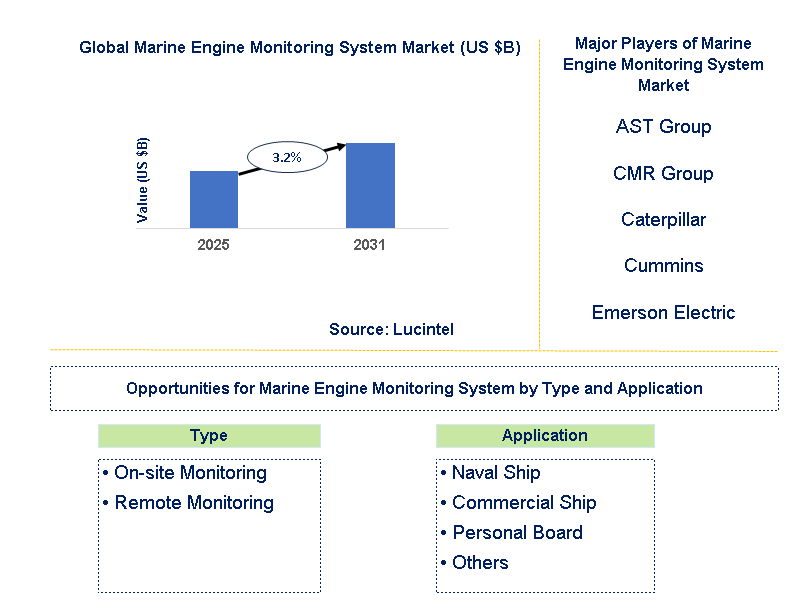
Key data points: The growth forecast = 3.2% annually for the next 7 years. Scroll below to get more insights. This market report covers trends, opportunities and forecasts in marine engine monitoring system market to 2031 by type (on-site monitoring and remote monitoring), application (naval ship, commercial ship, personal board, and others), and region (North America, Europe, Asia Pacific, and the Rest of the World)
We'll send your sample report shortly.
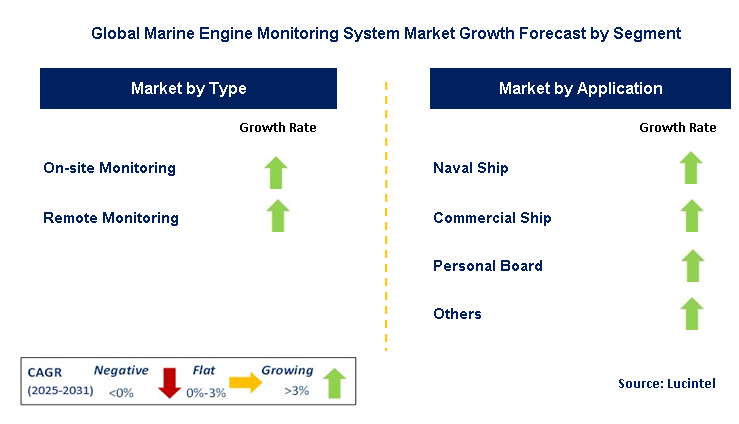
• Lucintel forecasts that, within the type category, remote monitoring is expected to witness higher growth over the forecast period.
• Within the application category, commercial ship is expected to witness the highest growth.
• In terms of region, APAC is expected to witness the highest growth over the forecast period. Gain valuable insights for your business decisions with our comprehensive 150+ page report. Sample figures with some insights are shown below.
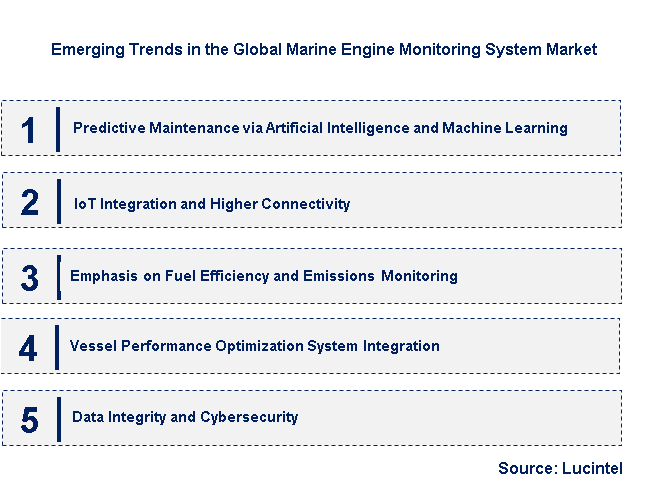
• Predictive Maintenance via Artificial Intelligence and Machine Learning: One of the leading upcoming trends is the extensive use of AI and ML in predictive maintenance for marine engine monitoring systems. These technologies scan enormous quantities of real-time and historical engine data for subtle patterns and anomalies that might lead to future failures, allowing for proactive scheduling of maintenance to avoid unexpected downtime, reduce the expense of downtime, maximize engine lifespan, and streamline spare parts management by ensuring repairs at the exact moment they are necessary.
• IoT Integration and Higher Connectivity: The Internet of Things (IoT) is revolutionizing marine engine monitoring at its core, allowing for easy data transmission from hundreds of onboard sensors to central systems and even remote monitoring facilities. Improved satellite and cellular connectivity guarantees error-free data transmission, including in far-flung oceanic regions. This trend enables real-time monitoring, remote diagnostics, and over-the-air software updates, enhancing situational awareness, allowing expert assistance from shore, and making fleet management more efficient over long distances.
• Emphasis on Fuel Efficiency and Emissions Monitoring: One of the key emerging trends is the greater emphasis on fuel efficiency and real-time emissions monitoring, fueled by rising fuel prices and tight environmental regulations such as IMO 2020 and future decarbonization mandates. Contemporary monitoring systems deliver accurate information on fuel consumption, exhaust gas composition, and engine performance parameters. This allows for engine settings to be optimized for reduced consumption and lower emissions, compliance with regulations, and considerable cost savings for shipping companies.
• Vessel Performance Optimization System Integration: The market is increasingly witnessing the convergence of marine engine monitoring systems with larger vessel performance optimization platforms. This takes the trend beyond engine health into overall ship efficiency, such as hull efficiency, propeller optimization, and routing. By mapping engine data onto other parameters of operation, these converged systems offer a holistic picture that enables end-to-end performance analysis and strategic tweaking that optimizes efficiency and reduces environmental footprint.
• Data Integrity and Cybersecurity: As marine engine monitoring systems become increasingly networked and cloud-based in data storage and transmission, cybersecurity and integrity of data have gained importance as trends. Ensuring safe and reliable operation of vessels requires safeguarding sensitive operational data from cyber attacks, unauthorized use, and tampering. This trend propels the creation of robust encryption protocols, secure communication channels, and sophisticated threat detection capabilities in monitoring systems to protect maritime assets against digital risks. These new trends are collectively transforming the marine engine monitoring system market as they push for more intelligent, networked, eco-friendly, and secure solutions. The focus on predictive analytics, real-time data, fuel efficiency, end-to-end vessel performance, and high-level cybersecurity is revolutionizing fleet management. This transformation ensures that the market continues to offer irreplaceable tools for contemporary, efficient, and sustainable maritime operations.
• Emergence of Remote Monitoring and Cloud-Based Solutions: One of the most important developments in recent years is the common adoption of remote monitoring and cloud-based engine solutions for maritime engines. This provides fleet operators and technical staff with real-time access to engine data regardless of location on the globe, enabling proactive maintenance and diagnostic actions without having to be onboard. This improves operational responsiveness, lowers response times, and allows for centralized management of heterogeneous fleets.
• Integration of Artificial Intelligence (AI) for Predictive Analytics: Recent trends involve greater use of Artificial Intelligence (AI) and machine learning algorithms within marine engine monitoring systems. AI uses real-time and historical data from sensor measurements of the engine to forecast future potential equipment failure ahead of time. This transition from reactive to predictive maintenance greatly minimizes unexpected downtime, increases the life of vital components, and maximizes maintenance schedules, with effects on operational efficiency and cost savings.
• Advanced Sensor Technology for High-Accuracy Data Acquisition: The marketplace has witnessed significant developments in sensor technology, which allow for more accurate and detailed collection of data from marine engines. Newer generations of sensors are able to track more varied parameters with increased precision, such as minute vibrations, sophisticated fuel flow patterns, and exhaust gas chemistry. This allows for richer information about engine health and performance, essential for tuning operations and compliance with regulations, especially those regarding emissions.
• Solutions Development for Hybrid and Electric Propulsion Systems: One of the most important recent developments is the advent of advanced marine engine monitoring systems designed specifically for hybrid and electric power systems. As decarbonization of the maritime sector gathers pace, these systems play an instrumental role in handling intricate power flows, maximizing battery performance, and facilitating efficient convergence of electric motors with conventional engines. This facilitates the switch to cleaner shipping solutions and syncs with worldwide sustainability efforts.
• Emphasis on Cybersecurity for Networked Systems: The latest developments also encompass added emphasis on cybersecurity in marine engine monitoring systems. With more connectivity and data sharing, safeguarding these vital operational systems against cyber attacks becomes imperative. Suppliers are adopting strong encryption, secure network protocols, and multi-layered security measures to protect shipboard operations, deny unauthorized access, and preserve the integrity of mission-critical engine performance data. These new advances collectively shape the marine engine monitoring system market towards more intelligent, connected, and secure solutions. The focus on remote capabilities, predictive analytics, accurate data sampling, support for new types of propulsion, and strong cybersecurity is revolutionizing the management of marine engines. This change ensures that the market continues to deliver critical tools for optimizing performance, safety, and environmental compliance in contemporary shipping.
• Commercial Shipping (Container and Cargo Ships): Commercial shipping is the greatest strategic expansion opportunity for marine engine monitoring systems. The worldwide armada of cargo and container ships continually strives to minimize fuel use, reduce downtime, and meet aggressive emissions standards. Opportunities include the delivery of advanced monitoring systems that deliver real-time fuel efficiency analysis, predictive maintenance, and integrated emissions reporting, meaningfully influencing profitability and environmental compliance for these high-volume customers.
• Naval Vessels and Defense Applications: The defense and naval ships offer a large strategic development opportunity. Naval ships need extremely reliable and durable engine monitoring systems in order to be mission-ready, increase vessel life, and supply situational awareness. Opportunities include creating specialized, ruggedized systems that would withstand tough environments, include increased cybersecurity capabilities, and interface with advanced combat management systems, which is essential to maintain operational supremacy and security in defense fleets.
• Offshore Oil and Gas Support Vessels: The offshore oil and gas sector with its specialized service vessels (e.g., PSVs, AHTSs) presents special growth opportunities. Operating in harsh environments with highly dependable engines and high levels of compliance with safety procedures, vessels in these segments need high levels of reliability, and strategic emphasis here is to supply monitoring systems providing real-time information on engine load, dynamic positioning system performance, and fuel consumption for highly demanding operations so as to achieve uptime and efficiency on challenging offshore activities.
• Recreational Yachts and Boats: The yachting and recreational boat market, smaller in size, is an emerging strategic market. High-value yacht and performance boat owners increasingly want high-end monitoring systems for engine health, fuel monitoring, and remote diagnostics to increase convenience and peace of mind. Strategies are to create friendly, visually integrated systems with smartphone connectivity and sophisticated alert features aimed at the luxury and leisure segments of the marine market.
• Workboats and Fishing Vessels: The fishing boats and workboats division, representing a very large and varied fleet, presents a key strategic growth opportunity, particularly in emerging markets. These boats tend to deploy in isolated situations, necessitating strong and dependable engine performance. Opportunities include offering affordable, rugged, and simple-to-install monitoring systems capable of measuring fuel consumption, engine hours, and rudimentary fault diagnostics, assisting operators in maximizing their catch, cutting operational expenses, and enhancing safety in adverse marine environments. These strategic growth prospects are significantly influencing the marine engine monitoring system market by spurring targeted innovation toward application-specific, high-value solutions. The focus on high-volume commercial shipping, specialized naval needs, demanding offshore operations, increasing recreational demand, and practical needs of fishing fleets is promoting varied product development. This application-focused strategy ensures that marine engine monitoring systems will remain vitally important to optimize performance, safety, and efficiency throughout the entire maritime sector.
• AST Group
• CMR Group
• Caterpillar
• Cummins
• Emerson Electric
• Hyundai Heavy Industries
• Kongsberg Gruppen
• MAN Energy Solutions
• Mitsubishi Heavy Industries
• Noris Group
• On-site Monitoring
• Remote Monitoring
• Naval Ship
• Commercial Ship
• Personal Board
• Others
• North America
• Europe
• Asia Pacific
• The Rest of the World
• United States: In the United States, the United States marine engine monitoring system market is experiencing robust growth, driven by a shift of attention to improving maritime safety, lowering emissions, and maximizing fuel efficiency in commercial and naval fleets. Developments involve the use of IoT and AI for predictive maintenance and remote diagnosis, enabling proactive problem-solving. Demand for hybrid and electric propulsion technology-friendly systems is also on the rise, in line with the country's initiatives towards cleaner maritime operations and technological superiority in smart vessel development.
• China: China's marine engine monitoring market is growing fast, driven by its huge shipbuilding sector, rising maritime trade, and huge investments in updating its commercial and naval fleets. New trends include rising uptake of sophisticated sensor technologies and data analytics platforms to enhance engine performance and decrease operational costs. The nation is also giving high priority to indigenous development of monitoring solutions that enable its ambitious digital maritime transformation programs and comply with progressively more stringent domestic and foreign environment regulations for shipping.
• Germany: The market for the marine engine monitoring system in Germany is dominated by a focus on high-quality, accurate, and technologically sophisticated solutions, consistent with its position at the forefront of marine engineering. Recent advances involve a concentration on combining advanced sensor technology with high-end analytics and cloud-based systems for end-to-end engine diagnostics and predictive maintenance. German manufacturers are also building systems for supporting alternative fuel engines and adhering to stringent European environmental standards, toward the overall objective of sustainable shipping and streamlined maritime operations.
• India: India's marine engine monitoring system market is witnessing significant growth due to its growing shipping industry, rising maritime trade, and escalating concern for naval modernization. Recent trends involve augmenting the use of real-time monitoring solutions for improved fuel efficiency and minimizing operational expenses in commercial ships. There is similarly increased demand for systems with high strength able to endure harsh environmental conditions, serving various applications ranging from cargo vessels to fishery fleets, with India's initiatives towards improving its maritime prowess and maintaining operational reliability.
• Japan: The marine engine monitoring system market of Japan is extremely sophisticated with a country boasting a highly advanced shipbuilding industry, emphasis on technological innovation, and commitment to going green. Recent trends include a strong focus on the use of AI and machine learning within monitoring systems to provide improved predictive functions and independent operation. Japanese firms are also at the forefront of developing highly reliable and compact systems for large commercial ships and specialized marine use, exemplifying their drive for operational excellence and compliance with worldwide environmental standards.


• AST Group
• CMR Group
• Caterpillar
• Cummins
• Emerson Electric
• Hyundai Heavy Industries
• Kongsberg Gruppen
• MAN Energy Solutions
• Mitsubishi Heavy Industries
• Noris Group Q5. Which marine engine monitoring system market segment will be the largest in future? Answer: Lucintel forecasts that, within the type category, remote monitoring is expected to witness higher growth over the forecast period. Q6. In marine engine monitoring system market, which region is expected to be the largest in next 5 years? Answer: In terms of region, APAC is expected to witness the highest growth over the forecast period. Q7. Do we receive customization in this report? Answer: Yes, Lucintel provides 10% customization without any additional cost.


Choose a license that fits your team. Instant PDF delivery.
Prices exclude taxes. Instant delivery. Custom licensing available on request.
Market Report · May 18, 2026
Market Report · May 16, 2026
Market Report · May 16, 2026
Trusted partner for strategic intelligence and business growth


Receive a complimentary market analysis tailored to your industry. Our analysts will identify key growth opportunities and competitive dynamics specific to your business.

Market size, growth rate, and key trend analysis for your specific sector.

Top competitor positioning and market share analysis.

Strategic recommendations backed by data-driven insights.
Get curated market intelligence and competitive moves straight to your inbox.
By subscribing, you agree to receive our monthly insights. Unsubscribe anytime.
Receive a complimentary market analysis tailored to your industry. Our analysts will identify key growth opportunities and competitive dynamics specific to your business.
Market size, growth rate, and key trend analysis for your specific sector.
Top competitor positioning and market share analysis.
Strategic recommendations backed by data-driven insights.
Get curated market intelligence, emerging trends, and competitive moves straight to your inbox each month.
By subscribing, you agree to receive our monthly insights. Unsubscribe anytime.
We'll send your sample report shortly.