
Market Report · May 18, 2026

This market report covers trends, opportunities, and forecasts in the global marine clinometer market to 2031 by technology (built-in, desktop, pocket, and others), application (passenger ship and commercial ship), and region (North America, Europe, Asia Pacific, and the Rest of the World)
We'll send your sample report shortly.
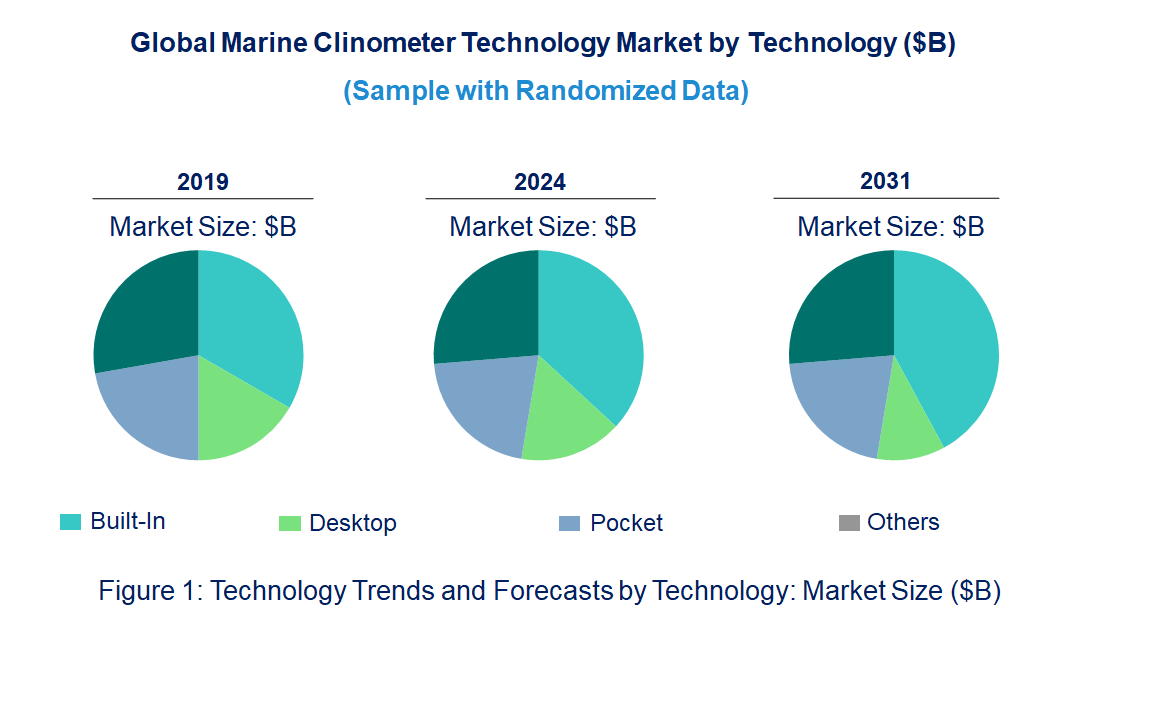
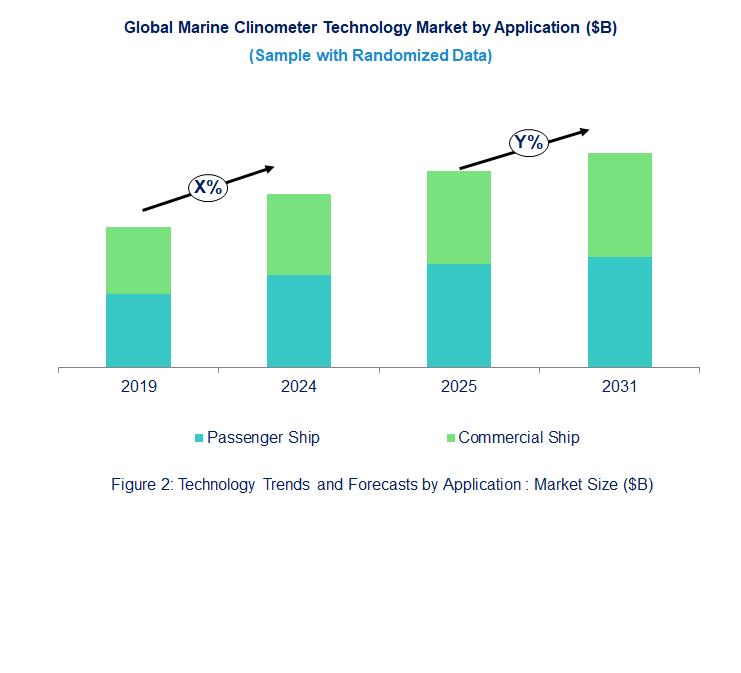
• Digitalization and Sensor Integration: Digital clinometers with integrated sensors are gradually replacing traditional mechanical devices. This trend improves the accuracy and efficiency of measurements, making clinometers more reliable in harsh marine environments. The integration of advanced sensors also enables better real-time data collection and monitoring.
• Portability and Compact Design: Pocket clinometers are becoming increasingly popular as marine operations require more flexible and portable equipment. These compact tools are easy to use, lightweight, and offer the same level of accuracy as desktop-based models, making them ideal for use in tight spaces on passenger and commercial ships.
• Real-Time Data Processing and Connectivity: The development of clinometers with real-time data processing capabilities is transforming the market. These tools can connect with other onboard systems, allowing for immediate decision-making and enhancing overall navigation and operational efficiency on ships.
• Increased Demand for Automation and Smart Systems: Marine clinometers are increasingly integrated into more automated systems. This is part of a broader shift towards smart ships, where the use of clinometers and other automated navigation tools ensures improvements in safety, efficiency, and route planning.
• Customized, Industry-Specific Solutions: As the demand for specialized applications in passenger and commercial ships grows, clinometer manufacturers are offering customized solutions. These solutions cater to the industry-specific requirements of cargo ships or luxury passenger vessels, ensuring that clinometers fulfill the operational needs of different industries. Emerging trends in the marine clinometer market, including digitalization, portability, real-time data processing, automation, and customization, are reshaping the industry. These technological developments are increasing the accuracy, efficiency, and versatility of clinometers, which are becoming integral to more advanced marine navigation and safety systems. Consequently, technology is strengthening its hold on maritime demands.
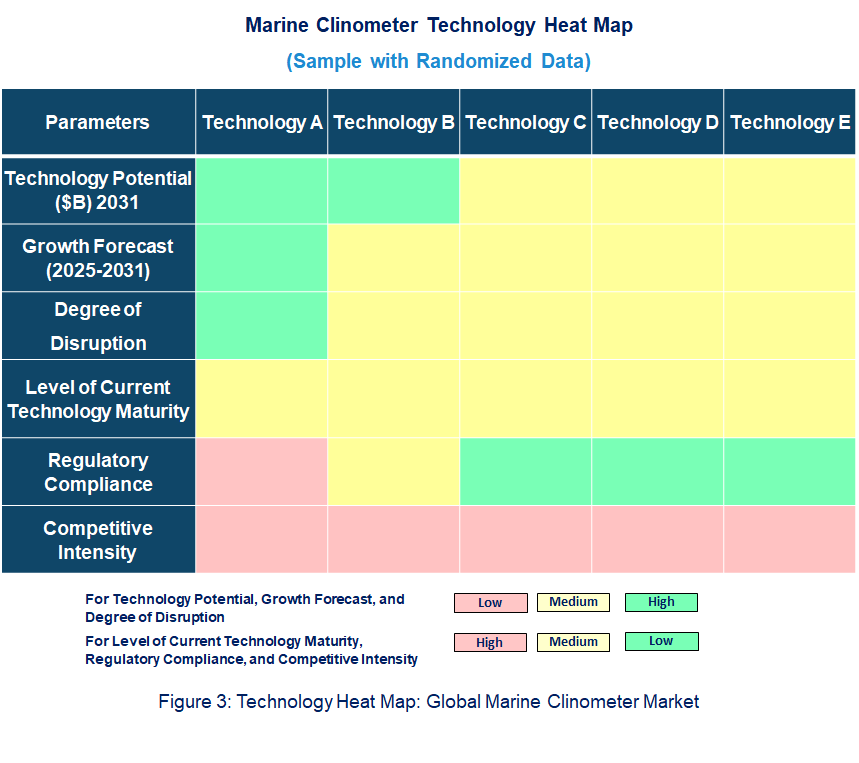
• Technology Potential: Marine clinometers, particularly digital models with integrated sensors, offer significant potential to enhance navigation accuracy, real-time data collection, and operational efficiency in the maritime industry. The ability to integrate these tools with other onboard systems is a game-changer, enabling smarter, data-driven decision-making.
• Degree of Disruption: The introduction of digital clinometers and sensor integration is disrupting traditional mechanical measurement systems. As digital solutions become more prevalent, mechanical systems are being phased out, leading to a faster, more accurate, and efficient measurement process on ships.
• Level of Current Technology Maturity: The current technology maturity in the marine clinometer market is quite high, with digital clinometers and sensor technologies being widely adopted in both commercial and passenger ships. The integration of real-time data processing and connectivity features is becoming standard in modern systems, signaling a mature phase for this technology.
• Regulatory Compliance: The increasing demand for safety and accuracy in maritime operations requires clinometer manufacturers to meet stringent regulatory standards. These devices must adhere to international maritime safety regulations, including ISO standards, ensuring that they comply with safety and operational requirements in various regions.
• Raymarine: Raymarine introduces a new generation of digital clinometers, combining next-level precision with integration possibilities. Their clinometers employ leading sensor technology to enhance precision. Designed to be connected flawlessly with other Raymarine navigation systems, the product can process real-time data, improving both efficiency and accuracy in navigation.
• MarineNav: MarineNav has concentrated on building compact and rugged clinometers that serve the needs of recreational and commercial vessels. Their clinometers include sophisticated sensors and integrated displays, providing higher reliability and performance even in harsh marine environments, making them ideal for passenger and commercial ships.
• Veethree Electronics and Marine: Veethree Electronics has taken the lead in creating hybrid clinometers that integrate digital precision with analog backup systems. They provide continuous operation in tough marine conditions. These innovative solutions address the demand for both accuracy and reliability in critical marine operations.
• Simrad Yachting: Simrad Yachting has advanced its clinometer technology by integrating it into its broader marine navigation systems. The integration allows for seamless communication between clinometers and other sensors on board, optimizing real-time decision-making and enhancing the efficiency of route planning, especially in automated vessels.
• Nanov Display: Nanov Display has introduced user-friendly digital clinometers with customized interfaces, allowing marine operators to adjust the display according to particular operational needs. Their focus on enhancing usability and accessibility is driving greater adoption of such tools in both passenger ships and commercial vessels.
• Tetradyne: Tetradyne has concentrated on the development of high-performance, advanced clinometers with increased durability and higher measurement accuracy. Their clinometers are designed to withstand extreme maritime conditions and are equipped with built-in sensors that ensure real-time, reliable data for precise navigation and positioning.
• Winmate: Winmate has embedded the latest technology in its clinometers, such as rugged designs and higher data accuracy. Their solutions are specifically suited for harsh marine environments. Their integration with other onboard systems makes them a perfect solution for enhancing the operational efficiency and safety of maritime professionals. These innovations from major players in the marine clinometer market are shaping the future of marine navigation. They push the limits of precision, connectivity, and automation.
• Technological Advancements: Continuous innovation in digital clinometers and sensor integration has significantly improved measurement accuracy and efficiency. New developments, such as hybrid and real-time processing clinometers, are driving the market forward by enabling more accurate and reliable navigation in complex maritime environments.
• Portability and Compact Design: The demand for portable and compact clinometers has risen due to the need for space-efficient tools that are easy to handle. Marine operations require compact, high-performance equipment, making pocket clinometers increasingly popular for both commercial and passenger vessels, thus expanding the market reach.
• Integration with Smart Navigation Systems: The increasing integration of clinometers with other onboard systems, such as GPS and automated navigation, allows for seamless data exchange, real-time decision-making, and enhanced safety. This integration is contributing to smarter and more efficient navigation systems, making clinometers an integral part of modern maritime operations. Challenges in the marine clinometer market are:
• Demand for Automation: The ongoing trend toward smart ships and autonomous navigation systems is driving demand for clinometers that can be integrated into automated platforms. This shift towards automation ensures smoother operations, greater safety, and more efficient decision-making processes in marine environments.
• Cost and Regulatory Challenges: High costs associated with advanced clinometer technologies and the need to comply with maritime regulations are significant barriers to market growth. These challenges affect the adoption of new technologies, particularly for smaller maritime operators who may find it difficult to invest in the latest systems. In conclusion, the marine clinometer market is significantly impacted by advancements in technology, portability, and smart system integration. However, the challenges related to cost and regulatory compliance continue to shape market dynamics. Overall, these opportunities and challenges are redefining the market landscape, driving the development of more sophisticated and efficient solutions for maritime navigation.
• Raymarine
• MarineNav
• Veethree Electronics and Marine
• Simrad Yachting
• Nanov Display
• Tetradyne
• Technology Readiness by Technology Type in the Marine Clinometer Market: The technology readiness for built-in, desktop, pocket, and other clinometers in the marine clinometer market is high. Each type is evolving to meet specific industry needs. Built-in clinometers are highly integrated into smart marine systems, providing real-time data for navigation. Desktop clinometers remain essential for high-precision applications in larger vessels. Although pocket clinometers are portable, they are becoming increasingly sophisticated with improved accuracy and data handling capabilities. Other technologies, such as hybrid or wireless clinometers, show great promise in applications requiring flexibility and remote connectivity. Competition is high as manufacturers develop more integrated and advanced solutions that comply with strict maritime regulations to ensure reliability and safety in various applications.
• Competitive Intensity and Regulatory Compliance of Various Technologies within the Marine Clinometer Market: The competitive intensity of the marine clinometer market varies depending on the technology type. Built-in clinometers face the highest competition because they need to integrate with existing marine navigation systems. Desktop clinometers compete on features, accuracy, and specialized applications, while pocket clinometers focus on portability and ease of use. All technologies must comply with regulatory standards, with strict maritime regulations governing their design and use. Companies operating in the market must balance innovation with compliance to meet operational requirements in different marine environments, which drives intense competition in the market.
• Disruption Potential of Different Technologies in the Marine Clinometer Market: Built-in, desktop, pocket, and other technologies have the potential to disrupt the marine clinometer market. Built-in clinometers with sensors that integrate smoothly into onboard equipment make navigation more efficient. Desktop clinometers, although slightly larger, offer advanced features and a high degree of accuracy; however, they lack portability. Pocket clinometers represent a shift toward miniaturization and mobility, making them ideal for personal use in smaller spaces. Other emerging technologies, such as wireless or hybrid clinometers, are disrupting the market by enabling remote data access and real-time data processing. These technological breakthroughs improve user flexibility and expand operational capabilities, further increasing the demand for advanced and precise tools in the marine industry.
• Built-In
• Desktop
• Others
• Passenger Ship
• Commercial Ship
• North America
• Europe
• Asia Pacific
• The Rest of the World
• Latest Developments and Innovations in the Marine Clinometer Technologies
• Companies / Ecosystems
• Strategic Opportunities by Technology Type


Choose a license that fits your team. Instant PDF delivery.
Prices exclude taxes. Instant delivery. Custom licensing available on request.
Market Report · May 18, 2026
Market Report · May 18, 2026
Market Report · May 18, 2026
Trusted partner for strategic intelligence and business growth


Receive a complimentary market analysis tailored to your industry. Our analysts will identify key growth opportunities and competitive dynamics specific to your business.

Market size, growth rate, and key trend analysis for your specific sector.

Top competitor positioning and market share analysis.

Strategic recommendations backed by data-driven insights.
Get curated market intelligence and competitive moves straight to your inbox.
By subscribing, you agree to receive our monthly insights. Unsubscribe anytime.
Receive a complimentary market analysis tailored to your industry. Our analysts will identify key growth opportunities and competitive dynamics specific to your business.
Market size, growth rate, and key trend analysis for your specific sector.
Top competitor positioning and market share analysis.
Strategic recommendations backed by data-driven insights.
Get curated market intelligence, emerging trends, and competitive moves straight to your inbox each month.
By subscribing, you agree to receive our monthly insights. Unsubscribe anytime.
We'll send your sample report shortly.