
Market Report · July 31, 2026

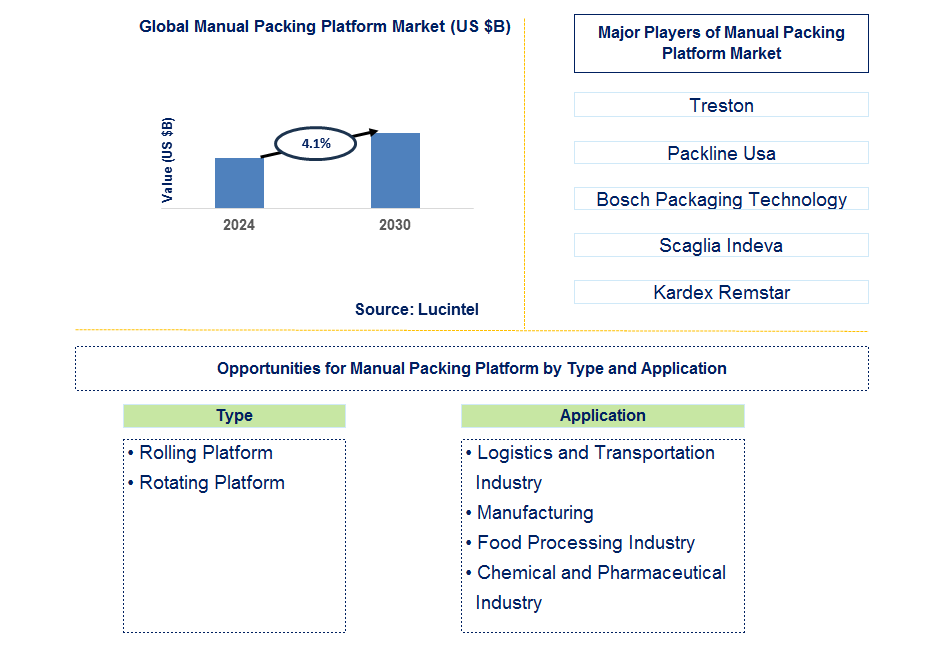
Key data points: The growth forecast = 4.1% annually next 6 years. Scroll below to get more insights. This market report covers trends, opportunities, and forecast in the global manual packing platform market to 2030 by type (rolling platform and rotating platform), application (logistics and transportation industry, manufacturing, food processing industry, and chemical and pharmaceutical industry), and region (North America, Europe, Asia Pacific, and the Rest of the World)
We'll send your sample report shortly.
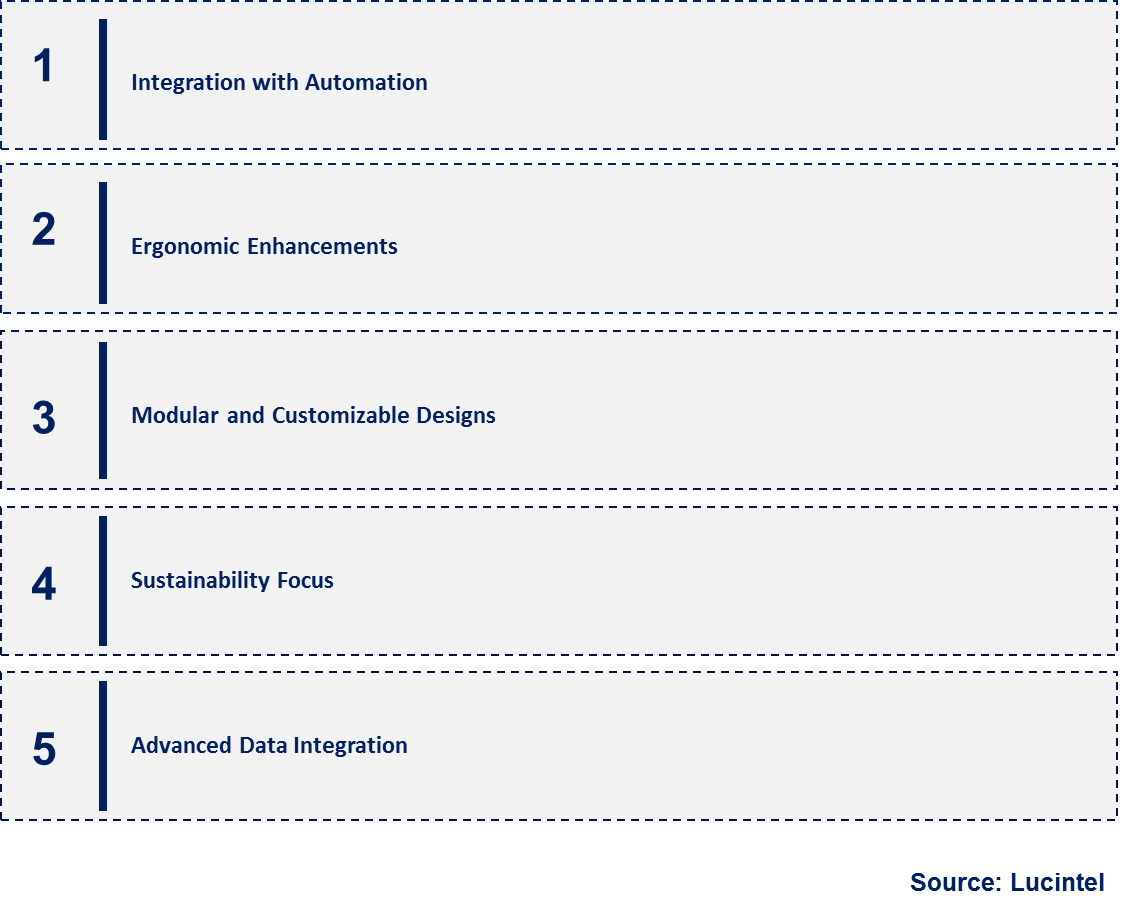
• Integration with Automation: To increase the speed of operations while ensuring accuracy, automated technologies are being incorporated into manual packaging platforms. This integration reduces manual work as well as retaining the capability of operating manually. Conveyor belts and automated labeling systems are examples of such automation tools that now make the process of packaging less demanding or simpler.
• Ergonomic Enhancements: There has been a growing interest in ergonomics to improve worker comfort and reduce injuries. Such developments include platforms whose height can be adjusted, anti-fatigue mats and ergonomic workstations. These improvements seek to make working places more comfortable thereby leading to higher productivity and reduced employee absenteeism.
• Modular and Customizable Designs: The market is shifting towards modular and customizable packing platforms that can cater to different packaging requirements. Companies are now able to customize their packing systems depending on individual needs, which enhances flexibility in packaging operations.
• Sustainability Focus: Sustainable practices have become one of the key drivers for firms when producing and designing manual packing platforms. These include use of friendly materials during construction processes, reduction in energy consumption together with use recyclable components in them. Therefore, sustainability coincides with massive industrial shifts toward environmental responsibility today.
• Advanced Data Integration: There is an increasing prevalence of integrating data analytics with real-time monitoring. Sensing and software are being installed on manual packing platforms to track performance metrics and identify improvement areas. This data-driven approach improves operations efficiency and decision-making. These trends are changing the face of the market for manual packing platforms through innovation, efficiency improvements and industry’s major dilemmas addressed. Automation, ergonomics, customization, sustainability and data integration are creating more effective and flexible manual packing solutions.
• Advancements in Ergonomic Design: Some developments recently made towards ergonomic designs focus on enhancing worker comfort while reducing strains on them. Adjustable height platforms, ergonomic workstations and anti-fatigue features are some such inclusions that create a safer and more productive working environment. To this end they address health concerns while also improving operational efficiencies.
• Integration with Automation Systems: Today’s manual packing systems are increasingly becoming part of automated processes. For example some now come fitted with automatic labeling or sorting systems including conveyors that can be used alongside human operators at the packaging line. Such an integration enhances overall accuracy as well as efficiency while maintaining flexibility characteristic to manually performed tasks.
• Modular and Flexible Solutions: There has been an increase in modular customized packing platforms within the market. It means these can be adapted to different types of packaging requirements or easily reconfigured when necessary. This adaptability supports various manufacturing industries across diverse range of packages thus adding scalability value to them.
• Focus on Sustainable Practices: In designing and producing these manual shipping devices manufacturers have started giving priority to sustainability issues. Eco-friendly materials are currently being utilized by industries to make them greener; they are also looking for ways to improve energy efficiency and incorporate recyclable parts. This shift towards sustainability aligns with broader industry trends towards reducing environmental impact.
• Enhanced Data Analytics: More use of sophisticated data analytics alongside real-time monitoring is evident. Manual packing platforms are being equipped with sensors and software to gather data on performance. With this skill the decision making process becomes better, more optimized operational efficiency leading to improved performance. These developments are driving innovation and efficiency in the manual packing platform market. The market is evolving in response to these demands by focusing on ergonomics, automation, modularity, sustainability, and data integration for modern manufacturing and packaging operations.
• Expansion into E-Commerce: In line with the rise of e-commerce there is an opportunity in creating packing platforms specifically designed for high volume small package fulfillment. Such solutions should be able to handle faster sorting that can be done at once; hence address the peculiarities involved in e-commerce packing thus driving its growth.
• Customization for Industry-Specific Needs: Developing customizable packing platforms that serve industries like pharmaceuticals, food and beverage or consumer goods provides some room for expansion. Tailoring products to meet unique requirements associated with various sectors makes them more appealing enhancing their functionality too.
• Integrating with Smart Technologies: Investing in smart technologies like IoT and data analytics gives room for growth. Integrating these technologies into manual packing platforms can help improve efficiency, accuracy, and real-time monitoring giving a competitive advantage in the market.
• Sustainability and Eco-Friendly Solutions: There is an increase in demand for sustainable packing solutions that minimize environmental impacts. Creating platforms using eco-friendly materials and energy efficient technologies are current industrial trends that appeal to environmentally conscious customers and businesses.
• Emerging Markets and Regional Expansion: Targeting expanding regional presence through emerging markets offers growth opportunities. The industries within these regions are growing which necessitate the need for efficient and scalable packaging solutions. Customizing platforms to meet local market requirements can therefore drive growth in such areas. These strategic growth opportunities drive innovation, expand applications, and address emerging needs making them transform the manual packing platform market. E-commerce focus, customization, sustainability, smart technologies, regional expansion aim at enhancing the market potential thus initiating a new basis of development.
• Technological Advancements: Automation; smart systems are also key technological innovations driving market growth hence investing on these advanced forms of technology ensures systems efficiency leading to accurate adaptive packaging process across various industries as their needs keep changing over time.
• Increasing Demand for Flexible Solutions: For meeting various industrial requirement sand different packaging needs that result into diversified industry product lines it requires more flexible designs that can be customized according to individual user’s specifications; modular casing along with adjustable parts will allow necessary flexibility of design.
• Focus on Ergonomics: This is a major driver because it improves worker comfort thereby reducing stress on workers. Platforms that are adjustable and have ergonomic workstations provide both higher productivity and lower risk of injury, which are the two things hiring authorities consider.
• Sustainability Trends: Increasingly, there is an insistence on sustainable packing solutions with limited impact to the environment. This move is aimed at driving growth within this industry by ensuring that these future trends meet market expectations in terms of eco-friendly materials as well as energy efficient devices that meet regulatory requirements.
• Regional Expansion: Expansion into emerging markets and increasing regional presence can lead to growth opportunities for companies. In these regions, as industries develop, the demand for efficient and scalable packing solutions increases thereby bringing profitability to new markets. Challenges in the manual packing platform market are:
• Regulatory Compliance: The complexity of regulations in regards to safety as well as environmental standards makes it difficult for players in this market to develop while maintaining their positions. Market acceptance depends heavily on compliance with diverse regulations associated with safety and environmental aspects thus avoiding potential legal rights infringements.
• Cost Management: Developing advanced packing platforms might be expensive, but they should still be affordable; balancing between development expenses and affordability is difficult. Manufacturers’ challenge lies in delivering high-quality innovative products at reasonable prices while keeping costs under control.
• Technological Limitations: Coping with present technological limitations and developing compatibility with upcoming systems is not easy.. Technological advancements are moving ahead fast hence innovation via adaptation will help address this gap allowing customizing products meeting buyers’ wishes or standardizing its production process so that it remains compatible throughout its life cycle. Therefore, technological advancements; increasing demand for flexibility; ergonomics focus; sustainability trends; regional expansion are some factors fostering development of manual packing market while compliance with such crucial issues like regulatory compliance cost management, technological advances will ensure further progress of the industry.
• Treston
• Packline Usa
• Bosch Packaging Technology
• Scaglia Indeva
• Kardex Remstar
• Bhs Corrugated
• Advance Lifts
• Mekitec
• Cmc Machinery
• Handling Specialty
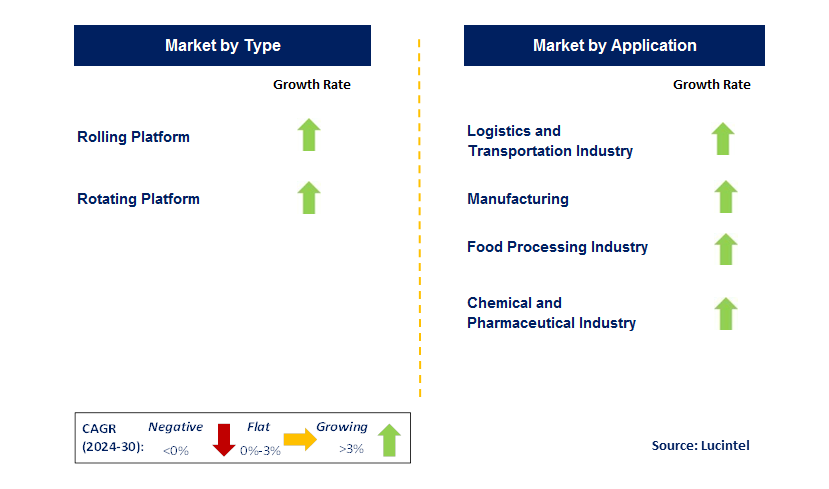
• Rolling Platform
• Rotating Platform
• Logistics and Transportation Industry
• Manufacturing
• Food Processing Industry
• Chemical and Pharmaceutical Industry
• North America
• Europe
• Asia Pacific
• The Rest of the World
• United States: In the US, manual packing platforms have made strides in automation integration and improvements in ergonomic design. For example, companies are adopting platforms that can adjust heights and have advanced materials that enhance workers’ comfort and productivity. Moreover, manual packing systems are increasingly being integrated with data analytics for monitoring performance in real time and optimizing it across all operations.
• China: Innovations aimed at enhancing productivity and reducing labor costs have expanded China's manual packaging platform market. This includes designing platforms that can be used at high speeds as well as easily join other manufacturing processes. On top of this, there is a growing adoption of durable materials alongside modular designs leading to more adaptable and durable packaging platforms.
• Germany: Precision and adherence to rigorous safety standards characterize Germany’s approach. Advanced sensors have been incorporated into recent development along with automated features intended to enhance precision while minimizing human error. German packers are also considering sustainability by using green resources as well as energy saving technologies.
• India: India’s market is experiencing growth due to demands for affordable and scalable packaging solutions. Among the innovations include modular or customizable packs that suit various industries. Additionally manufacturers are focusing on how to make their machines last longer thus making them more sustainable while responding to the needs of a fast-growing manufacturing sector globally.
• Japan: Japan has an emphasis on advanced ergonomics with special emphasis on worker security through precision engineering when developing the manually packed boxes. Employment of high-quality materials and techniques is among other advancements leading to improved employee convenience throughout packing process. Japanese manufacturers also investigate ways of improving manual platforms efficiency through their interaction with robotics systems.


• Treston
• Packline Usa
• Bosch Packaging Technology
• Scaglia Indeva
• Kardex Remstar
• Bhs Corrugated
• Advance Lifts
• Mekitec
• Cmc Machinery
• Handling Specialty Q5. Which manual packing platform market segment will be the largest in future? Answer: Lucintel forecasts that rolling platforms will remain the larger segment over the forecast period due to ease of use. Q6. In manual packing platform market, which region is expected to be the largest in next 5 years? Answer: North America will remain the largest region over the forecast period due to large and growing population in the region. Q7. Do we receive customization in this report? Answer: Yes, Lucintel provides 10% customization without any additional cost.


Choose a license that fits your team. Instant PDF delivery.
Prices exclude taxes. Instant delivery. Custom licensing available on request.
Market Report · July 31, 2026
Market Report · July 22, 2026
Market Report · July 20, 2026
Trusted partner for strategic intelligence and business growth


Receive a complimentary market analysis tailored to your industry. Our analysts will identify key growth opportunities and competitive dynamics specific to your business.

Market size, growth rate, and key trend analysis for your specific sector.

Top competitor positioning and market share analysis.

Strategic recommendations backed by data-driven insights.
Get curated market intelligence and competitive moves straight to your inbox.
By subscribing, you agree to receive our monthly insights. Unsubscribe anytime.
Receive a complimentary market analysis tailored to your industry. Our analysts will identify key growth opportunities and competitive dynamics specific to your business.
Market size, growth rate, and key trend analysis for your specific sector.
Top competitor positioning and market share analysis.
Strategic recommendations backed by data-driven insights.
Get curated market intelligence, emerging trends, and competitive moves straight to your inbox each month.
By subscribing, you agree to receive our monthly insights. Unsubscribe anytime.
We'll send your sample report shortly.