
Market Report · July 31, 2026

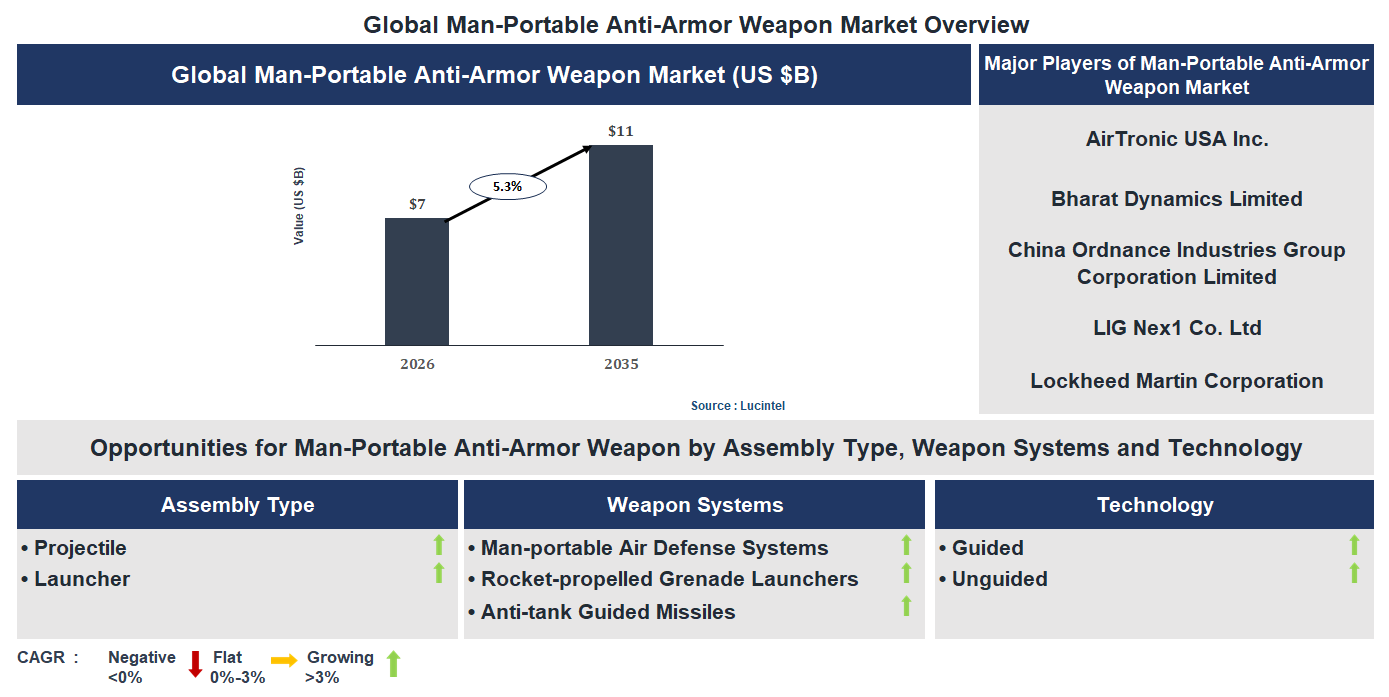
Key data points: The market size in 2035 = $11 billion, growth forecast = 5.3% annually for the next 8 years. Scroll below to get more insights. This market report covers trends, opportunities and forecasts in man-portable anti-armor weapon market to 2035 by assembly type (projectile and launcher), weapon systems (man-portable air defense systems, rocket-propelled grenade launchers, and anti-tank guided missiles), technology (guided and unguided), and region (North America, Europe, Asia Pacific, and the Rest of the World)
We'll send your sample report shortly.
• Lucintel forecasts that, within the assembly type category, launcher is expected to witness higher growth over the forecast period.
• Within the weapon systems category, anti-tank guided missile is expected to witness the highest growth.
• In terms of region, North America is expected to witness the highest growth over the forecast period. Gain valuable insights for your business decisions with our comprehensive 150+ page report. Sample figures with some insights are shown below.
• Technological Innovation: The integration of advanced technologies such as guided missile systems, smart targeting, and improved propulsion is transforming anti-armor weapons. These innovations enhance accuracy, range, and lethality, allowing soldiers to engage targets more effectively from safer distances. The development of lightweight materials and compact designs also improves portability without compromising performance. As technology continues to evolve, manufacturers are focusing on creating smarter, more reliable systems that can adapt to complex battlefield environments, thereby increasing the overall effectiveness of man-portable anti-armor solutions.
• Increasing Focus on Lightweight and Portable Systems: The demand for lightweight, easy-to-carry weapons is rising due to the need for mobility and rapid deployment in diverse combat scenarios. Modern soldiers require equipment that does not hinder movement or agility. Manufacturers are developing compact, ergonomic designs using advanced materials to reduce weight while maintaining durability and firepower. This trend enables infantry units to operate more flexibly, respond quickly to threats, and reduce logistical burdens. The emphasis on portability is also driven by the need for quick setup and ease of use in dynamic battlefield conditions.
• Growing Adoption of Guided and Fire-and-Forget Systems: Guided missile technology and fire-and-forget capabilities are gaining prominence in the market. These systems allow soldiers to engage targets with high precision from a safe distance, reducing exposure to enemy fire. The integration of laser guidance, infrared homing, and other targeting technologies enhances accuracy and minimizes collateral damage. This trend reflects a shift towards more sophisticated, user-friendly weapons that improve operational efficiency and safety. As military forces prioritize precision strikes, the adoption of guided systems is expected to accelerate, further transforming the anti-armor landscape.
• Strategic Collaborations and Defense Spending: Governments and defense contractors are increasingly collaborating to develop advanced anti-armor solutions. Rising defense budgets and strategic partnerships facilitate innovation, technology sharing, and rapid deployment of new systems. Countries are investing heavily in research and development to maintain technological superiority and address evolving threats. These collaborations also enable customization of weapons to specific operational needs, fostering a competitive market environment. The trend underscores the importance of strategic alliances in accelerating product development and ensuring the availability of cutting-edge man-portable anti-armor weapons.
• Geopolitical Tensions and Regional Conflicts: Ongoing regional conflicts and geopolitical tensions are driving the demand for portable anti-armor weapons. Countries seek to bolster their defense capabilities to counter armored threats and asymmetric warfare tactics. The proliferation of such weapons is also influenced by arms trade dynamics and regional security concerns. This trend results in increased procurement activities, rapid deployment, and a focus on versatile, easy-to-use systems suitable for various terrains and combat scenarios. The heightened demand underscores the strategic importance of man-portable anti-armor weapons in contemporary military operations. These emerging trends are significantly reshaping the man-portable anti-armor weapon market by fostering innovation, enhancing mobility, and increasing strategic collaborations. They are enabling armed forces to deploy more effective, precise, and adaptable systems, thereby improving battlefield survivability and operational success. As technological and geopolitical factors continue to evolve, the market is poised for sustained growth and transformation.

• Growing Defense Budgets: Increased military spending worldwide is boosting demand for man-portable anti-armor weapons, enabling countries to modernize their armed forces with advanced, lightweight systems that improve battlefield effectiveness and soldier safety.
• Technological Advancements: Innovations such as guided missile systems, improved targeting, and enhanced portability are making anti-armor weapons more accurate and user-friendly, expanding their application scope and increasing market adoption.
• Rising Asymmetric Warfare: The shift towards asymmetric conflicts has heightened the need for portable, easy-to-deploy anti-armor weapons, especially among non-state actors, creating new market segments and driving innovation.
• Geopolitical Tensions and Security Concerns: Escalating regional conflicts and security threats are prompting nations to stockpile and upgrade their anti-armor arsenals, thereby expanding market opportunities for manufacturers.
• Increasing Focus on Lightweight and Portable Systems: The demand for compact, lightweight anti-armor weapons that can be easily carried and operated by individual soldiers is growing, leading to the development of more efficient and versatile solutions. These developments are significantly impacting the man-portable anti-armor weapon market by driving innovation, expanding application areas, and increasing global demand. Enhanced technological capabilities and geopolitical factors are fostering a competitive environment, encouraging manufacturers to develop more effective, portable, and reliable systems. Overall, these trends are shaping a robust market with promising growth prospects for the foreseeable future.
• Increasing Defense Spending and Military Modernization Drive Market Expansion: Growing defense budgets worldwide are enabling militaries to invest in advanced man-portable anti-armor weapons. Countries are prioritizing modernization efforts to enhance battlefield capabilities, leading to increased procurement of lightweight, portable systems. This trend is particularly prominent in regions facing security threats, prompting governments to allocate funds for research, development, and procurement of next-generation weapons. The focus on improving infantry combat effectiveness is expected to sustain market growth over the coming years.
• Technological Advancements in Weapon Design and Materials Enhance Effectiveness: Innovations in materials such as composites and lightweight alloys are reducing weapon weight without compromising durability. Integration of smart targeting systems, laser guidance, and fire control technology improves accuracy and operational efficiency. These advancements enable soldiers to engage armored targets more effectively in complex terrains and adverse conditions. Continuous R&D efforts are resulting in more reliable, portable, and lethal anti-armor systems, which are critical for maintaining tactical superiority on the battlefield.
• Rising Adoption of Guided and Smart Anti-Armor Weapons: The shift from traditional unguided systems to guided, smart weapons is transforming the market. Precision-guided munitions offer higher hit probabilities and reduced collateral damage, making them preferable for modern military operations. The development of laser-guided, infrared, and GPS-enabled systems allows for greater engagement range and accuracy. This trend is driven by the need for versatile, effective solutions capable of neutralizing advanced armored threats, thereby expanding the market for guided anti-armor weapons.
• Growing Focus on Lightweight, Portable Systems for Infantry Units: The demand for lightweight, easy-to-carry anti-armor weapons is increasing as armies seek to enhance infantry mobility and operational flexibility. Compact designs that do not compromise firepower are crucial for rapid deployment and close-quarters combat. Innovations in miniaturization and ergonomic design are making these weapons more user-friendly. The emphasis on portability aligns with modern warfare tactics, where quick response and maneuverability are essential, fueling market growth in portable anti-armor systems.
• Strategic Collaborations and Defense Contracts Accelerate Market Development: Partnerships between defense contractors, governments, and research institutions are fostering innovation and expanding product portfolios. Competitive bidding for military contracts encourages technological advancements and cost-effective solutions. International collaborations facilitate knowledge sharing and access to new markets. These strategic alliances are vital for accelerating the development, testing, and deployment of cutting-edge man-portable anti-armor weapons, ensuring sustained market growth and technological leadership. The overall market outlook is positively influenced by these growth opportunities, promising continued innovation, increased procurement, and strategic collaborations. As military forces worldwide prioritize lightweight, precise, and effective anti-armor solutions, the market is poised for robust expansion. Embracing technological advancements and strategic partnerships will be key to capitalizing on emerging opportunities, ensuring armed forces remain equipped to counter evolving armored threats efficiently.
• Technological Innovation: The continuous development of advanced materials, guidance systems, and targeting technologies enhances weapon effectiveness. Innovations such as laser guidance, improved armor penetration, and lightweight designs increase operational efficiency and user safety. These technological advancements enable armed forces to counter evolving threats more effectively, driving market growth. Manufacturers investing in R&D are gaining competitive advantages, leading to increased adoption across military forces worldwide. The demand for more precise, reliable, and portable anti-armor solutions fuels ongoing innovation, ensuring the market remains dynamic and responsive to modern warfare needs.
• Rising Defense Budgets: Governments worldwide are increasing their defense spending to modernize military capabilities and address emerging threats. Elevated budgets facilitate procurement of advanced weapon systems, including man-portable anti-armor weapons, to enhance battlefield versatility. This financial commitment supports research, development, and procurement activities, expanding market opportunities. Countries facing regional conflicts or geopolitical tensions prioritize strengthening their defense arsenals, further propelling market growth. Additionally, international alliances and military aid programs contribute to increased sales and deployment of these weapons, making defense expenditure a critical driver for market expansion.
• Geopolitical Tensions and Conflicts: Ongoing regional conflicts, insurgencies, and border disputes necessitate the deployment of effective anti-armor weapons. These weapons provide tactical advantages in asymmetric warfare, enabling smaller forces to counter technologically superior adversaries. The persistent threat environment compels military forces to upgrade and expand their anti-armor inventories, boosting market demand. Countries involved in conflicts or facing security threats are more likely to invest in portable anti-armor solutions to enhance their operational capabilities. This geopolitical landscape sustains a steady demand for man-portable anti-armor weapons, influencing market growth and innovation.
• Military Modernization Programs: Many nations are undertaking comprehensive military modernization initiatives to upgrade their armed forces capabilities. These programs emphasize the integration of advanced weaponry, including man-portable anti-armor systems, to improve combat effectiveness. Modernization efforts often include replacing outdated equipment with more sophisticated, lightweight, and versatile solutions, aligning with contemporary warfare requirements. Such initiatives stimulate market growth by creating demand for new systems and encouraging domestic manufacturing. The focus on modernization also fosters technological collaborations and investments, further expanding the market scope and driving innovation.
• Growing Adoption in Homeland Security: Besides military applications, man-portable anti-armor weapons are increasingly being adopted for homeland security and counter-terrorism operations. Their portability and effectiveness against armored threats make them valuable for law enforcement agencies and special forces. This diversification broadens the market beyond traditional military use, opening new revenue streams. Governments are investing in these weapons to safeguard critical infrastructure and respond to asymmetric threats. The expanding scope of application enhances market resilience and growth prospects, especially in regions with heightened security concerns. The challenges facing the man-portable anti-armor weapon market include:
• Regulatory Restrictions and Export Controls: Stringent regulations governing the manufacture, sale, and transfer of anti-armor weapons limit market growth. International treaties and national laws impose restrictions to prevent proliferation and misuse, complicating cross-border trade. Compliance costs and bureaucratic hurdles can delay procurement and development processes. These regulatory frameworks also restrict access to certain markets, reducing potential sales and partnerships. Navigating complex legal landscapes requires significant resources and expertise, which can hinder rapid market expansion and innovation.
• High Development and Production Costs: Developing advanced man-portable anti-armor weapons involves substantial investment in research, testing, and manufacturing. The high costs can limit entry for smaller firms and slow down innovation cycles. Additionally, economies of scale are difficult to achieve due to limited procurement volumes, further inflating unit costs. These financial barriers can restrict the availability of cutting-edge solutions, impacting the competitiveness of manufacturers and delaying deployment. Budget constraints faced by some countries also hinder procurement, affecting overall market growth.
• Geopolitical Instability and Regional Conflicts: Political unrest, sanctions, and regional instability can disrupt supply chains, hinder international collaborations, and restrict market access. Conflicts may also lead to unpredictable procurement patterns, with some countries prioritizing immediate needs over long-term investments. Geopolitical tensions can escalate export restrictions or trigger arms embargoes, limiting market opportunities. Such instability creates an uncertain environment, deterring investment and innovation, and complicating strategic planning for market participants. The man-portable anti-armor weapon market is driven by technological advancements, increased defense spending, geopolitical tensions, modernization initiatives, and expanding security applications. However, regulatory hurdles, high development costs, and geopolitical instability pose significant challenges. These factors collectively influence market dynamics, shaping growth prospects and competitive strategies. While opportunities for innovation and expansion are substantial, stakeholders must navigate complex legal, financial, and geopolitical landscapes to capitalize on emerging trends. Overall, the markets future will depend on balancing these drivers and challenges to foster sustainable growth and technological progress.
• AirTronic USA Inc.
• Bharat Dynamics Limited
• China Ordnance Industries Group Corporation Limited
• LIG Nex1 Co. Ltd
• Lockheed Martin Corporation
• MBDA
• MKE Kurumu
• Nammo AS
• RTX Corporation
• Roketsan Roket Sanayii ve Ticaret AS
• Projectile
• Launcher
• Man-portable Air Defense Systems
• Rocket-propelled Grenade Launchers
• Anti-tank Guided Missiles
• Guided
• Unguided
• North America
• Europe
• Asia Pacific
• The Rest of the World
• United States: The US has advanced its man-portable anti-armor systems, focusing on integrating smart targeting and increased lethality. Recent developments include the deployment of next-generation missile systems with improved range and accuracy, such as the Javelin missile family. The US military is also investing in lightweight, portable systems that can be easily operated by infantry units, emphasizing rapid deployment and versatility. Additionally, collaborations with defense contractors aim to incorporate AI and sensor technologies to enhance target acquisition and engagement efficiency.
• China: China has made significant strides in developing indigenous man-portable anti-armor weapons, emphasizing affordability and ease of use. Recent innovations include the deployment of new missile systems with extended range and enhanced penetration capabilities. The Chinese military is also focusing on integrating these weapons with their evolving network-centric warfare strategies, enabling better coordination and targeting. Domestic production of advanced missile systems has increased, with a focus on countering regional threats and modernizing their ground forces.
• Germany: Germany has concentrated on improving the precision and portability of its anti-armor weapons, with recent developments in guided missile technology. The country has introduced upgraded systems that feature improved guidance systems, longer ranges, and better resistance to countermeasures. Germany is also investing in modular systems that can be adapted for various operational needs, emphasizing interoperability with NATO allies. These advancements aim to enhance the effectiveness of infantry units in both conventional and asymmetric warfare scenarios.
• India: India has accelerated its efforts to develop and deploy advanced man-portable anti-armor weapons, driven by regional security concerns. Recent developments include the induction of indigenous missile systems with increased range and armor penetration capabilities. India is also focusing on integrating these weapons with modern communication and targeting systems to improve battlefield coordination. Indigenous manufacturing and technology transfer initiatives are central to India’s strategy to reduce reliance on imports and bolster self-sufficiency in defense technology.
• Japan: Japan has prioritized the modernization of its infantry anti-armor capabilities, emphasizing lightweight and highly accurate missile systems. Recent advancements include the deployment of new guided missile systems with enhanced targeting precision and extended operational ranges. Japan is also exploring the integration of these weapons with advanced surveillance and reconnaissance systems to improve battlefield awareness. The focus remains on ensuring compatibility with existing defense infrastructure and maintaining technological superiority in the Asia-Pacific region.


• AirTronic USA Inc.
• Bharat Dynamics Limited
• China Ordnance Industries Group Corporation Limited
• LIG Nex1 Co. Ltd
• Lockheed Martin Corporation
• MBDA
• MKE Kurumu
• Nammo AS
• RTX Corporation
• Roketsan Roket Sanayii ve Ticaret AS Q6. Which man-portable anti-armor weapon market segment will be the largest in future? Answer: Lucintel forecasts that, within the assembly type category, launcher is expected to witness higher growth over the forecast period. Q7. In man-portable anti-armor weapon market, which region is expected to be the largest in next 8 years? Answer: In terms of region, North America is expected to witness the highest growth over the forecast period. Q8. Do we receive customization in this report? Answer: Yes, Lucintel provides 10% customization without any additional cost.


Choose a license that fits your team. Instant PDF delivery.
Prices exclude taxes. Instant delivery. Custom licensing available on request.
Market Report · July 31, 2026
Market Report · July 31, 2026
Market Report · July 31, 2026
Trusted partner for strategic intelligence and business growth


Receive a complimentary market analysis tailored to your industry. Our analysts will identify key growth opportunities and competitive dynamics specific to your business.

Market size, growth rate, and key trend analysis for your specific sector.

Top competitor positioning and market share analysis.

Strategic recommendations backed by data-driven insights.
Get curated market intelligence and competitive moves straight to your inbox.
By subscribing, you agree to receive our monthly insights. Unsubscribe anytime.
Receive a complimentary market analysis tailored to your industry. Our analysts will identify key growth opportunities and competitive dynamics specific to your business.
Market size, growth rate, and key trend analysis for your specific sector.
Top competitor positioning and market share analysis.
Strategic recommendations backed by data-driven insights.
Get curated market intelligence, emerging trends, and competitive moves straight to your inbox each month.
By subscribing, you agree to receive our monthly insights. Unsubscribe anytime.
We'll send your sample report shortly.