
Report Feature
Magnetic Flowmeter Market Trends and Forecast
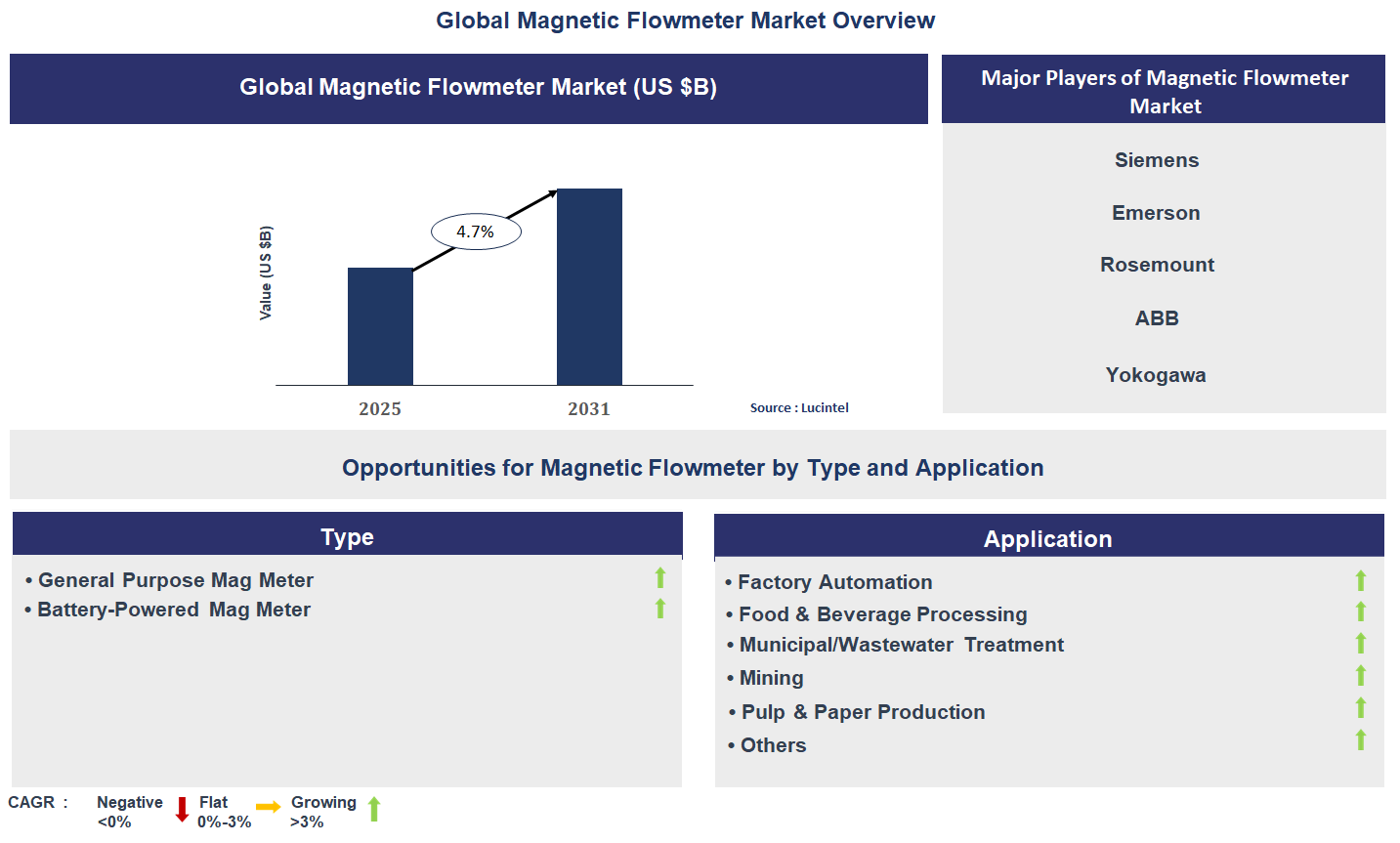
The future of the global magnetic flowmeter market looks promising with opportunities in the factory automation, food & beverage processing, municipal/wastewater treatment, mining, and pulp & paper production markets. The global magnetic flowmeter market is expected to grow with a CAGR of 4.7% from 2025 to 2031. The major drivers for this market are the increasing demand for accurate flow measurement, the rising integration with automation systems, and the growing adoption in water treatment sectors.• Lucintel forecasts that, within the type category, battery-powered mag meter is expected to witness higher growth over the forecast period.
• Within the application category, municipal/wastewater treatment is expected to witness the highest growth.
• In terms of region, APAC is expected to witness the highest growth over the forecast period. Gain valuable insights for your business decisions with our comprehensive 150+ page report. Sample figures with some insights are shown below.
Emerging Trends in the Magnetic Flowmeter Market
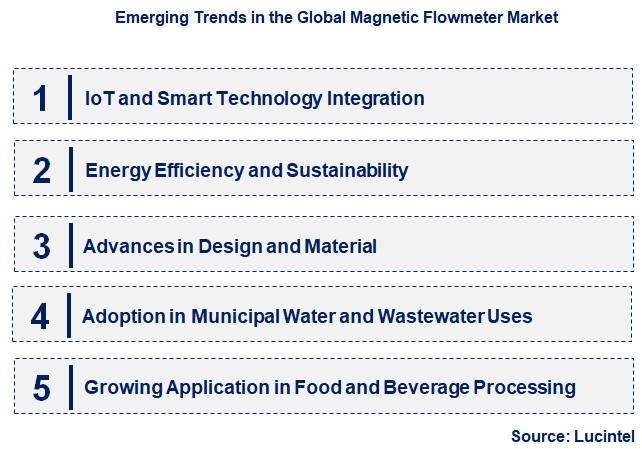
The magnetic flowmeter market is changing with the addition of new technology, sustainability initiatives, and shifts in industry standards. The following are the five emerging trends in the market:• IoT and Smart Technology Integration: Integration of magnetic flowmeters with the Internet of Things (IoT) and smart technologies is facilitating real-time monitoring and data analysis. This enables industries to streamline their processes, lower maintenance expenses, and boost operational efficiency. IoT-capable magnetic flowmeters can be remotely sent data, giving users timely insights and predictive analytics, enhancing decision-making. The trend towards intelligent, networked devices is driving the uptake of more sophisticated magnetic flowmeters across industries that need continuous, precise monitoring.
• Energy Efficiency and Sustainability: As environmental concerns become more prominent, companies are increasingly using technologies that enhance energy efficiency and sustainability. Magnetic flowmeters, owing to their high precision and low maintenance requirements, enable companies to streamline their operations, minimize waste, and save resources. This is especially seen in sectors such as water management, power generation, and food processing, where flow measurement efficiency directly enhances energy savings and eco-friendliness.
• Advances in Design and Material: New trends involve the creation of magnetic flowmeters that can work in more drastic environments, including high temperatures, pressures, or corrosive liquids. New material advances, such as linings and coatings, are improving the longevity and durability of magnetic flowmeters. New designs that are smaller and modular are being created to fit industries that have limited space and flexible installation requirements.
• Adoption in Municipal Water and Wastewater Uses: The use of magnetic flowmeters is increasing tremendously in municipal water and wastewater treatment uses. Magnetic flowmeters enable precise, non-intrusive measurement of water flow, meeting regulatory requirements and optimizing process efficiency. With governments globally pushing forward with sustainable water management practices, adoption of magnetic flowmeters in water treatment and distribution systems will rise in the future years.
• Growing Application in Food and Beverage Processing: Magnetic flowmeters are gaining popularity in the food and beverage market because they can measure liquid flow without altering the product. As food safety and quality demand rises, these flowmeters find application in processes where accurate measurement of ingredients, water, and other fluids is essential. The sanitary design of magnetic flowmeters makes them suitable for food processing environments, where cleanliness and precision are imperative. These new trends—IoT integration, sustainability, material development, municipal use, and food industry adoption—are transforming the magnetic flowmeter market. The need for intelligent, energy-efficient, and extremely resilient flow measurement solutions will continue to propel the expansion of this market, particularly as industries shift towards automation and more sustainable approaches.
Recent Development in the Magnetic Flowmeter Market
The market for magnetic flowmeter is undergoing a series of major developments that are determining its direction. These developments are driven by technology innovations, industry needs, and changing regulatory standards. Following are the five major developments in the market:• Digital Magnetic Flowmeter Advancement: Digital magnetic flowmeters are becoming increasingly popular as they offer increased accuracy, user-friendly operations, and smart system integration. Digital magnetic flowmeters offer real-time data output, which suits companies such as water treatment, oil and gas, and chemicals, where monitoring is a constant necessity. Digital flowmeters improve data transmission, remote observation, and predictive maintenance, all of which increase efficiency in operation.
• Wireless Flowmeters Expansion: Another important trend is the creation of wireless magnetic flowmeters. Wireless magnetic flowmeters are being utilized to facilitate better access to data and save on installation, especially in distant areas where wiring can be challenging or expensive. The wireless aspect makes it simple to integrate into current process control systems and enables real-time flow information for monitoring and analysis.
• High-Pressure and High-Temperature Flowmeters: With industries like oil and gas, petrochemicals, and power generation needing measurement of flow in extreme conditions, magnetic flowmeters that can measure in high-pressure and high-temperature conditions are in increased demand. Manufacturers are creating magnetic flowmeters with proprietary materials and constructions to be able to withstand these severe conditions, widening their application scope and enhancing their performance under difficult conditions.
• Compact Designs and Miniaturization: Miniaturization of the flow measurement equipment is the trend that is affecting the magnetic flowmeter market. Compact, space-efficient designs are in the process of being designed to meet the needs of industries where space is a constraint, including small-scale manufacturing units and congested industrial settings. The compact devices do not sacrifice accuracy or functionality, giving businesses the advantages of magnetic flow measurement in situations where space is limited.
• Enhanced Sensor Technology: Advances in sensor technology are enhancing the performance and accuracy of magnetic flowmeters. The use of high-resolution sensors makes it possible to measure flow more accurately in a range of industrial processes. This is especially useful in the pharmaceutical industry, where fluid measurement is paramount for product quality and regulatory requirements. These advancements—digitalization, wireless capability, high-pressure designs, miniaturization, and enhanced sensors—are increasing the abilities and uses of magnetic flowmeters. These advancements are powering expansion in the market by meeting the various requirements of industries for more reliable, effective, and accurate flow measuring solutions.
Strategic Growth Opportunities in the Magnetic Flowmeter Market
The market for magnetic flowmeter provides various strategic growth prospects in major applications. As demand rises for precise and efficient flow measurement, the industries are embracing magnetic flowmeters for different uses such as water management, industrial processes, and food processing. The following are five major growth opportunities by application:• Treatment of Water and Wastewater: Increasing emphasis on water conservation, quality monitoring, and effective management is leading to huge growth prospects for magnetic flowmeters in water and wastewater treatment. Magnetic flowmeters offer precise flow measurement, which allows better control over water consumption, treatment operations, and compliance with regulations. With the increasing need for clean water worldwide, the use of magnetic flowmeters in city water systems will continue to grow.
• Oil and Gas Industry: Magnetic flowmeters play a critical role in the oil and gas industry for the measurement of liquids, slurries, and other fluid flow in pipelines, refineries, and production plants. The precision and minimal maintenance requirements of magnetic flowmeters make them the most suitable for this sector, where accuracy is paramount. The growth of the international energy production and distribution networks will lead to an increased demand for magnetic flowmeters in the oil and gas industry.
• Food and Beverage Processing: Food and beverage processing offers a promising application for the use of magnetic flowmeters because of the requirement for hygienic, precise measurement of liquids and fluids. With tightening food safety measures and increased demand for precise measurements, magnetic flowmeters provide a perfect solution for this industry with accurate ingredient dosing and quality control during the production process.
• Chemical and Pharmaceutical Industries: In the chemical and pharmaceutical industries, accurate flow measurement is essential to ensure product quality and regulatory compliance. Magnetic flowmeters are most useful in these industries because they can measure corrosive, viscous, and abrasive fluids without impeding the flow. With growth in these industries, the demand for accurate, high-performance flow measurement solutions will increase.
• Energy Sector: The energy sector, and more specifically renewable energy and power generation, is experiencing a rising demand for precise flow measurement solutions. Magnetic flowmeters are crucial in measuring liquid and gas flow in power plants, most notably in cooling systems and fluid transfer operations. As the world moves toward cleaner energy sources and the expansion of energy infrastructure, magnetic flowmeters will likely experience increased use in this industry. Opportunities for growth in the magnetic flowmeter market exist across different applications such as water management, oil and gas, food processing, chemicals, and energy. With industries looking for more accurate and efficient flow measurement, the magnetic flowmeter market has opportunities to grow considerably across these industrial sectors.
Magnetic Flowmeter Market Driver and Challenges
The global magnetic flowmeter market is shaped by numerous technological, economic, and regulatory forces. Insight into the key drivers and challenges shaping the market is essential for the stakeholders to overcome the changing environment. The following are the key drivers and challenges in the market: The factors responsible for driving the magnetic flowmeter market include: 1. Technology Advancements: Ongoing advancements in digital and wireless magnetic flowmeters are propelling market growth. These technologies support real-time monitoring, greater accuracy, and enhanced interface with other process control systems, boosting operating efficiency. 2. Energy Efficiency and Sustainability: With industries looking to save energy and minimize environmental footprint, magnetic flowmeters are being increasingly used for their precision and lesser maintenance needs. Their potential to maximize fluid flow and minimize energy wastage is fueling demand in most industries. 3. Regulatory Compliance: High regulatory standards in sectors like water treatment, oil and gas, and pharma are demanding more precise flow measurement solutions. Magnetic flowmeters enable companies to achieve environmental and safety standards compliance through accurate flow information. 4. Need for Automation and Industry 4.0: The increasing drift towards automation and intelligent manufacturing is fueling the use of magnetic flowmeters that are compatible with IoT-based systems. This move towards intelligent solutions enables companies to streamline operations and minimize downtime. 5. Cost-Effectiveness: Magnetic flowmeters provide long-term cost benefits because they are durable, precise, and require minimum maintenance. As companies aim to trim operational expenses, magnetic flowmeters provide a cost-effective option in contrast to conventional flow measurement technologies. Challenges in the magnetic flowmeter market are: 1. High Upfront Expense: While they pay for themselves in the long run, magnetic flowmeters may carry a high initial expense, making it unattractive to small business to implement them. This can hinder the adoption of the technology, particularly in price-sensitive markets. 2. Limited Awareness in Emerging Markets: In certain emerging markets, there is limited awareness of magnetic flowmeter advantages that can limit their adoption. Educational campaigns and awareness programs are needed to improve market penetration in these markets. 3. Product Compatibility Problems: Merging magnetic flowmeters with existing process control systems has at times been challenging, especially where older facilities exist. Interoperability problems can necessitate investment in upgrading systems, which is a deterrent for some companies. The market for magnetic flowmeters is powered by technological innovation, regulatory requirements, and the desire for automation and energy efficiency. There are, however, challenges including high upfront costs, low awareness in developing markets, and issues of compatibility that need to be overcome for the market to fulfill its full potential.List of Magnetic Flowmeter Companies
Companies in the market compete on the basis of product quality offered. Major players in this market focus on expanding their manufacturing facilities, R&D investments, infrastructural development, and leverage integration opportunities across the value chain. With these strategies magnetic flowmeter companies cater increasing demand, ensure competitive effectiveness, develop innovative products & technologies, reduce production costs, and expand their customer base. Some of the magnetic flowmeter companies profiled in this report include-• Siemens
• Emerson
• Rosemount
• ABB
• Yokogawa
• Schneider Electric
• Honeywell
• KROHNE
• Endress+Hauser
• Fuji Electric
Magnetic Flowmeter Market by Segment
The study includes a forecast for the global magnetic flowmeter market by type, application, and region.Magnetic Flowmeter Market by Type [Value from 2019 to 2031]:
• General Purpose Mag Meter
• Battery-Powered Mag Meter
Magnetic Flowmeter Market by Application [Value from 2019 to 2031]:
• Factory Automation
• Food & Beverage Processing
• Municipal/Wastewater Treatment
• Mining
• Pulp & Paper Production
• Others
Magnetic Flowmeter Market by Region [Value from 2019 to 2031]:
• North America
• Europe
• Asia Pacific
• The Rest of the World
Country Wise Outlook for the Magnetic Flowmeter Market
The magnetic flowmeter industry has seen significant advances across the world as a result of pressure to achieve accurate and reliable flow measurement in different sectors. Magnetic flowmeters, which operate on the principle of Faradays Law of Induction to monitor the flow of electrically conductive fluids, are increasingly being sought after owing to their accuracy, long lifespan, and low maintenance. The market is changing fast in countries such as the United States, China, Germany, India, and Japan, where industrial expansion, the requirement for improved process control, and regulatory forces are driving the demand for improved flow measurement solutions.• United States: In the United States, the magnetic flowmeter market has registered notable growth as a result of the high demand for effective flow measurement solutions across industries like water and wastewater, chemicals, and pharmaceuticals. The market has been driven by the growing implementation of Industry 4.0 technologies that incorporate smart meters into established infrastructures, facilitating real-time data collection and process improvement. Further, the U.S. is experiencing an uptrend in demand for advanced magnetic flowmeters that can function in challenging environments with high temperatures and pressure levels.
• China: China has become a magnetic flowmeter market leader through fast industrialization and urbanization. The nations chemical and manufacturing sectors are increasingly depending on these meters for precise flow measurement to maintain consistent product quality and regulatory fulfillment. Improvement in water quality and infrastructure by the Chinese government has also resulted in high levels of investment in wastewater management, thus leading to demand for magnetic flowmeters. In addition, high-precision magnetic flowmeters are gaining momentum in China for use in food and beverage processing, pharmaceuticals, and mining operations.
• Germany: Germanys market for magnetic flowmeters is dominated by technology innovation and sustainability. Strong industrialization in chemicals, pharmaceuticals, and food processing has pushed forward adoption of sophisticated flow measurement technologies in Germany. Demand for electromagnetic flowmeters has grown as a result of high precision and low maintenance. Germany is also concentrating on smart infrastructure and magnetic flowmeters are included in automated process control systems for improved monitoring and management of data. The priority of the country towards energy efficiency and environmental standards has also compelled industries to adopt magnetic flowmeter technology further.
• India: The market for magnetic flowmeters in India is expanding considerably, triggered mainly by the industrial growth of the country and the rising demand for water and wastewater treatment systems. Magnetic flowmeters are emerging as the solution of choice for fluid measurement in chemical, food and beverage, and pharmaceutical industries, owing to their high accuracy and long lifespan. The governments initiatives towards clean water and better infrastructure are driving demand for magnetic flowmeters in industrial and municipal applications.
• Japan: The Japanese magnetic flowmeter market is also progressing with attention to accuracy, reliability, and energy efficiency. Magnetic flowmeters are being increasingly demanded in industries such as chemicals, automotive, and power generation because they are required to provide precise flow measurement in process control systems. The focus of Japan on innovation and intelligent manufacturing solutions is fueling the demand for smart and digital magnetic flowmeters that can be integrated with larger automation systems. In addition, Japan is experiencing a greater emphasis on the energy industry, where precise flow measurement is important to optimize performance and lower energy usage, driving market growth.

Features of the Global Magnetic Flowmeter Market
Market Size Estimates: Magnetic flowmeter market size estimation in terms of value ($B). Trend and Forecast Analysis: Market trends (2019 to 2024) and forecast (2025 to 2031) by various segments and regions. Segmentation Analysis: Magnetic flowmeter market size by type, application, and region in terms of value ($B). Regional Analysis: Magnetic flowmeter market breakdown by North America, Europe, Asia Pacific, and Rest of the World. Growth Opportunities: Analysis of growth opportunities in different types, applications, and regions for the magnetic flowmeter market. Strategic Analysis: This includes M&A, new product development, and competitive landscape of the magnetic flowmeter market. Analysis of competitive intensity of the industry based on Porter’s Five Forces model.
FAQ
Q1. What is the growth forecast for magnetic flowmeter market? Answer: The global magnetic flowmeter market is expected to grow with a CAGR of 4.7% from 2025 to 2031. Q2. What are the major drivers influencing the growth of the magnetic flowmeter market? Answer: The major drivers for this market are the increasing demand for accurate flow measurement, the rising integration with automation systems, and the growing adoption in water treatment sectors. Q3. What are the major segments for magnetic flowmeter market? Answer: The future of the magnetic flowmeter market looks promising with opportunities in the factory automation, food & beverage processing, municipal/wastewater treatment, mining, and pulp & paper production markets. Q4. Who are the key magnetic flowmeter market companies? Answer: Some of the key magnetic flowmeter companies are as follows:• Siemens
• Emerson
• Rosemount
• ABB
• Yokogawa
• Schneider Electric
• Honeywell
• KROHNE
• Endress+Hauser
• Fuji Electric Q5. Which magnetic flowmeter market segment will be the largest in future? Answer: Lucintel forecasts that, within the type category, battery-powered mag meter is expected to witness higher growth over the forecast period. Q6. In magnetic flowmeter market, which region is expected to be the largest in next 5 years? Answer: In terms of region, APAC is expected to witness the highest growth over the forecast period. Q7. Do we receive customization in this report? Answer: Yes, Lucintel provides 10% customization without any additional cost.
Table of Contents
List of Figures
List of Tables
Methodology
- In-depth interviews of the major players in this market
- Detailed secondary research from competitors’ financial statements and published data
- Extensive searches of published works, market, and database information pertaining to industry news, company press releases, and customer intentions
- A compilation of the experiences, judgments, and insights of Lucintel’s professionals, who have analyzed and tracked this market over the years.


Buy Now
Choose a license that fits your team. Instant PDF delivery.
Prices exclude taxes. Instant delivery. Custom licensing available on request.
Key Questions
- • What are some of the most promising, high-growth opportunities for the magnetic flowmeter market by type (general purpose mag meter and battery-powered mag meter), application (factory automation, food & beverage processing, municipal/wastewater treatment, mining, pulp & paper production, and others), and region (North America, Europe, Asia Pacific, and the Rest of the World)?
- • Which segments will grow at a faster pace and why?
- • Which region will grow at a faster pace and why?
- • What are the key factors affecting market dynamics? What are the key challenges and business risks in this market?
- • What are the business risks and competitive threats in this market?
- • What are the emerging trends in this market and the reasons behind them?
- • What are some of the changing demands of customers in the market?
- • What are the new developments in the market? Which companies are leading these developments?
- • Who are the major players in this market? What strategic initiatives are key players pursuing for business growth?
- • What are some of the competing products in this market and how big of a threat do they pose for loss of market share by material or product substitution?
- • What M&A activity has occurred in the last 5 years and what has its impact been on the industry? For any questions related to Magnetic Flowmeter Market, Magnetic Flowmeter Market Size, Magnetic Flowmeter Market Growth, Magnetic Flowmeter Market Analysis, Magnetic Flowmeter Market Report, Magnetic Flowmeter Market Share, Magnetic Flowmeter Market Trends, Magnetic Flowmeter Market Forecast, Magnetic Flowmeter Companies, write Lucintel analyst at email: helpdesk@lucintel.com. We will be glad to get back to you soon.


