
Market Report · July 31, 2026

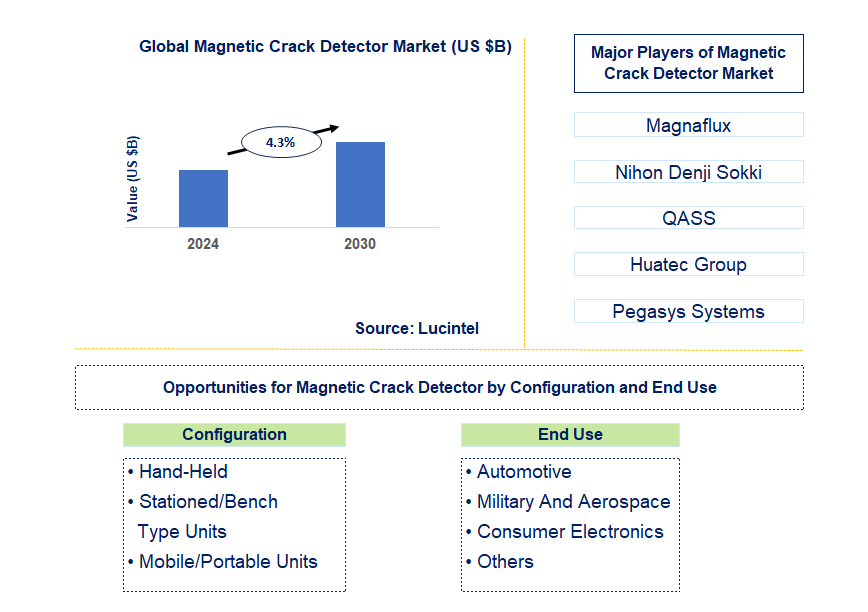
Key data points: The growth forecast = 4.3% annually for the next 6 years. Scroll below to get more insights. This market report covers trends, opportunities, and forecasts in the global magnetic crack detector market to 2030 by configuration (hand-held, stationed/bench type units, and mobile/portable units), end use (automotive, military and aerospace, consumer electronics, and others), and region (North America, Europe, Asia Pacific, and the Rest of the World)
We'll send your sample report shortly.
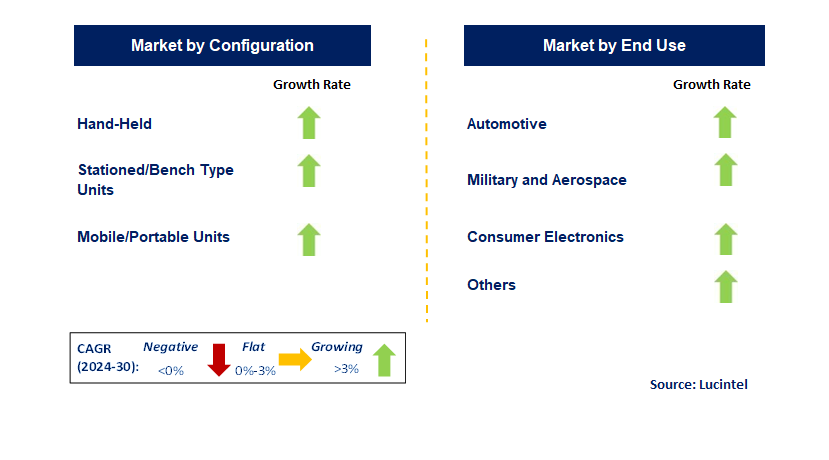
• Lucintel forecasts that, within the configuration category, hand-held will remain the largest segment over the forecast period.
• In terms of regions, APAC will remain the largest region over the forecast period. Gain valuable insights for your business decisions with our comprehensive 150+ page report.
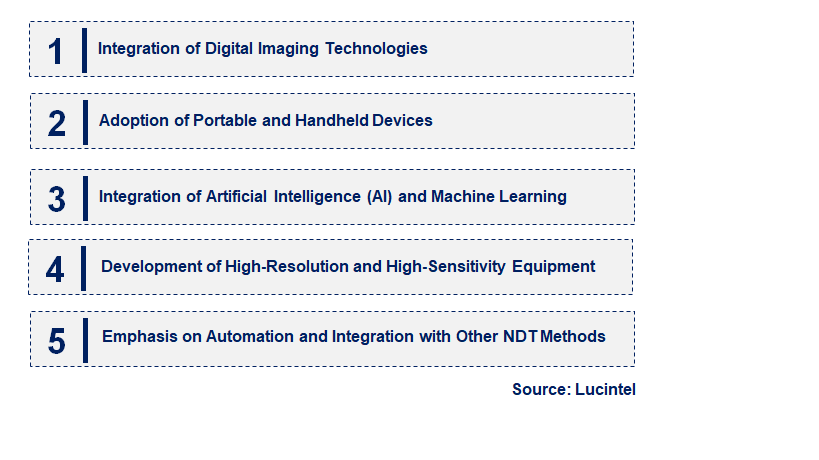
• Integration of Digital Imaging Technologies: Digital imaging technologies are increasingly being integrated into magnetic crack detectors, enhancing defect detection capabilities. Advanced digital systems provide high-resolution images and real-time analysis, allowing for more accurate and detailed inspections. This integration improves the efficiency of inspections by offering clearer visuals and faster data processing, making it easier to identify and assess defects. Digital imaging also facilitates automated reporting and documentation, streamlining the inspection process and reducing manual intervention.
• Adoption of Portable and Handheld Devices: The market is seeing a significant shift toward portable and handheld magnetic crack detectors. These devices offer convenience and flexibility, allowing for on-site and field inspections. Portable units are designed to be lightweight and easy to use while maintaining high performance in detecting defects. Their adaptability makes them ideal for remote locations or complex environments where traditional, larger systems may be impractical. This trend reflects a growing need for mobile solutions that provide effective, real-time inspection capabilities.
• Integration of Artificial Intelligence (AI) and Machine Learning: Artificial Intelligence (AI) and machine learning are increasingly being incorporated into magnetic crack detectors to enhance defect detection and analysis. AI algorithms can automatically identify and categorize defects with high precision, reducing the reliance on manual interpretation and increasing the speed of inspections. Machine learning models improve over time by learning from previous inspection data, leading to progressively better performance. This trend represents a significant advancement toward more intelligent and efficient inspection systems.
• Development of High-Resolution and High-Sensitivity Equipment: There is a growing emphasis on the development of high-resolution and high-sensitivity magnetic crack detectors. These advanced systems are designed to detect smaller and more subtle defects that might be missed by standard equipment. High-resolution detectors provide detailed images and accurate measurements of defects, while high-sensitivity equipment ensures that even minor anomalies are detected. This trend is driven by the need for greater precision in industries such as aerospace and automotive, where defect detection is critical.
• Emphasis on Automation and Integration with Other NDT Methods: The integration of automation and other non-destructive testing (NDT) methods is becoming increasingly important in the magnetic crack detector market. Automated systems streamline the inspection process by minimizing human intervention and enhancing consistency. Combining magnetic particle inspection with techniques like ultrasonic or radiographic testing provides a more comprehensive approach to defect detection. This trend reflects a move toward more integrated and efficient inspection solutions, aimed at improving overall testing accuracy and reliability. The magnetic crack detector market is undergoing significant transformation with trends such as digital imaging integration, the rise of portable devices, AI and machine learning adoption, high-resolution equipment development, and increased automation. These trends collectively enhance the accuracy, efficiency, and flexibility of defect detection methods. As these advancements continue to shape the market, they offer valuable opportunities for improving quality control and safety across various industries. Staying abreast of these trends is crucial for stakeholders to leverage new technologies and maintain competitiveness in the evolving landscape of non-destructive testing.
• Advanced Digital Imaging Integration: The integration of advanced digital imaging technologies into magnetic crack detectors represents a major development. Modern systems now feature high-resolution cameras and digital displays that provide clearer and more detailed images of defects. This enhancement allows for better visualization and analysis of surface cracks and discontinuities. The impact of digital imaging is profound, improving defect detection accuracy and enabling more precise assessments, which is crucial for high-stakes applications such as aerospace and automotive manufacturing.
• Portable and Handheld Devices: The market has seen a rise in the adoption of portable and handheld magnetic crack detectors. These devices offer the advantage of mobility and convenience, making them ideal for field inspections and on-site evaluations. Portable detectors are designed to be lightweight and user-friendly, without compromising performance. This development facilitates easier access to inspection processes in remote or difficult-to-reach locations, enhancing flexibility and operational efficiency across various industries.
• Integration of Artificial Intelligence (AI): The incorporation of artificial intelligence (AI) into magnetic crack detectors is transforming the industry. AI algorithms enable automatic detection, classification, and analysis of defects with high precision. By reducing the reliance on manual interpretation, AI-driven systems streamline the inspection process and improve consistency. The use of AI enhances the capability to identify complex defect patterns and provides predictive analytics, which can lead to proactive maintenance and reduced downtime.
• Enhanced Sensitivity and Resolution: Recent developments have focused on increasing the sensitivity and resolution of magnetic crack detectors. New technologies allow for the detection of finer cracks and smaller defects that previous systems might miss. Enhanced sensitivity ensures that even minor anomalies are identified, improving overall safety and reliability. High-resolution systems provide more detailed defect images, which is essential for applications where precision is critical, such as in high-performance engineering and critical infrastructure inspections.
• Automation and Integration with Other NDT Methods: The trend toward automation and integration with other non-destructive testing (NDT) methods is shaping the magnetic crack detector market. Automated systems reduce the need for manual intervention and improve inspection throughput. Combining magnetic particle inspection with other NDT techniques, such as ultrasonic testing or radiographic inspection, provides a comprehensive approach to detecting and analyzing defects. This integration enhances overall inspection accuracy and efficiency, offering a more robust solution for complex inspection scenarios. The magnetic crack detector market’s advanced digital imaging, portable devices, AI integration, enhanced sensitivity, and automation are significantly impacting the industry. They enhance defect detection capabilities, improve operational efficiency, and expand the range of applications. As these advancements continue to evolve, they address critical industry needs, ensuring higher quality control and safety standards across various sectors. Stakeholders should leverage these developments to stay competitive and meet the growing demands for reliable and efficient non-destructive testing solutions.
• Aerospace Industry: The aerospace industry represents a significant growth opportunity for magnetic crack detectors due to its stringent safety and quality standards. The demand for advanced inspection systems capable of detecting minute defects in aircraft components and structures is growing. Magnetic crack detectors with high sensitivity and resolution are crucial for ensuring the integrity and reliability of aerospace components, driving market growth in this sector.
• Automotive Manufacturing: The automotive industry is another major growth area for magnetic crack detectors. With the increasing complexity of vehicle components and the push for higher safety standards, there is a need for effective inspection solutions. Magnetic crack detectors help ensure the quality and safety of critical automotive parts, such as engine components and chassis, by detecting potential defects before they lead to failures, thus supporting the industry’s expansion and innovation.
• Oil and Gas Industry: The oil and gas industry presents a significant growth opportunity due to its demanding operational environment and the need for reliable equipment. Magnetic crack detectors are essential for inspecting pipelines, tanks, and other infrastructure that must withstand harsh conditions. Enhanced detection capabilities help prevent failures and ensure the safe operation of equipment, making it a key area for market growth as the industry continues to expand and invest in maintenance and safety.
• Infrastructure and Construction: The infrastructure and construction sectors are increasingly adopting magnetic crack detectors to ensure the integrity of critical structures, such as bridges, buildings, and railways. The focus on maintaining safety and quality in construction materials and structures drives demand for effective non-destructive testing methods. Magnetic crack detectors that offer portability and high-resolution inspection capabilities are well-suited to these applications, supporting market growth in this sector.
• Power Generation: The power generation industry, including nuclear and thermal power plants, requires rigorous inspection of components and systems to maintain operational safety and efficiency. Magnetic crack detectors are used to inspect high-stress components, such as reactor vessels and turbine blades, to detect potential defects that could lead to failures. The demand for reliable and accurate inspection tools in power generation drives growth in the magnetic crack detector market, supporting plant maintenance and safety efforts. Strategic growth opportunities in the magnetic crack detector market are evident across key applications such as aerospace, automotive manufacturing, oil and gas, infrastructure, and power generation. These sectors require advanced inspection solutions to ensure safety, quality, and operational efficiency. By addressing the specific needs of each industry and leveraging technological advancements, stakeholders can capitalize on these growth opportunities and drive market expansion.
• Technological Advancements: Innovations such as digital imaging and AI integration are major drivers of the magnetic crack detector market. Modern systems feature high-resolution sensors and sophisticated algorithms that enhance defect detection and analysis. These advancements improve the accuracy and efficiency of inspections, enabling the detection of finer and more complex defects. The continual evolution of technology is driving demand for more advanced magnetic crack detectors, catering to industries with stringent quality and safety requirements.
• Increased Safety and Quality Standards: Growing emphasis on safety and quality control across industries is a significant driver for the magnetic crack detector market. Industries such as aerospace, automotive, and construction are implementing stricter quality assurance measures to prevent failures and ensure the safety of components. Magnetic crack detectors play a crucial role in meeting these standards by providing reliable defect detection. The need to comply with rigorous safety regulations and maintain high-quality production drives the demand for advanced inspection tools.
• Expanding Industrial Applications: The growing range of industrial applications for magnetic crack detectors is fueling market growth. As sectors like oil and gas, power generation, and infrastructure expand, the need for effective non-destructive testing methods increases. Magnetic crack detectors are used to inspect various components and structures, ensuring their integrity and reliability. The diversification of applications and the increasing complexity of industrial components drive the demand for versatile and high-performance detection systems.
• Rising Focus on Preventive Maintenance: There is a growing trend toward preventive maintenance in industrial operations to reduce downtime and extend equipment lifespan. Magnetic crack detectors are integral to preventive maintenance programs, enabling early detection of defects before they lead to major failures. This proactive approach helps organizations minimize repair costs and avoid unplanned outages. The increasing adoption of preventive maintenance strategies across industries is driving the demand for reliable crack detection solutions.
• Enhanced Portability and Ease of Use: Recent developments in portable and handheld magnetic crack detectors are enhancing market appeal. These devices offer greater flexibility for on-site inspections, allowing for real-time analysis and immediate decision-making. The emphasis on ease of use and mobility is driven by the need for efficient inspections in diverse environments. Portable solutions cater to fieldwork requirements and support a broader range of applications, contributing to the market's growth. Challenges in the magnetic crack detector market include:
• Economic Constraints: Budget limitations and cost pressures pose challenges to the magnetic crack detector market. Advanced inspection systems can be expensive, and organizations may struggle to justify the investment, especially in sectors with tight budgets. Cost considerations can impact the adoption of new technologies and limit the market potential for high-end detection solutions. Addressing these economic challenges requires balancing cost with the benefits of improved safety and reliability.
• Regulatory Compliance: Navigating regulatory compliance is a significant challenge for the magnetic crack detector market. Different industries and regions have varying standards and regulations regarding non-destructive testing. Ensuring that detection systems meet these requirements can be complex and time-consuming. Companies must stay updated with evolving regulations and ensure their products comply with industry standards. This regulatory burden can affect product development and market entry, especially for manufacturers operating in multiple jurisdictions.
• Technical Limitations and Training: Technical limitations and the need for specialized training can impact the effectiveness of magnetic crack detectors. Despite technological advancements, challenges such as limitations in detecting certain types of defects or materials remain. Additionally, the proper use and maintenance of advanced detection systems require skilled operators. Ensuring that personnel are adequately trained and that systems are properly maintained is crucial for effective inspection. Addressing these technical and training challenges is essential for maximizing the performance of magnetic crack detectors. The magnetic crack detector market is influenced by several drivers, including technological advancements, increased safety standards, expanding applications, a focus on preventive maintenance, and improved portability. However, challenges such as economic constraints, regulatory compliance, and technical limitations also impact the market. Balancing these drivers and challenges is key for stakeholders aiming to capitalize on growth opportunities while addressing potential obstacles. As the market continues to evolve, addressing these factors will be crucial for sustaining growth and enhancing the effectiveness of magnetic crack detection solutions.
• Magnaflux
• Nihon Denji Sokki
• QASS
• Huatec Group
• Pegasys Systems
• Mayuresh Engineers
• Eastwest Engineering & Electronics
• Hand-Held
• Stationed/Bench Type Units
• Mobile/Portable Units
• Automotive
• Military and Aerospace
• Consumer Electronics
• Others
• North America
• Europe
• Asia Pacific
• The Rest of the World
• United States: In the United States, the magnetic crack detector market is evolving with significant advancements in digital and portable technologies. The integration of digital imaging and enhanced magnetic particle inspection (MPI) systems has improved defect detection accuracy and ease of use. Additionally, the development of user-friendly interfaces and real-time data analysis tools has increased the efficiency of inspections in aerospace, automotive, and manufacturing industries.
• China: China’s magnetic crack detector market is experiencing growth driven by industrial expansion and increased investment in infrastructure projects. Recent developments include the adoption of advanced MPI technologies and automated systems to enhance inspection capabilities. The emphasis is on integrating artificial intelligence (AI) and machine learning algorithms to improve defect detection and analysis. These innovations align with China’s focus on enhancing quality control and safety in its rapidly growing manufacturing and construction sectors.
• Germany: In Germany, the market for magnetic crack detectors is seeing advancements in high-precision and high-resolution systems. Innovations include the development of portable and compact detectors with enhanced sensitivity and the ability to detect smaller defects. Germany’s emphasis on maintaining stringent quality standards in industries such as automotive and aerospace has driven the adoption of cutting-edge NDT technologies. The focus is also on integrating digital solutions and data analytics to streamline inspection processes and improve overall efficiency.
• India: India is witnessing growth in the magnetic crack detector market due to the expansion of its industrial and infrastructure sectors. Recent developments include the introduction of cost-effective and reliable magnetic particle inspection solutions suited to local industry needs.
• Japan: Japan’s magnetic crack detector market is characterized by advancements in miniaturized and high-performance inspection equipment. Innovations include the development of portable devices with advanced imaging capabilities and improved sensitivity for detecting fine cracks. Japan’s focus on high-quality manufacturing and precision engineering drives the adoption of the latest NDT technologies.


• Magnaflux
• Nihon Denji Sokki
• QASS
• Huatec Group
• Pegasys Systems
• Mayuresh Engineers
• Eastwest Engineering & Electronics Q5. Which magnetic crack detector market segment will be the largest in future? Answer: Lucintel forecasts that hand-held will remain the largest segment over the forecast period. Q6. In magnetic crack detector market, which region is expected to be the largest in next 5 years? Answer: In terms of regions, APAC will remain the largest region over the forecast period. Q.7 Do we receive customization in this report? Answer: Yes, Lucintel provides 10% customization without any additional cost.


Choose a license that fits your team. Instant PDF delivery.
Prices exclude taxes. Instant delivery. Custom licensing available on request.
Market Report · July 31, 2026
Market Report · July 31, 2026
Market Report · July 31, 2026
Trusted partner for strategic intelligence and business growth


Receive a complimentary market analysis tailored to your industry. Our analysts will identify key growth opportunities and competitive dynamics specific to your business.

Market size, growth rate, and key trend analysis for your specific sector.

Top competitor positioning and market share analysis.

Strategic recommendations backed by data-driven insights.
Get curated market intelligence and competitive moves straight to your inbox.
By subscribing, you agree to receive our monthly insights. Unsubscribe anytime.
Receive a complimentary market analysis tailored to your industry. Our analysts will identify key growth opportunities and competitive dynamics specific to your business.
Market size, growth rate, and key trend analysis for your specific sector.
Top competitor positioning and market share analysis.
Strategic recommendations backed by data-driven insights.
Get curated market intelligence, emerging trends, and competitive moves straight to your inbox each month.
By subscribing, you agree to receive our monthly insights. Unsubscribe anytime.
We'll send your sample report shortly.