
Market Report · July 20, 2026

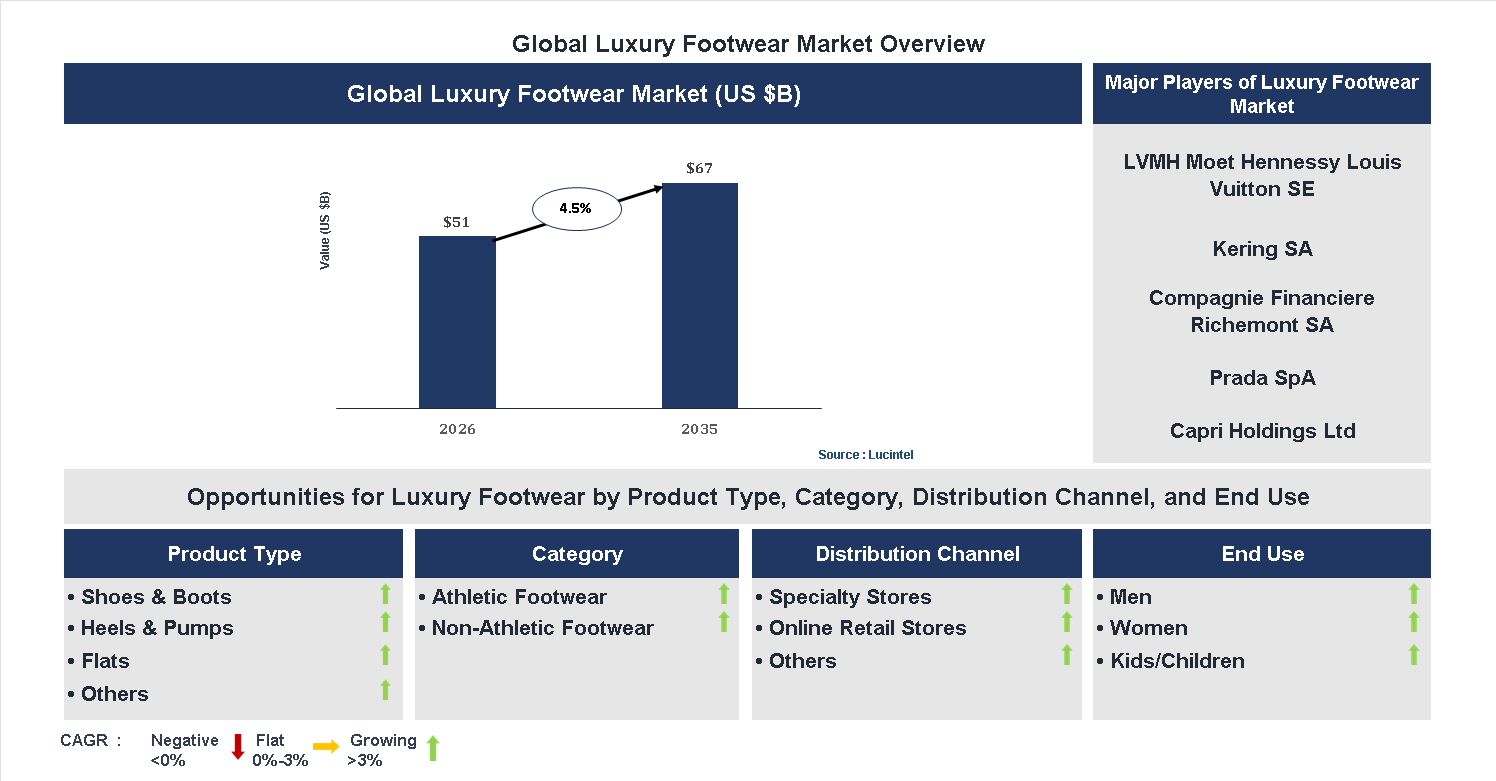
Key data points: The market size in 2035 = $67 billion, growth forecast = 4.5% annually for the next 8 years. Scroll below to get more insights. This market report covers trends, opportunities and forecasts in luxury footwear market to 2035 by product type (shoes & boots, heels & pumps, flats, and others), category (athletic footwear and non-athletic footwear), distribution channel (specialty stores, online retail stores, and others), end use (men, women, and kids/children), and region (North America, Europe, Asia Pacific, and the Rest of the World)
We'll send your sample report shortly.
• Lucintel forecasts that, within the product type category, shoe & boot is expected to witness the highest growth over the forecast period.
• Within the distribution channel category, specialty store is expected to witness the highest growth.
• In terms of region, APAC is expected to witness the highest growth over the forecast period. Gain valuable insights for your business decisions with our comprehensive 150+ page report. Sample figures with some insights are shown below.
• Digital Customization and Virtual Fitting: The rise of augmented reality (AR) and virtual try-on tools allows consumers to personalize footwear and visualize products before purchase. This enhances the shopping experience, reduces return rates, and caters to the demand for unique, bespoke products. Brands are investing heavily in digital platforms to offer seamless customization options, making luxury footwear more accessible and engaging for tech-savvy consumers. This trend fosters stronger brand loyalty and attracts a younger demographic eager for personalized luxury experiences.
• Sustainability and Eco-Friendly Materials: Consumers are increasingly prioritizing sustainability, prompting brands to adopt eco-friendly materials such as recycled leather, plant-based dyes, and biodegradable soles. This shift aligns with global environmental concerns and enhances brand reputation. Luxury brands are also transparent about their supply chains and sustainability initiatives, appealing to ethically conscious buyers. The integration of sustainable practices not only reduces environmental impact but also differentiates brands in a competitive market, driving innovation in material sourcing and manufacturing processes.
• Rise of Direct-to-Consumer (DTC) Channels: More luxury footwear brands are bypassing traditional retail channels to sell directly through their websites and flagship stores. This approach allows for better control over brand messaging, customer data, and profit margins. DTC channels enable personalized marketing and faster response to consumer trends, fostering stronger relationships with customers. The shift also supports the growth of online sales, which has become especially significant amid changing shopping behaviors influenced by the pandemic.
• Integration of Wearable Technology: The incorporation of smart features such as fitness tracking, heating elements, and customizable lighting is gaining traction in luxury footwear. This fusion of fashion and technology offers consumers innovative functionalities while maintaining aesthetic appeal. Wearable tech enhances user experience, promotes health and wellness, and positions brands at the forefront of innovation. As technology advances, luxury footwear is expected to become more interactive, blending style with utility in ways that appeal to modern consumers.
• Focus on Sustainability and Ethical Production: Consumers are demanding transparency and ethical practices in manufacturing. Brands are adopting fair labor policies, reducing carbon footprints, and ensuring ethical sourcing of materials. This focus on social responsibility enhances brand image and appeals to ethically minded buyers. Ethical production practices are becoming a key differentiator, influencing purchasing decisions and fostering long-term loyalty. As awareness grows, companies investing in responsible manufacturing are gaining competitive advantage in the luxury footwear market. These trends are fundamentally reshaping the luxury footwear market by emphasizing personalization, sustainability, technological integration, and ethical practices. They are driving innovation, enhancing consumer engagement, and creating new opportunities for brands to differentiate themselves. As these developments continue to evolve, the market is becoming more dynamic, competitive, and aligned with the values of modern consumers, ensuring sustained growth and transformation in the luxury footwear industry.

• Innovation in Sustainable Materials: Adoption of eco-friendly materials like recycled leather and plant-based alternatives is transforming production, appealing to environmentally conscious consumers. This shift enhances brand reputation and aligns with global sustainability goals, fostering loyalty and attracting new demographics. The integration of sustainable practices is also driving cost efficiencies and reducing environmental impact, positioning brands as responsible leaders in the luxury footwear sector.
• Digital Transformation and E-Commerce Growth: The rise of online platforms and virtual showrooms is expanding market reach and providing personalized shopping experiences. Brands are leveraging augmented reality and AI to enhance customer engagement, making luxury footwear more accessible globally. This digital shift is increasing sales channels, reducing reliance on physical stores, and enabling brands to gather valuable consumer data for targeted marketing strategies.
• Customization and Personalization Trends: Increasing demand for bespoke footwear options is encouraging brands to offer tailored designs, materials, and fit. Advanced manufacturing techniques like 3D printing facilitate rapid customization, elevating customer satisfaction and exclusivity. This trend strengthens brand loyalty, allows premium pricing, and differentiates products in a competitive market, catering to consumers seeking unique, handcrafted luxury items.
• Expansion into Emerging Markets: Growing affluence in regions like Asia-Pacific and the Middle East presents significant growth opportunities. Luxury footwear brands are establishing local boutiques and partnerships to tap into these markets. This expansion enhances brand visibility, diversifies revenue streams, and adapts offerings to regional preferences, ultimately driving global market growth and increasing competitive dynamics.
• Focus on Craftsmanship and Heritage: Emphasizing artisanal techniques and brand history appeals to consumers valuing authenticity and tradition. Investments in skilled craftsmanship and storytelling reinforce brand prestige and justify premium pricing. This focus fosters emotional connections, preserves cultural heritage, and differentiates brands in a crowded marketplace, contributing to sustained growth and customer loyalty. The recent developments in sustainable practices, digital innovation, customization, emerging market expansion, and craftsmanship are collectively transforming the luxury footwear market. These opportunities are driving growth, enhancing consumer engagement, and strengthening brand positioning, ultimately shaping a more dynamic, competitive, and sustainable industry landscape.
• Expansion into Emerging Markets: Entering developing regions such as Asia-Pacific and Africa presents significant growth potential due to rising affluence and changing consumer preferences. Luxury footwear brands can tailor products to local tastes, establish flagship stores, and leverage e-commerce platforms to reach a broader audience. This strategic move allows brands to diversify revenue streams, build brand recognition, and establish a foothold in high-growth areas, ultimately driving global market expansion.
• Integration of Sustainable and Eco-Friendly Materials: Incorporating sustainable materials and eco-conscious manufacturing processes appeals to environmentally aware consumers. Brands investing in biodegradable leathers, recycled fabrics, and ethical sourcing can differentiate themselves in a competitive market. This approach not only enhances brand reputation but also aligns with global sustainability trends, attracting a new segment of conscious buyers willing to pay premium prices for environmentally responsible products.
• Adoption of innovative Design and Customization Options: Offering personalized and bespoke footwear experiences caters to the growing demand for exclusivity and individual expression. Advanced manufacturing technologies like 3D printing and digital fitting tools enable brands to deliver tailored products efficiently. Customization enhances customer engagement, fosters brand loyalty, and allows premium pricing, positioning brands as leaders in innovation and craftsmanship within the luxury footwear segment.
• Leveraging Digital Channels and E-commerce Growth: Strengthening online presence through sophisticated e-commerce platforms and digital marketing strategies is crucial for reaching tech-savvy consumers. Virtual try-ons, augmented reality, and seamless online shopping experiences improve customer satisfaction. Digital channels also facilitate direct-to-consumer sales, reduce reliance on brick-and-mortar stores, and enable brands to gather valuable consumer data, fueling targeted marketing and personalized offerings.
• Collaborations and Limited-Edition Collections: Partnering with designers, celebrities, or artists to create exclusive collections boosts brand visibility and desirability. Limited editions generate buzz, attract collectors, and command higher price points. These collaborations foster innovation, expand brand reach into new demographics, and create a sense of urgency among consumers, ultimately driving sales and reinforcing the brand’s position as a leader in luxury footwear. The overall landscape of the luxury footwear market is poised for substantial growth as brands capitalize on emerging opportunities. Strategic expansion, sustainability, innovation, digital transformation, and exclusive collaborations will shape future success. Embracing these opportunities enables brands to strengthen their market position, meet evolving consumer expectations, and sustain long-term growth in a competitive environment.
• Technological Innovation: The integration of advanced manufacturing techniques, such as 3D printing and AI-driven design, enables brands to create bespoke, high-quality products efficiently. These innovations reduce production costs, enhance customization options, and accelerate time-to-market, appealing to luxury consumers seeking exclusivity and personalization. Moreover, digital tools facilitate virtual try-ons and augmented reality experiences, enriching customer engagement and driving sales. As technology continues to evolve, luxury brands can differentiate themselves through innovative offerings, fostering brand loyalty and expanding market share.
• Rising Disposable Income and Wealth Concentration: Increasing disposable incomes among affluent consumers, especially in emerging markets, fuel demand for luxury footwear. Wealth concentration in regions like Asia-Pacific and the Middle East creates a burgeoning customer base willing to invest in premium products. This economic prosperity allows consumers to prioritize quality, craftsmanship, and brand prestige, boosting sales of high-end footwear. Additionally, the aspirational value associated with luxury brands encourages consumers to upgrade their footwear collections, further driving market growth.
• E-commerce and Digital Penetration: The rapid expansion of online retail channels has transformed how consumers access luxury footwear. E-commerce platforms offer convenience, a wider product selection, and access to global brands, attracting a broader customer base. Digital marketing strategies, including social media influencers and targeted advertising, enhance brand visibility and engagement. Virtual showrooms and online customization tools provide personalized shopping experiences, increasing conversion rates. As digital penetration deepens, brands that effectively leverage online channels can capture new markets and sustain growth amid changing consumer behaviors.
• Sustainability and Ethical Sourcing: Growing awareness of environmental and social issues influences consumer preferences toward sustainable luxury footwear. Brands adopting eco-friendly materials, ethical manufacturing practices, and transparent supply chains appeal to conscientious consumers. Certification standards and eco-labels serve as trust signals, enhancing brand reputation. Emphasizing sustainability not only aligns with regulatory trends but also differentiates brands in a competitive market. As consumers increasingly prioritize responsible consumption, integrating sustainability into product development becomes a strategic imperative for market players.
• Brand Heritage and Craftsmanship: The legacy, craftsmanship, and exclusivity associated with luxury footwear remain vital drivers. Consumers seek products that embody tradition, quality, and uniqueness. Brands leveraging their heritage through storytelling and limited editions foster emotional connections and perceived value. Skilled artisans and bespoke services reinforce the premium nature of offerings, encouraging repeat purchases and brand loyalty. This focus on craftsmanship sustains demand for high-end footwear, especially among discerning buyers who value authenticity and heritage. The challenges facing the luxury footwear market include:
• Economic Uncertainty and Market Volatility: Fluctuations in global economic conditions, such as recessions, inflation, and currency fluctuations, pose significant risks. Reduced consumer spending power can lead to decreased demand for luxury footwear, especially in price-sensitive markets. Economic instability also affects supply chains, increasing costs and lead times. Brands must navigate these uncertainties by diversifying markets and maintaining flexible operations to sustain profitability during downturns.
• Counterfeit Products and Brand Dilution: The proliferation of counterfeit luxury footwear undermines brand integrity and erodes market share. Fake products often flood online marketplaces, damaging consumer trust and reducing sales of authentic items. Combating counterfeiting requires significant investment in legal actions, authentication technologies, and consumer education. Additionally, brand dilution from unauthorized outlets or overexposure can diminish exclusivity, impacting perceived value and pricing power.
• Regulatory and Sustainability Compliance: Increasing regulations related to environmental standards, labor practices, and import-export policies challenge brands to adapt swiftly. Compliance costs can be substantial, especially for small and medium-sized enterprises. Failure to meet evolving standards risks legal penalties, reputational damage, and market restrictions. Balancing sustainability commitments with profitability requires strategic planning and investment in sustainable materials and processes, which may initially increase costs but are essential for long-term viability. The luxury footwear market is driven by technological innovation, economic growth, digital expansion, sustainability efforts, and brand heritage. However, it faces challenges from economic fluctuations, counterfeit issues, and regulatory pressures. These factors collectively influence market dynamics, requiring brands to innovate, adapt, and uphold high standards to sustain growth. Successfully navigating these drivers and challenges will determine the market’s resilience and future trajectory, with opportunities for differentiation and expansion amid evolving consumer expectations.
• LVMH Moet Hennessy Louis Vuitton SE
• Kering SA
• Compagnie Financiere Richemont SA
• Prada SpA
• Capri Holdings Ltd
• Burberry Group plc
• Tapestry Inc.
• Salvatore Ferragamo SpA
• TODS SpA
• Dr. Martens plc
• Shoes & Boots
• Heels & Pumps
• Flats
• Others
• Athletic Footwear
• Non-Athletic Footwear
• Specialty Stores
• Online Retail Stores
• Others
• Men
• Women
• Kids/Children
• North America
• Europe
• Asia Pacific
• The Rest of the World
• United States: The US luxury footwear market has seen a surge in online sales, driven by increased digital adoption and e-commerce platforms. Brands are emphasizing sustainability and ethical sourcing to appeal to eco-conscious consumers. Customization options and limited-edition releases are gaining popularity, enhancing brand loyalty. Additionally, collaborations with designers and celebrities are boosting market visibility. The market is also witnessing a shift towards athleisure-inspired luxury footwear, blending comfort with style. Overall, innovation in materials and marketing strategies is fueling growth in this competitive landscape.
• China: China remains a dominant force in the luxury footwear market, with rapid urbanization and rising disposable incomes fueling demand. Digital channels, especially social media and live-streaming platforms, are crucial for marketing and sales. Local consumers are increasingly seeking exclusivity and personalized products, prompting brands to offer bespoke services. Domestic brands are gaining ground alongside international players, leveraging local culture and craftsmanship. The market is also witnessing a focus on sustainability and eco-friendly materials, aligning with global trends. Luxury footwear brands are expanding their retail presence through flagship stores and online platforms to capture the growing middle and upper class.
• Germany: The German luxury footwear market is characterized by a strong emphasis on quality, craftsmanship, and sustainability. Consumers prefer durable, ethically produced products, prompting brands to adopt eco-friendly manufacturing practices. Digital innovation, including virtual try-ons and augmented reality shopping experiences, is enhancing customer engagement. The market also shows a preference for minimalist and classic designs, reflecting German aesthetic sensibilities. E-commerce growth is steady, with brands investing in seamless online shopping experiences. Overall, the market is driven by a combination of tradition and innovation, catering to a sophisticated and environmentally conscious clientele.
• India: The luxury footwear market in India is expanding rapidly, fueled by increasing urbanization and a burgeoning middle class with rising disposable incomes. Consumers are increasingly seeking premium and designer footwear that reflects status and style. E-commerce platforms are playing a vital role in market penetration, especially among younger demographics. Local craftsmanship and traditional designs are being integrated into modern luxury footwear, creating a unique blend of heritage and contemporary fashion. Brands are also focusing on affordability and accessibility, with entry-level luxury options gaining popularity. The market is poised for continued growth as luxury consumption becomes more mainstream.
• Japan: Japans luxury footwear market is driven by a strong culture of fashion and craftsmanship. Consumers value high-quality materials, innovative designs, and brand heritage. The market is witnessing a rise in collaborations between luxury brands and local designers, blending traditional Japanese aesthetics with modern trends. Digital marketing and online shopping are increasingly important, especially among younger consumers. Sustainability and eco-conscious products are gaining traction, aligning with Japans environmental values. Limited editions and exclusive releases are popular, fostering a sense of uniqueness. Overall, the market remains sophisticated, with a focus on craftsmanship, innovation, and cultural resonance.


• LVMH Moet Hennessy Louis Vuitton SE
• Kering SA
• Compagnie Financiere Richemont SA
• Prada SpA
• Capri Holdings Ltd
• Burberry Group plc
• Tapestry Inc.
• Salvatore Ferragamo SpA
• TODS SpA
• Dr. Martens plc Q6. Which luxury footwear market segment will be the largest in future? Answer: Lucintel forecasts that, within the product type category, shoe & boot is expected to witness the highest growth over the forecast period. Q7. In luxury footwear market, which region is expected to be the largest in next 5 years? Answer: In terms of region, APAC is expected to witness the highest growth over the forecast period. Q8. Do we receive customization in this report? Answer: Yes, Lucintel provides 10% customization without any additional cost.


Choose a license that fits your team. Instant PDF delivery.
Prices exclude taxes. Instant delivery. Custom licensing available on request.
Market Report · July 20, 2026
Market Report · July 15, 2026
Market Report · July 15, 2026
Trusted partner for strategic intelligence and business growth


Receive a complimentary market analysis tailored to your industry. Our analysts will identify key growth opportunities and competitive dynamics specific to your business.

Market size, growth rate, and key trend analysis for your specific sector.

Top competitor positioning and market share analysis.

Strategic recommendations backed by data-driven insights.
Get curated market intelligence and competitive moves straight to your inbox.
By subscribing, you agree to receive our monthly insights. Unsubscribe anytime.
Receive a complimentary market analysis tailored to your industry. Our analysts will identify key growth opportunities and competitive dynamics specific to your business.
Market size, growth rate, and key trend analysis for your specific sector.
Top competitor positioning and market share analysis.
Strategic recommendations backed by data-driven insights.
Get curated market intelligence, emerging trends, and competitive moves straight to your inbox each month.
By subscribing, you agree to receive our monthly insights. Unsubscribe anytime.
We'll send your sample report shortly.