
Report Feature
Luminescent Substrate Market Trends and Forecast
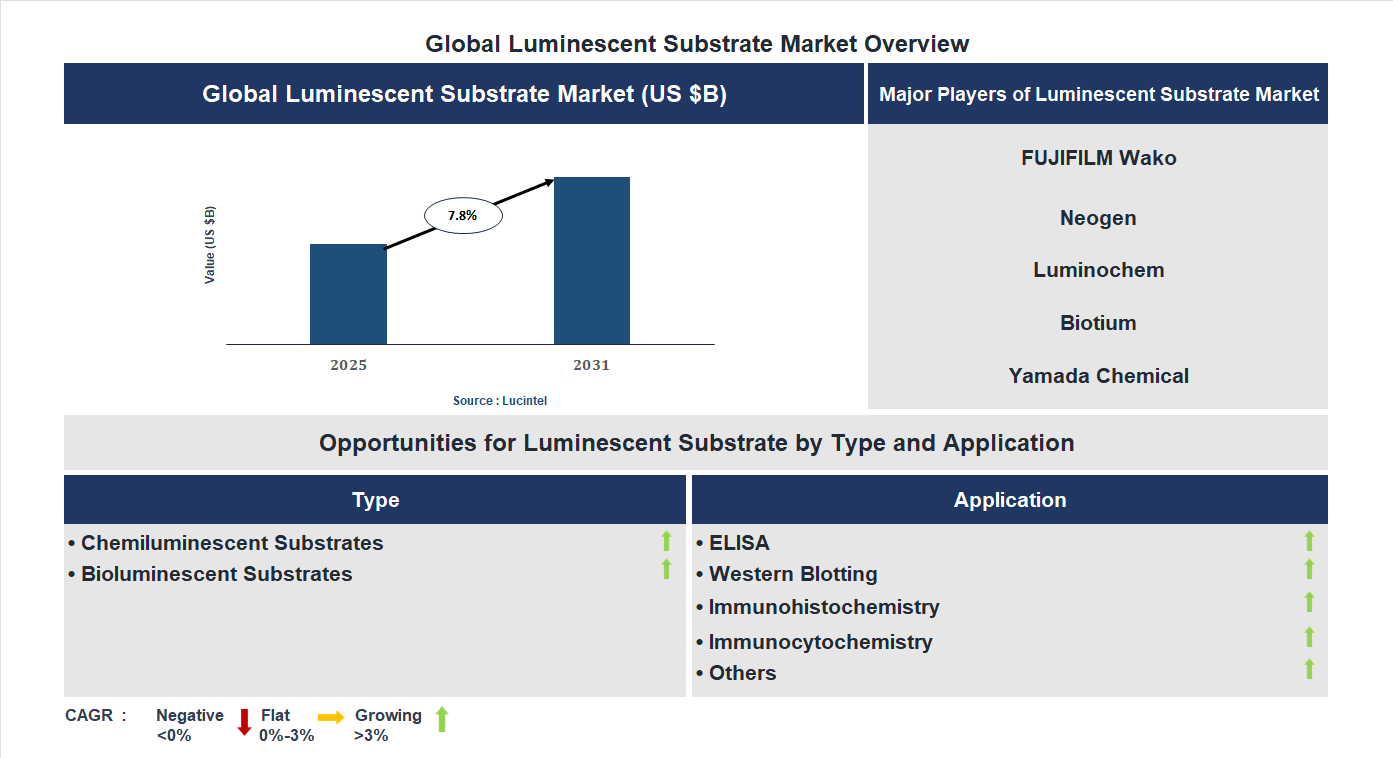
The future of the global luminescent substrate market looks promising with opportunities in the ELISA, western blotting, immunohistochemistry, and immunocytochemistry markets. The global luminescent substrate market is expected to grow with a CAGR of 7.8% from 2025 to 2031. The major drivers for this market are the increasing use in drug discovery research, the rising demand for high sensitivity assays, and the growing adoption in diagnostic testing applications.• Lucintel forecasts that, within the type category, bioluminescent substrate is expected to witness higher growth over the forecast period.
• Within the application category, western blotting is expected to witness the highest growth.
• In terms of region, APAC is expected to witness the highest growth over the forecast period. Gain valuable insights for your business decisions with our comprehensive 150+ page report. Sample figures with some insights are shown below.
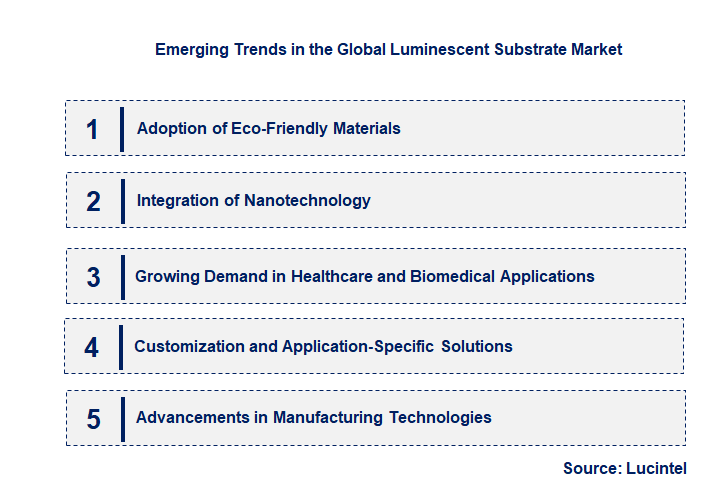
Emerging Trends in the Luminescent Substrate Market
The luminescent substrate market is experiencing rapid growth driven by technological advancements and increasing demand across various industries such as electronics, healthcare, and lighting. As applications become more sophisticated, market players are focusing on innovation, sustainability, and customization. These developments are shaping the future landscape of luminescent substrates, making them more efficient, eco-friendly, and versatile. The following key trends highlight the major shifts influencing this market, reflecting its dynamic nature and potential for continued expansion.• Adoption of Eco-Friendly Materials: The market is shifting towards sustainable luminescent substrates made from environmentally friendly materials. This trend is driven by increasing environmental regulations and consumer demand for green products. Manufacturers are investing in biodegradable and non-toxic components to reduce ecological impact, which enhances brand reputation and compliance. The move towards eco-friendly substrates also opens new opportunities in markets with strict environmental standards, fostering innovation in material science and expanding the application scope of luminescent substrates.
• Integration of Nanotechnology: Nanotechnology is playing a crucial role in enhancing the performance of luminescent substrates. By incorporating nanomaterials, manufacturers can improve brightness, energy efficiency, and durability. This trend enables the development of highly sensitive sensors, advanced display technologies, and efficient lighting solutions. The integration of nanotech also allows for miniaturization and customization, making luminescent substrates suitable for a broader range of high-tech applications. As research progresses, nanotechnology is expected to unlock new functionalities and improve overall market competitiveness.
• Growing Demand in Healthcare and Biomedical Applications: The healthcare sector is increasingly utilizing luminescent substrates for diagnostics, imaging, and therapeutic purposes. These substrates enable high-resolution imaging and targeted drug delivery, improving patient outcomes. The trend is driven by advancements in biocompatible materials and the need for non-invasive diagnostic tools. As biomedical research expands, the demand for innovative luminescent substrates is expected to rise, creating new revenue streams and fostering cross-industry collaborations. This growth is transforming the market into a vital component of modern healthcare solutions.
• Customization and Application-Specific Solutions: Market players are focusing on developing tailored luminescent substrates to meet specific industry needs. Customization involves adjusting properties such as emission wavelength, brightness, and form factor to suit particular applications like flexible electronics, wearable devices, or industrial sensors. This trend enhances product relevance and performance, enabling companies to differentiate themselves. The demand for application-specific solutions is driving innovation and collaboration across sectors, leading to a more diverse and adaptable market landscape that can cater to emerging technological requirements.
• Advancements in Manufacturing Technologies: Innovations in manufacturing processes, such as additive manufacturing and roll-to-roll printing, are revolutionizing the production of luminescent substrates. These technologies enable cost-effective, scalable, and precise fabrication, reducing time-to-market and enabling rapid prototyping. Improved manufacturing methods also facilitate the creation of complex, multi-layered substrates with enhanced functionalities. As these technologies mature, they will lower barriers to entry for new players and support mass production, thereby accelerating market growth and expanding the availability of advanced luminescent substrates across various industries. In summary, these emerging trends are collectively reshaping the luminescent substrate market by fostering sustainability, technological innovation, and application diversity. They are enabling the development of more efficient, customizable, and environmentally friendly products, which in turn is driving market expansion and opening new avenues for growth across multiple sectors.
Recent Development in the Luminescent Substrate Market
The luminescent substrate market has experienced significant growth driven by technological advancements and increasing demand across various industries such as electronics, healthcare, and lighting. Innovations in material science and manufacturing processes have expanded the applications and improved the performance of luminescent substrates. Additionally, rising investments in research and development are fostering new product launches and market expansion. The markets evolution is also influenced by environmental regulations and the need for energy-efficient solutions. These developments collectively shape the competitive landscape, offering new opportunities and challenges for industry players. Understanding these key trends is essential for stakeholders aiming to capitalize on emerging market potentials.• Technological Innovations: Development of high-efficiency luminescent materials has enhanced substrate performance, leading to improved brightness and longevity. This innovation has expanded applications in display technologies and lighting, boosting market growth and competitiveness.
• Environmental Regulations: Stricter environmental standards have prompted manufacturers to adopt eco-friendly materials and processes. This shift has increased R&D investments in sustainable luminescent substrates, influencing product development and market dynamics.
• Expansion in Healthcare Applications: The use of luminescent substrates in bio-imaging and diagnostics has surged, driven by advancements in medical technology. This growth has opened new revenue streams and increased market demand for specialized substrates.
• Growing Electronics Industry: The proliferation of LED displays, sensors, and other electronic devices has increased demand for luminescent substrates. This trend supports market expansion, especially in consumer electronics and automotive sectors.
• Strategic Partnerships and Mergers: Companies are forming alliances and acquiring smaller firms to enhance technological capabilities and expand product portfolios. These strategic moves are fostering innovation and consolidating market position. The recent developments in the luminescent substrate market are significantly impacting its growth trajectory. Technological advancements and environmental compliance are driving innovation and sustainability. The expansion into the healthcare and electronics sectors is broadening market applications and increasing demand. Strategic collaborations are strengthening industry competitiveness. Overall, these trends are fostering a dynamic, innovative, and sustainable market environment, promising continued growth and diversification in the coming years.
Strategic Growth Opportunities in the Luminescent Substrate Market
The luminescent substrate market is experiencing rapid growth driven by technological advancements and increasing demand across various industries. As applications diversify, key growth opportunities are emerging that can significantly influence market dynamics. These opportunities are driven by innovations in materials, expanding industrial applications, and the need for more efficient, sustainable solutions. Companies that capitalize on these trends can gain competitive advantages and expand their market share. Understanding these growth opportunities is essential for stakeholders aiming to leverage emerging trends and optimize their strategies in this evolving landscape.• Consumer Electronics: The demand for brighter, more energy-efficient screens in smartphones, tablets, and TVs is fueling the development of advanced luminescent substrates. These substrates enhance display quality, reduce power consumption, and enable flexible designs, thereby driving innovation and market growth in consumer electronics.
• Automotive Industry: Luminescent substrates are increasingly used in automotive lighting, dashboards, and infotainment systems. Their ability to improve visibility, durability, and energy efficiency supports the shift toward smarter, more sustainable vehicles, opening new revenue streams for manufacturers.
• Healthcare and Medical Devices: The unique properties of luminescent substrates are being harnessed for medical imaging, biosensors, and diagnostic devices. This application enhances sensitivity and accuracy, contributing to better patient outcomes and expanding the market within healthcare sectors.
• Industrial Manufacturing: The industrial sector is adopting luminescent substrates for LED lighting, signage, and safety indicators. Their durability and efficiency improve operational safety and energy savings, fostering growth in industrial applications.
• Renewable Energy: Luminescent substrates are being explored for use in solar panels and energy harvesting devices. Their ability to convert and transfer light efficiently supports the development of sustainable energy solutions, presenting significant growth potential. In summary, these growth opportunities are transforming the luminescent substrate market by expanding its application scope, enhancing product performance, and promoting sustainability. As industries adopt these innovative solutions, market growth accelerates, creating new avenues for investment and technological development.
Luminescent Substrate Market Driver and Challenges
The luminescent substrate market is influenced by a variety of technological, economic, and regulatory factors that shape its growth trajectory. Advances in optoelectronic devices, increasing demand for high-performance display technologies, and stringent environmental regulations are key drivers. Additionally, economic shifts affecting manufacturing costs and global supply chains impact market dynamics. Regulatory policies aimed at reducing hazardous substances further influence product development and adoption. These factors collectively create opportunities and challenges that determine the markets evolution, requiring stakeholders to adapt to rapid technological innovations and changing regulatory landscapes to maintain competitiveness and meet consumer demands. The factors responsible for driving the luminescent substrate market include:-• Technological Innovation: The continuous development of advanced luminescent materials and substrate technologies enhances device performance, efficiency, and durability. Innovations such as quantum dot-based substrates and flexible luminescent materials are expanding application possibilities in displays, lighting, and biomedical fields. These technological advancements enable manufacturers to produce more vibrant, energy-efficient, and versatile products, fueling market growth. As research progresses, the integration of smart and adaptive luminescent substrates is expected to further revolutionize the industry, attracting investments and expanding market reach.
• Growing Demand for Display Technologies: The proliferation of smartphones, tablets, televisions, and wearable devices has significantly increased the demand for high-quality display components. Luminescent substrates are critical in improving display brightness, color accuracy, and energy efficiency. The rise of OLED and micro-LED displays relies heavily on advanced luminescent substrates, driving market expansion. Additionally, the increasing adoption of large-format displays in the advertising and entertainment sectors further boosts demand. This trend is supported by consumer preferences for immersive visual experiences, prompting manufacturers to innovate and invest in superior luminescent substrate solutions.
• Environmental Regulations and Sustainability: Stringent environmental policies worldwide are compelling manufacturers to develop eco-friendly luminescent substrates that are free from hazardous substances like heavy metals. Regulations such as RoHS and REACH influence material selection and manufacturing processes, encouraging the adoption of sustainable and recyclable substrates. These regulations not only promote environmental responsibility but also open new market opportunities for companies offering compliant products. The push for greener solutions accelerates research into biodegradable and low-impact luminescent materials, shaping the future landscape of the market.
• Economic Factors and Supply Chain Dynamics: Fluctuations in raw material prices, manufacturing costs, and global supply chain disruptions significantly impact the luminescent substrate market. Economic downturns can reduce consumer spending on electronic devices, thereby affecting demand. Conversely, investments in semiconductor and display manufacturing infrastructure can stimulate growth. Supply chain challenges, such as shortages of rare earth elements and logistical delays, can hinder production and increase costs. Companies that effectively manage these economic and logistical factors gain a competitive edge, while instability can lead to market volatility and delayed product launches. The challenges facing this Market include:-
• Technological Complexity and High R&D Costs: Developing innovative luminescent substrates involves complex research and substantial investment in R&D. The high costs associated with material development, testing, and scaling up production can be prohibitive, especially for smaller players. Additionally, rapid technological changes require continuous innovation, which can strain resources and extend product development timelines. This complexity can slow market adoption and limit entry barriers, making it challenging for new entrants to compete effectively while maintaining profitability.
• Regulatory Compliance and Environmental Concerns: While regulations promote sustainability, they also pose compliance challenges. Manufacturers must navigate a complex web of international standards, which can vary significantly across regions. Ensuring products meet all environmental and safety standards increases costs and delays time-to-market. Non-compliance risks legal penalties and damage to brand reputation. The evolving regulatory landscape demands ongoing adjustments in materials and processes, adding to operational complexities and financial burdens for companies operating in this market.
• Market Fragmentation and Intense Competition: The luminescent substrate market is highly fragmented with numerous regional and global players competing for market share. Intense competition drives price wars, reducing profit margins and pressuring companies to innovate continuously. Differentiating products in a crowded marketplace is challenging, especially as technological standards converge. Market fragmentation also complicates distribution channels and customer relationships, requiring strategic collaborations and investments to establish a strong market presence. This competitive environment necessitates agility and innovation to sustain growth and profitability. In summary, the luminescent substrate market is shaped by rapid technological advancements, increasing demand for high-quality display solutions, and stringent environmental regulations. While these drivers create significant growth opportunities, challenges such as high R&D costs, regulatory compliance, and market fragmentation pose hurdles. The overall impact is a dynamic landscape requiring continuous innovation, strategic adaptation, and sustainable practices. Companies that effectively navigate these factors can capitalize on emerging trends, ensuring long-term growth and competitiveness in this evolving industry.
List of Luminescent Substrate Companies
Companies in the market compete on the basis of product quality offered. Major players in this market focus on expanding their manufacturing facilities, R&D investments, infrastructural development, and leverage integration opportunities across the value chain. With these strategies luminescent substrate companies cater increasing demand, ensure competitive effectiveness, develop innovative products & technologies, reduce production costs, and expand their customer base. Some of the luminescent substrate companies profiled in this report include-• FUJIFILM Wako
• Neogen
• Luminochem
• Biotium
• Yamada Chemical
• Hyasen Biotech
• R&D Systems
• BosterBio
• Advansta
• AAT Bioquest
Luminescent Substrate Market by Segment
The study includes a forecast for the global luminescent substrate market by type, application, and region.Luminescent Substrate Market by Type [Value from 2019 to 2031]:
• Chemiluminescent Substrates
• Bioluminescent Substrates
Luminescent Substrate Market by Application [Value from 2019 to 2031]:
• ELISA
• Western Blotting
• Immunohistochemistry
• Immunocytochemistry
• Others
Luminescent Substrate Market by Region [Value from 2019 to 2031]:
• North America
• Europe
• Asia Pacific
• The Rest of the World
Country Wise Outlook for the Luminescent Substrate Market
The luminescent substrate market has experienced significant growth driven by advancements in biotechnology, medical diagnostics, and environmental monitoring. As industries seek more sensitive and efficient detection methods, innovations in substrate materials and manufacturing processes have emerged globally. Countries are investing in research and development to enhance product performance, reduce costs, and expand applications across healthcare, industrial, and research sectors. The competitive landscape is evolving with new entrants and collaborations, reflecting a dynamic market environment. These developments are shaping the future of luminescent substrates, making them more accessible and versatile for various scientific and commercial uses.• United States: The US market has seen substantial innovation in luminescent substrates, particularly driven by the biotech and pharmaceutical sectors. Companies are developing highly sensitive, stable substrates for advanced diagnostic tests and imaging applications. There is also increased investment in R&D to improve substrate efficiency and reduce costs. The adoption of luminescent substrates in clinical laboratories and research institutions continues to grow, supported by regulatory approvals and technological breakthroughs. Additionally, collaborations between academia and industry are fostering new product development, positioning the US as a leader in this market.
• China: China has rapidly expanded its luminescent substrate industry, focusing on cost-effective manufacturing and large-scale production. The government’s support for the biotech and healthcare sectors has accelerated market growth. Chinese companies are investing heavily in research to develop innovative substrates with enhanced brightness and stability for use in medical diagnostics and environmental testing. The domestic market is also witnessing increased adoption of luminescent substrates in research and industrial applications, with a growing emphasis on export opportunities. This rapid development is making China a key player in the global luminescent substrate market.
• Germany: Germany remains at the forefront of technological innovation in luminescent substrates, especially within the biomedical and environmental sectors. The country’s strong research infrastructure and collaborations between industry and academia have led to the development of high-performance, durable substrates. German companies are focusing on sustainable manufacturing processes and environmentally friendly materials. The market is also benefiting from EU funding initiatives aimed at advancing scientific research. As a result, Germany continues to contribute significantly to the development of next-generation luminescent substrates with improved sensitivity and application versatility.
• India: India’s luminescent substrate market is experiencing rapid growth driven by increasing demand in healthcare diagnostics, environmental monitoring, and research. The country’s expanding biotech and pharmaceutical industries are adopting luminescent substrates for various applications. Local manufacturers are focusing on developing affordable, high-quality substrates to cater to domestic needs and export markets. Government initiatives supporting innovation and manufacturing are further boosting market growth. The increasing adoption of luminescent substrates in academic and clinical research is also contributing to the market’s expansion, positioning India as an emerging hub for luminescent technology development.
• Japan: Japan continues to innovate in the luminescent substrate market, emphasizing high-performance and miniaturized solutions for medical and industrial applications. The country’s advanced electronics and biotech sectors are integrating luminescent substrates into diagnostic devices, imaging systems, and environmental sensors. Japanese firms are investing in nanotechnology and material science to enhance substrate properties. The market benefits from strong government support for scientific research and development. Japan’s focus on quality and precision ensures the development of reliable, cutting-edge luminescent substrates, maintaining its position as a key player in the global market.

Features of the Global Luminescent Substrate Market
Market Size Estimates: Luminescent substrate market size estimation in terms of value ($B). Trend and Forecast Analysis: Market trends (2019 to 2024) and forecast (2025 to 2031) by various segments and regions. Segmentation Analysis: Luminescent substrate market size by type, application, and region in terms of value ($B). Regional Analysis: Luminescent substrate market breakdown by North America, Europe, Asia Pacific, and Rest of the World. Growth Opportunities: Analysis of growth opportunities in different type, application, and regions for the luminescent substrate market. Strategic Analysis: This includes M&A, new product development, and competitive landscape of the luminescent substrate market. Analysis of competitive intensity of the industry based on Porter’s Five Forces model.
FAQ
Q1. What is the growth forecast for luminescent substrate market? Answer: The global luminescent substrate market is expected to grow with a CAGR of 7.8% from 2025 to 2031. Q2. What are the major drivers influencing the growth of the luminescent substrate market? Answer: The major drivers for this market are the increasing use in drug discovery research, the rising demand for high sensitivity assays, and the growing adoption in diagnostic testing applications. Q3. What are the major segments for luminescent substrate market? Answer: The future of the luminescent substrate market looks promising with opportunities in the ELISA, western blotting, immunohistochemistry, and immunocytochemistry markets. Q4. Who are the key luminescent substrate market companies? Answer: Some of the key luminescent substrate companies are as follows:• FUJIFILM Wako
• Neogen
• Luminochem
• Biotium
• Yamada Chemical
• Hyasen Biotech
• R&D Systems
• BosterBio
• Advansta
• AAT Bioquest Q5. Which luminescent substrate market segment will be the largest in future? Answer: Lucintel forecasts that, within the type category, bioluminescent substrate is expected to witness higher growth over the forecast period. Q6. In luminescent substrate market, which region is expected to be the largest in next 5 years? Answer: In terms of region, APAC is expected to witness the highest growth over the forecast period. Q7. Do we receive customization in this report? Answer: Yes, Lucintel provides 10% customization without any additional cost.
Table of Contents
List of Figures
List of Tables
Methodology
- In-depth interviews of the major players in this market
- Detailed secondary research from competitors’ financial statements and published data
- Extensive searches of published works, market, and database information pertaining to industry news, company press releases, and customer intentions
- A compilation of the experiences, judgments, and insights of Lucintel’s professionals, who have analyzed and tracked this market over the years.


Buy Now
Choose a license that fits your team. Instant PDF delivery.
Prices exclude taxes. Instant delivery. Custom licensing available on request.
Key Questions
- • What are some of the most promising, high-growth opportunities for the luminescent substrate market by type (chemiluminescent substrates and bioluminescent substrates), application (ELISA, western blotting, immunohistochemistry, immunocytochemistry, and others), and region (North America, Europe, Asia Pacific, and the Rest of the World)?
- • Which segments will grow at a faster pace and why?
- • Which region will grow at a faster pace and why?
- • What are the key factors affecting market dynamics? What are the key challenges and business risks in this market?
- • What are the business risks and competitive threats in this market?
- • What are the emerging trends in this market and the reasons behind them?
- • What are some of the changing demands of customers in the market?
- • What are the new developments in the market? Which companies are leading these developments?
- • Who are the major players in this market? What strategic initiatives are key players pursuing for business growth?
- • What are some of the competing products in this market and how big of a threat do they pose for loss of market share by material or product substitution?
- • What M&A activity has occurred in the last 5 years and what has its impact been on the industry? For any questions related to Luminescent Substrate Market, Luminescent Substrate Market Size, Luminescent Substrate Market Growth, Luminescent Substrate Market Analysis, Luminescent Substrate Market Report, Luminescent Substrate Market Share, Luminescent Substrate Market Trends, Luminescent Substrate Market Forecast, Luminescent Substrate Companies, write Lucintel analyst at email: helpdesk@lucintel.com. We will be glad to get back to you soon.


