
Market Report · July 17, 2026

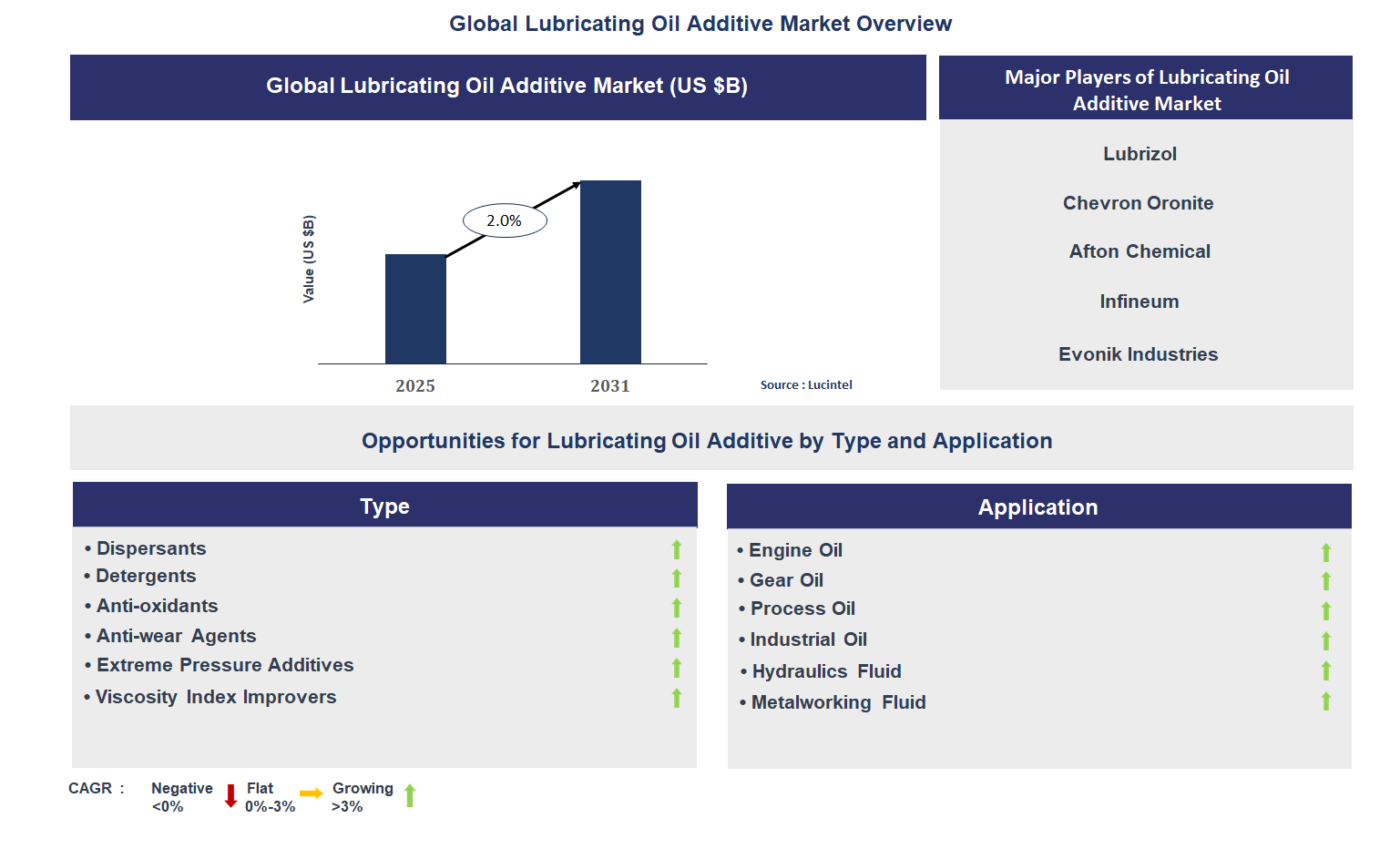
Key data points: The growth forecast = 2.0% annually for the next 7 years. Scroll below to get more insights. This market report covers trends, opportunities and forecasts in lubricating oil additive market to 2031 by type (dispersants, detergents, anti-oxidants, anti-wear agents, extreme pressure additives, and viscosity index improvers), application (engine oil, gear oil, process oil, industrial oil, hydraulics fluid, and metalworking fluid), and region (North America, Europe, Asia Pacific, and the Rest of the World)
We'll send your sample report shortly.
• Lucintel forecasts that, within the type category, viscosity index improver is expected to witness the highest growth over the forecast period.
• Within the application category, engine oil is expected to witness the highest growth.
• In terms of region, APAC is expected to witness the highest growth over the forecast period. Gain valuable insights for your business decisions with our comprehensive 150+ page report. Sample figures with some insights are shown below.
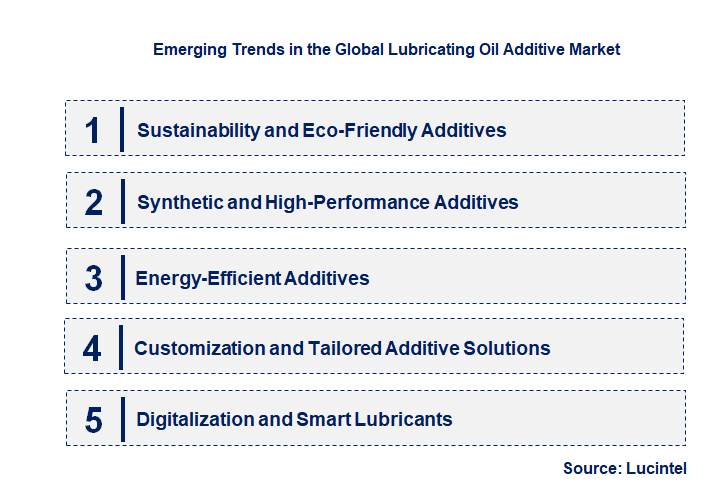
• Sustainability and Eco-friendly Additives: There is a growing demand for lubricants with eco-friendly additives that reduce environmental impact. This trend is driven by both consumer awareness and stricter regulatory frameworks. Manufacturers are formulating additives that are biodegradable and non-toxic, which is leading to more sustainable products in the market.
• Synthetic and High-performance Additives: Synthetic lubricants, coupled with advanced additives, are increasingly popular due to their superior performance in reducing engine wear and improving fuel efficiency. These products offer enhanced protection in extreme conditions, extending engine life. The shift toward synthetic oils is pushing innovation in additive formulations for better efficiency.
• Energy-efficient Additives: There is a heightened demand for lubricants designed to improve fuel efficiency. Additives that minimize friction and improve thermal stability are becoming standard in formulations. This trend aligns with efforts to lower operational costs and meet increasingly stringent fuel consumption regulations.
• Customization and Tailored Additive Solutions: Customizable additives tailored for specific engine types or applications are gaining traction. Automotive, industrial, and marine sectors are demanding specialized solutions to optimize performance. Manufacturers are responding with tailored formulations that meet the unique demands of different machinery, improving overall product effectiveness.
• Digitalization and Smart Lubricants: The integration of digital technologies is leading to the rise of smart lubricants. These lubricants use sensors or other technologies to monitor performance and wear in real time. This enables predictive maintenance, reducing downtime and enhancing the reliability of machinery. The trend toward digital solutions is transforming the lubricating oil market. These emerging trends indicate a shift towards more sustainable, performance-oriented, and technologically advanced lubricants. As manufacturers respond to consumer and regulatory demands, the market will continue to evolve, focusing on efficiency, customization, and environmental responsibility.
• Advancement in Bio-based Additives: Bio-based additives are gaining traction as companies seek to reduce their carbon footprint. These alternatives to traditional petroleum-based additives offer superior biodegradability and less environmental impact. As bio-based formulations become more affordable, they are expected to replace conventional additives in the long term.
• Focus on Extended Oil Life: Additives designed to extend oil life are becoming a major focus. With longer oil change intervals becoming the norm, additives that prevent oxidation, degradation, and deposit formation are essential. This development contributes to cost savings and environmental benefits by reducing waste oil production.
• Nanotechnology in Additives: Nanotechnology is being explored for improving lubricating oil additives. Nanoparticles can enhance lubricating properties, reduce friction, and improve heat resistance. This advancement is expected to revolutionize the performance of engine oils, leading to more efficient and durable products, particularly in high-performance and industrial applications.
• Low-emission Additives for Regulatory Compliance: In response to stringent environmental regulations, manufacturers are focusing on low-emission additives that improve fuel efficiency and reduce harmful emissions. These additives help meet emission standards while offering enhanced engine performance, thus supporting the global push for greener transportation.
• Integration of Advanced Oil Monitoring Systems: Oil monitoring technologies integrated with additives are becoming more common, providing real-time data on oil performance. This allows for more precise maintenance scheduling, preventing engine failure and optimizing lubricant usage. The combination of additives and smart technology is transforming how lubricants are used and managed. These developments show the market’s evolution toward more advanced, environmentally conscious, and performance-driven solutions. As technology continues to advance, manufacturers will likely continue innovating in additive formulations, enhancing oil performance, and meeting regulatory demands.
• Automotive Sector: The automotive sector remains the largest consumer of lubricating oil additives. As vehicles become more advanced, especially with the rise of electric and hybrid models, additives must improve engine protection and efficiency. This sector offers ample opportunities for additive suppliers to develop customized formulations for fuel efficiency and extended oil life.
• Industrial Machinery: Additives for industrial machinery are essential to enhance productivity and reduce downtime. Lubricants designed for high-load, high-temperature environments are in demand. The push for more energy-efficient solutions and longer operational lifespans for equipment opens up growth opportunities in this application.
• Marine Industry: The marine industry is another growing market for lubricating oil additives. With more focus on reducing emissions and improving fuel efficiency, the demand for marine-specific lubricants is increasing. The development of high-performance additives tailored for marine engines presents significant opportunities.
• Heavy Duty Equipment: Heavy-duty equipment, particularly in construction and mining, requires specialized lubricants that can withstand extreme conditions. Additives that improve high-temperature stability, reduce wear, and extend service intervals are critical in this application. The growing infrastructure and mining sectors create opportunities for lubricant innovation.
• Agricultural Equipment: As the agricultural sector becomes more mechanized, the need for lubricants that can handle the demands of farming equipment is growing. Additives that reduce wear, prevent rust, and enhance performance are becoming more important. This sector presents a large, growing opportunity for lubricant manufacturers to develop tailored solutions. These growth opportunities are reshaping the lubricating oil additive market, driving innovation in specialized products and formulations. With applications ranging from automotive to agriculture, the demand for advanced additives is expected to continue rising, presenting strategic opportunities for manufacturers.
• Lubrizol
• Chevron Oronite
• Afton Chemical
• Infineum
• Evonik Industries
• BASF
• Lanxess
• Croda
• BRB International
• Total
• Dispersants
• Detergents
• Anti-oxidants
• Anti-wear Agents
• Extreme Pressure Additives
• Viscosity Index Improvers
• Engine Oil
• Gear Oil
• Process Oil
• Industrial Oil
• Hydraulics Fluid
• Metalworking Fluid
• North America
• Europe
• Asia Pacific
• The Rest of the World
• United States: The U.S. lubricating oil additive market has seen a surge in demand for high-performance and environmentally friendly additives. Innovations in additive formulations focus on improving fuel efficiency and reducing emissions, aligning with stricter environmental regulations. The increasing adoption of electric vehicles also influences the demand for specific types of lubricants, although traditional engine oils remain a key market segment.
• China: China’s lubricating oil additive market is expanding rapidly, driven by the country’s industrialization and growing automotive sector. The focus is on developing additives that improve engine longevity and reduce wear. Strong government regulations and a push for energy efficiency are also shaping the market, encouraging companies to innovate with sustainable, low-emission solutions. The growing demand for high-quality products is evident.
• Germany: Germany is seeing a shift toward synthetic lubricants and high-performance additives, driven by its automotive industry’s focus on innovation and efficiency. The country’s strong regulatory environment fosters advancements in environmentally friendly additives that reduce carbon footprints. Germany’s market is also impacted by the demand for longer oil change intervals and reduced fuel consumption in both commercial and passenger vehicles.
• India: India’s lubricating oil additive market is experiencing robust growth, influenced by the booming automotive industry and industrial sector. Demand for additives that enhance fuel efficiency, reduce maintenance costs, and extend engine life is rising. Regulatory changes are prompting the shift towards cleaner, more efficient lubricants, with a focus on biodegradable additives. The market also benefits from expanding infrastructure projects and industrial applications.
• Japan: Japan is focused on enhancing lubricating oil additives for advanced automotive technologies, including hybrid and electric vehicles. The market is heavily influenced by local manufacturers‘ commitment to environmental sustainability and high-quality standards. Innovations emphasize high-performance additives that improve engine protection, reduce friction, and extend oil life, catering to both domestic and global markets. Increasingly stringent emissions regulations are accelerating these changes.


• Lubrizol
• Chevron Oronite
• Afton Chemical
• Infineum
• Evonik Industries
• BASF
• Lanxess
• Croda
• BRB International
• Total Q5. Which lubricating oil additive market segment will be the largest in future? Answer: Lucintel forecasts that, within the type category, viscosity index improver is expected to witness the highest growth over the forecast period. Q6. In lubricating oil additive market, which region is expected to be the largest in next 5 years? Answer: In terms of region, APAC is expected to witness the highest growth over the forecast period. Q7. Do we receive customization in this report? Answer: Yes, Lucintel provides 10% customization without any additional cost.


Choose a license that fits your team. Instant PDF delivery.
Prices exclude taxes. Instant delivery. Custom licensing available on request.
Market Report · July 17, 2026
Market Report · July 16, 2026
Market Report · July 15, 2026
Trusted partner for strategic intelligence and business growth


Receive a complimentary market analysis tailored to your industry. Our analysts will identify key growth opportunities and competitive dynamics specific to your business.

Market size, growth rate, and key trend analysis for your specific sector.

Top competitor positioning and market share analysis.

Strategic recommendations backed by data-driven insights.
Get curated market intelligence and competitive moves straight to your inbox.
By subscribing, you agree to receive our monthly insights. Unsubscribe anytime.
Receive a complimentary market analysis tailored to your industry. Our analysts will identify key growth opportunities and competitive dynamics specific to your business.
Market size, growth rate, and key trend analysis for your specific sector.
Top competitor positioning and market share analysis.
Strategic recommendations backed by data-driven insights.
Get curated market intelligence, emerging trends, and competitive moves straight to your inbox each month.
By subscribing, you agree to receive our monthly insights. Unsubscribe anytime.
We'll send your sample report shortly.