
Market Report · July 31, 2026

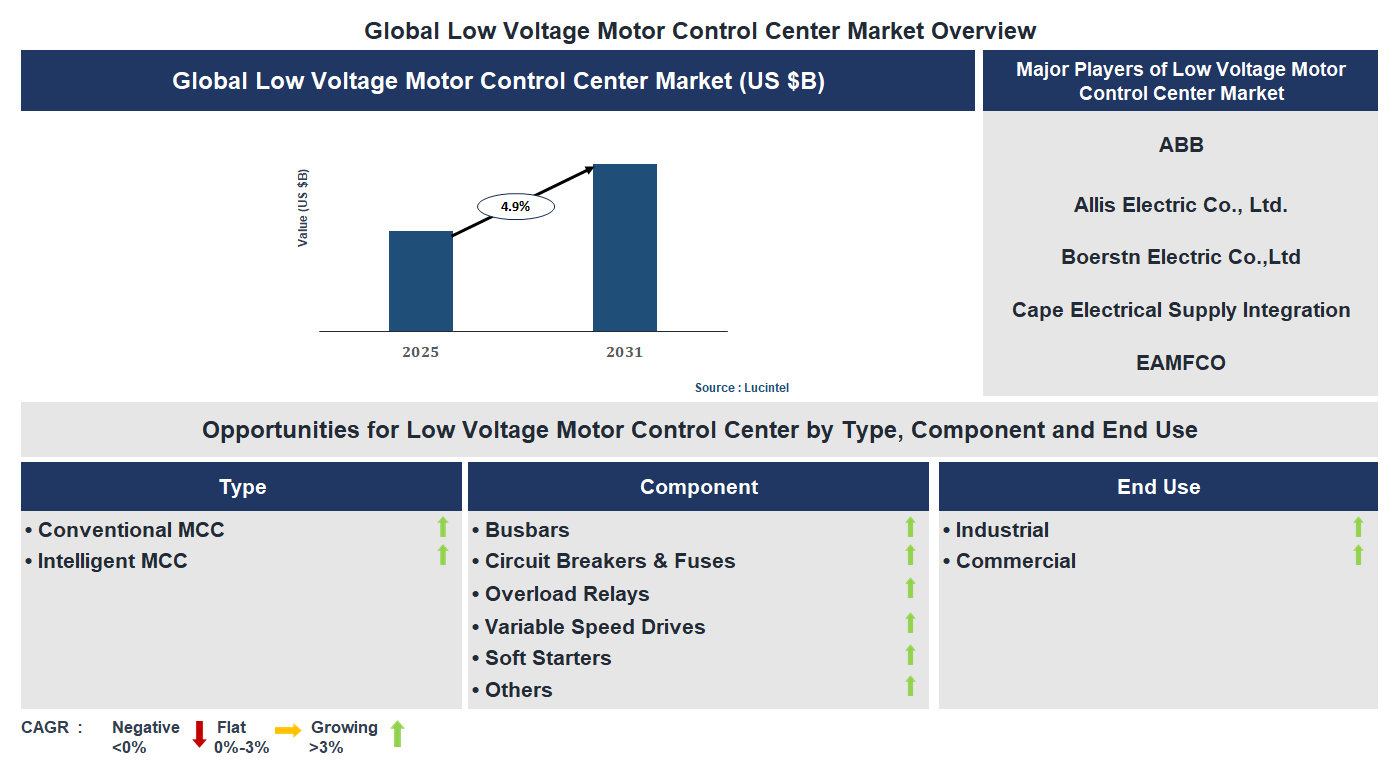
Key data points: The growth forecast = 4.9% annually for the next 7 years. Scroll below to get more insights. This market report covers trends, opportunities and forecasts in low voltage motor control center market to 2031 by type (conventional MCC and intelligent MCC), component (busbars, circuit breakers & fuses, overload relays, variable speed drives, soft starters, and others), end use (industrial and commercial), and region (North America, Europe, Asia Pacific, and the Rest of the World)
We'll send your sample report shortly.
• Lucintel forecasts that, within the type category, conventional MCC is expected to witness higher growth over the forecast period.
• Within the end use category, industrial is expected to witness higher growth.
• In terms of region, North America is expected to witness the highest growth over the forecast period. Gain valuable insights for your business decisions with our comprehensive 150+ page report. Sample figures with some insights are shown below.
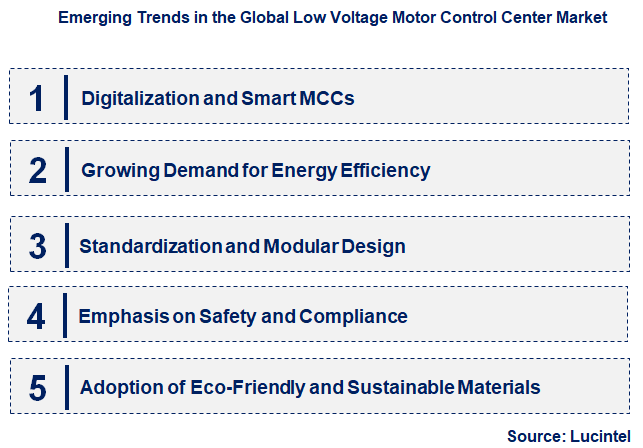
• Digitalization and Smart MCCs: The integration of digital technologies into MCCs is transforming traditional systems into smart, connected solutions. These digital MCCs enable real-time monitoring, predictive maintenance, and remote control, significantly reducing downtime and operational costs. The adoption of IoT and Industry 4.0 standards allows for seamless data collection and analysis, leading to improved decision-making and system optimization. This trend is driven by the need for increased efficiency, safety, and reliability in industrial operations, making digital MCCs a critical component of modern automation systems.
• Growing Demand for Energy Efficiency: Energy efficiency remains a primary driver in the LV MCC market. Manufacturers are developing more energy-efficient motor control solutions, such as variable frequency drives (VFDs) and energy-saving components, to meet stringent regulations and reduce operational costs. End-users are increasingly prioritizing sustainability, leading to a surge in demand for eco-friendly MCCs that minimize energy consumption. This trend not only helps companies meet environmental standards but also offers long-term cost savings, making energy-efficient MCCs a key focus for industry players.
• Standardization and Modular Design: The market is witnessing a shift towards standardized and modular MCC designs, which offer greater flexibility, scalability, and ease of installation. Modular MCCs allow for quick customization and upgrades, reducing downtime and simplifying maintenance. Standardization ensures compatibility across different systems and components, streamlining procurement and reducing costs. This trend caters to the evolving needs of diverse industries, enabling them to deploy tailored solutions rapidly while maintaining high levels of safety and reliability.
• Emphasis on Safety and Compliance: Safety regulations and standards are becoming more stringent, prompting manufacturers to incorporate advanced safety features into MCCs. These include arc flash protection, integrated safety relays, and compliance with international standards such as IEC and UL. Enhanced safety features reduce the risk of accidents and equipment damage, ensuring worker safety and regulatory compliance. This trend underscores the importance of safety as a core aspect of MCC design, influencing product development and market offerings.
• Adoption of Eco-Friendly and Sustainable Materials: Environmental concerns are pushing manufacturers to adopt sustainable materials and eco-friendly manufacturing processes. This includes the use of recyclable components, reduced hazardous substances, and energy-efficient production methods. Such initiatives aim to minimize the environmental footprint of MCCs and align with global sustainability goals. The shift towards eco-friendly materials not only appeals to environmentally conscious consumers but also helps companies meet regulatory requirements and enhance their corporate social responsibility profiles. In summary, these trends are collectively reshaping the low voltage motor control center market by fostering innovation, enhancing safety, improving energy efficiency, and promoting sustainability. As these developments continue, the market is poised for increased integration of digital technologies, greater customization, and a stronger focus on environmental responsibility, ultimately leading to smarter, safer, and more sustainable motor control solutions.
• Technological Integration: The adoption of IoT and smart technologies in LV MCCs has improved monitoring and control capabilities, enabling predictive maintenance and reducing downtime. This integration enhances operational efficiency and safety, making systems more reliable and easier to manage remotely.
• Modular Design Innovations: Manufacturers are focusing on modular LV MCCs that allow for easy customization and scalability. This development reduces installation time, simplifies maintenance, and provides flexibility to adapt to changing industrial requirements, thereby increasing market competitiveness.
• Energy Efficiency Improvements: New designs and components are emphasizing energy savings, such as low-loss transformers and energy-efficient circuit breakers. These innovations help industries reduce operational costs and meet sustainability goals, boosting market demand.
• Regulatory and Safety Standards: Stricter safety and compliance regulations are prompting manufacturers to upgrade LV MCCs with advanced safety features, such as arc flash protection and better insulation. This focus on safety enhances market trust and broadens application scope.
• Sustainable and Eco-friendly Solutions: The market is witnessing a shift towards eco-friendly materials and manufacturing processes, aligning with global sustainability initiatives. These developments appeal to environmentally conscious clients and support regulatory compliance, expanding market opportunities. In summary, these key developments are significantly impacting the low voltage motor control center market by driving innovation, improving safety and efficiency, and aligning with sustainability trends. The market is becoming more dynamic, competitive, and capable of meeting the evolving needs of various industrial sectors.
• Manufacturing: Enhanced automation and robotics drive demand for reliable motor control solutions, leading to increased adoption of LV MCCs for process efficiency and safety.
• Oil & Gas: Harsh operational environments necessitate robust, explosion-proof LV MCCs, creating opportunities for specialized, durable control centers.
• Water Treatment: Growing infrastructure investments require efficient motor control systems to manage pumps and treatment processes, expanding LV MCC deployment.
• Commercial Buildings: Smart building initiatives and energy efficiency standards boost the need for integrated LV MCC systems for HVAC and elevator controls.
• Data Centers: The surge in digital infrastructure demands reliable, scalable motor control solutions to ensure uninterrupted power and cooling systems. These growth opportunities are significantly impacting the LV MCC market by expanding its application scope, fostering innovation, and driving technological advancements. As industries prioritize safety, efficiency, and sustainability, the market is poised for sustained growth, attracting investments and encouraging product development tailored to specific sector needs.
• Technological Advancements: The integration of smart technologies and IoT in MCCs enhances operational efficiency, predictive maintenance, and remote monitoring. These innovations reduce downtime and improve safety, making MCCs more attractive to industries seeking automation. As industries adopt Industry 4.0 standards, the demand for intelligent MCCs increases, fostering market growth. Continuous R&D efforts are leading to more compact, energy-efficient, and user-friendly MCCs, further fueling adoption across sectors such as manufacturing, oil & gas, and utilities.
• Industrial Automation Growth: The global shift towards automation in manufacturing and process industries significantly boosts the demand for LV MCCs. Automated systems require reliable motor control solutions to ensure smooth operations, safety, and energy efficiency. As industries aim to optimize productivity and reduce operational costs, LV MCCs become essential components. The expansion of industrial zones and infrastructure projects in emerging economies also contribute to increased demand, supporting market expansion.
• Regulatory and Safety Standards: Stringent safety regulations and energy efficiency standards imposed by governments and international bodies influence MCC design and manufacturing. Compliance with standards such as IEC and NEC ensures safety, reliability, and environmental sustainability. These regulations compel manufacturers to innovate and upgrade their product offerings, which can increase costs but also open opportunities for premium, compliant solutions. Market players investing in compliance gain competitive advantages and access to new markets.
• Economic Growth and Infrastructure Development: Rapid economic development, especially in emerging markets, leads to increased investments in infrastructure, manufacturing plants, and power distribution networks. These developments require robust motor control solutions, thereby expanding the LV MCC market. Urbanization and industrialization initiatives drive demand for reliable electrical infrastructure, which directly impacts MCC sales. The growth in construction activities and energy projects further amplifies market opportunities.
• Rising Adoption of Energy-Efficient Solutions: Increasing awareness of energy conservation and sustainability is pushing industries to adopt energy-efficient MCCs. These solutions help reduce energy consumption and operational costs, aligning with global environmental goals. Manufacturers are developing innovative, energy-saving MCCs with features like variable frequency drives and advanced control systems. This trend not only boosts market growth but also encourages the development of eco-friendly products, catering to environmentally conscious consumers and regulatory mandates. The challenges facing this low voltage motor control center market include:
• High Initial Investment Costs: The adoption of advanced LV MCCs often involves significant upfront costs for equipment, installation, and integration. Small and medium-sized enterprises may find these expenses prohibitive, limiting market penetration. Additionally, the cost of compliance with stringent safety and energy standards can further escalate expenses. This financial barrier can slow down the adoption rate, especially in price-sensitive markets, impacting overall market growth.
• Regulatory Compliance and Certification Complexities: Navigating diverse and evolving regulatory landscapes across different regions poses a significant challenge. Manufacturers must ensure their products meet various safety, environmental, and performance standards, which can be time-consuming and costly. Non-compliance risks legal penalties, product recalls, and damage to reputation. The complexity of certification processes can delay product launches and increase operational costs, hindering market expansion.
• Technological Obsolescence and Integration Challenges: Rapid technological advancements can render existing MCCs obsolete quickly, necessitating frequent upgrades and replacements. Integrating new technologies with legacy systems can be complex and costly, especially in large industrial setups. Compatibility issues and the need for specialized skills pose additional hurdles. These challenges can lead to increased maintenance costs and reduced return on investment, creating hesitation among end-users to adopt new solutions promptly. In summary, the low voltage motor control center market is shaped by technological innovations, industrial growth, regulatory standards, and sustainability trends. While these drivers present significant opportunities for expansion, challenges such as high costs, regulatory complexities, and technological obsolescence pose risks. The overall market outlook remains positive, driven by ongoing industrialization and automation, but stakeholders must strategically address these challenges to capitalize on emerging opportunities and sustain growth.
• ABB
• Allis Electric Co., Ltd.
• Boerstn Electric Co.,Ltd
• Cape Electrical Supply Integration
• EAMFCO
• Eaton
• GT Engineering
• Ingeteam SA
• Mitsubishi Electric Corporation
• Powell Industries
• Conventional MCC
• Intelligent MCC
• Busbars
• Circuit Breakers & Fuses
• Overload Relays
• Variable Speed Drives
• Soft Starters
• Others
• Industrial
• Commercial
• North America
• Europe
• Asia Pacific
• The Rest of the World
• United States: The US market has seen increased adoption of smart LV MCC systems integrating IoT and automation technologies. Regulatory standards for safety and energy efficiency are driving modernization efforts. Key players are focusing on developing intelligent control centers with remote monitoring capabilities, boosting operational efficiency and reducing downtime. The rise of renewable energy projects and infrastructure upgrades further propel market growth, with a strong emphasis on digital transformation and cybersecurity measures.
• China: China continues to lead in LV MCC market expansion, driven by rapid industrialization and urbanization. The focus is on integrating advanced automation and smart control solutions to enhance manufacturing efficiency. Government policies promoting energy conservation and sustainable development are encouraging the adoption of eco-friendly MCC systems. Local manufacturers are investing heavily in R&D to develop cost-effective, innovative products, while infrastructure projects in smart cities are creating new demand avenues.
• Germany: Germanys LV MCC market is characterized by a focus on high-quality, energy-efficient, and sustainable solutions. The country emphasizes compliance with stringent EU regulations and standards. Innovations include the integration of digital control systems and modular designs for flexibility and scalability. The push towards Industry 4.0 and renewable energy integration is fostering the development of intelligent, connected MCC systems that improve operational safety and efficiency.
• India: The Indian LV MCC market is witnessing rapid growth due to expanding industrial sectors, infrastructure projects, and government initiatives like Make in India. There is a rising demand for reliable, cost-effective, and energy-efficient control centers. Local manufacturers are increasing their product offerings, incorporating automation and IoT features. The focus on rural electrification and smart city projects is further boosting market prospects, with a significant emphasis on affordable solutions tailored to local needs.
• Japan: Japans market is characterized by advanced technological integration and a strong focus on safety and reliability. The adoption of smart MCC systems with IoT connectivity is increasing, driven by the need for efficient energy management and disaster resilience. Japan emphasizes eco-friendly and energy-saving solutions, aligning with its sustainability goals. The market also benefits from innovations in automation and robotics, enhancing the safety and efficiency of control centers in various industrial applications.


• ABB
• Allis Electric Co., Ltd.
• Boerstn Electric Co.,Ltd
• Cape Electrical Supply Integration
• EAMFCO
• Eaton
• GT Engineering
• Ingeteam SA
• Mitsubishi Electric Corporation
• Powell Industries Q5. Which low voltage motor control center market segment will be the largest in future? Answer: Lucintel forecasts that, within the type category, conventional MCC is expected to witness higher growth over the forecast period. Q6. In low voltage motor control center market, which region is expected to be the largest in next 5 years? Answer: In terms of region, North America is expected to witness the highest growth over the forecast period. Q7. Do we receive customization in this report? Answer: Yes, Lucintel provides 10% customization without any additional cost.


Choose a license that fits your team. Instant PDF delivery.
Prices exclude taxes. Instant delivery. Custom licensing available on request.
Market Report · July 31, 2026
Market Report · July 22, 2026
Market Report · July 20, 2026
Trusted partner for strategic intelligence and business growth


Receive a complimentary market analysis tailored to your industry. Our analysts will identify key growth opportunities and competitive dynamics specific to your business.

Market size, growth rate, and key trend analysis for your specific sector.

Top competitor positioning and market share analysis.

Strategic recommendations backed by data-driven insights.
Get curated market intelligence and competitive moves straight to your inbox.
By subscribing, you agree to receive our monthly insights. Unsubscribe anytime.
Receive a complimentary market analysis tailored to your industry. Our analysts will identify key growth opportunities and competitive dynamics specific to your business.
Market size, growth rate, and key trend analysis for your specific sector.
Top competitor positioning and market share analysis.
Strategic recommendations backed by data-driven insights.
Get curated market intelligence, emerging trends, and competitive moves straight to your inbox each month.
By subscribing, you agree to receive our monthly insights. Unsubscribe anytime.
We'll send your sample report shortly.