
Market Report · July 17, 2026

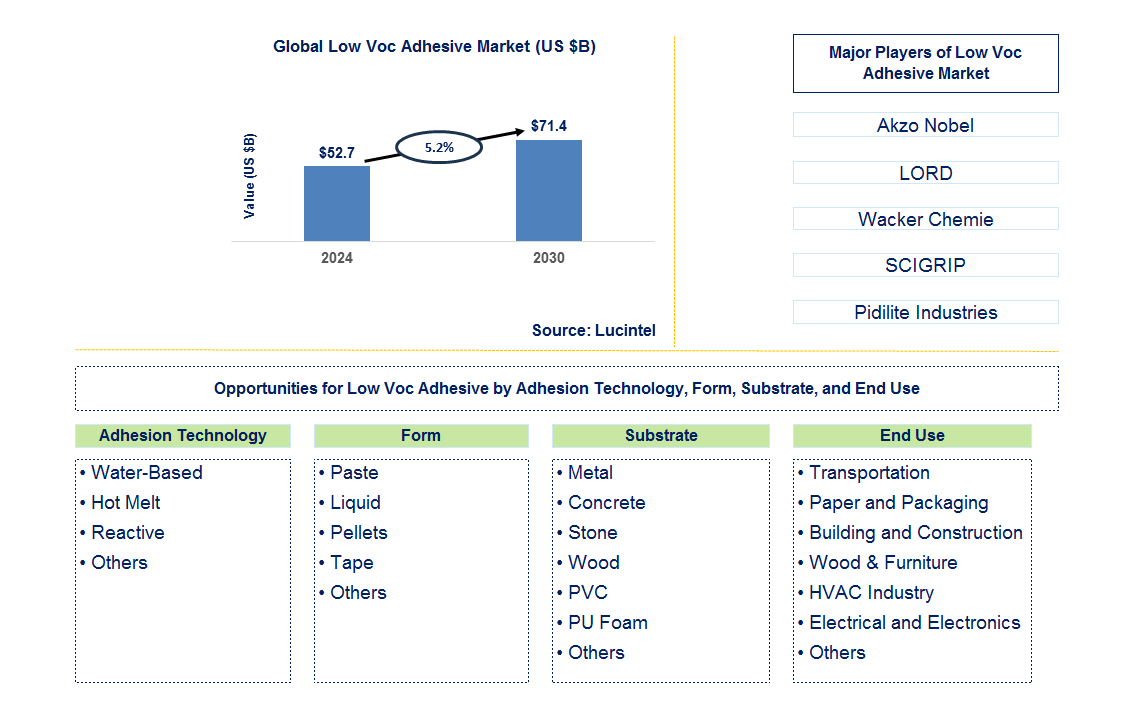
Key data points: The market size in 2030 = $71.4 billion, growth forecast = 5.2% annually for the next 6 years. Scroll below to get more insights. This market report covers trends, opportunities, and forecasts in the global low voc adhesive market to 2030 by adhesion technology (water-based, hot melt, reactive, and others), form (paste, liquid, pellets, tape, and others), substrate (metal, concrete, stone, wood, PVC, PU foam, and others), end use (transportation, paper and packaging, building and construction, wood & furniture, hvac industry, electrical and electronics, and others), and region (North America, Europe, Asia Pacific, and the Rest of the World)
We'll send your sample report shortly.
• United States: The U.S. has seen a surge in developing low VOC adhesives in automotive and construction. Companies are investing in R&D to enhance product performance while complying with stricter environmental regulations.
• China: China is rapidly expanding production capabilities, driven by government initiatives promoting eco-friendly materials. This has led to increased collaboration between manufacturers and research institutions to develop innovative, low-emission adhesives.
• Germany: Germany leads in sustainable adhesive solutions, focusing on bio-based and recycled materials. The push for low VOC products, supported by European Union regulations, fosters innovation and strengthens global competitiveness.
• India: In India, demand for low VOC adhesives is rising in furniture and packaging industries. Local manufacturers are developing affordable, eco-friendly products to meet growing consumer preferences.
• Japan: Japan has advanced in low VOC adhesive technologies for electronics and automotive applications. Manufacturers are investing in smart adhesives that offer high performance with minimal environmental impact.
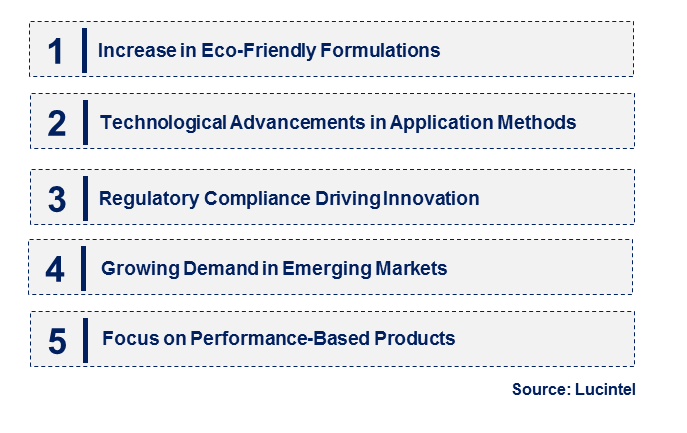
• Increase in Eco-Friendly Formulations: Companies are investing in developing adhesives made from natural and renewable resources. This shift not only meets regulatory requirements but also aligns with consumer demand for sustainable products, enhancing brand loyalty.
• Technological Advancements in Application Methods: Innovations such as improved dispensing techniques and automated application processes are increasing efficiency and reducing waste. These advancements help manufacturers minimize emissions while maintaining high-quality standards, further promoting the use of low VOC adhesives.
• Regulatory Compliance Driving Innovation: Stricter regulations regarding VOC emissions are pushing manufacturers to innovate and reformulate their products. This trend enhances product safety and drives competitiveness, as companies that comply early can capture market share more effectively.
• Growing Demand in Emerging Markets: As countries like India and China focus on sustainability, the demand for low VOC adhesives is rising. This trend presents significant growth opportunities for manufacturers willing to adapt to local market needs and preferences.
• Focus on Performance-Based Products: There is increasing emphasis on developing low VOC adhesives without compromising performance. Manufacturers are exploring advanced formulations that offer superior bonding capabilities, thermal stability, and durability, appealing to a broader range of industries. These trends are collectively reshaping the low VOC adhesive market by enhancing product offerings, fostering innovation, and expanding market reach in response to consumer and regulatory demands.
• Development of Bio-Based Adhesives: Many manufacturers are investing in formulating bio-based adhesives derived from renewable resources. This not only helps reduce VOC emissions but also appeals to environmentally conscious consumers, promoting sustainable practices.
• Expansion of Application Areas: Low VOC adhesives are increasingly used in diverse sectors such as automotive, construction, and packaging. This expansion is driven by compliance with stringent environmental regulations, making these adhesives attractive to manufacturers.
• Innovations in Adhesive Technology: Recent advancements, such as the development of hybrid adhesives, are improving bonding strength and durability while maintaining low VOC content. These innovations enhance product performance, making low VOC adhesives suitable for demanding applications.
• Increased Market Penetration in Asia: Asian countries are witnessing a rise in the adoption of low VOC adhesives, driven by growing regulatory pressures and consumer awareness. This trend fosters competition among manufacturers to deliver eco-friendly products tailored to local market needs.
• Collaboration Between Industry and Academia: Collaborations between manufacturers and research institutions are fostering innovation in low VOC adhesive formulations. These partnerships lead to the development of technologies that enhance adhesive performance while minimizing environmental impact. These developments are significantly impacting the low VOC adhesive market by driving innovation, expanding applications, and fostering sustainability, making these products more integral to various industries.
• Automotive Industry Adoption: The automotive sector is increasingly using low VOC adhesives to manufacture vehicles that meet stringent environmental regulations. This shift provides opportunities for manufacturers to innovate and develop specialized products tailored to automotive applications.
• Construction Sector Growth: As green building practices gain momentum, the demand for low VOC adhesives in construction is rising. This presents significant growth potential for manufacturers to offer eco-friendly bonding solutions for flooring, insulation, and structural applications.
• Expansion in Packaging Solutions: The packaging industry is shifting toward sustainable materials, increasing the demand for low VOC adhesives. Manufacturers can capitalize on this trend by developing adhesives that meet the performance and environmental requirements of modern packaging solutions.
• Electronics Industry Innovation: The electronics sector is adopting low VOC adhesives for components and assembly, driven by regulatory compliance and consumer demand for safer products. This trend offers growth opportunities for manufacturers to develop adhesives that meet high-performance standards while minimizing emissions.
• Growth in Furniture Manufacturing: The furniture industry is prioritizing low VOC adhesives to align with consumer preferences for sustainable products. This growth opportunity allows manufacturers to expand their product lines and cater to environmentally conscious consumers. These growth opportunities are reshaping the low VOC adhesive market by driving innovation and expanding market reach, enabling manufacturers to meet evolving consumer demands and regulatory requirements.
• Economic Uncertainty: Global economic fluctuations, including inflation and geopolitical tensions, lead investors to adopt a more conservative approach, resulting in decreased risk appetite and lower investment volumes.
• High Interest Rates: Rising interest rates deter venture capital investments as borrowing costs increase. Investors often seek safer returns, leading to reduced capital allocation to startups.
• Market Saturation: In many sectors, especially technology, there is a saturation of startups. As competition intensifies, investors may fund only those with proven traction or innovative solutions.
• Shift to Profitability: There is growing emphasis on profitability over growth, with investors favoring companies demonstrating sustainable business models. This shift may reduce funding rounds for early-stage startups focused on growth.
• Regulatory Changes: New regulations or changes in existing policies can create uncertainty. Compliance costs and operational challenges may discourage investors from committing capital to certain sectors. Challenges in the low VOC adhesive market are:
• Limited Access to Capital: Startups often struggle to secure funding, leading to cash flow issues and potential business failures. Many rely heavily on venture capital to scale operations.
• Increased Competition for Funding: With fewer available resources, startups face stiff competition for limited capital, resulting in longer fundraising cycles and higher expectations from investors.
• Pressure to Deliver Quick Returns: In a cautious investment climate, startups may face pressure to show quick returns on investment, which can hinder long-term innovation.
• Valuation Adjustments: Investors may reassess company valuations, leading to down rounds or unfavorable terms for startups seeking capital.
• Talent Retention Issues: A struggling funding environment affects talent acquisition and retention, making it difficult for startups to offer competitive salaries or equity packages. Navigating a low venture capital market requires startups to be agile and strategic. By focusing on sustainable growth, fostering investor relationships, and adapting to market conditions, startups can position themselves for success.
• Akzo Nobel
• LORD
• Wacker Chemie
• SCIGRIP
• Pidilite Industries
• Franklin International
• Permabond
• Water-Based
• Hot Melt
• Reactive
• Others
• Paste
• Liquid
• Pellets
• Tape
• Others
• Metal
• Concrete
• Stone
• Wood
• PVC
• PU Foam
• Transportation
• Paper and Packaging
• Building and Construction
• Wood & Furniture
• HVAC Industry
• Electrical and Electronics
• Others
• North America
• Europe
• Asia Pacific
• The Rest of the World
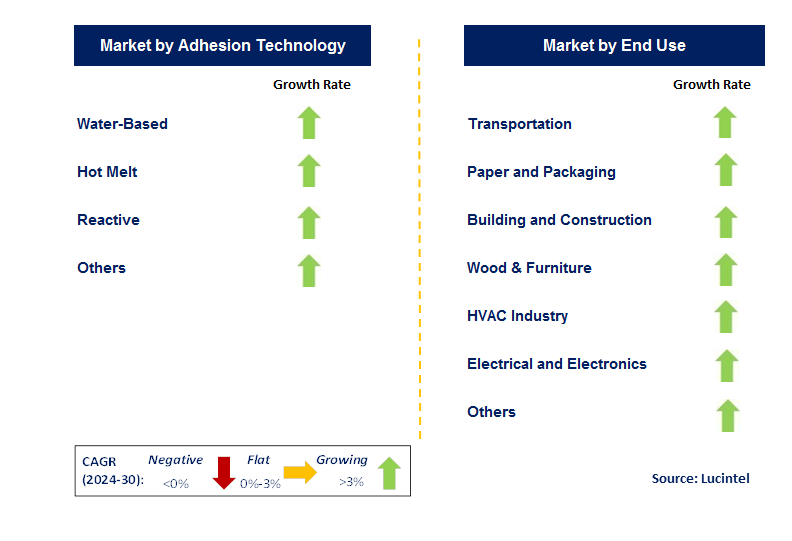
• Lucintel forecasts that, within the adhesion technology category, water-based will remain the largest segment over the forecast period.
• Within the end-use category, transportation will remain the largest segment over the forecast period.
• In terms of regions, APAC will remain the largest region over the forecast period.

• Akzo Nobel
• LORD
• Wacker Chemie
• SCIGRIP
• Pidilite Industries
• Franklin International
• Permabond Q6. Which low voc adhesive market segment will be the largest in future? Answer: Lucintel forecasts that, within the adhesion technology category, water-based will remain the largest segment over the forecast period. Q7. In low voc adhesive market, which region is expected to be the largest in next 5 years? Answer: In terms of regions, APAC will remain the largest region over the forecast period. Q.8 Do we receive customization in this report? Answer: Yes, Lucintel provides 10% customization without any additional cost.


Choose a license that fits your team. Instant PDF delivery.
Prices exclude taxes. Instant delivery. Custom licensing available on request.
Market Report · July 17, 2026
Market Report · July 17, 2026
Market Report · May 18, 2026
Trusted partner for strategic intelligence and business growth


Receive a complimentary market analysis tailored to your industry. Our analysts will identify key growth opportunities and competitive dynamics specific to your business.

Market size, growth rate, and key trend analysis for your specific sector.

Top competitor positioning and market share analysis.

Strategic recommendations backed by data-driven insights.
Get curated market intelligence and competitive moves straight to your inbox.
By subscribing, you agree to receive our monthly insights. Unsubscribe anytime.
Receive a complimentary market analysis tailored to your industry. Our analysts will identify key growth opportunities and competitive dynamics specific to your business.
Market size, growth rate, and key trend analysis for your specific sector.
Top competitor positioning and market share analysis.
Strategic recommendations backed by data-driven insights.
Get curated market intelligence, emerging trends, and competitive moves straight to your inbox each month.
By subscribing, you agree to receive our monthly insights. Unsubscribe anytime.
We'll send your sample report shortly.