
Market Report · July 29, 2026

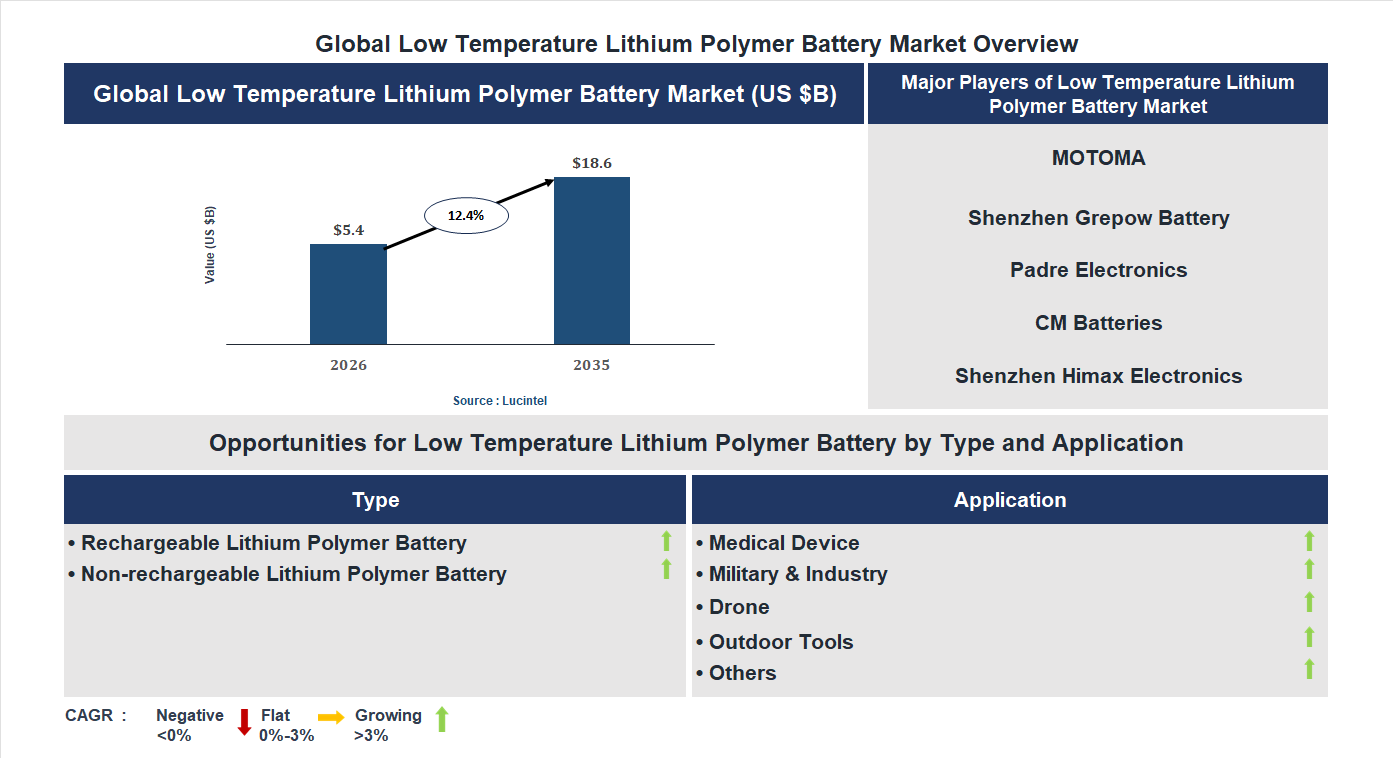
Key data points: The market size in 2035 = $18.6 billion, growth forecast = 12.4% annually for the next 8 years. Scroll below to get more insights. This market report covers trends, opportunities and forecasts in low temperature lithium polymer battery market to 2035 by type (rechargeable lithium polymer battery and non-rechargeable lithium polymer battery), application (medical device, military & industry, drone, outdoor tools, and others), and region (North America, Europe, Asia Pacific, and the Rest of the World)
We'll send your sample report shortly.
• Lucintel forecasts that, within the type category, rechargeable lithium polymer battery is expected to witness higher growth over the forecast period.
• Within the application category, drone is expected to witness the highest growth.
• In terms of region, APAC is expected to witness the highest growth over the forecast period. Gain valuable insights for your business decisions with our comprehensive 150+ page report. Sample figures with some insights are shown below.
• Technological Innovation in Battery Chemistry: This trend involves developing advanced electrolyte formulations and electrode materials that improve low-temperature performance. Innovations such as solid-state electrolytes and polymer-based composites enable batteries to maintain higher capacity and efficiency in cold environments. These improvements reduce power loss and extend battery life, making them suitable for applications like electric vehicles and aerospace. The impact is significant, as it broadens the usability of lithium polymer batteries in extreme conditions, fostering new product development and market expansion.
• Increased Focus on Safety and Thermal Management: As batteries operate in colder climates, managing thermal stability becomes critical. New safety protocols and advanced thermal management systems are being integrated to prevent issues like freezing, leakage, or thermal runaway. Enhanced safety features increase consumer confidence and meet stringent regulatory standards. This trend ensures reliable performance and reduces risks associated with low-temperature operation, thereby expanding market acceptance and adoption across various sectors.
• Growing Adoption in Electric Vehicles (EVs): The EV industry is increasingly adopting low-temperature lithium polymer batteries to address cold climate challenges. These batteries enable EVs to deliver consistent performance and longer range in winter conditions. Innovations such as integrated heating systems and improved insulation are making EVs more viable in colder regions. This trend significantly impacts the market by driving demand, encouraging manufacturers to invest in specialized battery solutions, and accelerating the adoption of electric mobility in diverse geographic areas.
• Sustainability and Eco-Friendly Materials: Environmental concerns are prompting the development of greener battery components. Researchers are exploring biodegradable electrolytes and recyclable materials to reduce environmental impact. This trend aligns with global sustainability goals and regulatory pressures, encouraging manufacturers to adopt eco-friendly practices. The impact includes not only reducing the carbon footprint but also appealing to environmentally conscious consumers, thereby shaping a more sustainable market landscape.
• Integration of Smart Monitoring and IoT Technologies: The incorporation of smart sensors and IoT connectivity into lithium polymer batteries allows real-time monitoring of performance and health status. These features enable predictive maintenance, enhance safety, and optimize battery usage in low-temperature conditions. The impact is profound, as it improves reliability, reduces downtime, and extends battery lifespan. This trend is transforming battery management systems and fostering the development of intelligent energy solutions tailored for cold environments. These emerging trends are collectively reshaping the low temperature lithium polymer battery market by enhancing performance, safety, sustainability, and connectivity. They are enabling new applications, expanding market reach, and setting the stage for innovative energy solutions capable of operating efficiently in extreme cold conditions.

• Enhanced Performance in Cold Climates: Advancements in electrolyte formulations and electrode materials are significantly improving battery performance at low temperatures. These innovations enable batteries to maintain higher capacity, faster charging, and longer lifespan in cold environments. As a result, industries such as aerospace, military, and outdoor electronics are adopting these batteries for reliable operation. This growth opportunity is expected to expand the market by addressing the limitations of traditional batteries in extreme cold, fostering new product development and applications.
• Expansion in Electric Vehicle Applications: Low temperature lithium polymer batteries are increasingly being integrated into electric vehicles (EVs) to ensure consistent performance in winter conditions. Improvements in thermal management and battery design are reducing energy loss and enhancing safety. This development is crucial for EV adoption in colder regions, boosting market growth. Automakers are investing in these batteries to meet consumer demand for reliable, efficient transportation options year-round, thus opening new markets and increasing sales in cold climates.
• Innovations in Battery Safety and Longevity: Recent developments focus on enhancing safety features and extending battery lifespan at low temperatures. New separator technologies and solid-state electrolytes reduce risks of thermal runaway and degradation. These improvements are vital for applications in aerospace, defense, and medical devices, where safety and durability are paramount. The market benefits from increased consumer confidence and regulatory approvals, leading to broader adoption and the creation of high-performance, long-lasting batteries suitable for extreme conditions.
• Growing Demand in Aerospace and Defense Sectors: The aerospace and defense industries are increasingly relying on low temperature lithium polymer batteries for critical applications such as satellite power systems and military equipment. Advances in miniaturization and energy density are making these batteries more viable for space missions and cold-weather operations. This trend is driving market expansion, as these sectors require highly reliable, lightweight, and durable energy sources. The development of specialized batteries is expected to open new avenues for market players and foster technological innovation.
• Rising Investment in Research and Development: Significant investments are being made in R&D to develop batteries capable of operating efficiently at sub-zero temperatures. Focus areas include new electrolyte chemistries, improved thermal management, and scalable manufacturing processes. These efforts are accelerating the commercialization of advanced low temperature batteries, broadening their application scope. Increased R&D activity is expected to lead to cost reductions, higher performance, and wider adoption across industries, ultimately strengthening the market position of key players. These developments are significantly impacting the low temperature lithium polymer battery market by enhancing performance, safety, and application scope. The innovations are enabling broader adoption in electric vehicles, aerospace, defense, and consumer electronics, especially in cold climates. As research progresses and technology matures, the market is poised for substantial growth, driven by increasing demand for reliable, efficient energy storage solutions in extreme conditions. This evolution is set to reshape the landscape of cold-weather energy applications globally.
• Expanding Use in Aerospace and Defense Applications: Low temperature lithium polymer batteries are critical for the aerospace and defense sectors, where reliable power sources are essential in cold, high-altitude, and remote environments. These batteries offer lightweight, high energy density, and safety advantages, making them suitable for satellites, drones, and military equipment. As these industries grow, the demand for specialized batteries that perform efficiently in low temperatures is expected to surge, driving innovation and market expansion.
• Growing Adoption in Electric Vehicles for Cold Climates: Electric vehicle manufacturers are increasingly integrating low temperature lithium polymer batteries to improve performance in cold climates. These batteries provide better cold-start capabilities, enhanced safety, and longer lifespan compared to traditional batteries. As EV adoption accelerates globally, especially in colder regions, the need for batteries that can withstand low temperatures without compromising efficiency presents a significant growth opportunity for market players.
• Technological Innovations Enhancing Battery Performance: Continuous research and development efforts are leading to advanced low temperature lithium polymer batteries with improved capacity, faster charging, and enhanced safety features. Innovations such as solid-state electrolytes and thermal management systems enable batteries to operate efficiently in extreme cold conditions. These technological advancements are crucial for expanding application scopes and increasing consumer confidence, thereby fueling market growth and competitiveness.
• Increasing Demand in Consumer Electronics for Cold Environments: Consumer electronics like smartphones, wearables, and portable devices are increasingly used in outdoor and cold environments. Low temperature lithium polymer batteries ensure reliable operation, longer battery life, and safety in such conditions. As outdoor activities and remote work become more prevalent, the demand for durable, high-performance batteries in consumer electronics is expected to rise, opening new avenues for market expansion.
• Strategic Collaborations and Market Penetration Strategies: Companies are forming strategic alliances, joint ventures, and partnerships to accelerate product development and expand market reach. These collaborations facilitate access to new technologies, distribution channels, and regional markets, especially in cold climate zones. Focused marketing and tailored solutions for specific applications are helping companies strengthen their market position, foster innovation, and capitalize on emerging opportunities in the low temperature lithium polymer battery sector. The overall market outlook is positively influenced by these growth opportunities, promising increased innovation, expanded applications, and heightened competition. As technological and strategic initiatives align, the market is poised for substantial growth, meeting the evolving needs of industries operating in low-temperature environments and driving sustainable development in energy storage solutions.
• Technological Innovation: The development of advanced lithium polymer batteries capable of operating efficiently at low temperatures is a primary driver. Innovations in electrolyte formulations and electrode materials enhance performance, enabling applications in cold climates such as aerospace, military, and outdoor electronics. These technological improvements reduce battery degradation and improve safety, making them more viable for critical applications. As research progresses, the market benefits from increased reliability and longer lifespan of batteries in low-temperature environments, fueling demand and expanding application scope.
• Growing Demand in Cold Climate Applications: The increasing need for reliable energy sources in cold regions drives market growth. Industries such as aerospace, defense, and outdoor consumer electronics require batteries that function effectively in low temperatures. For example, electric vehicles designed for polar expeditions or military operations depend heavily on low-temperature batteries. The expansion of renewable energy systems in colder regions also contributes to this demand. This trend encourages manufacturers to innovate and produce batteries tailored for extreme conditions, thereby broadening market opportunities and encouraging investment.
• Rising Adoption in Electric Vehicles (EVs): The surge in electric vehicle adoption, especially in regions with harsh winters, significantly impacts the market. Low-temperature lithium polymer batteries are crucial for EVs to ensure consistent performance and safety in cold climates. Automakers are investing in developing batteries that can operate efficiently at sub-zero temperatures, reducing range anxiety and improving user experience. This adoption not only boosts sales but also pushes technological advancements, fostering a competitive environment. As EV markets expand globally, the demand for specialized low-temperature batteries is expected to grow proportionally.
• Regulatory Support and Environmental Policies: Governments worldwide are implementing policies to promote clean energy and reduce carbon emissions, indirectly supporting the low-temperature lithium polymer battery market. Incentives for electric vehicles, renewable energy integration, and stricter safety standards for batteries encourage manufacturers to innovate and comply. Regulatory frameworks also emphasize safety and environmental sustainability, prompting the development of safer, eco-friendly battery chemistries suitable for low-temperature operations. These policies create a favorable environment for market growth, attracting investments and fostering technological advancements. The challenges facing the low temperature lithium polymer battery market include:-
• Technological Limitations at Low Temperatures: Operating efficiently in extremely cold environments remains a significant challenge. Lithium polymer batteries face issues such as reduced ionic conductivity, increased internal resistance, and potential electrolyte freezing at low temperatures. These factors lead to decreased capacity, power output, and overall performance, limiting their application scope. Overcoming these technical barriers requires extensive research and development, which can be time-consuming and costly. Without significant breakthroughs, the market may face stagnation or limited adoption in the most extreme cold conditions.
• High Manufacturing and Material Costs: Producing low-temperature lithium polymer batteries involves specialized materials and manufacturing processes, which are more expensive than standard batteries. The need for advanced electrolytes, thermal management systems, and rigorous testing increases production costs. These higher costs translate into more expensive end products, potentially limiting market penetration, especially in price-sensitive regions. Manufacturers must balance performance benefits with cost efficiency to remain competitive, which can be challenging given the current technological constraints.
• Stringent Safety and Regulatory Standards: The safety concerns associated with lithium-based batteries, especially in extreme conditions, lead to strict regulatory requirements. Ensuring thermal stability, preventing thermal runaway, and meeting safety certifications involve rigorous testing and quality control, increasing time-to-market and costs. Regulatory compliance varies across regions, complicating global market expansion. Failure to meet safety standards can result in product recalls, legal liabilities, and damage to brand reputation, posing significant risks for manufacturers operating in this niche market. The low temperature lithium polymer battery market is driven by technological innovations, increasing demand in cold climate applications, growth in electric vehicle adoption, and supportive regulatory policies. However, technological limitations, high manufacturing costs, and safety regulations pose notable challenges. These factors collectively influence market dynamics, requiring stakeholders to focus on research, cost management, and safety compliance. Overall, the market holds promising growth potential, provided these challenges are effectively addressed through continued innovation and strategic planning.
• MOTOMA
• Shenzhen Grepow Battery
• Padre Electronics
• CM Batteries
• Shenzhen Himax Electronics
• Shenzhen CSIP Science & Technology
• EEMB
• Dongguan Large Electronics
• GMB
• Junhang Electronics Technology
• Rechargeable Lithium Polymer Battery
• Non-rechargeable Lithium Polymer Battery
• Medical Device
• Military & Industry
• Drone
• Outdoor Tools
• Others
• North America
• Europe
• Asia Pacific
• The Rest of the World
• United States: The US has made notable progress in developing low-temperature lithium polymer batteries through government-funded research programs and collaborations with private firms. Companies are focusing on improving battery thermal management and energy density, with several startups launching innovative products tailored for cold climate applications. The US military and aerospace sectors are also investing heavily in this technology to enhance operational capabilities in extreme environments.
• China: China remains a dominant player in the market, with major manufacturers investing heavily in R&D to improve battery performance at low temperatures. Recent developments include the introduction of advanced electrolyte formulations and solid-state lithium polymer batteries that offer better stability and safety. The government’s support for electric vehicle adoption has accelerated the deployment of low-temperature batteries in EVs, especially in northern regions experiencing harsh winters.
• Germany: Germany’s focus on automotive and industrial applications has led to significant innovations in low-temperature lithium polymer batteries. Leading automotive OEMs are integrating these batteries into electric vehicles designed for cold climates, emphasizing safety and durability. German research institutions are also working on next-generation battery materials that can operate efficiently at sub-zero temperatures, contributing to the country’s reputation for high-quality engineering.
• India: India is increasingly investing in low-temperature battery technology to support its expanding electric mobility sector and renewable energy integration. Recent developments include the development of cost-effective lithium polymer batteries capable of functioning efficiently in colder regions like Himachal Pradesh and Ladakh. Government initiatives aim to promote local manufacturing and reduce reliance on imports, fostering innovation in low-temperature energy storage solutions.
• Japan: Japan continues to lead in battery technology innovation, with companies focusing on enhancing the performance of lithium polymer batteries in low-temperature environments. Recent advancements include the development of batteries with improved electrolyte stability and thermal management systems. Japan’s emphasis on safety and longevity has resulted in the commercialization of batteries suitable for cold-weather applications in consumer electronics and transportation sectors.


• MOTOMA
• Shenzhen Grepow Battery
• Padre Electronics
• CM Batteries
• Shenzhen Himax Electronics
• Shenzhen CSIP Science & Technology
• EEMB
• Dongguan Large Electronics
• GMB
• Junhang Electronics Technology Q5. Which low temperature lithium polymer battery market segment will be the largest in future? Answer: Lucintel forecasts that, within the type category, rechargeable lithium polymer battery is expected to witness higher growth over the forecast period. Q6. In low temperature lithium polymer battery market, which region is expected to be the largest in next 5 years? Answer: In terms of region, APAC is expected to witness the highest growth over the forecast period. Q7. Do we receive customization in this report? Answer: Yes, Lucintel provides 10% customization without any additional cost.


Choose a license that fits your team. Instant PDF delivery.
Prices exclude taxes. Instant delivery. Custom licensing available on request.
Market Report · July 29, 2026
Market Report · July 20, 2026
Market Report · July 20, 2026
Trusted partner for strategic intelligence and business growth


Receive a complimentary market analysis tailored to your industry. Our analysts will identify key growth opportunities and competitive dynamics specific to your business.

Market size, growth rate, and key trend analysis for your specific sector.

Top competitor positioning and market share analysis.

Strategic recommendations backed by data-driven insights.
Get curated market intelligence and competitive moves straight to your inbox.
By subscribing, you agree to receive our monthly insights. Unsubscribe anytime.
Receive a complimentary market analysis tailored to your industry. Our analysts will identify key growth opportunities and competitive dynamics specific to your business.
Market size, growth rate, and key trend analysis for your specific sector.
Top competitor positioning and market share analysis.
Strategic recommendations backed by data-driven insights.
Get curated market intelligence, emerging trends, and competitive moves straight to your inbox each month.
By subscribing, you agree to receive our monthly insights. Unsubscribe anytime.
We'll send your sample report shortly.