
Market Report · July 22, 2026

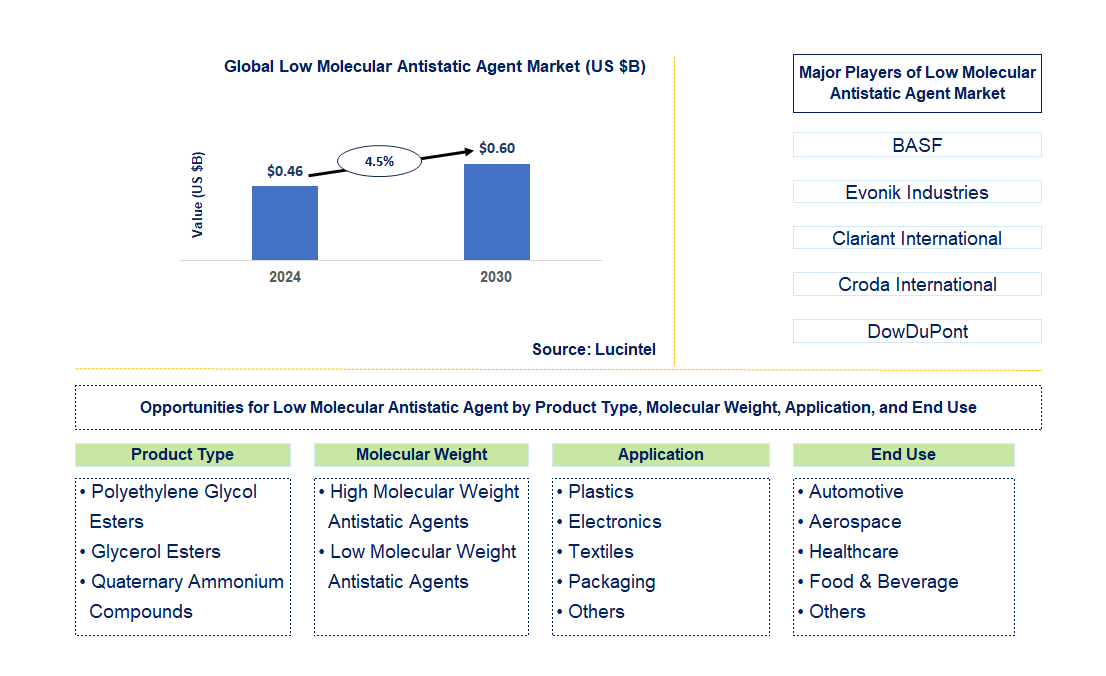
Key data points: The market size in 2030 = $0.60 billion, growth forecast = 4.5% annually next 6 years. Scroll below to get more insights. This market report covers trends, opportunities, and forecast in the global low molecular antistatic agent market to 2030 by product type (polyethylene glycol esters, glycerol esters, and quaternary ammonium compounds), molecular weight (high molecular weight antistatic agents and low molecular weight antistatic agents), application (plastics, electronics, textiles, packaging, and others), end use (automotive, aerospace, healthcare, food & beverage, and others), and region (North America, Europe, Asia Pacific, and the Rest of the World)
We'll send your sample report shortly.
• Lucintel forecasts that plastic is expected to witness the highest growth over the forecast period.
• Within this market, automotive is expected to witness the highest growth over the forecast period.
• North America is expected to witness highest growth over the forecast period. A more than 150-page report is developed to help in your business decisions.

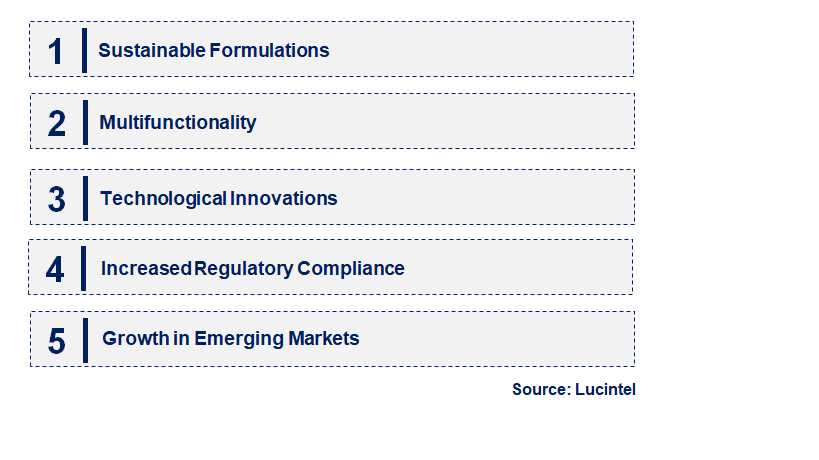
• Sustainable Formulations: There is a strong shift towards eco-friendly and biodegradable low molecular antistatic agents. As environmental concerns grow, manufacturers are prioritizing sustainability in their formulations. Bio-based antistatic agents derived from renewable resources are gaining traction, appealing to both consumers and regulatory bodies. These products not only reduce environmental impact but also meet the increasing demand for safer materials in industries like packaging and textiles. Companies that adopt sustainable practices can enhance their brand reputation and attract eco-conscious customers, positioning themselves favorably in a competitive landscape.
• Multifunctionality: Antistatic agents are being designed to offer additional properties beyond static control. The market is seeing an increase in multifunctional antistatic agents that provide benefits such as UV protection, flame retardancy, and antimicrobial properties. This trend is particularly important in sectors like electronics and automotive, where performance is crucial. By integrating multiple functionalities, manufacturers can deliver products that not only mitigate static electricity but also enhance the overall quality and longevity of end products. This versatility makes them more attractive to manufacturers looking for comprehensive solutions.
• Technological Innovations: Advances in chemical formulation and production techniques are enhancing the effectiveness of antistatic agents. Recent developments in production technologies, including improved synthesis methods and formulation techniques, allow for better control over the characteristics of antistatic agents. Innovations such as nanoencapsulation are enabling more efficient delivery and longer-lasting performance. These advancements not only enhance the efficacy of antistatic agents but also provide manufacturers with the ability to tailor products to meet specific application needs, thereby broadening their market appeal.
• Increased Regulatory Compliance: Stricter regulations around product safety and environmental impact are influencing the market. With the rise of consumer awareness and regulatory scrutiny, manufacturers are increasingly focused on compliance with international safety and environmental standards. This trend drives investment in research and development to ensure that new formulations are safe and sustainable. Companies that proactively address regulatory requirements can gain a competitive advantage, ensuring their products are market-ready and building consumer trust through transparency and responsibility.
• Growth in Emerging Markets: Emerging economies are becoming significant consumers of low molecular antistatic agents. Rapid industrialization in countries like India and China is leading to increased demand for effective antistatic solutions, particularly in the packaging and textile sectors. As local manufacturers seek to improve product quality and reduce static-related issues, the need for specialized antistatic agents is expected to rise. This trend presents opportunities for established brands to expand their reach and engage with new customer bases, driving growth in these dynamic markets. The low molecular antistatic agent market is evolving in response to sustainability imperatives, technological innovations, and changing consumer preferences. Understanding these emerging trends is essential for stakeholders looking to capitalize on growth opportunities and navigate the competitive landscape effectively. By embracing sustainable practices, multifunctional designs, and regulatory compliance, manufacturers can position themselves as leaders in this dynamic market.
• Introduction of Bio-Based Formulations: Recent advancements in the development of bio-based low molecular antistatic agents have gained momentum. Manufacturers are focusing on creating sustainable products derived from renewable resources to meet rising environmental concerns and regulatory standards. These formulations offer effective static control while minimizing environmental impact. By leveraging natural materials, companies can appeal to eco-conscious consumers and industries looking for safer alternatives. This shift not only enhances brand reputation but also aligns with global sustainability goals, positioning manufacturers favorably in a competitive market.
• Enhanced Multifunctionality: There is a growing trend towards multifunctional low molecular antistatic agents that provide benefits beyond static control. Recent formulations now include properties such as UV protection, flame retardancy, and antimicrobial effects. This enhancement is particularly valuable in sectors like electronics and packaging, where performance and safety are paramount. By integrating multiple functionalities into a single product, manufacturers can offer comprehensive solutions that address various application needs, thus improving the value proposition of their offerings and driving greater adoption across industries.
• Advances in Production Technology: Technological innovations in production methods have led to the development of more effective low molecular antistatic agents. Techniques such as nanoencapsulation and advanced synthesis processes enable manufacturers to enhance the delivery and longevity of these agents. These advancements allow for finer control over product characteristics, such as particle size and distribution, leading to improved performance in mitigating static electricity. By utilizing cutting-edge technology, companies can better meet specific application requirements and cater to the diverse needs of their customers.
• Increased Focus on Regulatory Compliance: Stricter regulations surrounding product safety and environmental impact are prompting manufacturers to prioritize compliance in their formulations. Recent developments show an increased investment in research and development aimed at creating formulations that meet international safety standards. This focus on regulatory compliance not only helps ensure market access but also builds consumer trust. Companies that proactively address these requirements can differentiate themselves in the market, providing a competitive edge through transparency and commitment to safety.
• Expansion in Emerging Markets: The demand for low molecular antistatic agents is rapidly increasing in emerging markets, particularly in Asia-Pacific regions like India and China. Recent developments indicate a significant uptick in industrialization and urbanization, driving the need for effective static control solutions, especially in textiles and packaging. As local manufacturers seek to enhance product quality and reduce static-related issues, the market for antistatic agents is expected to grow. This trend presents opportunities for established brands to expand their presence and engage with new customer bases in these dynamic economies. The low molecular antistatic agent market is evolving rapidly, influenced by trends in sustainability, multifunctionality, and regulatory compliance. The introduction of bio-based formulations, advancements in production technology, and increased focus on emerging markets present significant growth opportunities. By adapting to these developments, manufacturers can strengthen their competitive positions and meet the changing demands of various industries. As the market continues to grow, those who embrace innovation and sustainability will be well-equipped to thrive in this dynamic environment.
• Packaging Applications: The packaging industry is experiencing a surge in demand for low molecular antistatic agents to address static electricity issues that can affect product integrity and shelf life. With the rise of e-commerce and the need for protective packaging, manufacturers can leverage antistatic agents to enhance product safety. Innovations in sustainable and biodegradable formulations can attract eco-conscious consumers, providing a competitive edge. By integrating antistatic solutions into packaging materials, companies can not only improve functionality but also meet regulatory requirements, driving growth in this critical application area.
• Electronics Manufacturing: In the electronics sector, static control is paramount to prevent damage to sensitive components during production and transport. The demand for low molecular antistatic agents is increasing as manufacturers strive to meet stringent quality standards. Opportunities lie in developing advanced formulations that offer superior performance and compatibility with various materials used in electronic devices. Collaborations with electronics manufacturers can also lead to tailored solutions that enhance product reliability. By focusing on this application, companies can capitalize on the booming electronics market while ensuring product safety and longevity.
• Textile Industry: The textile industry presents significant growth potential for low molecular antistatic agents, particularly in the production of fabrics that require enhanced performance characteristics. Antistatic agents can improve the wearability and comfort of clothing by reducing static cling and enhancing fabric properties. As consumer preferences shift towards high-performance and functional textiles, manufacturers have the opportunity to innovate and develop specialized solutions tailored to specific fabric types. Targeting this market can drive product differentiation and appeal to brands looking to enhance their offerings in the competitive apparel sector.
• Automotive Sector: The automotive industry is increasingly focusing on reducing static electricity in various applications, from interior materials to electronic components. low molecular antistatic agents can play a crucial role in improving the performance and durability of automotive products. By developing formulations that enhance resistance to static buildup, manufacturers can provide solutions that meet the rigorous demands of this sector. Additionally, the push for electric vehicles and smart technologies opens new avenues for innovative antistatic applications, creating opportunities for growth in this evolving market.
• Consumer Goods: The consumer goods market is witnessing an increasing awareness of static-related issues in products such as household appliances and personal care items. low molecular antistatic agents can be incorporated into these products to enhance functionality and consumer experience. By focusing on developing versatile formulations that cater to a range of consumer goods, manufacturers can tap into a diverse market segment. Additionally, promoting the benefits of antistatic agents in improving product longevity and performance can drive consumer demand, presenting significant growth opportunities in this application area. The low molecular antistatic agent market is ripe with growth opportunities across various applications, from packaging and electronics to textiles and automotive. By focusing on innovative formulations and sustainable practices, manufacturers can enhance product performance and cater to evolving consumer demands. As industries increasingly recognize the importance of effective static control, investing in these key applications can lead to significant market expansion and competitive advantages in an increasingly dynamic landscape.
• BASF
• Evonik Industries
• Clariant International
• Croda International
• DowDuPont
• Solvay
• Arkema
• Akzo Nobel
• Mitsubishi Chemical
• A. Schulman
• Polyethylene Glycol Esters
• Glycerol Esters
• Quaternary Ammonium Compounds
• High Molecular Weight Antistatic Agents
• Low Molecular Weight Antistatic Agents
• Plastics
• Electronics
• Textiles
• Packaging
• Others
• Automotive
• Aerospace
• Healthcare
• Food & Beverage
• Others
• North America
• Europe
• Asia Pacific
• The Rest of the World
• United States: In the United States, recent developments in the low molecular antistatic agent market have been marked by a rise in regulatory scrutiny and a push towards environmentally friendly products. Leading manufacturers are investing in R&D to create non-toxic and biodegradable antistatic agents that comply with stringent regulations.
• China: China low molecular antistatic agent market is expanding rapidly, fueled by the booming electronics and automotive industries. Recent advancements include the development of multifunctional antistatic agents that not only reduce static but also enhance other properties like UV resistance and flame retardancy. As manufacturers seek to optimize product performance, the integration of these agents into various substrates is increasing. Furthermore, government initiatives promoting cleaner production processes are encouraging companies to invest in sustainable and efficient manufacturing methods, thus driving market growth.
• Germany: Germany is witnessing a shift towards innovative and sustainable low molecular antistatic agents, primarily in the automotive and packaging sectors. Recent developments include the formulation of bio-based antistatic agents derived from renewable resources, which are gaining traction due to their lower environmental footprint. German manufacturers are also focusing on enhancing product compatibility and performance across diverse applications. Moreover, the increasing emphasis on recycling and sustainability in packaging is driving the demand for efficient antistatic solutions, positioning the country as a leader in green chemistry practices within the European market.
• India: In India, the low molecular antistatic agent market is experiencing growth due to the expansion of the textile and packaging industries. Recent developments involve the introduction of cost-effective, low-toxic antistatic agents that cater to local manufacturers. The focus is on creating products that not only mitigate static electricity but also improve the overall quality of textiles and packaging materials. Furthermore, rising consumer awareness regarding product safety and performance is pushing manufacturers to adopt advanced formulations, thereby enhancing the competitiveness of Indian players in the global market.
• Japan: Japan market for low molecular antistatic agents is characterized by advanced technological applications and stringent quality standards. Recent developments include the creation of high-performance antistatic agents specifically designed for electronics, where static discharge can severely impact product functionality. Japanese manufacturers are prioritizing innovation, focusing on multifunctional agents that provide additional benefits like anti-fog and anti-UV properties. Moreover, the country's commitment to sustainability is driving research into eco-friendly formulations, aligning with consumer preferences and government policies aimed at reducing environmental impact.


• BASF
• Evonik Industries
• Clariant International
• Croda International
• DowDuPont
• Solvay
• Arkema
• Akzo Nobel
• Mitsubishi Chemical
• A. Schulman Q6. Which low molecular antistatic agent market segment will be the largest in future? Answer: Lucintel forecasts that plastic is expected to witness the highest growth over the forecast period. Q7. In low molecular antistatic agent market, which region is expected to be the largest in next 5 years? Answer: North America is expected to witness highest growth over the forecast period. Q.8 Do we receive customization in this report? Answer: Yes, Lucintel provides 10% customization without any additional cost.


Choose a license that fits your team. Instant PDF delivery.
Prices exclude taxes. Instant delivery. Custom licensing available on request.
Market Report · July 22, 2026
Market Report · July 22, 2026
Market Report · July 22, 2026
Trusted partner for strategic intelligence and business growth


Receive a complimentary market analysis tailored to your industry. Our analysts will identify key growth opportunities and competitive dynamics specific to your business.

Market size, growth rate, and key trend analysis for your specific sector.

Top competitor positioning and market share analysis.

Strategic recommendations backed by data-driven insights.
Get curated market intelligence and competitive moves straight to your inbox.
By subscribing, you agree to receive our monthly insights. Unsubscribe anytime.
Receive a complimentary market analysis tailored to your industry. Our analysts will identify key growth opportunities and competitive dynamics specific to your business.
Market size, growth rate, and key trend analysis for your specific sector.
Top competitor positioning and market share analysis.
Strategic recommendations backed by data-driven insights.
Get curated market intelligence, emerging trends, and competitive moves straight to your inbox each month.
By subscribing, you agree to receive our monthly insights. Unsubscribe anytime.
We'll send your sample report shortly.