
Market Report · May 18, 2026

This market report covers trends, opportunities, and forecasts in the global low code development platform (lcdp) market to 2031 by technology (drag-and-drop interfaces, workflow automation tools, ai-assisted development, pre-built templates and components, and integration and api management), end use industry (retail and e-commerce, healthcare, media & entertainment, bfsi, it & telecommunication, and government source), and region (North America, Europe, Asia Pacific, and the Rest of the World)
We'll send your sample report shortly.
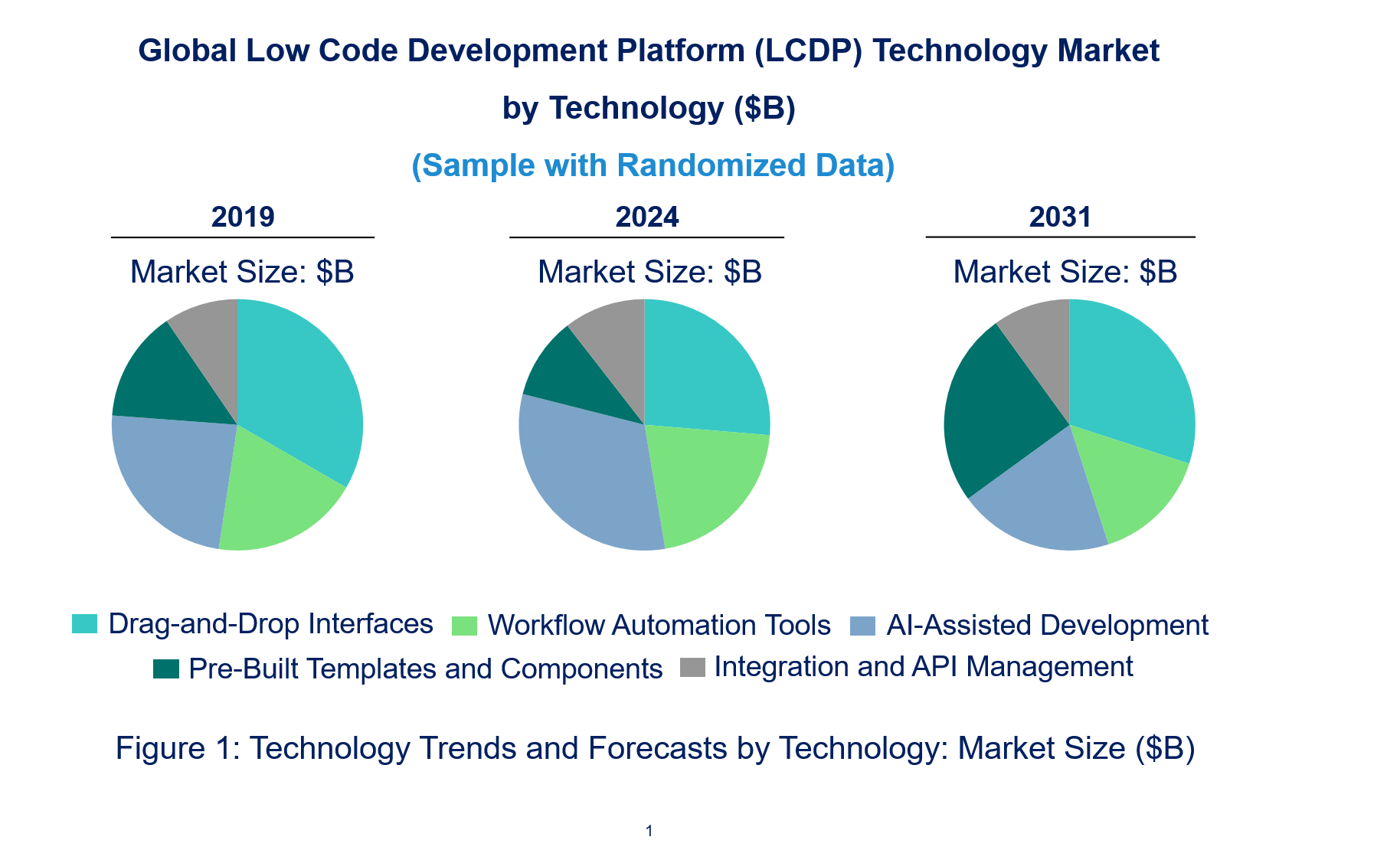
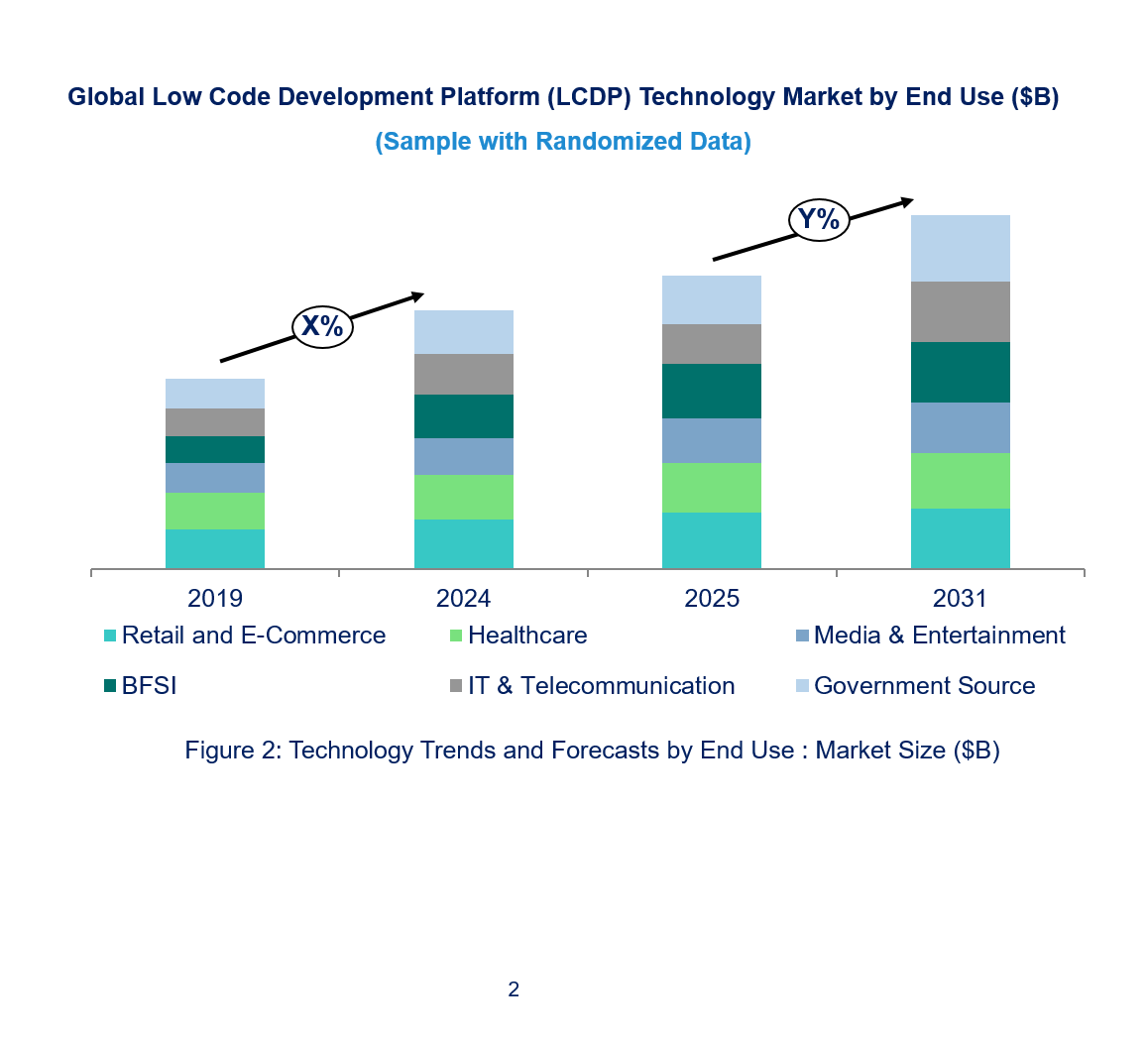
• Integration of AI and Automation: Artificial Intelligence is now widely integrated with low code development platform to generate code, assist in automating trivial tasks, and make the development cycle more productive. Through these AI-assisted development tools, developers are now equipped to enhance end-user applications, provide in-app suggestions, auto-detect bugs, and intelligently handle data for faster time-to-market.
• Focus on Citizen Development: Low code development platform (lcpd) market are shifting their mission to empower citizen developers, or business users, who are not professional programmers but have domain expertise. Democratizing software development is one reason that broadens the acceptance of low code development platform, as companies can meet demand through other means than solely through IT departments.
• Integration and API Management: Since companies use more than one tool, integrating these tools properly is a key necessity. Now, low code development platform also prioritize API management, allowing businesses to easily link different systems, share data, and create seamless workflows between applications.
• Cloud-Native Platforms: Low code development platform is changing with cloud adoption. A majority of low code development platform are deployed on the cloud, offering scalable and flexible applications that can update quickly. Cloud-native development ensures the application is easy to scale and maintain, reducing complexity in infrastructure management.
• Security and Compliance: As more mission-critical applications are developed using low code development platform, security has become a major concern. New trends emerging to address this include built-in security features, compliance automation, and the ability to integrate with enterprise security systems to ensure that applications meet industry standards.
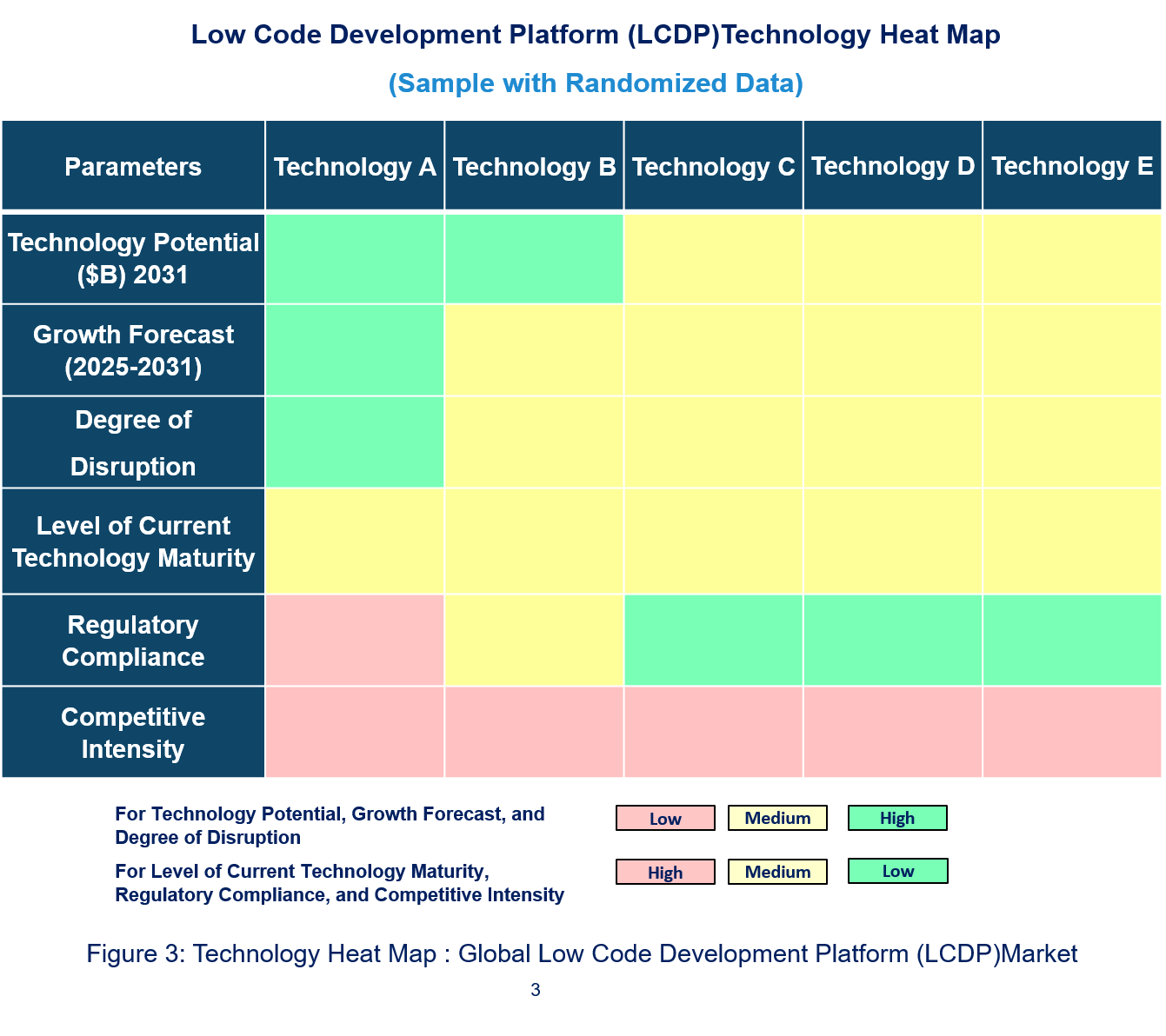
• Potential in Technology: LCDP technologies hold immense potential by allowing quicker application development with less coding knowledge required. The applications make use of drag-and-drop interfaces, AI-backed development, and preconfigured templates to greatly accelerate software development. The ability for non-technical users to be equipped and integrations across systems provides enormous scope for businesses to explore.
• Degree of Disruption: LCDPs are disrupting current software development processes by reducing reliance on specialized developers. Since they democratize app creation, they can lower the cost and time of development while increasing access to a larger user base, including business professionals. This is happening in industries such as retail, healthcare, and finance.
• Current Technology Maturity Level: LCDPs have grown to a relatively mature level, as several platforms now offer robust features such as workflow automation, AI integration, and cross-platform deployment. However, the technology is still evolving and maturing, especially when it comes to AI-assisted development and complex enterprise system integrations.
• Regulatory Compliance: Regulatory compliance remains a challenge as companies must ensure that applications developed on LCDPs adhere to industry-specific standards and data protection regulations. Many platforms are incorporating compliance features, but full regulatory alignment requires continuous updates. The low code development platform (LCDP) market holds transformative potential but also faces challenges related to regulation and maturity. It represents a significant shift in software development and innovation.
• Microsoft: Microsoft has expanded its low code offering through Power Apps, enabling businesses to create custom applications without extensive coding knowledge. Recent enhancements include deeper integration with other Microsoft products like Azure and Microsoft 365, improving workflows and collaboration.
• Appian: Appian is innovating with its low code platform, focusing on integrating AI and automation features to speed up application development. The company recently enhanced its workflow automation capabilities and introduced a new app marketplace for reusable components, helping users accelerate deployment.
• Pegasystems Inc.: Pegasystems has released several new developments under the Pega Platform, including AI-driven insights, low-code design of applications and business processes, and their business process management suite. The latest version has a more intuitive interface, real-time analytics, and a focus on cloud-based deployment. Low code capabilities are delivered to servicenow's users through its servicenow studio. This platform has automated workflows managed IT services, and built applications with minimal coding. Integration with enterprise systems and cloud solutions from their end has seen larger organizations join their platform.
• Rapid Digital Transformation: The increasing demand for digital solutions in every sector is encouraging businesses to use Low Code platforms. Organizations are seeking opportunities to develop applications faster and with fewer resources using Low Code platforms.
• Cost and Time Efficiency: Low Code platforms reduce the number of skilled developers required, thereby lowering the costs associated with software development. Moreover, these platforms enable fast application delivery, which is essential in today's fast-paced business environment.
• Increased Citizen Development: As organizations empower more people beyond technical staff to design applications, the demand for Low Code platforms increases in sectors such as healthcare, retail, and finance.
• Collaboration between IT and Business Teams: Low-code platforms bridge the gap between IT and business teams, making it possible for business teams to take ownership of digital transformation. They collaborate on application development, speeding up the pace of innovation. Challenges in the low code development platform market include:
• Security Issues: With Low Code platforms being increasingly used for mission-critical applications, security is a major issue. Ensuring that applications are built with robust security measures and compliance capabilities becomes a concern.
• Limited Customization: Although Low Code platforms offer speed and simplicity, they sometimes provide limited customization compared to traditional development. This may be a barrier for businesses with highly specific requirements.
• Integration Complexities: Although Low Code platforms are designed to simplify integration, many organizations still face challenges in connecting these platforms with legacy systems, especially in large enterprises with complex IT infrastructures. The low code development platform LCDP market is experiencing rapid growth, driven by its technological advancements and transformative potential across industries. Evaluating key factors such as technology potential, disruption, maturity, and regulatory compliance is essential for understanding its impact.
• Microsoft
• Appian
• Pegasystems Inc.
• ServiceNow
• Technology Readiness by Technology Type: Drag-and-drop interfaces and workflow automation are both mature highly competitive and widely adopted. AI-assisted development is emerging with growing potential. Pre-built templates and components enable fast and easy app development, while Integration and API management support efficient platform connections. These technologies form the foundation of retail, healthcare, and BFSI industries.
• Competitive Intensity and Regulatory Compliance: The market for low code development platform (LCDP) market is highly competitive, with vendors trying to deliver AI-assisted development and automation of workflows as advanced features. In healthcare and BFSI sectors, regulatory compliance is a critical factor for maintaining trust and meeting privacy standards such as GDPR and HIPAA. Vendors must balance innovation and compliance to succeed in various industries.
• Disruption Potential by Technology Type: Low code development platforms low code development platform (LCDP) are disrupted by technologies like drag-and-drop Interfaces, which simplify development for non-developers. Workflow automation tools boost efficiency by automating tasks, while AI-assisted development speeds up coding. Pre-built templates and Components reduce deployment time, and Integration and API Management ensure seamless system connectivity. These innovations democratize app development, enhance productivity, and drive digital transformation.
• Drag-and-Drop Interfaces
• Workflow Automation Tools
• AI-Assisted Development
• Pre-Built Templates and Components
• Integration and API Management
• Retail and E-Commerce
• Healthcare
• Media & Entertainment
• BFSI
• IT & Telecommunication
• Government Source
• North America
• Europe
• Asia Pacific
• The Rest of the World
• Latest Developments and Innovations in the Low Code Development Platform (LCDP) Technologies
• Companies / Ecosystems
• Strategic Opportunities by Technology Type




Choose a license that fits your team. Instant PDF delivery.
Prices exclude taxes. Instant delivery. Custom licensing available on request.
Market Report · May 18, 2026
Market Report · May 18, 2026
Market Report · May 18, 2026
Trusted partner for strategic intelligence and business growth


Receive a complimentary market analysis tailored to your industry. Our analysts will identify key growth opportunities and competitive dynamics specific to your business.

Market size, growth rate, and key trend analysis for your specific sector.

Top competitor positioning and market share analysis.

Strategic recommendations backed by data-driven insights.
Get curated market intelligence and competitive moves straight to your inbox.
By subscribing, you agree to receive our monthly insights. Unsubscribe anytime.
Receive a complimentary market analysis tailored to your industry. Our analysts will identify key growth opportunities and competitive dynamics specific to your business.
Market size, growth rate, and key trend analysis for your specific sector.
Top competitor positioning and market share analysis.
Strategic recommendations backed by data-driven insights.
Get curated market intelligence, emerging trends, and competitive moves straight to your inbox each month.
By subscribing, you agree to receive our monthly insights. Unsubscribe anytime.
We'll send your sample report shortly.