
Market Report · July 16, 2026

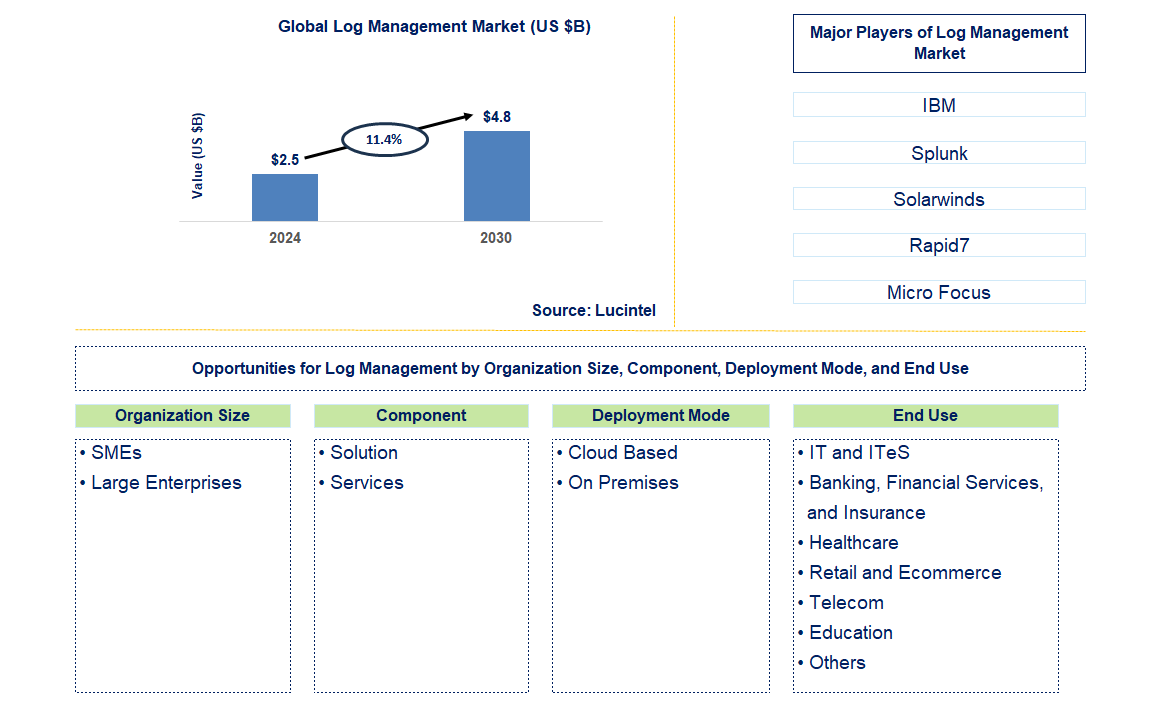
Key data points: The market size in 2030 = $4.8 billion, growth forecast = 11.4% annually for the next 6 years. Scroll below to get more insights. This market report covers trends, opportunities, and forecasts in the global log management market to 2030 by organization size (SMEs and large enterprises), component (solution and services), deployment mode (cloud based and on premises), end use (IT and ITes, banking, financial services, and insurance, healthcare, retail and ecommerce, telecom, education, and others), and region (North America, Europe, Asia Pacific, and the Rest of the World)
We'll send your sample report shortly.
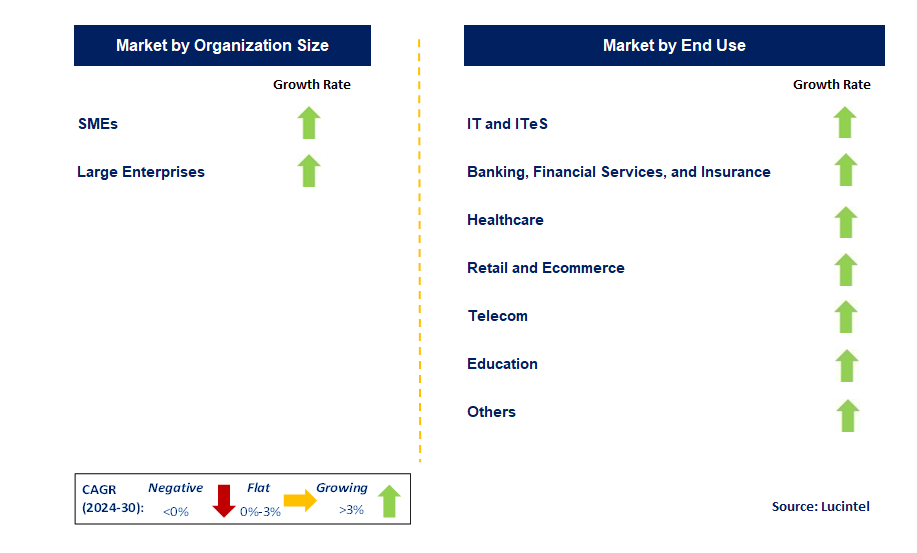
• Lucintel forecasts that, within the organization size category, large enterprise segment is expected to witness higher growth over the forecast period due to substantial volume of information is generated on a daily basis from IT systems.
• Within the end use category, IT and ITes segment will remain the largest segment due to increase in number of cybercrimes.
• In terms of regions, North America will remain the largest region over the forecast period due to technological advancements and rising advanced persistent threats and targeted attacks in the region. Gain valuable insight for your business decision with our comprehensive 150+ page report.
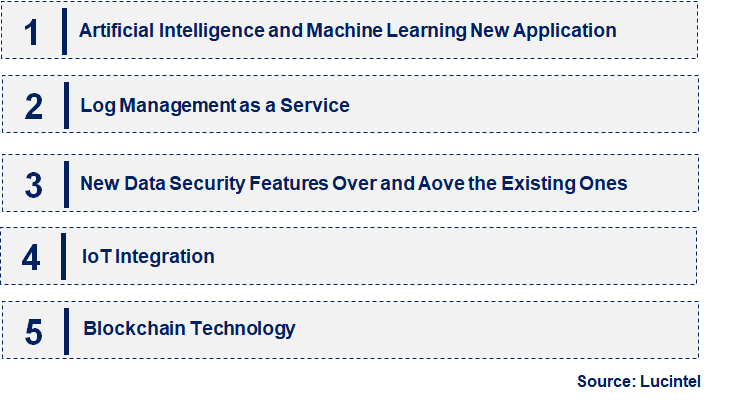
• Artificial Intelligence and Machine Learning New Applications: New applications will change log management by allowing automated analysis of logs and threat identification. These advancements extend the principle of real-time anomaly detection into machine behavior prediction, enabling the identification of potential security incidents and operational issues before they escalate.
• Log Management as a Service: Cloud-based solutions for running log management systems are becoming the norm due to their rapid adaptation and expansive potential. There is significant investment in the technology, centralizing logging and analysis, which reduces the need for local equipment. This trend complements the increasing demand for remote work and enables companies of all sizes to save on log management costs.
• New Data Security Features: Advanced data security measures, such as encryption and secure access barriers, are fundamental practices in log management. With ongoing data privacy regulations, adequate security is essential to protect log data from unauthorized access, thereby retaining organizational data without compliance liabilities.
• IoT Integration: IoT integration is a key trend where businesses seek to capture additional logs from a growing number of connected devices. By incorporating IoT technology into log management, an organization can monitor and manage device activities, including potential security threats, in real-time, thus improving security levels and organizational productivity.
• Blockchain Technology: The advent of blockchain technology has emerged as a method to secure log data from modifications. Blockchain systems are decentralized and resistant to tampering, allowing organizations to protect their log data from external interference while retaining and authenticating data, which is essential for audits and data management. Other emerging developments in log management, such as AI, cloud solutions, advanced data protection, IoT, and blockchain, have significantly transformed log management as a discipline. These trends enhance automation, scalability, security, and live monitoring to meet the requirements of contemporary IT infrastructure and foster better log management.
• Boosted Automation Capabilities: The wider integration of automation tools remains a major breakthrough in log management by making log collection, log analysis, and log response processes more efficient. Human efforts are reduced through these tools, which accurately identify and manage issues, making logging practices more efficient and proactive.
• Integration with Advanced Analytics: This integration assists in managing logs by helping to better understand log data. Furthermore, predicting the occurrence of technical issues and detecting anomalies makes it easier to notice certain trends and implications, thereby enhancing organizational decision-making and enabling swift responses to related incidents.
• Enhanced Data Privacy Compliance: Enhanced data privacy compliance features are being incorporated into log management solutions due to stricter requirements, such as GDPR. Today, these solutions provide enhanced data protection capabilities, such as increased granular access and logging, to prevent sensitive log data from being exposed in the event of non-compliance.
• Flexible Cloud Solutions: The log management segment is embracing the use of scalable cloud solutions for centralized log collection and management in an economical way. This approach allows for quick and cost-effective infrastructures, including secure measures, remote assurance, and integration of various online resources with functional capabilities within organizations at reduced infrastructure costs.
• Enhanced Integration with IT Security Tools: The evolution of enhanced integration with IT security tools is a significant change, as it extends security event management functionalities. Log management systems are now integrated into SIEM (security information and event management) and other security systems to provide a single view of security events and improve response coordination. New trends in log management, such as increased automation, advanced analytics capabilities, greater attention to data privacy, cloud-based solutions, and enhanced features related to log management tools, enhance efficiency, security, and compliance efforts. These changes are transforming how logs are managed and meeting the needs of today’s organizations.
• Automotive Industry Monitoring: Log management solutions can have parallel business development prospects in the automotive industry, as it increasingly becomes IT-dependent on connected vehicles. Providing timely analysis and planning of training logs for automobiles will enhance the operational performance of vehicles, safety, and compliance with industry laws.
• Healthcare Sector Compliance: The healthcare sector is likely to be very attractive for log management solutions, particularly in areas of compliance such as HIPAA. Technologies that allow for the secure storage and management of patient records and information are critical, as they cater to compliance laws and protect sensitive information.
• Financial Services Security: In the financial services sector, log management solutions are crucial for managing data security and legal compliance within organizations. Providing elaborate threat mitigation technologies, real-time monitoring, and secure retention of log files is important for addressing complex security concerns faced by financial institutions.
• Remote Work Enablement: For employees working from home, there are opportunities for log management systems focused on remote log management and monitoring. Cloud-based and mobile solutions enable companies to log and analyze data from various locations, thereby increasing flexibility and operational efficiency.
• IoT and Smart Devices Integration: The log management solutions market has growth opportunities with the integration of IoT and smart devices. The more devices organizations can connect and deploy, the more solutions can provide logs that reveal real-time activity. In such an environment, security and operational risks concerning the Internet of Things become manageable. Primarily, the log management business undertakes strategic growth opportunities in sectors such as automotive industry monitoring, healthcare compliance, financial services security, remote work enablement, and IoT integration. Such development areas also promote innovation and growth in log management solutions, bringing effectiveness to a variety of needs.
• Technological Advancements: Technological advancements are major drivers in log management, and the advent of AI, cloud computing, and analytical capabilities improves the entire process of log collection, management, and response. These technologies facilitate improved transcription, automation, and awareness of threats, thus enhancing the log management market.
• Regulatory Compliance Requirements: Regulatory compliance requirements increase the need for log management solutions that are rich in data privacy capabilities. Organizations have legal obligations they must follow, such as GDPR and HIPAA, and thus require solutions that provide secure log storage, access controls, and audit trails that meet legal and industry requirements.
• Increased Security Threats: The need to identify and mitigate risks is a major factor as institutions seek log management systems. The detection of advanced threats and ongoing monitoring are essential to combat coalitions of cyber attacks and to secure information.
• Demand for Automation: Demand for automation drives the creation of new log management solutions that facilitate log gathering and analysis. This reduces the manual workload, increases precision, and boosts operations, emphasizing the necessity of more aggressive and effective log management.
• Cost Efficiency Considerations: Cost efficiency considerations also play a role in the selection of log management solutions. Organizations are trending toward inexpensive mechanisms that offer better performance and scalability. On-demand and open-source options are becoming popular due to their low cost and high adaptability. Challenges in the log management market are:
• Data Security and Privacy Challenges: One challenge posed by log management is information security and privacy. Protecting sensitive logs from unauthorized access requires stricter measures and compliance with relevant data protection regulations. Overcoming these challenges is vital for preserving trust and maintaining competitiveness in the market.
• Integration Difficulties: The implementation of log management solutions may encounter integration challenges with existing IT systems. Apart from organizational cultural aspects that can affect the success of log management, especially in adopting log management tools, it is important to address technical challenges.
• User Adoption and Training: User adoption and training can sometimes hinder the optimal utilization of log management solutions, influencing their performance. Achieving the objectives of log management systems and their capabilities requires proper training and support for staff in using and maintaining these log facilities. The key factors driving demand for log management are defined as: technological development, regulatory imperatives, security threats, the need for automation, and cost efficiency. The increasing focus on data security, integration difficulties, and user adoption constraints the market. Addressing these drivers and challenges is of primary importance for effective log management and market development.
• IBM
• Splunk
• Solarwinds
• Rapid7
• Micro Focus
• SMEs
• Large Enterprises
• Solution
• Services
• Cloud Based
• On Premises
• IT and ITeS
• Banking, Financial Services, and Insurance
• Healthcare
• Retail and Ecommerce
• Telecom
• Education
• Others
• North America
• Europe
• Asia Pacific
• The Rest of the World
• United States: In the United States, log management is advancing with the integration of AI and machine learning for threat management, detection, and incident response. The automation of log event detection and abnormal activity recognition enhances timely security threat identification and enables coordinated response measures. Additionally, cloud-based log management solutions are gaining popularity due to their performance advantages over traditional solutions.
• China: Log management in China has progressed with a strong emphasis on data storage regulations and jurisdictional requirements. New solutions offer more effective encryption and data storage methods to meet strict compliance standards. Integration with the national cybersecurity system and increased automation are also trends aimed at enhancing security and improving regulatory compliance.
• Germany: In Germany, data privacy and GDPR compliance are central to log management solutions. These solutions have evolved to include additional data protection features, such as gated access to log storage, to meet strict regulatory requirements. There is also a trend toward aligning log management systems with broader IT risk management policies.
• India: The log management market in India is expanding with a focus on cost-effective and scalable solutions. Cloud-based and open-source applications are becoming popular among companies for log management and analysis due to lower service costs. Real-time analytics and automation are improving the security posture and operational efficiency of Indian organizations.
• Japan: In Japan, advancements in log management include convergence with new technologies such as IoT and blockchain. IoT-based log management systems enable logistics companies to monitor devices in real time, while blockchain technology is being explored for secure and immutable log storage. These innovations are enhancing security and reliability in complex IT environments.


• IBM
• Splunk
• Solarwinds
• Rapid7
• Micro Focus Q6. Which log management market segment will be the largest in future? Answer: Lucintel forecasts that large enterprise segment is expected to witness higher growth over the forecast period due to substantial volume of information is generated on a daily basis from IT systems. Q7. In log management market, which region is expected to be the largest in next 5 years? Answer: North America will remain the largest region over the forecast period due to technological advancements and rising advanced persistent threats and targeted attacks in the region. Q.8 Do we receive customization in this report? Answer: Yes, Lucintel provides 10% customization without any additional cost.


Choose a license that fits your team. Instant PDF delivery.
Prices exclude taxes. Instant delivery. Custom licensing available on request.
Market Report · July 16, 2026
Market Report · May 18, 2026
Market Report · May 18, 2026
Trusted partner for strategic intelligence and business growth


Receive a complimentary market analysis tailored to your industry. Our analysts will identify key growth opportunities and competitive dynamics specific to your business.

Market size, growth rate, and key trend analysis for your specific sector.

Top competitor positioning and market share analysis.

Strategic recommendations backed by data-driven insights.
Get curated market intelligence and competitive moves straight to your inbox.
By subscribing, you agree to receive our monthly insights. Unsubscribe anytime.
Receive a complimentary market analysis tailored to your industry. Our analysts will identify key growth opportunities and competitive dynamics specific to your business.
Market size, growth rate, and key trend analysis for your specific sector.
Top competitor positioning and market share analysis.
Strategic recommendations backed by data-driven insights.
Get curated market intelligence, emerging trends, and competitive moves straight to your inbox each month.
By subscribing, you agree to receive our monthly insights. Unsubscribe anytime.
We'll send your sample report shortly.