
Market Report · July 22, 2026

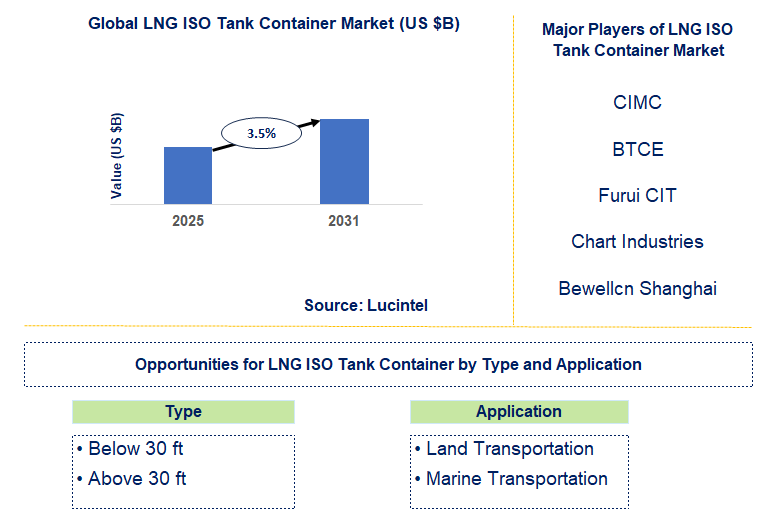
Key data points: The growth forecast = 3.5% annually for the next 7 years. Scroll below to get more insights. This market report covers Trends, opportunities and forecasts in LNG ISO tank container market to 2031 by type (below 30 ft and above 30 ft), application (land transportation and marine transportation), and region (North America, Europe, Asia Pacific, and the Rest of the World)
We'll send your sample report shortly.
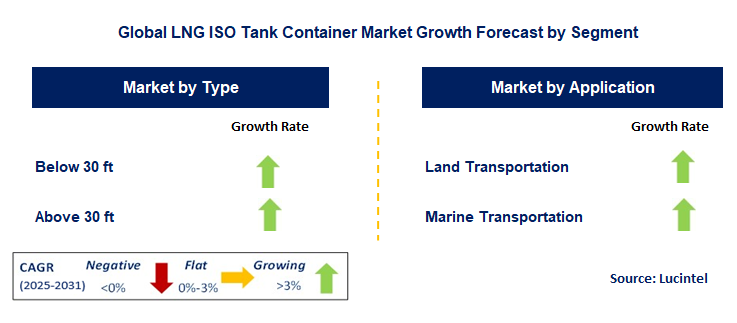
• Lucintel forecasts that, within the type category, above 30 ft is expected to witness higher growth over the forecast period.
• Within the application category, marine transportation is expected to witness higher growth.
• In terms of region, APAC is expected to witness the highest growth over the forecast period.
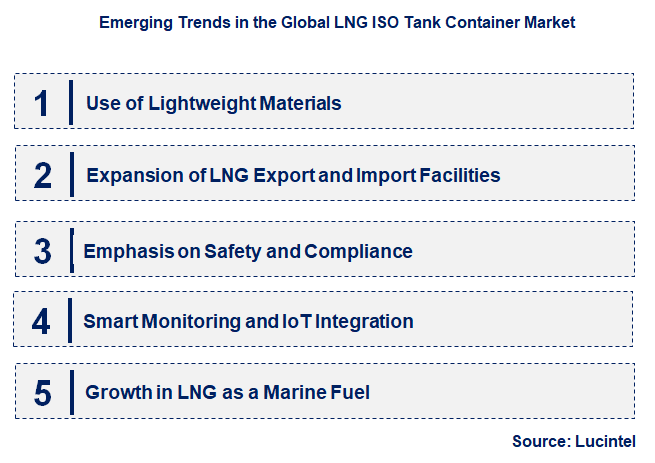
• Use of Lightweight Materials: The use of lightweight materials such as advanced composites and high-strength alloys is becoming more common in LNG ISO tank container design. The materials reduce the weight of the containers, hence increasing cargo capacity and improving fuel efficiency in transportation. Lighter containers also reduce the overall carbon footprint of LNG logistics. This trend is crucial because the industry is focusing on reducing emissions that are associated with transporting LNG over long distances.
• Expansion of LNG Export and Import Facilities: As LNG is becoming an important source of energy, nations are investing in the development of their LNG export and import facilities. This includes the creation of more sophisticated storage facilities and ISO tank containers with the capacity to store larger quantities of LNG. As international trade in LNG continues to grow, the need for ISO tank containers that can move LNG safely and efficiently across borders will also keep growing. The trend is a support for the overall objective of developing a more integrated global energy market.
• Emphasis on Safety and Compliance: Safety remains a top concern in the LNG ISO tank container market, with mounting regulatory pressure to comply with international safety requirements. Manufacturers are integrating sophisticated safety features, including more advanced pressure relief valves, leak detection systems, and strengthened containers, to minimize the chances of accidents during shipping. Subscribing to safety standards, including those of the International Maritime Organization (IMO), is vital for the sector to minimize the risks involved in shipping hazardous materials like LNG.
• Smart Monitoring and IoT Integration: The use of smart technologies and the Internet of Things (IoT) within LNG ISO tank containers is becoming increasingly popular. IoT containers enable real-time monitoring of vital parameters like pressure, temperature, and LNG levels. The information assists operators in efficiently managing the transportation process, anticipating maintenance requirements, and maintaining the integrity of transported LNG. These intelligent monitoring systems are increasingly becoming a part of the LNG logistics process, both increasing safety and operational efficiency.
• Growth in LNG as a Marine Fuel: Utilization of LNG as a marine fuel is on the rise as the shipping sector searches for cleaner fuels to replace traditional marine fuels. LNG ISO tank containers are finding wider applications in delivering LNG to ships, especially in areas where the environmental laws are tightening. With the maritime sector transitioning toward decarbonization, LNG is gaining relevance as a viable alternative fuel source, creating increased demand for LNG ISO tank containers to facilitate the increased trend in shipping. These new trends are transforming the LNG ISO tank container market by pushing innovations that enhance efficiency, safety, and sustainability. The use of light materials, the growth of LNG infrastructure, and the adoption of smart monitoring technologies are revolutionizing the logistics of LNG transportation. The increasing adoption of LNG as a marine fuel also underscores the significance of LNG ISO tank containers in the world's transition toward cleaner energy alternatives.
• Development of High-Capacity ISO Tank Containers: LNG ISO tank container design has evolved to carry higher LNG volumes, to meet the expanding energy demand. Large-capacity containers have greater LNG carrying capacities, which saves on transportation per unit and optimizes operational performance. This improvement is crucial when world LNG trade continues to grow and nations demand better methods for transporting high amounts of LNG.
• Technology for Cryogenic Tank Design: Technology in cryogenic tanks has improved dramatically, with improved insulation and more secure containment of LNG while it is being transported. Improved cryogenic systems ensure that LNG stays at the specified low temperatures, reducing boil-off gas and guaranteeing safe and efficient delivery of the LNG to its point of destination. Improved technology is important for ensuring the integrity of the LNG shipment, particularly over long distances.
• More Investment in LNG Transport Infrastructure: Nations and corporations are making large investments in LNG transportation infrastructure, such as bespoke ISO tank containers. The rationale behind the investment is the rising demand for LNG as a clean energy source and the requirement for efficient transportation to fulfill global supply chain demands. Growth in LNG storage and transport infrastructure is key to making certain that the growing amount of LNG can be delivered economically and reliably to markets around the globe.
• Enhanced Regulatory Guidelines for LNG Transportation: Governments and global institutions are enforcing stronger regulations for LNG transportation to maintain safety and protect the environment. Some of these regulations are safety guidelines for LNG ISO tank containers, such as pressure control, leak detection, and spill prevention guidelines. As the LNG market expands, these regulatory changes will be instrumental in maintaining the safe and sustainable transportation of LNG.
• Collaborations and Partnerships in LNG Supply Chain: Partnerships among firms dealing with LNG production, storage, and transportation are also on the rise. These partnerships help firms maximize their supply chains and enhance the efficiency of transporting LNG. Through collaboration, stakeholders are able to make the overall logistics process smoother and less costly, positioning LNG as a more competitive energy source globally. All of these advancements are contributing to enhanced efficiency, security, and scalability of LNG transport. With rising demand for LNG, the industry for ISO tank containers is shifting to address a changing energy future. All of these developments are making sure the LNG logistics industry continues to cope with growing capacities while maintaining highest safety standards.
• Growth in LNG as a Marine Fuel: Use of LNG as shipping fuel is also creating a robust growth prospect for LNG ISO tank containers. Stricter regulations, aiming at decarbonizing shipping, are shifting the focus to using LNG as a more convenient substitute fuel for the industry. Such a development is also translating to an additional need for LNG ISO tank containers in delivering LNG to ships around the globe and mainly to where environmental regulations in regards to emissions are stricter.
• Development of LNG Infrastructure in Emerging Markets: Emerging economies, especially in Asia and Africa, are experiencing swift industrialization and expanding energy requirements. While these countries are increasingly looking towards LNG as a cleaner fuel compared to oil and coal, there is an escalating need for LNG transport infrastructure. LNG ISO tank containers will be instrumental in facilitating the growth of these markets through efficient transportation and storage solutions.
• LNG as a Fuel for Industrial Uses: LNG is increasingly being utilized as a fuel in manufacturing, chemicals, and power industries. With industrial industries aiming for cleaner energy solutions, the demand for LNG ISO tank containers is growing. The containers are critical for the transportation of LNG to industrial plants, where it can be utilized to substitute conventional fuels such as coal and oil, enabling industries to minimize their carbon footprint.
• Increase in LNG Exports: As nations such as the United States and Australia increasingly become prominent LNG exporters, the LNG export market has great expansion potential. LNG ISO tank containers will serve to facilitate safe, efficient LNG transport from producing centers to foreign markets. Growth in LNG exports should lead to additional demand for increasingly sophisticated, specialty ISO tank containers.
• Energy Security and Strategic Reserves: Countries are focusing more on energy security, which has led to the development of LNG strategic reserves. This is an opportunity for LNG ISO tank containers to be used in the transportation and storage of LNG in reserves. The containers are very important in ensuring that countries have a reliable supply of LNG in case of disruptions in energy supply chains. These growth prospects are likely to propel the future growth of the LNG ISO tank container market. The growing application of LNG in different industries and the development of LNG infrastructure in developing economies create tremendous growth opportunities. With rising demand for cleaner fuels, LNG ISO tank containers will be instrumental in fulfilling the logistics requirements of the global LNG industry.
• CIMC
• BTCE
• Furui CIT
• Chart Industries
• Bewellcn Shanghai
• Rootselaar Group
• Air Water Engineering
• Corban Energy Group
• M1 Engineering
• INOXCVA
• Below 30 ft
• Above 30 ft
• Land Transportation
• Marine Transportation
• North America
• Europe
• Asia Pacific
• The Rest of the World
• United States: In the United States, the LNG ISO tank container market has seen rapid expansion owing to the growing demand for LNG export, especially to countries like Europe and Asia. With the U.S. emerging as a major exporter of LNG, there has been growing demand for safe and efficient means of LNG transportation. There has been investment in infrastructure in the U.S. to facilitate LNG export, which includes the construction of specialized ISO tank containers. These tanks are made more efficiently and safely in order to provide for the mounting demand for the use of LNG as a more environmentally friendly form of fuel as opposed to more conventional fossil fuel.
• China: China has been one of the biggest LNG consumers, with the demand of LNG ISO tank containers rising continually. With China's continued transition towards cleaner power sources, LNG imports and movement have risen sky-high. The government of China has been encouraging the utilization of LNG for domestic and industrial uses, pushing the demand for more efficient and safer tank containers. The nation is also investing in LNG storage and distribution facilities, with an emphasis on implementing international standards for tank container technology to enhance safety and lower costs in LNG logistics.
• Germany: Germany has been a pioneer in the move towards a low-carbon economy, and LNG is viewed as a major driver of this change. The LNG ISO tank container market has increased with the rising LNG imports by the country, particularly following decreasing dependence on nuclear and coal energy. Germany is emphasizing the development of its LNG infrastructure, including storage and distribution networks. The government is also encouraging the adoption of LNG as a substitute fuel in transportation, resulting in higher demand for ISO tank containers to cater to both industrial and mobility purposes.
• India: India's LNG ISO tank container market is growing because the country is growing industrially and its energy requirements are on the rise. LNG has become a crucial component of India's energy mix, particularly as the nation shifts towards cleaner energy sources. The demand for LNG import has increased as the nation's infrastructure to produce and store LNG keeps evolving. Moreover, India's initiative towards enhancing its transport infrastructure has resulted in a higher demand for LNG to fuel vehicles and other transport infrastructure. The Indian market is experiencing huge investments in LNG ISO tank containers to facilitate these developments.
• Japan: Japan, which is strongly dependent on LNG for its energy requirements, has experienced high growth in the consumption of LNG ISO tank containers. The energy market of the country has shifted towards giving greater emphasis to LNG imports, particularly since the Fukushima nuclear accident and the decline in nuclear power generation. Japan's emphasis on energy security and sustainability is propelling its demand for LNG as a more environmentally friendly energy source. As a result, the need for LNG ISO tank containers has increased as Japan looks to enhance its LNG storage and transportation facilities in addition to addressing its domestic and global energy demands.


• CIMC
• BTCE
• Furui CIT
• Chart Industries
• Bewellcn Shanghai
• Rootselaar Group
• Air Water Engineering
• Corban Energy Group
• M1 Engineering
• INOXCVA Q5. Which LNG ISO tank container market segment will be the largest in future? Answer: Lucintel forecasts that, within the type category, above 30 ft is expected to witness higher growth over the forecast period. Q6. In LNG ISO tank container market, which region is expected to be the largest in next 5 years? Answer: In terms of region, APAC is expected to witness the highest growth over the forecast period. Q7. Do we receive customization in this report? Answer: Yes, Lucintel provides 10% customization without any additional cost.


Choose a license that fits your team. Instant PDF delivery.
Prices exclude taxes. Instant delivery. Custom licensing available on request.
Market Report · July 22, 2026
Market Report · July 22, 2026
Market Report · July 17, 2026
Trusted partner for strategic intelligence and business growth


Receive a complimentary market analysis tailored to your industry. Our analysts will identify key growth opportunities and competitive dynamics specific to your business.

Market size, growth rate, and key trend analysis for your specific sector.

Top competitor positioning and market share analysis.

Strategic recommendations backed by data-driven insights.
Get curated market intelligence and competitive moves straight to your inbox.
By subscribing, you agree to receive our monthly insights. Unsubscribe anytime.
Receive a complimentary market analysis tailored to your industry. Our analysts will identify key growth opportunities and competitive dynamics specific to your business.
Market size, growth rate, and key trend analysis for your specific sector.
Top competitor positioning and market share analysis.
Strategic recommendations backed by data-driven insights.
Get curated market intelligence, emerging trends, and competitive moves straight to your inbox each month.
By subscribing, you agree to receive our monthly insights. Unsubscribe anytime.
We'll send your sample report shortly.