
Market Report · May 16, 2026

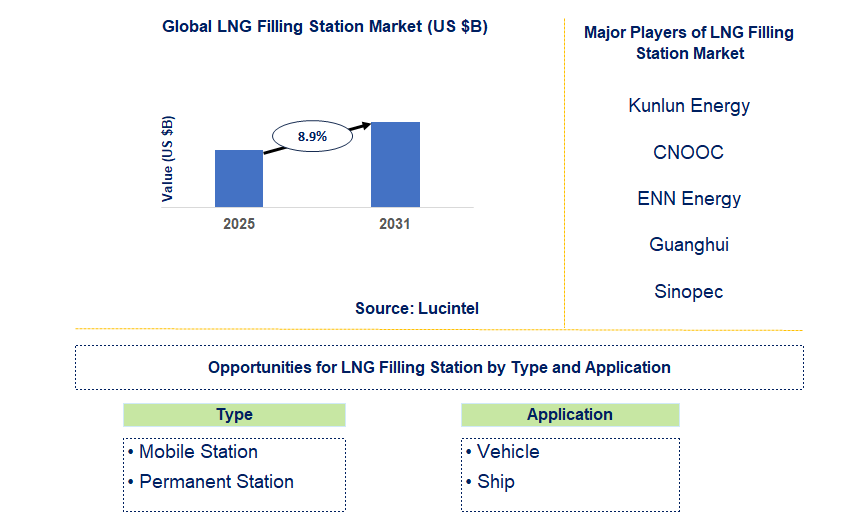
Key data points: The growth forecast = 8.9% annually for the next 7 years. Scroll below to get more insights. This market report covers Trends, opportunities and forecasts in LNG filling station market to 2031 by type (mobile station and permanent station), application (vehicle and ship), and region (North America, Europe, Asia Pacific, and the Rest of the World)
We'll send your sample report shortly.
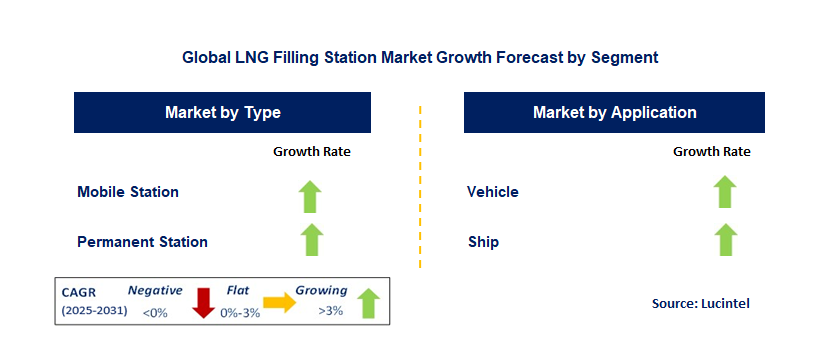
• Lucintel forecasts that, within the type category, mobile station is expected to witness higher growth over the forecast period.
• Within the application category, vehicle is expected to witness higher growth.
• In terms of region, APAC is expected to witness the highest growth over the forecast period.
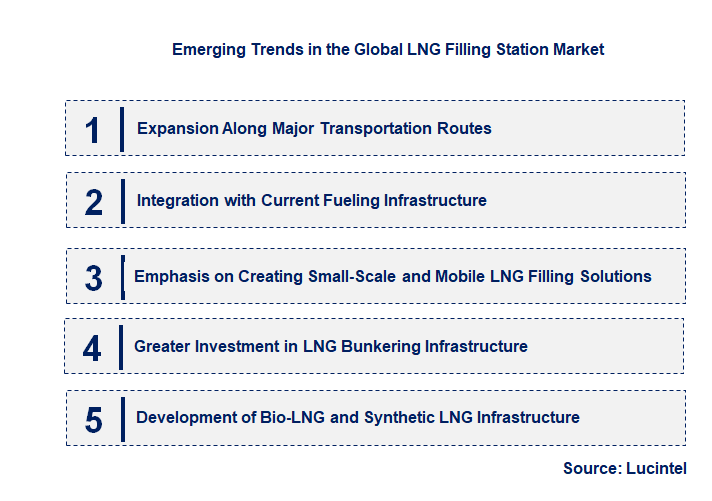
• Expansion Along Major Transportation Routes: A major trend is the planned development of LNG filling station along primary highways and freight corridors to meet the increasing fleet of LNG-powered heavy-duty trucks. This development is intended to offer convenient refueling for long-haul transport, promoting increased use of LNG vehicles and enabling cross-country logistics.
• Integration with Current Fueling Infrastructure: There is a growing trend of integrating LNG refueling capacity into current multi-fuel station. This method enables fleet operators and individual consumers to have access to both traditional fuels and LNG at the same site, lowering infrastructure costs and enhancing the availability of LNG as a transportation fuel.
• Emphasis on Creating Small-Scale and Mobile LNG Filling Solutions: In order to cater to the demands of specialized applications and isolated locations, developing smaller, modular, and even mobile LNG filling station solutions is of increasing interest. These versatile alternatives can enable the use of LNG in specialized niches and areas with minimal existing infrastructure.
• Greater Investment in LNG Bunkering Infrastructure: As tighter environmental laws for the shipping industry, there is a big push towards greater investment in LNG bunkering infrastructure at key ports. This move helps to sustain the increased application of LNG as a cleaner source of fuel for vessels, promoting lower emissions for shipping and helping to develop allied services.
• Development of Bio-LNG and Synthetic LNG Infrastructure: Looking towards a more sustainable future, there is an emerging trend of developing infrastructure capable of handling bio-LNG (liquefied biogas) and synthetic LNG. This allows for a transition towards carbon-neutral fuels using existing LNG infrastructure, enhancing the long-term environmental benefits of LNG as a transportation fuel. These trends as a whole reflect a dynamic development of the LNG filling station market, which is fueled by the demand for cleaner transport, technological advancement, and strategic infrastructure building. The emphasis on accessibility, flexibility, and sustainability will be pivotal in defining the future growth and broader application of LNG as a major fuel in the transport industry.
• Expanded Deployment of Large-Capacity LNG Filling Stations: New developments involve the deployment of high-capacity LNG filling station with higher storage capacities and higher refueling rates to support the increasing number of LNG-fueled heavy-duty trucks and buses. This satisfies the demand for cost-effective refueling solutions for fleet operators and enhances the usability of LNG as a main fuel.
• Increase in LNG Bunkering Infrastructure in Major Ports: To aid the maritime industry's shift towards cleaner fuels, there has been a major increase in LNG bunkering infrastructure in major ports around the world. This involves the establishment of fixed and floating LNG bunkering options, allowing more ships to use LNG as a marine fuel and meet tighter emissions regulations.
• Standardized Safety Protocols and Training Development: With the growth of the LNG filling station network, there is growing emphasis on creating and applying standardized safety protocols and training for the staff involved in operating and maintaining the facilities. This provides safe and efficient LNG refueling procedures in various regions and applications.
• Integration of Digital Technologies for Station Management: Recent advancements include the integration of digital technologies, including remote monitoring systems and automated payment systems, into LNG filling station operations. These technologies increase efficiency, enhance station management, and offer improved data for optimizing performance and customer service.
• Pilot Projects for Small-Scale LNG Filling in Niche Applications: To test the viability of LNG in various applications, pilot projects on small-scale LNG filling station for industries such as mining, construction, and off-road are underway. These projects seek to prove the advantages of LNG in lowering emissions and operational expenses in specialized industries. These trends overall reflect an evolving LNG filling station market, which is dominated by growing capacity, improved safety features, integration of technology, and new applications. Emphasis on establishing a strong and efficient refueling infrastructure is vital to facilitate the broadening base of using LNG as a cleaner alternative fuel in different transportation markets.
• Heavy-Duty Road Transport (Trucks and Buses): Extending the LNG refueling infrastructure across highways and major cities to accommodate the expanding number of LNG-fueled trucks and buses is a main growth opportunity. This entails the creation of large-capacity station with rapid refueling capability to accommodate long-haul and city transit applications.
• Maritime Transport (Bunkering Infrastructure in Ports): Building and growing LNG bunkering facilities in significant ports around the world is an important area of expansion, with tighter ship environmental regulations being a driving force. Offering both fixed and mobile bunkering is expected to encourage the usage of LNG as a cleaner marine fuel for a range of vessel sizes.
• Rail Transportation (LNG Fueling Depots): Placing LNG fueling depots on rail lines for LNG-fueled locomotives provides a huge potential to lower emissions from freight and passenger rail transport. This involves creating specialized refueling facilities to suit the particular characteristics of rail operations.
• Off-Road Equipment and Vehicles (Construction, Mining, Agriculture): Using smaller-scale or mobile LNG filling options at construction, mining, and agricultural locations can serve the increasing demand for the use of LNG to fuel heavy-duty off-road equipment and vehicles, providing fuel cost savings and lower emissions in these markets.
• Industrial Power Generation (Remote Locations and Microgrids): Creating LNG refueling infrastructure to enable LNG-fueled generators in remote industrial locations or microgrid use cases is an opportunity for growth in offering cleaner and more consistent power versus conventional diesel generators, particularly in locations where there are restrictions on natural gas pipeline availability. Leaping on these strategic growth prospects involves a concerted effort on infrastructure building that is geared towards the individual needs and operational demands of every application. Inter-cooperation between LNG suppliers, station developers, vehicle producers, and end-users will be imperative to unlocking the full potential of the LNG filling station market in these disparate sectors.
• Kunlun Energy
• CNOOC
• ENN Energy
• Guanghui
• Sinopec
• Cryostar
• Engie
• Mobile Station
• Permanent Station
• Vehicle
• Ship
• North America
• Europe
• Asia Pacific
• The Rest of the World
• United States: The US market for filling station for LNG is growing gradually, mainly due to the need for cleaner fuel in port operations and long-haul trucking. Recent trends involve the growth of LNG refueling infrastructure along major transportation routes and near ports. Government policies supporting alternative fuels and investment in natural gas infrastructure are driving this growth.
• China: China is aggressively growing its LNG filling station network, driven by tough air pollution control policies and an expanding pool of LNG-powered heavy-duty vehicles, particularly trucks and buses. Recent activities include substantial government investment in constructing LNG refueling facilities along strategic logistics corridors and within cities. The maritime side is also seeing wider adoption of LNG as a fuel.
• Germany: The LNG filling station market in Germany is growing steadily, with the major emphasis being on catering to the heavy-duty trucking segment as part of the nation's initiative to contain carbon emissions from transport. New LNG refueling points have been set up along highways and logistics points in recent times, commonly backed by the government in terms of incentives and in tandem with industry players.
• India: India's LNG fueling station market is at a nascent stage of development, fueled by the promise of LNG as a cleaner alternative fuel for commercial transportation and shipping. Recent activity has involved pilot initiatives for LNG buses and trucks and initial investment in establishing LNG refueling infrastructure, especially in areas of high industrial and transportation activity.
• Japan: The Japanese LNG filling station market primarily caters to the maritime sector with the country having a large shipping industry and strict environmental compliance regulations for ships. Developments in recent times include the growth of LNG bunkering infrastructure in key ports and growing interest in using LNG as a fuel source for heavy-duty road transport to meet emissions targets.


• Kunlun Energy
• CNOOC
• ENN Energy
• Guanghui
• Sinopec
• Cryostar
• Engie Q5. Which LNG filling station market segment will be the largest in future? Answer: Lucintel forecasts that, within the type category, mobile station is expected to witness higher growth over the forecast period. Q6. In LNG filling station market, which region is expected to be the largest in next 5 years? Answer: In terms of region, APAC is expected to witness the highest growth over the forecast period. Q7. Do we receive customization in this report? Answer: Yes, Lucintel provides 10% customization without any additional cost.


Choose a license that fits your team. Instant PDF delivery.
Prices exclude taxes. Instant delivery. Custom licensing available on request.
Market Report · May 16, 2026
Market Report · May 16, 2026
Market Report · May 16, 2026
Trusted partner for strategic intelligence and business growth


Receive a complimentary market analysis tailored to your industry. Our analysts will identify key growth opportunities and competitive dynamics specific to your business.

Market size, growth rate, and key trend analysis for your specific sector.

Top competitor positioning and market share analysis.

Strategic recommendations backed by data-driven insights.
Get curated market intelligence and competitive moves straight to your inbox.
By subscribing, you agree to receive our monthly insights. Unsubscribe anytime.
Receive a complimentary market analysis tailored to your industry. Our analysts will identify key growth opportunities and competitive dynamics specific to your business.
Market size, growth rate, and key trend analysis for your specific sector.
Top competitor positioning and market share analysis.
Strategic recommendations backed by data-driven insights.
Get curated market intelligence, emerging trends, and competitive moves straight to your inbox each month.
By subscribing, you agree to receive our monthly insights. Unsubscribe anytime.
We'll send your sample report shortly.