
Market Report · July 22, 2026

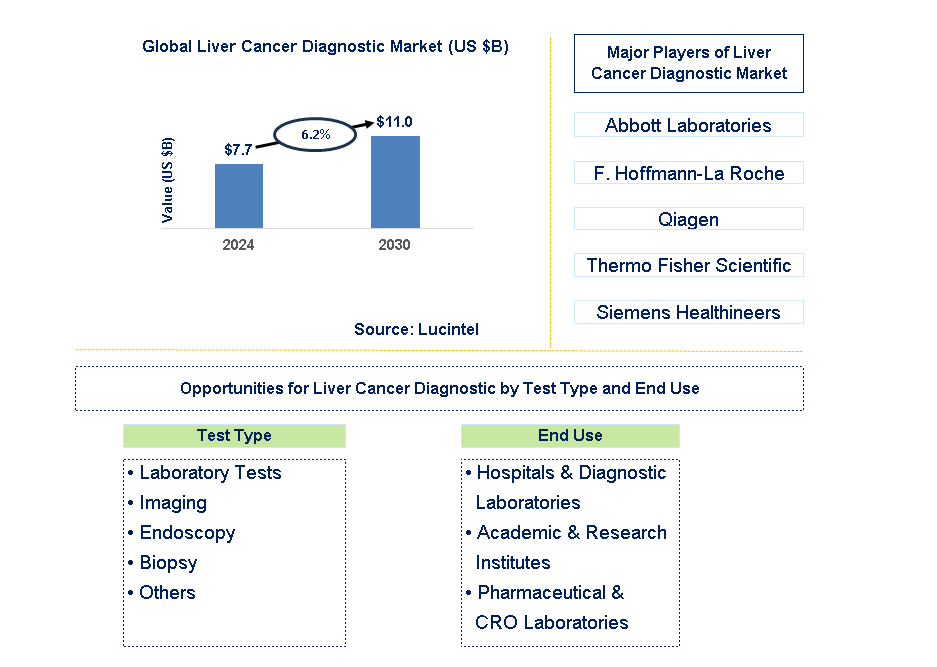
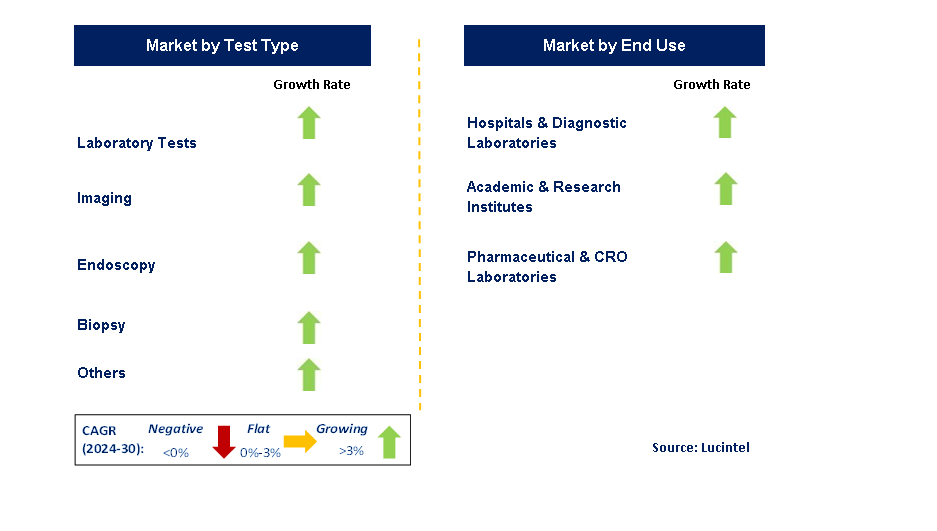
Key data points: The market size in 2030 = $11.0 billion, growth forecasts = 6.2% annually for the next 6 years. Scroll below to get more insights. This market report covers trends, opportunities, and forecasts in the global liver cancer diagnostic market to 2030 by test type (laboratory tests, imaging, endoscopy, biopsy, and others), end use (hospitals & diagnostic laboratories, academic & research institutes, and pharmaceutical & CRO laboratories), and region (North America, Europe, Asia Pacific, and the Rest of the World)
We'll send your sample report shortly.
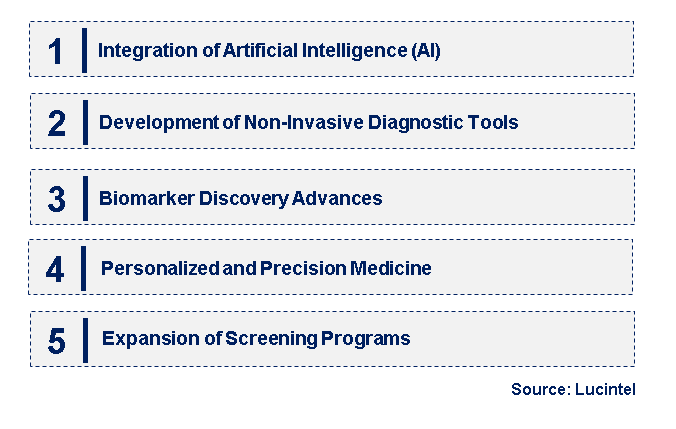
• Integration of Artificial Intelligence (AI): Imaging systems are increasingly being equipped with AI technologies that improve the accuracy and speed of liver cancer diagnoses. Complex imaging data are analyzed for patterns and anomalies that might have been missed by human radiologists. This trend improves diagnostic precision, hence allowing early detection that facilitates better patient outcomes and more personalized treatment plans.
• Development of Non-Invasive Diagnostic Tools: There is a trend towards less invasive diagnostics, liquid biopsies, and the use of sophisticated imaging. Methods used in general are less invasive and hence comforting for patients. Such non-invasive tools will permit the early detection and monitoring of liver cancer, which would enable much better management and outcomes for the treatments of the disease.
• Biomarker Discovery Advances: Studies of new biomarkers aid in the advancement of early detection and diagnosis of liver cancer. New biomarkers will enhance diagnosis, monitoring of disease progression, and prediction of treatment responses. This trend flows better for personalized medicine approaches and helps fit treatments to individual patient profiles for more effective and targeted interventions.
• Personalized and Precision Medicine: There is a growing interest in personalized and precision medicine in the diagnosis of liver cancer, which emphasizes the need to develop diagnostic and therapeutic approaches fitted to the peculiarities of the individual patient. Diagnosis and treatment, then, are informed by genetic and molecular information. Precision medicine advances diagnosis by paying attention to the peculiarities that surround each case and optimizes treatment planning for better outcomes.
• Expansion of Screening Programs: Scaling up the programs is becoming widespread, particularly in high-risk populations. Screening efforts are trying to move diagnosis forward in stage for liver cancer, which will improve prognosis and treatment options. Such an approach expresses the bigger policy emphasis on preventive care and early intervention, with earlier diagnosis leading to better management of liver cancer. Some of the emerging trends that shape the liver cancer diagnostic market include non-invasive diagnostic tools, biomarker discovery, use of personalized medicine, and screening programs. These emerging trends spur innovation, improve diagnostic accuracy, ensure early detection, and offer improved personalized treatment approaches, thus improving patient outcomes.
• AI-Enhanced Imaging Techniques: The huge steps taken in the area of AI have immensely enriched liver cancer imaging methodologies. Artificial intelligence algorithms analyze complex imaging data emanating from CT scans and MRIs for quicker and more precise diagnoses of liver tumors. This technological improvement supports greater diagnostic precision, less human error in diagnosis, and, importantly, the capability for earlier detection of liver cancer, thus improving the chances of better treatment outcomes and enhanced patient care.
• Growth of Liquid Biopsy Technologies: Liquid biopsy technologies have emerged as new, non-invasive methods for diagnosis in liver cancer. These tests detect the presence of circulating tumor DNA or RNA from blood samples to identify cancer biomarkers. In the recent times, with improvement in the accuracy and reliability of liquid biopsy techniques, these are becoming a very essential modality for early detection, monitoring disease progression, and guiding treatment decisions.
• Advanced Molecular Biomarkers: New biomarkers of liver cancer had been identified in the research into advanced molecular biomarkers. These biomarkers involve proteins and genetic mutations that present better diagnostic accuracy and help further in discriminating liver cancer from other liver diseases. The introduction of such biomarkers in diagnostic practices will enhance early detection and personalized treatment approaches.
• Improved Imaging Modalities: Recent advances in imaging studies, such as contrast-enhanced ultrasound and high-resolution MRI, have enhanced liver cancer diagnosis. The ability to visualize liver tumors more clearly and accurately furthers the diagnostic skill, which enables more precise tumor staging and treatment planning. Early detection and more accurate monitoring of liver cancer become possible.
• Early Detection Program Expansion: In fact, one of the major drives in liver cancer has been to extend the early detection programs, especially in the high-risk population, by increasing access to the various screening technologies, making screening programs available in order to spot the liver cancer at an earlier stage. This can help improve outcomes with earlier interventions and better management of the disease. Recent advancement in imaging modality by AI, liquid biopsy technologies, advanced molecular biomarkers, improved imaging modalities, and broadened early detection programs-the liver cancer diagnostic market is being transformed. Accurate diagnosis, earlier detection, and better patient outcome are thereby enhanced by these variances, reflecting the continuous advances in the management of liver cancer.
• Liquid Biopsy Technologies Continue to Expand: Liquid biopsy technologies have great growth potential considering their non-invasive nature and capability for monitoring tumor changes in real time. Thus, on the back of growing demand for non-invasive diagnostic solutions, companies can develop and market advanced liquid biopsy tests that improve diagnosis accuracy and aid personalized treatment decisions.
• Development of AI-Driven Diagnostic Tools: Diagnostic tools will provide AI in order to unlock promising growth opportunities. Using AI-powered imaging and analysis systems will increase diagnostic accuracy, hence possibly fastening the diagnosis. The investments in AI technology and new innovative solutions for liver cancer diagnostics will continue to create new competitive opportunities in the marketplace because of increasing demand for advanced diagnostic tools.
• Expanded Screening Programs: This offers a further opportunity for diagnostic companies to expand the screening programs, particularly in high-risk populations. A company might also market and support appropriate screening projects in concert with health providers and public health organizations to enhance early detection rates and counter the growing incidence of liver cancer.
• Molecular Biomarkers: New molecular biomarkers for the diagnosis of liver cancer are one of the most promising areas for research and development. The companies may focus their attention on identifying and validating new biomarkers that improve diagnostic precision, enabling personalized medicine approaches. This represents a growth opportunity that fits well with the growing emphasis on precision diagnosis and targeted therapies.
• Emerging Markets: The emerging markets of India and China hold great potential for growth in the diagnostics of liver cancer. In these regions, one can exploit the opportunities by offering solutions for diagnostics that are economically viable and accessible. Investing in local collaborations while adapting the products to regional needs propels the market growth toward early access to diagnostic tools. The liquid biopsy technologies, AI-driven diagnostic devices, expanded screening programs, molecular biomarkers, and arising markets pose strategic growth opportunities for huge advancements to take place in diagnostics related to liver cancer. These opportunities will enable companies to improve their market presence while improving diagnostics that lead to better patient outcomes.
• Technological Advancements: The growth in the liver cancer diagnostics market is driven by technological advances that include AI, liquid biopsy technologies, and advanced imaging techniques. The new innovations are improving diagnostic accuracy and the prospects of early detection and personalized treatment approaches. As technologies advance, so does the market, with increasing precision in diagnosis and efficiency that shapes better outcomes for patients.
• Increasing Prevalence of Liver Cancer: The increased frequency of liver cancer globally translates to a greater need for novel diagnostic solutions. Increasing prevalence of hepatitis infections, obesity, and chronic liver diseases are the normal driving forces behind higher incidence rates of liver cancer. It is all the more fueling demand towards more efficient diagnosis methods and a screening program in order to manage a small but growing patient population.
• Growing Focus on Early Detection: Early detection and preventive care are the bases for innovation in liver cancer diagnostics. Early detection results in better treatment outcomes and lower mortality rates. Greater awareness of the benefits of early diagnosis, along with superior technologies for screening, bodes well for the market in aiding early-stage identification efforts for liver cancer.
• Health Infrastructure Expansion: Expansion of healthcare infrastructure, particularly in developing economies, is acting as a generator for liver cancer diagnostics market growth. Better access to diagnostic facilities, more health expenditures, and newer diagnostic centers improve availability and affordability that acts as factors contributing towards liver cancer diagnostics market expansion.
• Advancement in Personalized Medicine: The increasing demand for personalized medicine fuels market growth as there is continuous need for improved diagnostics and biomarkers. Indeed, personalized medicine approaches are deeply dependent on very accurate diagnostic information to allow the targeting of specific treatment strategies according to unique patient profiles. New biomarkers and diagnostic technologies are being developed and integrated into personalized treatment approaches, hence driving the market. Challenges in the liver cancer diagnostic market are:
• High Cost of Advanced Diagnostics: The high cost of advanced diagnostic technologies, including AI-driven and liquid biopsies, is one of the big challenges. High-priced equipment and high-cost tests create an accessibility problem, very much in low-resource settings and emerging markets. Firms have to respond to cost barriers if advanced diagnostics solutions are to become widely available and broadly accessible.
• Regulatory and Reimbursement Issues: The companies in liver cancer diagnosis may also go through challenges with regard to addressing regulatory requirements and their reimbursement policies. Of course, such variations in regulations and consequent reimbursements are affecting product development and entry into the market. Companies are increasingly emphasizing regulatory hurdles and close coordination with payers to ensure coverage of the diagnostic tests and access to them by patients.
• Limited Public Awareness and Access: Poor public awareness regarding liver cancer and diagnostic options is another issue that might hinder the growth of the market. In fact, many of the regions are not well aware of the need for early detection and diagnostic technologies available. Increasing the amount of public education and outreach will be an important factor in improving the awareness, demand for diagnostic services, and early intervention. The key factors driving the liver cancer diagnostic market include technological development, increasing incidence of cancers, focus on early detection, improvement in healthcare infrastructure, and personalized medicine. Issues to be sorted out are high costs of procedures and tests, regulatory matters, and lacking awareness among the public for better growth and access to the diagnostic tool by the patients.
• Abbott Laboratories
• F. Hoffmann-La Roche
• Qiagen
• Thermo Fisher Scientific
• Siemens Healthineers
• Laboratory Tests
• Imaging
• Endoscopy
• Biopsy
• Others
• Hospitals & Diagnostic Laboratories
• Academic & Research Institutes
• Pharmaceutical & CRO Laboratories
• North America
• Europe
• Asia Pacific
• The Rest of the World
• United States: In the U.S., diagnostics related to liver cancer are on the rise with liquid biopsy technologies and molecular imaging. The latest development includes Artificial Intelligence on imaging tools to ensure better diagnostic accuracy. The growth of early detection techniques also developed alongside personalized treatment methods. Indeed, leading clinical trials in the U.S. represent a high level of innovation with regard to new diagnostic devices and contribute to an increase in patient outcomes with advanced technologies.
• China: China has been making respectable steps toward diagnostics in liver cancer, especially through policies to increase access to advanced imaging and biomarker testing. More recently, attempts are being made to develop new screening programs for high-risk populations and to increase access to non-invasive diagnostic tools. Traditional Chinese medicine studies are also being undertaken for their possible use in the improvement of diagnosis. Because of the growing incidence of liver cancer, China is scaling up its diagnostic capability rapidly.
• Germany: Germany's advances in liver cancer diagnostics are predominantly within the sphere of precision medicine and the part advanced imaging techniques play in that sphere. Recent applications include AI algorithms to analyze image data and the introduction of biomarkers for diagnosis. It also focuses on early detection methodologies and personalized treatment approaches. Several aspects bear testimony to Germany's commitment to quality healthcare and research in the frontline of medical science.
• India: Recent diagnostics of liver cancer in India involve an increase in the accessibility of relatively cheap imagining techniques and a rise in awareness about early detection. The main focus is to implement cost-effective diagnostic solutions so that the high burden of liver cancer can be addressed. Besides, there is a need to use biomarkers more extensively and develop non-invasive methods for testing. The diagnostic improvements and increase in accessibility for early detection in the larger populace are thus the objectives of the developments in India.
• Japanese diagnostics for liver cancer have been advanced by the combination of high-resolution imaging and advanced biomarkers. Recent developments include the use of sophisticated imaging technologies, like contrast-enhanced ultrasound and MRI, applied to enhance diagnosis. Japan is focusing on novel biomarkers and non-invasive test development with a view to further advances in early detection and personalized treatments-evidenced by the strong focus on the field of precision medicine.


• Abbott Laboratories
• F. Hoffmann-La Roche
• Qiagen
• Thermo Fisher Scientific
• Siemens Healthineers Q6. Which liver cancer diagnostic market segment will be the largest in future? Answer: Lucintel forecasts that laboratory test will remain the largest segment over the forecast period due to its rising preference among general public because of its precision and cost-effectiveness. Q7. In liver cancer diagnostic market, which region is expected to be the largest in next 5 years? Answer: North America is expected to witness highest growth over the forecast period due to existence of robust healthcare settings, rising adoption of healthcare insurance policies among the population, and presence of key players in the region. Q.8 Do we receive customization in this report? Answer: Yes, Lucintel provides 10% customization without any additional cost.


Choose a license that fits your team. Instant PDF delivery.
Prices exclude taxes. Instant delivery. Custom licensing available on request.
Market Report · July 22, 2026
Market Report · July 22, 2026
Market Report · July 22, 2026
Trusted partner for strategic intelligence and business growth


Receive a complimentary market analysis tailored to your industry. Our analysts will identify key growth opportunities and competitive dynamics specific to your business.

Market size, growth rate, and key trend analysis for your specific sector.

Top competitor positioning and market share analysis.

Strategic recommendations backed by data-driven insights.
Get curated market intelligence and competitive moves straight to your inbox.
By subscribing, you agree to receive our monthly insights. Unsubscribe anytime.
Receive a complimentary market analysis tailored to your industry. Our analysts will identify key growth opportunities and competitive dynamics specific to your business.
Market size, growth rate, and key trend analysis for your specific sector.
Top competitor positioning and market share analysis.
Strategic recommendations backed by data-driven insights.
Get curated market intelligence, emerging trends, and competitive moves straight to your inbox each month.
By subscribing, you agree to receive our monthly insights. Unsubscribe anytime.
We'll send your sample report shortly.