
Market Report · July 22, 2026

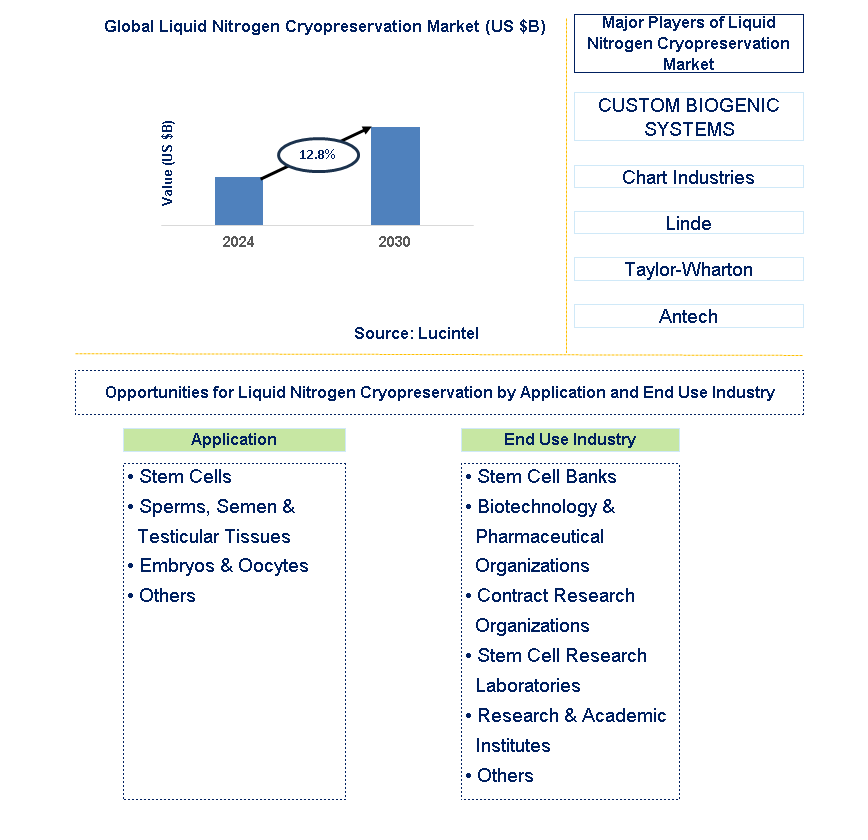
Key data points: The growth forecast = 12.8% annually for the next 6 years. Scroll below to get more insights. This market report covers trends, opportunities, and forecasts in the global liquid nitrogen cryopreservation market to 2030 by application (stem cells, sperms, semen & testicular tissues, embryos & oocytes, and others), end use industry (stem cell banks, biotechnology & pharmaceutical organizations, contract research organizations, stem cell research laboratories, research & academic institutes, and others), and region (North America, Europe, Asia Pacific, and the Rest of the World)
We'll send your sample report shortly.
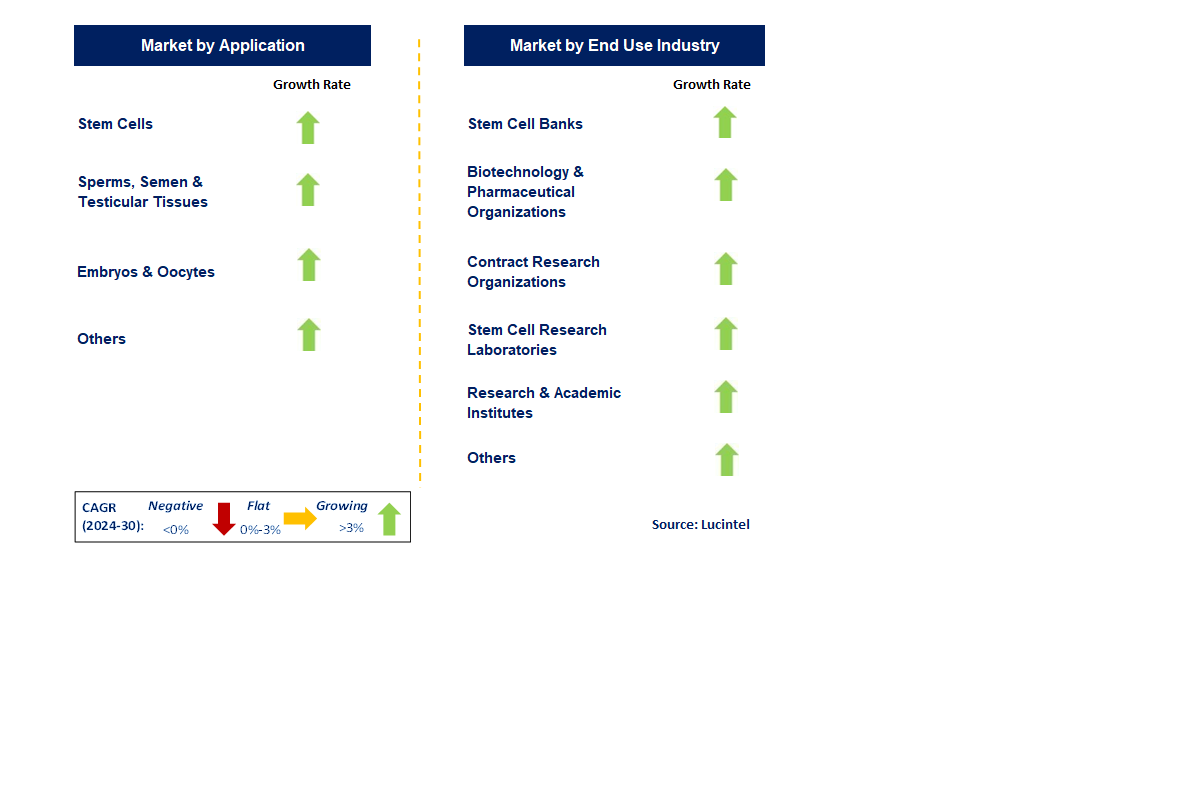
• Lucintel forecasts that, within the application category, stem cells will remain the largest segment over the forecast period due to growing demand for cell therapy and long-term storage potential.
• Within the end use category, stem cell research laboratories will remain the largest segment due to invest heavily in cryopreservation equipment and technology to support their research activities.
• In terms of regions, APAC is expected to witness highest growth over the forecast period due to rapidly growing healthcare sector. Gain valuable insights for your business decisions with our comprehensive 150+ page report.
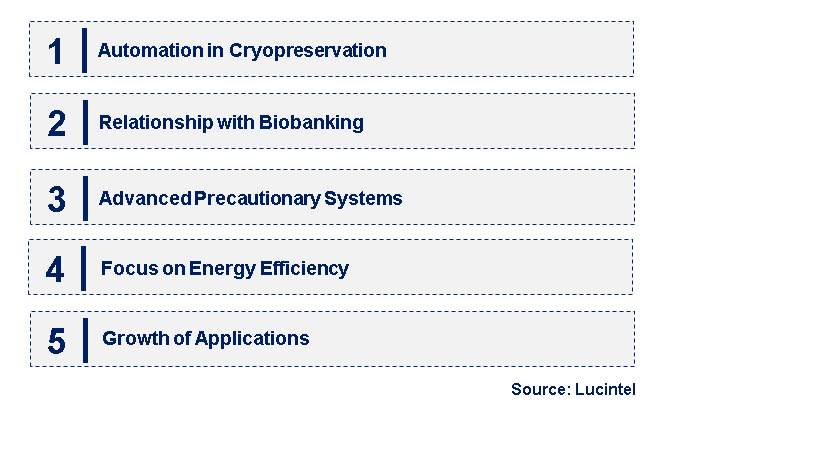
• Automation in Cryopreservation: Automation in cryopreservation is emerging as one of the most significant trends, with improved efficiency and accuracy due to developments in robotics and automated storage systems. Automated systems minimize the chances of human error and improve the efficiency of cryopreservation processes, which is favorable when dealing with large quantities of biological specimens. This trend is propelling the move toward the medical and scientific fields that are embracing automated solutions in biobanking and research facilities, leading to effective and optimal preservation approaches.
• Relationship with Biobanking: The development of the liquid nitrogen cryopreservation market is closely tied to biobanking. The increasing biobanking technologies are also dovetailing with cryogenics to store and preserve biospecimens effectively. This development addresses the increasing requirements of personalized medicine and large-scale studies that require efficient solutions for the safekeeping and retrieval of precious biospecimens over prolonged periods.
• Advanced Precautionary Systems: In cryopreservation, improved monitoring and control systems are necessary. The inclusion of technologies capable of performing real-time monitoring, data logging, and sending alerts is enhancing the safety and accuracy of the cryopreservation processes. These systems guarantee accurate temperature levels and reduce the chances of sample degradation, leading to better and more consistent cryopreservation results.
• Focus on Energy Efficiency: The need to manage energy conservatively is bringing about changes in cryogenic storage. More energy-efficient cryopreservation systems are being developed to cut down on operational costs and reduce carbon footprints and environmental degradation. Increases in sustainable cryopreservation technology are being fueled by advancements in insulation, refrigeration, and energy capture technologies, which align with global sustainability interests.
• Growth of Applications: The increase in applications of liquid nitrogen cryopreservation enables its market expansion. Cryopreservation goes beyond the traditional boundaries of healthcare and agriculture practices, extending into new fields like biotechnology, regenerative medicine, and environmental preservation. This trend is encouraging growth in investment and expanding the range of applications covered by cryopreservation technologies across various spheres. Shifts in the liquid nitrogen cryopreservation market trends include the management of process permanence and energy preservation, along with process automation, integration with biobanking, and enhanced monitoring. These trends are changing the end users in the industry. They are fueling improvements in technological processes, enhancing process effectiveness, and increasing the possibilities of cryopreservation as a procedure, consequently affecting the growth and practice of this technique in various industries.
• Advanced Automated Storage Systems: Advanced automated storage systems are a major development that has increased the effectiveness and efficiency of the cryopreservation process. These systems manage large volumes of samples by eliminating human intervention thanks to robotics and automated controls, ensuring better and more homogenous conditions for sample preservation. This development increases the capacity and dependability of biobanks and research institutions in carrying out cryopreservation.
• Improved Cryogenic Containers: Improvements in cryogenic containers are driving developments in the market. New materials and designs are enhancing the insulation and durability of the containers, achieving better control and protection of the samples. These innovations address energy efficiency and storage capacity, resulting in improved cryopreservation methods.
• Real-Time Monitoring Technologies: One of the significant developments is the advancement of real-time monitoring technologies, which help maintain precise control over processes and relevant data on the various operations of the cryopreservation process. Improvements in sensor technologies and software allow for monitoring storage conditions and issuing alerts if any parameters deviate from the set limits, thereby protecting the samples. This development provides a remarkable risk management and backup system for cryopreservation processes.
• Energy-Efficient Cryopreservation Systems: Energy-efficient methods of performing cryopreservation are on the rise, aiming to cut down on operational costs as well as environmental impacts. New technologies such as advanced cooling system designs, better insulation, and energy usage management are enabling less expensive and more environmentally friendly cryopreservation methods. This development aligns with increasing concerns for sustainability.
• Enhancement of Cryopreservation Applications: The application of cryopreservation technology continues to rise. While most applications remain in conventional cryobiology, new applications are emerging in biotechnology, regenerative medicine, and environmental protection. The development of cryopreservation technology enables businesses to explore more areas, sparking creativity and expanding opportunities in the market. In recent years, advancements in cryopreservation—including automated storage systems, improved cryogenic containers, real-time monitoring tools, energy-conserving systems, and other innovations—have fueled creativity in the liquid nitrogen cryopreservation market. These developments are shaping the future of the market, enhancing process efficiency, and increasing the range of applications for cryopreservation technologies.
• Biobanking Expansion: The prospects for biobanking expansion are tied to the increased emphasis on biological sample storage. Engagement with state-of-the-art cryopreservation methods will complement biobanking activities, promoting research particularly in personalized medicine and genomics. This opportunity involves intelligent investments in creating more cost-effective and easily scalable cryopreservation solutions for biobanking.
• Regenerative Medicine: Regenerative medicine represents a critical opportunity for growth. Cryopreservation is extensively used in stem cell research and tissue engineering. Advancements in cryopreservation technologies can assist in the storage and preservation of stem cells, tissues, and organs for therapeutic applications. This opportunity focuses on providing specialized cryobanks in regenerative medicine.
• Agricultural Biotechnology: Agricultural biotechnology presents growth opportunities related to the preservation of plant genetic materials and livestock semen. Many new cryopreservation solutions can improve the storage of genetic resources, supporting agricultural research and improvement programs. This opportunity covers developing solutions tailored to the agricultural biotechnology sector.
• Environmental Conservation: Environmental conservation is emerging as a growth area for the cryopreservation market, particularly in preserving endangered species and biodiversity. The storage of frozen sperm and ova cultures from rare wildlife species provides biodiversity resources for environmental protection. This opportunity involves developing cryopreservation solutions for various biological samples under stress.
• Healthcare and Fertility Treatments: Healthcare, particularly fertility treatments, has significant growth potential, as cryopreservation is commonly used in reproductive medicine. Advances in cryopreservation technologies could facilitate increased success rates for fertility treatments and broaden the scope for storing reproductive tissues. This opportunity allows for designing more effective cryopreservation solutions to improve outcomes in reproductive healthcare. Strategic opportunities for businesses in the liquid nitrogen cryopreservation market include extending biobanking, regenerative medicine, agricultural biotechnology, environmental protection, and healthcare and fertility treatments. Utilizing these opportunities can promote growth, foster innovation, meet changing market demands, and extend cryopreservation technologies to additional areas, thereby determining the market's prospects.
• Advancements in Technology: New technologies are a major factor contributing to the growth of the liquid nitrogen cryopreservation market. Developments in cryogenic storage system design, automation, and monitoring systems improve the ease of use and feasibility of cryopreservation techniques. Such improvements enhance the storage of specific biological samples, boost R&D efforts, and stimulate further market development.
• Increasing Use of Biobanking: Growing biobanking needs are fueling the liquid nitrogen cryopreservation market. There is a rising demand to conserve biological samples for research, individualized medicine, or therapeutic use, making cryopreservation technology increasingly essential. This driver promotes the development of more effective cryopreservation methods in response to the advancing biobanking industry.
• Geographical Expansion of Healthcare Sectors: The expansion of healthcare applications, including reproductive health and regenerative medicine, is influencing the market. Cryopreservation is integral to family building, new treatments involving stem cells, and tissue engineering. The advancement and use of these technologies in healthcare facilities benefit the market's expansion and innovation.
• Adherence to Energy Conservation Principles: A shift toward energy efficiency is affecting the liquid nitrogen cryopreservation market. Companies are designing more energy-efficient cryogenic storage systems to lower operating costs and reduce environmental impacts. This driver aligns with global sustainable development objectives and supports emerging technologies that help manage energy consumption in cryopreservation.
• Greater Spending on Research and Development: Increased investment in research and development is a key driver of innovation in the liquid nitrogen cryopreservation market. Resources allocated to studying materials, their storage, and various cryopreservation applications lead to new advancements and improve process efficiency. This driver fosters technological progress and market expansion. Challenges in the liquid nitrogen cryopreservation market include:
• High Operational Costs: High operational costs pose challenges in the liquid nitrogen cryopreservation market. Various costs linked to storage systems, liquid nitrogen usage, and maintenance may limit profitability. Companies must manage these factors creatively to remain competitive.
• Legal Requirements: Legal requirements can hinder the cryopreservation market. Numerous regulations concerning cryogenic storage, safety, and data must be observed. Navigating these policies can adversely affect the time and cost of entering and conducting business in the market.
• Technological Realism: The reality of advancing technology poses barriers in the market. There is a growing need for increasing capacity and innovation in cryopreservation methods, which can be challenging for companies lacking expertise. A consistent issue for market participants is the proper adoption of innovations and the necessary inter-system interactions. Overall, technological advancements, rising biobanking needs, broader healthcare applications, cost-effective strategies, and increased R&D investment are driving growth in the liquid nitrogen cryopreservation market. Conversely, challenges such as high operational costs, compliance with regulations, and the pace of technological advancement affect market dynamics. Understanding these factors is crucial for navigating market challenges and leveraging existing opportunities for growth.
• CUSTOM BIOGENIC SYSTEMS
• Chart Industries
• Linde
• Taylor-Wharton
• Antech
• Stem Cells
• Sperms, Semen & Testicular Tissues
• Embryos & Oocytes
• Others
• Stem Cell Banks
• Biotechnology & Pharmaceutical Organizations
• Contract Research Organizations
• Stem Cell Research Laboratories
• Research & Academic Institutes
• Others
• In terms of regions, North America
• In terms of regions, Europe
• Asia Pacific
• The Rest of the World
• United States: In the United States, advancements in liquid nitrogen cryopreservation methods include improvements in automated storage systems and cryogenic container design. Companies are seeking technologies to mitigate errors during preparation and filling stages of cryopreservation processes. There is a particular focus on clinical uses, supported by increased investments in R&D in biobanking, regenerative medicine, and tissue engineering.
• China: China’s liquid nitrogen cryopreservation market is rapidly evolving despite receiving less attention. This is primarily due to the growth of its biotechnology and healthcare sectors. The country is focusing on creating novel and efficient cryopreservation equipment and storage techniques. Substantial funds are allocated for establishing large biorepositories and research centers, where new biopreservation technologies are being developed and their applications in stem cells and reproductive medicine are expanding.
• Germany: Trends in Germany’s liquid nitrogen cryopreservation market are associated with enhanced monitoring and control systems. Companies are modernizing cryogenic storage by incorporating monitoring devices that ensure reliable temperature control and data storage throughout the storage period. Attention is also being directed toward reducing energy consumption and costs in cryopreservation processes, consistent with Germany’s development philosophy.
• India: In India, novel trends in liquid nitrogen cryopreservation are emerging alongside a growing healthcare and agricultural market. There is an increasing demand for cryonics in fertility treatment and the application of cryopreservation techniques for the genetic preservation of crops. Additionally, there is a rise in the construction of biobanks and cryopreservation centers, aided by foreign collaborations and government support to improve research capabilities.
• Japan: Japan’s liquid nitrogen cryopreservation market is characterized by active development aimed at stem cell storage and regenerative medicine. Japanese companies are increasingly implementing video surveillance systems and seeking new materials to enhance the efficiency and safety of biomaterial storage processes. There is also a strong emphasis on integrating cryopreservation with advanced technologies such as robotics and artificial intelligence for greater automation and data control.


• CUSTOM BIOGENIC SYSTEMS
• Chart Industries
• Linde
• Taylor-Wharton
• Antech Q5. Which liquid nitrogen cryopreservation market segment will be the largest in future? Answer: Lucintel forecasts that stem cells will remain the largest segment over the forecast period due to growing demand for cell therapy and long-term storage potential. Q6. In liquid nitrogen cryopreservation market, which region is expected to be the largest in next 5 years? Answer: APAC is expected to witness highest growth over the forecast period due to rapidly growing healthcare sector. Q7. Do we receive customization in this report? Answer: Yes, Lucintel provides 10% customization without any additional cost.


Choose a license that fits your team. Instant PDF delivery.
Prices exclude taxes. Instant delivery. Custom licensing available on request.
Market Report · July 22, 2026
Market Report · July 22, 2026
Market Report · July 22, 2026
Trusted partner for strategic intelligence and business growth


Receive a complimentary market analysis tailored to your industry. Our analysts will identify key growth opportunities and competitive dynamics specific to your business.

Market size, growth rate, and key trend analysis for your specific sector.

Top competitor positioning and market share analysis.

Strategic recommendations backed by data-driven insights.
Get curated market intelligence and competitive moves straight to your inbox.
By subscribing, you agree to receive our monthly insights. Unsubscribe anytime.
Receive a complimentary market analysis tailored to your industry. Our analysts will identify key growth opportunities and competitive dynamics specific to your business.
Market size, growth rate, and key trend analysis for your specific sector.
Top competitor positioning and market share analysis.
Strategic recommendations backed by data-driven insights.
Get curated market intelligence, emerging trends, and competitive moves straight to your inbox each month.
By subscribing, you agree to receive our monthly insights. Unsubscribe anytime.
We'll send your sample report shortly.