
Market Report · July 22, 2026

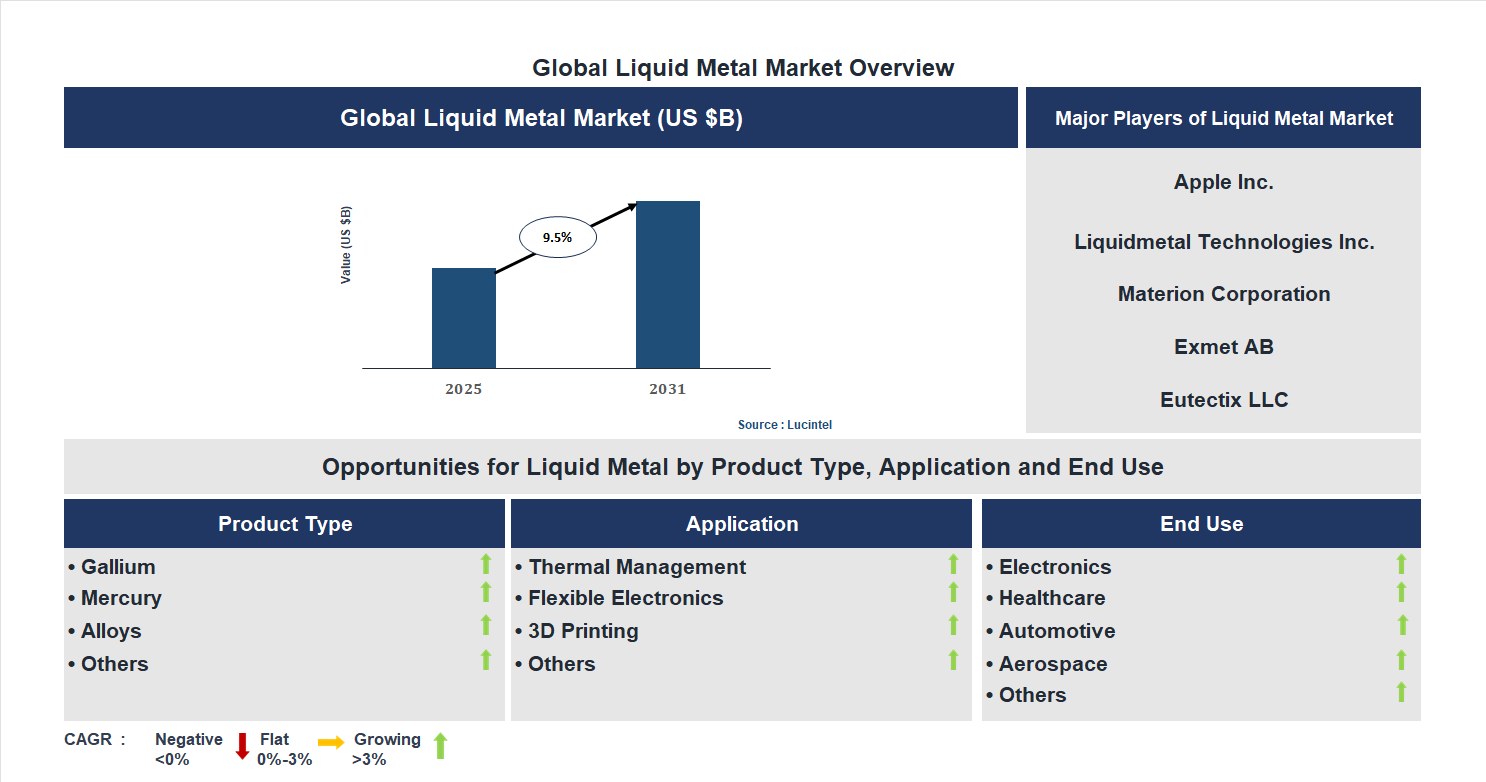
Key data points: The growth forecast = 9.5% annually for the next 7 years. Scroll below to get more insights. This market report covers trends, opportunities and forecasts in liquid metal market to 2031 by product type (gallium, mercury, alloys, and others), application (thermal management, flexible electronics, 3D printing, and others), end use (electronics, healthcare, automotive, aerospace, and others), and region (North America, Europe, Asia Pacific, and the Rest of the World)
We'll send your sample report shortly.
• Lucintel forecasts that, within the product type category, gallium is expected to witness the highest growth over the forecast period.
• Within the end use category, electronics is expected to witness the highest growth.
• In terms of region, APAC is expected to witness the highest growth over the forecast period. Gain valuable insights for your business decisions with our comprehensive 150+ page report. Sample figures with some insights are shown below.
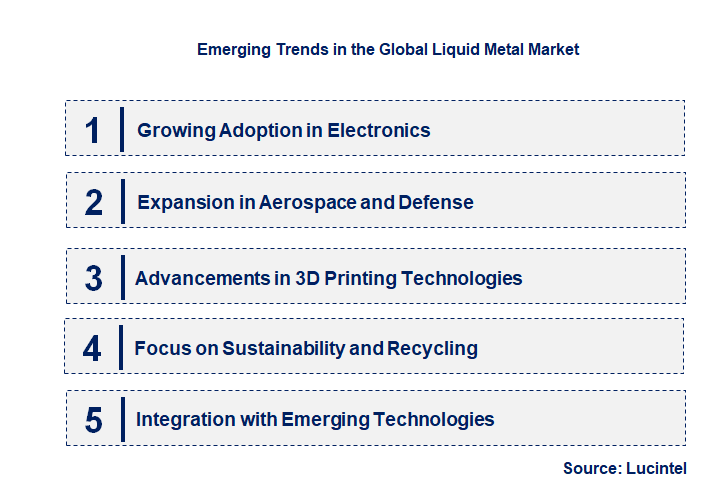
• Growing Adoption in Electronics: The demand for flexible, lightweight, and high-performance electronic components is fueling the use of liquid metals. Their excellent electrical conductivity and ability to form seamless circuits enable advancements in wearable devices, flexible displays, and soft robotics. This trend is expanding the scope of liquid metals beyond traditional applications, making them integral to next-generation electronic innovations. As consumer electronics demand more adaptable and durable materials, liquid metals are positioned as a critical component, driving market growth and technological progress.
• Expansion in Aerospace and Defense: Liquid metals are increasingly utilized in the aerospace and defense sectors due to their thermal management capabilities and lightweight nature. They are used in cooling systems, sensors, and structural components that require high thermal conductivity and flexibility. This trend enhances the performance and safety of aircraft and defense equipment, while also reducing weight and improving fuel efficiency. The integration of liquid metals in these sectors signifies a move toward more efficient, reliable, and innovative aerospace solutions, opening new avenues for market expansion.
• Advancements in 3D Printing Technologies: The development of liquid metal-based 3D printing is revolutionizing manufacturing processes by enabling the creation of complex, customized, and highly conductive components. This trend allows for rapid prototyping and on-demand production, reducing costs and lead times. The ability to print liquid metals with precision is opening new possibilities in electronics, medical devices, and industrial applications. As 3D printing technology matures, the market for liquid metals is expected to grow significantly, driven by increased adoption across various sectors seeking innovative manufacturing solutions.
• Focus on Sustainability and Recycling: Environmental concerns are prompting the industry to explore sustainable practices, including recycling and eco-friendly production of liquid metals. Innovations in recycling techniques aim to recover valuable metals like gallium and indium from electronic waste, reducing reliance on primary mining. This trend not only minimizes environmental impact but also ensures a stable supply chain for critical materials. As sustainability becomes a priority, market players are investing in green technologies and circular economy models, which are reshaping the supply and demand dynamics within the liquid metal industry.
• Integration with Emerging Technologies: Liquid metals are increasingly integrated with emerging fields such as soft robotics, wearable technology, and biomedical devices. Their unique properties enable the development of flexible, biocompatible, and self-healing systems. This trend is expanding the application scope of liquid metals, fostering innovation in healthcare, robotics, and smart materials. The convergence of liquid metals with these cutting-edge technologies is creating new market segments and driving demand for specialized solutions, positioning the liquid metal market at the forefront of technological innovation. In summary, these trends are collectively transforming the liquid metal market by enhancing application versatility, improving sustainability practices, and fostering technological innovation. They are enabling industries to develop smarter, more efficient, and environmentally conscious products, thereby reshaping the future landscape of this dynamic market.
• Technological Innovations in Liquid Metal Alloys: Advances in alloy formulations have improved properties such as corrosion resistance, melting points, and electrical conductivity, enabling broader industrial use and enhancing product performance.
• Expansion of 3D Printing with Liquid Metals: The integration of liquid metals into additive manufacturing has revolutionized prototyping and production, offering complex geometries and high precision, thus reducing costs and lead times.
• Growing Adoption in Electronics and Wearables: Liquid metals are increasingly used in flexible electronics, sensors, and wearable devices due to their excellent conductivity and flexibility, driving innovation in consumer and medical electronics.
• Development of Eco-Friendly Liquid Metal Alternatives: Researchers are focusing on sustainable, non-toxic liquid metals, reducing environmental impact and expanding market acceptance, especially in healthcare and eco-conscious industries.
• Strategic Collaborations and Market Investments: Major companies are forming partnerships and investing in R&D to accelerate liquid metal applications, fostering market growth and technological breakthroughs. These developments are collectively transforming the liquid metal market by enhancing material performance, expanding application areas, and promoting sustainable practices. As a result, the market is experiencing accelerated growth, increased competitiveness, and broader adoption across diverse industries.
• Electronics Industry: Innovation in flexible and wearable devices is driving demand for liquid metals. Their excellent electrical conductivity and flexibility enable the development of stretchable circuits and sensors, revolutionizing consumer electronics and medical devices. This growth enhances device performance, durability, and user comfort, opening new avenues for product design and functionality.
• Aerospace Sector: Liquid metals are increasingly used in thermal management and lightweight structural components. Their high thermal conductivity improves heat dissipation in aircraft and spacecraft, enhancing safety and efficiency. This application reduces weight and improves fuel efficiency, supporting the development of next-generation aerospace technologies.
• Healthcare and Medical Devices: Liquid metals are utilized in minimally invasive surgical tools and diagnostic devices due to their biocompatibility and unique physical properties. They enable precise, flexible, and durable medical instruments, improving patient outcomes and expanding the scope of medical innovations.
• Automotive Industry: The integration of liquid metals in cooling systems and sensors is transforming vehicle design. Their superior thermal management capabilities and adaptability support electric vehicle development and advanced driver-assistance systems, leading to safer, more efficient vehicles.
• Energy Sector: Liquid metals are critical in energy storage and thermal energy management systems. Their high thermal and electrical conductivities facilitate efficient heat transfer and energy conversion, supporting renewable energy technologies and grid stability. In summary, these growth opportunities are significantly impacting the liquid metal market by fostering innovation, enhancing product performance, and expanding application scopes. As industries increasingly adopt liquid metals, market growth accelerates, driven by technological advancements and rising demand across key sectors. This evolution positions the market for sustained expansion and strategic development in the coming years.
• Technological Innovation: The development of advanced manufacturing techniques and new alloy formulations enhances the application scope of liquid metals, particularly in electronics, aerospace, and automotive industries. Innovations such as 3D printing with liquid metals are expanding possibilities, leading to increased adoption. These technological advancements improve product performance, reduce costs, and open new markets, fueling overall growth.
• Growing Demand in Electronics and Semiconductors: Liquid metals like gallium and mercury are critical in the production of semiconductors, sensors, and flexible electronics. The rising demand for miniaturized and high-performance electronic devices drives the need for innovative materials, boosting market growth. As consumer electronics and IoT devices proliferate, the market for liquid metals expands correspondingly.
• Automotive and Aerospace Industry Expansion: The automotive sectors shift toward electric vehicles and lightweight materials increases the use of liquid metals for thermal management and conductive components. Similarly, aerospace applications benefit from liquid metals unique properties, such as high thermal conductivity and corrosion resistance. These industries growth directly impacts market demand, encouraging research and development investments.
• Regulatory and Environmental Policies: Stricter regulations concerning the use of hazardous materials and environmental safety standards influence market dynamics. Governments are promoting the development of eco-friendly liquid metals and safer handling practices, which can both challenge and stimulate innovation. Compliance costs and regulatory hurdles may impact market growth, but also encourage sustainable solutions. The challenges in the liquid metal market are:
• Handling and Safety Concerns: Liquid metals pose significant safety risks, including toxicity and high reactivity, requiring specialized handling and storage procedures. These safety concerns increase operational costs and limit widespread adoption, especially in smaller or less regulated markets. Developing safer, more manageable liquid metal formulations remains a key challenge.
• High Production and Processing Costs: The manufacturing and processing of liquid metals involve complex, costly procedures due to their unique physical and chemical properties. These high costs can hinder market penetration, especially in price-sensitive sectors. Overcoming these economic barriers requires technological breakthroughs to reduce production expenses.
• Environmental and Disposal Issues: The disposal and recycling of liquid metals raise environmental concerns, particularly with toxic elements like mercury. Strict disposal regulations and environmental impact assessments increase operational complexities and costs. Developing sustainable recycling methods and eco-friendly alternatives is essential to address these challenges. In summary, the liquid metal market is driven by technological advancements, increasing demand from electronics and automotive sectors, and supportive regulatory initiatives. However, safety concerns, high costs, and environmental issues pose significant hurdles. These factors collectively influence the markets growth trajectory, requiring stakeholders to innovate and adapt to ensure sustainable development. The interplay of drivers and challenges will determine the future landscape, with opportunities for growth balanced by the need for safety, cost-efficiency, and environmental responsibility.
• Apple Inc.
• Liquidmetal Technologies Inc.
• Materion Corporation
• Exmet AB
• Eutectix LLC
• BMG Metals Inc.
• Dowa Holdings Co., Ltd.
• Hitachi Metals, Ltd.
• Johnson Matthey Plc
• Materion Brush Inc.
• Gallium
• Mercury
• Alloys
• Others
• Thermal Management
• Flexible Electronics
• 3D Printing
• Others
• Electronics
• Healthcare
• Automotive
• Aerospace
• Others
• North America
• Europe
• Asia Pacific
• The Rest of the World
• United States: The US market for liquid metals has seen substantial progress with increased investments in research institutions and private sector innovation. Major tech companies are exploring liquid metal applications in flexible electronics, wearable devices, and advanced cooling systems. The government’s focus on aerospace and defense has also spurred developments in liquid metal-based materials for lightweight and high-performance components. Additionally, startups are emerging with novel uses in biomedical devices and energy storage, contributing to a diversified and expanding market landscape.
• China: China has rapidly advanced in the liquid metal sector, driven by government policies supporting high-tech manufacturing and innovation. The country is investing heavily in research to develop new liquid metal alloys with enhanced properties for use in electronics, 3D printing, and the automotive industries. Chinese companies are also focusing on scaling production capabilities and establishing strategic partnerships to strengthen their global presence. The integration of liquid metals into consumer electronics and renewable energy systems is gaining momentum, positioning China as a key player in this market.
• Germany: Germany’s liquid metal market is characterized by a focus on industrial applications, particularly in automotive and manufacturing sectors. The country is leveraging its expertise in materials science to develop high-performance liquid metal components for electric vehicles and industrial machinery. German research institutions are collaborating with industry leaders to innovate in areas such as thermal management and lightweight design. The emphasis on sustainability and efficiency is driving the adoption of liquid metals in environmentally friendly technologies and advanced manufacturing processes.
• India: India is witnessing a growing interest in liquid metals, primarily driven by the electronics and healthcare sectors. The government’s initiatives to promote innovation and manufacturing are encouraging local research and startups to explore new applications. India is investing in developing cost-effective liquid metal alloys suitable for consumer electronics, sensors, and biomedical devices. The expanding industrial base and increasing demand for advanced materials are expected to propel the market forward, with a focus on affordability and scalability.
• Japan: Japan continues to be a leader in liquid metal research, especially in electronics, robotics, and energy storage. The country’s advanced technological infrastructure supports ongoing innovations in liquid metal-based flexible displays, sensors, and thermal management systems. Japanese companies are also exploring applications in renewable energy, such as liquid metal batteries for grid storage. The government’s emphasis on sustainable and smart technologies is fostering a conducive environment for market growth, with collaborations between academia and industry driving cutting-edge developments in liquid metal applications.


• Apple Inc.
• Liquidmetal Technologies Inc.
• Materion Corporation
• Exmet AB
• Eutectix LLC
• BMG Metals Inc.
• Dowa Holdings Co., Ltd.
• Hitachi Metals, Ltd.
• Johnson Matthey Plc
• Materion Brush Inc. Q5. Which liquid metal market segment will be the largest in future? Answer: Lucintel forecasts that, within the product type category, gallium is expected to witness the highest growth over the forecast period. Q6. In liquid metal market, which region is expected to be the largest in next 5 years? Answer: In terms of region, APAC is expected to witness the highest growth over the forecast period. Q7. Do we receive customization in this report? Answer: Yes, Lucintel provides 10% customization without any additional cost.


Choose a license that fits your team. Instant PDF delivery.
Prices exclude taxes. Instant delivery. Custom licensing available on request.
Market Report · July 22, 2026
Market Report · July 22, 2026
Market Report · July 22, 2026
Trusted partner for strategic intelligence and business growth


Receive a complimentary market analysis tailored to your industry. Our analysts will identify key growth opportunities and competitive dynamics specific to your business.

Market size, growth rate, and key trend analysis for your specific sector.

Top competitor positioning and market share analysis.

Strategic recommendations backed by data-driven insights.
Get curated market intelligence and competitive moves straight to your inbox.
By subscribing, you agree to receive our monthly insights. Unsubscribe anytime.
Receive a complimentary market analysis tailored to your industry. Our analysts will identify key growth opportunities and competitive dynamics specific to your business.
Market size, growth rate, and key trend analysis for your specific sector.
Top competitor positioning and market share analysis.
Strategic recommendations backed by data-driven insights.
Get curated market intelligence, emerging trends, and competitive moves straight to your inbox each month.
By subscribing, you agree to receive our monthly insights. Unsubscribe anytime.
We'll send your sample report shortly.