
Market Report · July 15, 2026

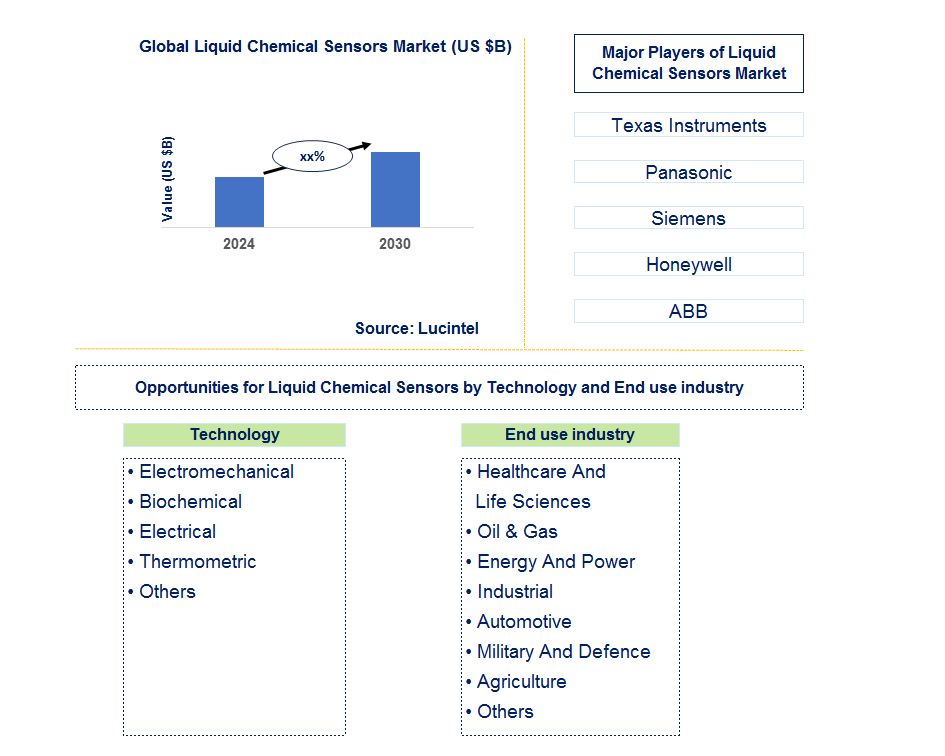
Key data points: The market size in 2030 = $7.9 billion, growth forecast = 6.1% annually for the next 6 years. Scroll below to get more insights. This market report covers trends, opportunities, and forecasts in the global liquid chemical sensors market market to 2030 by technology (electromechanical, biochemical, electrical,thermometric, and others), end use industry (healthcare and life sciences, oil & gas, energy and power, industrial, automotive, military and defence, agriculture, and others), and region (North America, Europe, Asia Pacific, and the Rest of the World)
We'll send your sample report shortly.
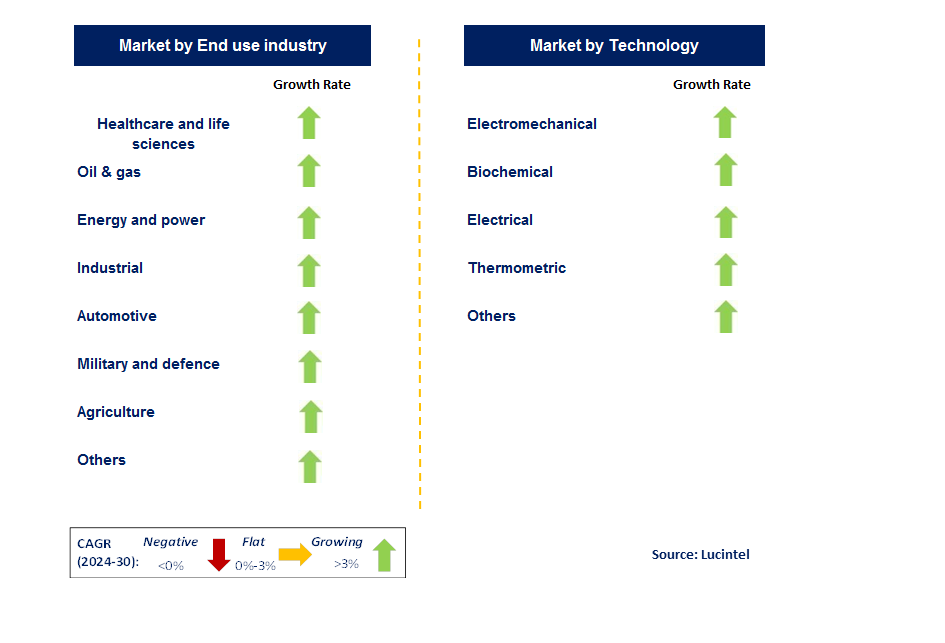
• Lucintel forecasts that within the technology category, electromechanical is expected to witness the highest growth over the forecast period.
• Within the end use industry category, healthcare and life science will remain the largest segment.
• In terms of region, APAC is expected to witness the highest growth over the forecast period due to rapid industralization and growing demand from healthcare and automotive industries in this region. Gain valuable insights for your business decisions with our comprehensive 150+ page report. A more than 150-page report is developed to help in your business decisions.
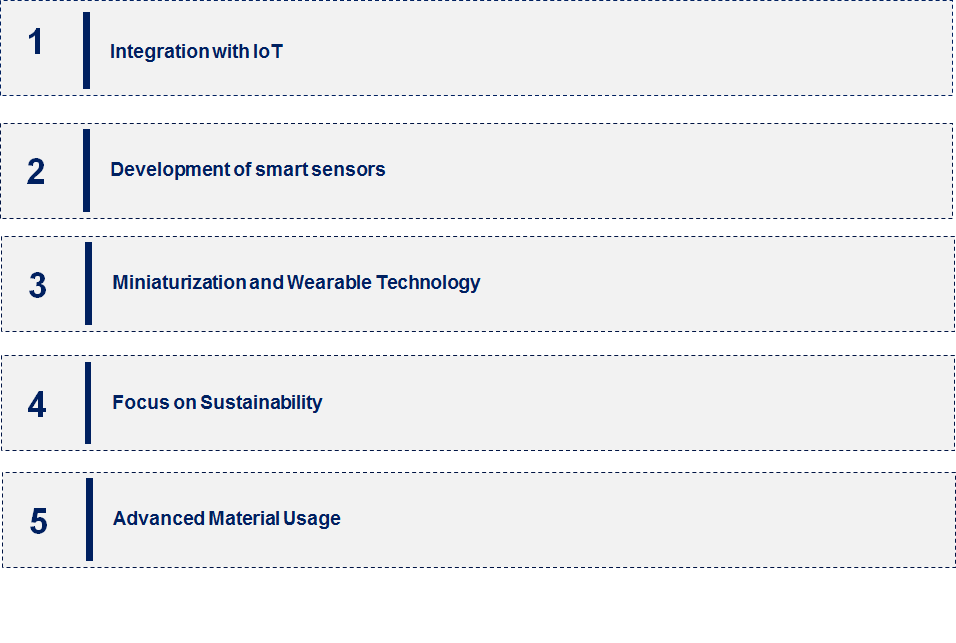
• Integration with IoT: The integration between liquid chemical sensors and Internet of Things (IoT) technology improves real-time data collection, remote monitoring and other capabilities. This facilitates better operations resulting from more accurate systems that are automated in sectors like water treatment plants and environment surveillance services.
• Development of smart sensors: Even though, smart sensors armed with advanced analytics and self-calibration features are increasingly becoming common. These sensors give better performance and reliability enabling more accurate measurements and reducing the need for human intervention. This trend is driving innovation in areas like healthcare and industrial automation.
• Miniaturization and Wearable Technology: The focus on miniaturization has made possible the development of smaller, more portable sensors that can be used as wearable technology. This trend is expanding applications in the field of health monitoring systems thus offering consumers more convenient options for continuous monitoring.
• Focus on Sustainability: Today we are seeing a heightened focus on eco-friendly as well as sustainable kinds of sensors. Innovations involve use of biodegradable materials and energy-efficient designs. Such trends conform to global drive towards lower environmental impact and promotion of green technologies.
• Advanced Material Usage: Advanced material usage has enhanced sensor performance including nanomaterials and conductive polymers, which allow for improved sensitivity as well as accuracy contributing to innovations in environmental sensing among others. These trends have significantly reshaped global liquid chemical sensors market through enhanced functionality, expanded applications, and sustainability concerns addressed with regards to it. The ever-changing nature of sensor technologies is driving efficiency gains, increasing accuracy levels while boosting integration across multiple industries at once.
• Advances in Sensor Accuracy: In this regard recently emphasis has been put on improving sensor accuracy through better materials and design choices that have been made so far by the developers; these make it possible to make very precise measurement in many application such as environmentally friendly production processes leading more reliable data resulting into wiser decisions being made at all times.
• Integration with Digital Technologies: There is a strong drive towards digital technologies integration of liquid chemical sensors like AI and machine learning. Such systems allow for more complex data analysis and prediction, leading to higher efficiency in operations, thus smarter manufacturing and healthcare.
• Expansion into Emerging Markets: The market is expanding into emerging regions, driven by increased demand for affordable and effective sensor solutions. By doing this it has facilitated adoption of advanced sensors such as water quality monitoring among others; this allows them address the issues facing their localities thereby promoting growth within this area.
• Development of Flexible and Wearable Sensors: Flexible and wearable sensors are being developed to facilitate personal health monitoring and wearable technology. The use of these types of sensors provides much needed flexibility when it comes to collecting real-time data which improves user experience while broadening the scope of equipment application.
• Regulatory and Environmental Compliance: New regulations have been introduced to ensure that the liquid chemical sensors are safe as well as effective. As a result, compliance with such requirements drives innovation which further leads to improved quality products within this industry all supporting market development at large. These developments have greatly impacted on liquid chemical sensors market by driving innovation, expanding applications & raising product standards. Through continuous evolution in sensor technology, better performance in relation to different industry needs is guaranteed
• Healthcare Monitoring: Real time health monitoring and diagnostics are increasingly in demand offering scope for high growth. Advanced liquid chemical sensors can give accurate, immediate data on the state of health conditions, supporting personalized medicine and improving patient results.
• Water Quality Testing: The growing concern over water pollution and safety has led to a strong need for more effective water quality sensors. Sensor technology innovations will enhance detection capabilities and ensure safer water supplies thereby driving growth in environmental monitoring.
• Industrial Process Control: In industrial process control, sensors play a vital role by involving real-time chemical analysis and process optimization. Improvement in sensor ruggedness and accuracy can lead to increased efficiency hence reduced operational costs which equals substantial growth potential in industry.
• Agriculture: In agriculture, sensors are being used more often to monitor various things like soil condition, irrigation as well as crop health among others. For the optimization of agricultural practices and good yield advanced liquid chemical sensors provide accurate data that will enable one make informed decisions about sustainable farming thus creating a lot of opportunities for growth.
• Environmental Monitoring: The rising pollution levels and climate change have necessitated heightened environmental monitoring through advanced sensor systems. With innovation of sensor technology aiding better tracking as well management of environmental conditions thus helping this market expand. These strategic growth opportunities shape the future of liquid chemical sensor market where key applications along with technological advancements define further expansion of the sector through innovation.
• Technological Advancements: Survival in such an environment would largely depend upon continuous improvement resulting from research into new avenues such as biomaterials or digital merging that push developments within this market segment forward. These technologies also increase accuracy; life span as well as miniaturization thereby making them applicable across a wide range of industries.
• Increasing Demand for Real-time Monitoring: Advanced liquid chemical sensors are increasingly in demand due to the need for real-time monitoring in sectors such as healthcare, environmental monitoring, and industrial processes. It saves time which helps in improving operational efficiency.
• Environmental and Regulatory Pressures : Increased environmental regulation and push towards sustainability has necessitated adoption of advanced sensors for pollution monitoring and compliance. There is therefore high demand for sensors that meet regulatory standards while at the same time contributing to environmental protection.
• Expanding Applications: The sensor applications have expanded into areas like wearable technology as well as smart devices creating new opportunities for growth. This diversification is widening the market base leading to increased sensor adoption rates.
• Growing Industrial Automation: With industrial automation on the rise, there is an increasing requirement for precise and reliable sensors that can be used in industry. In modern industrial operations, they are crucial components that must integrate with automated systems offering real time feedback when necessary. Challenges in the liquid chemical sensors market market are:
• High Costs of Advanced Sensors: The high cost of advanced sensors and materials often acts as a barrier to widespread adoption particularly in developing regions where there may be no available financing options yet. Some cost reduction measures should be implemented and innovations done so that the price is not a limiting factor on their use by expanding populations.
• Data Security Concerns: Data security concerns have arisen alongside integration between digital systems hence the issues of privacy come up more frequently now than before since most individuals are concerned about protecting themselves from hackers using their own information against them or even stealing it altogether. Therefore, strong security measures need to be put in place so as not compromise any sensitive information thereby maintaining confidence over these technologies among people using them here
• Complexity of Technology: Developing and maintaining advanced sensor technologies are complicated.The development of these high-technologies requires constant research and development to troubleshoot the technology challenges as well as enhance the performance and reliability of sensors. These drivers and challenges are shaping the liquid chemical sensors market by influencing technological development, market expansion, and regulatory compliance. For that reason, to be successful in this market, it is necessary to solve these problems while taking advantage of growth opportunities.
• Texas Instruments
• Panasonic
• Siemens
• Honeywell
• ABB
• Analog Devices
• General Electric
• Kongsberg
• Emerson Electric
• STMicroelectronics
• Electromechanical
• Biochemical
• Electrical
• Thermometric
• Others
• Healthcare and Life Sciences
• Oil & Gas
• Energy and Power
• Industrial
• Automotive
• Military and Defence
• Agriculture
• Others
• North America
• Europe
• Asia Pacific
• The Rest of the World
• United States: To support real-time monitoring and data analytics IoT technology integration with liquid chemical sensors has been improved significantly in the US market. An example of these include higher accuracy as well as durability of sensors due to development of materials science among other factors such as miniaturization. This follows new product entries that focus both on industrial segments including consumer sectors driven by regulatory encouragement through environmental monitoring plus health diagnostic.
• China: China leads in low-cost and high-performance sensing devices since it has strong manufacturing base coupled with a robust research capability base. Recent developments include wider usage of sensors within water quality monitoring applications or even during industrial processes. Government funding towards smart city infrastructures along with environmental preservation hastens acceptance of advanced types hence spreading their use crosswise over different industries.
• Germany: Precision engineering combined with automation commitment in this country has resulted into development of accurate and highly reliable liquid chemical sensors. These have included improvements in the stability of sensor, which possesses integration qualities for industrial automations alongside environmental monitoring. As part of its broader environmental objectives, there are several innovations driven by Germany’s thrust on green economy as well as industrial efficiency.
• India: In India, there has been an increase in the production and development of inexpensive liquid chemical sensors that are tailored for localized water quality concerns and agricultural monitoring. New developments include introduction of sensors adapted to a particular regional requirement plus increased collaboration between industry players and research institutions aimed at improving sensor performance as well as affordability.
• Japan: Japan is making progress with miniaturization of sensors combined with their integration into advanced technologies such as robots or smart devices among others. It is about the production of high sensitivity and fast response time set of sensors utilized during precision manufacturing together with health care. This drive is leading to adoption of latest cutting edge sensing techs across diverse applications due to strictness on hi-tech advancements along with efficiency in Japan.


• Texas Instruments
• Panasonic
• Siemens
• Honeywell
• ABB
• Analog Devices
• General Electric
• Kongsberg
• Emerson Electric
• STMicroelectronics Q6. Which liquid chemical sensors market segment will be the largest in future? Answer: Lucintel forecasts that electromechanical is expected to witness highest growth over the forecast period. Q7. In liquid chemical sensors market, which region is expected to be the largest in next 5 years? Answer: APAC is expected to witness highest growth over the forecast period due to rapid industralization and growing demand from healthcare and automotive industries in this region. Q.8 Do we receive customization in this report? Answer: Yes, Lucintel provides 10% customization without any additional cost.


Choose a license that fits your team. Instant PDF delivery.
Prices exclude taxes. Instant delivery. Custom licensing available on request.
Market Report · July 15, 2026
Market Report · July 13, 2026
Market Report · July 13, 2026
Trusted partner for strategic intelligence and business growth


Receive a complimentary market analysis tailored to your industry. Our analysts will identify key growth opportunities and competitive dynamics specific to your business.

Market size, growth rate, and key trend analysis for your specific sector.

Top competitor positioning and market share analysis.

Strategic recommendations backed by data-driven insights.
Get curated market intelligence and competitive moves straight to your inbox.
By subscribing, you agree to receive our monthly insights. Unsubscribe anytime.
Receive a complimentary market analysis tailored to your industry. Our analysts will identify key growth opportunities and competitive dynamics specific to your business.
Market size, growth rate, and key trend analysis for your specific sector.
Top competitor positioning and market share analysis.
Strategic recommendations backed by data-driven insights.
Get curated market intelligence, emerging trends, and competitive moves straight to your inbox each month.
By subscribing, you agree to receive our monthly insights. Unsubscribe anytime.
We'll send your sample report shortly.