
Report Feature
Light Industrial Cleaning Wiper Market Trends and Forecast
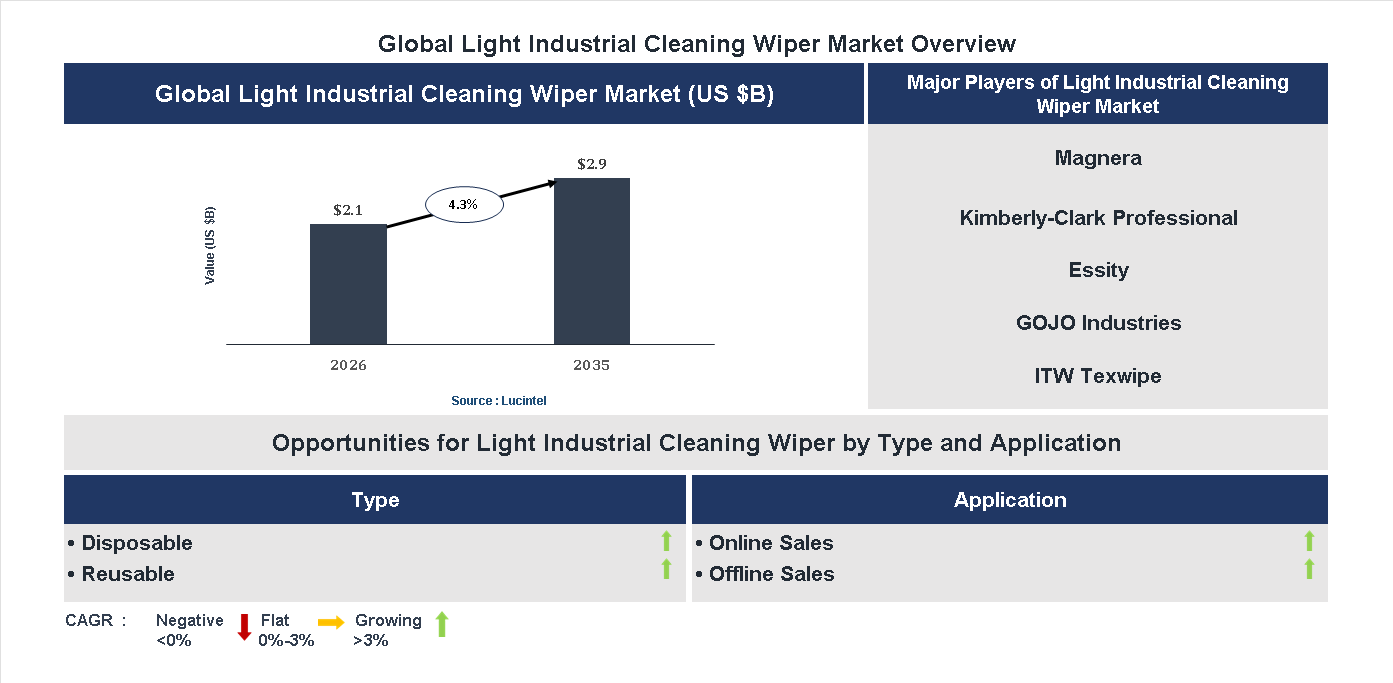
The future of the global light industrial cleaning wiper market looks promising with opportunities in the online sale and offline sale markets. The global light industrial cleaning wiper market is expected to reach an estimated $2.9 billion by 2035 with a CAGR of 4.3% from 2026 to 2035. The major drivers for this market are the increasing demand for efficient workplace cleaning, the rising focus on industrial hygiene standards, and the growing adoption across light manufacturing facilities.• Lucintel forecasts that, within the type category, disposable is expected to witness higher growth over the forecast period.
• Within the application category, online sale is expected to witness higher growth.
• In terms of region, APAC is expected to witness the highest growth over the forecast period. Gain valuable insights for your business decisions with our comprehensive 150+ page report. Sample figures with some insights are shown below.
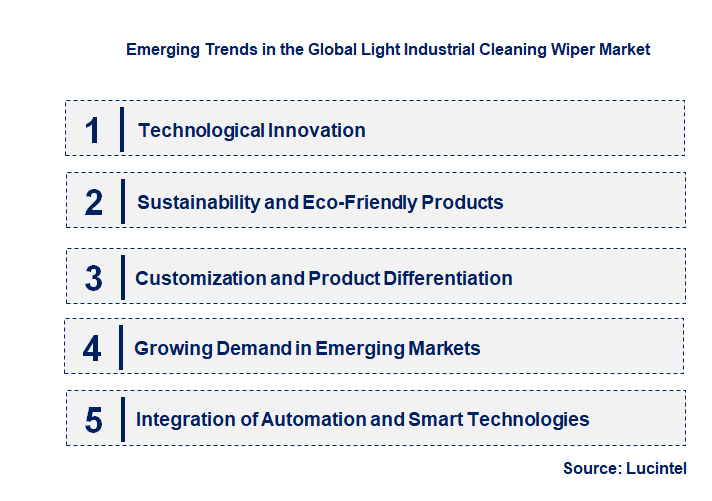
Emerging Trends in the Light Industrial Cleaning Wiper Market
The light industrial cleaning wiper market is experiencing significant transformation driven by technological advancements, changing customer preferences, and increasing emphasis on sustainability. As industries seek more efficient, eco-friendly, and cost-effective cleaning solutions, market players are innovating to meet these demands. The integration of smart materials, automation, and sustainable practices is reshaping the landscape, creating new opportunities and challenges. These emerging trends are not only enhancing product performance but also influencing market dynamics, competitive strategies, and customer expectations. Understanding these developments is crucial for stakeholders aiming to stay ahead in this evolving industry.• Technological Innovation: Adoption of advanced materials and manufacturing processes is improving wiper efficiency and durability. Innovations such as antimicrobial coatings, high-absorbency fibers, and moisture control technologies are enhancing cleaning performance. Automation and smart sensors are also being integrated into wipers for real-time monitoring and improved usability. These technological advancements lead to better cleaning outcomes, longer product lifespan, and reduced operational costs, thereby increasing market competitiveness and customer satisfaction.
• Sustainability and Eco-Friendly Products: Growing environmental concerns are driving demand for biodegradable, recyclable, and chemical-free wipers. Manufacturers are developing eco-friendly materials that reduce carbon footprint and waste. The shift towards sustainable products aligns with regulatory pressures and consumer preferences for greener solutions. This trend encourages innovation in raw materials and manufacturing processes, fostering a market shift towards environmentally responsible products that appeal to eco-conscious clients and enhance brand reputation.
• Customization and Product Differentiation: Customers increasingly seek tailored solutions to meet specific industrial cleaning needs. Manufacturers are offering customizable wipers in terms of size, absorbency, texture, and chemical compatibility. This trend allows companies to differentiate their products in a competitive market, cater to niche segments, and provide value-added solutions. Customization enhances customer satisfaction and loyalty, while also enabling manufacturers to command premium pricing for specialized products.
• Growing Demand in Emerging Markets: Rapid industrialization and urbanization in developing regions are fueling demand for light industrial cleaning wipers. These markets present new growth opportunities due to expanding manufacturing, healthcare, and food processing sectors. Local manufacturers are entering these markets, often offering cost-effective solutions tailored to regional needs. This trend broadens the market scope, increases sales volumes, and encourages global supply chain expansion, ultimately driving overall industry growth.
• Integration of Automation and Smart Technologies: The incorporation of automation, IoT, and smart sensors into cleaning products is revolutionizing the market. Automated wipers with features like self-drying, real-time usage monitoring, and data collection are improving efficiency and hygiene standards. These innovations enable predictive maintenance and reduce waste, aligning with Industry 4.0 principles. The adoption of smart technologies enhances operational efficiency, reduces labor costs, and provides valuable insights, positioning companies at the forefront of technological evolution in the light industrial cleaning wiper market. These emerging trends are fundamentally reshaping the light industrial cleaning wiper market by driving innovation, promoting sustainability, enabling customization, expanding into new markets, and integrating smart technologies. These developments are fostering a more competitive, efficient, and environmentally responsible industry, ultimately benefiting manufacturers, consumers, and the environment alike.
Recent Development in the Light Industrial Cleaning Wiper Market
The light industrial cleaning wiper market is experiencing rapid growth driven by increasing demand for efficient cleaning solutions across various industries. Innovations in material technology and heightened awareness of hygiene standards are fueling market expansion. Additionally, the rise in industrial activities and stringent regulations on cleanliness are prompting companies to adopt advanced wiping products. This evolving landscape presents significant opportunities for manufacturers to innovate and capture market share, ultimately transforming the cleaning industry and improving operational efficiency across sectors.• Growing Demand for Hygiene and Sanitation: The increasing emphasis on hygiene standards in industries such as healthcare, food processing, and manufacturing is boosting demand for high-quality light industrial cleaning wipers. These products are essential for maintaining cleanliness, preventing contamination, and complying with health regulations. As awareness about sanitation rises globally, companies are investing more in effective wiping solutions, which directly impacts market growth and encourages innovation in product formulations.
• Technological Advancements in Material Composition: Innovations in fabric technology, such as the development of highly absorbent, durable, and eco-friendly materials, are revolutionizing the market. These advancements improve cleaning efficiency, reduce waste, and enhance sustainability. Manufacturers are focusing on creating multi-purpose wipes that cater to diverse industrial needs, leading to increased adoption. The integration of antimicrobial properties further boosts product appeal, ensuring better hygiene and longer shelf life, thus expanding market opportunities.
• Increasing Adoption of Eco-Friendly Products: Environmental concerns and regulatory pressures are driving the shift toward biodegradable and sustainable wiping solutions. Companies are investing in eco-friendly materials that minimize environmental impact without compromising performance. This trend is attracting environmentally conscious consumers and industries aiming to meet sustainability goals. The development of recyclable and compostable wipes is opening new market segments, fostering innovation, and encouraging manufacturers to adopt greener practices, which ultimately enhances market competitiveness.
• Expansion in End-User Industries: The growth of sectors such as automotive, electronics, and pharmaceuticals is significantly contributing to market expansion. These industries require specialized cleaning wipes for delicate components and sterile environments. The increasing industrialization and automation are further amplifying demand. As these sectors grow, so does the need for tailored wiping solutions, prompting manufacturers to diversify product offerings. This expansion not only broadens market reach but also encourages technological innovation to meet specific industry standards.
• Impact of Regulatory Standards and Quality Certifications: Stringent regulations and quality standards are shaping the market landscape by ensuring product safety and efficacy. Compliance with certifications like ISO and EPA standards enhances consumer trust and opens access to global markets. Manufacturers are investing in quality assurance processes and R&D to meet evolving regulatory requirements. This focus on standards drives product innovation, improves market credibility, and encourages industry players to develop safer, more effective wipes, ultimately fostering market stability and growth. These developments are collectively transforming the light industrial cleaning wiper market by driving innovation, expanding application areas, and emphasizing sustainability. The focus on hygiene, technological progress, eco-friendliness, industry expansion, and regulatory compliance is creating a dynamic environment. As a result, market players are better positioned to meet diverse customer needs, improve operational efficiencies, and capitalize on emerging opportunities, ensuring sustained growth and competitiveness in the evolving landscape.
Strategic Growth Opportunities in the Light Industrial Cleaning Wiper Market
The light industrial cleaning wiper market is experiencing significant growth driven by increasing demand for efficient cleaning solutions across various industries. Innovations in material technology, rising health and safety standards, and expanding applications in manufacturing, healthcare, and food processing are fueling market expansion. Companies are focusing on product durability, eco-friendliness, and cost-effectiveness to meet evolving customer needs. Strategic investments and partnerships are further accelerating growth, creating numerous opportunities for market players to capture new segments and enhance their competitive edge.• Expansion Into Healthcare and Food Processing Sectors: The increasing emphasis on hygiene and sanitation standards in healthcare and food processing industries presents substantial growth opportunities. Light industrial cleaning wipers designed for high absorbency, chemical resistance, and safety compliance are in high demand. These sectors require specialized products to prevent contamination and ensure regulatory adherence, prompting manufacturers to innovate and tailor solutions. This expansion is expected to significantly boost market size and diversify application portfolios.
• Adoption of Eco-Friendly and Sustainable Wipers: Growing environmental awareness and regulatory pressures are driving demand for eco-friendly cleaning products. Manufacturers are developing biodegradable, recyclable, and chemical-free wipers that reduce environmental impact. These sustainable options appeal to environmentally conscious consumers and companies aiming to meet green standards. The shift towards eco-friendly products not only enhances brand reputation but also opens new market segments, fostering long-term growth and compliance with evolving environmental regulations.
• Technological Innovations in Material Composition: Advances in material science are enabling the development of more effective, durable, and cost-efficient wipers. Innovations such as non-woven fabrics, microfiber technology, and antimicrobial coatings improve cleaning efficiency, absorbency, and safety. These technological improvements allow for better performance in demanding industrial environments, reducing waste and operational costs. Continuous R&D investments are expected to lead to next-generation products, further strengthening market competitiveness and expanding application scopes.
• Rising Demand for Customized and Specialty Wipers: The diverse needs of industries like electronics, pharmaceuticals, and automotive manufacturing require customized solutions. Manufacturers are offering tailored wipers with specific features such as chemical resistance, static control, or lint-free properties. This customization enhances cleaning effectiveness and safety, meeting strict industry standards. The ability to provide specialized products creates opportunities for differentiation, customer loyalty, and entry into niche markets, supporting overall market growth.
• Strategic Collaborations and Market Penetration: Partnerships between raw material suppliers, manufacturers, and distributors are facilitating market expansion. Collaborations enable access to advanced technologies, new distribution channels, and broader customer bases. Market players are also investing in regional expansion to tap into emerging markets with growing industrial activities. These strategic moves enhance product offerings, improve supply chain efficiency, and accelerate market penetration, ultimately driving sustained growth and competitive advantage across the industry. The overall impact of these opportunities is poised to significantly enhance market growth, diversify application areas, and foster innovation. Companies that leverage these trends will be better positioned to meet evolving customer demands, comply with regulations, and sustain competitive advantages. As a result, the light industrial cleaning wiper market is expected to experience robust expansion, driven by technological, environmental, and industry-specific factors.
Light Industrial Cleaning Wiper Market Driver and Challenges
The light industrial cleaning wiper market is influenced by a variety of technological, economic, and regulatory factors that shape its growth and development. Advances in cleaning technology, increasing demand for hygiene standards, and evolving environmental regulations are key drivers. Economic factors such as industrial expansion and infrastructure development also play a significant role. Conversely, challenges like fluctuating raw material costs, stringent regulatory compliance, and market saturation pose hurdles. Understanding these drivers and challenges is essential for stakeholders to navigate the market effectively and capitalize on emerging opportunities while mitigating risks. The factors responsible for driving the light industrial cleaning wiper market include:-• Technological Innovation: The development of advanced, eco-friendly, and highly absorbent cleaning wipers has significantly boosted market growth. Innovations such as biodegradable materials and enhanced durability meet increasing hygiene standards and environmental concerns. These technological advancements improve cleaning efficiency, reduce waste, and appeal to eco-conscious consumers and industries. As companies invest in R&D, the market benefits from a broader product portfolio, catering to diverse industrial needs, thus expanding market reach and customer satisfaction.
• Rising Industrial and Commercial Activities: The expansion of manufacturing, healthcare, food processing, and hospitality sectors drives demand for effective cleaning solutions. As industries prioritize hygiene and safety, especially post-pandemic, the need for reliable cleaning wipers has surged. Infrastructure development projects and urbanization further contribute to increased consumption. This economic growth fuels demand for high-quality, durable, and cost-effective cleaning products, creating a robust market environment with ample growth opportunities.
• Increasing Focus on Hygiene and Safety Standards: Heightened awareness of health and safety regulations across industries compels companies to adopt superior cleaning practices. Stringent standards in healthcare, food processing, and hospitality sectors necessitate the use of high-performance cleaning wipers. This focus on hygiene not only ensures compliance but also enhances brand reputation and consumer trust. Consequently, manufacturers are innovating to meet these standards, which propels market expansion and encourages the adoption of advanced cleaning solutions.
• Environmental Regulations and Sustainability Initiatives: Governments and regulatory bodies are imposing stricter environmental laws aimed at reducing waste and promoting sustainability. This has led to increased demand for biodegradable, recyclable, and eco-friendly cleaning wipers. Companies are adopting sustainable materials and manufacturing processes to align with these regulations, which not only reduces environmental impact but also appeals to eco-conscious consumers. These initiatives drive innovation and market differentiation, fostering long-term growth while addressing environmental concerns. The challenges facing the light industrial cleaning wiper market include:-
• Fluctuating Raw Material Costs: The market heavily depends on raw materials like nonwoven fabrics, cellulose, and chemicals, which are subject to price volatility due to supply chain disruptions, geopolitical tensions, and fluctuating oil prices. These fluctuations impact manufacturing costs, forcing companies to either absorb higher expenses or pass them onto consumers, potentially reducing competitiveness. Managing supply chain stability and cost efficiency remains a critical challenge for sustained profitability and market growth.
• Stringent Regulatory Compliance: Evolving environmental and safety regulations impose strict standards on product composition, labeling, and disposal. Compliance requires significant investment in R&D, testing, and certification processes, increasing operational costs. Non-compliance can lead to legal penalties, product recalls, and damage to brand reputation. Navigating complex regulatory landscapes across different regions demands continuous adaptation, which can hinder market agility and increase barriers for new entrants.
• Market Saturation and Intense Competition: The market is highly competitive with numerous established players and new entrants vying for market share. Product differentiation becomes challenging, leading to price wars and reduced profit margins. Additionally, saturation in mature markets limits growth opportunities, compelling companies to explore new regions or innovate continuously. Maintaining competitive advantage requires significant marketing efforts, innovation, and cost management, which can strain resources and impact profitability. The light industrial cleaning wiper market is shaped by technological advancements, expanding industrial activities, and regulatory pressures that foster growth. However, challenges such as raw material cost fluctuations, regulatory compliance, and market saturation pose significant hurdles. These factors collectively influence market dynamics, requiring stakeholders to innovate, adapt, and strategize effectively. Overall, the markets future depends on balancing these drivers and challenges to sustain growth, meet evolving customer needs, and adhere to environmental standards, ensuring long-term success.
List of Light Industrial Cleaning Wiper Companies
Companies in the market compete on the basis of product quality offered. Major players in this market focus on expanding their manufacturing facilities, R&D investments, infrastructural development, and leverage integration opportunities across the value chain. With these strategies light industrial cleaning wiper companies cater increasing demand, ensure competitive effectiveness, develop innovative products & technologies, reduce production costs, and expand their customer base. Some of the light industrial cleaning wiper companies profiled in this report include-• Magnera
• Kimberly-Clark Professional
• Essity
• GOJO Industries
• ITW Texwipe
• Contec Inc
• 3M
• Sofidel
• OZU CORPORATION
• Freudenberg
Light Industrial Cleaning Wiper Market by Segment
The study includes a forecast for the global light industrial cleaning wiper market by type, application, and region.Light Industrial Cleaning Wiper Market by Type [Value from 2019 to 2035]:
• Disposable
• Reusable
Light Industrial Cleaning Wiper Market by Application [Value from 2019 to 2035]:
• Online Sales
• Offline Sales
Light Industrial Cleaning Wiper Market by Region [Value from 2019 to 2035]:
• North America
• Europe
• Asia Pacific
• The Rest of the World
Country Wise Outlook for the Light Industrial Cleaning Wiper Market
The light industrial cleaning wiper market has experienced significant growth driven by increasing demand for hygiene and cleanliness standards across various industries. Technological innovations, sustainability initiatives, and evolving regulations are shaping market dynamics globally. Countries are adopting new materials, eco-friendly products, and advanced manufacturing processes to meet rising consumer and industrial needs. The markets expansion is also influenced by the growth of sectors such as healthcare, manufacturing, and food processing, which require high-quality cleaning solutions. As these trends continue, key players are focusing on product innovation, strategic partnerships, and expanding their geographic presence to capitalize on emerging opportunities.• United States: The U.S. market has seen a surge in demand for eco-friendly and biodegradable wipers, driven by stringent environmental regulations and consumer preferences. Innovations in microfiber technology have improved cleaning efficiency, while companies are investing in sustainable manufacturing practices. The healthcare and food processing sectors are major contributors to market growth, with increased adoption of disposable wipers to ensure hygiene. Additionally, e-commerce platforms are expanding access to a broader range of products, boosting sales and market penetration.
• China: China’s market for light industrial cleaning wipers is rapidly expanding due to industrialization and urbanization. The government’s focus on environmental protection has led to increased adoption of sustainable products. Local manufacturers are investing in R&D to develop high-performance, cost-effective wipers, catering to sectors like electronics, automotive, and food processing. The rise of e-commerce and distribution channels has further facilitated market growth, while exports to other Asian countries are also increasing. The market is characterized by a shift towards premium, multi-purpose wipers to meet diverse industrial needs.
• Germany: Germany’s market is marked by a strong emphasis on quality, safety, and environmental sustainability. The adoption of strict EU regulations has prompted manufacturers to develop high-quality, eco-friendly wipers with enhanced absorbency and durability. The industrial sector, including automotive and manufacturing, is a key driver, with a focus on reducing waste and improving efficiency. Innovations in reusable and washable wipers are gaining traction, aligning with Germany’s sustainability goals. The market also benefits from advanced logistics and distribution networks, ensuring timely supply to industrial clients across Europe.
• India: The Indian market is witnessing rapid growth due to expanding manufacturing, healthcare, and food processing industries. Increasing awareness of hygiene standards has boosted demand for disposable and high-absorbency wipers. Local manufacturers are adopting cost-effective production techniques and introducing innovative products to compete with international brands. The rise of organized retail and e-commerce platforms has improved product accessibility. Government initiatives promoting cleanliness and sanitation are further fueling market expansion. Additionally, the shift towards environmentally friendly products is encouraging companies to develop biodegradable and sustainable wipers tailored to local needs.
• Japan: Japan’s market is characterized by a focus on high-quality, durable, and environmentally friendly wipers. The country’s strict safety and environmental standards have driven innovation in biodegradable and reusable products. The healthcare, electronics, and automotive sectors are primary consumers, demanding high-performance cleaning solutions. Japanese companies are investing in advanced materials and manufacturing processes to enhance product efficiency and sustainability. The market benefits from a well-established distribution network and a strong emphasis on research and development, ensuring that products meet the highest standards of quality and environmental responsibility.

Features of the Global Light Industrial Cleaning Wiper Market
Market Size Estimates: Light industrial cleaning wiper market size estimation in terms of value ($B). Trend and Forecast Analysis: Market trends (2019 to 2025) and forecast (2026 to 2035) by various segments and regions. Segmentation Analysis: Light industrial cleaning wiper market size by type, application, and region in terms of value ($B). Regional Analysis: Light industrial cleaning wiper market breakdown by North America, Europe, Asia Pacific, and Rest of the World. Growth Opportunities: Analysis of growth opportunities in different types, applications, and regions for the light industrial cleaning wiper market. Strategic Analysis: This includes M&A, new product development, and competitive landscape of the light industrial cleaning wiper market. Analysis of competitive intensity of the industry based on Porter’s Five Forces model.
FAQ
Q1. What is the light industrial cleaning wiper market size? Answer: The global light industrial cleaning wiper market is expected to reach an estimated $2.9 billion by 2035. Q2. What is the growth forecast for light industrial cleaning wiper market? Answer: The global light industrial cleaning wiper market is expected to grow with a CAGR of 4.3% from 2026 to 2035. Q3. What are the major drivers influencing the growth of the light industrial cleaning wiper market? Answer: The major drivers for this market are the increasing demand for efficient workplace cleaning, the rising focus on industrial hygiene standards, and the growing adoption across light manufacturing facilities. Q4. What are the major segments for light industrial cleaning wiper market? Answer: The future of the light industrial cleaning wiper market looks promising with opportunities in the online sale and offline sale markets. Q5. Who are the key light industrial cleaning wiper market companies? Answer: Some of the key light industrial cleaning wiper companies are as follows:• Magnera
• Kimberly-Clark Professional
• Essity
• GOJO Industries
• ITW Texwipe
• Contec Inc
• 3M
• Sofidel
• OZU CORPORATION
• Freudenberg Q6. Which light industrial cleaning wiper market segment will be the largest in future? Answer: Lucintel forecasts that, within the type category, disposable is expected to witness higher growth over the forecast period. Q7. In light industrial cleaning wiper market, which region is expected to be the largest in next 5 years? Answer: In terms of region, APAC is expected to witness the highest growth over the forecast period. Q8. Do we receive customization in this report? Answer: Yes, Lucintel provides 10% customization without any additional cost.
Table of Contents
List of Figures
List of Tables
Methodology
- In-depth interviews of the major players in this market
- Detailed secondary research from competitors’ financial statements and published data
- Extensive searches of published works, market, and database information pertaining to industry news, company press releases, and customer intentions
- A compilation of the experiences, judgments, and insights of Lucintel’s professionals, who have analyzed and tracked this market over the years.


Buy Now
Choose a license that fits your team. Instant PDF delivery.
Prices exclude taxes. Instant delivery. Custom licensing available on request.
Key Questions
- • What are some of the most promising, high-growth opportunities for the light industrial cleaning wiper market by type (disposable and reusable), application (online sales and offline sales), and region (North America, Europe, Asia Pacific, and the Rest of the World)?
- • Which segments will grow at a faster pace and why?
- • Which region will grow at a faster pace and why?
- • What are the key factors affecting market dynamics? What are the key challenges and business risks in this market?
- • What are the business risks and competitive threats in this market?
- • What are the emerging trends in this market and the reasons behind them?
- • What are some of the changing demands of customers in the market?
- • What are the new developments in the market? Which companies are leading these developments?
- • Who are the major players in this market? What strategic initiatives are key players pursuing for business growth?
- • What are some of the competing products in this market and how big of a threat do they pose for loss of market share by material or product substitution?
- • What M&A activity has occurred in the last 7 years and what has its impact been on the industry? For any questions related to Light Industrial Cleaning Wiper Market, Light Industrial Cleaning Wiper Market Size, Light Industrial Cleaning Wiper Market Growth, Light Industrial Cleaning Wiper Market Analysis, Light Industrial Cleaning Wiper Market Report, Light Industrial Cleaning Wiper Market Share, Light Industrial Cleaning Wiper Market Trends, Light Industrial Cleaning Wiper Market Forecast, Light Industrial Cleaning Wiper Companies, write Lucintel analyst at email: helpdesk@lucintel.com. We will be glad to get back to you soon.


