
Report Feature
License Plate Recognition Market Trends and Forecast
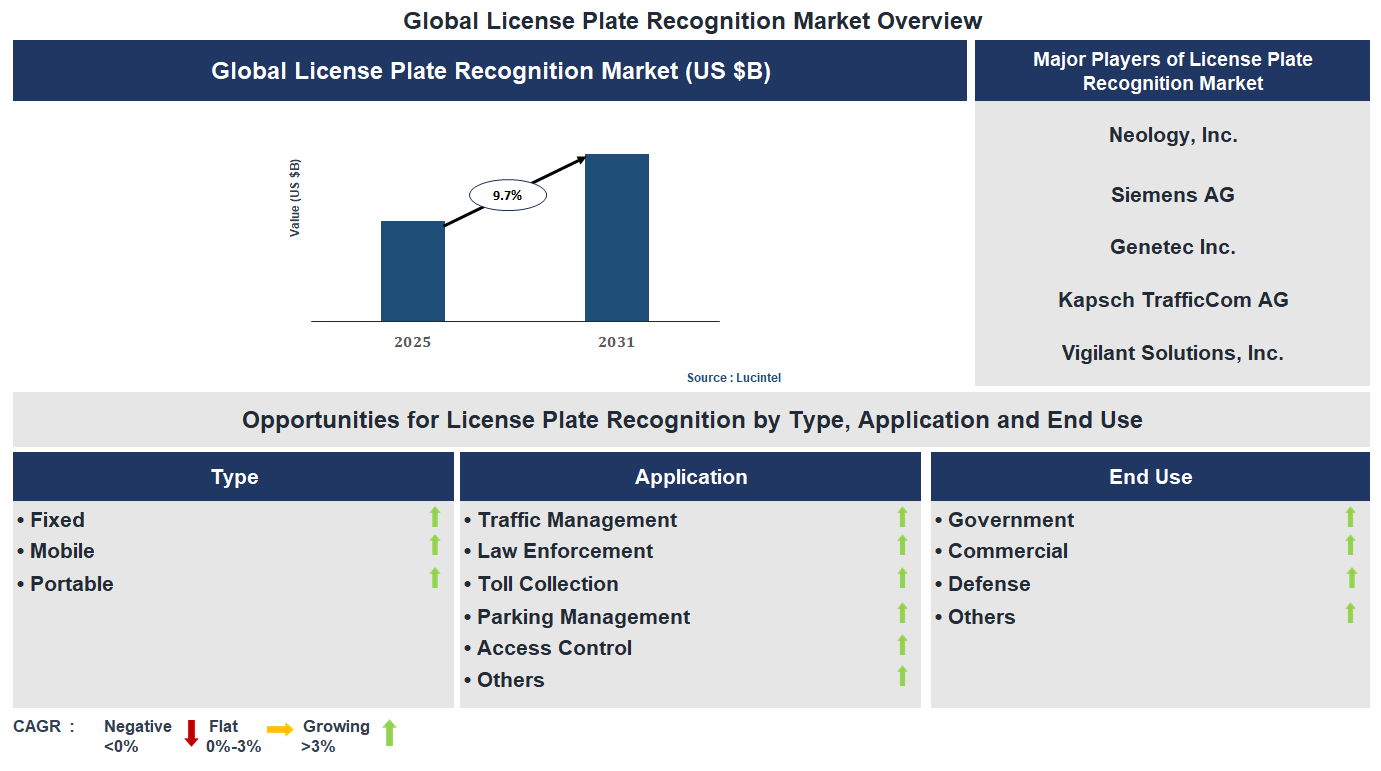
The future of the global license plate recognition market looks promising with opportunities in the government, commercial, and defense markets. The global license plate recognition market is expected to grow with a CAGR of 9.7% from 2025 to 2031. The major drivers for this market are the increasing demand for security solutions, the rising adoption of smart transportation systems, and the growing need for efficient traffic management.• Lucintel forecasts that, within the type category, fixed is expected to witness the highest growth over the forecast period.
• Within the end use category, government is expected to witness the highest growth.
• In terms of region, North America is expected to witness the highest growth over the forecast period. Gain valuable insights for your business decisions with our comprehensive 150+ page report. Sample figures with some insights are shown below.
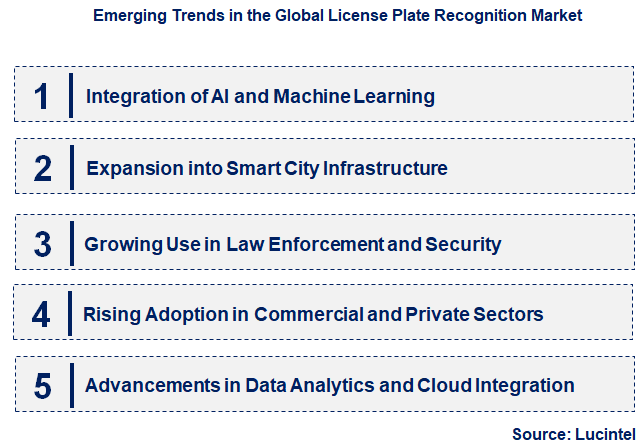
Emerging Trends in the License Plate Recognition Market
The license plate recognition market is experiencing rapid growth driven by technological advancements, increasing security concerns, and the need for efficient vehicle management systems. As governments, law enforcement agencies, and private organizations seek smarter solutions for vehicle identification, the market is evolving with innovative features and expanding applications. These developments are transforming how vehicles are monitored, managed, and secured across various sectors. The following key trends highlight the major shifts shaping the future of the LPR market, reflecting its increasing importance in security, automation, and data analytics.• Integration of AI and Machine Learning: The adoption of AI and machine learning algorithms enhances the accuracy and speed of license plate recognition. These technologies enable systems to adapt to different plate formats, lighting conditions, and obstructions, reducing false positives. AI-driven LPR solutions are also capable of real-time data processing, facilitating instant alerts and decision-making. This integration improves overall system reliability and broadens application scope, including traffic management, toll collection, and law enforcement, making vehicle identification more efficient and scalable.
• Expansion into Smart City Infrastructure: LPR technology is increasingly embedded within smart city initiatives to improve urban mobility and security. By integrating LPR with traffic management systems, cities can monitor vehicle flow, enforce traffic rules, and optimize parking management. This trend supports the development of intelligent transportation systems that reduce congestion and pollution. Additionally, LPR data aids in crime prevention and emergency response, contributing to safer, more efficient urban environments. The expansion into smart city infrastructure signifies a move toward comprehensive, data-driven urban management solutions.
• Growing Use in Law Enforcement and Security: Law enforcement agencies are leveraging LPR systems for enhanced surveillance and crime prevention. These systems facilitate automatic vehicle identification, tracking stolen vehicles, and monitoring suspect movements. The ability to quickly access vehicle data from a centralized database accelerates investigations and improves response times. The deployment of mobile and fixed LPR units at checkpoints, borders, and high-crime areas underscores their importance in security strategies. This trend underscores the critical role of LPR in maintaining public safety and supporting law enforcement operations.
• Rising Adoption in Commercial and Private Sectors: Commercial entities such as parking management companies, toll operators, and fleet managers are increasingly adopting LPR technology to streamline operations. Private organizations use LPR for access control, security, and asset management. The proliferation of smart parking solutions and automated toll collection systems exemplifies this trend. As costs decrease and technology becomes more accessible, the private sectors reliance on LPR is expected to grow, enhancing operational efficiency and customer experience.
• Advancements in Data Analytics and Cloud Integration: The integration of LPR systems with cloud platforms and advanced data analytics tools is transforming data management. Cloud-based solutions enable remote access, scalable storage, and real-time data sharing across multiple locations. Advanced analytics facilitate pattern recognition, predictive maintenance, and behavioral insights, adding value beyond basic vehicle identification. This trend supports the development of comprehensive vehicle monitoring ecosystems, enabling organizations to make data-driven decisions. The shift toward cloud and analytics integration is making LPR systems more versatile, efficient, and capable of supporting complex operational needs. In summary, these emerging trends are significantly reshaping the license plate recognition market by enhancing system capabilities, expanding application areas, and integrating with broader smart infrastructure. The adoption of AI, smart city integration, security enhancements, private sector growth, and data analytics are collectively driving innovation, efficiency, and security, positioning LPR technology as a vital component of modern urban and organizational management.
Recent Development in the License Plate Recognition Market
The license plate recognition market has experienced significant growth driven by advancements in technology, increasing security concerns, and the adoption of smart city initiatives worldwide. As governments and private sectors seek efficient vehicle management and security solutions, the market is evolving rapidly. Innovations in artificial intelligence, machine learning, and camera technologies are enhancing the accuracy and speed of LPR systems. Additionally, the integration of LPR with other surveillance systems is expanding its applications across various sectors. These developments are shaping the future landscape of vehicle identification and security management, making the market more competitive and technologically advanced.• Technological Advancements: The incorporation of AI and machine learning algorithms has significantly improved the accuracy and speed of license plate recognition systems. These technologies enable real-time processing and better recognition in challenging conditions such as poor lighting or weather. As a result, the systems are more reliable, reducing false positives and negatives, which enhances security and operational efficiency across law enforcement, toll collection, and parking management sectors.
• Expansion of Smart City Projects: Governments worldwide are investing in smart city initiatives that incorporate LPR technology for traffic management, law enforcement, and urban planning. These projects utilize LPR systems to monitor traffic flow, enforce regulations, and improve public safety. The expansion of such projects is driving demand for scalable and integrated LPR solutions, fostering market growth and encouraging innovation in urban infrastructure.
• Increased Adoption in Toll Collection: Toll operators are increasingly adopting automated LPR systems to streamline vehicle passage and reduce congestion. These systems enable contactless toll payments and real-time vehicle tracking, improving efficiency and customer experience. The shift towards cashless tolling and the need for seamless traffic flow are propelling the market forward, especially in regions with high traffic volumes.
• Integration with Other Surveillance Technologies: LPR systems are increasingly being integrated with CCTV cameras, facial recognition, and vehicle tracking systems to create comprehensive security networks. This integration enhances situational awareness and provides law enforcement agencies with robust tools for crime prevention and investigation. The trend is fostering a more interconnected security infrastructure, expanding the scope and capabilities of LPR technology.
• Growing Use in Commercial Fleet Management: Companies are adopting LPR technology for fleet management, vehicle tracking, and security purposes. This adoption helps optimize routes, monitor vehicle usage, and prevent theft. The increasing demand from logistics and transportation sectors is contributing to market expansion, emphasizing the importance of efficient vehicle identification and management solutions. In summary, these developments are significantly impacting the license plate recognition market by enhancing system accuracy, expanding application areas, and integrating with other security technologies. The market is becoming more sophisticated, driven by technological innovation and the increasing need for efficient vehicle management and security solutions. This evolution is expected to continue, fostering growth and new opportunities across various sectors.
Strategic Growth Opportunities in the License Plate Recognition Market
The license plate recognition market is experiencing rapid growth driven by technological advancements and increasing demand across various sectors. As governments, businesses, and security agencies seek efficient and automated solutions, the market is expanding into diverse applications. Key growth opportunities are emerging in areas such as traffic management, law enforcement, toll collection, parking management, and retail security. These applications are transforming traditional processes, enhancing safety, efficiency, and customer experience. The following highlights five key growth opportunities within these applications, illustrating their potential to shape the future of the LPR market.• Enhanced Traffic Flow and Congestion Reduction: LPR systems enable real-time traffic monitoring, automated signal control, and incident detection, leading to smoother traffic flow and reduced congestion in urban areas. This improves commuter experience and reduces emissions, making cities smarter and more sustainable.
• Improved Crime Prevention and Investigation: LPR technology assists law enforcement agencies in identifying stolen vehicles, tracking suspects, and managing traffic violations efficiently. This enhances public safety, accelerates investigations, and reduces crime rates, fostering safer communities.
• Automated, Contactless Toll Processing: LPR systems facilitate seamless toll collection on highways and bridges, minimizing delays and reducing operational costs. This results in faster transit, improved revenue collection, and enhanced user convenience for commuters.
• Streamlined Parking Operations and Security: LPR enables automated entry and exit, real-time parking occupancy monitoring, and secure access control. These features optimize parking space utilization, reduce wait times, and improve overall parking security.
• Loss Prevention and Customer Analytics : In retail environments, LPR helps monitor vehicle access, prevent theft, and gather customer data for targeted marketing. This enhances store security, improves customer insights, and boosts sales performance. In summary, these growth opportunities are significantly impacting the license plate recognition market by expanding its application scope, improving operational efficiency, and enhancing security measures. As technology advances and adoption increases, the market is poised for sustained growth, transforming various sectors and contributing to smarter, safer environments.
License Plate Recognition Market Driver and Challenges
The license plate recognition market is influenced by a variety of technological, economic, and regulatory factors. Rapid advancements in computer vision, artificial intelligence, and camera technologies have significantly enhanced LPR accuracy and efficiency. Economic growth and urbanization drive demand for intelligent transportation systems, security, and law enforcement applications. Regulatory frameworks around data privacy and security also shape market dynamics, influencing deployment and innovation. Additionally, increasing investments in smart city initiatives and infrastructure modernization further propel market growth. However, these drivers are counterbalanced by challenges such as technological limitations, privacy concerns, and regulatory uncertainties, which can hinder market expansion and adoption. The factors responsible for driving the license plate recognition market include:• Technological Advancements: The continuous evolution of AI, machine learning, and high-resolution imaging has improved LPR accuracy, speed, and reliability. These innovations enable real-time processing and integration with other security systems, making LPR more effective for law enforcement, toll collection, and parking management. As technology becomes more affordable and scalable, adoption accelerates across various sectors, fostering market growth.
• Growing Security and Surveillance Needs: Increasing concerns over crime, terrorism, and vehicle theft have heightened demand for automated surveillance solutions. LPR systems provide efficient monitoring of public spaces, borders, and transportation hubs, enabling quick identification and response. Governments and private entities are investing heavily in security infrastructure, which directly boosts the adoption of LPR technology.
• Smart City Initiatives: Urban centers worldwide are adopting smart city concepts to improve transportation, safety, and resource management. LPR plays a crucial role in traffic management, congestion reduction, and automated tolling, aligning with the goals of smart city projects. This integration promotes widespread deployment of LPR systems, supported by government funding and policy incentives.
• Regulatory and Policy Support: Governments are implementing policies to enhance transportation safety, reduce congestion, and improve law enforcement efficiency. Regulatory frameworks that encourage the use of automated systems and data sharing facilitate market growth. Additionally, standards for interoperability and data security are fostering confidence among stakeholders, encouraging broader adoption.
• Increasing Adoption in Commercial Sectors: The commercial sector, including parking management, logistics, and retail, is increasingly utilizing LPR for operational efficiency. Automated vehicle identification reduces manual effort, enhances customer experience, and improves security. As businesses recognize the benefits, investment in LPR solutions continues to rise, expanding market reach. The challenges facing this license plate recognition market include:
• Technological Limitations: Despite advancements, LPR systems still face challenges such as poor lighting, adverse weather conditions, and occlusions that impair accuracy. Variations in license plate designs and fonts across regions further complicate recognition processes. These limitations can lead to false positives or missed detections, reducing system reliability and hindering widespread adoption.
• Privacy and Data Security Concerns: The deployment of LPR systems raises significant privacy issues, especially regarding data collection, storage, and sharing. Public apprehension about surveillance and misuse of personal data can lead to regulatory restrictions and resistance from civil rights groups. Ensuring compliance with data protection laws and establishing transparent policies are critical but challenging.
• Regulatory Uncertainty and Legal Frameworks: The lack of standardized regulations across different jurisdictions creates uncertainty for market players. Varying legal requirements regarding data privacy, retention, and usage can delay deployment and increase compliance costs. Navigating these complex legal landscapes poses a significant challenge for global market expansion. In summary, the license plate recognition market is driven by technological innovations, security needs, smart city initiatives, supportive policies, and commercial adoption. However, technological limitations, privacy concerns, and regulatory uncertainties present notable challenges. These factors collectively influence the pace and scope of market growth, requiring stakeholders to balance innovation with compliance and privacy considerations. Overall, the markets future depends on addressing these challenges while leveraging technological and infrastructural opportunities to enhance safety, efficiency, and urban management.
List of License Plate Recognition Companies
Companies in the market compete on the basis of product quality offered. Major players in this market focus on expanding their manufacturing facilities, R&D investments, infrastructural development, and leverage integration opportunities across the value chain. With these strategies license plate recognition companies cater increasing demand, ensure competitive effectiveness, develop innovative products & technologies, reduce production costs, and expand their customer base. Some of the license plate recognition companies profiled in this report include-• Neology, Inc.
• Siemens AG
• Genetec Inc.
• Kapsch TrafficCom AG
• Vigilant Solutions, Inc.
• Conduent, Inc.
• Bosch Security Systems GmbH
• Tattile S.r.l.
• ARH Inc.
• Q-Free ASA
License Plate Recognition Market by Segment
The study includes a forecast for the global license plate recognition market by type, application, end use, and region.License Plate Recognition Market by Type [Value from 2019 to 2031]:
• Fixed
• Mobile
• Portable
License Plate Recognition Market by Application [Value from 2019 to 2031]:
• Traffic Management
• Law Enforcement
• Toll Collection
• Parking Management
• Access Control
• Others
License Plate Recognition Market by End Use [Value from 2019 to 2031]:
• Government
• Commercial
• Defense
• Others
License Plate Recognition Market by Region [Value from 2019 to 2031]:
• North America
• Europe
• Asia Pacific
• The Rest of the World
Country Wise Outlook for the License Plate Recognition Market
The license plate recognition market has experienced significant growth driven by advancements in artificial intelligence, machine learning, and increased adoption across various sectors such as transportation, law enforcement, and toll management. As countries seek smarter, more efficient traffic management solutions, the markets evolution reflects technological innovation and expanding applications. Recent developments indicate a shift towards more accurate, real-time systems, integration with broader smart city initiatives, and increased deployment in both urban and rural areas. These trends are shaping the future landscape of LPR technology, making it a critical component of modern infrastructure worldwide.• United States: The US market has seen rapid adoption of AI-powered LPR systems, especially in law enforcement and toll collection. Major cities are deploying advanced solutions for traffic management and security, with increased investments in smart city projects. Integration with surveillance networks and data analytics has improved accuracy and operational efficiency. Regulatory frameworks are evolving to address privacy concerns, fostering broader acceptance. Additionally, private sector adoption in parking management and commercial vehicle monitoring is expanding, driving market growth.
• China: China continues to lead in LPR technology deployment, driven by government initiatives to enhance urban traffic management and security. The country has seen widespread adoption of AI-based systems in public transportation, toll booths, and law enforcement. Innovations include high-speed recognition capabilities and integration with facial recognition systems. The government’s focus on smart city projects and urban surveillance has accelerated market expansion. Domestic manufacturers are investing heavily in R&D to improve system accuracy and reduce costs, making China a dominant player in the global market.
• Germany: Germany’s market emphasizes precision and reliability, especially in toll systems and law enforcement. The country is adopting advanced LPR solutions that comply with strict privacy and data protection regulations. There is a focus on integrating LPR with existing traffic management infrastructure and smart city initiatives. German companies are innovating in vehicle identification and data security, ensuring high standards of accuracy and privacy. The market is also witnessing increased collaboration with European partners to develop standardized, interoperable systems for cross-border transportation.
• India: India’s LPR market is rapidly expanding, driven by government initiatives to improve traffic management and reduce congestion in urban areas. The adoption of AI-enabled systems is increasing in toll collection, parking, and law enforcement. Cost-effective solutions tailored to local conditions are being developed, with a focus on scalability and ease of deployment. The government’s push for smart city projects and digital infrastructure has accelerated market growth. Additionally, private sector players are investing in innovative solutions to address unique challenges like high traffic density and diverse vehicle types.
• Japan: Japan is focusing on integrating LPR technology into its advanced transportation infrastructure, including toll systems and traffic monitoring. The country emphasizes high accuracy and reliability, especially in high-speed environments. Japan is also exploring the use of LPR in automated vehicle systems and smart city projects. Collaborations between technology firms and government agencies aim to enhance system capabilities and data security. The market is characterized by a focus on innovation, with ongoing research into improving recognition speed and accuracy, aligning with Japan’s broader goals of technological excellence and sustainable urban mobility.

Features of the Global License Plate Recognition Market
Market Size Estimates: License plate recognition market size estimation in terms of value ($B). Trend and Forecast Analysis: Market trends (2019 to 2024) and forecast (2025 to 2031) by various segments and regions. Segmentation Analysis: License plate recognition market size by type, application, end use, and region in terms of value ($B). Regional Analysis: License plate recognition market breakdown by North America, Europe, Asia Pacific, and Rest of the World. Growth Opportunities: Analysis of growth opportunities in different types, applications, end uses, and regions for the license plate recognition market. Strategic Analysis: This includes M&A, new product development, and competitive landscape of the license plate recognition market. Analysis of competitive intensity of the industry based on Porter’s Five Forces model.
FAQ
Q1. What is the growth forecast for license plate recognition market? Answer: The global license plate recognition market is expected to grow with a CAGR of 9.7% from 2025 to 2031. Q2. What are the major drivers influencing the growth of the license plate recognition market? Answer: The major drivers for this market are the increasing demand for security solutions, the rising adoption of smart transportation systems, and the growing need for efficient traffic management. Q3. What are the major segments for license plate recognition market? Answer: The future of the license plate recognition market looks promising with opportunities in the government, commercial, and defense markets. Q4. Who are the key license plate recognition market companies? Answer: Some of the key license plate recognition companies are as follows:• Neology, Inc.
• Siemens AG
• Genetec Inc.
• Kapsch TrafficCom AG
• Vigilant Solutions, Inc.
• Conduent, Inc.
• Bosch Security Systems GmbH
• Tattile S.r.l.
• ARH Inc.
• Q-Free ASA Q5. Which license plate recognition market segment will be the largest in future? Answer: Lucintel forecasts that, within the type category, fixed is expected to witness the highest growth over the forecast period. Q6. In license plate recognition market, which region is expected to be the largest in next 5 years? Answer: In terms of region, North America is expected to witness the highest growth over the forecast period. Q7. Do we receive customization in this report? Answer: Yes, Lucintel provides 10% customization without any additional cost.
Table of Contents
List of Figures
List of Tables
Methodology
- In-depth interviews of the major players in this market
- Detailed secondary research from competitors’ financial statements and published data
- Extensive searches of published works, market, and database information pertaining to industry news, company press releases, and customer intentions
- A compilation of the experiences, judgments, and insights of Lucintel’s professionals, who have analyzed and tracked this market over the years.


Buy Now
Choose a license that fits your team. Instant PDF delivery.
Prices exclude taxes. Instant delivery. Custom licensing available on request.
Key Questions
- • What are some of the most promising, high-growth opportunities for the license plate recognition market by type (fixed, mobile, and portable), application (traffic management, law enforcement, toll collection, parking management, access control, and others), end use (government, commercial, defense, and others), and region (North America, Europe, Asia Pacific, and the Rest of the World)?
- • Which segments will grow at a faster pace and why?
- • Which region will grow at a faster pace and why?
- • What are the key factors affecting market dynamics? What are the key challenges and business risks in this market?
- • What are the business risks and competitive threats in this market?
- • What are the emerging trends in this market and the reasons behind them?
- • What are some of the changing demands of customers in the market?
- • What are the new developments in the market? Which companies are leading these developments?
- • Who are the major players in this market? What strategic initiatives are key players pursuing for business growth?
- • What are some of the competing products in this market and how big of a threat do they pose for loss of market share by material or product substitution?
- • What M&A activity has occurred in the last 5 years and what has its impact been on the industry? For any questions related to License Plate Recognition Market, License Plate Recognition Market Size, License Plate Recognition Market Growth, License Plate Recognition Market Analysis, License Plate Recognition Market Report, License Plate Recognition Market Share, License Plate Recognition Market Trends, License Plate Recognition Market Forecast, License Plate Recognition Companies, write Lucintel analyst at email: helpdesk@lucintel.com. We will be glad to get back to you soon.


