
Market Report · July 31, 2026

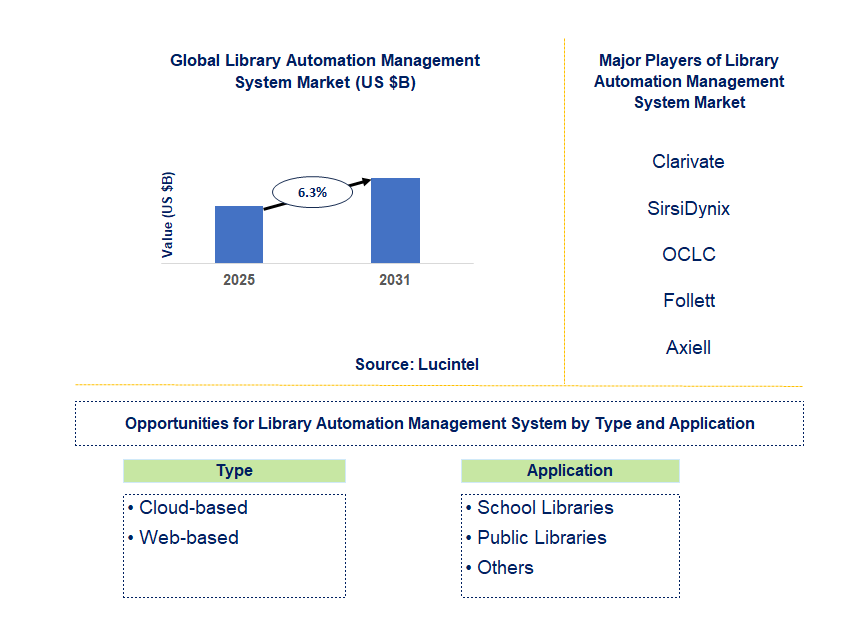
Key data points: The growth forecast = 6.3% annually for the next 7 years. Scroll below to get more insights. This market report covers Trends, opportunities and forecasts in library automation management system market to 2031 by type (cloud-based and web-based), application (school libraries, public libraries, and others), and region (North America, Europe, Asia Pacific, and the Rest of the World)
We'll send your sample report shortly.
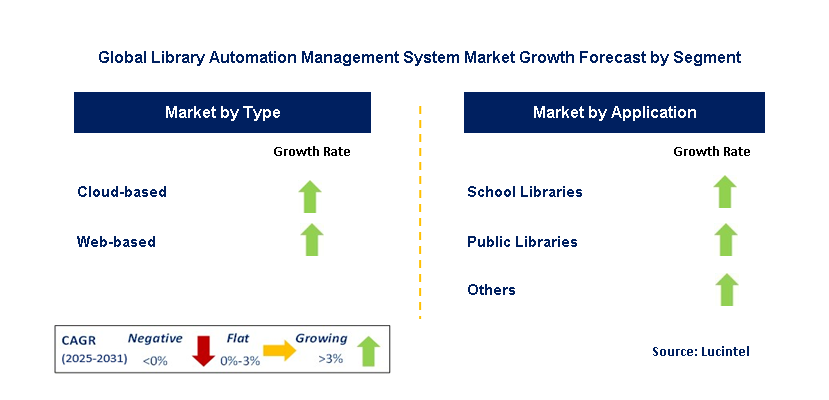
• Lucintel forecasts that, within the type category, cloud-based is expected to witness higher growth over the forecast period.
• Within the application category, public library is expected to witness higher growth.
• In terms of region, North America is expected to witness the highest growth over the forecast period.
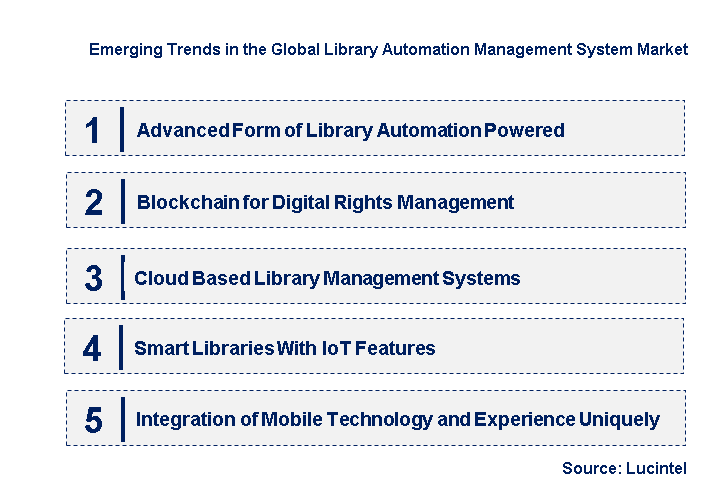
• Advanced Form of Library Automation Powered : The operations of the library are been revolutionized through the introduction of AI, with automated book cataloging, metadata creation, analytics forecasting, and other AI functions. Additionally, chatbots powered by AI are improving the interaction users have with the services of the library by aiding them immediately with questions and book suggestions. Search restorers, be it digital or physical, are increasingly accurate due to the algorithms of machine learning improving searches. In addition, libraries have started using AI powered analytics to assist them in determining which books to acquire based on what the users prefer or what is most borrowed. With this trend, libraries become more efficient and friendly, increasing automation and eliminating manual tasks so that librarians have more time for strategic business activities.
• Blockchain for Digital Rights Management: The use of Blockchain technology is becoming popular in libraries in automating processes for managing and securing the digital rights of different resources. Libraries can use decentralized ledgers to secure data, verify ownership, and protect against unauthorized changes of academic and literary works. Smart contracts are being proposed for easy inter-library loans and content licensing. Moreover, blockchain technology provides transparency in digital archiving which aids in the protection of intellectual property rights and reliable proof of ownership. As the digital collections of libraries continue to grow, trust in blockchain technology is expected to improve the security in resource sharing.
• Cloud Based Library Management Systems: The advantages offered by cloud computing such as scalability and affordability help in transforming data storage, organization, and access in managing libraries. Cloud-integrated ILS (Integrated Library System) allow real-time updating of resources so that users can access both physical and digital resources from anywhere. Subscription-based systems which lessen the reliance on on-premise infrastructure are becoming popular. Libraries are combining mobile applications with cloud technologies to provide users with unparalleled experience. To safeguard the privacy of data and cybersecurity, cloud service providers are improving encryption and multi-factor authentication to access library resources.
• Smart Libraries With IoT Features: Automation of book libraries is changing with the Internet of Things (IoT) technology. Smart shelves, RFID book tracking systems, and automated check-in/check-out systems add value to inventory management. Existing stock books that harbor valuable manuscripts and other historical documents are IoT sensor controlled to monitor environmental conditions in archival storage. Self-service is enhanced, and operational costs are lowered by Interactive kiosks. As technology develops, it is expected that libraries will form smarter inter-connected systems that enhance ease of use and response to get information.
• Integration of Mobile Technology and Experience Uniquely: Mobile devices and users are becoming the top focus for library services. Mobile learning applications enable searching catalogs and reserving books, and users get notified about due dates and new book arrivals. AR is also being used to develop virtual learning experiences in library spaces. This is placing libraries where they are intended to be - at the forefront of user expectations and preferences. AI algorithms are utilized for evaluating user behavior and creating personalized content recommendations. The transformation of the library automation management system market is fundamentally changing with new emerging technologies such as AI, blockchain, cloud computing, the Internet of Things (IoT), and tailored experiences. These technologies streamline processes, maximize security, and improve access to resources, all while putting the user first. With the advancement of technology, libraries globally are expected to adopt sophisticated automation technologies to serve multi-faceted user groups more effectively. The continuing digital evolution of the industry will help libraries stay functional and flexible in the fast-evolving digital landscape.
• Use of Artificial Intelligence in Library Management: The automation of library services such as book indexing, cataloging, and recommending books has greatly been enhanced through AI technology. Machine learning utilizes predictive analytics for demand forecasting, inventory optimization, and personalized reading recommendations. Enhanced accessibility and efficiency of library services is made possible because of reduced administrative burden and greater engagement. These advantages, together with the growing concerns around privacy of data, qualified personnel to operate the systems, and oversight of the technology maintain the challenge. Libraries that integrate AI are able to respond to the changing dynamics of digital patrons and reallocate resources effectively.
• Cloud Based Library Management Solution: The implementation of cloud storage systems is changing library automation with their remote access capabilities, centralized data storage, and seamless updates. These solutions allow libraries to synchronize their catalogs in branches in real time which enhances productivity and collaboration. Cloud based systems also mitigate IT infrastructure costs and improve system-wide recovery efforts. Still, cloud technology has vulnerabilities in security and relies heavily on external providers. Overall, libraries using cloud technology experience improved distributive scalability, cost efficiency, and user accessibility.
• Self-Service Kiosks and Mobile-Friendly Feature: The need for mobile-optimized tools has led to the creation of self-service kiosk and mobile friendly applications. Library management apps enable patrons to browse catalogs, make reservations, and view available digital content. Self-service kiosks allow patrons to check-in, check-out, and pay fines, thereby improving organizational efficiency due to less staff being needed at the front desk. These new designs improve user experience while decreasing administrative delays. Libraries that adopt modern mobile and self-service options are more likely to meet the needs of tech-savvy patrons while streamlining operations.
• Improved Merging of Multimedia as Well as e-Library: To keep pace with the increasing demand for digital content, libraries are incorporating e-books, audiobooks, and other multimedia content into their automation systems. Enhanced DRM technologies are distributing scholarly content more securely than ever before while ensuring access to the materials. This transformation allows libraries to extend their services beyond the physical realms of book lending and permit remote access to materials, but at the same time, tight budgets on spending and complicated licensing issues are a few of the obstacles. These risks and challenges can, however, be mitigated by investments in digital content integration which drives user engagement. Such initiatives help libraries safeguard their services against obsolescence.
• Blockchain Adoption Regarding Security Measure: There are emerging solutions to secure library transactions such as Blockchains for user identity verification, digital lending, and rights management. Loaning and borrowing of books are facilitated through the use of Blockchain which guarantees secure and transparent record keeping, thus ensuring integrity. With the development of these new systems, honesty and responsibility are improved while violation of such basic security concepts of unauthorized exploitation and data theft is significantly reduced. Despite these possibilities, the implementation expenses and technical skillset needed to install blockchain systems present difficulties. Using Blockchain solutions is one of the many ways information and infrastructure can be maintained which places an institution at the forefront of innovation. These innovations are shifting the library automation management system market for better productivity, ease of use, and heightened security. Mobile and cloud solutions, along with artificial intelligence management, are facilitating engagement on both the user and library end. Digital content and blockchain integration is redefining libraries’ resource storage and sharing paradigm, transforming libraries into primary centers of digital learning and research.
• Growth of Library Services Powered by AI: There is great potential in automated virtual assistants, cataloging, and even predictive analytic functions which can all be enhanced through the use of AI. Chatbots can be integrated into library systems to help users with their queries while predictive analytics take over the optimization of book purchasing and stocking. AI in libraries means users can get far more personalized service, which increases user satisfaction and engagement. The adoption of AI-based automation in libraries will definitely improve service delivery and lessen administrative work needed.
• Growth in Subscription-Based Models of Cloud Solution: Library management is moving to the cloud as vendors provide scalable and inexpensive solutions to educational institutions. Through subscriptions, libraries can now have advanced automation systems without a large initial purchase. Demand for cloud-based solutions is increasing due to the need to integrate digital resources, automate processes, and improve access to information from different locations. Businesses providing subscription based services with strong security will have opportunities in this segment of the market.
• Growth In Managing Digital Archives And Special Collection: For the preservation and sharing of knowledge, libraries are digitizing more historical records, rare manuscripts, and research papers. Institutions can now use Digital archiving solutions to improve access to rare documents without risking deterioration. Automated metadata generation ensures documents can be properly identified and retrieved later while AI powered searches enhance advanced searching technologies. Businesses focusing on automated metadata generation for historical and academic resources can meet a growing need for preserving important documents.
• Merging the Internet of Things and Smart Library Technology: The deployment of smart libraries is IoT is creating new automation opportunities. RFID-based book tracking, automated shelving systems, and occupancy sensors improve operational efficiency and inventory accuracy. Climate and air control systems also aid in document and book preservation. Libraries adopting IoT based automation will have lower operational costs and better asset management.
• Focus on Multilingual and Accessibility Systems Development: There is a growing demand for automation systems that incorporates multiple languages and offers ease of use for people with disabilities. Libraries require the addition of text-to-speech and voice-operated modules as well as multilingual cataloging systems, which aim to serve the specific sheds of all types of users. There is a growing demand for systems to improve access for the visually impaired and other disabled persons. Such companies that factor in inclusive design for disabled persons in library automation systems will have an advantage in the market. Integrating AI, cloud technology, IoT, and systems aiding disabilities greatly influences the advancement of the library automation management system market. Such libraries that take advantage of these opportunities are improving efficiency of services, expanding the digital resources, and enhancing user interactions with the systems. These innovations will continue to transform Library automation all around the world.
• Clarivate
• SirsiDynix
• OCLC
• Follett
• Axiell
• ParentPay
• Libsys
• The Library Corporation
• COMPanion
• Book Systems
• Cloud-based
• Web-based
• School Libraries
• Public Libraries
• Others
• North America
• Europe
• Asia Pacific
• The Rest of the World
• United Sate: The United States remains the leading country in the use of Library Automation Management System, adopting cloud and AI technologies rapidly, especially cataloging systems. The integration of AI chatbots for user queries saves time, and efficient book tracking through RFID technology is becoming the norm. The American Library Association (ALA) is implementing various initiatives for Digital Transformation and Automation Adoption which is actively supported by many public and academic libraries. Enhanced user experience through personalized recommendations and mobile-optimized services is a priority too. The real-time data analytics and automated inventory management provided by software for universities is changing the way libraries utilize current up-to-date technologies and enabling modern innovations.
• China: Driven by government efforts to upgrade public and academic libraries, China’s library automation market is growing at a rapid pace. AI and machine learning are being used for analytics and cataloging. The application of blockchain technology for digital rights management and the authentication of academic resources is developing. Smart libraries with self-service kiosks, IoT inventory tracking, and automated self-checkout systems are being implemented in universities. Enhanced accessibility and operational efficiency are priority goals in major cities like Beijing and Shanghai which are integrating modern automation systems. Digital transformation of education by the Chinese government is likely to strengthen the market further.
• Germany: Germany’s libraries are automating under stringent data privacy policies and a focus on open-source software. A large number of libraries are using cloud-based Integrated Library Systems (ILS) and complying with GDPR. RFID implementation for book tracking and self-checkout kiosks are on the rise in public libraries. The country is also witnessing increased investments in AI-driven metadata management and digital archiving. In addition, the collaboration between universities and technology companies is conducting research on AI-powered semantic search for improving search engines and digital resource management within libraries.
• India: The library automation market in India is witnessing a continuous upward trajectory due to growing expenditure towards promoting digital literacy, as well as government initiatives, such as the National Digital Library of India (NDLI). Academic institutions are adopting cloud technology to facilitate improved access and resource sharing. There is the implementation of RFID book tracking and biometric access control systems in university libraries. AI-powered Cataloging and voice command information retrieval systems are becoming more popular. The use of mobile applications for managing libraries is also increasing, which enables users to view catalogs remotely and make reservations. The efforts of the Indian Government towards digital education will further accelerate the growth of this market.
• Japan: Japan leads the world in technology related to the automation of libraries, especially AI and robotics. There is an increased use of robotic assistants in libraries to help users find books and navigate through the library. Inventory management is being enhanced through the use of RFID smart shelves, while cloud-based systems facilitate enhanced access to library resources from remote locations. The country is also expanding its investments in AI chatbots to include users from different linguists. Digital technologies for the preservation of historical and cultural records are becoming popular. Japan’s advancement in technology and smart libraries will accelerate the growth of this market.


• Clarivate
• SirsiDynix
• OCLC
• Follett
• Axiell
• ParentPay
• Libsys
• The Library Corporation
• COMPanion
• Book Systems Q5. Which library automation management system market segment will be the largest in future? Answer: Lucintel forecasts that, within the type category, cloud-based is expected to witness higher growth over the forecast period. Q6. In library automation management system market, which region is expected to be the largest in next 5 years? Answer: In terms of region, North America is expected to witness the highest growth over the forecast period. Q7. Do we receive customization in this report? Answer: Yes, Lucintel provides 10% customization without any additional cost.


Choose a license that fits your team. Instant PDF delivery.
Prices exclude taxes. Instant delivery. Custom licensing available on request.
Market Report · July 31, 2026
Market Report · July 31, 2026
Market Report · July 31, 2026
Trusted partner for strategic intelligence and business growth


Receive a complimentary market analysis tailored to your industry. Our analysts will identify key growth opportunities and competitive dynamics specific to your business.

Market size, growth rate, and key trend analysis for your specific sector.

Top competitor positioning and market share analysis.

Strategic recommendations backed by data-driven insights.
Get curated market intelligence and competitive moves straight to your inbox.
By subscribing, you agree to receive our monthly insights. Unsubscribe anytime.
Receive a complimentary market analysis tailored to your industry. Our analysts will identify key growth opportunities and competitive dynamics specific to your business.
Market size, growth rate, and key trend analysis for your specific sector.
Top competitor positioning and market share analysis.
Strategic recommendations backed by data-driven insights.
Get curated market intelligence, emerging trends, and competitive moves straight to your inbox each month.
By subscribing, you agree to receive our monthly insights. Unsubscribe anytime.
We'll send your sample report shortly.