
Report Feature
Legal Cannabis Market Trends and Forecast
The future of the global legal cannabis market looks promising with opportunities in the chronic pain, mental disorder, and cancer markets. The global legal cannabis market is expected to grow with a CAGR of 25.5% from 2025 to 2031. The major drivers for this market are the increasing legalization of cannabis, the rising demand for medicinal products, and the growing acceptance of recreational use.• Lucintel forecasts that, within the type category, oil is expected to witness higher growth over the forecast period.
• Within the application category, chronic pain is expected to witness the highest growth.
• In terms of region, North America is expected to witness the highest growth over the forecast period. Gain valuable insights for your business decisions with our comprehensive 150+ page report. Sample figures with some insights are shown below.
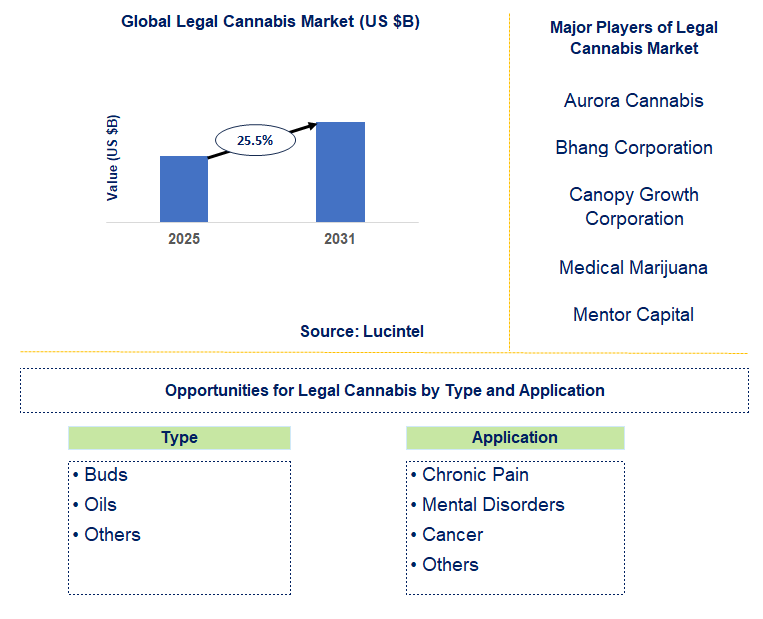
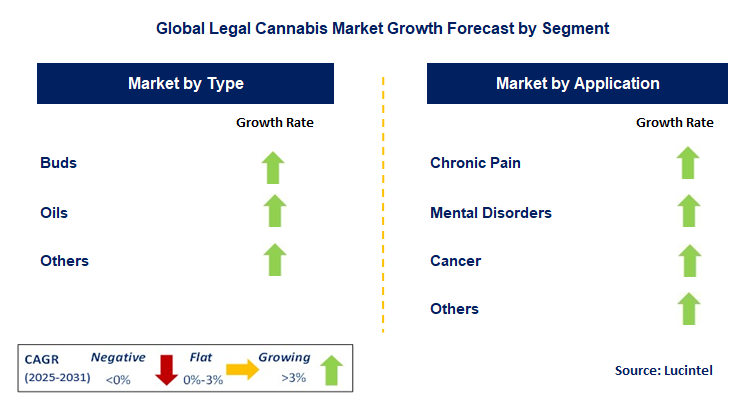
Emerging Trends in the Legal Cannabis Market
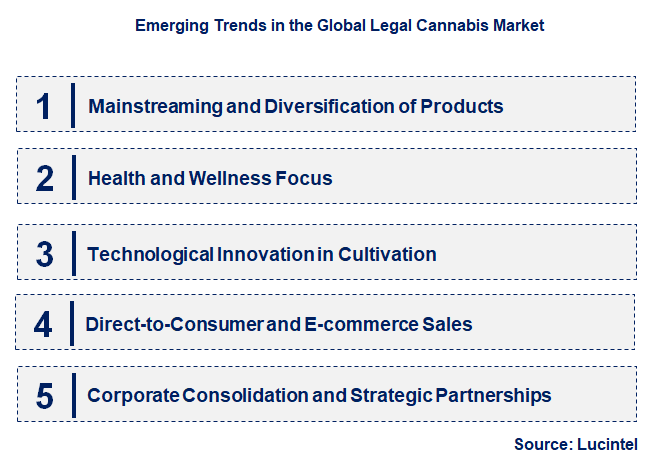
The legal cannabis industry is in a phase of change, with a few defining trends redefining its landscape. They are a result of a mix of technological advancements, changing consumer and industry needs, and the world’s move towards sustainability. They affect right from the raw materials used through the production process and down to the end applications of these much-needed fasteners. It is important for market players to stay competitive and take advantage of new opportunities by understanding these trends.• Mainstreaming and Diversification of Products: The industry is evolving beyond the conventional flower products. There is a definitive trend towards diversifying products to attract a wider consumer base. This involves increased popularity for edibles, drinks, tinctures, and topicals. The diversification brings cannabis within reach and more appealing to new consumers who are not fond of smoking. It is even creating opportunities for joint ventures with traditional food and beverage companies.
• Health and Wellness Focus: One major trend is the rise in attention to the health and wellness effects of cannabis. This is shifting cannabis from a recreational item to a wellness supplement. The market is witnessing heavy demand for products with certain cannabinoid profiles, including CBD, CBG, or CBN, which are applied for targeted use such as pain relief, sleep, and anxiety. It is fueled by consumer demand for natural and holistic health options.
• Technological Innovation in Cultivation: The cannabis sector is increasingly embracing cutting-edge technology to enhance cultivation. This encompasses precision agriculture, vertical farming, and utilizing AI to track plant health. These technologies enable greater control over environmental conditions, resulting in increased yields, enhanced product consistency, and a more efficient cultivation process. This minimizes resource use and assists in addressing the growing need for premium quality, traceable products.
• Direct-to-Consumer and E-commerce Sales: One of the most significant trends is the movement to online shopping and direct-to-consumer sales. Online platforms offer consumers a private and easy method of buying cannabis products. Through this model, brands can also circumvent conventional retail and gather crucial customer information for targeted marketing and product innovation. This trend is especially influential where access to physical dispensary is restricted, and it’s contributing to expanding the market.
• Corporate Consolidation and Strategic Partnerships: With the maturing of the market, there is a definitive trend towards consolidation through mergers and acquisitions. Large, multi-state operators are buying smaller players to broaden their geographical reach and product offerings. Strategic partnerships between cannabis firms and companies in the traditional alcohol, tobacco, and pharmaceutical sectors are also becoming increasingly prevalent. This trend is a sign of a maturing market and is drawing new capital and talent to the market. These evolving trends are radically transforming the legal cannabis industry. The diversification and health and wellness focus are expanding the consumer market and drawing new investment. The development of sophisticated technology is enhancing product quality and sustainability. The rise of e-commerce and direct-to-consumer models is expanding market access. The consolidation and alliances are introducing a new degree of professionalism and efficiency to the industry. These trends are all driving the market towards more technologically sophisticated, responsive, and innovative solutions.
Recent Development in the Legal Cannabis Market
The legal cannabis industry is also going through a period of dramatic change fueled by both technological advancements, developing industry norms, and changing worldwide economic patterns. The developments are also affecting the materials they are made of, the processes involved in manufacturing them, and the end-use applications of these ever-useful fasteners. Industry players are adapting to these changes by making investments in research and development and streamlining their operations to contend with new challenges and requirements.• Federal Rescheduling of Marijuana in the US: One of the key developments is the current effort to reschedule marijuana from a Schedule I to a Schedule III controlled drug in America. This would be a historic milestone for the industry, which could relax the tax burden on companies and make further research into its medicinal uses easier. It would also likely enhance banking access and draw institutional investment, which has otherwise been stifled by cannabis’s federal status.
• European Legalization Wave: A number of European nations have lately shifted direction toward legalizing or decriminalizing marijuana for personal or medical purposes. Partial legalization in Germany is the most high-profile, but other nations are also looking at comparable policies. This is producing a new, regulated cannabis market in Europe with the potential to become a key global center for legal cannabis business and establishing a new model for a modern, regulated market.
• Growth of Infused Drinks: There has been a tremendous increase in the demand for cannabis-infused drinks. This category of product is attracting consumers looking for a different alternative to alcoholic beverages. These drinks provide a social, disable, and usually quicker-acting experience compared to classic edibles. This trend is drawing big names from the beverage world and is creating new manufacturing methods and approaches to marketing.
• Emphasis on Minor Cannabinoids: Although THC and CBD have been the market leaders, the current emphasis is also on minor cannabinoids such as CBG, CBN, and THCV. New therapeutic uses of these compounds are being discovered through research, which is establishing specialized products. This evolution is opening up new niche markets for the cannabis market and is pushing innovation in product development and research and development.
• Technology Integration in Supply Chain: The law cannabis market is increasingly embracing technology to streamline supply chain efficiency and transparency. This comprises using seed-to-sale tracking software as well as blockchain technology to provide product authenticity and regulatory compliance. This innovation serves to construct consumer confidence, eliminate black market sales, and automate operations for companies in a highly regulated industry. These trends are having a far-reaching effect on the legal cannabis industry. The prospect of federal rescheduling in the US is set to reshape the financial environment for the sector. The wave of European legalization is building huge new market opportunities. The emergence of infused drinks and the trend on minor cannabinoids are fructifying product lines and winning new customers. The embracement of new technology is expanding transparency and efficiency of the supply chain. As a whole, these changes are rendering the market more dynamic, technologically savvy, and adaptable to changing customer needs.
Strategic Growth Opportunities in the Legal Cannabis Market
The legal cannabis market, though mature, has some strategic growth opportunities fueled by technological innovation and changing needs of different industries. These opportunities are not limited to traditional applications but extend into emerging sectors and specialized niches. Companies that can identify and capitalize on these growth areas will be well-positioned for future success. This requires a proactive approach to research, product development, and market engagement.• Pharmaceutical and Medical Applications: The largest opportunity for growth exists in the pharmaceutical and medical segments. With more states and countries legalizing medical cannabis, a massive opportunity opens up for firms to create and sell cannabis-based therapies and medicines. This includes concentrating on specific illnesses such as chronic pain, epilepsy, and psychological disorders. This use has a strong basis in expanding clinical evidence and patient demand.
• Consumer Goods and Wellness: The wellness space is a significant growth opportunity. This encompasses the utilization of cannabis extracts, notably CBD, in consumer products such as supplements, topicals, and cosmetics. This presents a chance to sell to a wider, non-recreational consumer looking for natural solutions for stress, sleep, and skin care. Strategic collaborations with leading players in the health and beauty space may present an avenue for expansion.
• Cannabis-Infused Drinks: Infused drinks are among the most rapidly growing categories. This use is an enormous opportunity since it offers a substitute for conventional alcoholic drinks and targets a fresh consumer market. Having a wide portfolio of diversified drinks with different cannabinoid profiles ranging from soothing teas to stimulating seltzers can capture a large market share and be a new source of revenue for firms.
• Direct-to-Consumer and E-commerce: As online shopping has increased, having a robust direct-to-consumer presence is a prime opportunity. It enables companies to establish a direct connection with customers and distribute more products without the limitations of a physical store. This solution also gives marketers valuable customer information that can be leveraged for product development and targeted advertising campaigns.
• Expansion of International Markets: With an increase in legalization of cannabis across different countries, there lies immense scope for expansion in international markets. Organizations that have already set up bases in developed markets such as the US and Canada can strategically penetrate fresh markets in Europe, Latin America, and Asia. This involves comprehensive knowledge of regulation and consumer behavior in the local market but presents a means to achieve high long-term growth. These strategic growth segments are well placed to greatly affect the legal cannabis industry. The medical and pharmaceutical categories represent a high-scale, high-growth channel, and the wellness and consumer products markets represent a steady demand. The infused beverages segment offers diversification of products and high-margin sales. The e-commerce market offers a stable market, and the international expansion market offers a high-value niche. By concentrating on these application-specific opportunities, businesses can unlock new sources of revenue and strengthen their market position.
Legal Cannabis Market Driver and Challenges
The legal cannabis market is influenced by a multifaceted interplay of different drivers and challenges. These drivers and challenges, involving technological, economic, and regulatory factors, affect everything from manufacturing and distribution to pricing and market entry. A thorough understanding of such forces is necessary for every participant who aims to effectively move within the competitive environment. Drivers drive the market forward while challenges need to be tackled strategically in order to reduce risk and ensure growth. The factors responsible for driving the legal cannabis market include: 1. Growing Legalization and Regulatory Reforms: The most important driver is the growing tide of cannabis legalization worldwide, ranging from the United States and Canada to Germany and Mexico. This is fueled by the realization of economic gains, including tax returns, and the possibility of a regulated, safer marketplace. This persistent realignment of the legal environment is creating enormous new markets for cultivation, processing, and retail, which is being driven as a main stimulus for market growth. 2. Increased Consumer Acceptance: Social stigma around cannabis is fast declining. This is due to education campaigns, celebrity support, and increasing knowledge about its medicinal value. More consumers are thus open to experimenting with cannabis for both recreational and medicinal use. The change in perception is opening up a wider consumer base and is luring fresh investment and talent to the space. 3. Healthcare and Medicinal Uses: The leading driver is the increasing use of cannabis for medical and healthcare applications. Cannabis is being increasingly confirmed by research to have efficacy in treating a range of ailments, from chronic pain and epilepsy through to anxiety and chemotherapy-induced nausea. This has resulted in more patients looking for legal access to cannabis and is prompting pharmaceuticals and research centers to invest in creating new medicines based on cannabis. 4. Product Diversification and Innovation: There is a boom of product innovation driving the market. Firms are breaking away from the norm of common products such as flower and are creating a variety of offerings to suit the consumers. This encompasses edibles, infused drinks, topicals, and vaporizers. This diversification is bringing in a broader consumer base and is enabling firms to differentiate themselves within a competitive marketplace. 5. Technological Advancements in Cultivation: Technological innovations in cultivation are one of the major drivers. Hydroponics, aeroponics, and vertical farming are being used to enhance crop yields and product quality. Automation and data analysis are also enhancing efficiency and consistency, which is vital for handling a regulated market’s requirements. These technologies are enhancing the sustainability and profitability of the industry. Challenges in the legal cannabis market are: 1. Legal and Regulatory Obstacles: The US patchwork of federal and state laws, as well as the dissimilar legislation across nations, poses a significant obstacle for companies. It makes it hard to conduct interstate commerce, banking, and taxation. The absence of federal legalization in the US, for instance, compels many companies to become cash-only and to be unable to use conventional banking services. 2. High Operational and Taxation Costs: The cannabis market is heavily taxed, which has a direct bearing on profitability and can make it challenging for licensed operators to compete with the black market. The operational costs are high because there are strict regulatory and compliance needs, including seed-to-sale tracking, product testing, and security. 3. Competition in the Market and Price Compression: With the maturation of the market and increasing licenses being issued, competition is increasing. This is resulting in oversupply in certain markets and a drop in wholesale prices, thereby narrowing profit margins for growers and processors. The on-going consolidation is producing a more competitive market. In summary, the legalized cannabis market is being driven by strong forces like rising legalization, consumer acceptance, and product development. It is also challenged by a complicated regulatory landscape, high taxes, and stiff competition. Overall, the result is a growing market that is also becoming more dynamic. Businesses which can best harness the drivers while strategically counterbalancing the threats will fare best in this dynamic landscape.List of Legal Cannabis Companies
Companies in the market compete on the basis of product quality offered. Major players in this market focus on expanding their manufacturing facilities, R&D investments, infrastructural development, and leverage integration opportunities across the value chain. With these strategies legal cannabis companies cater increasing demand, ensure competitive effectiveness, develop innovative products & technologies, reduce production costs, and expand their customer base. Some of the legal cannabis companies profiled in this report include-• Aurora Cannabis
• Bhang Corporation
• Canopy Growth Corporation
• Medical Marijuana
• Mentor Capital
• Cannoid
• CBD American Shaman
• CV Sciences
• Elixinol
• Folium Biosciences
Legal Cannabis Market by Segment
The study includes a forecast for the global legal cannabis market by type, application, and region.Legal Cannabis Market by Type [Value from 2019 to 2031]:
• Buds
• Oils
• Others
Legal Cannabis Market by Application [Value from 2019 to 2031]:
• Chronic Pain
• Mental Disorders
• Cancer
• Others
Legal Cannabis Market by Region [Value from 2019 to 2031]:
• North America
• Europe
• Asia Pacific
• The Rest of the World
Country Wise Outlook for the Legal Cannabis Market
The lawfully legal cannabis industry is currently undergoing fast-paced transformation, fueled by a worldwide shift in perception of cannabis consumption and expanded scientific inquiry into its medicinal uses. The transformation is characterized by an uneven landscape of shifting laws, tremendous technology improvements, and huge investment. The industry is shifting away from conventional methods of consumption towards an array of products that can be consumed in a wide variety of ways, such as edibles, drinks, and wellness products. Such a dynamic setting brings with it both giant opportunities and huge challenges for regulators and businesses alike.• United States: The US legal cannabis industry is continuing to expand state by state. Developments in the past year include the increasing number of states that have legalized cannabis for both recreational and medical purposes. Most noteworthy is the process of reclassifying cannabis as a Schedule III, rather than a Schedule I, drug at the federal level, which would make a huge difference in the availability of banking services and taxation for cannabis companies, relaxing financial costs and attracting new investment.
• China: China’s policy on cannabis is strictly prohibitive. Recent action, however, focuses on the industrial hemp and medical marijuana sectors. China is a significant world producer and exporter of hemp and hemp derivatives, especially for commercial purposes such as textiles and paper. THC, though, remains prohibited. There is increasing interest in growing hemp to use for CBD production for research and development purposes in the medical area.
• Germany: Germany leads the European legal cannabis sector. Key recent events include the legalization of cannabis for private use on a partial basis, permitting home-growing and the establishment of "cannabis clubs." This is designed to close down the black market. The medicinal cannabis sector is also growing, with increasing patient volumes and more interest in a more efficient prescription and reimbursement system.
• India: India’s cannabis policy is multifaceted, founded on cultural utilization and negotiating a mosaic of laws. Current initiatives are aimed at legalizing industrial hemp for a number of purposes. Increasing pressure is also developing around research and development into the medical properties of cannabis, with some states permitting the cultivation of hemp for medicinal use. The market is gradually shifting, with emphasis on research and prospects for a regulated medical cannabis industry.
• Japan: Japan has an extremely strict legal environment when it comes to cannabis. Recent news is concentrated on the legalization of non-psychoactive derivatives of cannabis, especially CBD. This has resulted in a limited but increasing market for CBD-based products, including oils, edibles, and cosmetics. THC is still illegal, but there is growing interest at the government and public level in the possible medical advantages of CBD, and more research is being conducted with a slow change in the regulatory situation.

Features of the Global Legal Cannabis Market
Market Size Estimates: Legal cannabis market size estimation in terms of value ($B). Trend and Forecast Analysis: Market trends (2019 to 2024) and forecast (2025 to 2031) by various segments and regions. Segmentation Analysis: Legal cannabis market size by type, application, and region in terms of value ($B). Regional Analysis: Legal cannabis market breakdown by North America, Europe, Asia Pacific, and Rest of the World. Growth Opportunities: Analysis of growth opportunities in different types, applications, and regions for the legal cannabis market. Strategic Analysis: This includes M&A, new product development, and competitive landscape of the legal cannabis market. Analysis of competitive intensity of the industry based on Porter’s Five Forces model.
FAQ
Q1. What is the growth forecast for legal cannabis market? Answer: The global legal cannabis market is expected to grow with a CAGR of 25.5% from 2025 to 2031. Q2. What are the major drivers influencing the growth of the legal cannabis market? Answer: The major drivers for this market are the increasing legalization of cannabis, the rising demand for medicinal products, and the growing acceptance of recreational use. Q3. What are the major segments for legal cannabis market? Answer: The future of the legal cannabis market looks promising with opportunities in the chronic pain, mental disorder, and cancer markets. Q4. Who are the key legal cannabis market companies? Answer: Some of the key legal cannabis companies are as follows:• Aurora Cannabis
• Bhang Corporation
• Canopy Growth Corporation
• Medical Marijuana
• Mentor Capital
• Cannoid
• CBD American Shaman
• CV Sciences
• Elixinol
• Folium Biosciences Q5. Which legal cannabis market segment will be the largest in future? Answer: Lucintel forecasts that, within the type category, oil is expected to witness higher growth over the forecast period. Q6. In legal cannabis market, which region is expected to be the largest in next 5 years? Answer: In terms of region, North America is expected to witness the highest growth over the forecast period. Q7. Do we receive customization in this report? Answer: Yes, Lucintel provides 10% customization without any additional cost.
Table of Contents
Methodology
- In-depth interviews of the major players in this market
- Detailed secondary research from competitors’ financial statements and published data
- Extensive searches of published works, market, and database information pertaining to industry news, company press releases, and customer intentions
- A compilation of the experiences, judgments, and insights of Lucintel’s professionals, who have analyzed and tracked this market over the years.


Buy Now
Choose a license that fits your team. Instant PDF delivery.
Prices exclude taxes. Instant delivery. Custom licensing available on request.
Key Questions
- • What are some of the most promising, high-growth opportunities for the legal cannabis market by type (buds, oils, and others), application (chronic pain, mental disorders, cancer, and others), and region (North America, Europe, Asia Pacific, and the Rest of the World)?
- • Which segments will grow at a faster pace and why?
- • Which region will grow at a faster pace and why?
- • What are the key factors affecting market dynamics? What are the key challenges and business risks in this market?
- • What are the business risks and competitive threats in this market?
- • What are the emerging trends in this market and the reasons behind them?
- • What are some of the changing demands of customers in the market?
- • What are the new developments in the market? Which companies are leading these developments?
- • Who are the major players in this market? What strategic initiatives are key players pursuing for business growth?
- • What are some of the competing products in this market and how big of a threat do they pose for loss of market share by material or product substitution?
- • What M&A activity has occurred in the last 5 years and what has its impact been on the industry? For any questions related to Legal Cannabis Market, Legal Cannabis Market Size, Legal Cannabis Market Growth, Legal Cannabis Market Analysis, Legal Cannabis Market Report, Legal Cannabis Market Share, Legal Cannabis Market Trends, Legal Cannabis Market Forecast, Legal Cannabis Companies, write Lucintel analyst at email: helpdesk@lucintel.com. We will be glad to get back to you soon.


