
Report Feature
LED photography Studio Light Market Trends and Forecast
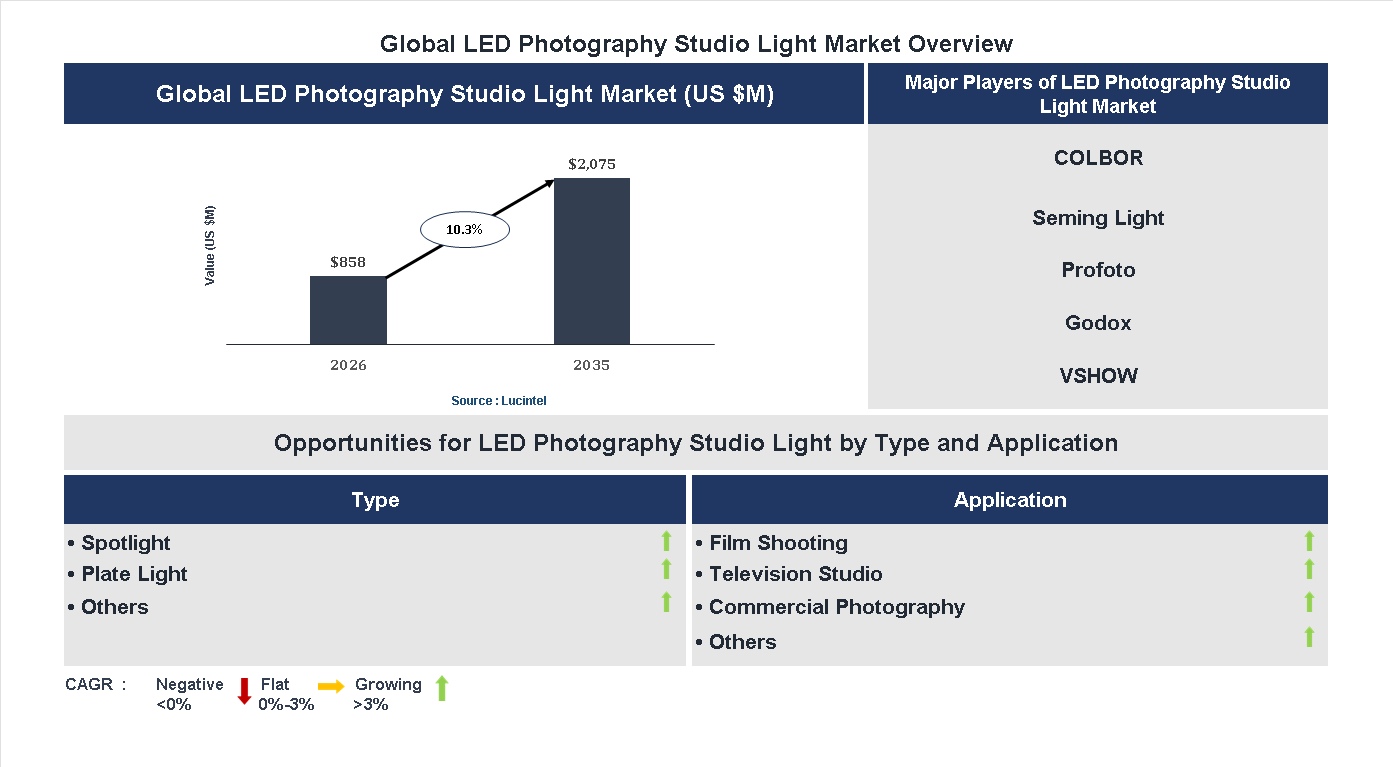
The future of the global LED photography studio light market looks promising with opportunities in the film shooting, television studio, and commercial photography markets. The global LED photography studio light market is expected to reach an estimated $2075 million by 2035 with a CAGR of 10.3% from 2026 to 2035. The major drivers for this market are the increasing demand for professional photography lighting equipment, the rising popularity of online content creation studios, and the growing adoption of energy efficient led lighting solutions.• Lucintel forecasts that, within the type category, plate light is expected to witness higher growth over the forecast period.
• Within the application category, commercial photography is expected to witness the highest growth.
• In terms of region, APAC is expected to witness the highest growth over the forecast period. Gain valuable insights for your business decisions with our comprehensive 150+ page report. Sample figures with some insights are shown below.
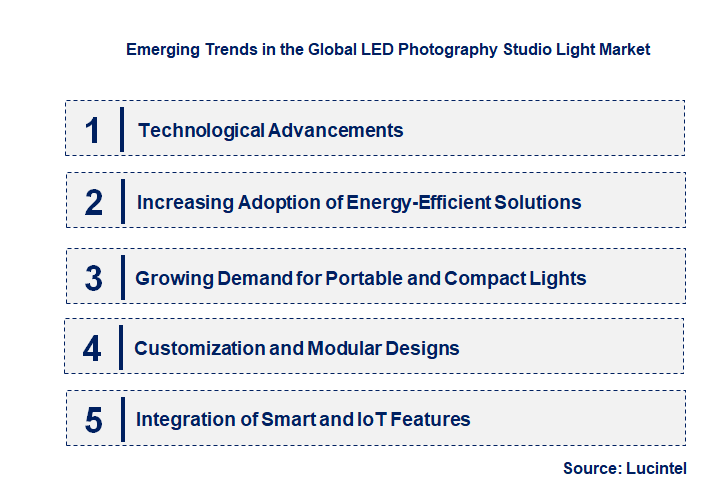
Emerging Trends in the LED Photography Studio Light Market
The LED photography studio light market is experiencing rapid growth driven by technological advancements, changing consumer preferences, and increasing demand for high-quality visual content. As photographers, videographers, and content creators seek versatile and energy-efficient lighting solutions, the market is evolving to meet these needs. Innovations in LED technology, affordability, and customization options are shaping the competitive landscape. Additionally, the integration of smart features and eco-friendly designs are influencing purchasing decisions. These developments are not only expanding the market but also transforming how professionals and hobbyists approach lighting setups, leading to more creative possibilities and improved production quality.• Technological Advancements: The integration of smart controls and adjustable color temperatures is revolutionizing LED studio lights. These features allow users to customize lighting conditions precisely, enhancing creative flexibility. Innovations such as wireless remote control, app connectivity, and programmable settings improve user experience and efficiency. As technology continues to evolve, LED lights are becoming more intuitive and versatile, enabling professionals to achieve complex lighting effects with ease. This trend is driving market growth by attracting tech-savvy users seeking advanced features and seamless operation.
• Increasing Adoption of Energy-Efficient Solutions: Consumers and businesses are prioritizing energy-efficient lighting options to reduce operational costs and environmental impact. LED lights consume significantly less power compared to traditional lighting, making them a sustainable choice. The market is witnessing a shift towards eco-friendly products that offer long-term savings and compliance with green regulations. This trend encourages manufacturers to develop more energy-efficient models with enhanced durability. As sustainability becomes a key purchasing criterion, the demand for energy-efficient LED studio lights is expected to rise, further expanding the market.
• Growing Demand for Portable and Compact Lights: The rise of on-the-go content creation and mobile photography has increased the need for portable lighting solutions. Compact LED studio lights are lightweight, easy to set up, and highly versatile, making them ideal for outdoor shoots, vlogging, and remote projects. This trend is driven by the increasing popularity of social media influencers and freelance professionals who require flexible lighting options. Manufacturers are responding by designing smaller, battery-powered units that do not compromise on brightness or quality. The demand for portable LED lights is reshaping product offerings and expanding market reach.
• Customization and Modular Designs: Users now seek personalized lighting setups tailored to specific projects. Modular LED lighting systems allow for easy customization, enabling users to add or remove components based on their needs. This flexibility supports a wide range of applications, from studio photography to live streaming. Customizable features such as adjustable light intensity, color, and beam angle enhance creative control. The trend towards modular designs is encouraging manufacturers to develop adaptable products that cater to both amateurs and professionals, fostering innovation and expanding market opportunities.
• Integration of Smart and IoT Features: The incorporation of Internet of Things (IoT) technology into LED studio lights is transforming the market. Smart lights can be controlled via mobile apps, voice commands, or automated routines, offering unprecedented convenience. IoT-enabled lights facilitate remote monitoring, scheduling, and synchronization with other studio equipment. This connectivity enhances workflow efficiency and allows for more complex lighting setups. As smart technology becomes more affordable and reliable, its adoption is expected to accelerate, making LED studio lights more intelligent and user-friendly, thereby reshaping industry standards. These emerging trends technological innovation, energy efficiency, portability, customization, and smart integration—are collectively transforming the LED photography studio light market. They are driving increased adoption, expanding application possibilities, and fostering a more dynamic and competitive landscape. As these developments continue, the market is poised for sustained growth and innovation, meeting the evolving needs of modern visual content creators.
Recent Development in the LED Photography Studio Light Market
The LED photography studio light market is experiencing rapid growth driven by technological advancements, increasing demand for high-quality images, and expanding applications across various industries. Innovations in LED technology are making lights more energy-efficient and versatile, attracting professional photographers and content creators alike. As the market evolves, key opportunities are emerging that promise to reshape the landscape, offering enhanced performance, sustainability, and affordability. These developments are set to influence market dynamics significantly, creating new avenues for growth and competition.• Technological Innovations in LED Lighting: Advancements in LED technology are leading to brighter, more energy-efficient, and longer-lasting studio lights. These innovations improve color accuracy, reduce heat output, and enable customizable lighting setups, which are crucial for professional photography. The integration of smart controls and wireless connectivity further enhances user experience. As a result, photographers benefit from versatile, cost-effective solutions that meet diverse creative needs, driving increased adoption and expanding market reach.
• Growing Demand for Sustainable Lighting Solutions: Sustainability is becoming a key factor influencing purchasing decisions. LED lights consume less energy and have a longer lifespan compared to traditional lighting options, reducing environmental impact and operational costs. Manufacturers are focusing on eco-friendly materials and energy-efficient designs to appeal to environmentally conscious consumers. This shift towards sustainable lighting solutions is fostering market growth, encouraging brands to innovate and offer greener products that align with global sustainability goals.
• Expansion of Application Sectors: The use of LED studio lights is expanding beyond traditional photography into areas like videography, live streaming, e-commerce, and virtual events. These applications demand portable, adjustable, and high-quality lighting solutions, which LEDs can provide effectively. The versatility of LED lights allows for seamless integration into various setups, increasing their utility across multiple industries. This diversification is broadening the market scope and creating new revenue streams for manufacturers.
• Integration of Smart Technologies: The incorporation of smart features such as app control, automation, and customizable presets is transforming LED studio lighting. These technologies enable precise control over lighting parameters, facilitate remote operation, and improve workflow efficiency. As smart technology adoption increases, users gain greater flexibility and creative control, making LED lights more appealing. This trend is driving innovation, enhancing product value, and fostering competitive differentiation within the market.
• Price Competitiveness and Market Accessibility: The declining cost of LED components and manufacturing efficiencies are making high-quality studio lights more affordable. This price reduction broadens market accessibility, enabling amateur photographers, small studios, and educational institutions to invest in professional-grade lighting. Increased affordability accelerates market penetration and stimulates demand across various customer segments. Consequently, the market is experiencing rapid expansion, with a more diverse customer base adopting advanced LED lighting solutions. These developments are significantly impacting the LED photography studio light market by enhancing product performance, sustainability, and affordability. The integration of smart technologies and expanding application sectors are broadening market opportunities, attracting a wider customer base. As innovation continues, the market is poised for sustained growth, fostering increased competition and encouraging manufacturers to deliver more advanced, eco-friendly, and cost-effective lighting solutions that meet evolving industry needs.
Strategic Growth Opportunities in the LED Photography Studio Light Market
The LED photography studio light market is experiencing rapid expansion driven by technological advancements, increasing demand for high-quality imaging, and the growing popularity of professional and amateur photography. Innovations in LED technology, energy efficiency, and customizable lighting solutions are creating new opportunities for manufacturers and service providers. As the market evolves, strategic investments and product diversification will be essential for capturing emerging segments and maintaining competitive advantage in this dynamic industry.• Growing Adoption of LED Technology in Photography Equipment: The shift from traditional lighting to LED-based solutions offers benefits such as energy efficiency, longer lifespan, and adjustable color temperatures. Photographers and studios prefer LED lights for their versatility and cost-effectiveness, fueling market growth. Continuous technological improvements, including higher brightness and better color rendering, are expanding applications across commercial, portrait, and product photography, making LED studio lights a preferred choice worldwide.
• Increasing Demand for Portable and Wireless Lighting Solutions: The need for mobility and flexibility in photography setups is driving demand for portable, wireless LED studio lights. These solutions enable photographers to shoot in diverse environments without cumbersome wiring or heavy equipment. Advances in battery technology and wireless controls enhance usability, making these lights suitable for outdoor shoots, on-location photography, and dynamic studio environments. This trend is expected to significantly boost sales and innovation in portable lighting products.
• Rising Popularity of Customizable and Smart Lighting Systems: Customizable LED studio lights with adjustable color, intensity, and effects are gaining popularity among professional and hobbyist photographers. Integration with smart controls and mobile apps allows precise adjustments and automation, improving workflow efficiency. These intelligent lighting systems cater to creative needs and complex setups, opening new revenue streams for manufacturers. The trend toward personalization and automation is expected to shape future product development and market expansion.
• Expansion of the Photography and Videography Market: The growth of content creation, social media, and video production is increasing demand for high-quality lighting solutions. Content creators require versatile, easy-to-use LED lights to produce professional-grade images and videos. The rise of vlogging, live streaming, and online tutorials further fuels this demand. As the industry diversifies, the need for specialized lighting products tailored to different content formats will drive innovation and market penetration.
• Increasing Focus on Energy Efficiency and Sustainability: Environmental concerns and rising energy costs are prompting manufacturers to develop eco-friendly LED lighting solutions. Energy-efficient designs with lower power consumption and longer lifespans reduce operational costs and environmental impact. Certifications and green product initiatives appeal to environmentally conscious consumers and businesses. This focus on sustainability is expected to influence product development, marketing strategies, and regulatory standards, fostering a more sustainable growth trajectory for the LED photography studio light market. The overall market is poised for significant growth as these opportunities intersect, fostering innovation, expanding applications, and enhancing user experience. Companies that strategically leverage these trends will be well-positioned to capture market share and meet evolving customer demands in the competitive landscape.
LED Photography Studio Light Market Driver and Challenges
The LED photography studio light market is influenced by a variety of technological, economic, and regulatory factors that shape its growth trajectory. Advances in LED technology have led to more energy-efficient, durable, and versatile lighting solutions, attracting professional and amateur photographers alike. Economic factors such as increasing disposable income and the expanding photography industry further propel market demand. Regulatory standards concerning energy consumption and environmental impact also influence product development and adoption. Additionally, the rise of digital content creation and social media platforms has heightened the need for high-quality lighting equipment. These combined drivers and challenges create a dynamic environment that impacts market expansion and innovation. The factors responsible for driving the LED photography studio light market include:• Technological Innovation: The continuous development of LED technology has resulted in lights that are more energy-efficient, produce less heat, and offer adjustable color temperatures. These advancements enable photographers to achieve professional-quality results with greater ease and flexibility. Smart features like remote control and app integration further enhance user experience, making LED lights more appealing. As technology evolves, manufacturers can introduce innovative products that meet diverse customer needs, fueling market growth and expanding application scopes.
• Growing Photography Industry: The global expansion of the photography sector, driven by increasing demand for professional and commercial photography, is a significant driver. The rise of social media platforms and digital marketing has created a surge in content creation, requiring high-quality lighting solutions. This growth is also supported by the proliferation of photography studios and freelance photographers seeking reliable, portable, and cost-effective lighting options, thereby boosting market demand.
• Increasing Adoption in Video Production: The surge in video content creation for platforms like YouTube, TikTok, and streaming services has increased the need for versatile lighting solutions. LED studio lights offer adjustable brightness and color settings, making them ideal for video shoots. Their portability and energy efficiency further appeal to content creators, expanding the market beyond traditional photography into the broader multimedia industry.
• Regulatory and Environmental Factors: Governments worldwide are implementing stricter regulations concerning energy consumption and environmental impact. LED lights, being energy-efficient and environmentally friendly, align well with these standards. Manufacturers are motivated to develop compliant products, which in turn encourages market growth. Additionally, eco-conscious consumers prefer sustainable lighting options, further driving demand for LED solutions in photography studios.
• Technological Integration and Customization: The integration of smart technology, such as wireless controls and customizable settings, is transforming the market. Users can remotely adjust lighting parameters, enabling more precise control during shoots. Customizable features like color temperature and light intensity allow for tailored lighting setups, enhancing creative possibilities. This technological integration attracts a broader customer base, including high-end studios and individual content creators, fostering market expansion. The challenges facing the LED photography studio light market include:
• High Initial Investment Costs: Despite decreasing prices, high-quality LED studio lights still require significant upfront investment, which can be a barrier for small studios and individual photographers. The cost of advanced features, such as smart controls and high lumen output, adds to the expense. This financial barrier may limit market penetration in emerging regions or among budget-conscious consumers, slowing overall growth.
• Rapid Technological Obsolescence: The fast pace of technological innovation in LED lighting means products can become outdated quickly. Manufacturers face pressure to continuously upgrade their offerings, leading to increased R&D costs. Consumers may also hesitate to invest in high-end products fearing rapid obsolescence, which can hinder long-term sales and market stability.
• Market Fragmentation and Competition: The market is highly fragmented with numerous local and international players offering similar products. Intense competition results in price wars, reducing profit margins and challenging brand differentiation. Smaller manufacturers may struggle to compete with established brands, leading to market consolidation challenges and potential barriers to innovation and quality improvements. The LED photography studio light market is driven by technological advancements, industry growth, and regulatory support, which collectively foster innovation and expansion. However, high costs, rapid technological changes, and market fragmentation pose significant challenges. These factors collectively influence the market's evolution, requiring stakeholders to balance innovation with strategic planning. Overall, the market's future hinges on technological progress and adaptive strategies to overcome economic and competitive hurdles, ensuring sustained growth and diversification.
List of LED photography Studio Light Companies
Companies in the market compete on the basis of product quality offered. Major players in this market focus on expanding their manufacturing facilities, R&D investments, infrastructural development, and leverage integration opportunities across the value chain. With these strategies LED photography studio light companies cater increasing demand, ensure competitive effectiveness, develop innovative products & technologies, reduce production costs, and expand their customer base. Some of the LED photography studio light companies profiled in this report include-• COLBOR
• Seming Light
• Profoto
• Godox
• VSHOW
• Visico
• Nanlight
• Aputure
• Elinchrom
• Hedler
LED photography Studio Light Market by Segment
The study includes a forecast for the global LED photography studio light market by type, application, and region.LED photography Studio Light Market by Type [Value from 2019 to 2035]:
• Spotlight
• Plate Light
• Others
LED photography Studio Light Market by Application [Value from 2019 to 2035]:
• Film Shooting
• Television Studio
• Commercial Photography
• Others
LED photography Studio Light Market by Region [Value from 2019 to 2035]:
• North America
• Europe
• Asia Pacific
• The Rest of the World
Country Wise Outlook for the LED Photography Studio Light Market
The LED Photography Studio Light Market has experienced significant growth driven by technological advancements, increasing demand for high-quality lighting in photography and videography, and the expanding professional and amateur markets worldwide. Innovations in energy efficiency, portability, and smart lighting controls have further propelled this sector. As the industry evolves, key players are focusing on sustainable solutions and integration with digital ecosystems. The market dynamics vary across regions, influenced by local technological adoption, economic factors, and industry trends. Understanding these regional developments provides insight into the global trajectory of LED studio lighting solutions and their future potential.• United States: The US market has seen rapid adoption of smart LED studio lights with advanced features like app control and customizable settings. Major companies are investing in R&D to develop energy-efficient, portable, and high-lumen products. The rise of content creation and professional photography has boosted demand, alongside increasing adoption in educational and commercial sectors. E-commerce platforms and retail chains are expanding their product offerings, making LED studio lights more accessible. Additionally, US regulations favor sustainable and eco-friendly lighting solutions, encouraging innovation in this area.
• China: China remains a dominant player in the LED photography studio light market, driven by a large manufacturing base and growing domestic demand. The market benefits from rapid technological innovation and competitive pricing, making products more affordable. Chinese companies are focusing on integrating smart features and improving product durability. The rise of social media influencers and content creators has further fueled demand. Government initiatives supporting technological development and export expansion have helped Chinese brands gain international market share. Local brands are increasingly competing with established global players through innovation and cost competitiveness.
• Germany: Germany's market is characterized by high-quality, precision-engineered LED studio lights tailored for professional photographers and studios. The focus is on energy efficiency, durability, and advanced control features. The country’s strong emphasis on sustainability influences product development, with many companies adopting eco-friendly manufacturing practices. Germany also benefits from a robust distribution network and a well-established professional photography industry. Innovations in wireless control and integration with other studio equipment are prominent. The market is driven by a combination of domestic demand and exports to European and global markets.
• India: The Indian LED photography studio light market is witnessing rapid growth due to increasing penetration of digital photography and videography. Affordability and product availability are key factors, with local manufacturers offering cost-effective solutions. The rise of social media and content creation platforms has expanded the consumer base. There is a growing demand for portable and easy-to-use lighting options among amateur photographers and small studios. E-commerce channels are playing a crucial role in distribution. Additionally, government initiatives promoting digital literacy and entrepreneurship are indirectly supporting market expansion.
• Japan: Japan's market emphasizes innovation, quality, and advanced technology integration in LED studio lighting. Japanese companies are focusing on energy-efficient designs with high color rendering index (CRI) and customizable features. The adoption of smart lighting systems and wireless controls is increasing among professional studios. The market benefits from a strong culture of technological innovation and a high standard of quality. Domestic demand is complemented by exports to other Asian markets. Sustainability and eco-friendly manufacturing practices are also gaining importance, aligning with global trends and consumer preferences.

Features of the Global LED photography Studio Light Market
Market Size Estimates: LED photography studio light market size estimation in terms of value ($M). Trend and Forecast Analysis: Market trends (2019 to 2025) and forecast (2026 to 2035) by various segments and regions. Segmentation Analysis: LED photography studio light market size by type, application, and region in terms of value ($M). Regional Analysis: LED photography studio light market breakdown by North America, Europe, Asia Pacific, and Rest of the World. Growth Opportunities: Analysis of growth opportunities in different types, applications, and regions for the LED photography studio light market. Strategic Analysis: This includes M&A, new product development, and competitive landscape of the LED photography studio light market. Analysis of competitive intensity of the industry based on Porter’s Five Forces model.
FAQ
Q1. What is the LED photography studio light market size? Answer: The global LED photography studio light market is expected to reach an estimated $2075 million by 2035. Q2. What is the growth forecast for LED photography studio light market? Answer: The global LED photography studio light market is expected to grow with a CAGR of 10.3% from 2026 to 2035. Q3. What are the major drivers influencing the growth of the LED photography studio light market? Answer: The major drivers for this market are the increasing demand for professional photography lighting equipment, the rising popularity of online content creation studios, and the growing adoption of energy efficient led lighting solutions. Q4. What are the major segments for LED photography studio light market? Answer: The future of the LED photography studio light market looks promising with opportunities in the film shooting, television studio, and commercial photography markets. Q5. Who are the key LED photography studio light market companies? Answer: Some of the key LED photography studio light companies are as follows:• COLBOR
• Seming Light
• Profoto
• Godox
• VSHOW
• Visico
• Nanlight
• Aputure
• Elinchrom
• Hedler Q6. Which LED photography studio light market segment will be the largest in future? Answer: Lucintel forecasts that, within the type category, plate light is expected to witness higher growth over the forecast period. Q7. In LED photography studio light market, which region is expected to be the largest in next 5 years? Answer: In terms of region, APAC is expected to witness the highest growth over the forecast period. Q8. Do we receive customization in this report? Answer: Yes, Lucintel provides 10% customization without any additional cost.
Table of Contents
List of Figures
List of Tables
Methodology
- In-depth interviews of the major players in this market
- Detailed secondary research from competitors’ financial statements and published data
- Extensive searches of published works, market, and database information pertaining to industry news, company press releases, and customer intentions
- A compilation of the experiences, judgments, and insights of Lucintel’s professionals, who have analyzed and tracked this market over the years.


Buy Now
Choose a license that fits your team. Instant PDF delivery.
Prices exclude taxes. Instant delivery. Custom licensing available on request.
Key Questions
- • What are some of the most promising, high-growth opportunities for the LED photography studio light market by type (spotlight, plate light, and others), application (film shooting, television studio, commercial photography, and others), and region (North America, Europe, Asia Pacific, and the Rest of the World)?
- • Which segments will grow at a faster pace and why?
- • Which region will grow at a faster pace and why?
- • What are the key factors affecting market dynamics? What are the key challenges and business risks in this market?
- • What are the business risks and competitive threats in this market?
- • What are the emerging trends in this market and the reasons behind them?
- • What are some of the changing demands of customers in the market?
- • What are the new developments in the market? Which companies are leading these developments?
- • Who are the major players in this market? What strategic initiatives are key players pursuing for business growth?
- • What are some of the competing products in this market and how big of a threat do they pose for loss of market share by material or product substitution?
- • What M&A activity has occurred in the last 7 years and what has its impact been on the industry? For any questions related to LED photography Studio Light Market, LED photography Studio Light Market Size, LED photography Studio Light Market Growth, LED photography Studio Light Market Analysis, LED photography Studio Light Market Report, LED photography Studio Light Market Share, LED photography Studio Light Market Trends, LED photography Studio Light Market Forecast, LED photography Studio Light Companies, write Lucintel analyst at email: helpdesk@lucintel.com. We will be glad to get back to you soon.


