
Market Report · July 29, 2026

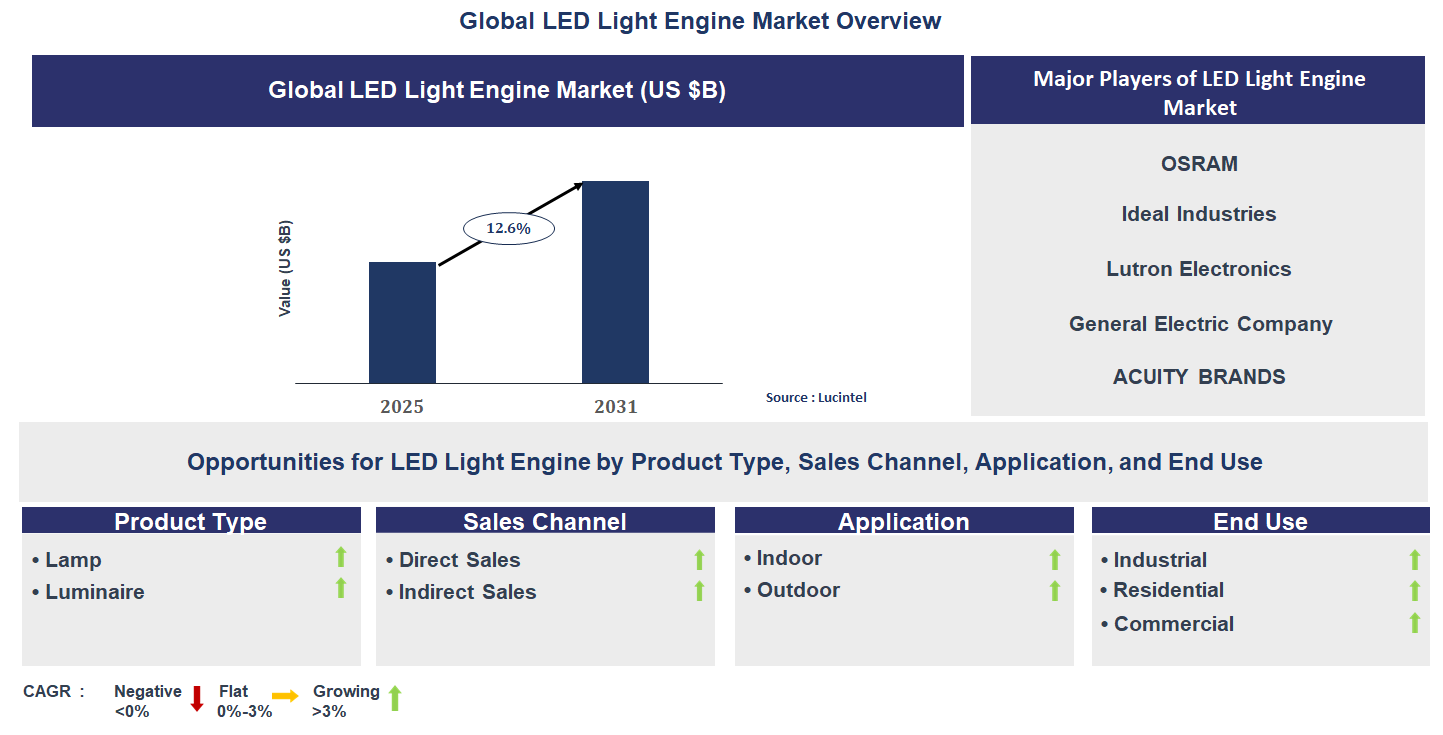
Key data points: The growth forecast = 12.6% annually for the next 7 years. Scroll below to get more insights. This market report covers trends, opportunities and forecasts in LED light engine market to 2031 by product type (lamp and luminaire), sales channel (direct sales and indirect sales), application (indoor and outdoor), end use (industrial, residential, and commercial), and region (North America, Europe, Asia Pacific, and the Rest of the World)
We'll send your sample report shortly.
• Lucintel forecasts that, within the product type category, luminaire will remain a larger segment over the forecast period.
• Within the end use category, commercial will remain the largest segment.
• In terms of region, North America will remain the largest region over the forecast period. Gain valuable insights for your business decisions with our comprehensive 150+ page report. Sample figures with some insights are shown below.
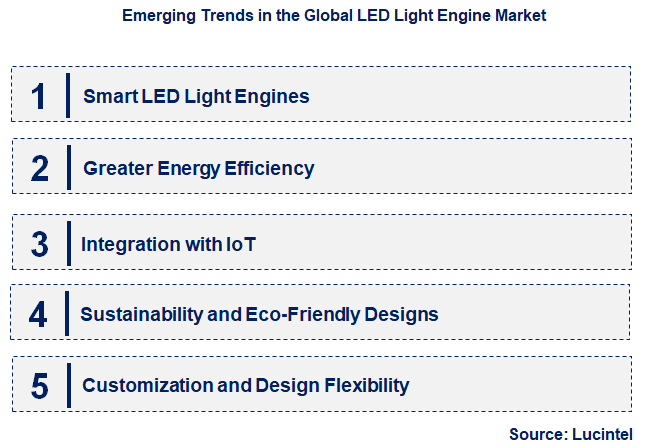
• Smart LED Light Engines: Smart LED light engines, integration of smart technologies with LED light engines, is one of the most prominent trends in the industry. Smart light engines can be remotely controlled using smartphones, voice command, or smart home systems. This trend is boosted by growing home automation system adoption and the need for more energy-efficient, customizable lighting solutions. The rise of smart homes, together with IoT integration, is likely to drastically increase the demand for smart LED light engines.
• Greater Energy Efficiency: With growing environmental concerns and increasing energy prices, energy-efficient LED light engines are becoming highly popular. LED technologies are already power-efficient compared to conventional lighting systems, but manufacturers are further enhancing energy efficiency, lowering electricity usage even more. Efficient LED light engines are increasingly being the first choice in commercial, industrial, and residential use due to the demand for environmentally friendly and cost-saving measures. Government regulations and incentives add to this momentum and push consumers and businesses towards adopting energy-efficient lighting technologies.
• Integration with IoT: Greater integration of LED light engines with the Internet of Things (IoT) is another prominent trend. IoT-integrated LED light engines are capable of providing advanced features like auto-dimming, color switching, and energy consumption monitoring. This integration makes the user more in control and enables real-time adjustment according to environmental conditions or user inputs. With increasing demand for smart lighting systems, IoT-integrated LED light engines will be instrumental in creating intelligent lighting solutions.
• Sustainability and Eco-Friendly Designs: Sustainability remains a prevalent trend in the LED light engine industry, with manufacturers and end-users alike concentrating on green products. Manufacturers are employing recyclable materials, cutting down waste, and making sure that their products last for a long time to reduce the environmental footprint. The need for sustainable lighting solutions is also affecting product design, with consumers looking for energy-efficient LED light engines that play a part in minimizing carbon footprints. This is bound to be a continuing trend as the global drive for sustainability gains momentum.
• Customization and Design Flexibility: Consumers place more and more value on customization, particularly in commercial and residential applications. LED light engines with adjustable features such as color temperature, brightness, and patterns are becoming popular as they offer more flexibility in meeting specific lighting needs. This trend is particularly prevalent in design-driven sectors like hospitality, retail, and home decor, where lighting plays a significant role in creating ambiance. Producers are turning to offering more flexible LED light engine options where customers can adapt lighting systems to suit their tastes. These new trends—smart integration, energy efficiency, IoT connectivity, sustainability, and customization—are transforming the LED light engine market. With changing consumer demands and technological innovations, the market is in a highly dynamic phase. Companies that adopt these trends and invest in R&D will be well-placed to address the increasing demand for smart, energy-efficient, and customizable lighting solutions.
• Intelligent LED Light Engines: LED light engines are being equipped with more intelligent technologies by manufacturers, which enable remote management, automation, and power monitoring. Smart LED solutions make it possible for users to remotely adjust lighting according to needs, whether it is brightness or ambiance. These innovations meet the need for smart home integration, giving consumers greater control over lights and helping to save energy. With increased adoption of IoT, the smart LED light engine market is likely to witness tremendous growth.
• Energy-Efficient LED Technology: Energy efficiency has been continually improved by LED companies, with recent innovations aimed at lowering power consumption even more. Improved LED light engines are now using less energy and delivering more lumen output, making them suitable for applications in commercial, residential, and industrial areas. The market is enjoying these innovations, which address the growing need for sustainable and affordable lighting solutions. Energy efficiency is backed up by government policies encouraging the use of LED lighting technologies as well.
• Human-Centric Lighting: There is a tendency towards human-centric lighting solutions that seek to enhance the well-being of people through controlled light exposure. LED light engines are being designed to provide more dynamic and adjustable light solutions that work with the natural circadian rhythm. Such a trend is most applicable in commercial areas, healthcare facilities, and schools, where lighting can have a major impact on productivity and well-being. Incorporating such human-oriented aspects into LED light engines is an important trend in the market.
• Manufacturing Sustainability: With growing priority to sustainability by both consumers and manufacturers, LED light engine manufacturers are also increasingly incorporating sustainable practices. These involve the use of recyclable materials, minimizing waste, and making products durable. Not only is manufacturing sustainability triggered by consumer demand, but regulatory forces are also at play, enhancing the appeal of eco-friendly LED light engines to both businesses and governments with sustainability agendas. Such practices are most likely to be a defining phenomenon in determining the future of the market.
• Enhanced Thermal Management: Advanced thermal management technologies are being integrated into LED light engines for enhanced performance and longevity. Efficient heat dissipation is essential to ensure maximum efficiency and avoid LED degradation. Advances in thermal management materials and design enhancements are aiding the longevity of LED light engines, ensuring they are more robust and reliable. This technology is specifically crucial in high-end applications, where the lighting quality should be consistent. These fundamental advancements—smart technology integration, energy efficiency, human-centric lighting, sustainability, and enhanced thermal management—are transforming the LED light engine market by fulfilling consumer demands for higher performance, energy savings, and improved lighting experiences. As these advancements evolve, the LED light engine market will expand and grow across several sectors, fueled by innovation and technological change.
• Home Lighting: The need for energy-efficient and programmable lighting in the household is on the rise, especially in advanced economies. Customers are embracing LED light engines for energy efficiency, longer life, and the potential to tailor lighting solutions. This is being fueled by the need for sustainable home solutions and the rise of smart homes. Manufacturers have an opportunity to benefit from this trend by providing smart, programmable, and cost-effective LED light engines for homes.
• Commercial Lighting: Commercial establishments, such as offices, shops, and hospitality outlets, offer tremendous growth prospects for LED light engines. Energy-efficient and visually appealing lighting solutions are increasingly sought after, and companies want to save energy as well as enhance lighting quality. Intelligent LED systems that can modulate brightness and color according to time of day or activity are becoming popular in these environments, fueling growth in the commercial sector.
• Industrial Applications: Industrial applications are increasingly using LED light engines for energy savings as well as better lighting quality in manufacturing plants, warehouses, and factories. LED light engines provide greater strength, longer life cycle, and reduced maintenance costs, making them suitable for industrial applications. With growing demand for energy-efficient solutions, manufacturers can tap into this expanding market by creating strong and high-performance LED light engines for industrial applications.
• Public Infrastructure: With cities adopting smart city principles, the need for smart and energy-efficient lighting for public spaces, street lights, and infrastructure development is increasing. LED light engines are the preferred choice in such applications because of their energy efficiency, long life, and compatibility with smart technologies. Governments are also urging the use of energy-efficient lighting for public areas, opening up opportunities for manufacturers to provide solutions for this growing market.
• Smart Lighting Systems: Merging LED light engines with smart technologies is a major opportunity in the market. IoT-enabled LED systems are increasingly being taken up by consumers and businesses, which offer such advanced features as remote control, energy monitoring, and automation. This trend is widely followed in the residential and commercial segments, where smart lighting solutions can offer convenience, energy savings, as well as improved user experiences. Businesses can tap into this market through the supply of LED light engines that facilitate smart capabilities and IoT integration. The market for LED light engines is rife with strategic growth opportunities in a variety of applications, ranging from commercial and residential lighting to industry and public infrastructure. Companies that seize these opportunities by providing energy-saving, customizable, and smart lighting solutions will be primed to take the lead in this fast-changing market.
• OSRAM
• Ideal Industries
• Lutron Electronics
• General Electric Company
• ACUITY BRANDS
• Hubbell Incorporated
• Signify Holding
• Samsung Electronics
• Zumtobel Lighting
• Glamox
• Lamp
• Luminaire
• Direct Sales
• Indirect Sales
• Indoor
• Outdoor
• Industrial
• Residential
• Commercial
• North America
• Europe
• Asia Pacific
• The Rest of the World
• United States: The American market for LED light engines has witnessed substantial growth, spearheaded by rising demand for energy-saving lighting solutions. Some of the key technology breakthroughs involve advancements in smart LED light engines, which can be integrated with IoT systems for higher levels of automation and control. As energy conservation measures intensify, the governments initiative toward sustainability through programs like the Energy Star program has also driven the adoption of LED light engines. Commercial markets, such as retail and hospitality, are embracing LED solutions for energy efficiency and improved illumination performance, while residential is increasing due to the cost-effectiveness and long lifespan of LED products.
• China: China continues to be a world leader in the global LED light engine market for production and consumption. The nation has spent heavily in developing LED technology and refining manufacturing processes, making more affordable and efficient solutions available. Chinas urbanizing population and growing middle class are propelling the demand for premium lighting products, especially in public infrastructure, retail, and commercial structures. Moreover, government policies aimed at sustainability and energy efficiency further spurred the use of LED technologies. Chinese players are also venturing into smart lighting solutions, integrating LED light engines with IoT capabilities for smart homes and cities.
• Germany: Germany, which has been a strong advocate for sustainability, has led the charge in the LED light engine market. With an emphasis on energy efficiency and lowering carbon prints, Germanys automotive, industrial, and commercial markets have been quick to embrace LED light engine technology. German manufacturers are concentrating on incorporating sophisticated features such as dimming control and enhanced color rendering in their LED light engines to improve product quality. The nations movement toward green building certifications, like LEED, is fueling demand for high-performance lighting systems in residential and commercial construction, again spurring the LED light engine market.
• India: Indias LED light engine market has been witnessing strong growth as a result of increasing demand for low-cost, energy-efficient lighting systems. Government programs like the LED bulbs initiative, where incandescent bulbs are replaced with LEDs, have propelled the use of LED technology in residences, businesses, and public places. Urbanization and growth in the middle class are driving more consumers to look for energy-efficient lighting options for both commercial and domestic use. With a thrust to decrease energy usage, the Indian market is witnessing growing uptake of LED light engines in sectors like infrastructure, education, and healthcare.
• Japan: Japans market for LED light engines is led by rigorous technology standards and emphasis on saving energy. Industry and commercial sectors in the country are taking up LED light engines to comply with energy-saving requirements and enhance lighting performance. The latest advances in LED technology, including human-centric lighting solutions and sophisticated dimming systems, are being integrated into new products. Japan is also testing the combination of LED light engines with smart technologies, which will allow users to control lighting remotely. The governments strict energy-saving regulations, coupled with increasing consumer demand for sustainable solutions, are helping drive the strong growth of the LED light engine market in Japan.


• OSRAM
• Ideal Industries
• Lutron Electronics
• General Electric Company
• ACUITY BRANDS
• Hubbell Incorporated
• Signify Holding
• Samsung Electronics
• Zumtobel Lighting
• Glamox Q5. Which LED light engine market segment will be the largest in future? Answer: Lucintel forecasts that, within the product type category, luminaire will remain a larger segment over the forecast period. Q6. In LED light engine market, which region is expected to be the largest in next 5 years? Answer: In terms of region, North America will remain the largest region over the forecast period. Q7. Do we receive customization in this report? Answer: Yes, Lucintel provides 10% customization without any additional cost.


Choose a license that fits your team. Instant PDF delivery.
Prices exclude taxes. Instant delivery. Custom licensing available on request.
Market Report · July 29, 2026
Market Report · July 20, 2026
Market Report · July 20, 2026
Trusted partner for strategic intelligence and business growth


Receive a complimentary market analysis tailored to your industry. Our analysts will identify key growth opportunities and competitive dynamics specific to your business.

Market size, growth rate, and key trend analysis for your specific sector.

Top competitor positioning and market share analysis.

Strategic recommendations backed by data-driven insights.
Get curated market intelligence and competitive moves straight to your inbox.
By subscribing, you agree to receive our monthly insights. Unsubscribe anytime.
Receive a complimentary market analysis tailored to your industry. Our analysts will identify key growth opportunities and competitive dynamics specific to your business.
Market size, growth rate, and key trend analysis for your specific sector.
Top competitor positioning and market share analysis.
Strategic recommendations backed by data-driven insights.
Get curated market intelligence, emerging trends, and competitive moves straight to your inbox each month.
By subscribing, you agree to receive our monthly insights. Unsubscribe anytime.
We'll send your sample report shortly.