
Market Report · July 31, 2026

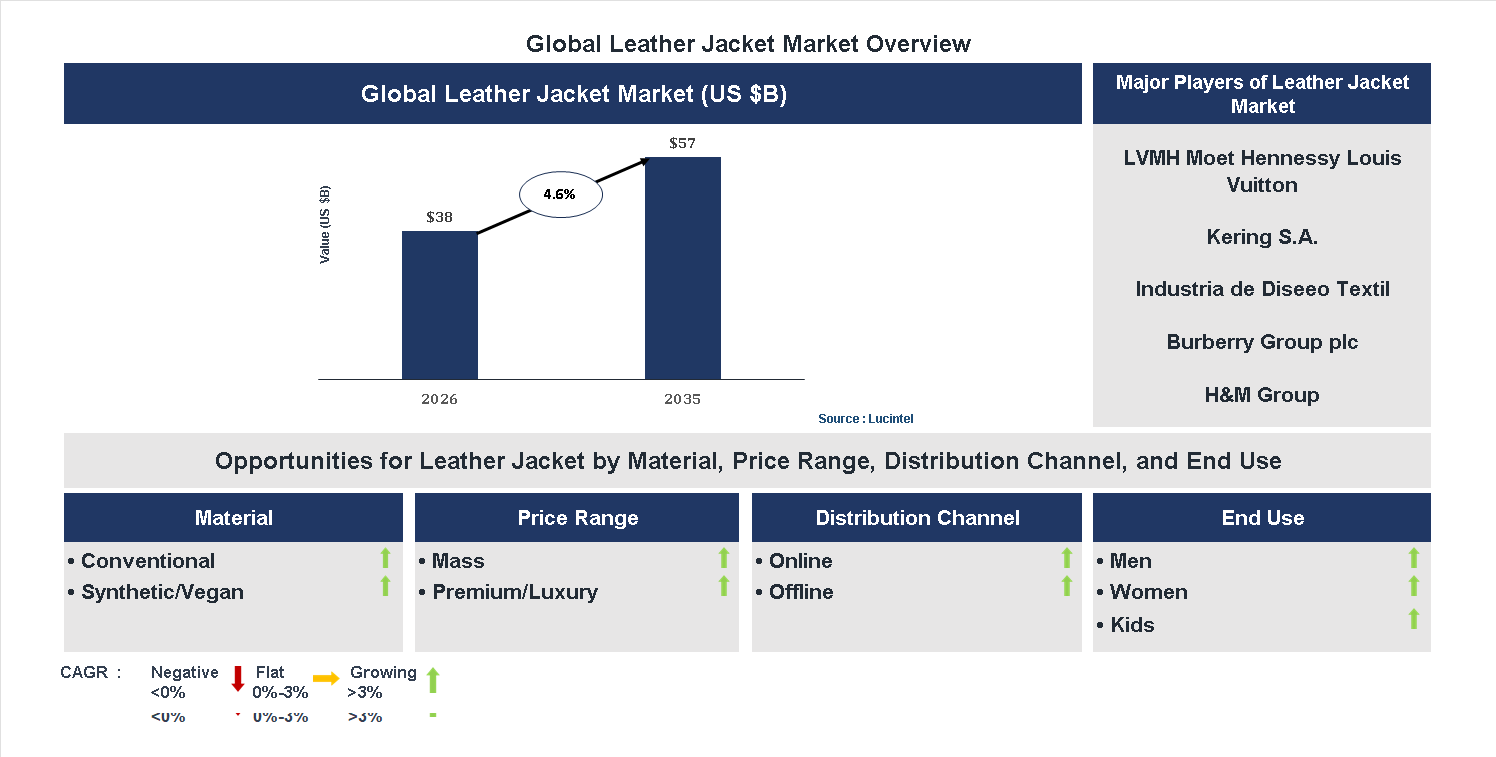
Key data points: The market size in 2035 = $57 billion, growth forecast = 4.6% annually for the next 8 years. Scroll below to get more insights. This market report covers trends, opportunities and forecasts in leather jacket market to 2035 by material (conventional and synthetic/vegan), price range (mass and premium/luxury), distribution channel (online and offline), end use (men, women, and kids), and region (North America, Europe, Asia Pacific, and the Rest of the World)
We'll send your sample report shortly.
• Lucintel forecasts that, within the material category, conventional is expected to witness higher growth over the forecast period.
• Within the distribution channel category, online is expected to witness higher growth.
• In terms of region, APAC is expected to witness the highest growth over the forecast period. Gain valuable insights for your business decisions with our comprehensive 150+ page report. Sample figures with some insights are shown below.
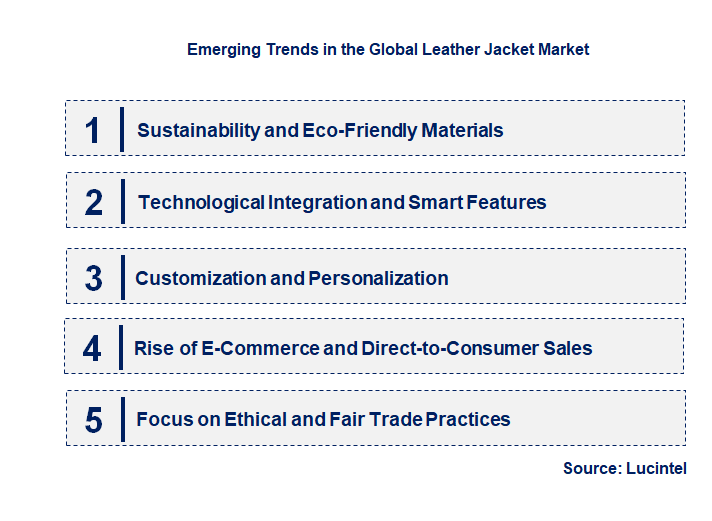
• Sustainability and Eco-Friendly Materials : Consumers are prioritizing environmentally sustainable products, prompting brands to adopt eco-friendly materials such as vegetable-tanned leather, recycled fabrics, and plant-based dyes. This shift reduces environmental impact and appeals to eco-conscious buyers. Companies investing in sustainable sourcing and transparent supply chains are gaining competitive advantage, fostering brand loyalty among environmentally aware consumers. The trend encourages innovation in alternative materials, which could redefine traditional leather manufacturing and influence market growth.
• Technological Integration and Smart Features : The incorporation of technology into leather jackets is gaining momentum. Features like embedded sensors for health monitoring, Bluetooth connectivity, and adaptive heating systems are enhancing functionality. These smart jackets appeal to tech-savvy consumers seeking convenience and innovation. The integration of wearable technology is expanding the market beyond fashion, into health and lifestyle sectors. This trend is driving product differentiation and opening new revenue streams for brands willing to invest in R&D, ultimately transforming the traditional leather jacket into a multifunctional accessory.
• Customization and Personalization : Consumers increasingly desire personalized products that reflect their individual style. Brands are offering customization options such as choice of leather type, color, fit, and additional features like embroidery or patches. Digital tools and online configurators facilitate easy customization, enhancing customer engagement and satisfaction. This trend allows brands to cater to niche markets and build stronger customer relationships. The rise of customization is also encouraging small-scale artisans and luxury brands to offer bespoke services, thereby elevating the overall market experience and driving higher profit margins.
• Rise of E-Commerce and Direct-to-Consumer Sales : The shift towards online shopping is significantly impacting the leather jacket market. E-commerce platforms provide wider reach, convenience, and access to global markets. Direct-to-consumer models enable brands to control branding, pricing, and customer data, leading to better margins and customer insights. The pandemic accelerated this trend, prompting brands to invest heavily in digital marketing and virtual try-on technologies. As online sales grow, traditional retail channels are declining, prompting a strategic shift towards digital-first approaches that are reshaping distribution and marketing strategies.
• Focus on Ethical and Fair Trade Practices : Ethical sourcing and fair trade practices are becoming critical factors influencing consumer choices. Brands are emphasizing transparent supply chains, fair wages, and cruelty-free production methods. Certification labels and storytelling around ethical practices enhance brand credibility and appeal to socially conscious consumers. This trend is driving industry-wide changes, encouraging suppliers to adopt more responsible practices. As consumers become more aware of ethical issues, brands that prioritize social responsibility are likely to gain a competitive edge, fostering a more sustainable and ethically driven market environment. These trends are collectively reshaping the leather jacket market by emphasizing sustainability, technological innovation, customization, digital transformation, and ethical practices. They are fostering a more dynamic, responsible, and consumer-centric industry, encouraging brands to innovate and adapt to evolving global expectations. This evolution is likely to lead to increased market competitiveness, new product categories, and a stronger emphasis on sustainability and technology integration.
• Growing Demand for Sustainable Leather Alternatives: Increasing environmental awareness is prompting brands to adopt eco-friendly materials, such as vegan leather and recycled fabrics, reducing reliance on traditional leather. This shift appeals to eco-conscious consumers and broadens market reach. The adoption of sustainable materials enhances brand reputation and aligns with global sustainability goals, fostering long-term growth. As a result, companies investing in sustainable options are gaining competitive advantage and expanding their customer base.
• Technological Innovations in Manufacturing Processes: Advanced manufacturing technologies like 3D printing, laser cutting, and automation are improving efficiency and product quality. These innovations enable faster production cycles, customization, and cost reduction, making premium leather jackets more accessible. Enhanced precision and design flexibility also allow brands to meet diverse consumer preferences. The integration of technology is transforming traditional manufacturing, leading to increased innovation, reduced waste, and a more agile supply chain.
• Expansion of E-commerce and Digital Marketing: The rise of online retail platforms and targeted digital marketing strategies are significantly boosting sales channels. E-commerce provides consumers with easy access to a wide range of products, while social media campaigns enhance brand visibility. Virtual try-ons and augmented reality features improve online shopping experiences. This digital shift allows brands to reach global audiences, increase sales, and gather valuable consumer data for personalized marketing, thereby strengthening market presence.
• Increasing Popularity of Customization and Personalization: Consumers are seeking unique, personalized leather jackets that reflect individual style. Brands are offering customization options such as color, design, and fit, enhancing customer engagement and satisfaction. This trend drives higher margins and brand loyalty. The ability to tailor products to specific preferences creates a competitive edge and attracts a broader demographic, especially younger consumers who value individuality and exclusivity.
• Rising Influence of Fashion Trends and Celebrity Endorsements: Fashion trends and celebrity endorsements are shaping consumer preferences and driving demand for stylish leather jackets. Influencers and celebrities showcase new styles, making them highly desirable. This influence accelerates market growth and encourages brands to innovate in design and marketing. Staying aligned with current trends and leveraging celebrity partnerships helps brands maintain relevance and attract trend-conscious consumers. The overall impact of these developments is a dynamic, innovative market characterized by increased sustainability, technological advancement, and consumer-centric approaches. These factors are expanding market size, enhancing product offerings, and improving customer engagement, ultimately driving sustained growth and competitiveness in the leather jacket industry.
• Expanding Fashion and Lifestyle Trends Drive Market Growth: The rising popularity of leather jackets as a fashion statement across different demographics fuels market expansion. Consumers seek stylish, versatile, and high-quality outerwear, prompting brands to innovate with designs, colors, and fits. The influence of celebrity endorsements and social media trends further accelerates demand. As fashion cycles evolve, leather jackets remain a timeless staple, encouraging brands to develop new collections that cater to changing consumer preferences and boost overall sales.
• Increasing Demand for Sustainable and Ethical Leather Products: Consumers are increasingly conscious of environmental and ethical considerations, prompting brands to adopt sustainable practices. The use of eco-friendly tanning methods, recycled materials, and cruelty-free alternatives enhances brand appeal. Certification standards and transparency in sourcing are becoming critical factors influencing purchasing decisions. This shift toward sustainability opens opportunities for market players to differentiate their products, meet regulatory requirements, and attract environmentally conscious customers, thereby expanding market share.
• Technological Innovations Enhance Product Quality and Manufacturing Efficiency: Advances in manufacturing technologies, such as automated cutting, 3D modeling, and eco-friendly tanning processes, improve product quality and reduce costs. These innovations enable brands to offer customized designs and faster production cycles, meeting consumer demand for personalized and timely products. Additionally, the integration of sustainable materials and manufacturing practices aligns with market trends, providing a competitive edge. Continuous technological development is essential for maintaining product excellence and operational efficiency in a competitive landscape.
• Growing E-commerce and Digital Marketing Expand Market Reach: The proliferation of online shopping platforms and digital marketing strategies significantly broadens consumer access to leather jackets. E-commerce provides convenience, wider product selection, and competitive pricing, attracting a global customer base. Social media campaigns, influencer collaborations, and targeted advertising enhance brand visibility and engagement. This digital shift allows brands to penetrate new markets, gather consumer insights, and adapt quickly to trends, ultimately driving sales growth and market penetration.
• Diversification into Niche and Custom Market Segments Presents New Opportunities: Catering to niche markets such as vintage, luxury, or custom-designed leather jackets offers significant growth potential. Consumers seeking unique, high-end, or personalized products are willing to pay premium prices, increasing profit margins. Developing specialized collections for specific lifestyles or cultural preferences can foster brand loyalty and differentiate offerings. This strategic focus on niche segments enables brands to expand their customer base, reduce dependency on mass-market sales, and establish a strong presence in specialized markets. The leather jacket markets growth opportunities are driven by fashion trends, sustainability, technological advancements, digital expansion, and niche marketing. Capitalizing on these areas will enable brands to innovate, meet evolving consumer demands, and strengthen their market position, ensuring sustained growth and competitiveness in a dynamic industry.
• Technological Innovations: The integration of advanced manufacturing techniques, such as computer-aided design (CAD) and automated cutting, has enhanced production efficiency and product quality. These innovations enable brands to offer customized designs, reduce waste, and accelerate time-to-market, thereby increasing competitiveness. As technology continues to evolve, manufacturers can produce more durable, lightweight, and stylish jackets, appealing to a broader consumer base. This technological progress also facilitates sustainable practices, such as eco-friendly tanning processes, aligning with consumer demand for environmentally responsible products.
• Growing Fashion Consciousness: Increasing awareness of fashion trends and the desire for stylish, statement outerwear have driven demand for leather jackets. Consumers seek versatile, high-quality products that reflect their personality and status. The influence of social media and celebrity endorsements further amplifies this trend, encouraging consumers to invest in premium leather apparel. As fashion cycles become faster, brands are compelled to innovate continuously, offering trendy designs that cater to diverse preferences, thus fueling market growth.
• Rising Disposable Income: Economic growth in key markets has led to higher disposable incomes, enabling consumers to spend more on premium and luxury items like leather jackets. This increase in purchasing power encourages consumers to opt for higher-quality, durable products rather than cheaper alternatives. As a result, demand for branded and designer leather jackets has surged, especially in emerging markets. The willingness to invest in long-lasting fashion items also supports the premium segment of the market, contributing to overall growth.
• Expansion of E-commerce Platforms: The proliferation of online retail channels has expanded market reach and accessibility for consumers worldwide. E-commerce offers a wide variety of leather jackets, competitive pricing, and convenient shopping experiences, attracting a broader demographic. Digital marketing strategies and virtual try-on features enhance customer engagement and satisfaction. The growth of online sales channels has also enabled brands to enter new markets with minimal physical infrastructure, accelerating market expansion and increasing sales volumes.
• Sustainability and Ethical Sourcing: Increasing awareness of environmental and animal welfare issues has prompted brands to adopt sustainable practices, such as using vegan leather or ethically sourced raw materials. Consumers are increasingly seeking eco-friendly and cruelty-free products, influencing market offerings. Companies investing in sustainable sourcing and transparent supply chains can differentiate themselves and build brand loyalty. This shift towards sustainability is expected to reshape product development and marketing strategies, fostering innovation and opening new market segments. The challenges facing the leather jacket market include:-
• Regulatory and Environmental Restrictions: Stricter regulations on animal welfare, environmental impact, and chemical use in tanning processes pose significant challenges. Compliance costs increase as manufacturers adopt eco-friendly practices, which may require substantial investment in new technologies and processes. Non-compliance can lead to legal penalties, reputational damage, and restricted market access, especially in regions with stringent standards like the European Union. Balancing regulatory requirements with cost-effective production remains a critical challenge for industry players.
• Fluctuating Raw Material Prices: The leather industry is highly dependent on raw material costs, which are subject to volatility due to factors such as supply chain disruptions, climate change, and geopolitical tensions. Rising prices of raw hides and tanning chemicals can squeeze profit margins and lead to increased product prices, potentially reducing consumer demand. Managing supply chain risks and securing stable raw material sources are ongoing challenges that impact pricing strategies and overall profitability.
• Competition from Alternatives: The growing popularity of synthetic and vegan leather alternatives presents a significant challenge to traditional leather markets. These alternatives often offer lower costs, similar aesthetics, and appeal to environmentally conscious consumers. As technological advancements improve the quality of synthetic materials, traditional leather manufacturers face pressure to innovate and differentiate their products. The shift towards cruelty-free and sustainable options could threaten the long-term viability of conventional leather jackets if market preferences continue to favor alternatives. The leather jacket market is driven by technological advancements, fashion trends, economic growth, and sustainability initiatives, which collectively foster expansion and innovation. However, regulatory constraints, raw material price fluctuations, and competition from alternatives pose substantial challenges. Navigating these factors requires strategic adaptation and innovation to sustain growth and meet evolving consumer demands. Overall, the markets future will depend on how effectively industry players can leverage opportunities while mitigating risks associated with these drivers and challenges.
• LVMH Moet Hennessy Louis Vuitton
• Kering S.A.
• Industria de Diseeo Textil
• Burberry Group plc
• H&M Group
• Schott NYC
• Belstaff
• Lion Capital
• Harley-Davidson
• Levi Strauss & Co.
• Conventional
• Synthetic/Vegan
• Mass
• Premium/Luxury
• Online
• Offline
• Men
• Women
• Kids
• North America
• Europe
• Asia Pacific
• The Rest of the World
• United States: The US market is witnessing a surge in demand for sustainable and ethically sourced leather jackets. Brands are incorporating eco-friendly materials and transparent supply chains, appealing to environmentally conscious consumers. Technological integration, such as online customisation and virtual fitting rooms, enhances customer experience. Additionally, vintage and retro styles are trending, driven by a desire for unique, timeless pieces. The market is also seeing growth in premium and luxury segments, emphasizing craftsmanship and exclusivity.
• China: China remains a major manufacturing hub and consumer market for leather jackets. Recent developments include the adoption of advanced manufacturing technologies like automation and AI-driven design processes, increasing efficiency and product quality. The rise of e-commerce platforms has expanded access to diverse styles and brands, fueling rapid market growth. Chinese consumers are increasingly interested in fashionable, affordable, and innovative designs, with a growing emphasis on sustainable production practices. Local brands are gaining prominence by blending traditional craftsmanship with modern aesthetics.
• Germany: The German leather jacket market emphasizes high quality, durability, and sustainability. Innovations include the use of eco-friendly tanning processes and biodegradable materials to reduce environmental impact. The market is characterized by a focus on craftsmanship and premium products, catering to a sophisticated customer base. Technological advancements such as 3D design and virtual fitting rooms are enhancing shopping experiences. There is also a rising trend toward minimalist and functional designs, aligning with Germany’s reputation for engineering excellence and sustainability consciousness.
• India: The Indian market is experiencing rapid growth driven by increasing urbanization and a young, fashion-conscious population. Local artisans and manufacturers are adopting modern designs while preserving traditional craftsmanship. The use of innovative, affordable materials and customization options is expanding market reach. There is a rising interest in sustainable and ethically produced leather jackets, influenced by global trends. E-commerce platforms are playing a crucial role in expanding access to diverse styles, and international brands are entering the market, increasing competition and variety.
• Japan: Japan’s leather jacket market is characterized by a focus on craftsmanship, quality, and innovative design. The trend toward minimalist and sleek styles continues, with an emphasis on functionality and subtle aesthetics. Technological integration, such as smart textiles and wearable tech, is emerging in high-end segments. Sustainability is gaining importance, with brands exploring eco-friendly tanning and recycled materials. Japanese consumers value durability and timeless design, leading to a preference for high-end, artisanal products. The market also benefits from a strong culture of fashion experimentation and a keen interest in blending traditional techniques with modern innovation.


• LVMH Moet Hennessy Louis Vuitton
• Kering S.A.
• Industria de Diseeo Textil
• Burberry Group plc
• H&M Group
• Schott NYC
• Belstaff
• Lion Capital
• Harley-Davidson
• Levi Strauss & Co. Q6. Which leather jacket market segment will be the largest in future? Answer: Lucintel forecasts that, within the material category, conventional is expected to witness higher growth over the forecast period. Q7. In leather jacket market, which region is expected to be the largest in next 5 years? Answer: In terms of region, APAC is expected to witness the highest growth over the forecast period. Q8. Do we receive customization in this report? Answer: Yes, Lucintel provides 10% customization without any additional cost.


Choose a license that fits your team. Instant PDF delivery.
Prices exclude taxes. Instant delivery. Custom licensing available on request.
Market Report · July 31, 2026
Market Report · July 31, 2026
Market Report · July 31, 2026
Trusted partner for strategic intelligence and business growth


Receive a complimentary market analysis tailored to your industry. Our analysts will identify key growth opportunities and competitive dynamics specific to your business.

Market size, growth rate, and key trend analysis for your specific sector.

Top competitor positioning and market share analysis.

Strategic recommendations backed by data-driven insights.
Get curated market intelligence and competitive moves straight to your inbox.
By subscribing, you agree to receive our monthly insights. Unsubscribe anytime.
Receive a complimentary market analysis tailored to your industry. Our analysts will identify key growth opportunities and competitive dynamics specific to your business.
Market size, growth rate, and key trend analysis for your specific sector.
Top competitor positioning and market share analysis.
Strategic recommendations backed by data-driven insights.
Get curated market intelligence, emerging trends, and competitive moves straight to your inbox each month.
By subscribing, you agree to receive our monthly insights. Unsubscribe anytime.
We'll send your sample report shortly.