
Report Feature
Lead Vest Market Trends and Forecast
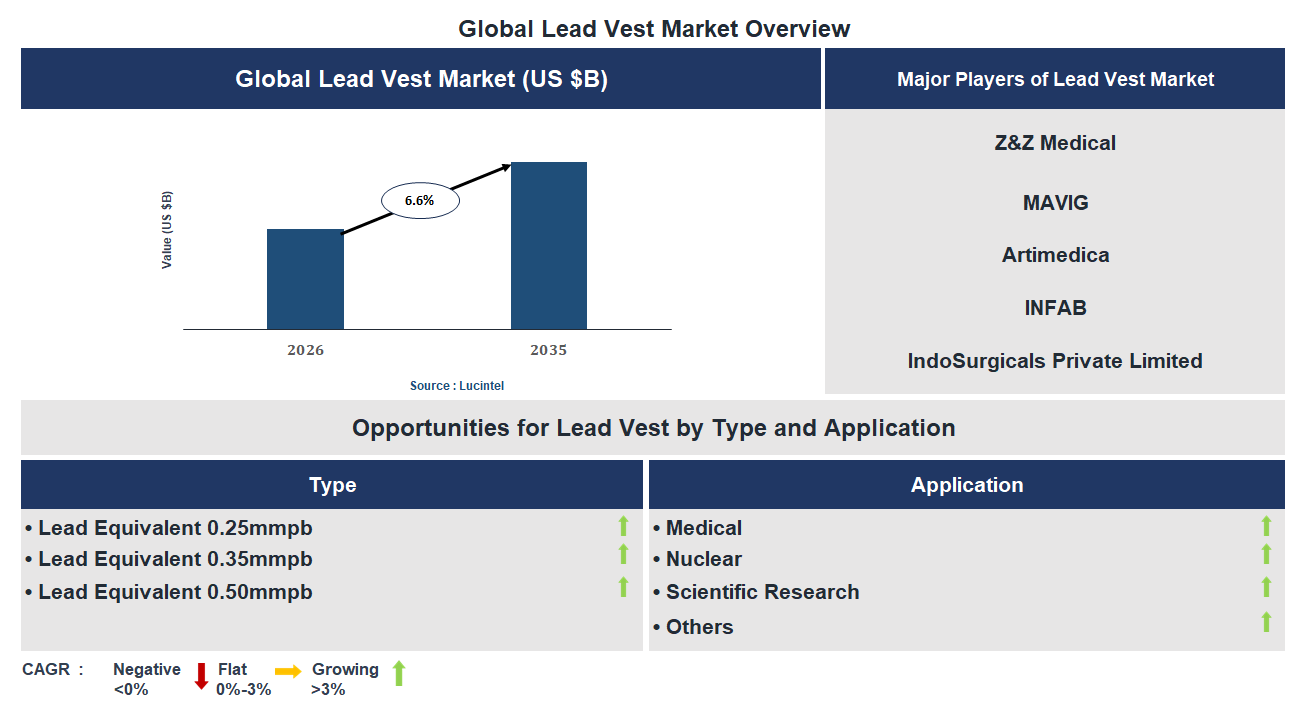
The future of the global lead vest market looks promising with opportunities in the medical, nuclear, and scientific research markets. The global lead vest market is expected to reach an estimated $396 million by 2035 with a CAGR of 6.7% from 2026 to 2035. The major drivers for this market are the increasing demand for radiation protection, the rising awareness of occupational health risks, and the growing adoption of safety regulations in healthcare.• Lucintel forecasts that, within the type category, lead equivalent 0.50mmpb is expected to witness the highest growth over the forecast period.
• Within the application category, medical is expected to witness the highest growth.
• In terms of region, APAC is expected to witness the highest growth over the forecast period. Gain valuable insights for your business decisions with our comprehensive 150+ page report. Sample figures with some insights are shown below.
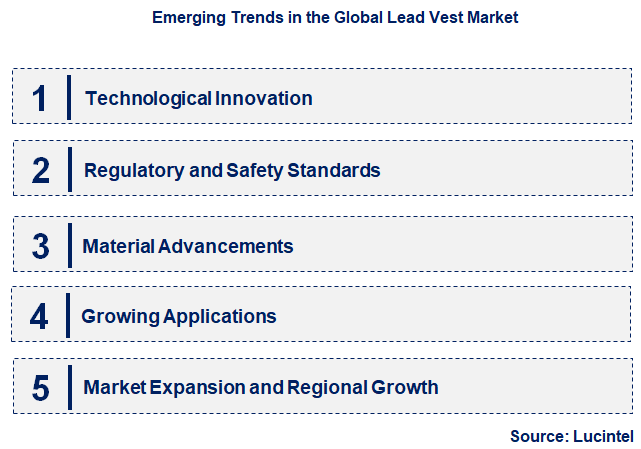
Emerging Trends in the Lead Vest Market
The lead vest market is experiencing a significant transformation driven by technological advancements, changing safety regulations, and evolving industry needs. As industries such as healthcare, security, and military seek more effective protective solutions, the market is adapting rapidly. Innovations in materials, increased focus on comfort and durability, and the integration of smart technology are shaping the future landscape. These developments are not only enhancing protection but also expanding the applications and accessibility of lead vests. Understanding these emerging trends is crucial for stakeholders aiming to stay competitive and meet the growing demand for advanced protective gear in various sectors.• Technological Innovation: The integration of smart materials and wearable technology is revolutionizing lead vests. These vests now feature sensors that monitor radiation exposure in real-time, providing immediate feedback to users. Advanced materials improve flexibility, weight distribution, and durability, making vests more comfortable and effective. This trend enhances user safety, optimizes protection, and allows for data collection to improve future designs. As technology advances, expect more intelligent, lightweight, and customizable lead vests that cater to specific industry needs, significantly improving safety standards and user experience.
• Regulatory and Safety Standards: Increasingly stringent safety regulations are driving the demand for higher-quality lead vests. Governments and industry bodies are implementing stricter standards for radiation protection, requiring manufacturers to develop more effective and compliant products. This trend encourages innovation in materials and design to meet these standards, ensuring better protection for users. It also fosters market growth as organizations prioritize safety compliance, leading to increased adoption across healthcare, security, and industrial sectors. The evolving regulatory landscape ensures continuous improvement and innovation within the market.
• Material Advancements: The development of new, lightweight, and non-toxic materials is transforming lead vest manufacturing. Traditional lead is being replaced or supplemented with alternative materials like tungsten, bismuth, and composite fabrics that offer comparable or superior radiation shielding with less weight. These advancements improve wearer comfort and reduce fatigue during prolonged use. Additionally, eco-friendly and non-toxic materials are gaining popularity, aligning with sustainability goals. Material innovation is expanding the market by making protective vests more accessible, comfortable, and environmentally responsible, thereby broadening their application scope.
• Growing Applications: The market is witnessing an expansion beyond traditional healthcare and security sectors into areas such as industrial radiography, nuclear power plants, and research laboratories. The increasing use of radiation in various fields necessitates specialized protective gear, fueling demand for customized lead vests. Additionally, the rise of portable and modular designs caters to diverse operational needs, enhancing flexibility and usability. This diversification of applications is broadening the market base, creating new opportunities for manufacturers and suppliers to innovate and meet specific industry requirements.
• Market Expansion and Regional Growth: Emerging markets in Asia-Pacific, Latin America, and the Middle East are experiencing rapid growth due to increasing industrialization and healthcare infrastructure development. These regions are investing in advanced radiation protection solutions to meet safety standards and improve operational efficiency. Local manufacturing and distribution are expanding, reducing costs and increasing accessibility. This regional growth is contributing to a more competitive global market, encouraging innovation and price competitiveness. As these markets develop, they are expected to become significant contributors to the overall growth of the lead vest industry. In summary, these trends are collectively reshaping the lead vest market by fostering innovation, enhancing safety standards, expanding applications, and driving regional growth. The market is becoming more sophisticated, user-centric, and globally accessible, ensuring better protection and operational efficiency across multiple sectors.
Recent Development in the Lead Vest Market
The lead vest market is experiencing rapid growth driven by increasing awareness of health safety, technological advancements, and expanding applications across various sectors. As industries prioritize safety and innovation, new opportunities are emerging for manufacturers and investors. These developments are shaping the future landscape of lead vest utilization, offering enhanced protection, comfort, and functionality. Stakeholders are keenly observing these trends to capitalize on emerging market potentials and meet evolving consumer demands.• Growing Awareness of Safety Standards: The rising emphasis on health safety regulations and occupational safety standards is boosting demand for lead vests. Industries such as healthcare, construction, and security are adopting advanced protective gear to ensure worker safety. This increased awareness is encouraging manufacturers to innovate and improve product quality, leading to a broader market reach and higher adoption rates globally.
• Technological Innovations in Material Composition: Advances in lightweight, durable, and non-toxic materials are transforming lead vest manufacturing. These innovations improve comfort and mobility for users while maintaining effective radiation shielding. The integration of smart textiles and ergonomic designs enhances user experience, making lead vests more appealing across medical, industrial, and security sectors, thereby expanding market opportunities and driving sales growth.
• Expansion of Medical Imaging Applications: The growing use of medical imaging techniques like X-rays, CT scans, and fluoroscopy is significantly increasing the need for protective lead vests. Hospitals and diagnostic centers are investing in high-quality protective gear to safeguard staff and patients from radiation exposure. This trend is expected to continue as medical imaging becomes more prevalent, fueling sustained demand and market expansion.
• Increased Focus on Customization and Comfort: Manufacturers are now offering customized lead vests tailored to individual body types, improving comfort and fit. Enhanced ergonomic designs and lightweight materials reduce fatigue and improve compliance among users. This focus on personalization is attracting more customers, especially in professional settings, and is expected to boost market penetration and customer satisfaction.
• Regulatory Changes and Market Standards: New regulations and stricter safety standards are compelling industries to upgrade their protective gear, including lead vests. Compliance with these standards ensures safety and legal adherence, prompting manufacturers to innovate and meet higher quality benchmarks. This regulatory environment is fostering market growth by encouraging product development and ensuring consumer trust. These developments are significantly impacting the lead vest market by driving innovation, expanding application areas, and enhancing safety standards. Increased awareness, technological advancements, and regulatory changes are collectively fostering a more competitive and dynamic market landscape. As demand for safer, more comfortable, and technologically advanced lead vests grows, manufacturers are poised to capitalize on these opportunities, resulting in sustained market growth and diversification across multiple sectors.
Strategic Growth Opportunities in the Lead Vest Market
The lead vest market is experiencing significant growth driven by increasing safety awareness in the medical, industrial, and security sectors. Technological advancements and regulatory standards are prompting demand for more effective, lightweight, and comfortable protective gear. Market players are focusing on innovation, customization, and expanding applications to capitalize on emerging opportunities. As industries prioritize safety and compliance, the market is poised for sustained expansion, offering numerous avenues for strategic growth and competitive advantage.• Increasing Adoption of Lead Vests in Medical Imaging: The rising use of lead vests in diagnostic imaging, such as X-rays and fluoroscopy, is a key growth driver. Healthcare providers seek reliable protection for staff and patients, prompting demand for lightweight, durable, and customizable lead vests. Technological improvements in material composition are enhancing comfort and safety, further boosting adoption. Growing awareness of radiation safety standards and regulatory compliance is also fueling market expansion in hospitals, clinics, and diagnostic centers worldwide.
• Growing Need for Protective Gear in Industrial and Construction Sectors: Industrial and construction sectors are increasingly adopting lead vests to safeguard workers from hazardous radiation exposure during non-destructive testing, radiography, and other operations. Stringent safety regulations and occupational health standards are compelling companies to invest in high-quality protective equipment. The demand for lightweight, ergonomic, and durable lead vests is rising, driven by the need to improve worker safety, reduce downtime, and ensure regulatory compliance, thereby expanding market opportunities.
• Technological Innovations Enhancing Lead Vest Performance: Advances in material science and manufacturing techniques are leading to the development of more effective lead vests. Innovations such as flexible, lightweight composites and ergonomic designs improve comfort without compromising protection. These technological improvements enable customization for specific applications, increasing user acceptance and compliance. As R&D efforts continue, the market is expected to see a surge in high-performance, cost-effective lead vests that meet evolving safety standards and user preferences.
• Expansion of Security and Defense Applications: The security and defense sectors are increasingly utilizing lead vests for personnel protection during radiological threat scenarios, nuclear facility operations, and security screenings. Growing concerns over radiological terrorism and nuclear safety are driving demand for specialized protective gear. The need for lightweight, high-strength, and adaptable lead vests tailored to operational requirements is creating new market segments. This expansion into defense applications offers significant growth potential, supported by government initiatives and increased security budgets.
• Increasing Focus on Customization and Comfort for User Compliance: Market players are emphasizing the development of customized lead vests that offer enhanced comfort, fit, and mobility. User compliance is critical for effective radiation protection, prompting innovations in design and materials. Features such as adjustable straps, ergonomic shapes, and lighter weights are improving the wearers experience. The focus on personalization and comfort is expected to boost adoption rates across medical, industrial, and security sectors, thereby driving overall market growth and strengthening customer loyalty. These strategic growth opportunities collectively position the lead vest market for robust expansion. Innovations in materials and design, coupled with expanding applications across healthcare, industrial, security, and defense sectors, are fueling demand. Emphasizing safety, comfort, and customization will be crucial for market players to capitalize on emerging trends. As regulatory standards tighten and awareness increases, the market is set to experience sustained growth, offering significant potential for industry stakeholders to innovate and expand their market share.
Lead Vest Market Driver and Challenges
The lead vest market is influenced by a variety of technological, economic, and regulatory factors that shape its growth and development. Advances in materials science and manufacturing techniques have led to more effective and comfortable lead vests, while economic factors such as healthcare spending and the increasing need for safety in medical and industrial settings drive demand. Regulatory standards and safety protocols also play a crucial role in shaping product specifications and market entry. Additionally, technological innovations like lightweight and flexible lead vests are expanding applications beyond traditional medical use. However, the market faces challenges related to regulatory compliance, high costs, and environmental concerns, which could impact future growth trajectories. The factors responsible for driving the lead vest market include:• Technological Advancements: The development of lightweight, flexible, and more effective lead vests has significantly enhanced user comfort and safety. Innovations in material science, such as the use of alternative shielding materials, have reduced weight without compromising protection. These advancements enable broader application in medical imaging, industrial radiography, and security screening, thereby expanding market reach. As technology continues to evolve, manufacturers can offer more customized and efficient products, fueling market growth and meeting increasing safety standards.
• Rising Healthcare Expenditure: Increasing healthcare spending worldwide, especially in diagnostic imaging and radiology departments, is a major driver. Hospitals and clinics are investing in advanced protective gear for their staff to comply with safety regulations and reduce radiation exposure risks. The growing prevalence of cancer and other diseases requiring frequent imaging procedures further boosts demand for lead vests. This economic trend supports the expansion of the market as healthcare providers prioritize safety and invest in high-quality protective equipment.
• Growing Industrial and Security Applications: The expanding use of lead vests in industrial radiography, security screening at airports, and military applications is a key growth factor. These sectors require reliable radiation protection solutions to ensure safety during operations involving radioactive materials or radiation-emitting devices. As industrial activities and security concerns increase globally, the demand for effective shielding solutions like lead vests rises, creating new market opportunities and driving overall growth.
• Regulatory Standards and Safety Protocols: Stringent government regulations and safety standards in healthcare, industrial, and security sectors mandate the use of protective gear, including lead vests. Compliance with these standards ensures safety for workers and patients, encouraging consistent market demand. Regulatory bodies also influence product design and quality, prompting manufacturers to innovate and adhere to high safety benchmarks, which in turn sustains market growth.
• Increasing Awareness of Radiation Safety: Growing awareness among healthcare professionals, industrial workers, and security personnel about the risks of radiation exposure is fueling demand for protective gear. Educational campaigns and safety protocols emphasize the importance of using lead vests, leading to higher adoption rates. This increased awareness supports market expansion as organizations prioritize safety measures, thereby boosting sales and encouraging product innovation. The challenges facing the lead vest market include:
• Regulatory Compliance and Certification Costs: Navigating complex regulatory landscapes and obtaining necessary certifications can be costly and time-consuming for manufacturers. Different regions have varying standards for radiation shielding products, which can delay product launches and increase expenses. Non-compliance risks include legal penalties and market restrictions, which can hinder growth. Ensuring consistent quality and safety standards across markets requires significant investment, posing a barrier for smaller players and potentially limiting market expansion.
• High Production and Material Costs: The manufacturing of lead vests involves expensive raw materials and specialized processes to ensure safety and durability. The cost of high-quality lead and alternative shielding materials can fluctuate, impacting profit margins. Additionally, the need for precision manufacturing and quality control adds to production expenses. These high costs can translate into higher prices for end-users, potentially limiting adoption in price-sensitive markets and constraining overall market growth.
• Environmental and Disposal Concerns: Lead is a toxic material, raising environmental and health concerns regarding its disposal and recycling. Proper disposal of used or damaged lead vests involves strict regulations, increasing operational costs for manufacturers and users. Environmental awareness and regulations are pushing for the development of eco-friendly alternatives, which could threaten the traditional lead vest market. Managing environmental impact and developing sustainable solutions are critical challenges that could influence future market dynamics. In summary, the lead vest market is driven by technological innovations, increasing healthcare and industrial safety needs, and regulatory compliance, all contributing to steady growth. However, high costs, regulatory hurdles, and environmental concerns pose significant challenges that could impede expansion. The markets future will depend on how effectively manufacturers can innovate, reduce costs, and address environmental issues while meeting evolving safety standards. Overall, these factors collectively shape a dynamic landscape with substantial growth potential amid ongoing challenges.
List of Lead Vest Companies
Companies in the market compete on the basis of product quality offered. Major players in this market focus on expanding their manufacturing facilities, R&D investments, infrastructural development, and leverage integration opportunities across the value chain. With these strategies lead vest companies cater increasing demand, ensure competitive effectiveness, develop innovative products & technologies, reduce production costs, and expand their customer base. Some of the lead vest companies profiled in this report include-• Z&Z Medical
• MAVIG
• Artimedica
• INFAB
• IndoSurgicals Private Limited
• Phillips Safety
• Jinan Chendong Radiation Protection Material
• Double Eagle Medical Device
• Longkou Sanyi Medical Device
• Shandong Chenlu Medical Instrument
Lead Vest Market by Segment
The study includes a forecast for the global lead vest market by type, application, and region.Lead Vest Market by Type [Value from 2019 to 2035]:
• Lead Equivalent 0.25mmpb
• Lead Equivalent 0.35mmpb
• Lead Equivalent 0.50mmpb
Lead Vest Market by Application [Value from 2019 to 2035]:
• Medical
• Nuclear
• Scientific Research
• Others
Lead Vest Market by Region [Value from 2019 to 2035]:
• North America
• Europe
• Asia Pacific
• The Rest of the World
Country Wise Outlook for the Lead Vest Market
The lead vest market has experienced significant shifts driven by technological advancements, regulatory changes, and evolving safety standards across the globe. As the healthcare, industrial, and security sectors expand, demand for effective radiation protection solutions like lead vests increases. Countries are adopting innovative materials, improving manufacturing processes, and implementing stricter safety protocols to meet rising needs. These developments reflect a broader trend toward enhanced safety and efficiency in radiation-related applications, influencing market growth and competitive dynamics worldwide.• United States: The US market has seen increased adoption of lightweight, flexible lead vests incorporating advanced materials for improved comfort and protection. Regulatory agencies have tightened safety standards, prompting manufacturers to innovate. The healthcare sector remains the primary driver, with growing use in diagnostic imaging and radiotherapy. Additionally, there is a rising trend in custom-fit vests for better patient and technician safety. The government’s focus on radiation safety training has further boosted demand, alongside technological integration such as digital dosimetry.
• China: China’s lead vest market is expanding rapidly due to increased healthcare infrastructure and industrial applications. The government’s investments in medical imaging and radiology facilities have driven demand for protective gear. Local manufacturers are adopting new materials to produce lighter, more durable vests at competitive prices. The country is also witnessing growth in the security sector, especially in airport and border security, which boosts demand for radiation protection. Regulatory standards are evolving, encouraging higher quality and safety compliance among producers.
• Germany: Germany’s market is characterized by high-quality, precision-engineered lead vests used primarily in medical and industrial sectors. The country emphasizes safety standards aligned with European Union regulations, leading to the adoption of eco-friendly and non-toxic materials. Innovations include ergonomic designs that improve comfort during long procedures. Germany’s focus on research and development has resulted in advanced manufacturing techniques, ensuring durability and effectiveness. The healthcare sector’s strict safety protocols continue to drive steady growth, with an increasing emphasis on sustainable and recyclable materials.
• India: The Indian lead vest market is witnessing rapid growth driven by expanding healthcare infrastructure and increased awareness of radiation safety. Local manufacturers are producing cost-effective, lightweight vests to cater to a large population. The rise in diagnostic imaging centers and radiology clinics has significantly contributed to market expansion. Additionally, government initiatives to improve healthcare access and safety standards are encouraging the adoption of protective gear. The industrial sector, including non-destructive testing, also contributes to demand. Innovations focus on affordability and comfort, with some integration of modern materials to enhance performance.
• Japan: Japan’s market is characterized by advanced technological integration and stringent safety standards. The country emphasizes high-performance, ergonomic lead vests used in medical imaging, radiotherapy, and industrial applications. Japan invests heavily in research to develop eco-friendly and lightweight materials that do not compromise protection. The aging population increases demand for diagnostic imaging, further boosting the market. Japan’s focus on sustainability has led to the adoption of recyclable and non-toxic materials. The industry also benefits from strong regulatory oversight, ensuring high safety and quality standards across all products.

Features of the Global Lead Vest Market
Market Size Estimates: Lead vest market size estimation in terms of value ($M). Trend and Forecast Analysis: Market trends (2019 to 2025) and forecast (2026 to 2035) by various segments and regions. Segmentation Analysis: Lead vest market size by type, application, and region in terms of value ($M). Regional Analysis: Lead vest market breakdown by North America, Europe, Asia Pacific, and Rest of the World. Growth Opportunities: Analysis of growth opportunities in different types, applications, and regions for the lead vest market. Strategic Analysis: This includes M&A, new product development, and competitive landscape of the lead vest market. Analysis of competitive intensity of the industry based on Porter’s Five Forces model.
FAQ
Q1. What is the market size and growth forecast for lead vest market? Answer: The global lead vest market is expected to reach an estimated $396 million by 2035 and grow with a CAGR of 6.7% from 2026 to 2035. Q2. What are the major drivers influencing the growth of the lead vest market? Answer: The major drivers for this market are the increasing demand for radiation protection, the rising awareness of occupational health risks, and the growing adoption of safety regulations in healthcare. Q3. What are the major segments for lead vest market? Answer: The future of the lead vest market looks promising with opportunities in the medical, nuclear, and scientific research markets. Q4. Who are the key lead vest market companies? Answer: Some of the key lead vest companies are as follows:• Z&Z Medical
• MAVIG
• Artimedica
• INFAB
• IndoSurgicals Private Limited
• Phillips Safety
• Jinan Chendong Radiation Protection Material
• Double Eagle Medical Device
• Longkou Sanyi Medical Device
• Shandong Chenlu Medical Instrument Q5. Which lead vest market segment will be the largest in future? Answer: Lucintel forecasts that, within the type category, lead equivalent 0.50mmpb is expected to witness the highest growth over the forecast period. Q6. In lead vest market, which region is expected to be the largest in next 5 years? Answer: In terms of region, APAC is expected to witness the highest growth over the forecast period. Q7. Do we receive customization in this report? Answer: Yes, Lucintel provides 10% customization without any additional cost.
Table of Contents
List of Figures
List of Tables
Methodology
- In-depth interviews of the major players in this market
- Detailed secondary research from competitors’ financial statements and published data
- Extensive searches of published works, market, and database information pertaining to industry news, company press releases, and customer intentions
- A compilation of the experiences, judgments, and insights of Lucintel’s professionals, who have analyzed and tracked this market over the years.


Buy Now
Choose a license that fits your team. Instant PDF delivery.
Prices exclude taxes. Instant delivery. Custom licensing available on request.
Key Questions
- • What are some of the most promising, high-growth opportunities for the lead vest market by type (lead equivalent 0.25mmpb, lead equivalent 0.35mmpb, and lead equivalent 0.50mmpb), application (medical, nuclear, scientific research, and others), and region (North America, Europe, Asia Pacific, and the Rest of the World)?
- • Which segments will grow at a faster pace and why?
- • Which region will grow at a faster pace and why?
- • What are the key factors affecting market dynamics? What are the key challenges and business risks in this market?
- • What are the business risks and competitive threats in this market?
- • What are the emerging trends in this market and the reasons behind them?
- • What are some of the changing demands of customers in the market?
- • What are the new developments in the market? Which companies are leading these developments?
- • Who are the major players in this market? What strategic initiatives are key players pursuing for business growth?
- • What are some of the competing products in this market and how big of a threat do they pose for loss of market share by material or product substitution?
- • What M&A activity has occurred in the last 7 years and what has its impact been on the industry? For any questions related to Lead Vest Market, Lead Vest Market Size, Lead Vest Market Growth, Lead Vest Market Analysis, Lead Vest Market Report, Lead Vest Market Share, Lead Vest Market Trends, Lead Vest Market Forecast, Lead Vest Companies, write Lucintel analyst at email: helpdesk@lucintel.com. We will be glad to get back to you soon.


