
Market Report · July 29, 2026

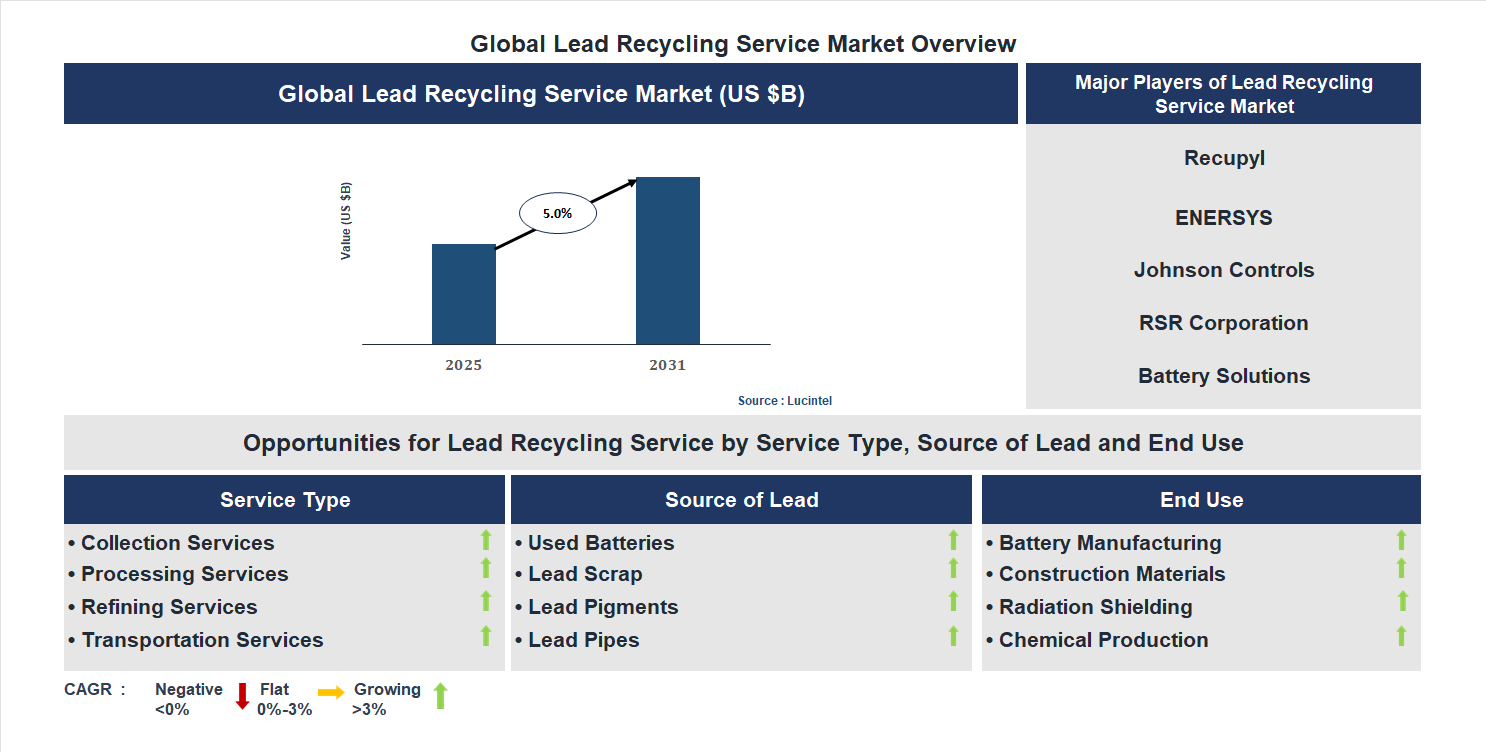
Key data points: The growth forecast = 5% annually for the next 6 years. Scroll below to get more insights. This market report covers trends, opportunities and forecasts in lead recycling service market to 2031 by service type (collection services, processing services, refining services, and transportation services), source of lead (used batteries, lead scrap, lead pigments, and lead pipes), end use (battery manufacturing, construction materials, radiation shielding, and chemical production), and region (North America, Europe, Asia Pacific, and the Rest of the World)
We'll send your sample report shortly.
• Lucintel forecasts that, within the service type category, collection service is expected to witness the highest growth over the forecast period.
• Within the end use category, battery manufacturing is expected to witness the highest growth.
• In terms of region, APAC is expected to witness the highest growth over the forecast period. Gain valuable insights for your business decisions with our comprehensive 150+ page report. Sample figures with some insights are shown below.
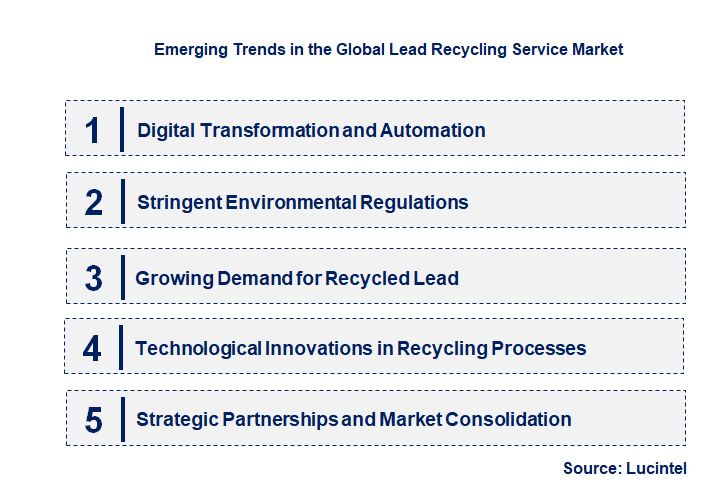
• Digital Transformation and Automation: The integration of digital technologies and automation tools is revolutionizing lead recycling processes. Advanced sensors, IoT devices, and AI-driven analytics enable real-time monitoring and optimization of recycling operations. This results in increased efficiency, reduced waste, and lower operational costs. Automation also minimizes human error and enhances safety standards within recycling facilities. As a result, companies can process higher volumes of lead with improved quality control, making the recycling process more sustainable and economically viable.
• Stringent Environmental Regulations: Governments worldwide are implementing stricter environmental policies to control hazardous waste and promote recycling. These regulations compel lead recycling companies to adopt cleaner, more efficient technologies that reduce emissions and prevent soil and water contamination. Compliance with these standards often involves significant investment in eco-friendly equipment and processes. Consequently, regulatory pressures are driving innovation in the industry, encouraging companies to develop environmentally sustainable recycling methods that meet legal requirements while maintaining profitability.
• Growing Demand for Recycled Lead: The increasing demand for recycled lead is driven by its cost-effectiveness and environmental benefits compared to primary lead production. Industries such as automotive manufacturing, batteries, and construction are prioritizing recycled lead to reduce their carbon footprint. This demand surge is encouraging recycling companies to expand capacity and improve recovery rates. Additionally, the rising adoption of electric vehicles and renewable energy solutions further amplifies the need for sustainable lead sources, positioning recycled lead as a critical component in the green economy.
• Technological Innovations in Recycling Processes: Innovations such as hydrometallurgical and pyrometallurgical techniques are enhancing lead recovery efficiency and purity. These advanced methods enable the extraction of lead from complex waste streams with minimal environmental impact. Research and development efforts are focused on developing eco-friendly, cost-effective technologies that can handle diverse waste materials. These innovations are not only improving yield rates but also reducing energy consumption and emissions, thereby making lead recycling more sustainable and competitive with primary lead production.
• Strategic Partnerships and Market Consolidation: The market is witnessing increased collaborations between recycling firms, automotive manufacturers, and technology providers. Strategic alliances facilitate knowledge sharing, technological advancements, and expanded distribution networks. Mergers and acquisitions are also common as companies seek to strengthen their market position and diversify their offerings. This consolidation trend enhances operational efficiencies and enables the development of integrated recycling solutions. Such partnerships are crucial for scaling up sustainable practices and meeting the growing global demand for recycled lead, ultimately shaping a more resilient and innovative market landscape. In summary, these emerging trends are collectively reshaping the lead recycling service market by fostering innovation, ensuring compliance, and meeting rising demand sustainably. They are driving industry growth, improving environmental outcomes, and creating new opportunities for stakeholders committed to a circular economy.
• Growing Demand for Sustainable Recycling Solutions: The market is expanding as industries seek eco-friendly lead recycling options. Increasing environmental regulations and consumer awareness are pushing companies to adopt sustainable practices. Advanced recycling technologies are enabling higher recovery rates and lower emissions, making lead recycling more viable and attractive. This trend is expected to continue, driving market growth and encouraging innovation in recycling processes.
• Technological Innovations in Recycling Processes: New technologies such as automated sorting, chemical recovery, and eco-friendly smelting are transforming the lead recycling landscape. These innovations improve efficiency, reduce waste, and lower energy consumption, making recycling more cost-effective and environmentally sustainable. As technology advances, the market will see increased adoption of these methods, leading to higher recovery rates and better quality lead products, ultimately boosting industry competitiveness.
• Rising Applications in Battery Manufacturing: The surge in electric vehicle production and renewable energy storage systems is increasing demand for recycled lead in battery manufacturing. Lead-acid batteries remain essential for various applications, and recycled lead offers a sustainable alternative to virgin materials. This growth in demand is encouraging investments in recycling infrastructure and technology, ensuring a steady supply of high-quality recycled lead, and supporting the expansion of the battery industry.
• Regulatory Frameworks Promoting Recycling Practices: Governments worldwide are implementing stricter regulations to promote lead recycling and reduce environmental hazards. These policies incentivize companies to adopt responsible recycling practices and invest in cleaner technologies. Enhanced compliance requirements are fostering transparency and accountability within the industry, leading to increased market participation. Such regulatory support is crucial for sustainable growth and for meeting global environmental standards.
• Market Expansion in Emerging Economies: Emerging economies are witnessing increased industrialization and urbanization, leading to higher lead consumption and recycling activities. Investments in infrastructure and regulatory reforms are facilitating market entry and expansion. This growth provides new opportunities for local and international players to develop recycling facilities, create jobs, and promote sustainable resource management, thereby contributing to the overall development of the lead recycling industry. These recent developments are significantly transforming the lead recycling service market by fostering sustainability, technological advancement, and regulatory compliance. The market is poised for robust growth as innovations improve efficiency and environmental standards drive adoption. Expanding applications and emerging economies further enhance opportunities, making the industry more resilient and competitive. Overall, these trends are shaping a more sustainable, efficient, and profitable future for lead recycling globally.
• Growing Demand for Recycled Lead in Battery Manufacturing: The surge in electric vehicle adoption and renewable energy storage systems has increased demand for recycled lead in battery production. Recycling lead from used batteries offers a cost-effective and environmentally friendly alternative to primary lead extraction. This trend is supported by stricter regulations on mining and lead emissions, prompting manufacturers to prioritize recycled lead. As battery recycling infrastructure improves, the market for recycled lead in batteries is expected to expand significantly, offering substantial growth opportunities.
• Increasing Adoption of Sustainable Recycling Technologies: Advances in recycling processes, such as hydrometallurgical and pyrometallurgical methods, enhance lead recovery efficiency and reduce environmental impact. These innovative technologies enable higher purity lead extraction and lower emissions, aligning with regulatory standards. Companies investing in sustainable recycling methods can differentiate themselves and meet consumer demand for eco-friendly products. The adoption of such technologies is expected to drive market growth by improving profitability and environmental compliance.
• Expansion into Emerging Markets with Growing Industrialization: Rapid industrialization in regions like Asia-Pacific and Latin America is fueling demand for lead in construction, infrastructure, and manufacturing sectors. These markets present opportunities for recycling services to establish local facilities, reduce import dependence, and support sustainable development. As infrastructure projects increase, the need for recycled lead in various applications will grow, making emerging markets attractive for investment and expansion in lead recycling services.
• Regulatory Pressures and Environmental Policies Favoring Recycling: Governments worldwide are implementing stricter regulations on lead disposal and promoting recycling to reduce environmental hazards. Policies incentivize the use of recycled lead and impose penalties on improper disposal. This regulatory environment encourages industries to adopt lead recycling services, creating a stable demand base. Companies that align with these policies can benefit from compliance incentives and avoid penalties, fostering market growth and sustainability.
• Rising Awareness and Consumer Preference for Eco-Friendly Products: Increasing consumer awareness about environmental issues influences companies to adopt sustainable practices, including lead recycling. Brands are emphasizing eco-friendly sourcing and production, which boosts demand for recycled lead. This shift in consumer preference encourages industries to partner with recycling service providers, expanding market opportunities. As sustainability becomes a key purchasing criterion, the lead recycling market is poised for continued growth driven by eco-conscious consumer behavior. The overall impact of these opportunities is a robust expansion of the lead recycling service market, driven by technological innovation, regulatory support, and shifting consumer preferences. Stakeholders who capitalize on these trends can achieve competitive advantages, promote environmental sustainability, and meet the rising global demand for recycled lead. This dynamic environment promises long-term growth and resilience for the industry.
• Technological Advancements: The development of innovative recycling technologies enhances the efficiency, safety, and environmental compliance of lead recycling processes. Modern methods reduce hazardous emissions and improve lead recovery rates, making recycling more economically viable and environmentally sustainable. These advancements attract investments and encourage industry adoption, supporting market growth. As technology continues to evolve, companies can process more complex waste streams, expand capacity, and meet stricter regulatory standards, thereby strengthening the overall market.
• Growing Demand from Automotive and Battery Industries: The surge in electric vehicle adoption and the proliferation of lead-acid batteries significantly increase the demand for recycled lead. These industries rely on recycled lead to reduce costs and meet environmental regulations. As the global shift toward cleaner energy solutions accelerates, the need for sustainable lead sources becomes more critical, fueling market expansion. The consistent demand from these sectors ensures a steady flow of recyclable lead, supporting the growth of recycling services.
• Stringent Environmental Regulations: Governments worldwide are implementing strict regulations to control lead emissions and manage hazardous waste. These policies compel industries to adopt responsible recycling practices, often favoring certified recycling services. Compliance costs may rise, but they also create opportunities for specialized service providers. Regulatory frameworks also promote the use of recycled lead over virgin materials, encouraging market growth while ensuring environmental safety.
• Economic Factors and Lead Price Fluctuations: The volatility of lead prices directly influences recycling activity. Higher prices incentivize increased recycling efforts as it becomes more profitable, while lower prices may reduce recycling incentives. Economic stability and industrial growth also impact demand for lead, affecting the volume of recyclable waste. Market players must adapt to these fluctuations to optimize operations and maintain profitability, making economic factors a critical driver.
• Environmental Sustainability Initiatives: Growing awareness of environmental issues and sustainability goals drives demand for recycled lead. Companies and governments are increasingly prioritizing eco-friendly practices, which include recycling and reusing materials. These initiatives support the development of a circular economy, reducing reliance on virgin lead mining and minimizing environmental impact. As sustainability becomes a core business objective, the market for lead recycling services is expected to expand further. The challenges facing this lead recycling service market include:
• Regulatory Compliance Costs: While regulations promote responsible recycling, they also impose significant compliance costs on service providers. Meeting environmental standards requires investment in advanced technologies, certifications, and monitoring systems, which can be financially burdensome, especially for smaller players. Navigating complex and varying regulations across regions adds to operational challenges, potentially limiting market entry and expansion.
• Hazardous Waste Management Risks: Lead recycling involves handling toxic materials, posing health and environmental risks. Improper management can lead to contamination, legal liabilities, and reputational damage. Ensuring safe handling, storage, and disposal requires strict adherence to safety protocols and substantial investment in protective equipment and training. These risks can hinder market growth by increasing operational costs and creating barriers for new entrants.
• Market Volatility and Lead Price Fluctuations: The market's dependence on lead prices makes it vulnerable to volatility driven by global economic conditions, supply-demand imbalances, and geopolitical factors. Price fluctuations can lead to unpredictable profit margins, affecting investment and operational decisions. This uncertainty complicates long-term planning and can discourage new investments, thereby impacting the overall growth trajectory of the lead recycling service market. In summary, the lead recycling service market is shaped by technological innovations, rising demand from key industries, regulatory pressures, economic fluctuations, and sustainability initiatives. While these drivers foster growth and innovation, challenges such as compliance costs, hazardous waste risks, and market volatility pose significant hurdles. The interplay of these factors determines the market's future trajectory, requiring stakeholders to adapt strategically. Embracing technological progress, adhering to regulations, and managing economic risks will be crucial for sustainable growth in this evolving sector.
• Recupyl
• ENERSYS
• Johnson Controls
• RSR Corporation
• Battery Solutions
• Green Battery
• Schnabel Recycling
• Call2Recycle
• Umicore
• EcoBattery
• Collection Services
• Processing Services
• Refining Services
• Transportation Services
• Used Batteries
• Lead Scrap
• Lead Pigments
• Lead Pipes
• Battery Manufacturing
• Construction Materials
• Radiation Shielding
• Chemical Production
• North America
• Europe
• Asia Pacific
• The Rest of the World
• United States: The US market has seen substantial technological advancements, including the adoption of automated sorting and refining processes that improve lead recovery rates. Regulatory frameworks, such as EPA standards, have become more stringent, encouraging companies to adopt environmentally friendly practices. Major players are investing in sustainable recycling facilities, and there is a growing emphasis on reducing lead emissions during processing. Additionally, the US government promotes recycling initiatives through incentives and grants, fostering industry growth and innovation.
• China: China remains the largest consumer and recycler of lead, with rapid technological upgrades in recycling facilities. The country has implemented stricter environmental regulations to control lead emissions and waste disposal, leading to the modernization of recycling plants. Investment in eco-friendly technologies has increased, aiming to reduce pollution and improve lead recovery efficiency. The government’s focus on sustainable development and circular economy policies has further propelled the market, alongside rising domestic demand for recycled lead in manufacturing sectors.
• Germany: Germany has advanced its lead in recycling capabilities through high-quality standards and innovative processes. The country emphasizes environmentally sustainable practices, including the use of cleaner technologies and stricter emission controls. German companies are investing in research to develop more efficient recycling methods and reduce energy consumption. The market benefits from strong regulatory support within the European Union, promoting circular economy principles and ensuring high safety and environmental standards in lead recycling operations.
• India: India’s lead recycling market is expanding rapidly, driven by increasing demand for recycled lead in automotive and battery manufacturing. The country is adopting modern recycling technologies, although challenges remain in regulatory enforcement and environmental management. Government initiatives aim to formalize the sector and improve safety standards. Investments in infrastructure and technology are growing, with a focus on reducing hazardous emissions and waste. The market is also influenced by rising domestic consumption and export opportunities, fostering sustainable growth.
• Japan: Japan has made significant strides in lead recycling through advanced technological integration and strict environmental regulations. The country emphasizes high-quality recycling processes to meet international standards, reducing environmental impact. Innovations include the use of cleaner energy sources and improved refining techniques. Japan’s recycling industry benefits from government policies promoting sustainability and resource efficiency. The market continues to evolve with investments in research to develop eco-friendly and cost-effective recycling solutions, maintaining Japan’s position as a leader in environmentally responsible lead recycling practices.


• Recupyl
• ENERSYS
• Johnson Controls
• RSR Corporation
• Battery Solutions
• Green Battery
• Schnabel Recycling
• Call2Recycle
• Umicore
• EcoBattery Q5. Which lead recycling service market segment will be the largest in future? Answer: Lucintel forecasts that, within the service type category, collection service is expected to witness the highest growth over the forecast period. Q6. In lead recycling service market, which region is expected to be the largest in next 5 years? Answer: In terms of region, APAC is expected to witness the highest growth over the forecast period. Q7. Do we receive customization in this report? Answer: Yes, Lucintel provides 10% customization without any additional cost.


Choose a license that fits your team. Instant PDF delivery.
Prices exclude taxes. Instant delivery. Custom licensing available on request.
Market Report · July 29, 2026
Market Report · July 22, 2026
Market Report · May 18, 2026
Trusted partner for strategic intelligence and business growth


Receive a complimentary market analysis tailored to your industry. Our analysts will identify key growth opportunities and competitive dynamics specific to your business.

Market size, growth rate, and key trend analysis for your specific sector.

Top competitor positioning and market share analysis.

Strategic recommendations backed by data-driven insights.
Get curated market intelligence and competitive moves straight to your inbox.
By subscribing, you agree to receive our monthly insights. Unsubscribe anytime.
Receive a complimentary market analysis tailored to your industry. Our analysts will identify key growth opportunities and competitive dynamics specific to your business.
Market size, growth rate, and key trend analysis for your specific sector.
Top competitor positioning and market share analysis.
Strategic recommendations backed by data-driven insights.
Get curated market intelligence, emerging trends, and competitive moves straight to your inbox each month.
By subscribing, you agree to receive our monthly insights. Unsubscribe anytime.
We'll send your sample report shortly.