
Market Report · July 22, 2026

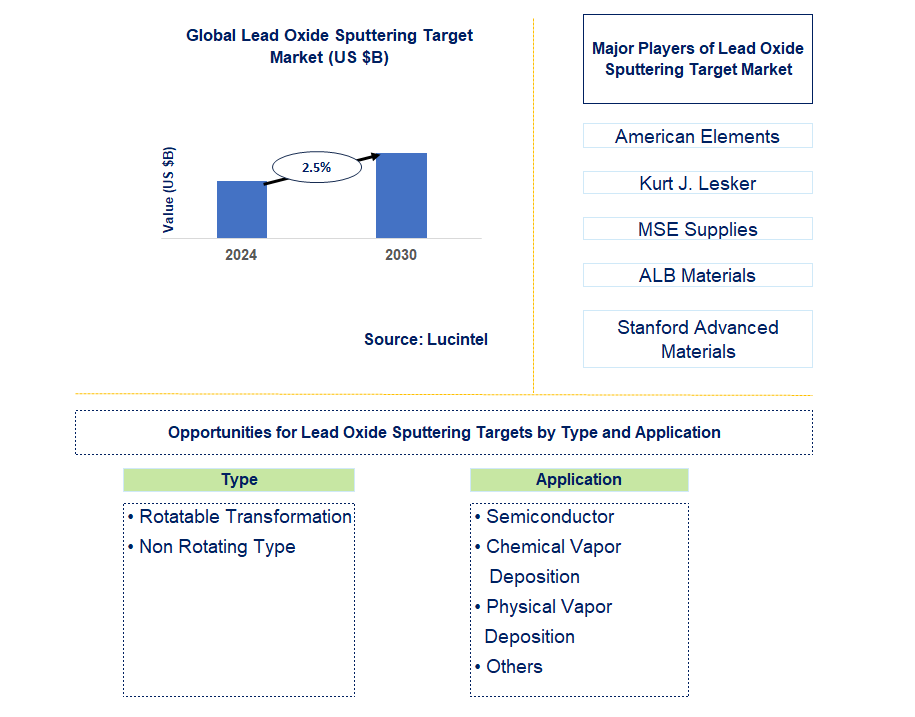
Key data points: The growth forecast = 2.5% annually for the next 6 years. Scroll below to get more insights. This market report covers trends, opportunities, and forecast in the global lead oxide sputtering target market to 2030 by type (rotatable transformation and non rotating type), application (semiconductor, chemical vapor deposition, physical vapor deposition, and others), and region (North America, Europe, Asia Pacific, and the Rest of the World)
We'll send your sample report shortly.
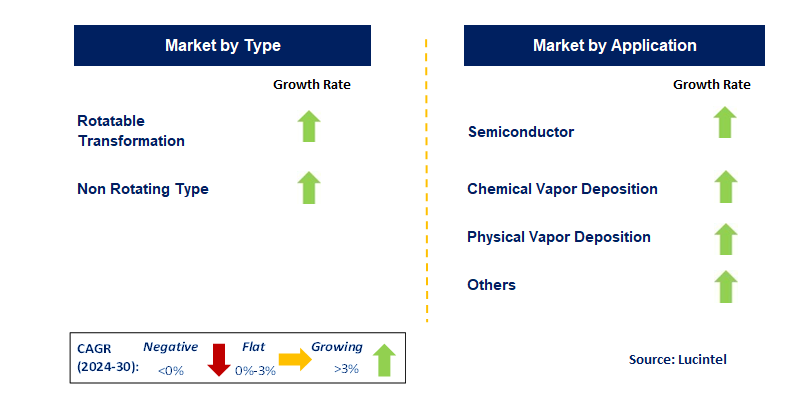
• Lucintel forecasts that, within the type category, rotatable transformation is expected to witness a higher growth over the forecast period.
• Within the application category, semiconductor is expected to witness the highest growth.
• In terms of regions, APAC is expected to witness the highest growth over the forecast period. A more than 150-page report is developed to help in your business decisions.
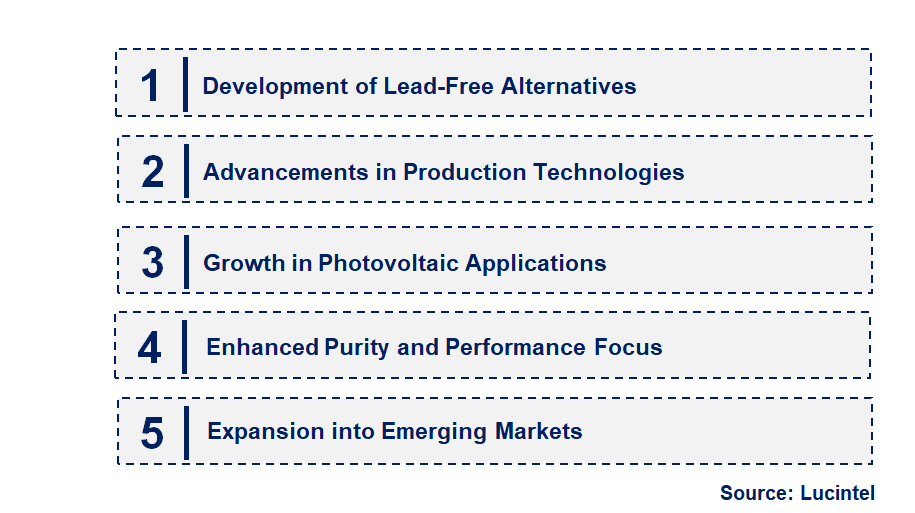
• Development of Lead-Free Alternatives: There is a significant trend toward developing alternative materials that are free from lead, as lead is considered harmful to the environment. This has compelled researchers to explore non-toxic materials such as bismuth-based compounds, which offer similar performance to those containing lead oxides. The choice of lead-free sputtering targets is driven by regulatory stringency and the increased demand for eco-friendly materials. Transitioning to these new alternatives is expected to create new market opportunities and spur technological advancements in sputtering targets.
• Advancements in Production Technologies: The quality and performance of lead oxide sputtering targets are being enhanced by technological innovations in production methods. Better target consistency and efficiency can be achieved through high-precision sintering, automation techniques, and advanced quality control systems. Such improvements enable manufacturing enterprises to optimize cost-effectiveness while meeting the growing demands of high-tech applications. These technologies are likely to reduce production costs, attracting more investment into this sector.
• Growth in Photovoltaic Applications: In photovoltaic applications, there has been an increase in the demand for lead oxide vapor deposition targets due to the rise in the use of solar energy. Because it enhances the efficiency and performance of thin films used in solar cells, lead oxide remains a substance that is highly prevalent in such technologies. With the expansion of the solar energy sector, there continues to be a growing need for high-quality sputtering targets designed with precision to meet the specific requirements of photovoltaic technology. This is expanding the demand for lead oxide targets and boosting growth within this market segment.
• Enhanced Purity and Performance Focus: There is a growing emphasis on producing lead oxide sputtering targets with higher purity and performance to meet the needs of advanced electronic devices and coatings. Material processing innovations and improved quality control are critical in achieving the higher target purity and consistency required for high-performance applications. The need for reliable, high-quality sputtering targets is also driving this trend, ensuring top-notch results in demanding applications.
• Expansion into Emerging Markets: With the growth of industries such as electronics, automotive, and renewable energy, emerging markets are being targeted by lead oxide sputtering target manufacturers. These developing markets require sputtering targets that meet specific application requirements. As a result, an increasing number of businesses are exploring growing industrial sectors within newly established regions, contributing to the global expansion of the lead oxide sputtering target market. Emerging trends in the lead oxide sputtering target market include the development of lead-free alternatives, improvements in production technologies, growth in photovoltaic applications, a focus on enhanced purity and performance, and expansion into emerging markets. These trends are driving market changes, with innovation leading the way, alongside environmental considerations linked to technological advancements.
• Technological Improvements: Manufacturers are turning to modern methods of producing lead oxide sputtering targets to ensure proper manufacturing, both in terms of quality and efficiency. For example, accuracy during synthesis has increased due to innovations like fully automated manufacturing lines, which improve material uniformity. In addition to better performance levels in complex industries such as computers and processors, these improvements also help lower costs.
• Environmental Regulations Driving Lead-Free Alternatives: Regulations concerning the environment and health have forced the industry to develop sputtering targets without lead. Research is ongoing into bismuth-based and other non-toxic materials to provide alternatives that can meet performance standards without the health and environmental drawbacks associated with lead.
• Expansion of Production Capacities: In response to the demand for lead oxide sputtering targets from companies in sectors like electronics and photovoltaics, firms are expanding their production capacities. New manufacturing plants and technologies are increasing production efficiency, which supports market growth.
• Increased Focus on Quality Control: The importance of increasing the purity of lead oxide sputtering targets cannot be overstated. Targets are being subjected to advanced quality control measures and material processing techniques to meet the specific demands of advanced applications. They must also deliver high reliability, particularly through their performance consistency.
• Growth in Photovoltaic Applications: Lead oxide sputtering targets are increasingly being used for solar panels, driven by the surging demand for solar energy. This has led to developments in materials for these targets as well as methods of manufacturing specifically tailored to the production needs of the solar cell industry. Technological improvements, the regulatory impact on development toward lead-free alternatives, capacity increases, improved quality control, and growth in photovoltaic applications represent recent developments in the lead oxide sputtering target market. These developments shape the market, drive innovation, and promote growth.
• Tapping into Emerging Markets: There are viable growth prospects in emerging markets where industries such as electronics, automobiles, and renewable energy are booming. For instance, a company might capitalize on this expansion by establishing a presence in these areas, targeting solutions and localizing production. By meeting the growing demand for sputtering targets, establishing a presence in emerging markets can expand revenue and market share.
• Less Toxic Alternatives Research: Investing in the development of non-toxic sputtering targets is one of the strategies that may arise due to various factors, including increasing environmental concerns and regulatory pressures. This would position companies as leaders among sustainable material manufacturers and meet the demand for green alternatives in high-tech applications.
• Technological Innovations with Product Uniqueness: A competitive advantage can be gained through the adoption of improved manufacturing technologies and offering product differentiation. This could include high-precision manufacturing capabilities, better material processing techniques, and increased quality control, which lead to better-performing or more reliable lead oxide sputtering targets, thus attracting higher-priced market segments.
• Growth in Renewable Energy Applications: In particular, the growth of renewable energy, especially photovoltaics, presents substantial opportunities for expansion. Companies can focus their efforts on designing sputtering targets tailored for solar cell production to take advantage of the ever-growing demand for advanced materials in the renewable energy industry.
• Strategic Partnerships and Collaborations: Strategic alliances with technology providers, university labs, or related companies will accelerate innovation and speed up entry into new markets. In return, these partnerships may enable knowledge sharing, boost product development capacity, and expand market coverage, thus propelling growth and helping companies outdo their rivals. These strategic growth opportunities involve expanding into emerging markets, developing alternative lead substitutes, embracing technological advancements, focusing on renewable energy sources, and forming strategic alliances. They act as channels for growth and market leadership.
• Tapping into Emerging Markets: There are viable growth prospects in emerging markets where industries such as electronics, automobiles, and renewable energy are booming. For instance, a company might capitalize on this expansion by establishing a presence in these areas, targeting solutions and localizing production. By meeting the growing demand for sputtering targets, establishing a presence in emerging markets can expand revenue and market share.
• Less Toxic Alternatives Research: Investing in the development of non-toxic sputtering targets is one of the strategies that may arise due to various factors, including increasing environmental concerns and regulatory pressures. This would position companies as leaders among sustainable material manufacturers and meet the demand for green alternatives in high-tech applications.
• Technological Innovations with Product Uniqueness: A competitive advantage can be gained through the adoption of improved manufacturing technologies and offering product differentiation. This could include high-precision manufacturing capabilities, better material processing techniques, and increased quality control, which lead to better-performing or more reliable lead oxide sputtering targets, thus attracting higher-priced market segments.
• Growth in Renewable Energy Applications: In particular, the growth of renewable energy, especially photovoltaics, presents substantial opportunities for expansion. Companies can focus their efforts on designing sputtering targets tailored for solar cell production to take advantage of the ever-growing demand for advanced materials in the renewable energy industry.
• Strategic Partnerships and Collaborations: Strategic alliances with technology providers, university labs, or related companies will accelerate innovation and speed up entry into new markets. In return, these partnerships may enable knowledge sharing, boost product development capacity, and expand market coverage, thus propelling growth and helping companies outdo their rivals. These strategic growth opportunities involve expanding into emerging markets, developing alternative lead substitutes, embracing technological advancements, focusing on renewable energy sources, and forming strategic alliances. They act as channels for growth and market leadership. The lead oxide sputtering target plays a very important role in many industries, including semiconductor, chemical vapor deposition, and physical vapor deposition. The changing market dynamics are driven by increasing usage in electronics and renewable energy, technological advancements, government support and funding, and an increased focus on quality and performance. However, challenges such as environmental regulations and health risks, the high cost of lead oxide, and competing alternative materials remain. The factors driving the lead oxide sputtering target market include:
• Increasing Usage in Electronics and Renewable Energy: The use of lead oxide sputtering targets has grown significantly in applications such as electronics and the renewable energy sector. As a result, there is continuous demand for high-performance sputter targets in these industries, thereby expanding the markets.
• Technological Advancements: Lead oxide targets are improving through technological innovations that include advancements in the fabrication processes of sputtering targets and sputtering systems. For instance, more precise production techniques have emerged due to advances in material processing, leading to lower costs while meeting the new requirements of high-tech applications.
• Government Support and Funding: Government initiatives that support the growth of the lead oxide sputtering target market, including financial assistance for research, enable scholars to conduct research in this area. Some policies focus on enhancing technological advancements and sustainability, which have led to innovation and market expansion.
• Increased Focus on Quality and Performance: The emphasis on improving both purity levels and overall performance drives the sputtering target industry forward. This has been facilitated by better quality control measures and improvements made during the material processing stage to meet higher standards for advanced applications. Challenges in the lead oxide sputtering target market include:
• Environmental Regulations and Health Risks: Environmental regulations are a major factor that hinders the use of lead in workplaces due to the health risks involved, thus posing a significant challenge. In addition, compliance with these environmental policies reduces the demand for traditional products and paves the way for environmentally friendly substitutes. Companies must navigate these shifts in market dynamics while keeping costs under control without compromising quality or functionality.
• Expensive Lead Oxide: The manufacturing costs and profitability of lead oxide and its derivatives are affected by their high cost. Fluctuations in raw material prices impact the overall cost structure of lead oxide sputtering targets, requiring companies to adopt cost-effective strategies and manage price volatility.
• Competing Alternative Materials: The market for lead oxide is challenged by the emergence of alternative materials for sputtering targets. Research into new materials that offer similar or improved performance characteristics may impact the demand for lead oxide targets, forcing companies to innovate and adapt. These factors include growth in the electronics sector, especially increased demand in renewable energy, technological development, government support, and a greater emphasis on quality. Challenges include environmental regulations, expensive feedstock, disrupted supply chains, and competition from alternative materials. Addressing these factors is crucial for sustained growth and market success.
• American Elements
• Kurt J. Lesker
• MSE Supplies
• ALB Materials
• Stanford Advanced Materials
• Advanced Engineering Materials
• QS Advanced Materials
• Rotatable Transformation
• Non Rotating Type
• Semiconductor
• Chemical Vapor Deposition
• Physical Vapor Deposition
• Others
• North America
• Europe
• Asia Pacific
• The Rest of the World
• United States: In the United States, recent developments in this market have focused on improving product quality and expanding application areas. American manufacturers have improved the purity and uniformity of lead oxide targets required for high-performance electronics and photovoltaic applications.
• China: China’s tremendous industrial growth, along with technological investments, has had a significant impact on the country’s lead oxide sputtering target market. Chinese companies have scaled up production capacities while adopting advanced manufacturing methods to enhance target performance and reduce costs. To meet the rising demands of the semiconductor and solar industries, there is a strong focus on improving the purity and consistency of the material.
• Germany: Germany’s recent developments in the lead oxide sputtering target market highlight its commitment to high-quality manufacturing and environmentally friendly production processes. Lead oxide targets from German companies comply with the most demanding quality control requirements due to the advanced production techniques they use.
• India: India's lead oxide vapor deposition market is booming due to the growth of the electronics and solar industries. Among the recent developments, more domestic production capacities are being built, with technology upgrades aimed at improving target performance and lowering costs. Indian firms have been enhancing the purity and consistency of lead oxide targets, which are required in state-of-the-art applications.
• Japan: Pioneered by technological advancements, Japan’s lead oxide vapor deposition target market focuses on high-performance products. By investing in modern production technologies, Japanese manufacturers aim to improve the quality and efficiency of lead oxide targets. In addition, strict environmental regulations, coupled with health concerns, have prompted the development of alternative materials that do not contain lead.




Choose a license that fits your team. Instant PDF delivery.
Prices exclude taxes. Instant delivery. Custom licensing available on request.
Market Report · July 22, 2026
Market Report · July 22, 2026
Market Report · July 22, 2026
Trusted partner for strategic intelligence and business growth


Receive a complimentary market analysis tailored to your industry. Our analysts will identify key growth opportunities and competitive dynamics specific to your business.

Market size, growth rate, and key trend analysis for your specific sector.

Top competitor positioning and market share analysis.

Strategic recommendations backed by data-driven insights.
Get curated market intelligence and competitive moves straight to your inbox.
By subscribing, you agree to receive our monthly insights. Unsubscribe anytime.
Receive a complimentary market analysis tailored to your industry. Our analysts will identify key growth opportunities and competitive dynamics specific to your business.
Market size, growth rate, and key trend analysis for your specific sector.
Top competitor positioning and market share analysis.
Strategic recommendations backed by data-driven insights.
Get curated market intelligence, emerging trends, and competitive moves straight to your inbox each month.
By subscribing, you agree to receive our monthly insights. Unsubscribe anytime.
We'll send your sample report shortly.