
Market Report · July 31, 2026

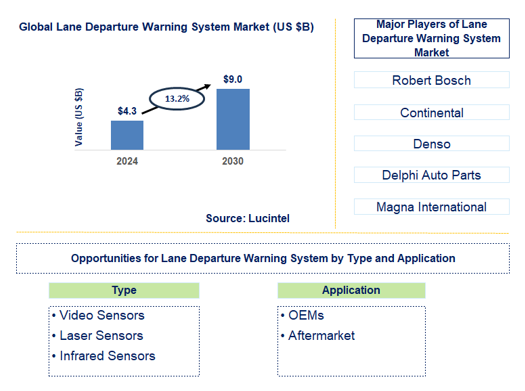
Key data points: The market size in 2030 = $8.96 billion, growth forecast = 13.2% annually for the next 6 years. Scroll below to get more insights. This market report covers trends, opportunities, and forecasts in the global lane departure warning system market to 2030 by type (video sensors, laser sensors, and infrared sensors), application (OEMs and aftermarket), and region (North America, Europe, Asia Pacific, and the Rest of the World)
We'll send your sample report shortly.
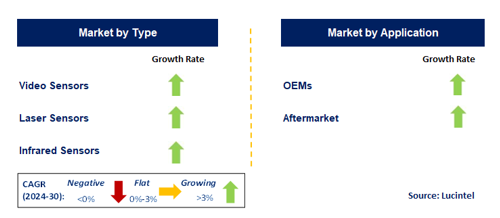
• Lucintel forecasts that, within the type category, infrared sensor will remain the largest segment over the forecast period as it provides highest level of accuracy.
• Within the application category, OEMs will remain the largest segment due to increasing demand for vehicles equipped with advanced safety features.
• Europe is expected to witness the highest growth over the forecast period due to growing awareness and recognition of active vehicle safety systems among consumers. Gain valuable insights for your business decisions with our comprehensive 150+ page report.
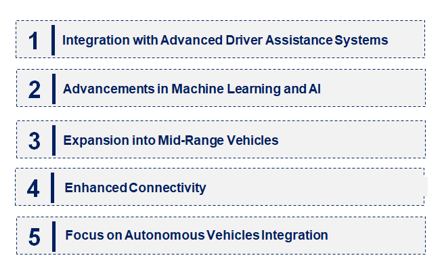
• Integration with Advanced Driver Assistance Systems: LDW systems are increasingly integrated with broader ADAS features, such as adaptive cruise control and automated parking. This trend enhances overall vehicle safety by providing a comprehensive suite of assistance technologies. Integration improves system functionality and user experience by offering seamless operation and reducing the likelihood of driver error. This convergence of technologies is driving the development of more sophisticated and user-friendly safety solutions.
• Use of Machine Learning and AI: Machine learning and artificial intelligence (AI) are being leveraged to enhance the accuracy and effectiveness of LDW systems. These technologies enable real-time learning and adaptation to various driving conditions and road scenarios. AI-driven systems can better interpret lane markings, detect potential hazards, and improve lane-keeping accuracy. This trend is leading to more responsive and reliable LDW systems, increasing their effectiveness in preventing accidents.
• Expansion of LDW Features to Mid-Range Vehicles: Initially, LDW systems were primarily available in high-end vehicles, but there is a growing trend to include these features in mid-range models. This expansion is driven by consumer demand for enhanced safety and competitive pricing strategies by automakers. By making LDW systems more accessible, manufacturers are broadening their market reach and improving overall vehicle safety across different segments.
• Enhanced Connectivity and Vehicle-to-Everything Communication: The development of vehicle-to-everything (V2X) communication is improving the functionality of LDW systems. V2X technology allows vehicles to communicate with infrastructure, other vehicles, and pedestrians, providing additional data for more accurate lane departure detection. This enhanced connectivity supports more effective safety interventions and contributes to the development of smarter, more connected transportation systems.
• Focus on Autonomous Vehicle Integration: As the automotive industry moves toward autonomous vehicles, LDW systems are being integrated into more advanced autonomous driving technologies. LDW systems are evolving to support higher levels of vehicle automation, including full self-driving capabilities. This integration ensures that LDW systems can operate effectively in a range of automated driving scenarios, contributing to the overall safety and reliability of autonomous vehicles. Emerging trends in the lane departure warning system market, such as integration with ADAS, the use of AI, expansion to mid-range vehicles, enhanced connectivity with V2X, and integration with autonomous vehicles, are reshaping the industry. These trends reflect advancements in technology, growing consumer expectations, and the push toward more comprehensive safety solutions. Together, they are driving innovation and broadening the scope of LDW systems, contributing to improved vehicle safety and driving experiences.
• Enhanced Sensor Technology: Recent advancements in sensor technology have improved the accuracy and reliability of LDW systems. New sensors, such as high-resolution cameras and radar systems, provide better lane detection and more precise alerts. This development enhances the system ability to operate in various driving conditions and increases overall safety. Enhanced sensors also contribute to more effective integration with other safety features.
• Integration with ADAS: The integration of LDW systems with Advanced Driver Assistance Systems (ADAS) is becoming more common. This integration combines LDW with features like adaptive cruise control and automated braking, creating a comprehensive safety system. The synergy between these technologies improves vehicle control and reduces the risk of accidents, providing drivers with a more advanced and reliable safety net.
• Improved Machine Learning Algorithms: The adoption of advanced machine learning algorithms is enhancing the performance of LDW systems. These algorithms enable systems to learn from diverse driving scenarios, improving their ability to detect lane markings and predict potential lane departures. Machine learning contributes to more accurate and adaptive LDW systems, which can better handle various road conditions and driving behaviors.
• Cost Reduction Strategies: Manufacturers are focusing on reducing the cost of LDW systems to make them more accessible to a broader range of vehicles. Innovations in production techniques and component sourcing are contributing to lower costs while maintaining performance. This development is making LDW systems available in mid-range and entry-level vehicles, expanding their adoption and improving road safety across different market segments.
• Enhanced User Interfaces: Recent developments include improvements in user interfaces for LDW systems. Enhanced graphical displays, haptic feedback, and auditory alerts provide drivers with clearer and more intuitive notifications. Improved user interfaces contribute to a better driver experience by making system interactions more user-friendly and reducing the likelihood of misinterpretation or missed alerts. These key developments in the lane departure warning system market—enhanced sensor technology, integration with ADAS, improved machine learning algorithms, cost reduction strategies, and enhanced user interfaces—are driving innovation and improving system performance. By addressing various aspects of technology, functionality, and cost, these developments are contributing to more effective and widely adopted LDW systems, enhancing vehicle safety and driver confidence.
• Adoption in Mid-Range Vehicles: Expanding LDW system availability to mid-range vehicles represents a significant growth opportunity. As manufacturers develop cost-effective solutions, LDW systems are becoming more accessible to a broader audience. This expansion enhances vehicle safety across different market segments and aligns with increasing consumer demand for advanced safety features. By targeting mid-range vehicles, companies can tap into a larger customer base and drive market growth.
• Integration with Autonomous Driving Technologies: Integrating LDW systems with autonomous driving technologies offers growth potential as the industry moves toward self-driving vehicles. LDW systems play a crucial role in supporting automated driving by providing additional safety layers. This integration aligns with the push toward higher levels of vehicle automation and supports the development of more advanced and reliable autonomous systems.
• Enhanced Connectivity and V2X Integration: The growth of vehicle-to-everything (V2X) communication technology presents opportunities for enhancing LDW systems. By integrating LDW systems with V2X, vehicles can receive real-time data from infrastructure and other road users, improving lane departure detection and response. This connectivity enhances overall safety and supports the development of smart transportation systems.
• Expansion into Emerging Markets: Emerging markets, such as India and Southeast Asia, present growth opportunities for LDW systems. As vehicle ownership increases and road safety awareness rises, demand for advanced safety technologies is growing. Tailoring LDW systems to meet the needs of these markets, including affordability and local regulations, can drive adoption and market expansion. Strategic growth opportunities in the lane departure warning system market include adoption in mid-range vehicles, integration with autonomous technologies, enhanced connectivity with V2X, expansion into emerging markets, and the development of advanced machine learning algorithms. By leveraging these opportunities, companies can drive market growth, improve vehicle safety, and address evolving consumer and regulatory demands.
• Technological Advancements: Advances in sensor technology, machine learning, and connectivity are driving the growth of LDW systems. New technologies improve system accuracy, reliability, and integration with other safety features. These advancements make LDW systems more effective in preventing accidents and responding to complex driving conditions, supporting overall market growth.
• Increasing Vehicle Safety Regulations: Stringent vehicle safety regulations are pushing the adoption of LDW systems. Governments worldwide are implementing and enforcing regulations that mandate the inclusion of advanced safety features in new vehicles. Compliance with these regulations drives demand for LDW systems, as manufacturers seek to meet safety standards and avoid penalties.
• Rising Consumer Awareness and Demand: Growing consumer awareness of vehicle safety and increasing demand for advanced safety features are driving the LDW system market. Consumers are increasingly seeking vehicles equipped with LDW systems to enhance driving safety and prevent accidents. This demand encourages manufacturers to incorporate LDW systems into a wider range of vehicles.
• Integration with ADAS: The integration of LDW systems with Advanced Driver Assistance Systems (ADAS) is a key driver of market growth. This integration enhances vehicle safety by combining LDW with other features such as adaptive cruise control and automatic braking. The synergy between these systems offers comprehensive safety solutions and drives adoption.
• Innovations in Cost Reduction: Innovations aimed at reducing the cost of LDW systems are expanding their accessibility. Advances in manufacturing processes and component sourcing are making LDW systems more affordable, allowing them to be included in mid-range and entry-level vehicles. This cost reduction broadens the market reach and promotes wider adoption. Challenges in the lane departure warning system market are:
• High Initial Costs: The high initial costs of LDW systems can be a barrier to widespread adoption, particularly in cost-sensitive markets. The expense associated with advanced technologies may deter some consumers and manufacturers. Despite the long-term safety benefits, the upfront financial commitment remains a challenge.
• Variability in Regulatory Standards: Variability in regulatory standards across different regions can complicate the development and deployment of LDW systems. Manufacturers must navigate diverse safety regulations and certification processes, which can increase costs and delay market entry. Harmonizing standards and ensuring compliance across multiple jurisdictions is a significant challenge.
• Technological Complexity: The technological complexity of LDW systems can pose challenges for both manufacturers and users. Advanced features, such as integration with ADAS and machine learning algorithms, require specialized knowledge and expertise. Managing and maintaining these complex systems can be demanding, impacting user experience and system reliability. The lane departure warning system market is influenced by drivers such as technological advancements, increasing vehicle safety regulations, rising consumer demand, integration with ADAS, and cost reduction innovations. However, challenges including high initial costs, regulatory variability, and technological complexity must be addressed. Balancing these drivers and challenges is crucial for stakeholders to capitalize on growth opportunities and advance market development.
• Robert Bosch
• Continental
• Denso
• Delphi Auto Parts
• Magna International
• Mobileye
• Autoliv
• Video Sensors
• Laser Sensors
• Infrared Sensors
• OEMs
• Aftermarket
• North America
• Europe
• Asia Pacific
• The Rest of the World
• United States: In the United States, recent developments in the lane departure warning system market focus on integrating more advanced driver assistance technologies. Automakers are increasingly incorporating LDW systems as part of comprehensive Advanced Driver Assistance Systems (ADAS). Enhanced features, such as lane-keeping assist and adaptive cruise control, are becoming standard in new vehicles. The U.S. regulatory environment is also pushing for higher safety standards, encouraging the adoption of these technologies. Furthermore, the growth of electric and autonomous vehicles is accelerating the innovation and implementation of LDW systems.
• China: China is witnessing rapid advancements in the lane departure warning system market, driven by the country's ambitious plans to become a global leader in automotive technology. Chinese automakers are integrating LDW systems into a growing range of vehicles, supported by government policies promoting automotive safety and innovation. Additionally, there is a strong focus on developing cost-effective LDW solutions to cater to the large domestic market. The rise of electric vehicles and smart cars in China is further fueling the adoption of advanced safety systems, including LDW.
• Germany: Germany, known for its robust automotive industry, is at the forefront of integrating cutting-edge LDW technology. German automakers are focusing on enhancing the precision and reliability of LDW systems through advanced sensors and machine learning algorithms. Regulatory frameworks in Germany are stringent, with a strong emphasis on safety standards, pushing the development of more sophisticated systems. The country's emphasis on innovation and quality is driving the deployment of LDW systems in high-end vehicles and setting benchmarks for global automotive safety standards.
• India: In India, the lane departure warning system market is experiencing gradual growth, influenced by increasing vehicle ownership and rising awareness of road safety. Recent developments include the introduction of more affordable LDW systems tailored for the Indian market. Automakers are starting to offer these systems in mid-range and high-end vehicles as part of their safety packages. Government initiatives aimed at improving road safety and reducing accidents are also contributing to the adoption of LDW technologies in India, though at a slower pace compared to other regions.
• Japan: Japan's lane departure warning system market is marked by technological innovation and high adoption rates. Japanese automakers are integrating LDW systems with advanced safety features, including lane-keeping assist and automated emergency braking. The focus is on developing systems that offer high precision and reliability in diverse driving conditions. Japan’s regulatory environment supports the adoption of advanced safety technologies, and there is strong consumer demand for high-tech automotive features. The country’s emphasis on innovation in the automotive sector is driving continuous improvements in LDW systems.


• Robert Bosch
• Continental
• Denso
• Delphi Auto Parts
• Magna International
• Mobileye
• Autoliv Q6. Which lane departure warning system market segment will be the largest in future? Answer: Lucintel forecasts that infrared sensor will remain the largest segment over the forecast period as it provides highest level of accuracy. Q7. In lane departure warning system market, which region is expected to be the largest in next 5 years? Answer: Europe is expected to witness highest growth over the forecast period due to growing awareness and recognition of active vehicle safety systems among consumers. Q8. Do we receive customization in this report? Answer: Yes, Lucintel provides 10% customization without any additional cost.


Choose a license that fits your team. Instant PDF delivery.
Prices exclude taxes. Instant delivery. Custom licensing available on request.
Market Report · July 31, 2026
Market Report · July 22, 2026
Market Report · July 17, 2026
Trusted partner for strategic intelligence and business growth


Receive a complimentary market analysis tailored to your industry. Our analysts will identify key growth opportunities and competitive dynamics specific to your business.

Market size, growth rate, and key trend analysis for your specific sector.

Top competitor positioning and market share analysis.

Strategic recommendations backed by data-driven insights.
Get curated market intelligence and competitive moves straight to your inbox.
By subscribing, you agree to receive our monthly insights. Unsubscribe anytime.
Receive a complimentary market analysis tailored to your industry. Our analysts will identify key growth opportunities and competitive dynamics specific to your business.
Market size, growth rate, and key trend analysis for your specific sector.
Top competitor positioning and market share analysis.
Strategic recommendations backed by data-driven insights.
Get curated market intelligence, emerging trends, and competitive moves straight to your inbox each month.
By subscribing, you agree to receive our monthly insights. Unsubscribe anytime.
We'll send your sample report shortly.