
Market Report · July 29, 2026

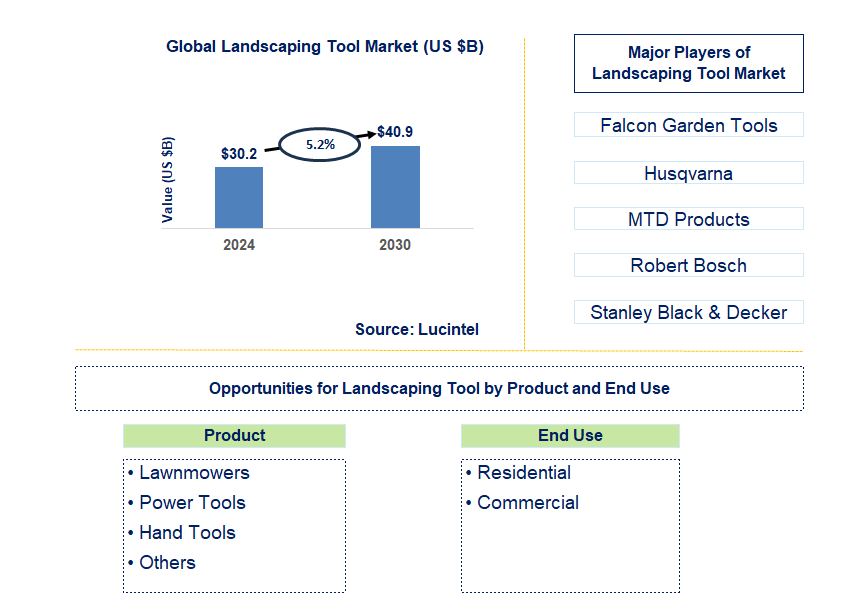
Key data points: The market size in 2030 = $40.9 billion, growth forecast = 5.2% annually for the next 6 years. Scroll below to get more insights. This market report covers trends, opportunities, and forecasts in the global landscaping tool market to 2030 by product (lawnmowers, power tools, hand tools, and others), end use (residential and commercial), and region (North America, Europe, Asia Pacific, and the Rest of the World)
We'll send your sample report shortly.
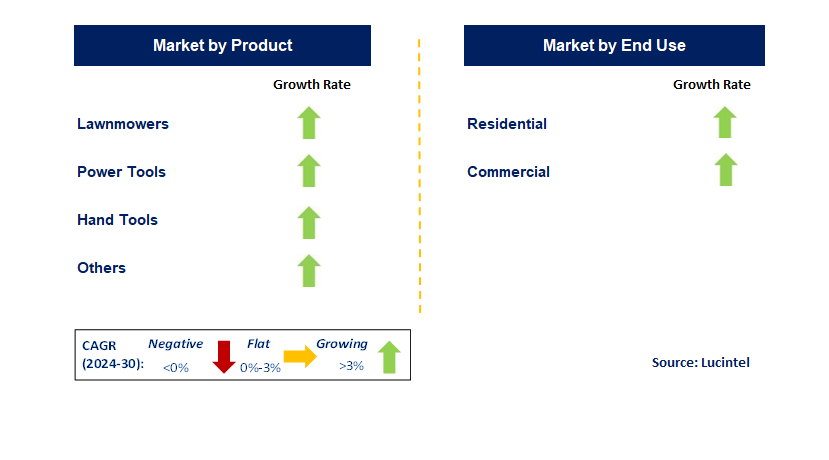
• Lucintel forecasts that, within the product category, power tool is expected to witness the highest growth over the forecast period.
• In terms of regions, North America is expected to witness the highest growth over the forecast period due to growing interest in home gardening and rising population's need for cleaner air and a beautiful garden for recreation in the region. A more than 150-page report is developed to help in your business decisions.
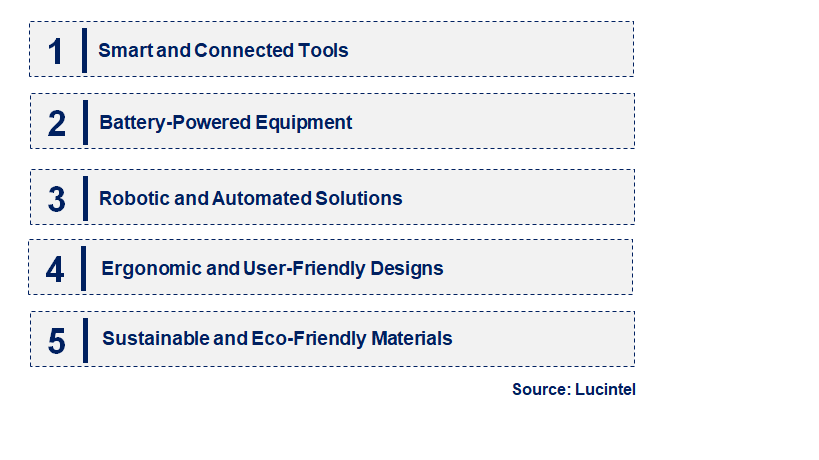
• Smart and Connected Tools: The integration of smart technology in landscaping tools is a significant trend. Tools equipped with GPS, IoT connectivity, and mobile app integration allow users to monitor performance, schedule operations, and receive maintenance alerts remotely. For example, smart lawn mowers can be programmed to navigate and mow based on specific patterns and schedules, enhancing efficiency and convenience. This trend reflects the growing demand for technology-driven solutions that provide greater control and precision in landscaping tasks.
• Battery-Powered Equipment: There is a marked shift towards battery-powered landscaping tools, driven by the need for quieter and more environmentally friendly alternatives to traditional gas-powered equipment. Innovations in battery technology, such as lithium-ion batteries, offer longer run times and quicker charging. These tools are not only more sustainable but also reduce noise pollution and maintenance requirements. The growing preference for battery-powered options is indicative of a broader trend towards eco-friendly and user-friendly equipment in the landscaping industry.
• Robotic and Automated Solutions: Robotic and automated landscaping tools are becoming increasingly popular. Robotic lawn mowers, automated irrigation systems, and smart plant care devices are examples of this trend. These tools reduce manual labor and improve precision, making landscaping tasks more efficient. Automation allows for consistent performance and time savings, appealing to both residential users and professional landscapers. The adoption of these technologies reflects a desire for greater convenience and productivity in maintaining outdoor spaces.
• Ergonomic and User-Friendly Designs: The focus on ergonomic and user-friendly designs is a growing trend in landscaping tools. Manufacturers are incorporating features such as adjustable handles, lightweight materials, and vibration reduction to enhance comfort and reduce strain during use. Ergonomic designs cater to a broader range of users, including those with physical limitations, and improve overall user experience. This trend highlights the industry's commitment to creating tools that are not only effective but also accessible and comfortable for diverse users.
• Sustainable and Eco-Friendly Materials: The landscaping tool market is increasingly focused on sustainability, with manufacturers adopting eco-friendly materials and practices. This includes the use of recyclable materials, reducing carbon footprints in production, and designing tools for longer lifespans to minimize waste. Sustainable practices extend to energy-efficient tools and products that help users reduce their environmental impact. This trend aligns with the broader consumer shift towards environmental responsibility and reflects the industry's efforts to address climate change and resource conservation. Emerging trends in the landscaping tool market, including smart technology integration, battery-powered equipment, robotic solutions, ergonomic designs, and sustainable materials, underscore a shift towards innovation, efficiency, and environmental responsibility. These trends are shaping the future of landscaping tools, providing users with advanced, user-friendly, and eco-conscious options that enhance performance and sustainability.
• Smart technology integration into landscaping tools: The advent of smart technology has significantly impacted the landscaping tools market. There are now smart lawn mowers and connected watering systems that feature GPS, IoT, and mobile application capabilities. These technologies allow users to manage, service, and optimize equipment based on real-time data. Using smart technology leads to improved outcomes and reduced human effort, allowing users to work more efficiently. This trend shows the direction in which the landscaping sector is headed—the adoption of automated and computerized systems to enhance landscaping work.
• Progress in battery equipment technology: As manufacturers improve lithium-ion batteries with longer run times and faster charging capabilities, battery-powered landscaping tools are gaining popularity. These tools include cordless lawn mowers, trimmers, and blowers, which operate more quietly and do not require fuel. They are more environmentally friendly by reducing carbon emissions and noise pollution associated with gas-powered alternatives. The transition to battery-powered tools is also increasing due to the growing demand for low-maintenance and eco-friendly landscaping options.
• Expansion of robotic and automated solutions: The market is gradually adopting various robotic and automated technologies, such as robotic lawn mowers and automatic plant watering systems. These technologies reduce the amount of manual labor required and increase operational efficiency by performing tasks autonomously. Areas of use: Robotic mowers can work on complex designs, handle boundaries, and include features such as scheduled mowing and automated watering based on soil moisture content. This trend is driven by the demand for convenience and efficiency, especially among busy homeowners and landscaping professionals.
• Shift towards ergonomics and sociological engineering approaches: There has been an increased focus on ergonomic and user-friendly designs for landscaping tools. These designs include features such as adjustable handles, lighter materials, and technologies that reduce vibrations to enhance user comfort and alleviate fatigue. Ergonomic designs are especially beneficial for people with physical limitations or those who need to perform landscaping tasks for extended periods. This evolution also reflects the developers' concern for customer satisfaction and the goal of making landscaping tools comfortable for diverse users.
• Focus on eco-friendly materials and procedures: The landscaping tool market is increasingly adopting green materials and practices. The focus is shifting to the use of recyclable materials, waste minimization, and designing tools for a longer lifecycle. This trend is in line with new construction methods aimed at improving the longevity of tools while using resources more efficiently. It is also notable that there is a growing trend for eco-friendly products that consume less energy. Progressive consumers are driving the emphasis on sustainability. In recent years, the landscaping tool market has undergone considerable transformation, embracing enhancement, sustainability, and user-driven solutions. Factors such as the integration of smart technologies, the introduction of battery-operated tools, the deployment of robotics, and the incorporation of ergonomics and eco-friendly products are reshaping the industry. These advancements are in response to the increasing need for efficiency, environmentally friendly practices, and improved customer satisfaction, which are defining the trends in the market and advancing the industry.
• Residential Gardening: Residential gardening is an important area for developing landscaping tools, as it presents extensive growth opportunities. DIY gardening and home improvement are experiencing a positive evolution. Therefore, there is an increase in the need for tools that are easy, convenient, functional, and suitable for residential use. The proliferation of cordless, battery-powered, and automatic weather-based irrigation control systems will target this market segment. All these trends provide tremendous opportunities for companies to introduce products that make gardening easier, better, and more environmentally friendly by including safe irrigation systems and eco-friendly materials.
• Commercial Landscaping: Commercial landscaping activities are as diverse as transforming parks into office spaces or maintaining the landscape around shopping centers. This growth will attract new high-performance tools to handle multiple and complex landscaping projects on a larger scale. Demand is anticipated for innovative robotic and wire-guided lawn mowers, professional-grade trimmers, and industrial blowers that offer both efficiency and reliability. Companies can enter this market segment by introducing professional tools aimed at saving time and reducing maintenance costs while addressing the physical and aesthetic aspects of commercial facilities.
• Golf Course Maintenance: As most tasks involved in golf course maintenance fall within a specialized category, there is an urgent need for more sophisticated equipment to care for large, designed landscapes. One of the opportunities involves the development of high-accuracy lawn mowers, automatic lawn management equipment, and irrigation systems. Performance enhancement, reduction of repair time, and improvement of turf quality are highly valued. Companies can gain a competitive advantage by providing tailored solutions that meet the demanding requirements of golf course maintenance and positively impact the game.
• Municipal Groundskeeping: Public spaces like parks, highways, and urban greenery fall under the category of municipal groundskeeping. This is a sector where opportunities exist for developing strong and effective landscaping tools that cater to the increasing size and variety of work involved. Additionally, the development of high-output light construction equipment such as grass-damage-resistant mowers, industrial blowers, and automated sprinkler systems is crucial. Companies can address this market by providing tools that are dependable, easy to maintain, and affordable, helping with the effective management of green spaces and facilities in urban areas.
• Agricultural Landscaping: Agricultural landscaping, including farm and vineyard maintenance, is an increasingly important sub-sector. There is a growing demand for machinery related to soil preparation, crop control, and land improvement. Many opportunities exist for creating specialized devices such as precision tillers, automated planting systems, and efficient irrigation solutions. Companies can capitalize on this opportunity by offering tools designed to increase agricultural efficiency, boost crop production, and promote environmentally friendly farming practices, thus fulfilling the needs of farmers and agricultural managers. Strategic growth opportunities in the landscaping tool market span various key applications, including residential gardening, commercial landscaping, golf course maintenance, municipal groundskeeping, and agricultural landscaping. By focusing on these areas and leveraging innovations in technology, design, and sustainability, companies can tap into emerging demands and enhance their market presence.
• Technological Advancements: Technological innovations are a major driver in the landscaping tool market. The integration of smart technology, such as GPS and IoT connectivity, enhances the functionality and efficiency of tools. Innovations like battery-powered equipment and robotic solutions offer increased precision and reduced manual labor. Advanced technologies also lead to the development of tools that are more durable, efficient, and user-friendly. These advancements cater to the growing demand for high-performance and automated landscaping solutions, driving market growth and creating new opportunities for innovation.
• Growing DIY and Home Improvement Trends: The rising popularity of DIY gardening and home improvement projects significantly drives the landscaping tool market. Consumers are increasingly investing in tools that enable them to undertake landscaping tasks independently. This trend is supported by the availability of user-friendly, affordable tools that cater to both novice and experienced gardeners. As more people seek to enhance their outdoor spaces, the demand for innovative and easy-to-use landscaping tools increases, driving market expansion and encouraging manufacturers to develop products that meet these evolving consumer needs.
• Focus on Sustainability and Eco-Friendly Solutions: There is a growing emphasis on sustainability and environmental responsibility in the landscaping tool market. Consumers and companies alike are seeking tools that reduce environmental impact, such as battery-powered equipment that eliminates emissions and noise pollution. The use of recyclable materials and energy-efficient designs also aligns with global sustainability goals. This trend is driven by increasing awareness of environmental issues and regulatory pressures. Manufacturers who prioritize eco-friendly practices and products can capture a significant market share and align with the broader movement towards green and sustainable solutions.
• Demand for High-Efficiency Tools: The demand for high-efficiency landscaping tools is a significant market driver. Professional landscapers and commercial users require tools that offer superior performance, durability, and productivity. Innovations in tool design, such as advanced cutting systems, high-capacity batteries, and ergonomic features, cater to this demand. High-efficiency tools reduce operational time and costs, making them attractive to users seeking to maximize their investment. This trend drives manufacturers to continuously improve their product offerings to meet the performance expectations of both professional and residential users.
• Increased Urbanization and Infrastructure Development: Urbanization and infrastructure development contribute to the growth of the landscaping tool market. As cities expand and new developments arise, there is a heightened need for landscaping and groundskeeping to maintain aesthetic and functional green spaces. This creates demand for a wide range of landscaping tools and equipment capable of handling large-scale and complex tasks. The focus on creating and maintaining urban green spaces drives market growth, with opportunities for tools designed to meet the specific needs of municipal and commercial landscaping projects. Challenges in the landscaping tool market are:
• High Costs of Advanced Technology: The cost of developing and integrating advanced technology into landscaping tools can be a significant challenge. High research and development costs, along with the expense of advanced materials and manufacturing processes, can lead to higher prices for end consumers. This may limit market access for certain user segments and affect the affordability of advanced tools. Companies need to balance innovation with cost-effectiveness to remain competitive while meeting the demands of diverse market segments.
• Regulatory Compliance and Environmental Standards: Compliance with stringent regulatory and environmental standards poses a challenge for landscaping tool manufacturers. Regulations related to emissions, noise levels, and material usage require companies to invest in designing and producing tools that meet these standards. Navigating the complex regulatory landscape and ensuring products comply with various regional and international requirements can increase production costs and impact market entry. Manufacturers must stay informed about evolving regulations and integrate compliance into their product development processes.
• Market Fragmentation and Competition: The landscaping tool market is highly fragmented, with numerous players offering a wide range of products. Intense competition among manufacturers can lead to price wars, reduced profit margins, and challenges in differentiating products. Companies must continuously innovate and differentiate their offerings to stand out in a crowded market. Managing competition while maintaining product quality and meeting consumer expectations is a key challenge for stakeholders aiming to achieve and sustain market success. The landscaping tool market is shaped by a variety of drivers and challenges, including technological advancements, growing DIY trends, a focus on sustainability, demand for efficiency, and urbanization. At the same time, high technology costs, regulatory compliance, and market competition present significant challenges. Addressing these factors effectively will be crucial for stakeholders to capitalize on growth opportunities and navigate the evolving landscape of the landscaping tool market.
• Falcon Garden Tools
• Husqvarna
• MTD Products
• Robert Bosch
• Stanley Black & Decker
• Honda Power Equipment
• Fiskars
• Lawnmowers
• Power Tools
• Hand Tools
• Others
• Residential
• Commercial
• North America
• Europe
• Asia Pacific
• The Rest of the World
• United States: In the U.S., recent developments in the landscaping tool market focus on smart technology and battery-powered equipment. Innovations include tools equipped with GPS and IoT connectivity, allowing for precise operation and remote monitoring. The shift towards battery-operated tools is driven by the demand for quieter, more eco-friendly alternatives to gas-powered equipment. Additionally, there is a growing interest in ergonomic designs that enhance user comfort and reduce fatigue. The market is also seeing increased integration of advanced materials, such as carbon fiber, to improve durability and performance.
• China: The Chinese landscaping tool market is experiencing growth with an emphasis on automation and affordability. The introduction of robotic lawn mowers and automated garden tools reflects a trend towards technology-driven solutions that reduce manual labor and increase efficiency. Chinese manufacturers are focusing on cost-effective production to cater to a broad consumer base, resulting in competitive pricing and widespread availability. Additionally, there is a push towards incorporating sustainable practices in production processes, including the use of recyclable materials and energy-efficient designs.
• Germany: Germany is leading advancements in high-performance and precision landscaping tools, driven by its strong emphasis on engineering and quality. Recent developments include the introduction of highly efficient electric and hybrid tools designed to meet stringent environmental standards. German companies are also innovating with ergonomic features and modular designs that enhance versatility and ease of use. The market is seeing increased adoption of professional-grade tools that combine durability with advanced technology, reflecting the country’s focus on high-quality and sustainable landscaping solutions.
• India: In India, the landscaping tool market is expanding with a focus on affordability and adaptability. There is a growing demand for versatile, multipurpose tools that cater to both residential and commercial landscaping needs. Recent developments include the introduction of cost-effective, durable tools designed to handle diverse environmental conditions. Indian manufacturers are also exploring lightweight, easy-to-use designs that address the needs of both amateur gardeners and professional landscapers. Additionally, there is an increasing emphasis on localized production to reduce costs and improve accessibility.
• Japan: The Japanese landscaping tool market is witnessing advancements in precision and automation, with a strong focus on technology and innovation. The introduction of advanced robotic and automated tools reflects the country’s commitment to enhancing efficiency and reducing manual labor. Japanese manufacturers are also incorporating high-quality materials and precision engineering to ensure durability and performance. There is a growing trend towards tools that combine traditional craftsmanship with modern technology, catering to both professional landscapers and hobbyists seeking high-performance equipment.


• Falcon Garden Tools
• Husqvarna
• MTD Products
• Robert Bosch
• Stanley Black & Decker
• Honda Power Equipment
• Fiskars Q6. Which landscaping tool market segment will be the largest in future? Answer: Lucintel forecasts that power tool is expected to witness highest growth over the forecast period. Q7. In landscaping tool market, which region is expected to be the largest in next 5 years? Answer: North America is expected to witness highest growth over the forecast period due to growing interest in home gardening and rising population's need for cleaner air and a beautiful garden for recreation in the region. Q.8 Do we receive customization in this report? Answer: Yes, Lucintel provides 10% customization without any additional cost.


Choose a license that fits your team. Instant PDF delivery.
Prices exclude taxes. Instant delivery. Custom licensing available on request.
Market Report · July 29, 2026
Market Report · July 20, 2026
Market Report · July 20, 2026
Trusted partner for strategic intelligence and business growth


Receive a complimentary market analysis tailored to your industry. Our analysts will identify key growth opportunities and competitive dynamics specific to your business.

Market size, growth rate, and key trend analysis for your specific sector.

Top competitor positioning and market share analysis.

Strategic recommendations backed by data-driven insights.
Get curated market intelligence and competitive moves straight to your inbox.
By subscribing, you agree to receive our monthly insights. Unsubscribe anytime.
Receive a complimentary market analysis tailored to your industry. Our analysts will identify key growth opportunities and competitive dynamics specific to your business.
Market size, growth rate, and key trend analysis for your specific sector.
Top competitor positioning and market share analysis.
Strategic recommendations backed by data-driven insights.
Get curated market intelligence, emerging trends, and competitive moves straight to your inbox each month.
By subscribing, you agree to receive our monthly insights. Unsubscribe anytime.
We'll send your sample report shortly.