
Market Report · July 31, 2026

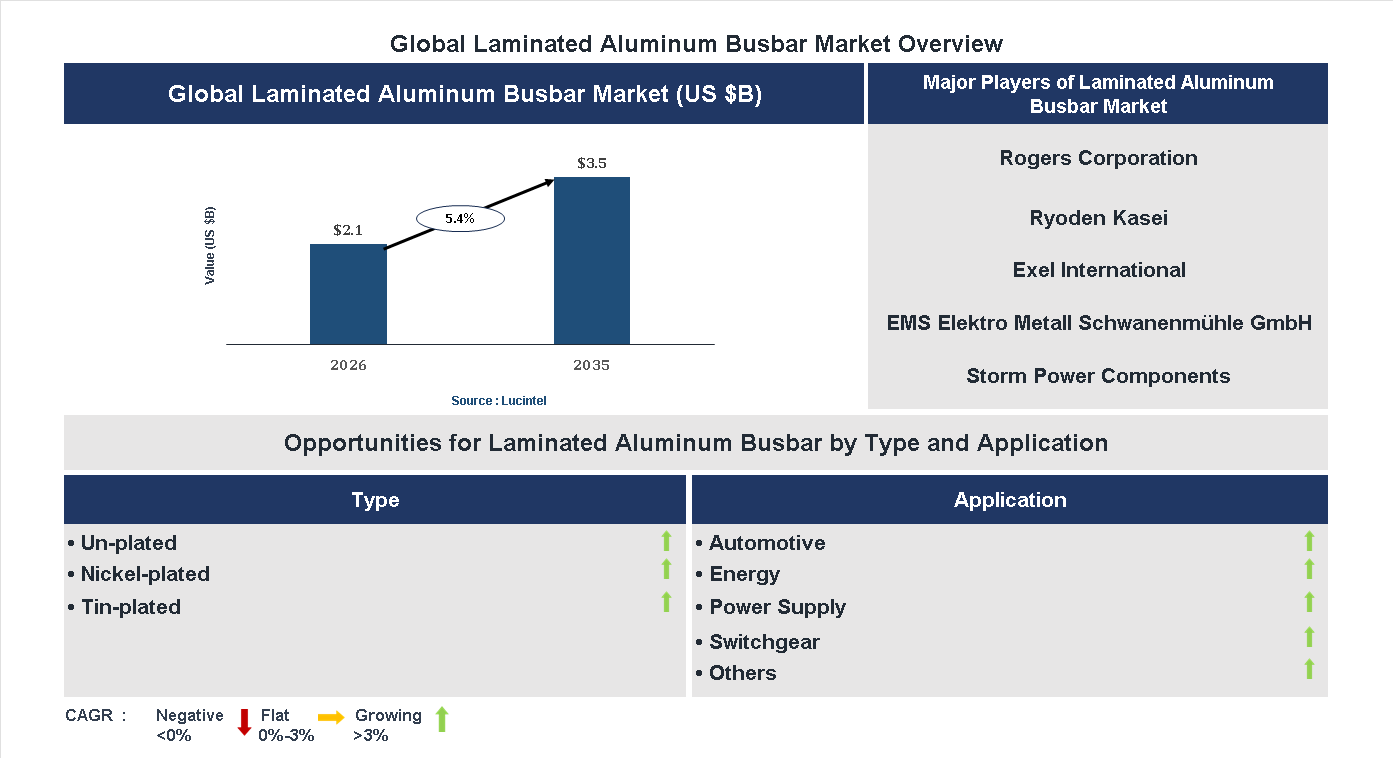
Key data points: The market size in 2035 = $3.5 billion, growth forecast = 5.4% annually for the next 8 years. Scroll below to get more insights. This market report covers trends, opportunities and forecasts in laminated aluminum busbar market to 2035 by type (un-plated, nickel-plated, and tin-plated), application (automotive, energy, power supply, switchgear, and others), and region (North America, Europe, Asia Pacific, and the Rest of the World)
We'll send your sample report shortly.
• Lucintel forecasts that, within the type category, nickel-plated is expected to witness the highest growth over the forecast period.
• Within the application category, automotive is expected to witness the highest growth.
• In terms of region, APAC is expected to witness the highest growth over the forecast period. Gain valuable insights for your business decisions with our comprehensive 150+ page report. Sample figures with some insights are shown below.
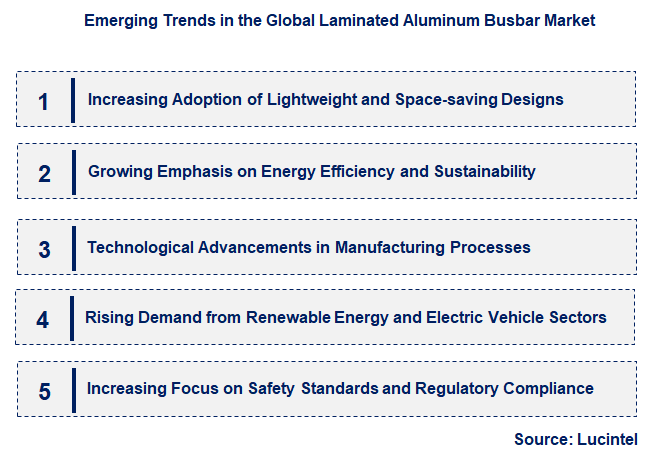
• Increasing Adoption of Lightweight and Space-saving Designs: The demand for compact and lightweight busbars is rising due to the need for efficient space utilization in electrical systems. Laminated aluminum busbars offer high strength-to-weight ratios, making them ideal for applications in automotive, aerospace, and renewable energy sectors. This trend is driven by the need to reduce overall system weight, improve energy efficiency, and meet stringent safety standards. Manufacturers are focusing on innovative designs and advanced manufacturing techniques to produce more efficient, space-saving laminated aluminum busbars, which are increasingly replacing traditional copper-based solutions.
• Growing Emphasis on Energy Efficiency and Sustainability: As global focus shifts towards reducing carbon footprints and promoting renewable energy, the laminated aluminum busbar market is benefiting from the demand for energy-efficient electrical distribution systems. Aluminum's excellent electrical conductivity, combined with its lightweight nature, makes it a preferred choice for sustainable infrastructure projects. Additionally, laminated structures help minimize energy losses and improve thermal management. This trend is encouraging manufacturers to develop eco-friendly, recyclable, and cost-effective busbar solutions that align with environmental regulations and sustainability goals, thereby expanding market opportunities.
• Technological Advancements in Manufacturing Processes: Innovations such as automated lamination, precision cutting, and advanced insulation techniques are transforming the production of laminated aluminum busbars. These technological improvements enhance product quality, consistency, and performance while reducing manufacturing costs. The integration of Industry 4.0 concepts, including IoT and automation, allows for real-time monitoring and optimization of production processes. As a result, manufacturers can meet the increasing demand for customized, high-performance busbars with shorter lead times, boosting overall market competitiveness and enabling the development of complex electrical systems.
• Rising Demand from Renewable Energy and Electric Vehicle Sectors: The expansion of renewable energy projects, such as solar and wind farms, along with the rapid growth of electric vehicles (EVs), is significantly driving the laminated aluminum busbar market. These sectors require reliable, high-capacity electrical distribution solutions capable of handling high currents and voltages efficiently. Laminated aluminum busbars offer advantages like reduced weight, improved thermal management, and enhanced safety, making them suitable for these applications. This trend is expected to continue as the adoption of clean energy and EVs accelerates, creating substantial opportunities for market growth.
• Increasing Focus on Safety Standards and Regulatory Compliance: Stringent safety regulations and standards for electrical systems are prompting manufacturers to innovate and improve laminated aluminum busbar designs. Features such as enhanced insulation, fire resistance, and corrosion protection are becoming standard to meet international safety requirements. Compliance with these standards not only ensures safety but also boosts consumer confidence and market acceptance. Manufacturers are investing in R&D to develop compliant products that offer superior performance, durability, and safety, thereby strengthening their market position and expanding their customer base. In summary, these emerging trends are collectively reshaping the laminated aluminum busbar market by promoting innovation, sustainability, and safety. They are enabling manufacturers to develop more efficient, lightweight, and environmentally friendly solutions, which are crucial for the evolving needs of industries like renewable energy, automotive, and infrastructure. As these trends continue to evolve, they will drive market growth, foster technological advancements, and open new avenues for competitive differentiation.
• Growing Demand for Lightweight and Efficient Electrical Components: The market is expanding as industries seek lightweight, high-conductivity solutions to improve energy efficiency and reduce installation costs. Laminated aluminum busbars offer superior performance compared to traditional copper options, making them ideal for modern electrical systems. This trend is driven by infrastructure upgrades, renewable energy projects, and the automotive sector’s shift towards electrification. The demand for durable, corrosion-resistant, and easy-to-install busbars is further accelerating growth, providing manufacturers with new opportunities to innovate and capture market share.
• Technological Advancements in Manufacturing Processes: Innovations such as automated lamination techniques and improved insulation materials are enhancing the quality and performance of laminated aluminum busbars. These advancements reduce production costs, increase precision, and enable customization for specific applications. As a result, manufacturers can meet diverse industry requirements more effectively, boosting market competitiveness. The integration of Industry 4.0 technologies is also streamlining supply chains and reducing lead times, which positively impacts overall market growth and encourages adoption across various sectors.
• Rising Adoption in Renewable Energy and Infrastructure Projects: The increasing deployment of renewable energy systems, such as solar and wind farms, requires reliable and efficient electrical distribution components. Laminated aluminum busbars are favored for their lightweight nature and high conductivity, making them suitable for large-scale infrastructure projects. Governments’ focus on sustainable development and investments in smart grid technologies further propel market growth. This trend is expected to continue as renewable energy capacity expands globally, creating sustained demand for advanced busbar solutions in diverse applications.
• Stringent Safety and Environmental Regulations: New safety standards and environmental regulations are prompting industries to adopt safer, eco-friendly electrical components. Laminated aluminum busbars, being lightweight, corrosion-resistant, and recyclable, align with these regulatory requirements. Manufacturers are innovating to meet stricter compliance standards, which enhances product reliability and safety. This regulatory landscape encourages market players to develop compliant, high-performance busbars, fostering innovation and expanding market opportunities in sectors such as transportation, construction, and energy.
• Increasing Focus on Customization and Modular Solutions: The demand for tailored electrical distribution systems is rising across industries, requiring customizable laminated aluminum busbars. Modular designs facilitate easier installation, maintenance, and scalability, which are critical for complex infrastructure projects. Manufacturers are offering versatile solutions that can be adapted to specific voltage, current, and space requirements. This focus on customization enhances system efficiency and reduces downtime, driving market growth. The trend supports the development of innovative, flexible busbar configurations that meet evolving industry needs. The overall impact of these developments is a robust expansion of the laminated aluminum busbar market, driven by technological innovation, regulatory compliance, and increasing demand for efficient, sustainable electrical solutions. These opportunities are fostering a competitive environment that encourages product innovation and diversification, ultimately leading to a more resilient and dynamic market landscape.
• Growing Demand for Lightweight and Durable Electrical Components: The laminated aluminum busbar market is expanding as industries seek lightweight, corrosion-resistant, and high-conductivity electrical solutions. These busbars offer improved mechanical strength and thermal performance, making them ideal for applications in transportation, power distribution, and industrial automation. The ability to customize designs and sizes further enhances their appeal, driving adoption across sectors aiming to optimize space and reduce overall system weight.
• Increasing Adoption in Renewable Energy Infrastructure: The shift toward renewable energy sources like solar and wind power necessitates reliable, efficient electrical distribution systems. Laminated aluminum busbars provide excellent electrical conductivity and thermal management, making them suitable for high-capacity power plants and grid integration. Their modular design facilitates easy installation and maintenance, supporting the growth of renewable projects worldwide and creating substantial opportunities for market players.
• Technological Innovations Enhancing Performance and Safety: Advances in manufacturing processes, such as improved lamination techniques and surface treatments, are boosting the performance and safety of laminated aluminum busbars. These innovations reduce electrical losses, enhance thermal stability, and improve fire resistance. As safety standards become more stringent, manufacturers investing in R&D to develop high-performance, compliant products are gaining competitive advantages, thereby expanding market reach and application scope.
• Expansion of Urban Infrastructure and Smart Cities: Rapid urbanization and the development of smart city projects are increasing demand for efficient electrical distribution networks. Laminated aluminum busbars are favored for their space-saving design, ease of installation, and reliability in complex electrical systems. They support the integration of IoT-enabled infrastructure, smart grids, and energy-efficient buildings, opening new avenues for growth in municipal, commercial, and residential sectors.
• Strategic Collaborations and Market Penetration in Emerging Economies: Companies are forming strategic alliances, joint ventures, and partnerships to penetrate emerging markets with high growth potential. These collaborations facilitate technology transfer, local manufacturing, and customized solutions tailored to regional needs. As developing economies invest heavily in infrastructure and industrialization, the laminated aluminum busbar market is poised for substantial expansion through targeted marketing and distribution strategies. The overall market outlook indicates that these growth opportunities will significantly influence the laminated aluminum busbar industry, fostering innovation, expanding applications, and driving global market expansion.
• Technological Innovation: The continuous development of advanced manufacturing techniques, such as lamination and extrusion, enhances the performance, durability, and safety of aluminum busbars. These innovations enable the production of more compact, lightweight, and efficient busbars suitable for high-current applications. As industries like power transmission, automotive, and renewable energy seek reliable electrical distribution solutions, technological progress becomes a key driver. Moreover, integration with smart grid technologies and automation systems further boosts demand, as these require sophisticated busbar configurations to optimize energy flow and system reliability.
• Growing Infrastructure and Urbanization: Rapid urbanization and infrastructure development across emerging and developed economies significantly increase the demand for efficient electrical distribution systems. Governments and private sectors are investing heavily in power transmission and distribution networks to support expanding urban centers, industrial zones, and renewable energy projects. Laminated aluminum busbars, known for their high conductivity and lightweight properties, are increasingly preferred in these applications. This trend not only enhances grid reliability but also reduces installation and maintenance costs, thereby propelling market growth in regions experiencing rapid development.
• Environmental Regulations and Sustainability Initiatives: Stricter environmental standards and a global push toward sustainability influence the laminated aluminum busbar market. Aluminum is favored over copper due to its lower weight and cost, and its recyclability aligns with eco-friendly practices. Regulations aimed at reducing carbon footprints and promoting energy efficiency encourage industries to adopt lightweight, energy-efficient electrical components. The recyclability of aluminum further supports circular economy initiatives, making laminated aluminum busbars an attractive choice for environmentally conscious projects. These factors collectively drive market expansion by aligning product offerings with regulatory and sustainability goals.
• Increasing Adoption of Renewable Energy: The global shift toward renewable energy sources such as solar, wind, and hydroelectric power necessitates advanced electrical infrastructure capable of handling variable loads and high capacities. Laminated aluminum busbars are ideal for these applications due to their excellent electrical conductivity, thermal management, and lightweight nature. Their ability to facilitate efficient power transmission in large-scale renewable projects accelerates market growth. As governments and private entities invest heavily in renewable infrastructure to meet climate targets, the demand for laminated aluminum busbars is expected to rise substantially, supporting a sustainable energy future.
• Cost-Effectiveness and Material Advantages: Aluminum's lower cost compared to copper, combined with its high strength-to-weight ratio, makes laminated aluminum busbars a cost-effective solution for electrical distribution. The lamination process enhances mechanical stability and electrical performance, reducing the need for maintenance and replacements. This economic advantage appeals to industries seeking reliable yet affordable electrical components, especially in large-scale projects. Additionally, the ease of installation and reduced transportation costs due to lighter weight further contribute to their popularity, driving market growth across various sectors. The challenges facing the laminated aluminum busbar market include:-
• Fluctuating Raw Material Prices: The laminated aluminum busbar market is highly sensitive to fluctuations in aluminum prices, which are influenced by global supply and demand, geopolitical tensions, and energy costs. Price volatility can impact manufacturing costs, profit margins, and project budgeting, creating uncertainty for manufacturers and consumers alike. Sudden increases in raw material costs may lead to higher product prices, potentially reducing competitiveness and slowing market adoption. Managing supply chain risks and securing stable sourcing are critical challenges that companies must address to ensure consistent market growth.
• Stringent Regulatory Compliance: The market faces challenges related to evolving safety, environmental, and quality standards across different regions. Compliance with these regulations often requires significant investments in testing, certification, and process modifications, which can increase operational costs and time-to-market. Non-compliance risks include legal penalties, product recalls, and damage to brand reputation. Navigating diverse regulatory landscapes demands continuous monitoring and adaptation, posing a barrier for new entrants and complicating international expansion for existing players.
• Technological Compatibility and Integration: As electrical systems become more sophisticated, laminated aluminum busbars must be compatible with emerging technologies such as smart grids, automation, and high-voltage systems. Ensuring seamless integration requires ongoing research and development, which can be resource-intensive. Compatibility issues may lead to design constraints, increased costs, and delays in deployment. Additionally, the need for specialized installation and maintenance expertise can hinder widespread adoption, especially in regions with limited technical infrastructure. In summary, the laminated aluminum busbar market is driven by technological advancements, infrastructure growth, environmental considerations, renewable energy adoption, and economic benefits. However, it faces challenges such as raw material price volatility, regulatory complexities, and technological integration issues. These factors collectively influence market stability and growth prospects. While opportunities abound in emerging sectors and sustainable initiatives, addressing the challenges effectively will be crucial for sustained expansion. Overall, the market's future hinges on innovation, strategic sourcing, and regulatory compliance, shaping a resilient and adaptable industry landscape.
• Rogers Corporation
• Ryoden Kasei
• Exel International
• EMS Elektro Metall Schwanenmühle GmbH
• Storm Power Components
• RHI Electronic
• Foshan Zoete Electric
• Un-plated
• Nickel-plated
• Tin-plated
• Automotive
• Energy
• Power Supply
• Switchgear
• Others
• North America
• Europe
• Asia Pacific
• The Rest of the World
• United States: The U.S. market has seen increased adoption of laminated aluminum busbars in renewable energy projects and data centers. Technological innovations have improved efficiency and safety standards. Infrastructure upgrades and government incentives for clean energy have further propelled market growth. Companies are investing in advanced manufacturing techniques to meet rising demand for reliable electrical systems. The focus on sustainable and energy-efficient solutions remains a key driver in the U.S. market expansion.
• China: China continues to lead in laminated aluminum busbar production and consumption, driven by rapid urbanization and industrialization. The government’s emphasis on smart grid development and renewable energy integration has boosted demand. Local manufacturers are expanding capacity and adopting new technologies to improve product quality and reduce costs. The market benefits from extensive infrastructure projects and a focus on energy efficiency, making China a dominant player in the global laminated aluminum busbar market.
• Germany: Germany’s market is characterized by a strong emphasis on renewable energy integration and energy efficiency. The country’s push for smart grid technology and sustainable infrastructure has increased demand for laminated aluminum busbars. Innovations in manufacturing and strict quality standards have enhanced product reliability. The adoption of green energy policies and investments in grid modernization are key factors supporting market growth. German companies are also focusing on developing eco-friendly and high-performance busbars to meet stringent environmental regulations.
• India: The Indian market is witnessing rapid growth due to expanding industrialization and infrastructure development. The government’s initiatives toward renewable energy and smart city projects are fueling demand for laminated aluminum busbars. Local manufacturers are increasing production capacity and adopting advanced technologies to cater to the growing market. The focus on reducing energy losses and improving electrical safety is driving innovation. Market growth is also supported by rising investments in power transmission and distribution networks across the country.
• Japan: Japan’s laminated aluminum busbar market is driven by the need for reliable and efficient electrical systems in manufacturing and infrastructure sectors. The country’s focus on energy conservation and disaster resilience has led to increased adoption of advanced busbar solutions. Innovations in material quality and manufacturing processes have improved product durability and safety. Japan’s emphasis on renewable energy integration and smart grid development continues to support market expansion. The country is also investing in research and development to enhance the performance of laminated aluminum busbars in various applications.


• Rogers Corporation
• Ryoden Kasei
• Exel International
• EMS Elektro Metall Schwanenmühle GmbH
• Storm Power Components
• RHI Electronic
• Foshan Zoete Electric Q6. Which laminated aluminum busbar market segment will be the largest in future? Answer: Lucintel forecasts that, within the type category, nickel-plated is expected to witness the highest growth over the forecast period. Q7. In laminated aluminum busbar market, which region is expected to be the largest in next 5 years? Answer: In terms of region, APAC is expected to witness the highest growth over the forecast period. Q8. Do we receive customization in this report? Answer: Yes, Lucintel provides 10% customization without any additional cost.


Choose a license that fits your team. Instant PDF delivery.
Prices exclude taxes. Instant delivery. Custom licensing available on request.
Market Report · July 31, 2026
Market Report · July 31, 2026
Market Report · July 31, 2026
Trusted partner for strategic intelligence and business growth


Receive a complimentary market analysis tailored to your industry. Our analysts will identify key growth opportunities and competitive dynamics specific to your business.

Market size, growth rate, and key trend analysis for your specific sector.

Top competitor positioning and market share analysis.

Strategic recommendations backed by data-driven insights.
Get curated market intelligence and competitive moves straight to your inbox.
By subscribing, you agree to receive our monthly insights. Unsubscribe anytime.
Receive a complimentary market analysis tailored to your industry. Our analysts will identify key growth opportunities and competitive dynamics specific to your business.
Market size, growth rate, and key trend analysis for your specific sector.
Top competitor positioning and market share analysis.
Strategic recommendations backed by data-driven insights.
Get curated market intelligence, emerging trends, and competitive moves straight to your inbox each month.
By subscribing, you agree to receive our monthly insights. Unsubscribe anytime.
We'll send your sample report shortly.