
Market Report · July 22, 2026

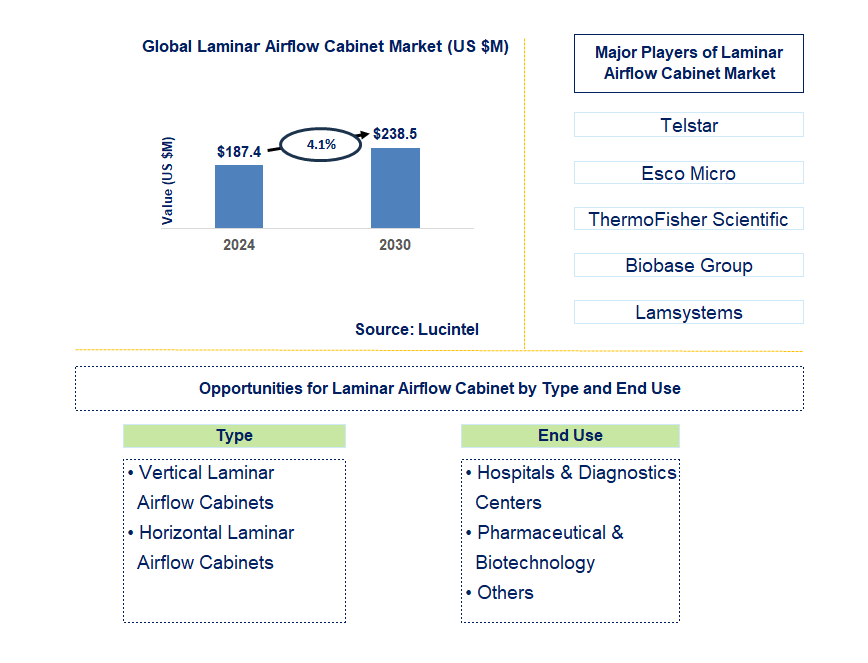
Key data points: The market size in 2030 = $238.5 million, growth forecast = 4.1% annually next 6 years. Scroll below to get more insights. This market report covers trends, opportunities, and forecast in the global laminar airflow cabinet market to 2030 by type (vertical laminar airflow cabinets and horizontal laminar airflow cabinets), end use (hospitals & diagnostics centers, pharmaceutical & biotechnology, and others), and region (North America, Europe, Asia Pacific, and the Rest of the World)
We'll send your sample report shortly.
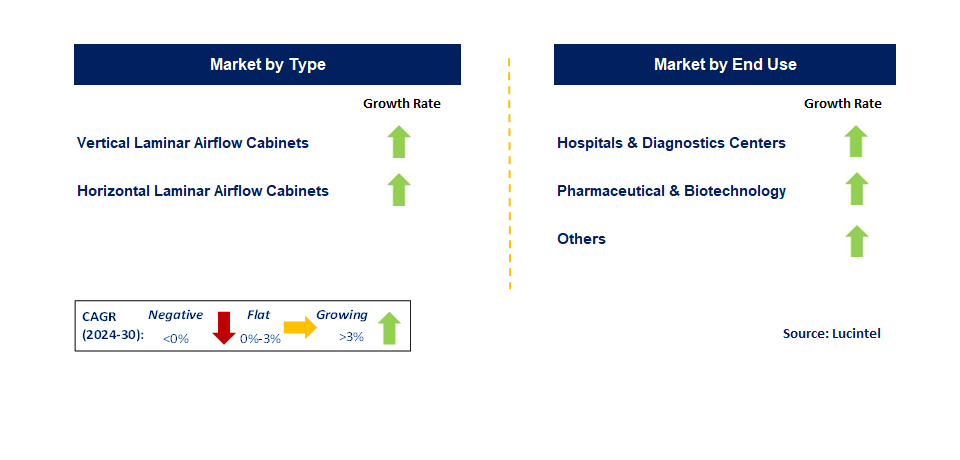
• Lucintel forecasts that vertical will remain the larger segment over the forecast period due to it's compatibility, design, and resemblance to the room exhaust system.
• Within this market, hospital & diagnostic center is expected to witness the higher growth.
• North America will remain the largest region over the forecast period due to presence of reputable research institutions and big pharmaceutical companies in the region. A more than 150-page report is developed to help in your business decisions.
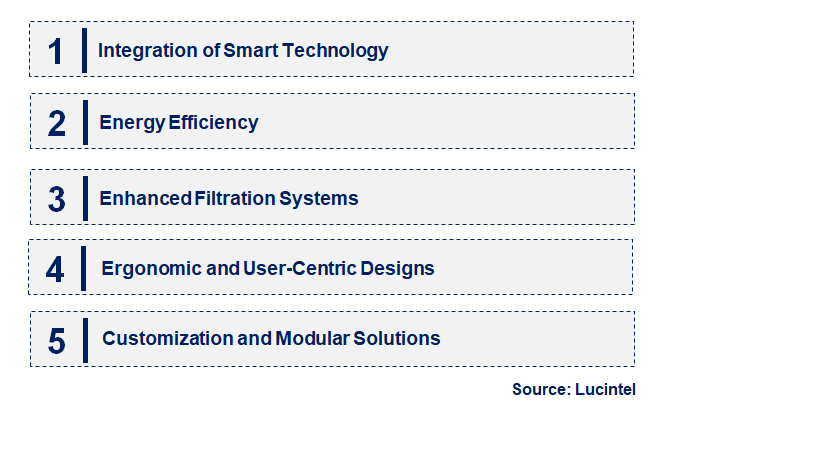
• Integration of Smart Technology: The integration of smart technology into laminar airflow cabinets is a significant trend. This includes features such as real-time monitoring, automated controls, and data logging. These innovations provide improved control over airflow, enhance operational efficiency, and ensure better compliance with safety standards. Smart technology also allows for remote diagnostics and troubleshooting, reducing downtime and maintenance costs.
• Energy Efficiency: Energy efficiency is becoming a major focus in the laminar airflow cabinet market. New models are designed to reduce energy consumption through advancements such as LED lighting and energy-efficient motors. This trend not only helps in reducing operational costs but also aligns with global sustainability goals. Energy-efficient cabinets contribute to lower carbon footprints and meet stringent environmental regulations.
• Enhanced Filtration Systems: There is a growing emphasis on enhanced filtration systems in laminar airflow cabinets. Advanced HEPA filters and ULPA filters with higher efficiency are being incorporated to ensure better air quality and contamination control. This trend is driven by the need for higher cleanliness standards in laboratories and is crucial for maintaining the integrity of sensitive experiments and processes.
• Ergonomic and User-Centric Designs: Ergonomic and user-centric designs are increasingly prevalent in the laminar airflow cabinet market. Modern cabinets are being designed with user comfort and accessibility in mind, featuring adjustable work surfaces, improved lighting, and intuitive controls. This trend aims to enhance the overall user experience, reduce physical strain, and improve productivity in laboratory settings.
• Customization and Modular Solutions: Customization and modular solutions are gaining traction as laboratories seek to tailor cabinets to specific needs. Manufacturers are offering customizable options for size, configuration, and features, allowing users to adapt cabinets to various research requirements. Modular designs also enable easy upgrades and maintenance, providing flexibility and scalability for growing or evolving laboratory environments. These emerging trends are reshaping the laminar airflow cabinet market by introducing advanced technologies, improving efficiency, and enhancing user experience. The focus on smart technology, energy efficiency, and customization reflects a broader shift towards more sustainable, adaptable, and user-friendly laboratory environments.
• Advanced Filtration Technologies: Recent advancements in filtration technologies have led to the development of laminar airflow cabinets with superior HEPA and ULPA filters. These filters offer higher filtration efficiency and longer service life, improving air quality and contamination control. Enhanced filtration is crucial for maintaining the integrity of sensitive research and ensuring compliance with stringent laboratory standards.
• Energy-Efficient Designs: New energy-efficient designs are becoming standard in laminar airflow cabinets. Innovations such as LED lighting, energy-efficient motors, and optimized airflow systems contribute to reduced energy consumption. These developments help laboratories lower operational costs and align with environmental sustainability goals, reflecting a growing emphasis on green technologies.
• Integration of Smart Technology: The integration of smart technology into laminar airflow cabinets is a key development. Features such as real-time monitoring, automated controls, and connectivity options allow for better management of airflow, enhanced data accuracy, and remote troubleshooting. These technologies improve overall cabinet performance and operational efficiency, meeting modern laboratory needs.
• Enhanced User Experience: Enhancements in user experience are driving the development of more ergonomic and user-friendly laminar airflow cabinets. Recent innovations include adjustable work surfaces, improved lighting, and intuitive control panels. These features aim to increase user comfort, reduce physical strain, and enhance productivity, making laboratory work more efficient and enjoyable.
• Modular and Customizable Solutions: Modular and customizable laminar airflow cabinets are gaining popularity. Manufacturers are offering options for adjustable sizes, configurations, and features, allowing users to tailor cabinets to specific research needs. This flexibility supports evolving laboratory environments and facilitates easy upgrades and maintenance, catering to diverse and dynamic laboratory requirements. These recent developments are significantly impacting the laminar airflow cabinet market by improving performance, efficiency, and user experience. The focus on advanced technologies, energy efficiency, and customization is driving the market towards more innovative and adaptable solutions for modern laboratories.
• Biotechnology and Pharmaceuticals: The biotechnology and pharmaceutical sectors are experiencing rapid growth, fueling demand for advanced laminar airflow cabinets. Laboratories in these fields require high-precision equipment to ensure contamination-free environments for drug development and testing. Opportunities include developing specialized cabinets with enhanced filtration and automation features to support high-throughput research and compliance with stringent regulatory standards. This growth is driven by increasing R&D activities and the need for high-quality control in drug manufacturing.
• Healthcare and Clinical Diagnostics: The healthcare sector, particularly clinical diagnostics, presents substantial growth opportunities for laminar airflow cabinets. As hospitals and diagnostic labs emphasize infection control and accurate test results, there is a demand for cabinets that provide a sterile working environment. Innovations such as cabinets with integrated disinfection systems and real-time monitoring can address these needs. This opportunity is fueled by rising health concerns and the increasing volume of diagnostic tests.
• Academic and Research Institutions: Academic and research institutions are expanding their laboratory facilities, creating a significant market for laminar airflow cabinets. These institutions require versatile and cost-effective cabinets for diverse research applications. Opportunities lie in offering customizable and modular solutions that can adapt to various research needs. The growth is driven by increasing funding for research and the expansion of scientific research activities across multiple disciplines.
• Environmental Testing: Environmental testing laboratories need laminar airflow cabinets to ensure accurate and uncontaminated results when analyzing air, water, and soil samples. Cabinets designed for specific environmental testing requirements, such as those with enhanced particle control and specialized materials, present growth opportunities. This sector's growth is driven by increased regulatory requirements and a heightened focus on environmental protection and quality assurance.
• Industrial Manufacturing: In industrial manufacturing, especially in industries involving sensitive materials or processes, there is a need for laminar airflow cabinets to prevent contamination. Opportunities include designing cabinets with robust construction and high filtration efficiency to support cleanroom environments. The growth in this sector is driven by increased quality control measures and the need for consistent product quality in manufacturing processes. These strategic growth opportunities are shaping the laminar airflow cabinet market by addressing specific needs across various applications. The demand for advanced, customizable, and efficient cabinets is expanding as industries seek to enhance their operational standards and meet regulatory requirements. This trend is driving innovation and market expansion.
• Telstar
• Esco Micro
• ThermoFisher Scientific
• Biobase Group
• Lamsystems
• Airclean Systems
• Allentown
• Kimberly-Clark Corporation
• Labconco Corporation
• NuAire
• Vertical Laminar Airflow Cabinets
• Horizontal Laminar Airflow Cabinets
• Hospitals & Diagnostics Centers
• Pharmaceutical & Biotechnology
• Others
• North America
• Europe
• Asia Pacific
• The Rest of the World
• United States: In the U.S., the laminar airflow cabinet market has seen increased adoption of energy-efficient models, driven by regulatory pressures and sustainability goals. Advances in filtration technology, such as HEPA filters with higher efficiency, are becoming standard. Additionally, there is a growing trend towards integrating smart technology, which includes real-time monitoring and automation to enhance user control and data accuracy.
• China: China has emerged as a key player in the laminar airflow cabinet market due to its rapid industrialization and growth in biotechnology sectors. Recent developments include the expansion of manufacturing capabilities and innovations in cost-effective, high-performance cabinets. The government’s focus on upgrading laboratory infrastructure and increasing R&D funding has also spurred advancements in cabinet technology, particularly in the use of advanced materials for better durability and performance.
• Germany: Germany laminar airflow cabinet market is characterized by a focus on high precision and compliance with stringent EU standards. Recent developments include the integration of advanced features such as energy-efficient LED lighting and automated airflow control systems. There is also a strong emphasis on ergonomic designs and user safety, reflecting the country's commitment to maintaining high laboratory standards and enhancing user experience.
• India: India market for laminar airflow cabinets is expanding rapidly due to increased investment in healthcare and research facilities. Recent trends include the adoption of cost-effective and compact models suitable for a range of laboratory sizes. There is also growing interest in customizable solutions to meet specific needs of various research sectors. Additionally, the rise in local manufacturing capabilities is helping to lower costs and improve accessibility.
• Japan: Japan laminar airflow cabinet market is marked by a focus on high-tech features and integration with other laboratory equipment. Recent developments include the incorporation of advanced control systems and the use of high-quality materials for durability. The market also sees a growing demand for cabinets that offer enhanced contamination control and precision, reflecting Japan's commitment to technological innovation and excellence in laboratory standards.


• Telstar
• Esco Micro
• ThermoFisher Scientific
• Biobase Group
• Lamsystems
• Airclean Systems
• Allentown
• Kimberly-Clark Corporation
• Labconco Corporation
• NuAire Q6. Which laminar airflow cabinet market segment will be the largest in future? Answer: Lucintel forecasts that vertical will remain the larger segment over the forecast period due to it's compatibility, design, and resemblance to the room exhaust system. Q7. In laminar airflow cabinet market, which region is expected to be the largest in next 5 years? Answer: North America will remain the largest region over the forecast period due to presence of reputable research institutions and big pharmaceutical companies in the region. Q.8 Do we receive customization in this report? Answer: Yes, Lucintel provides 10% customization without any additional cost.


Choose a license that fits your team. Instant PDF delivery.
Prices exclude taxes. Instant delivery. Custom licensing available on request.
Market Report · July 22, 2026
Market Report · July 22, 2026
Market Report · July 22, 2026
Trusted partner for strategic intelligence and business growth


Receive a complimentary market analysis tailored to your industry. Our analysts will identify key growth opportunities and competitive dynamics specific to your business.

Market size, growth rate, and key trend analysis for your specific sector.

Top competitor positioning and market share analysis.

Strategic recommendations backed by data-driven insights.
Get curated market intelligence and competitive moves straight to your inbox.
By subscribing, you agree to receive our monthly insights. Unsubscribe anytime.
Receive a complimentary market analysis tailored to your industry. Our analysts will identify key growth opportunities and competitive dynamics specific to your business.
Market size, growth rate, and key trend analysis for your specific sector.
Top competitor positioning and market share analysis.
Strategic recommendations backed by data-driven insights.
Get curated market intelligence, emerging trends, and competitive moves straight to your inbox each month.
By subscribing, you agree to receive our monthly insights. Unsubscribe anytime.
We'll send your sample report shortly.