
Report Feature
The technologies in electric vehicle battery charging station has undergone significant change in recent years, with wired charging station to wireless charging stations. The rising wave of new technologies, such as DC fast charging station, wireless inductive charging stations are creating significant potential for electric vehicle battery charger station due to easy availability and efficient charging infrastructure.
In electric vehicle battery charging station market, various technologies, such as inductive charging, capacitive charging (static and dynamic), and dynamic conductive charging are used to charge the electric vehicles. Increasing adoption of electric vehicles, growing consumer awareness regarding the environmental benefits, and strategic initiatives by major players for the development of EV charging infrastructure are creating opportunities for various electric vehicle battery charging station technologies.
Some of the latest technological developments by various countries in the electric vehicle battery charging station market are as follows:
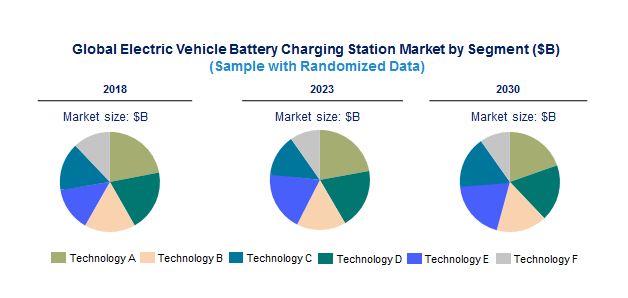
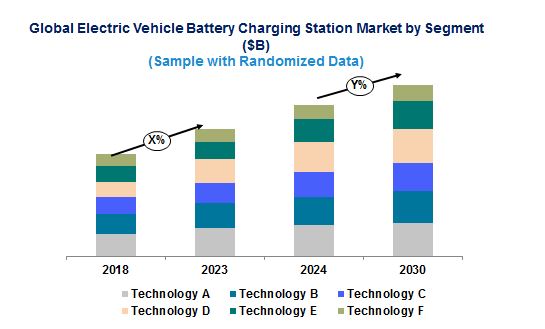
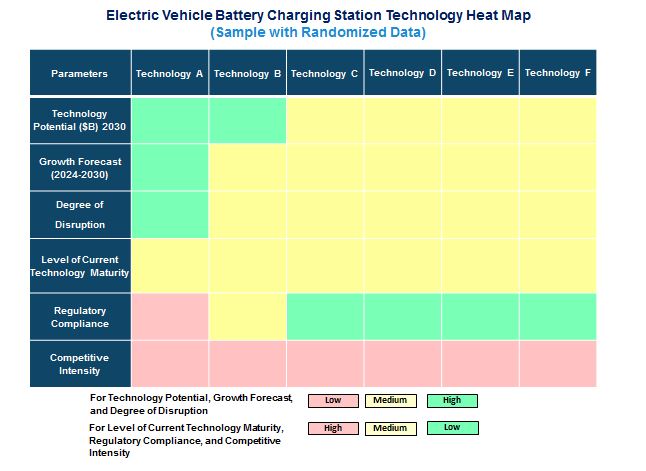
The study includes technology readiness, competitive intensity, regulatory compliance, disruption potential, trends, forecasts and strategic implications for the global electric vehicle battery charging station technology by material technology, application, and region as follows:
Technology Readiness by Technology Type
Competitive Intensity and Regulatory Compliance
Disruption Potential by Technology Type
Trends and Forecasts by Technology Type [$M shipment analysis from 2018 to 2030]:
Trends and Forecasts by Application [$M shipment analysis from 2018 to 2030]:
Trends and Forecasts by Region [$M shipment analysis for 2018 to 2030]:
Latest Developments and Innovations in the Electric Vehicle Battery Charging Station Technologies
Companies / Ecosystems
Strategic Opportunities by Technology Type
Some of the electric vehicle battery charging station companies profiled in this report include EVgo, ABB, Charge Point, Siemens, Tesla Motors, and SemaConnect.
Below are the latest technological developments from top companies in the electric vehicle battery charging station market:
Q.1 What are some of the most promising and high-growth technology opportunities for the electric vehicle battery charging station market?
Q.2 Which technology will grow at a faster pace and why?
Q.3 What are the key factors affecting dynamics of different technologies? What are the drivers and challenges of these technologies in electric vehicle battery charging station market?
Q.4 What are the levels of technology readiness, competitive intensity and regulatory compliance in this technology space?
Q.5 What are the business risks and threats to these technologies in electric vehicle battery charging station market?
Q.6 What are the latest developments in electric vehicle battery charging station technologies? Which companies are leading these developments?
Q.7 Which technologies have potential of disruption in this market?
Q.8 Who are the major players in this electric vehicle battery charging station market? What strategic initiatives are being implemented by key players for business growth?
Q.9 What are strategic growth opportunities in this electric vehicle battery charging station technology space?
In electric vehicle battery charging station market, various technologies, such as inductive charging, capacitive charging (static and dynamic), and dynamic conductive charging are used to charge the electric vehicles. Increasing adoption of electric vehicles, growing consumer awareness regarding the environmental benefits, and strategic initiatives by major players for the development of EV charging infrastructure are creating opportunities for various electric vehicle battery charging station technologies.
Some of the latest technological developments by various countries in the electric vehicle battery charging station market are as follows:
- China: Shanghai has set an ambitious target to install 10,000 wireless charging stations for EVs. This initiative highlights the growing focus on inductive charging technology to address range anxiety and enhance convenience for EV drivers.
- Germany: Siemens, a German engineering giant, launched a pilot project to test a 200 kW dynamic charging system for trucks on a public highway. This development signifies advancements in capacitive charging technology, specifically dynamic charging, which has the potential to revolutionize long-haul electric trucking.
- United States: Recognizing the potential of wireless charging, the US Department of Energy announced a $5 million funding program to support research on wireless charging technologies for EVs. This government funding indicates a proactive approach to fostering innovation in the EV charging infrastructure landscape.
- Japan: Kawasaki Heavy Industries, a Japanese multinational corporation, collaborated with partners to develop a dynamic charging system specifically for electric buses. This project showcases progress in dynamic conductive charging technology, offering a potential solution for electrifying public transportation systems.
The study includes technology readiness, competitive intensity, regulatory compliance, disruption potential, trends, forecasts and strategic implications for the global electric vehicle battery charging station technology by material technology, application, and region as follows:
Technology Readiness by Technology Type
Competitive Intensity and Regulatory Compliance
Disruption Potential by Technology Type
Trends and Forecasts by Technology Type [$M shipment analysis from 2018 to 2030]:
- Inductive Charging
- Capacitive Charging (Static and Dynamic)
- Dynamic Conductive Charging
Trends and Forecasts by Application [$M shipment analysis from 2018 to 2030]:
-
Battery Electric Vehicle
- Inductive Charging
- Capacitive Charging (Static and Dynamic)
- Dynamic Conductive Charging
-
Hybrid Electric Vehicle
- Inductive Charging
- Capacitive Charging (Static and Dynamic)
- Dynamic Conductive Charging
-
Plug-in Hybrid Electric Vehicle
- Inductive Charging
- Capacitive Charging (Static and Dynamic)
- Dynamic Conductive Charging
Trends and Forecasts by Region [$M shipment analysis for 2018 to 2030]:
-
North America
- United States
- Canada
- Mexico
-
Europe
- United Kingdom
- Germany
- France
-
Asia Pacific
- Japan
- China
- South Korea
- India
- The Rest of the World
Latest Developments and Innovations in the Electric Vehicle Battery Charging Station Technologies
Companies / Ecosystems
Strategic Opportunities by Technology Type
Some of the electric vehicle battery charging station companies profiled in this report include EVgo, ABB, Charge Point, Siemens, Tesla Motors, and SemaConnect.
Below are the latest technological developments from top companies in the electric vehicle battery charging station market:
- Qualcomm invests $100 million in WiTricity, a leading developer of inductive charging technology for electric vehicles. This investment aims to accelerate the development and commercialization of wireless charging solutions for EVs.
- Siemens launches a new 150 kW inductive charging station prototype for electric taxis. This highlights the growing interest in inductive charging for commercial fleet applications.
- The Starlight Consortium, a group of European automotive and technology companies, announces a €50 million project to develop a standardized inductive charging system for electric vehicles.
- HEVO announces a strategic partnership with Q by Enel, a leading electric utility company, to deploy capacitive charging stations at supermarkets and parking garages across Europe. This partnership signifies collaboration between charging infrastructure providers and utilities.
- Evogy, a German charging network operator, unveils its plans to install 1,000 static capacitive charging stations in urban centers. This indicates a focus on convenient charging solutions for inner-city applications.
- Momentum Dynamics, a developer of dynamic capacitive charging systems for electric buses, secures $20 million in Series B funding to expand its product offerings and deployments.
- ABB and Siemens join forces to develop a standardized dynamic conductive charging system for electric trucks on highways. This collaboration showcases industry leaders working together to address long-distance EV charging challenges.
- The California Department of Transportation allocates $30 million for a pilot project to install dynamic conductive charging lanes on a major highway stretch. This government funding signifies growing public support for innovative charging infrastructure.
Q.1 What are some of the most promising and high-growth technology opportunities for the electric vehicle battery charging station market?
Q.2 Which technology will grow at a faster pace and why?
Q.3 What are the key factors affecting dynamics of different technologies? What are the drivers and challenges of these technologies in electric vehicle battery charging station market?
Q.4 What are the levels of technology readiness, competitive intensity and regulatory compliance in this technology space?
Q.5 What are the business risks and threats to these technologies in electric vehicle battery charging station market?
Q.6 What are the latest developments in electric vehicle battery charging station technologies? Which companies are leading these developments?
Q.7 Which technologies have potential of disruption in this market?
Q.8 Who are the major players in this electric vehicle battery charging station market? What strategic initiatives are being implemented by key players for business growth?
Q.9 What are strategic growth opportunities in this electric vehicle battery charging station technology space?
Table of Contents
1. Executive Summary 2. Technology Landscape 2.1. Technology Background and Evolution 2.2. Technology and Application Mapping 2.3. Supply Chain
3. Technology Readiness 3.1. Technology Commercialization and Readiness 3.2. Drivers and Challenges in Electric Vehicle Battery Charging Station Technologies 3.3. Competitive Intensity 3.4. Regulatory Compliance
4. Technology Trends and Forecasts Analysis from 2018-2030 4.1. Electric Vehicle Battery Charging Station Opportunity 4.2. Technology Trends (2018-2023) and Forecasts (2024-2030)
5. Technology Opportunities (2013-2024) by Region 5.1. Electric Vehicle Battery Charging Station Market by Region 5.2. North American Electric Vehicle Battery Charging Station Technology Market
6. Latest Developments and Innovations in the Electric Vehicle Battery Charging Station Technologies 7. Companies / Ecosystem 7.1. Product Portfolio Analysis 7.2. Market Share Analysis 7.3. Geographical Reach
8. Strategic Implications 8.1. Implications 8.2. Growth Opportunity Analysis
9. Company Profiles of Leading Players 9.1. EVgo 9.2. ABB 9.3. Charge Point 9.4. Siemens 9.5. Tesla Motors 9.6. SemaConnect
Methodology
Lucintel has been in the business of market research and management consulting since 2000 and has published over 1000 market intelligence reports in various markets / applications and served over 1,000 clients worldwide. This study is a culmination of four months of full-time effort performed by Lucintel's analyst team. The analysts used the following sources for the creation and completion of this valuable report:
- In-depth interviews of the major players in this market
- Detailed secondary research from competitors’ financial statements and published data
- Extensive searches of published works, market, and database information pertaining to industry news, company press releases, and customer intentions
- A compilation of the experiences, judgments, and insights of Lucintel’s professionals, who have analyzed and tracked this market over the years.
Extensive research and interviews are conducted across the supply chain of this market to estimate market share, market size, trends, drivers, challenges, and forecasts. Below is a brief summary of the primary interviews that were conducted by job function for this report.

Thus, Lucintel compiles vast amounts of data from numerous sources, validates the integrity of that data, and performs a comprehensive analysis. Lucintel then organizes the data, its findings, and insights into a concise report designed to support the strategic decision-making process. The figure below is a graphical representation of Lucintel’s research process.

Buy Now
Choose a license that fits your team. Instant PDF delivery.
Prices exclude taxes. Instant delivery. Custom licensing available on request.


