
Report Feature
Smart Grid Sensors Market Trends and Forecast
The technologies in the smart grid sensors market have undergone significant changes in recent years, with traditional analog-based sensors transitioning to advanced IoT-enabled and AI-powered sensors. Voltage/temperature sensors have evolved from standalone devices to integrated systems capable of real-time data analytics. Outage detection sensors shifted from manual fault identification to automated, predictive algorithms. Transformer Monitoring Sensors progressed from basic thermal monitoring to sophisticated multi-parameter diagnostics.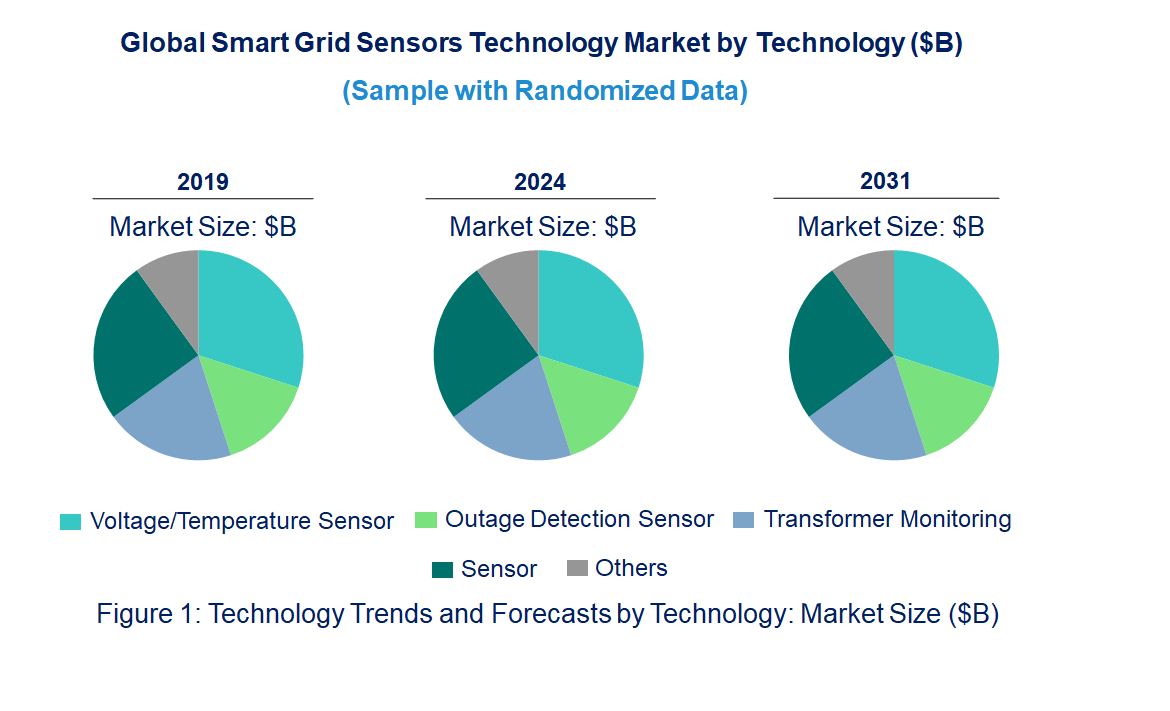
Emerging Trends in the Smart Grid Sensors Market
The smart grid sensors market is witnessing a rapid transformation fueled by advancements in connectivity, data analytics, and automation. Below are five key trends driving these changes:• IoT Integration in Sensors: IoT-enabled sensors allow real-time data collection and communication, enabling smarter energy management. These sensors enhance predictive maintenance and operational efficiency.
• AI and Machine Learning Applications: AI-driven analytics empower sensors to predict grid failures and optimize energy distribution, reducing downtime and operational costs.
• Miniaturization and Energy Harvesting: Compact and energy-efficient sensors powered by energy harvesting technologies offer sustainable solutions for remote grid monitoring.
• 5G Connectivity for Faster Communication: The adoption of 5G enhances the speed and reliability of data transmission between smart grid sensors and centralized systems, enabling instantaneous decision-making.
• Advanced Cybersecurity Features: As sensors become connected, robust cybersecurity protocols are being integrated to safeguard against data breaches and ensure grid stability. These technology trends are reshaping the smart grid sensors market by enhancing efficiency, resilience, and sustainability, paving the way for a more intelligent energy infrastructure.
Smart Grid Sensors Market : Industry Potential, Technological Development, and Compliance Considerations
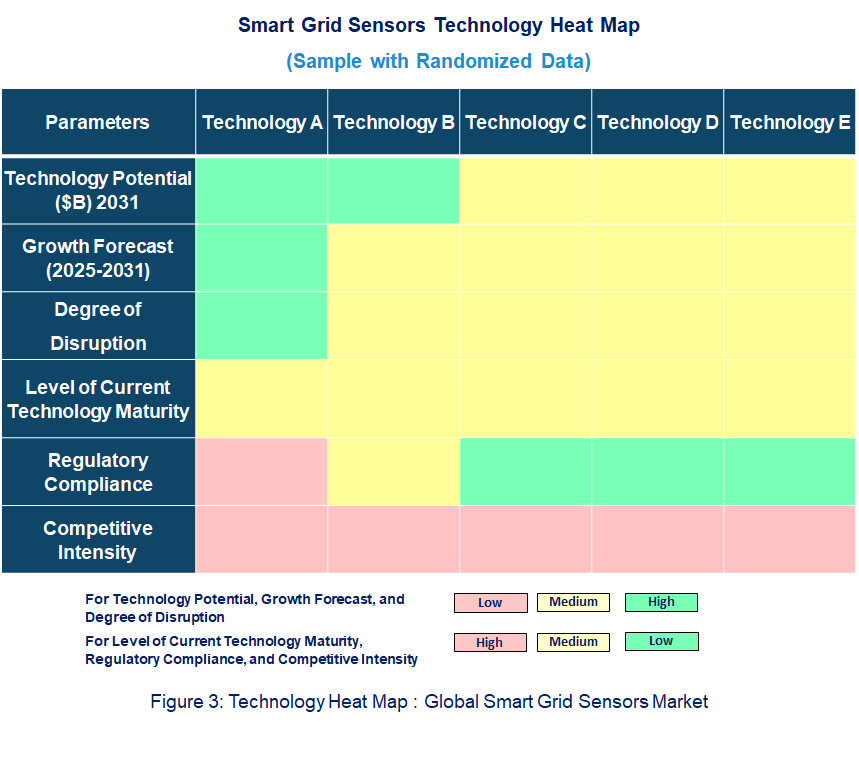
• Technology Potential: Smart grid sensors offer significant potential to revolutionize energy distribution networks. By enabling real-time monitoring, fault detection, and predictive maintenance, these sensors enhance grid efficiency, reduce energy losses, and optimize resource allocation. Their integration with IoT and AI unlocks advanced analytics, supporting the transition to decentralized and renewable energy sources. This capability makes smart grid sensors critical in achieving global sustainability goals.
• Degree of Disruption: The adoption of smart grid sensors represents a high degree of disruption in the energy sector. Traditional grid systems, reliant on periodic manual inspections and static monitoring, are being replaced by dynamic, data-driven operations. This shift challenges conventional practices, compelling utilities to rethink their operational and maintenance strategies to accommodate automation and digitization.
• Level of Current Technology Maturity: Smart grid sensor technology has reached a moderate to advanced maturity level. While developed regions have widely adopted solutions like IoT-enabled sensors and AI-driven analytics, deployment in emerging markets remains in the early stages. Advancements in energy harvesting and 5G connectivity are further refining these technologies, making them more scalable and accessible.
• Regulatory Compliance: Regulatory frameworks are evolving to promote smart grid adoption, driven by mandates for energy efficiency and grid modernization. Standards for interoperability, cybersecurity, and environmental impact are strengthening, providing a supportive ecosystem for market growth. Compliance remains crucial for widespread adoption and market expansion.
Recent Technological development in Smart Grid Sensors Market by Key Players
Key players in the smart grid sensors market, including ABB, GE Grid Solutions, Siemens, Landis+Gyr, Trilliant, Itron, and S&C Electric, are driving innovation to meet the demands of an increasingly digital and sustainable energy landscape. Their advancements are reshaping the industry and enhancing grid resilience, efficiency, and security.• ABB: ABB introduced advanced IoT-based grid sensors integrated with its ABB Ability™ platform. These sensors enable real-time data analytics, improving fault detection and predictive maintenance capabilities, thereby enhancing grid reliability.
• GE Grid Solutions: GE Grid Solutions launched next-generation dynamic line rating sensors, helping utilities maximize grid capacity and integrate renewable energy. This development supports the efficient management of fluctuating power loads.
• Siemens: Siemens unveiled AI-enabled sensors for smart distribution networks, enhancing energy efficiency and grid automation. These innovations significantly reduce energy losses and support renewable integration.
• Landis+Gyr: Landis+Gyr expanded its grid edge intelligence solutions by integrating data analytics with smart sensors. This advancement aids utilities in demand forecasting and energy optimization.
• Trilliant: Trilliant introduced end-to-end smart grid communication platforms with embedded sensors, improving interoperability and real-time data exchange across grid components.
• Itron: Itron developed advanced smart meters with embedded sensors for outage detection and energy usage optimization, enhancing customer satisfaction and operational efficiency.
• S&C Electric: S&C Electric advanced its fault-detection sensors for distribution automation, reducing outage response times and improving grid resilience. The recent developments by key players in the smart grid sensors market underscore the industry’s focus on enhancing grid efficiency, reliability, and sustainability. Innovations such as IoT integration, AI-enabled analytics, and advanced fault detection are enabling utilities to meet growing energy demands and transition toward renewable energy. These advancements are not only modernizing grid operations but also paving the way for a smarter, more resilient energy infrastructure globally.
Smart Grid Sensors Market Driver and Challenges
The smart grid sensors market is driven by technological advancements and growing energy demands, but faces challenges related to high costs and cybersecurity risks. Below are the major growth drivers and challenges impacting the market.• Rising Demand for Renewable Integration: The global shift toward renewable energy necessitates dynamic grid sensors to manage variable energy flows, supporting the efficient integration of wind and solar power.
• Growth in IoT and AI Adoption: IoT-enabled sensors paired with AI analytics enhance predictive maintenance and operational efficiency, reducing costs and improving reliability.
• Need for Grid Resilience: Increasing incidences of extreme weather events and grid outages drive demand for sensors that enable real-time monitoring and quicker response. Challenges in the smart grid sensors market are:
• High Initial Costs: The high upfront investment required for deploying smart grid sensors limits their adoption, particularly in emerging markets.
• Cybersecurity Risks: The digitalization of grid systems increases vulnerabilities to cyberattacks, necessitating robust security measures to protect data integrity and grid stability. These drivers and challenges collectively shape the smart grid sensors market, with drivers fueling technological innovation and challenges emphasizing the need for cost efficiency and robust cybersecurity. By addressing these areas, the market is poised to achieve broader adoption and transformative impact.
List of Smart Grid Sensors Companies
Companies in the market compete on the basis of product quality offered. Major players in this market focus on expanding their manufacturing facilities, R&D investments, infrastructural development, and leverage integration opportunities across the value chain. With these strategies smart grid sensors companies cater increasing demand, ensure competitive effectiveness, develop innovative products & technologies, reduce production costs, and expand their customer base. Some of the smart grid sensors companies profiled in this report includes.• Abb
• Ge Grid Solutions
• Siemens
• Landis+Gyr
• Trilliant
• Itron
Smart Grid Sensors Market by Technology
• Technology Readiness by Technology Type: The readiness of smart grid sensor technologies varies, influencing their adoption and application. voltage/temperature sensors are highly mature, widely used in energy distribution systems. Outage detection sensors are advanced, excelling in reducing grid downtimes. Transformer monitoring sensors are gaining traction with improved predictive maintenance capabilities. Dynamic line rating sensors, though emerging, show high potential for integrating renewables. Other technologies, such as IoT-enabled and AI-driven sensors, are progressing rapidly, though deployment challenges persist. Competitive intensity focuses on innovation and cost-efficiency, while regulatory frameworks ensure secure, interoperable, and sustainable sensor deployments across key energy applications.
• Competitive Intensity and Regulatory Compliance: The market for smart grid sensors is marked by intense competition and evolving regulatory standards. Voltage/temperature sensors compete on precision and affordability, while outage detection sensors are distinguished by their speed and accuracy. Transformer monitoring sensors emphasize reliability and advanced diagnostics to gain market traction. Dynamic line rating sensors face competitive pressures in scalability and compatibility with renewable energy sources. Other sensors, particularly IoT-enabled ones, compete on cybersecurity and integration capabilities. Regulatory compliance spans interoperability, cybersecurity, and environmental standards, ensuring alignment with global grid modernization initiatives and fostering a level playing field for all technologies.
• Disruption Potential of Technologies: The smart grid sensors market technologies demonstrate significant disruption potential in transforming energy infrastructure. Voltage/temperature sensors enhance operational efficiency by offering real-time monitoring and predictive analytics. Outage detection sensors revolutionize grid reliability by enabling swift fault identification and resolution. Transformer monitoring sensors mitigate system failures through proactive maintenance. Dynamic line rating sensors optimize grid capacity by adjusting to real-time conditions, crucial for renewable integration. Other emerging sensors, leveraging IoT and AI, automate grid management and support decentralized energy systems. Together, these technologies disrupt traditional grid models, fostering smarter, sustainable, and resilient energy systems.
Smart Grid Sensors Market Trend and Forecast by Technology [Value from 2019 to 2031]:
• Voltage/Temperature Sensor
• Outage Detection Sensor
• Transformer Monitoring Sensor
• Dynamic Line Rating Sensor
• Others
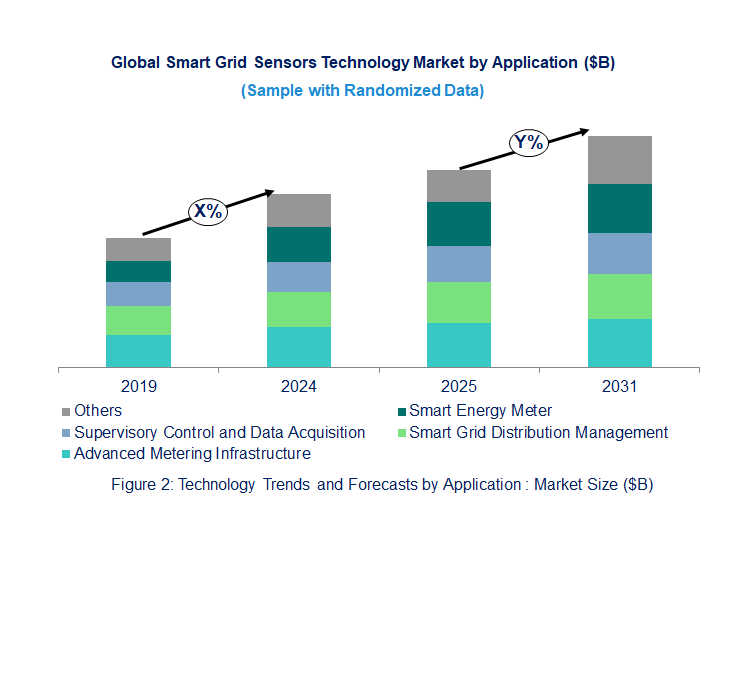
Smart Grid Sensors Market Trend and Forecast by Application [Value from 2019 to 2031]:
• Advanced Metering Infrastructure
• Smart Grid Distribution Management
• Supervisory Control and Data Acquisition
• Smart Energy Meter
• Others
Smart Grid Sensors Market by Region [Value from 2019 to 2031]:
• North America
• Europe
• Asia Pacific
• The Rest of the World
• Latest Developments and Innovations in the Smart Grid Sensors Technologies
• Companies / Ecosystems
• Strategic Opportunities by Technology Type
Features of the Global Smart Grid Sensors Market
Market Size Estimates: Smart grid sensors market size estimation in terms of ($B). Trend and Forecast Analysis: Market trends (2019 to 2024) and forecast (2025 to 2031) by various segments and regions. Segmentation Analysis: Technology trends in the global smart grid sensors market size by various segments, such as application and technology in terms of value and volume shipments. Regional Analysis: Technology trends in the global smart grid sensors market breakdown by North America, Europe, Asia Pacific, and the Rest of the World. Growth Opportunities: Analysis of growth opportunities in different technologies and applications and regions for technology trends in the global smart grid sensors market. Strategic Analysis: This includes M&A, new product development, and competitive landscape for technology trends in the global smart grid sensors market. Analysis of competitive intensity of the industry based on Porter’s Five Forces model.Table of Contents
Methodology
- In-depth interviews of the major players in this market
- Detailed secondary research from competitors’ financial statements and published data
- Extensive searches of published works, market, and database information pertaining to industry news, company press releases, and customer intentions
- A compilation of the experiences, judgments, and insights of Lucintel’s professionals, who have analyzed and tracked this market over the years.


Buy Now
Choose a license that fits your team. Instant PDF delivery.
Prices exclude taxes. Instant delivery. Custom licensing available on request.
Key Questions
- • What are some of the most promising potential, high-growth opportunities for the technology trends in the global smart grid sensors market by technology (voltage/temperature sensor, outage detection sensor, transformer monitoring sensor, dynamic line rating sensor, and others), application (advanced metering infrastructure, smart grid distribution management, supervisory control and data acquisition, smart energy meter, and others), and region (North America, Europe, Asia Pacific, and the Rest of the World)?
- • Which technology segments will grow at a faster pace and why?
- • Which regions will grow at a faster pace and why?
- • What are the key factors affecting dynamics of different technology? What are the drivers and challenges of these technologies in the global smart grid sensors market?
- • What are the business risks and threats to the technology trends in the global smart grid sensors market?
- • What are the emerging trends in these material technologies in the global smart grid sensors market and the reasons behind them?
- • Which technologies have potential of disruption in this market?
- • What are the new developments in the technology trends in the global smart grid sensors market? Which companies are leading these developments?
- • Who are the major players in technology trends in the global smart grid sensors market? What strategic initiatives are being implemented by key players for business growth?
- • What are strategic growth opportunities in this smart grid sensors technology space?
- • What M & A activities did take place in the last five years in technology trends in the global smart grid sensors market?


