
Report Feature
Single Nucleotide Polymorphism Genotyping Market Trends and Forecast
The technologies in single nucleotide polymorphism genotyping market have undergone significant changes in recent years, with advancements such as transitioning from traditional restriction fragment length polymorphism (RFLP) technology to high-throughput SNP microarrays and next-generation sequencing (NGS).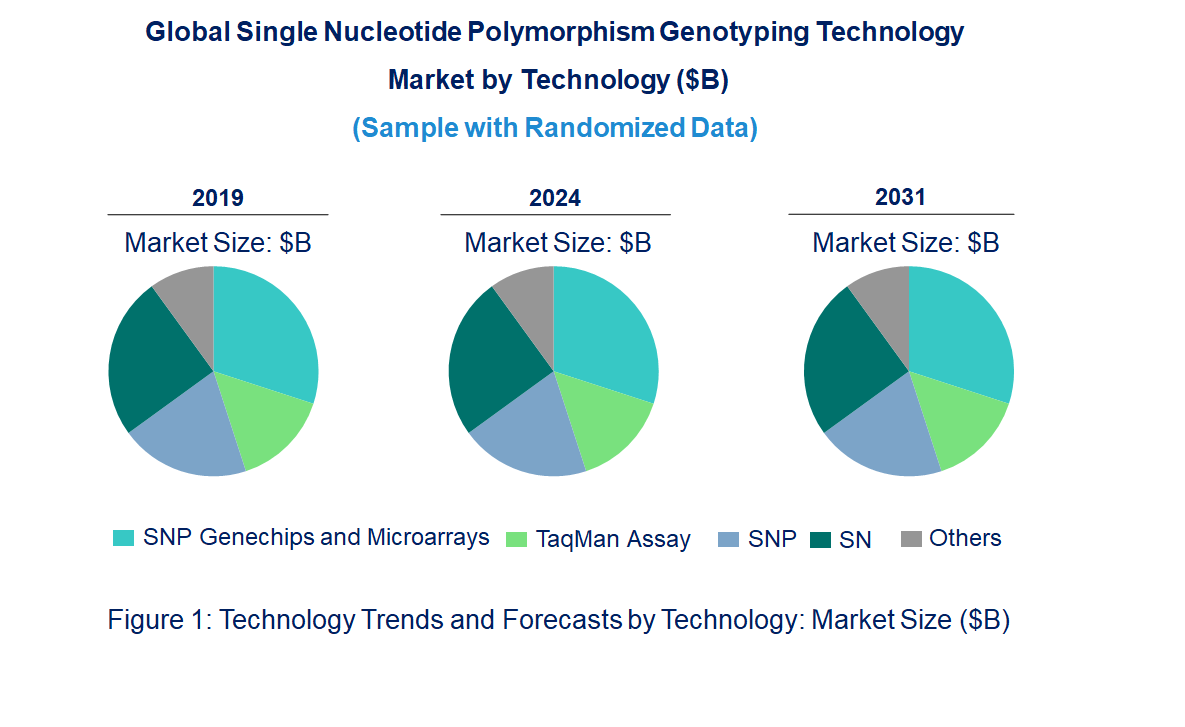
Emerging Trends in the Single Nucleotide Polymorphism Genotyping Market
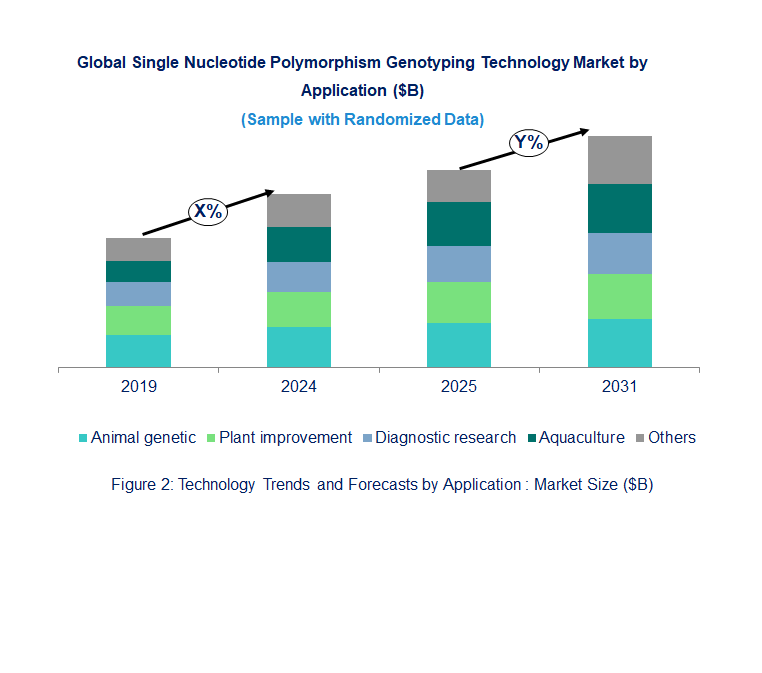
The single nucleotide polymorphism genotyping market is experiencing a technological transformation driven by innovation, efficiency, and the growing need for precise genomic analysis. These trends are reshaping the landscape:• Integration of High-Throughput Sequencing: The shift towards NGS allows for faster and more accurate single nucleotide polymorphism detection, enabling comprehensive genomic profiling across larger datasets.
• Adoption of AI-Driven Genomic Analysis: Machine learning algorithms are being integrated to streamline data interpretation, reducing analysis time and improving accuracy.
• Development of Point-of-Care Genotyping Devices: Portable technologies are emerging, catering to agricultural and diagnostic applications, ensuring rapid on-site single nucleotide polymorphism detection.
• Focus on Multi-Omics Platforms: single nucleotide polymorphism genotyping is increasingly combined with transcriptomics and epigenomics, offering a holistic view of genetic influences.
• Emergence of CRISPR-Based single nucleotide polymorphism Detection: CRISPR technology is being adapted for single nucleotide polymorphism identification, promising high specificity and sensitivity. These trends reflect the market’s evolution towards high-precision, scalable, and application-driven single nucleotide polymorphism genotyping solutions, enhancing research and commercial outcomes.
Single Nucleotide Polymorphism Genotyping Market : Industry Potential, Technological Development, and Compliance Considerations
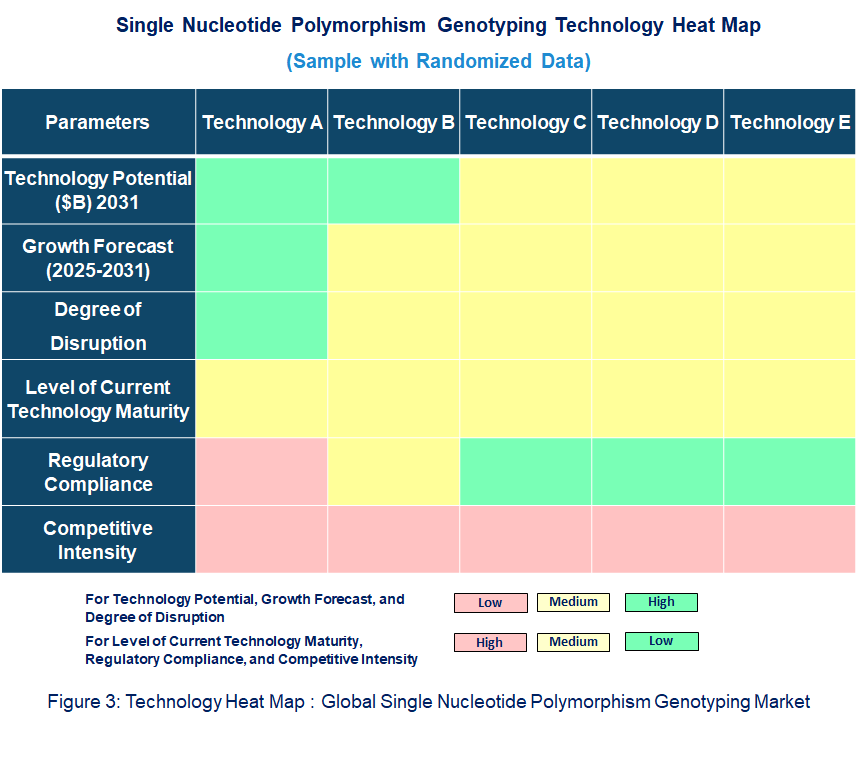
• Technology Potential: The single nucleotide polymorphism (SNP) genotyping market offers substantial potential in personalized medicine, agricultural biotechnology, and disease diagnostics. SNPs, as key genetic markers, enable insights into genetic predispositions, drug response, and crop or livestock improvement. Advanced technologies like next-generation sequencing (NGS) and CRISPR-based SNP detection are unlocking possibilities for high-throughput, cost-effective, and precise analyses, fostering transformative applications across industries.
• Degree of Disruption: Technologies such as NGS and AI-driven genotyping are highly disruptive, replacing traditional methods like RFLP and SSCP with scalable, efficient, and accurate alternatives. This disruption is redefining workflows in genomics, improving research speed, reducing costs, and opening new possibilities for large-scale studies and real-time genetic diagnostics.
• Level of Current Technology Maturity: Technologies like TaqMan Assays and SNP microarrays are well-established, offering robust performance. Emerging platforms, including CRISPR-based tools and AI-enhanced genotyping, are in a growth phase, showing promising results but requiring further refinement for broader adoption. NGS is transitioning into mainstream use, driven by falling costs and increasing accuracy.
• Regulatory Compliance: SNP genotyping technologies must adhere to stringent regulations for clinical and agricultural applications. Compliance with FDA guidelines, ISO standards, and country-specific agricultural policies ensures reliability and safety, particularly for medical diagnostics and genetically modified organisms. Regulatory oversight also drives trust and market adoption.
Recent Technological development in Single Nucleotide Polymorphism Genotyping Market by Key Players
The single nucleotide polymorphism (single nucleotide polymorphism) genotyping market is witnessing rapid advancements driven by the increasing adoption of genomic research in precision medicine, drug development, and agricultural biotechnology. Key players are focusing on innovation, partnerships, and strategic expansions to enhance their market position and address evolving customer needs.• Fluidigm: Fluidigm launched an advanced single nucleotide polymorphism genotyping system integrating high-throughput capabilities with robust analytical tools, enabling researchers to conduct large-scale studies with higher accuracy and speed. This innovation strengthens Fluidigm’s position in the research and diagnostic market.
• Beckman Coulter: Beckman Coulter introduced automation enhancements for its genotyping workflows, focusing on improving efficiency and reducing hands-on time for laboratories. These developments support laboratories in handling higher sample volumes with consistent data quality.
• Roche Holding: Roche Holding expanded its single nucleotide polymorphism genotyping portfolio by acquiring specialized genetic testing technologies. This strategic move enhances its capacity to cater to diverse clinical and research applications in personalized medicine.
• Thermo Fisher Scientific: Thermo Fisher launched an advanced single nucleotide polymorphism genotyping kit featuring enhanced multiplexing and cost-effective solutions for large-scale studies. This innovation accelerates adoption in academic and pharmaceutical research.
• Qiagen: Qiagen enhanced its bioinformatics platform to provide seamless integration with single nucleotide polymorphism genotyping assays, improving data interpretation and enabling users to derive actionable insights efficiently.
• GE Healthcare: GE Healthcare partnered with genomics firms to co-develop single nucleotide polymorphism genotyping solutions targeting oncology and rare disease research, strengthening its collaboration-driven innovation strategy.
• Agilent Technologies: Agilent introduced a next-generation sequencing (NGS)-enabled single nucleotide polymorphism genotyping assay, focusing on delivering superior sensitivity and specificity for challenging samples. This development positions Agilent as a leader in advanced genotyping technologies.
• Sequenom: Sequenom advanced its prenatal genetic testing platform to include single nucleotide polymorphism-based assessments, offering improved detection of inherited disorders and expanding its market reach in maternal and fetal health diagnostics.
• Affymetrix: Affymetrix developed a genotyping array targeting agricultural genomics, enabling precise trait mapping and breeding decisions in crops and livestock, which opens new opportunities in agrigenomics.
• Bio-Rad Laboratories: Bio-Rad Laboratories introduced droplet-based digital PCR technology for single nucleotide polymorphism genotyping, providing unparalleled accuracy and detection capabilities, particularly for rare allele studies. Recent developments in the single nucleotide polymorphism Genotyping Market highlight a focus on technological innovation, strategic partnerships, and expanded applications across healthcare and agriculture. These advancements enhance accuracy, efficiency, and accessibility, driving market growth and fostering progress in personalized medicine, genetic research, and agrigenomics, paving the way for transformative industry outcomes.
Single Nucleotide Polymorphism Genotyping Market Driver and Challenges
The single nucleotide polymorphism genotyping market is shaped by the increasing demand for personalized medicine, advancements in genomic technologies, and expanding applications in healthcare and agriculture. Despite these drivers, the market faces challenges such as high costs, technical complexities, and limited awareness in certain regions, impacting the pace of adoption. Major driver for single nucleotide polymorphism genotyping market include:• Growth of Precision Medicine: The growing adoption of personalized medicine is a key driver, as single nucleotide polymorphism genotyping enables tailored treatments and early disease detection. This has broadened its application scope, particularly in oncology and rare disease research.
• Advancements in Genomic Technologies: Innovations in next-generation sequencing and bioinformatics are enhancing the efficiency and accuracy of single nucleotide polymorphism genotyping, reducing costs and enabling large-scale applications in healthcare and agricultural sectors.
• Expanding Applications in Agriculture: single nucleotide polymorphism genotyping is increasingly used in agrigenomics for trait mapping, improving crop yields, and livestock breeding. This addresses food security challenges and creates new opportunities in agricultural biotechnology.
• Increasing Investments in Genomics: Rising funding from governments and private sectors in genomic research is fueling the development and commercialization of single nucleotide polymorphism genotyping technologies. This supports both academic and clinical research initiatives.
• Integration with Bioinformatics: The incorporation of advanced bioinformatics platforms enhances data interpretation and scalability, enabling more efficient handling of high-throughput genotyping projects across diverse applications. Challenges in the single nucleotide polymorphism genotyping market are:
• High Costs of Technology: The cost of advanced single nucleotide polymorphism genotyping systems and reagents remains a barrier for widespread adoption, particularly in emerging markets with limited healthcare budgets.
• Technical Complexities: The need for specialized expertise and the challenges in data analysis present hurdles, especially for small-scale laboratories and research centers.
• Limited Awareness: In developing regions, a lack of awareness about the benefits and applications of single nucleotide polymorphism genotyping restricts its adoption in healthcare and agricultural research. The single nucleotide polymorphism genotyping market is driven by advancements in genomic technologies and growing demand across healthcare and agriculture. However, challenges such as high costs and technical hurdles limit its full potential. Continued innovation, strategic investments, and awareness-building initiatives are essential to overcoming these barriers and sustaining market growth.
List of Single Nucleotide Polymorphism Genotyping Companies
Companies in the market compete on the basis of product quality offered. Major players in this market focus on expanding their manufacturing facilities, R&D investments, infrastructural development, and leverage integration opportunities across the value chain. With these strategies single nucleotide polymorphism genotyping companies cater increasing demand, ensure competitive effectiveness, develop innovative products & technologies, reduce production costs, and expand their customer base. Some of the single nucleotide polymorphism genotyping companies profiled in this report includes.• Fluidigm
• Beckman Coulter
• Roche Holding
• Thermo Fisher Scientific
• Qiagen
• Ge Healthcare
Single Nucleotide Polymorphism Genotyping Market by Technology
• Technology Readiness, Competitiveness, and Applications in single nucleotide polymorphism Genotyping Market: Single nucleotide polymorphism genechips and microarrays and taqman assay are highly mature, offering robust solutions for large-scale and diagnostic applications. Pyrosequencing is moderately ready, excelling in targeted, medium-scale studies. SN Plex demonstrates high readiness for high-throughput requirements, while Sequenom MassARRAY is a cost-effective option for multiplex applications. RFLP and SSCP exhibit lower readiness, primarily limited to research-specific uses. ARMS is competitive for mutation detection in clinical genomics. Regulatory compliance is strong for advanced technologies like TaqMan Assay and Sequenom MassARRAY, enabling their adoption in precision medicine. Technologies in the Others category are emerging with niche applications, adapting to evolving regulatory landscapes and competitive demands.
• Disruption Potential: Technologies like single nucleotide polymorphism genechips, microarrays, and Taqman assay showcase high disruption potential due to their scalability and precision, catering to broad genomic studies. Pyrosequencing offers real-time results, enhancing targeted applications. SN Plex excels in high-throughput genotyping, making it crucial for large-scale projects. Sequenom massarray MALDI-TOF is known for cost-effectiveness and multiplexing capabilities, disrupting affordability in genotyping. RFLP and SSCP, though older, remain relevant for specific research niches. ARMS is transformative in allele-specific applications. Emerging methods classified as Others bring flexibility and innovation, targeting niche markets and enhancing data accuracy. Collectively, these technologies are reshaping genotyping with scalability, affordability, and precision.
• Competitive Intensity and Regulatory Compliance: The single nucleotide polymorphism genotyping market sees high competitive intensity, with technologies like single nucleotide polymorphism genechips, taqman assay, and sequenom massarray leading due to their advanced capabilities and wide adoption. RFLP and SSCP face reduced competitiveness, limited by older methodologies and lower throughput. Regulatory compliance varies, with newer technologies like Pyrosequencing and SN Plex meeting stricter standards for clinical and diagnostic applications.
• Technologies such as ARMS are favored in regulatory frameworks for personalized medicine. Smaller players in other industries innovate to maintain relevance, intensifying the competition. This dynamic interplay shapes the market, balancing innovation, adoption rates, and compliance adherence.
Single Nucleotide Polymorphism Genotyping Market Trend and Forecast by Technology [Value from 2019 to 2031]:
• SNP Genechips and Microarrays
• TaqMan Assay
• SNP genotyping based upon Pyrosequencing
• SN Plex based upon Applied Biosystems
• Sequenom Masarray MALDI TOF
• RFLP
• SSCP
• ARMS
• Others
Single Nucleotide Polymorphism Genotyping Market Trend and Forecast by Application [Value from 2019 to 2031]:
• Animal genetic
• Plant improvement
• Diagnostic research
• Aquaculture
• Pharmaceutical and Pharmacogenomic
• Agricultural Biotechnology
• Animal Livestock and breeding
• Others
Single Nucleotide Polymorphism Genotyping Market by Region [Value from 2019 to 2031]:
• North America
• Europe
• Asia Pacific
• The Rest of the World
• Latest Developments and Innovations in the Single Nucleotide Polymorphism Genotyping Technologies
• Companies / Ecosystems
• Strategic Opportunities by Technology Type
Features of the Global Single Nucleotide Polymorphism Genotyping Market
Market Size Estimates: Single nucleotide polymorphism genotyping market size estimation in terms of ($B). Trend and Forecast Analysis: Market trends (2019 to 2024) and forecast (2025 to 2031) by various segments and regions. Segmentation Analysis: Technology trends in the global single nucleotide polymorphism genotyping market size by various segments, such as application and technology in terms of value and volume shipments. Regional Analysis: Technology trends in the global single nucleotide polymorphism genotyping market breakdown by North America, Europe, Asia Pacific, and the Rest of the World. Growth Opportunities: Analysis of growth opportunities in different technologies and applications and regions for technology trends in the global single nucleotide polymorphism genotyping market. Strategic Analysis: This includes M&A, new product development, and competitive landscape for technology trends in the global single nucleotide polymorphism genotyping market. Analysis of competitive intensity of the industry based on Porter’s Five Forces model.Table of Contents
Methodology
- In-depth interviews of the major players in this market
- Detailed secondary research from competitors’ financial statements and published data
- Extensive searches of published works, market, and database information pertaining to industry news, company press releases, and customer intentions
- A compilation of the experiences, judgments, and insights of Lucintel’s professionals, who have analyzed and tracked this market over the years.


Buy Now
Choose a license that fits your team. Instant PDF delivery.
Prices exclude taxes. Instant delivery. Custom licensing available on request.
Key Questions
- • What are some of the most promising potential, high-growth opportunities for the technology trends in the global single nucleotide polymorphism genotyping market by technology (snp genechips and microarrays, taqman assay, snp genotyping based upon pyrosequencing, sn plex based upon applied biosystems, sequenom masarray maldi tof, rflp, sscp, arms, and others), application (animal genetic, plant improvement, diagnostic research, aquaculture, pharmaceutical and pharmacogenomic, agricultural biotechnology, animal livestock and breeding, and others), and region (North America, Europe, Asia Pacific, and the Rest of the World)?
- • Which technology segments will grow at a faster pace and why?
- • Which regions will grow at a faster pace and why?
- • What are the key factors affecting dynamics of different technology? What are the drivers and challenges of these technologies in the global single nucleotide polymorphism genotyping market?
- • What are the business risks and threats to the technology trends in the global single nucleotide polymorphism genotyping market?
- • What are the emerging trends in these material technologies in the global single nucleotide polymorphism genotyping market and the reasons behind them?
- • Which technologies have potential of disruption in this market?
- • What are the new developments in the technology trends in the global single nucleotide polymorphism genotyping market? Which companies are leading these developments?
- • Who are the major players in technology trends in the global single nucleotide polymorphism genotyping market? What strategic initiatives are being implemented by key players for business growth?
- • What are strategic growth opportunities in this single nucleotide polymorphism genotyping technology space?
- • What M & A activities did take place in the last five years in technology trends in the global single nucleotide polymorphism genotyping market?


