
Report Feature
Rhinoplasty Market Trends and Forecast
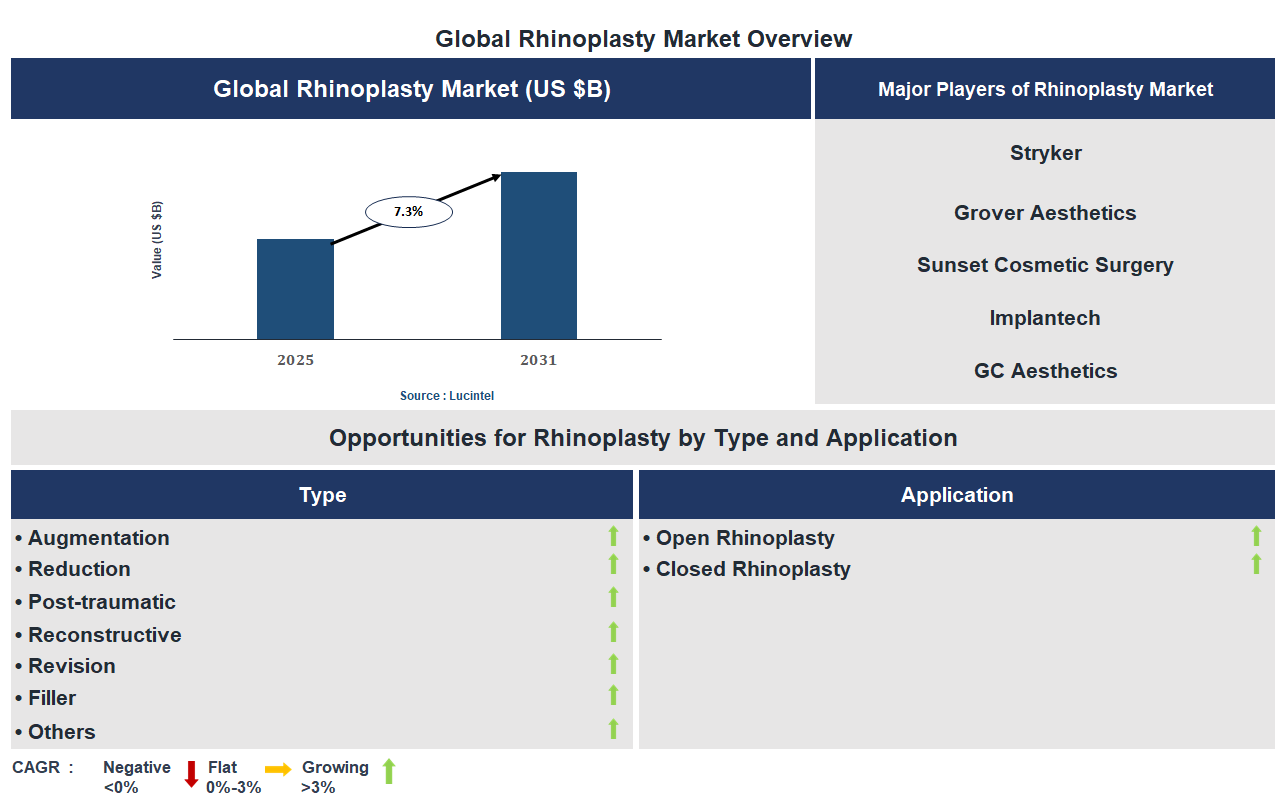
The future of the global rhinoplasty market looks promising with opportunities in the open rhinoplasty and closed rhinoplasty markets. The global rhinoplasty market is expected to grow with a CAGR of 7.3% from 2025 to 2031. The major drivers for this market are the increasing demand for cosmetic surgeries, the rising awareness about facial aesthetics, and the growing preference for minimally invasive procedures.• Lucintel forecasts that, within the type category, augmentation is expected to witness the highest growth over the forecast period.
• Within the application category, open rhinoplasty is expected to witness higher growth.
• In terms of region, North America is expected to witness the highest growth over the forecast period. Gain valuable insights for your business decisions with our comprehensive 150+ page report. Sample figures with some insights are shown below.
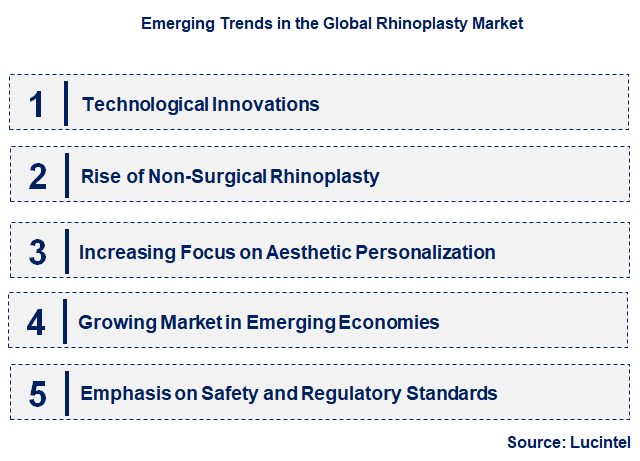
Emerging Trends in the Rhinoplasty Market
The rhinoplasty market is experiencing significant transformation driven by technological advancements, changing consumer preferences, and evolving aesthetic standards. As demand for both surgical and non-surgical procedures increases globally, industry players are adopting innovative techniques and expanding their service offerings. The integration of digital tools, personalized treatments, and a focus on minimally invasive options are shaping the future landscape. These developments are not only enhancing patient outcomes but also broadening market accessibility and competitiveness. Understanding these emerging trends is crucial for stakeholders aiming to capitalize on growth opportunities and adapt to the dynamic environment of the rhinoplasty market.• Technological Innovations: The adoption of advanced surgical tools and techniques, such as 3D imaging and computer-assisted planning, is revolutionizing rhinoplasty procedures. These innovations enable precise, customized surgeries, improving aesthetic outcomes and reducing recovery times. Surgeons can now simulate results pre-operatively, enhancing patient satisfaction and confidence. The integration of minimally invasive techniques also reduces scarring and complications, making procedures more appealing. As technology continues to evolve, the market will see increased efficiency, safety, and personalization, attracting a broader patient base and expanding procedural options.
• Rise of Non-Surgical Rhinoplasty: Non-invasive procedures using injectable fillers and neuromodulators are gaining popularity due to their quick results, minimal downtime, and lower costs. These treatments appeal to a wider demographic, including those hesitant about surgery. The convenience and reversibility of non-surgical rhinoplasty are driving demand, especially among younger patients seeking subtle enhancements. This trend is prompting clinics to diversify their offerings, blending surgical and non-surgical options to meet varied patient needs. The growth of non-surgical rhinoplasty is reshaping market dynamics by expanding access and increasing procedure volume.
• Increasing Focus on Aesthetic Personalization: Patients now seek highly individualized treatments tailored to their unique facial features and aesthetic goals. Surgeons are leveraging digital imaging and 3D modeling to design customized procedures that align with patient expectations. This trend emphasizes a patient-centric approach, improving satisfaction and outcomes. Personalization also involves considering cultural and ethnic differences, leading to more diverse and inclusive treatment options. As personalization becomes a standard, the market is shifting towards more sophisticated, tailored solutions that enhance patient engagement and loyalty.
• Growing Market in Emerging Economies: Rising disposable incomes, increased awareness, and expanding healthcare infrastructure are fueling rhinoplasty demand in emerging markets such as Asia-Pacific, Latin America, and the Middle East. These regions offer significant growth opportunities due to a large, underserved population seeking aesthetic enhancements. Local clinics are adopting advanced techniques and international standards to attract global patients. The expansion into emerging economies is diversifying the market landscape, fostering competition, and driving innovation. This trend is expected to sustain long-term growth and global market integration.
• Emphasis on Safety and Regulatory Standards: As the market expands, there is a heightened focus on safety protocols, quality standards, and regulatory compliance. Governments and industry bodies are implementing stricter guidelines to ensure patient safety and procedure efficacy. Surgeons and clinics are adopting rigorous sterilization, training, and certification processes. Transparency in outcomes and adverse event management is also gaining importance. This trend enhances consumer confidence, reduces risks, and promotes sustainable growth. Strengthening safety standards is crucial for maintaining market credibility and fostering trust among patients and practitioners alike. In summary, these emerging trends are fundamentally reshaping the rhinoplasty market by fostering innovation, expanding access, and emphasizing safety. The integration of advanced technology, the rise of non-surgical options, personalized treatments, market growth in emerging economies, and stringent safety standards collectively drive the industry toward a more dynamic, inclusive, and patient-focused future.
Recent Development in the Rhinoplasty Market
The rhinoplasty market has experienced significant growth driven by increasing demand for aesthetic and reconstructive nasal surgeries worldwide. Advances in technology, rising awareness, and changing beauty standards have contributed to this expansion. Additionally, innovations in surgical techniques and the growing popularity of minimally invasive procedures are shaping the market landscape. The influence of social media and celebrity culture further fuels consumer interest. Regulatory developments and the rise of medical tourism also play crucial roles. These factors collectively influence market dynamics, creating new opportunities and challenges for industry stakeholders. Understanding these recent developments is essential for businesses aiming to capitalize on emerging trends and meet evolving consumer preferences.• Technological Innovations: Introduction of 3D imaging and computer-assisted surgical planning has enhanced precision and outcomes in rhinoplasty procedures, leading to increased patient confidence and higher demand. These tools allow surgeons to better visualize results preoperatively, reducing complications and improving satisfaction. As a result, clinics adopting advanced technology are gaining a competitive edge, driving market growth and encouraging further innovation.
• Minimally Invasive Procedures: The rise of non-surgical rhinoplasty using injectable fillers offers a less invasive alternative with minimal downtime. This development appeals to a broader demographic, including younger patients seeking quick aesthetic improvements. The convenience and lower risk associated with non-surgical options are expanding the market, prompting surgeons to diversify their service offerings and invest in training for these techniques.
• Growing Consumer Awareness: Increased exposure to aesthetic procedures through social media platforms and celebrity endorsements has heightened awareness and acceptance of rhinoplasty. Consumers now seek personalized, natural-looking results, pushing providers to adopt tailored approaches. This trend has expanded the customer base and stimulated market growth, especially among younger populations eager for aesthetic enhancement.
• Regulatory and Safety Standards: Implementation of stricter safety regulations and standardized protocols has improved procedure outcomes and patient safety. These measures have increased consumer trust and reduced malpractice risks, encouraging more individuals to opt for rhinoplasty. Enhanced regulatory oversight also promotes quality improvements across clinics, fostering sustainable market development.
• Medical Tourism Expansion: Countries like Mexico, Turkey, and India are emerging as popular destinations for affordable rhinoplasty procedures. The growth of medical tourism has broadened access to high-quality care for international patients, boosting market revenues. This trend encourages cross-border collaborations and investments, further stimulating industry growth and innovation. In summary, recent developments such as technological advancements, minimally invasive options, increased consumer awareness, regulatory improvements, and the expansion of medical tourism are collectively transforming the rhinoplasty market. These factors are driving growth, enhancing patient outcomes, and expanding access, positioning the industry for continued evolution and opportunity.
Strategic Growth Opportunities in the Rhinoplasty Market
The rhinoplasty market is experiencing significant growth driven by increasing aesthetic awareness, technological advancements, and expanding healthcare access worldwide. As demand for cosmetic and reconstructive procedures rises, key applications are emerging as pivotal growth areas. These opportunities are transforming the market landscape by offering innovative solutions, improving patient outcomes, and expanding market reach. Stakeholders are focusing on leveraging these opportunities to enhance their competitive edge and meet evolving consumer preferences. The following five key growth opportunities across applications highlight the dynamic evolution of the rhinoplasty market and its promising future.• Cosmetic Rhinoplasty: Market expansion driven by rising aesthetic consciousness and social media influence. Patients seek refined nasal features, prompting surgeons to adopt advanced techniques. This growth enhances market revenue and encourages innovation in minimally invasive procedures, making cosmetic rhinoplasty more accessible and appealing to a broader demographic.
• Reconstructive Rhinoplasty: Increasing cases of trauma, congenital deformities, and tumor resections fuel demand. Improved surgical methods and biomaterials enable better functional and aesthetic outcomes. This opportunity supports healthcare systems by providing effective solutions for complex reconstructive needs, expanding the scope of rhinoplasty applications.
• Functional Rhinoplasty: Growing awareness of nasal airway issues and sleep disorders boosts demand for procedures that improve breathing. Advances in diagnostic tools and surgical techniques enhance success rates. This growth opportunity emphasizes the importance of functional improvements alongside aesthetic results, broadening patient appeal and clinical applications.
• Revision Rhinoplasty: Rising incidences of primary rhinoplasty complications create demand for corrective procedures. Innovations in surgical planning and materials facilitate better results. This segment offers significant revenue potential and underscores the importance of expertise and technology in achieving patient satisfaction.
• Non-Surgical Rhinoplasty: Increasing preference for non-invasive procedures with minimal downtime drives demand. Use of fillers and injectables offers quick, effective results. This growth opportunity caters to a broader patient base seeking affordable, less invasive options, expanding the market’s reach and versatility. In summary, these growth opportunities are significantly impacting the rhinoplasty market by fostering innovation, expanding application scope, and enhancing patient outcomes. They are driving market growth, attracting new entrants, and shaping future trends in both cosmetic and reconstructive domains.
Rhinoplasty Market Driver and Challenges
The rhinoplasty market is influenced by a complex interplay of technological advancements, economic factors, and regulatory considerations. Innovations in surgical techniques and non-invasive procedures have expanded options for patients, while economic conditions affect affordability and demand. Regulatory frameworks ensure safety and quality standards but can also pose barriers to market entry and innovation. These drivers and challenges collectively shape the growth trajectory, competitiveness, and accessibility of rhinoplasty services worldwide. Understanding these factors is essential for stakeholders to navigate the evolving landscape, capitalize on opportunities, and address potential obstacles effectively. The factors responsible for driving the rhinoplasty market include:-• Technological Innovations: The development of minimally invasive techniques and advanced imaging tools has revolutionized rhinoplasty procedures. These innovations reduce recovery time, improve precision, and enhance aesthetic outcomes, making procedures more appealing to a broader patient base. As technology continues to evolve, market growth accelerates due to increased patient confidence and surgeon capabilities. The integration of 3D imaging and computer-assisted planning further personalizes treatments, boosting demand and expanding market reach.
• Rising Cosmetic Surgery Trends: Increasing societal acceptance and awareness of cosmetic enhancements have led to a surge in demand for rhinoplasty. Influenced by media, celebrity culture, and social media platforms, more individuals seek aesthetic improvements, driving market growth. The desire for improved facial harmony and self-esteem fuels this trend, especially among younger demographics, contributing to sustained demand and market expansion.
• Economic Growth and Disposable Income: Economic stability and rising disposable incomes in emerging and developed regions have made cosmetic surgeries more accessible. Affordability allows a larger population to consider rhinoplasty as a viable option, thereby expanding the customer base. Additionally, insurance coverage and financing options further facilitate procedure affordability, supporting market growth in various regions.
• Increasing Awareness and Patient Education: Enhanced awareness campaigns and availability of information through digital platforms have educated potential patients about rhinoplasty options, risks, and benefits. This knowledge empowers consumers to make informed decisions, increasing procedure acceptance rates. As educational efforts continue, more individuals are likely to pursue rhinoplasty, positively impacting market growth. The challenges in the rhinoplasty market are:
• Regulatory and Safety Concerns: Stringent regulatory standards and safety protocols are essential to ensure patient safety but can also hinder innovation and delay market entry for new procedures or devices. Variations in regulations across regions create compliance complexities, increasing costs for manufacturers and practitioners. Additionally, concerns over surgical risks and complications may deter potential patients, impacting overall demand.
• High Procedure Costs and Limited Insurance Coverage: Rhinoplasty can be expensive, often not covered by insurance, making it inaccessible to some segments of the population. The high costs limit market growth, especially in price-sensitive regions. Patients may opt for less invasive or non-surgical alternatives, which could impact traditional rhinoplasty demand. Cost barriers also restrict the expansion of services in emerging markets.
• Skilled Practitioner Shortage: The demand for skilled surgeons proficient in advanced rhinoplasty techniques exceeds supply in many regions. This shortage can lead to longer waiting times, increased procedural costs, and variability in outcomes. Limited access to trained professionals hampers market growth and affects patient satisfaction, emphasizing the need for specialized training programs to meet rising demand. In summary, the rhinoplasty market is driven by technological advancements, societal trends, economic factors, and increased awareness, which collectively foster growth and innovation. However, regulatory hurdles, high costs, and practitioner shortages pose significant challenges that could restrain expansion. Balancing these drivers and challenges is crucial for sustainable market development, ensuring broader access, safety, and innovation in rhinoplasty procedures worldwide.
List of Rhinoplasty Companies
Companies in the market compete on the basis of product quality offered. Major players in this market focus on expanding their manufacturing facilities, R&D investments, infrastructural development, and leverage integration opportunities across the value chain. With these strategies rhinoplasty companies cater increasing demand, ensure competitive effectiveness, develop innovative products & technologies, reduce production costs, and expand their customer base. Some of the rhinoplasty companies profiled in this report include-• Stryker
• Grover Aesthetics
• Sunset Cosmetic Surgery
• Implantech
• GC Aesthetics
Rhinoplasty Market by Segment
The study includes a forecast for the global rhinoplasty market by type, application, and region.Rhinoplasty Market by Type [Value from 2019 to 2031]:
• Augmentation
• Reduction
• Post-traumatic
• Reconstructive
• Revision
• Filler
• Others
Rhinoplasty Market by Application [Value from 2019 to 2031]:
• Open Rhinoplasty
• Closed Rhinoplasty
Rhinoplasty Market by Region [Value from 2019 to 2031]:
• North America
• Europe
• Asia Pacific
• The Rest of the World
Country Wise Outlook for the Rhinoplasty Market
The rhinoplasty market has experienced significant growth and innovation driven by technological advancements, increasing consumer demand for aesthetic procedures, and evolving healthcare policies worldwide. As societal beauty standards and awareness of cosmetic surgery rise, countries are adopting new techniques, expanding access, and integrating digital tools to enhance patient outcomes. The United States, China, Germany, India, and Japan are key players in this dynamic landscape, each contributing unique developments that shape the global rhinoplasty market. These countries are witnessing shifts in procedural preferences, technological adoption, and regulatory frameworks, reflecting broader trends in healthcare and cosmetic surgery.• United States: The US market has seen a surge in minimally invasive rhinoplasty procedures, driven by technological innovations such as 3D imaging and computer-assisted surgery. Increasing demand for natural-looking results and patient-specific customization has led to the adoption of advanced techniques. The rise of outpatient clinics and medical tourism also contributes to market growth, alongside expanding insurance coverage for reconstructive procedures. Regulatory agencies are emphasizing safety standards, fostering innovation while ensuring patient protection.
• China: China’s rhinoplasty market is rapidly expanding due to rising disposable incomes and growing beauty consciousness among younger populations. The adoption of innovative techniques like cartilage grafting and non-surgical rhinoplasty is increasing. Local manufacturers are developing affordable, high-quality implants, boosting accessibility. Digital marketing and social media influence are significantly impacting consumer choices. Government initiatives to improve healthcare infrastructure and cosmetic surgery regulations are further supporting market growth.
• Germany: The German rhinoplasty market is characterized by a focus on safety, quality, and minimally invasive procedures. Advanced imaging technologies, such as 3D simulations, are widely used for preoperative planning. There is a growing preference for natural results and functional improvements alongside aesthetic enhancements. Germany’s strict regulatory environment ensures high standards, fostering innovation in surgical techniques and materials. The aging population also drives demand for reconstructive and revision rhinoplasty procedures.
• India: India’s market is witnessing rapid growth due to increasing awareness, affordability, and a large pool of skilled surgeons. Non-surgical rhinoplasty using fillers is gaining popularity for quick, less invasive results. The rise of medical tourism attracts international patients seeking affordable yet high-quality procedures. Local companies are innovating with cost-effective implants and techniques. Government initiatives to improve healthcare access and the proliferation of cosmetic clinics are further fueling market expansion.
• Japan: The Japanese rhinoplasty market emphasizes subtle, natural enhancements with a focus on functional improvements. Advanced techniques like cartilage preservation and endoscopic procedures are prevalent. The aging population and increasing awareness of cosmetic options contribute to steady growth. Japan’s strict safety standards and technological innovations, such as 3D imaging, ensure high-quality outcomes. Cultural preferences for discreet, natural results influence procedural choices, while local research and development continue to advance surgical materials and techniques.

Features of the Global Rhinoplasty Market
Market Size Estimates: Rhinoplasty market size estimation in terms of value ($B). Trend and Forecast Analysis: Market trends (2019 to 2024) and forecast (2025 to 2031) by various segments and regions. Segmentation Analysis: Rhinoplasty market size by type, application, and region in terms of value ($B). Regional Analysis: Rhinoplasty market breakdown by North America, Europe, Asia Pacific, and Rest of the World. Growth Opportunities: Analysis of growth opportunities in different types, applications, and regions for the rhinoplasty market. Strategic Analysis: This includes M&A, new product development, and competitive landscape of the rhinoplasty market. Analysis of competitive intensity of the industry based on Porter’s Five Forces model.
FAQ
Q1. What is the growth forecast for rhinoplasty market? Answer: The global rhinoplasty market is expected to grow with a CAGR of 7.3% from 2025 to 2031. Q2. What are the major drivers influencing the growth of the rhinoplasty market? Answer: The major drivers for this market are the increasing demand for cosmetic surgeries, the rising awareness about facial aesthetics, and the growing preference for minimally invasive procedures. Q3. What are the major segments for rhinoplasty market? Answer: The future of the rhinoplasty market looks promising with opportunities in the open rhinoplasty and closed rhinoplasty markets. Q4. Who are the key rhinoplasty market companies? Answer: Some of the key rhinoplasty companies are as follows:• Stryker
• Grover Aesthetics
• Sunset Cosmetic Surgery
• Implantech
• GC Aesthetics Q5. Which rhinoplasty market segment will be the largest in future? Answer: Lucintel forecasts that, within the type category, augmentation is expected to witness the highest growth over the forecast period. Q6. In rhinoplasty market, which region is expected to be the largest in next 5 years? Answer: In terms of region, North America is expected to witness the highest growth over the forecast period. Q7. Do we receive customization in this report? Answer: Yes, Lucintel provides 10% customization without any additional cost.
Table of Contents
List of Figures
List of Tables
Methodology
- In-depth interviews of the major players in this market
- Detailed secondary research from competitors’ financial statements and published data
- Extensive searches of published works, market, and database information pertaining to industry news, company press releases, and customer intentions
- A compilation of the experiences, judgments, and insights of Lucintel’s professionals, who have analyzed and tracked this market over the years.


Buy Now
Choose a license that fits your team. Instant PDF delivery.
Prices exclude taxes. Instant delivery. Custom licensing available on request.
Key Questions
- • What are some of the most promising, high-growth opportunities for the rhinoplasty market by type (augmentation, reduction, post-traumatic, reconstructive, revision, filler, and others), application (open rhinoplasty and closed rhinoplasty), and region (North America, Europe, Asia Pacific, and the Rest of the World)?
- • Which segments will grow at a faster pace and why?
- • Which region will grow at a faster pace and why?
- • What are the key factors affecting market dynamics? What are the key challenges and business risks in this market?
- • What are the business risks and competitive threats in this market?
- • What are the emerging trends in this market and the reasons behind them?
- • What are some of the changing demands of customers in the market?
- • What are the new developments in the market? Which companies are leading these developments?
- • Who are the major players in this market? What strategic initiatives are key players pursuing for business growth?
- • What are some of the competing products in this market and how big of a threat do they pose for loss of market share by material or product substitution?
- • What M&A activity has occurred in the last 5 years and what has its impact been on the industry? For any questions related to Rhinoplasty Market, Rhinoplasty Market Size, Rhinoplasty Market Growth, Rhinoplasty Market Analysis, Rhinoplasty Market Report, Rhinoplasty Market Share, Rhinoplasty Market Trends, Rhinoplasty Market Forecast, Rhinoplasty Companies, write Lucintel analyst at email: helpdesk@lucintel.com. We will be glad to get back to you soon.


