
Report Feature
Renal Biomarker Market Trends and Forecast
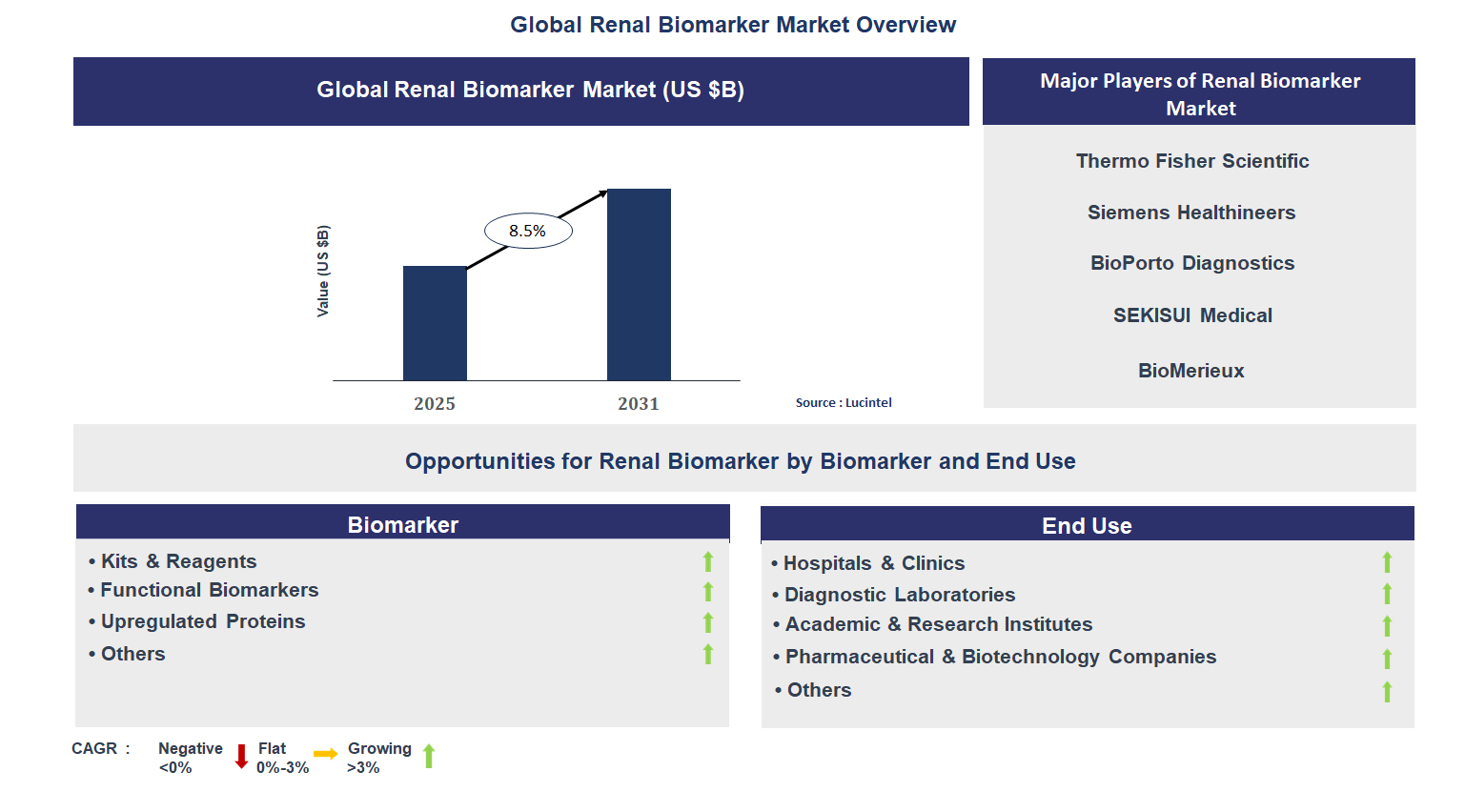
The future of the global renal biomarker market looks promising with opportunities in the hospital & clinic, diagnostic laboratory, academic & research institute, and pharmaceutical & biotechnology company markets. The global renal biomarker market is expected to grow with a CAGR of 8.5% from 2025 to 2031. The major drivers for this market are the increasing prevalence of chronic kidney diseases, the rising awareness about early disease diagnosis, and the growing advancements in biomarker testing technologies.• Lucintel forecasts that, within the biomarker category, functional biomarker is expected to witness the highest growth over the forecast period.
• Within the end use category, hospital & clinic is expected to witness the highest growth.
• In terms of region, APAC is expected to witness the highest growth over the forecast period. Gain valuable insights for your business decisions with our comprehensive 150+ page report. Sample figures with some insights are shown below.
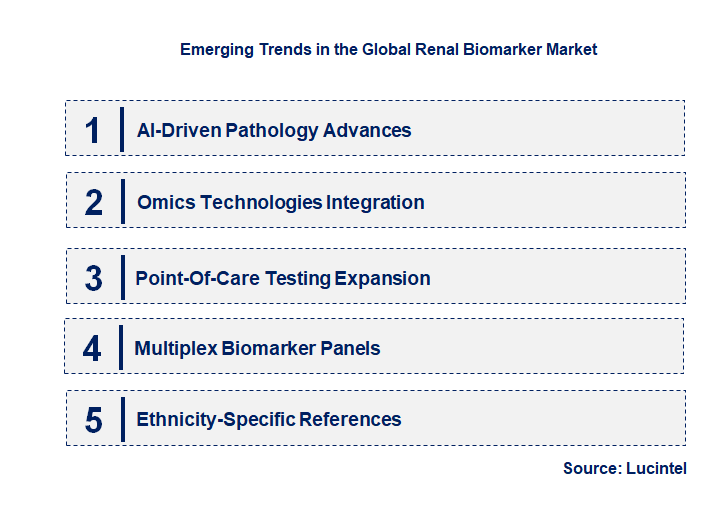
Emerging Trends in the Renal Biomarker Market
Emerging trends in the renal biomarker market emphasize precision diagnostics, omics integration, and point-of-care solutions. As CKD burdens escalate, five trends redefine assays for earlier intervention. They enhance accuracy, accessibility, and personalization, transforming kidney health management worldwide.• AI-Driven Pathology Advances: Platforms like NephroPath accelerate histological analysis, identifying subtle CKD markers faster. This cuts drug trial timelines, enabling precise therapies and reducing misdiagnosis in biopsies, ultimately lowering healthcare costs through targeted interventions.
• Omics Technologies Integration: Genomics and proteomics uncover novel AKI predictors, boosting sensitivity beyond creatinine. They facilitate personalized panels, improving prognosis in diabetics and expanding research applications for diverse populations.
• Point-of-Care Testing Expansion: Portable NGAL cartridges enable rapid screening in remote areas, aiding early hypertension detection. This democratizes access, cuts lab dependency, and supports community programs for timely CKD management.
• Multiplex Biomarker Panels: Combining cystatin C with KIM-1 stratifies risks pre-eGFR drop, endorsed by payers for cost savings. Panels reduce hospitalizations, guiding therapy intensity and enhancing outcomes in high-risk groups.
• Ethnicity-Specific References: Biobanks tailor intervals for Asian cohorts, addressing variability in assays. This boosts confidence in global guidelines, accelerating adoption in diverse markets like Japan and India. These trends propel the market toward proactive, inclusive diagnostics. AI, omics, and portable tools lower barriers, while panels and tailored refs ensure equity. Collectively, they foster resilient ecosystems, curbing CKD progression and innovation in renal care.
Recent Development in the Renal Biomarker Market
Key advancements in the renal biomarker market highlight collaborations, launches, and regulatory nods. Five developments underscore innovation in assays and access, reshaping diagnostics and research worldwide.• AI Platform Launches Surge: NephroPath evaluates biopsies swiftly, accelerating CKD therapy development. It enhances precision in histological markers, streamlining trials and enabling faster regulatory paths for novel drugs.
• Screening Program Expansions: Community vans deploy NGAL for diabetes checks, subsidizing early detection. This scales rural access, curbing AKI progression and integrating biomarkers into chronic care pathways.
• Assay Collaborations Boost: SphingoTec and Boditech co-develop penKid for real-time monitoring. It integrates into AFIAS, improving AKI prognosis and point-of-care reliability across clinics.
• FDA Approvals Accelerate: De Novo nods for KidneyIntelX validate prognostic tests. They expand reimbursement, boosting adoption in high-risk diabetics and reducing end-stage transitions.
• Biomarker Panel Acquisitions: Firms consolidate NGAL expertise via mergers. This diversifies portfolios, speeding multiplex commercialization for comprehensive renal profiling. These innovations fortify early detection and equity in renal care. Launches, approvals, and ties cut costs, enhance accuracy, and align with regs, positioning biomarkers central to CKD prevention globally.
Strategic Growth Opportunities in the Renal Biomarker Market
Renal biomarker growth targets vital applications amid CKD surges. Diagnostics labs, hospitals, research, pharma trials, and point-of-care offer expansion via tailored assays for monitoring and discovery.• Diagnostics Labs Demand: High-throughput ELISA panels detect NGAL early in hypertension cases. They enable scalable screening, optimizing workflows and supporting population health in urban centers.
• Hospital Monitoring Rise: Cystatin C assays guide AKI therapy in ICUs. Real-time insights reduce dialysis needs, improving survival and resource allocation in acute settings.
• Research Biomarker Boom: Omics platforms uncover KIM-1 variants for CKD models. They fuel grant funding, accelerating mechanistic studies and novel target validation.
• Pharma Trial Opportunities: Predictive panels stratify diabetic cohorts. They shorten enrollment, enhancing efficacy signals and speeding renal drug approvals.
• Point-of-Care Expansion: Portable penKid devices aid remote screenings. They empower community interventions, bridging gaps in underserved areas for proactive care. Application-driven innovations diversify revenues in diagnostics and trials. Tailored tools address CKD variances, forging alliances and scaling access for enduring market vitality.
Renal Biomarker Market Driver and Challenges
Major drivers and challenges in the renal biomarker market encompass technological breakthroughs, economic pressures, and regulatory hurdles. Five drivers accelerate progress, while three challenges require navigation. Their interplay defines innovation and accessibility in diagnostics. The factors responsible for driving the renal biomarker market include: 1. CKD Prevalence Surge: Diabetes and hypertension epidemics heighten demand for NGAL assays. Early flagging averts end-stage disease, easing burdens on dialysis and transplants globally. 2. Genetics Tech Advances: Omics reveal sensitive markers like KIM-1. They enable precise genotyping, personalizing therapies and expanding predictive applications in trials. 3. Aging Population Growth: Geriatric vulnerabilities boost cystatin C screening. Tailored protocols mitigate multimorbidity, supporting longevity and reducing long-term care costs. 4. Government Screening Initiatives: Subsidized vans integrate biomarkers in diabetes checks. They scale equity, curbing disparities and integrating renal care into public health. 5. Precision Medicine Shift: Panels stratify risks for targeted interventions. They optimize dosing, enhancing efficacy and minimizing adverse events in diverse cohorts. Challenges in the renal biomarker market are: 1. Regulatory Approval Delays: Stringent FDA paths prolong validations for novel assays. This slows launches, favoring incumbents and stalling access in urgent AKI needs. 2. Reimbursement Variability: Inconsistent coverage hampers adoption in low-income settings. It burdens patients, limiting scaling despite proven cost savings from early detection. 3. Assay Standardization Gaps: Variability in NGAL results erodes trust across labs. Without harmonized refs, inter-site comparisons falter, complicating guidelines and outcomes. Drivers eclipse challenges, channeling growth via tech and policy. Overcoming hurdles through standardization fortifies resilience, empowering leaders in equitable, innovative renal diagnostics.List of Renal Biomarker Companies
Companies in the market compete on the basis of product quality offered. Major players in this market focus on expanding their manufacturing facilities, R&D investments, infrastructural development, and leverage integration opportunities across the value chain. With these strategies renal biomarker companies cater increasing demand, ensure competitive effectiveness, develop innovative products & technologies, reduce production costs, and expand their customer base. Some of the renal biomarker companies profiled in this report include-• Thermo Fisher Scientific
• Siemens Healthineers
• BioPorto Diagnostics
• SEKISUI Medical
• BioMerieux
• SphingoTec
• Randox Laboratories
• Beckman Coulter
• QIAGEN
• Becton Dickinson & Co.
Renal Biomarker Market by Segment
The study includes a forecast for the global renal biomarker market by biomarker, end use, and region.Renal Biomarker Market by Biomarker [Value from 2019 to 2031]:
• Kits & Reagents
• Functional Biomarkers
• Upregulated Proteins
• Others
Renal Biomarker Market by End Use [Value from 2019 to 2031]:
• Hospitals & Clinics
• Diagnostic Laboratories
• Academic & Research Institutes
• Pharmaceutical & Biotechnology Companies
• Others
Renal Biomarker Market by Region [Value from 2019 to 2031]:
• North America
• Europe
• Asia Pacific
• The Rest of the World
Country Wise Outlook for the Renal Biomarker Market
The renal biomarker market evolves rapidly amid rising chronic kidney disease prevalence, driven by diabetes and hypertension surges. In the United States, China, Germany, India, and Japan, innovations focus on early detection tools like NGAL and KIM-1 assays, enhancing diagnostics through AI integration and regulatory approvals. These advancements improve patient outcomes and support precision medicine globally.• United States: High CKD incidence fuels demand for advanced assays from Abbott and bioMérieux, with FDA approvals accelerating commercialization. AI platforms like NephroPath enable precise histological analysis, speeding drug development. Medicare incentives boost albuminuria testing, enhancing early intervention in diabetic patients and reducing progression to end-stage disease.
• China: Urbanization and diabetes epidemic drive biomarker testing expansion, with government funding for CKD screening in community vans using NGAL cartridges. Biotechnology investments yield innovative assays for AKI detection, supporting rural electrification and hypertension management, while local production lowers costs for widespread adoption.
• Germany: EU regulations mandate annual albuminuria screening for type 2 diabetes, financed by statutory insurance, spurring adoption of cystatin C panels. Product launches demonstrate biomarker efficacy in CKD monitoring, while collaborations foster recyclable formulations, optimizing precision in urban substations and export diagnostics.
• India: Ayushman Bharat reimburses albumin-to-creatinine tests for diabetics, boosting volumes in tier-2 cities via local reagent manufacturing. Genomics advancements aid early renal disorder detection amid rising comorbidities, enabling affordable screening in construction and textile sectors for faster industrialization.
• Japan: Aging population prompts ultra-sensitive assays for compact diagnostics in seismic zones, with biobank pooling establishing ethnicity-specific references. High-throughput platforms integrate NGAL for heat-stress screening, prolonging monitoring in high-tech assembly lines and supporting renewable health transitions.

Features of the Global Renal Biomarker Market
Market Size Estimates: Renal biomarker market size estimation in terms of value ($B). Trend and Forecast Analysis: Market trends (2019 to 2024) and forecast (2025 to 2031) by various segments and regions. Segmentation Analysis: Renal biomarker market size by biomarker, end use, and region in terms of value ($B). Regional Analysis: Renal biomarker market breakdown by North America, Europe, Asia Pacific, and Rest of the World. Growth Opportunities: Analysis of growth opportunities in different biomarkers, end uses, and regions for the renal biomarker market. Strategic Analysis: This includes M&A, new product development, and competitive landscape of the renal biomarker market. Analysis of competitive intensity of the industry based on Porter’s Five Forces model.
FAQ
Q1. What is the growth forecast for renal biomarker market? Answer: The global renal biomarker market is expected to grow with a CAGR of 8.5% from 2025 to 2031. Q2. What are the major drivers influencing the growth of the renal biomarker market? Answer: The major drivers for this market are the increasing prevalence of chronic kidney diseases, the rising awareness about early disease diagnosis, and the growing advancements in biomarker testing technologies. Q3. What are the major segments for renal biomarker market? Answer: The future of the renal biomarker market looks promising with opportunities in the hospital & clinic, diagnostic laboratory, academic & research institute, and pharmaceutical & biotechnology company markets. Q4. Who are the key renal biomarker market companies? Answer: Some of the key renal biomarker companies are as follows:• Thermo Fisher Scientific
• Siemens Healthineers
• BioPorto Diagnostics
• SEKISUI Medical
• BioMerieux
• SphingoTec
• Randox Laboratories
• Beckman Coulter
• QIAGEN
• Becton Dickinson & Co. Q5. Which renal biomarker market segment will be the largest in future? Answer: Lucintel forecasts that, within the biomarker category, functional biomarker is expected to witness the highest growth over the forecast period. Q6. In renal biomarker market, which region is expected to be the largest in next 5 years? Answer: In terms of region, APAC is expected to witness the highest growth over the forecast period. Q7. Do we receive customization in this report? Answer: Yes, Lucintel provides 10% customization without any additional cost.
Table of Contents
List of Figures
List of Tables
Methodology
- In-depth interviews of the major players in this market
- Detailed secondary research from competitors’ financial statements and published data
- Extensive searches of published works, market, and database information pertaining to industry news, company press releases, and customer intentions
- A compilation of the experiences, judgments, and insights of Lucintel’s professionals, who have analyzed and tracked this market over the years.


Buy Now
Choose a license that fits your team. Instant PDF delivery.
Prices exclude taxes. Instant delivery. Custom licensing available on request.
Key Questions
- • What are some of the most promising, high-growth opportunities for the renal biomarker market by biomarker (kits & reagents, functional biomarkers, upregulated proteins, and others), end use (hospitals & clinics, diagnostic laboratories, academic & research institutes, pharmaceutical & biotechnology companies, and others), and region (North America, Europe, Asia Pacific, and the Rest of the World)?
- • Which segments will grow at a faster pace and why?
- • Which region will grow at a faster pace and why?
- • What are the key factors affecting market dynamics? What are the key challenges and business risks in this market?
- • What are the business risks and competitive threats in this market?
- • What are the emerging trends in this market and the reasons behind them?
- • What are some of the changing demands of customers in the market?
- • What are the new developments in the market? Which companies are leading these developments?
- • Who are the major players in this market? What strategic initiatives are key players pursuing for business growth?
- • What are some of the competing products in this market and how big of a threat do they pose for loss of market share by material or product substitution?
- • What M&A activity has occurred in the last 5 years and what has its impact been on the industry? For any questions related to Renal Biomarker Market, Renal Biomarker Market Size, Renal Biomarker Market Growth, Renal Biomarker Market Analysis, Renal Biomarker Market Report, Renal Biomarker Market Share, Renal Biomarker Market Trends, Renal Biomarker Market Forecast, Renal Biomarker Companies, write Lucintel analyst at email: helpdesk@lucintel.com. We will be glad to get back to you soon.


