Phase Change Material Market Report: Trends, Forecast and Competitive Analysis to 2035

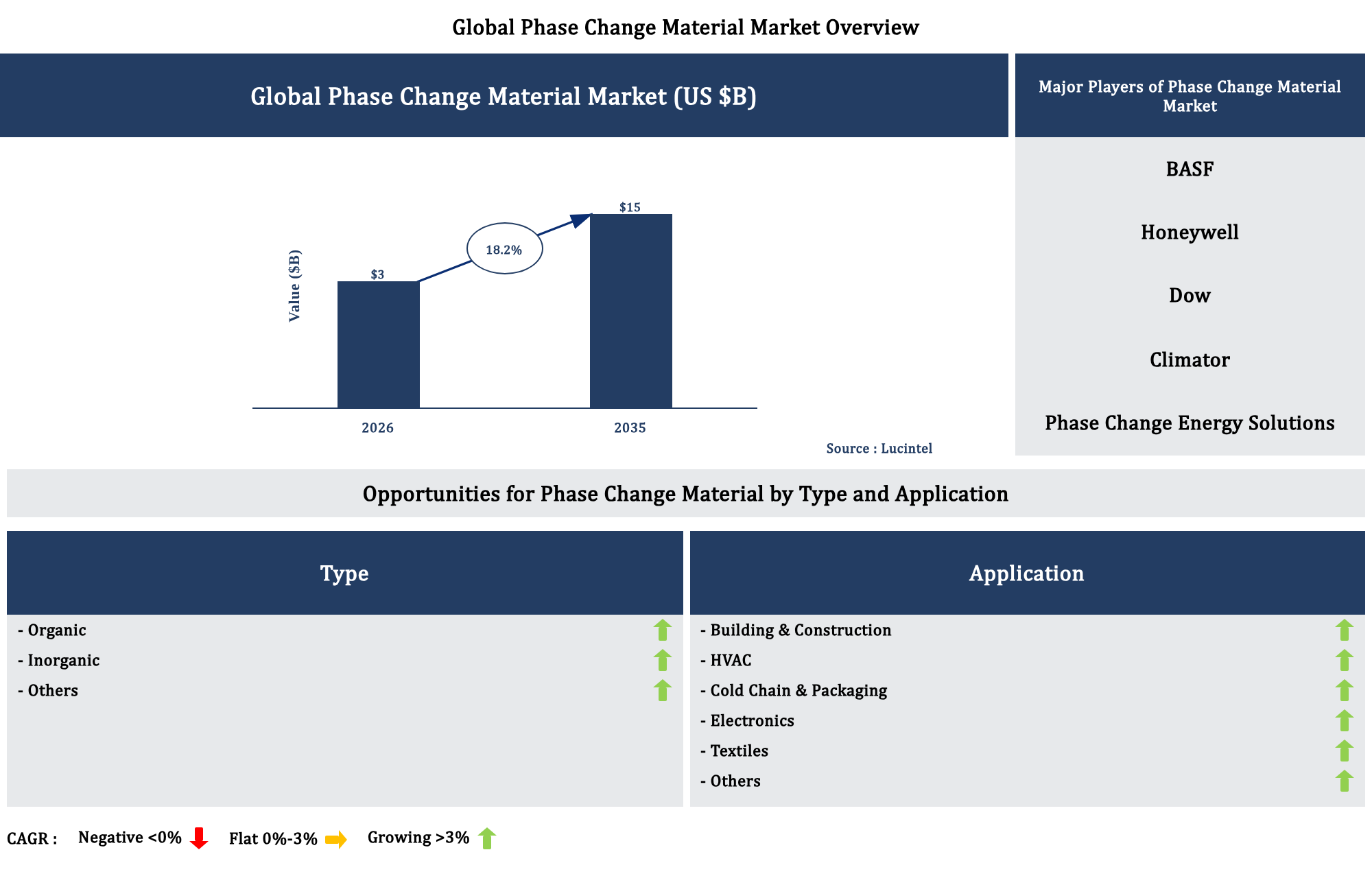
Key data points: The market size in 2035 = $15 billion, growth forecast = 18.2% annually for the next 9 years. Scroll below to get more insights. This market report covers trends, opportunities, and forecasts in the global phase change material market to 2035 by type (organic, inorganic and others), application (building & construction, HVAC, cold chain & packaging, electronics, textiles and others), and region (North America, Europe, Asia Pacific, and the Rest of the World)

Publisher: Lucintel Last Updated: June 2026
See Pricing

Download Sample Report

| ✨ New Download Sample report — Get instant insights! | ✨ New Download Sample report — Get instant insights!

Phase Change Material Market Report: Trends, Forecast and Competitive Analysis to 2035

Phase Change Material Market


The future of the global phase change material market looks promising with opportunities in the building & construction, HVAC, cold chain & packaging, electronics and textiles markets. The global phase change material market is expected to reach an estimated $15 billion by 2035 with a CAGR of 18.2% from 2026 to 2035. The major drivers for this market are the increasing demand for energy-efficient buildings, the rising adoption of thermal energy storage and the growing use in temperature-sensitive applications.

• Lucintel forecasts that, within the type category, organic will remain the largest segment over the forecast period as the increasing demand for sustainable thermal storage solutions.

• Within the application category, building & construction will remain the largest segment due to the the growing adoption of energy-efficient building materials.

• In terms of regions, North America will remain the largest region over the forecast period due to the the increasing adoption of energy efficient building solutions.

Gain valuable insights for your business decisions with our comprehensive 150+ page report.
Phase Change Material Market

Emerging Trends in the Phase Change Material Market

The phase change material market is evolving rapidly as industries seek more efficient thermal management, energy savings, and improved comfort and safety. Phase change materials (PCMs) are increasingly integrated into building envelopes, cold-chain logistics, electronics cooling, textiles, and renewable energy systems to store and release heat in a controlled manner. Advances in encapsulation, bio-based chemistries, and smart controls are broadening performance ranges while lowering environmental impact. At the same time, regulatory pressure for greener buildings and low-carbon cooling solutions is accelerating demand. Together, these dynamics are reshaping the competitive landscape and creating new high-value application niches for PCMs worldwide.
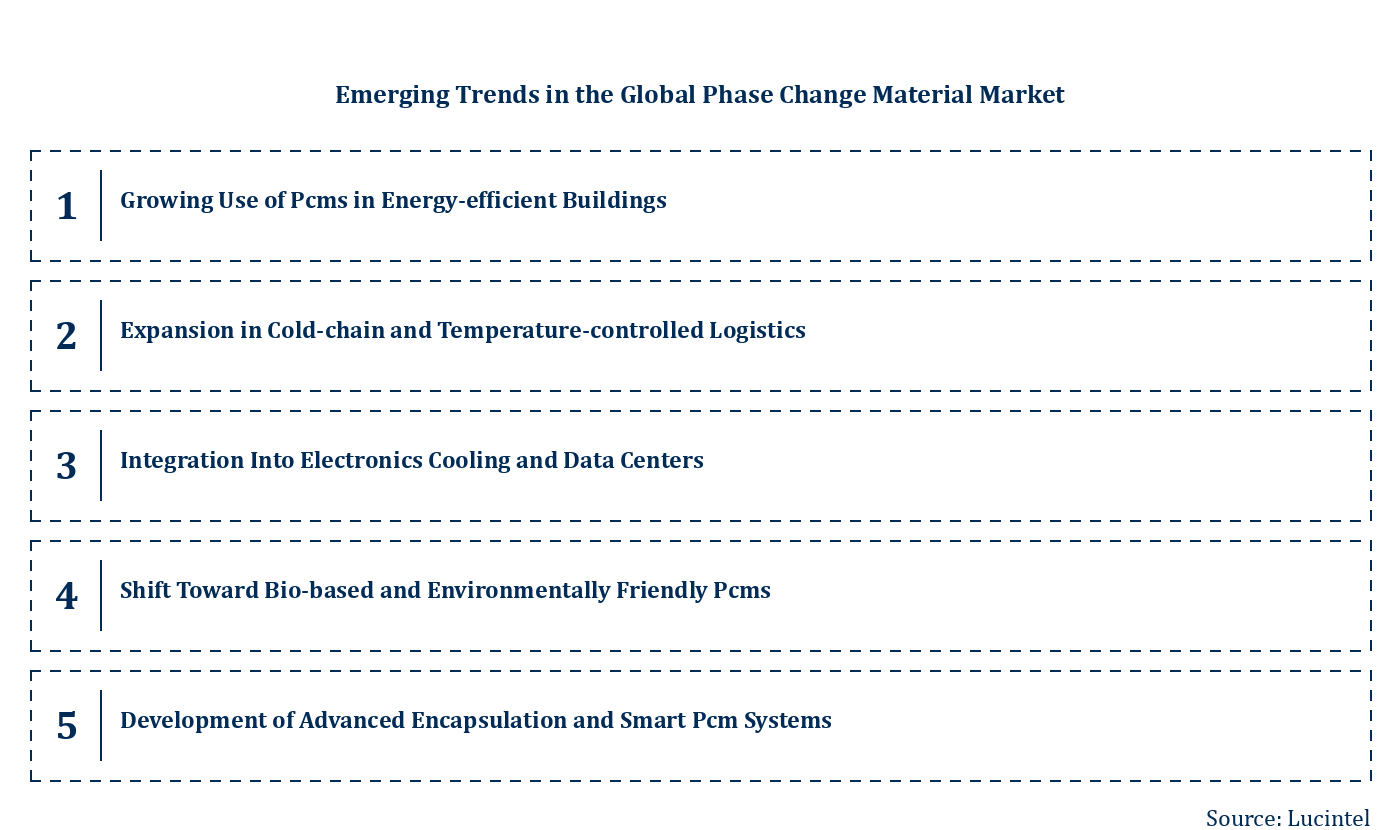
  • Growing Use of PCMs in Energy-efficient Buildings: The phase change material market is seeing strong adoption in building and construction, where PCMs are embedded in walls, ceilings, plasters, and gypsum boards to stabilize indoor temperatures and reduce HVAC loads. This trend is driven by stricter building energy codes, net-zero building targets, and rising cooling needs in urban environments. Developers and ESCOs are turning to PCMs as a passive thermal storage strategy that enhances occupant comfort and lowers peak energy demand without major design changes, stimulating partnerships between PCM suppliers, insulation manufacturers, and green building solution providers.
  • Expansion in Cold-chain and Temperature-controlled Logistics: The phase change material market is benefiting from rapid growth in pharmaceuticals, biologics, vaccines, and fresh food distribution, where precise temperature control is critical. PCMs are being engineered with tightly defined melting points to support 2–8 °C, frozen, and ultra-low temperature ranges in reusable shippers, pallet covers, and last-mile boxes. This trend improves payload protection and reduces reliance on dry ice or active refrigeration, helping cut logistics costs and carbon emissions. Regulatory scrutiny on product integrity and the rise of e-commerce grocery delivery further accelerate PCM adoption in global cold-chain networks.
  • Integration Into Electronics Cooling and Data Centers: The phase change material market is experiencing increasing demand from electronics, EV batteries, and data centers seeking compact, passive thermal management solutions. PCMs are incorporated into battery packs, circuit boards, and server racks to absorb transient heat spikes, protect components, and enable higher power densities. This trend supports miniaturization, faster charging, and performance optimization while reducing dependence on bulky heatsinks and active cooling. As AI workloads and edge computing proliferate, PCMs provide a valuable buffer for thermal runaway risks, driving collaboration between PCM formulators, thermal interface material suppliers, and OEMs.
  • Shift Toward Bio-based and Environmentally Friendly PCMs: The phase change material market is experiencing a clear shift from traditional paraffin-based systems toward bio-based, inorganic, and low-toxicity alternatives. Manufacturers are developing PCMs derived from plant oils, fatty acids, salt hydrates, and recycled materials to align with corporate sustainability targets and regulatory restrictions on hazardous substances. This trend addresses concerns about flammability, leakage, and end-of-life disposal while improving lifecycle performance metrics. Green PCMs are increasingly specified in eco-labeled buildings, consumer products, and packaging, creating differentiation for suppliers that can validate responsible sourcing, safety, and circularity credentials.
  • Development of Advanced Encapsulation and Smart PCM Systems: The phase change material market is being transformed by innovations in microencapsulation, nano-enhanced PCMs, and smart control integration. Advanced encapsulation improves thermal cycling stability, prevents leakage, and allows PCMs to be incorporated into paints, textiles, and polymer composites without compromising mechanical properties. Nanomaterials and additives enhance thermal conductivity and tailor melting ranges. In parallel, sensors and IoT platforms are enabling real-time monitoring and optimization of PCM-based systems. These developments expand application possibilities, reduce performance risks, and support premium pricing for high-performance, application-specific PCM solutions.

Phase Change Material Market by country

Recent Developments in the Phase Change Material Market

The phase change material market is undergoing rapid transformation as industries prioritize energy efficiency, thermal comfort, and decarbonization. Growing adoption in construction, cold-chain logistics, textiles, and electronics cooling is driving innovation in both organic and inorganic PCMs, while regulations around building energy performance and sustainability targets are accelerating deployment. Manufacturers are focusing on higher energy density, improved cycling stability, and safer encapsulation methods to overcome historical reliability challenges. At the same time, collaboration between chemical companies, building system integrators, and HVAC players is expanding practical use cases and business models across global commercial, residential, and industrial applications.

  • Commercialization of Bio-based and Recyclable PCMs: Recent years have seen a surge in bio-based and recyclable phase change materials that reduce reliance on paraffin and salt hydrates, responding directly to stricter sustainability targets and corporate ESG strategies. These PCMs, derived from plant oils and other renewable feedstocks, offer lower toxicity and improved end-of-life recyclability, making them attractive for building envelopes and consumer products. Their commercialization is helping reposition the phase change material market from a niche specialty segment to a key enabler of circular and low-carbon thermal management solutions.
  • Advances in Microencapsulation and Form-stable Technologies: Significant R&D progress in microencapsulation and form-stable PCM composites has improved leakage resistance, mechanical stability, and compatibility with construction materials and textiles. New polymer shells, inorganic coatings, and porous carrier structures enable higher PCM loadings without compromising structural integrity. These advances are expanding integration into gypsum boards, concrete, asphalt, and technical fabrics, allowing more predictable thermal performance and longer service life. As a result, the phase change material market is moving toward more standardized, building-code-ready products that simplify specification for architects and engineers.
  • Integration Into Smart Buildings and Connected HVAC Systems: The phase change material market is increasingly linked with smart building platforms that combine PCMs with sensors, controls, and advanced HVAC equipment. By leveraging predictive algorithms and real-time energy pricing, PCMs are being used for load shifting, peak shaving, and demand response in commercial and residential buildings. Pilot projects and commercial deployments show that coupling PCMs with smart thermostats and variable-speed heat pumps can reduce energy bills and improve comfort. This integration trend is positioning PCMs as part of holistic building energy management strategies rather than stand-alone materials.
  • Expansion in Cold-chain, Pharmaceutical, and E-commerce Logistics: Rapid growth in e-commerce, biologics, and temperature-sensitive pharmaceuticals has accelerated use of phase change materials in cold-chain packaging and transport systems. New PCM formulations with tightly controlled phase transition temperatures are enabling passive thermal protection for vaccines, biologics, and fresh food over longer durations without active refrigeration. Logistics providers and packaging specialists are adopting reusable PCM-based containers to cut dry ice usage and reduce operational emissions. This expansion is creating a robust, recurring demand base that diversifies the phase change material market beyond construction applications.
  • Strategic Partnerships, M&A, and Capacity Expansions: The phase change material market has seen a wave of strategic collaborations between chemical producers, insulation manufacturers, packaging firms, and HVAC companies, alongside targeted mergers and acquisitions. These moves aim to secure supply, broaden application know-how, and accelerate commercialization in high-potential segments such as net-zero buildings and green data centers. At the same time, several leading players are investing in new production lines and regional manufacturing hubs to improve supply security and reduce logistics costs. This consolidation and capacity build-out are reshaping the competitive landscape and enabling larger, multi-region deployments.

Strategic Growth Opportunities in the Phase Change Material Market

The phase change material market is entering a strong growth trajectory as efficiency, decarbonization, and thermal resilience become core priorities across industries. Phase change materials (PCMs) offer latent heat storage that enables tighter temperature control, higher energy savings, and improved comfort or product stability. Rapid innovation in bio-based PCMs, encapsulation technologies, and system integration is widening their use from buildings and textiles to cold chain logistics and electronics. Regulatory pressure to cut emissions, combined with rising energy prices and electrification, is accelerating adoption. Five application areas stand out as the most attractive strategic growth opportunities for market participants.

  • Building and Construction Thermal Management: PCMs integrated into walls, ceilings, façades, and HVAC systems can shave peak loads, reduce heating and cooling demand, and improve indoor comfort without oversized equipment. Growth is driven by net-zero building codes, green certifications, and retrofits in commercial and residential stock, especially where grid constraints and extreme temperatures converge. Innovations such as microencapsulated PCMs in plasters and panels, plus smart controls and digital twins, create opportunities for system-level solutions, long-term service contracts, and performance-based energy savings models across both new-build and retrofit projects.
  • Cold Chain and Refrigerated Logistics: The rising demand for temperature-sensitive pharmaceuticals, biologics, and fresh and frozen foods is expanding the use of PCMs in passive and active cold chain packaging, containers, and transport units. By providing stable isothermal conditions, PCMs reduce reliance on dry ice and continuous mechanical refrigeration, lowering operational costs and emissions. Opportunities emerge in vaccine distribution, last-mile grocery delivery, and cross-border logistics where grid reliability is weak. Suppliers can differentiate via validated temperature ranges, regulatory-compliant designs, reusable solutions, and integration with IoT temperature monitoring for verifiable, data-backed cold chain performance.
  • Consumer and Technical Textiles: PCMs embedded in fibers, coatings, and laminates enable garments, bedding, and protective gear to actively buffer against temperature swings, improving wearer comfort and performance. Growth is underpinned by outdoor sports, military and first-responder gear, medical textiles, and premium bedding segments. Brand owners seek lightweight, durable, and wash-resistant PCM formulations that maintain functionality over many cycles. Strategic opportunities include co-developing proprietary PCM-enhanced fabric platforms with apparel and gear manufacturers, licensing performance labels, and targeting high-value niches such as space-constrained wearables, climate-adaptive uniforms, and smart textiles with integrated sensing and thermal management.
  • Electronics and Battery Thermal Management: As power densities increase in data centers, power electronics, EV batteries, and consumer devices, overheating risks and performance losses create a strong need for advanced thermal control. PCMs can absorb transient heat spikes, improve temperature uniformity, and extend component lifetime when integrated into modules, housings, and cooling plates. The most attractive opportunities lie in EV battery packs, fast-charging infrastructure, 5G equipment, and compact consumer electronics. Players that combine PCM formulations with advanced encapsulation, graphite or metal additives, and system co-design can secure design wins and long-term supply positions in high-growth electronics segments.
  • Industrial Waste Heat Recovery and Process Stability: Industrial processes in chemicals, food and beverage, metal processing, and district heating generate significant low- to medium-grade waste heat that is often underutilized. PCMs enable compact thermal storage systems that capture and release this heat to support preheating, cleaning-in-place cycles, or space conditioning, improving overall energy efficiency. Opportunities include modular PCM storage units for small and mid-sized plants, integration into combined heat and power and solar thermal systems, and heat buffering for batch processes requiring tightly controlled temperatures. Service-based business models and turnkey retrofits can accelerate adoption among cost- and reliability-focused industrial customers.

Phase Change Material Market Drivers and Challenges

The global phase change material (PCM) market is shaped by a multifaceted set of technological, economic, and regulatory dynamics. Growing emphasis on energy efficiency, stricter building standards, and the need for temperature stability across diverse applications are creating solid momentum for PCM deployment. At the same time, issues such as high material costs, performance variability, and limited industry awareness constrain faster adoption. Technology advances in encapsulation, bio-based chemistries, and system integration are steadily improving the value proposition. Understanding the core drivers and challenges is essential for manufacturers, integrators, and end users seeking to capture long-term opportunities in this evolving market.

The factors responsible for driving the phase change material market include:

  • Energy Efficiency and Thermal Management: The phase change material market is strongly driven by the growing demand for efficient thermal management solutions across buildings, industrial processes, and consumer products, as organizations seek to reduce operational energy use and carbon footprints.
  • Expansion of Temperature-sensitive Logistics: Rapid growth in temperature-controlled logistics for pharmaceuticals, biologics, and fresh food is accelerating PCM adoption because these materials can stabilize temperatures in packaging and containers without continuous active cooling.
  • Advances in PCM Encapsulation and Formulation: Continuous innovation in microencapsulation, macroencapsulation, and advanced PCM formulations is enhancing durability, safety, and integration flexibility, enabling more reliable and long-lasting thermal storage solutions.
  • Supportive Regulations and Green Building Standards: Stricter energy codes, sustainability certifications, and decarbonization policies worldwide are encouraging the incorporation of PCMs into building envelopes, HVAC systems, and industrial processes as recognized tools for demand reduction and energy storage.
  • Growth of Renewable Energy and Grid Flexibility Needs: Increasing penetration of intermittent renewable power sources is driving interest in flexible thermal energy storage, and PCMs offer a cost-effective way to shift heating and cooling loads, improving grid stability and enabling better utilization of renewable energy.

The challenges facing this phase change material market include:

  • High Upfront Costs and Price Volatility: The phase change material market faces the obstacle of relatively high initial material and system costs compared with conventional insulation or cooling technologies, and price volatility in raw materials can further limit adoption, particularly in cost-sensitive segments.
  • Technical Performance Limitations and Safety Concerns: Some PCMs exhibit issues such as subcooling, phase separation, flammability, or limited cycling stability, which can reduce effective thermal performance over time and raise safety concerns, requiring careful formulation, testing, and system design.
  • Limited Awareness, Standardization, and Integration Expertise: Many architects, engineers, and end users still lack familiarity with PCM solutions, and the absence of widely accepted standards, design guidelines, and performance benchmarks makes specification more complex and slows mainstream market penetration.

The overall development of the global phase change material market reflects a tension between strong structural drivers and persistent implementation barriers. Rising energy costs, climate objectives, and growth in temperature-sensitive sectors are expanding the opportunity space for PCM-based thermal storage and regulation. However, cost, performance, and knowledge gaps continue to moderate the pace of adoption, especially in regions with less stringent energy regulations. Progress in materials science, encapsulation technologies, and application engineering is gradually mitigating these constraints. Stakeholders that invest in robust validation, cost optimization, and clear value communication are best positioned to benefit as the market matures.

List of Phase Change Material Market Companies

Companies in the market compete on the basis of product quality offered. Major players in this market focus on expanding their manufacturing facilities, R&D investments, infrastructural development, and leverage integration opportunities across the value chain. Through these strategies phase change material market companies cater increasing demand, ensure competitive effectiveness, develop innovative products & technologies, reduce production costs, and expand their customer base. Some of the phase change material market companies profiled in this report include-

  • BASF
  • Honeywell
  • Dow
  • Climator
  • Phase Change Energy Solutions
  • Rubitherm
  • Microtek Laboratories
  • PCM Products
  • SGL Carbon

Phase Change Material Market by Segment

The study includes a forecast for the global phase change material market by type, application, and region.

  • Phase Change Material Market by Type [Value ($B) from 2019 to 2035]:
    • Organic
    • Inorganic
    • Others
  • Phase Change Material Market by Application [Value ($B) from 2019 to 2035]:
    • Building & Construction
    • HVAC
    • Cold Chain & Packaging
    • Electronics
    • Textiles
    • Others
  • Phase Change Material Market by Region [Value ($B) from 2019 to 2035]:
    • North America
    • Europe
    • Asia Pacific
    • The Rest of the World

Country Wise Outlook for the Phase Change Material Market

The phase change material (PCM) market is evolving rapidly as countries seek advanced thermal management solutions for buildings, cold-chain logistics, electronics, and electric vehicles. PCMs, which store and release heat during phase transitions, are increasingly integrated into energy-efficient construction, temperature-controlled packaging, and battery systems. Recent developments reflect differing national priorities, from decarbonizing building stock to securing supply chains and fostering advanced materials innovation. The summaries below outline the latest trends and initiatives in the United States, China, Germany, India, and Japan, highlighting how each market is shaping demand, technology pathways, and commercialization of PCMs.

  • United States: The United States PCM market is seeing strong momentum driven by green building standards, high energy costs, and federal decarbonization incentives. Recent developments include greater use of organic and bio-based PCMs in building envelopes, data centers, and refrigerated transport, supported by DOE-funded demonstration projects. Startups and specialty chemical players are scaling micro-encapsulated PCMs for HVAC retrofits and smart textiles, while large logistics firms deploy PCM-based cold-chain solutions for pharmaceuticals and fresh food. Stricter ESG mandates and utility rebates are encouraging broader adoption, particularly in commercial real estate and temperature-sensitive supply chains.
  • China: China’s PCM market is expanding quickly, underpinned by aggressive urbanization, large-scale cold-chain investments, and strong government backing for energy-efficient materials. Local manufacturers are ramping production of inorganic salt-hydrate and paraffin-based PCMs for building insulation, district cooling, and industrial waste-heat recovery. Policy support for “dual carbon” goals is driving integration of PCMs into prefabricated buildings and solar-thermal systems, while leading battery and EV makers test PCM packs for thermal runaway protection. Domestic innovation centers focus on low-cost, high-latent-heat materials and scalable encapsulation technologies to reduce reliance on imported advanced thermal solutions.
  • Germany: Germany’s PCM market is characterized by high technical standards and a strong emphasis on sustainable construction and industrial decarbonization. Recent developments include widespread use of PCMs in passive house concepts, ceiling tiles, and wallboards to smooth indoor temperature fluctuations and reduce HVAC loads. German research institutes and Mittelstand companies are advancing bio-based and recyclable PCMs, as well as system-integrated PCM modules for heat pumps and district heating networks. Automotive and machinery sectors are piloting PCM-based thermal buffers for power electronics and batteries, supported by EU and national funding programs that prioritize lifecycle assessment and circular material use.
  • India: In India, the PCM market is growing from a relatively low base, fueled by rapid expansion of cold-chain infrastructure and rising interest in low-cost energy efficiency solutions. Recent activity centers on PCM-enabled refrigerated trucks, vaccine carriers, and pack-house storage that mitigate grid instability and diesel use. Local manufacturers and startups are developing affordable paraffin and salt-hydrate PCMs tailored to tropical climate needs, alongside collaborations with academic institutions for agro-produce preservation. Government schemes for smart cities and building energy codes are spurring pilot projects that embed PCMs in roofs and walls, although broader adoption still depends on cost reductions and installer awareness.
  • Japan: Japan’s PCM market development is closely linked to high-performance buildings, precision manufacturing, and advanced electronics cooling. Recent initiatives focus on incorporating PCMs into office and residential building materials to stabilize indoor temperatures in a warming climate and aging building stock. Electronics and EV manufacturers are testing compact PCM modules for thermal management of power devices, batteries, and 5G infrastructure, prioritizing safety and reliability. Japanese firms are also innovating in high-purity, stable PCMs and sophisticated encapsulation methods suitable for space-constrained applications, while government energy-efficiency programs encourage demonstration projects in urban redevelopment and public facilities.

Features of the Phase Change Material Market

  • Market Size Estimates: Phase change material market size estimation in terms of value ($B).
  • Trend and Forecast Analysis: Market trends (2019 to 2025) and forecast (2026 to 2035) by various segments and regions.
  • Segmentation Analysis: Phase change material market size by various segments, such as by type, application and region in terms of value ($B).
  • Regional Analysis: Phase change material market breakdown by North America, Europe, Asia Pacific, and the Rest of the World.
  • Growth Opportunities: Analysis of growth opportunities in different type, application and regions for the phase change material market.
  • Strategic Analysis: This includes M&A, new product development, and competitive landscape of the phase change material market.
  • Analysis of competitive intensity of the industry based on Porter's Five Forces model.

Article

Phase Change Material Market: Which Innovations Are Rewriting the Thermals Playbook?

Dallas, June 4, 2026 – The Phase Change Material (PCM) market is entering a decisive growth phase as energy efficiency, thermal management, and sustainability move from compliance topics to boardroom priorities. PCMs, which store and release heat during phase transitions such as solid-to-liquid, are shifting from niche thermal additives to strategic enablers across construction, electronics, cold chain logistics, mobility, and renewable energy systems. Momentum is being driven by stricter building codes, data center heat challenges, and the need to stabilize renewable energy, but the most disruptive impact is emerging where technology and thermal performance intersect.

Across the market, three to five major trends are reshaping business models: engineered bio-based and high-performance chemistries, integration of PCMs into smart systems, rapid adoption in electronics and batteries, and new business models in thermal services and circularity. These shifts are redefining which sectors capture value and which players risk being left behind as thermal performance becomes a differentiating feature instead of a hidden component cost.

  • A key trend is the acceleration of advanced PCM chemistries that balance thermal performance, safety, and sustainability.
  • Another trend centers on embedding PCMs into smart, sensor-enabled systems that dynamically manage heat, particularly in buildings and electronics.
  • Growing adoption in technology hardware, from data centers to consumer devices, is pushing PCMs into the strategic planning of semiconductor and device manufacturers.
  • Emerging business models around energy services, cooling-as-a-service, and circular thermal materials are changing how value is captured in the PCM ecosystem.

Why Are Advanced PCM Chemistries Becoming a Strategic Differentiator?

The chemistry of PCMs is moving beyond basic paraffins and salt hydrates toward highly engineered formulations aimed at specific temperature windows, lifespan, and safety requirements. Stakeholders are increasingly demanding materials that not only deliver precise thermal performance but also align with ESG commitments and regulatory expectations. This shift is opening new product categories and reshuffling the competitive landscape among materials suppliers and specialty chemical companies.

  • Engineered organic PCMs are seeing rising adoption due to their tunable melting points, chemical stability, and compatibility with encapsulation technologies.
  • Bio-based PCMs derived from plant oils and other renewable feedstocks are gaining traction as building owners, consumer electronics brands, and logistics companies seek lower-carbon solutions.
  • Salt hydrates and inorganic PCMs remain attractive for high-capacity and higher-temperature applications such as industrial waste heat recovery and solar thermal storage, but corrosion, supercooling, and cycling durability remain active areas of R&D.
  • Nanocomposite PCMs and enhanced thermal conductivity additives are being developed to overcome slow heat transfer, especially in compact electronics and densely packed battery systems.

Buildings, refrigerated transport, and renewable energy storage markets are expected to see significant impact from these chemistry advances. More stable and safer PCMs unlock integration into structural building elements and façade systems, while higher-temperature materials support industrial demand response and heat storage. As chemistries become more customizable, suppliers that can co-develop formulations with OEMs and integrators will capture disproportionate value.

How Is Smart Integration of PCMs Transforming Buildings and Energy Systems?

Standalone PCM products are giving way to integrated thermal systems that combine materials, sensors, controls, and digital optimization. In the built environment, PCMs are increasingly embedded in wallboards, ceiling tiles, flooring systems, and HVAC components to blunt peak loads and smooth indoor temperatures. When combined with intelligent controls, these materials enable time-shifting of cooling and heating, turning passive structures into active thermal assets.

  • Smart building platforms are starting to incorporate PCM-based thermal storage as a controllable load to respond to time-of-use tariffs and grid signals.
  • HVAC manufacturers are experimenting with PCM-enhanced air handling units, chillers, and duct components to reduce compressor runtime and manage peak capacity.
  • Cold chain logistics operators are integrating PCM packs with IoT trackers and data platforms to maintain temperature in pharmaceuticals, food, and biotech shipments while reducing reliance on dry ice.
  • Renewable energy developers are piloting PCM-based storage modules that pair with solar thermal collectors or hybrid systems to deliver dispatchable heat and reduce curtailment.

These smart integrations are expected to disrupt traditional cooling capacity planning and energy procurement models. Utilities and energy service companies are beginning to view PCM-equipped buildings and facilities as flexible thermal batteries that can be monetized in demand response and ancillary services markets. This creates opportunities for new partnerships between materials firms, automation vendors, and energy retailers built around performance guarantees rather than simple product sales.

Where Will the Technology Industry Feel the Strongest Impact of PCM Innovation?

The technology industry is emerging as one of the most dynamic demand centers for advanced PCMs, driven by escalating heat densities, miniaturization, and the electrification of mobility. Data centers, high-performance computing, consumer electronics, and electric vehicles are all confronting the limits of conventional air cooling and simple heat sinks. In this environment, PCMs are moving from experimental concepts to standard design options in product roadmaps.

  • Data centers are exploring PCM-enhanced cold plates, rack-level thermal buffers, and modular PCM panels to manage power spikes, enable higher rack densities, and extend safe operating windows during cooling failures.
  • High-end laptops, gaming consoles, and smartphones are incorporating microencapsulated PCMs in thermal interface materials and spreaders to absorb short-term heat loads and smooth temperature peaks that degrade user experience and chip reliability.
  • Electric vehicle battery packs and power electronics are adopting PCM layers and encapsulated modules to stabilize cell temperatures during fast charging and high-load driving, supporting both range consistency and safety.
  • Telecom equipment and 5G base stations in harsh environments are using PCMs within enclosures to manage diurnal temperature swings without oversized active cooling.

These use cases are poised to disrupt traditional thermal design workflows and supplier hierarchies in the electronics value chain. As device makers embed PCMs deeper into their architectures, Tier 1 and Tier 2 suppliers with advanced materials expertise and strong co-design capabilities will gain leverage. Thermal performance may become a key differentiator not only for flagship devices but also for cloud services, charging networks, and mobility platforms.

Which Markets Stand to Gain Most from PCM-Driven Disruption?

While PCMs touch many sectors, several markets are positioned for outsized impact as innovations scale and costs decline. These markets combine large thermal footprints, clear pain points, and regulatory or customer pressures that reward smarter heat management.

  • Construction and real estate will benefit from PCM-enabled passive cooling and heating that reduces energy use, lowers operating costs, and supports net-zero building commitments.
  • Data centers and cloud infrastructure will leverage PCMs to increase rack densities, defer expensive cooling upgrades, and enhance resilience, directly affecting total cost of ownership and service reliability.
  • Cold chain logistics for pharmaceuticals, biologics, and high-value foods will adopt PCM containers and panels to maintain narrow temperature bands, cutting spoilage and dependence on carbon-intensive refrigerants.
  • Automotive and mobility, particularly EVs and advanced driver-assistance systems, will use PCMs in batteries, power electronics, and cabin climate systems to improve performance and extend component lifetimes.
  • Industrial process industries will deploy high-temperature PCMs to capture waste heat, smooth process variability, and participate in emerging energy flexibility and carbon markets.

Across these markets, the disruption is not merely technical. Business models are shifting toward performance-based contracts, thermal-as-a-service, and integrated energy solutions, where PCMs become hidden but critical enablers of new revenue streams and cost structures.

What Are the Main Challenges Holding Back Wider PCM Adoption?

Despite rising interest and a richer innovation pipeline, the PCM market continues to face structural and operational barriers that slow scale-up. Many of these challenges are not purely material-science issues but relate to integration complexity, standards, and fragmented value chains.

  • Cost competitiveness remains a concern, particularly when comparing advanced PCMs with traditional insulation or oversizing of mechanical cooling, making clear business cases essential.
  • Performance variability and long-term stability under repeated thermal cycling can raise questions among conservative buyers in mission-critical applications such as healthcare, aerospace, and data centers.
  • Lack of standardized testing protocols, rating systems, and certification frameworks complicates comparisons and slows procurement decisions.
  • Integration complexity in construction and electronics design demands early-stage co-engineering, which can conflict with established design cycles and siloed procurement processes.
  • Safety, fire performance, and environmental impacts over the full lifecycle require careful evaluation, especially for organic and bio-based PCMs used in occupied spaces.

Overcoming these barriers will require coordinated efforts among materials suppliers, standards bodies, regulators, and system integrators. Demonstration projects, open data on long-term performance, and clear labeling will play pivotal roles in building confidence and accelerating broader deployment.

Where Do the Biggest Opportunities Emerge for Innovators and Investors?

The evolving PCM landscape offers attractive openings for both established corporates and new entrants willing to build capabilities across materials, systems engineering, and digital services. The most compelling opportunities lie where PCMs intersect with decarbonization, electrification, and digitalization agendas.

  • Materials innovators can create differentiated portfolios around bio-based, high-temperature, or nanostructured PCMs tailored to specific industries and regulatory regimes.
  • System integrators and OEMs can package PCMs into turnkey solutions for buildings, data centers, and EV platforms, bundling hardware, software, and performance guarantees.
  • Energy service companies can incorporate PCM-based thermal storage into demand response programs, district energy schemes, and resilience offerings aimed at hospitals, campuses, and industrial parks.
  • Technology firms can use PCM-based thermal innovations to push device performance limits, enabling smaller form factors, faster charging, and higher computing densities without compromising reliability.
  • Investors can target platforms that combine advanced materials with scalable manufacturing and strong partnerships in construction, logistics, and mobility, capturing upside from policy-driven growth.

What Recent Developments Signal the Next Phase of Market Maturity?

Recent activity across the PCM value chain illustrates how the market is moving from experimental pilots to more mature, repeatable deployments. While specific corporate announcements vary by region and segment, several patterns are emerging that point to the next stage of competition and consolidation.

  • Building material manufacturers have launched PCM-infused drywall, ceiling tiles, and façade elements, backed by field data showing reduced peak loads and improved occupant comfort in real-world projects.
  • Data center operators have initiated pilots that integrate PCM modules at rack and room levels, aiming to validate energy savings, resilience benefits, and compatibility with liquid cooling strategies.
  • Major logistics and parcel companies have expanded use of PCM-based insulated packaging for temperature-sensitive products, as regulations for pharmaceutical distribution tighten and customers demand lower-carbon shipping options.
  • Automotive suppliers have introduced PCM-enhanced thermal management modules for EV batteries and power electronics, often tied to fast-charging strategies and extended warranties.
  • Research collaborations between universities, chemical companies, and energy utilities are focusing on large-scale PCM storage for district heating, solar thermal plants, and industrial waste heat reuse.

These developments suggest that the phase change material market is entering a scale-up phase characterized by sector-specific solutions, performance data, and closer alignment with policy and sustainability frameworks. For executives and investors, the message is clear: PCMs are transitioning from a specialized thermal niche to a strategic lever in energy, technology, and infrastructure transformation. Those who move early to understand, integrate, and commercialize these materials within broader systems will be better positioned to capture emerging value and shape the next wave of thermal innovation.

Top 5 Companies

1. BASF

  • Headquarters: Ludwigshafen, Germany.
  • Website: https.www.basf.com.
  • Total Revenue (2024): Approximately €73 billion (company-wide).
  • Establishment Year: 1865.

BASF is one of the largest global chemical companies and a leading supplier of advanced materials, including phase change materials (PCMs) used for thermal energy storage and temperature control applications. Headquartered in Ludwigshafen, Germany, and established in 1865, BASF employs well over 100,000 people worldwide and operates production sites and R&D centers across Europe, North America, Asia Pacific, South America, and the Middle East. In the phase change material market, BASF’s portfolio includes organic, inorganic, and bio-based PCMs tailored for building envelopes, interior plasters, wallboards, ceiling systems, refrigerated transport, cold-chain packaging, and temperature-controlled logistics. These materials are integrated into construction products to reduce heating and cooling loads, enhance energy efficiency, and support net-zero building designs. BASF has expanded its geographic reach for PCM-related solutions by collaborating with building materials manufacturers and insulation system providers in Europe and North America and by promoting PCM-enhanced solutions in rapidly urbanizing regions in Asia. The company regularly enters technology partnerships and joint development agreements with construction firms, HVAC manufacturers, and packaging specialists to co-develop PCM-integrated systems. While BASF’s mergers and acquisitions are broad-based across chemicals and materials, its acquisitions of specialty chemicals businesses and building materials portfolios have reinforced its capabilities in energy-efficient construction and thermal management, indirectly strengthening its PCM business and global offering.

2. Honeywell

  • Headquarters: Charlotte, North Carolina, USA.
  • Website: https.www.honeywell.com.
  • Total Revenue (2024): Approximately $37 billion (company-wide).
  • Establishment Year: 1906.

Honeywell is a diversified technology and manufacturing company with strong positions in building technologies, performance materials, and aerospace, and it participates in the phase change material market through its advanced materials and building solutions businesses. Headquartered in Charlotte, North Carolina, and founded in 1906, Honeywell employs more than 90,000 people and serves customers in over 100 countries. Within the PCM domain, Honeywell develops and supplies specialty chemicals, encapsulated PCMs, and thermal management solutions used in building envelopes, energy-efficient roofing, chilled ceilings, cold-chain logistics, electronics cooling, and battery thermal management. Its PCMs are designed to smooth temperature peaks, store surplus energy, and improve overall system efficiency in both residential and commercial buildings as well as in industrial applications. The company has a broad geographic footprint across North America, Europe, the Middle East, Asia Pacific, and Latin America, with local engineering support and integration capabilities that enable PCM deployment in region-specific building codes and climatic conditions. Honeywell has expanded its presence in energy-efficient buildings and advanced materials through investments and partnerships focused on smart buildings and sustainable infrastructure, where PCMs are often integrated with controls and sensors. While Honeywell’s major mergers and acquisitions span automation, software, and specialty materials, the acquisition and integration of performance materials and building technologies businesses have allowed it to bundle PCMs with insulation, HVAC controls, and building management systems, strengthening its position in the global phase change material market.

3. Dow

  • Headquarters: Midland, Michigan, USA.
  • Website: https.www.dow.com.
  • Total Revenue (2024): Approximately $45 billion (company-wide).
  • Establishment Year: 1897.

Dow is a leading global materials science company that offers a wide portfolio of specialty polymers, chemicals, and advanced materials, including solutions relevant to the phase change material market. Headquartered in Midland, Michigan, and founded in 1897, Dow employs tens of thousands of people and operates manufacturing and R&D facilities across North and South America, Europe, the Middle East, Africa, and Asia Pacific. In the PCM space, Dow focuses on enabling technologies such as encapsulation polymers, binders, and formulation components that are used in microencapsulated PCMs for building materials, textiles, and thermal packaging. Dow’s materials are widely used in wallboards, plasters, roofing membranes, and insulation products that incorporate PCMs for improved thermal comfort and reduced energy consumption. The company also supports PCMs for cold-chain and temperature-sensitive logistics through high-performance foams and encapsulation resins. Dow has extended its geographic presence by partnering with regional construction material producers, packaging companies, and appliance manufacturers to integrate PCM-capable materials into local product lines. Its global innovation centers collaborate closely with OEMs to tailor PCM-related solutions to climatic and regulatory requirements in key markets such as Europe, China, and North America. Dow’s broader M&A activity, including portfolio rationalization and targeted acquisitions in performance materials, has bolstered its capabilities in advanced building and packaging solutions. These moves support the development and commercialization of PCM-containing systems, helping customers design more energy-efficient buildings, appliances, and logistic chains that benefit from controlled thermal management and improved sustainability.

4. Phase Change Energy Solutions

  • Headquarters: Asheboro, North Carolina, USA.
  • Website: https.www.phasechange.com.
  • Total Revenue (2024): Not publicly disclosed; company positions itself as a leading PCM solution provider.
  • Establishment Year: 2004.

Phase Change Energy Solutions is a specialized company dedicated to the development and commercialization of phase change materials and PCM-enabled products for energy efficiency and thermal management. Headquartered in Asheboro, North Carolina, and established in 2004, the company focuses on engineered PCMs derived from bio-based and hybrid formulations designed for predictable melting and freezing temperatures. While exact employee numbers are not publicly detailed, Phase Change Energy Solutions operates with a focused team serving customers in North America and expanding into Europe, the Middle East, and Asia through distributors and partners. Its product portfolio includes PCM-enhanced building panels, ceiling tiles, insulation systems, cold-chain and refrigerated packaging solutions, data center thermal management products, and textile applications. Branded PCM solutions are integrated into commercial and residential buildings to reduce peak loads and improve occupant comfort, and into logistics systems to maintain temperature for food, pharmaceuticals, and other temperature-sensitive goods. The company has expanded its geographic reach by forming alliances with building system integrators, HVAC firms, and packaging companies in Europe and the Middle East and by participating in demonstration projects and pilot installations in diverse climates. Phase Change Energy Solutions has also entered strategic collaborations and licensing agreements with global construction and technology firms to embed its PCMs into established product lines. While it has not announced large headline mergers or acquisitions, it has pursued technology partnerships and smaller asset or IP deals that strengthen its PCM chemistry, encapsulation know-how, and manufacturing capabilities, reinforcing its position as a dedicated player in the global phase change material market.

5. Rubitherm

  • Headquarters: Berlin, Germany.
  • Website: https.www.rubitherm.eu.
  • Total Revenue (2024): Not publicly disclosed; operates as a specialized PCM manufacturer.
  • Establishment Year: 1993.

Rubitherm is a Germany-based specialist in phase change materials and PCM systems, recognized for its broad catalog of standard and customized PCMs serving a wide range of thermal energy storage applications. Founded in 1993 and headquartered in Berlin, Rubitherm focuses almost exclusively on PCMs, offering a portfolio that includes organic, inorganic, and eutectic formulations as well as macro- and micro-encapsulated products. The company serves customers across Europe and internationally, with distributors and partners extending its reach into Asia, North America, and other regions. While specific employee counts are not widely disclosed, Rubitherm operates as a focused technology company with in-house development and production capabilities. Its PCM products are used in building and construction, refrigeration and cold-chain logistics, solar thermal storage, waste-heat recovery, HVAC systems, electronics cooling, and temperature-sensitive packaging. Rubitherm supplies PCMs in containers, plates, spheres, and other formats tailored for integration into building components, storage tanks, and transport systems. Over recent years, the company has expanded its geographic presence by enhancing export activities and partnering with system integrators and OEMs in building technology, renewable energy, and mobility sectors that incorporate PCMs into their solutions. Rubitherm concentrates on organic growth, technical collaborations, and joint development agreements rather than large-scale mergers and acquisitions. Its strategic focus is on improving PCM reliability, cycling stability, and environmental performance, thereby reinforcing its niche leadership in the global phase change material market and supporting customers who require precise and durable thermal management solutions.

Table of Contents

1. Executive Summary
13.1 Competitive Analysis

List of Figures

List of Tables

Methodology

Lucintel has been in the business of market research and management consulting since 2000 and has published over 1000 market intelligence reports in various markets / applications and served over 1,000 clients worldwide. This study is a culmination of four months of full-time effort performed by Lucintel's analyst team. The analysts used the following sources for the creation and completion of this valuable report:

  • In-depth interviews of the major players in this market
  • Detailed secondary research from competitors' financial statements and published data
  • Extensive searches of published works, market, and database information pertaining to industry news, company press releases, and customer intentions
  • A compilation of the experiences, judgments, and insights of Lucintel's professionals, who have analyzed and tracked this market over the years.

Extensive research and interviews are conducted across the supply chain of this market to estimate market share, market size, trends, drivers, challenges, and forecasts. Below is a brief summary of the primary interviews that were conducted by job function for this report.

Lucintel's methodology for market research

Thus, Lucintel compiles vast amounts of data from numerous sources, validates the integrity of that data, and performs a comprehensive analysis. Lucintel then organizes the data, its findings, and insights into a concise report designed to support the strategic decision-making process. The figure below is a graphical representation of Lucintel's research process.

Primary interviews by job function

Buy Now

Choose a license that fits your team. Instant PDF delivery.

Market Report

1 User PDF

$4,850
Buy Now

Market Report

2-5 Users PDF

$6,700
Buy Now

Market Report

Corporate PDF

$8,850
Buy Now

Market Report

Global PDF

$10,000
Buy Now

Prices exclude taxes. Instant delivery. Custom licensing available on request.

Frequently Asked Questions

What is the Phase Change Material Market size?
The global Phase Change Material Market is expected to reach an estimated $15 billion by 2035.
What is the growth forecast for Phase Change Material Market?
The global Phase Change Material Market is expected to grow with a CAGR of 18.2% from 2026 to 2035.
What are the major drivers influencing the growth of the Phase Change Material Market?
The major drivers for this market are the increasing demand for energy-efficient buildings, the rising adoption of thermal energy storage and the growing use in temperature-sensitive applications.
What are the major segments for Phase Change Material Market?
The future of the Phase Change Material Market looks promising with opportunities in the Building & Construction, HVAC, Cold Chain & Packaging, Electronics, and Textiles markets.
Who are the key Phase Change Material Market companies?
Some of the key Phase Change Material Market companies are as follows: • BASF • Honeywell • Dow • Climator • Phase Change Energy Solutions • Rubitherm • Microtek Laboratories • PCM Products • SGL Carbon
Which Phase Change Material Market segment will be the largest in future?
Lucintel forecasts that, within the Type category, Organic will remain the largest segment over the forecast period.
In Phase Change Material Market, which region is expected to be the largest in next 9 years?
In terms of region, North America is expected to witness the highest growth over the forecast period.
Do we receive customization in this report?
Yes, Lucintel provides 10% customization without any additional cost.

Key Questions

  • What are some of the most promising, high-growth opportunities for the Phase Change Material Market by Type (Organic, Inorganic, and Others), Application (Building & Construction, HVAC, Cold Chain & Packaging, Electronics, Textiles, and Others), and region (North America, Europe, Asia Pacific, and the Rest of the World)?
  • Which segments will grow at a faster pace and why?
  • Which region will grow at a faster pace and why?
  • What are the key factors affecting market dynamics? What are the key challenges and business risks in this market?
  • What are the business risks and competitive threats in this market?
  • What are the emerging trends in this market and the reasons behind them?
  • What are some of the changing demands of customers in the market?
  • What are the new developments in the market? Which companies are leading these developments?
  • Who are the major players in this market? What strategic initiatives are key players pursuing for business growth?
  • What are some of the competing products in this market and how big of a threat do they pose for loss of market share by material or product substitution?
  • What M&A activity has occurred in the last 9 years, and what has its impact been on the industry?
Why Choose Us

The Lucintel Advantage

Trusted partner for strategic intelligence and business growth

25+ Years Excellence

25+ Years Excellence

Quarter century of proven expertise in management consulting and market research across global markets.
Game-Changer Ideas

Game-Changer Ideas

Innovative strategies and actionable insights that help clients become the smartest in their industry.
Global Reach

Global Reach

Extensive coverage across 50+ industries and markets worldwide with localized expertise.
Start Your Growth Journey

Get Your Free
Market Intelligence
Briefing

Receive a complimentary market analysis tailored to your industry. Our analysts will identify key growth opportunities and competitive dynamics specific to your business.

Custom Market Snapshot

Market size, growth rate, and key trend analysis for your specific sector.

Competitive Landscape Overview

Top competitor positioning and market share analysis.

Growth Opportunity Identification

Strategic recommendations backed by data-driven insights.

Subscribe

Subscribe to our Newsletter

Get curated market intelligence and competitive moves straight to your inbox.

By subscribing, you agree to receive our monthly insights. Unsubscribe anytime.

Industry Trends Market Signals Opportunities Competitor Moves