
Report Feature
Patient Transfer Device Market Trends and Forecast
The future of the global patient transfer device market looks promising with opportunities in the pre-hospital and in-hospital markets. The global patient transfer device market is expected to reach an estimated $640 million by 2035 with a CAGR of 3.9% from 2026 to 2035. The major drivers for this market are the increasing use of advanced lifting equipment, the rising awareness of safe patient handling practices, and the growing demand for patient safety during transfers.• Lucintel forecasts that, within the product type category, scoop stretcher is expected to witness the highest growth over the forecast period.
• Within the end use category, in-hospital is expected to witness the highest growth.
• In terms of region, APAC is expected to witness the highest growth over the forecast period.
Gain valuable insights for your business decisions with our comprehensive 150+ page report. Sample figures with some insights are shown below.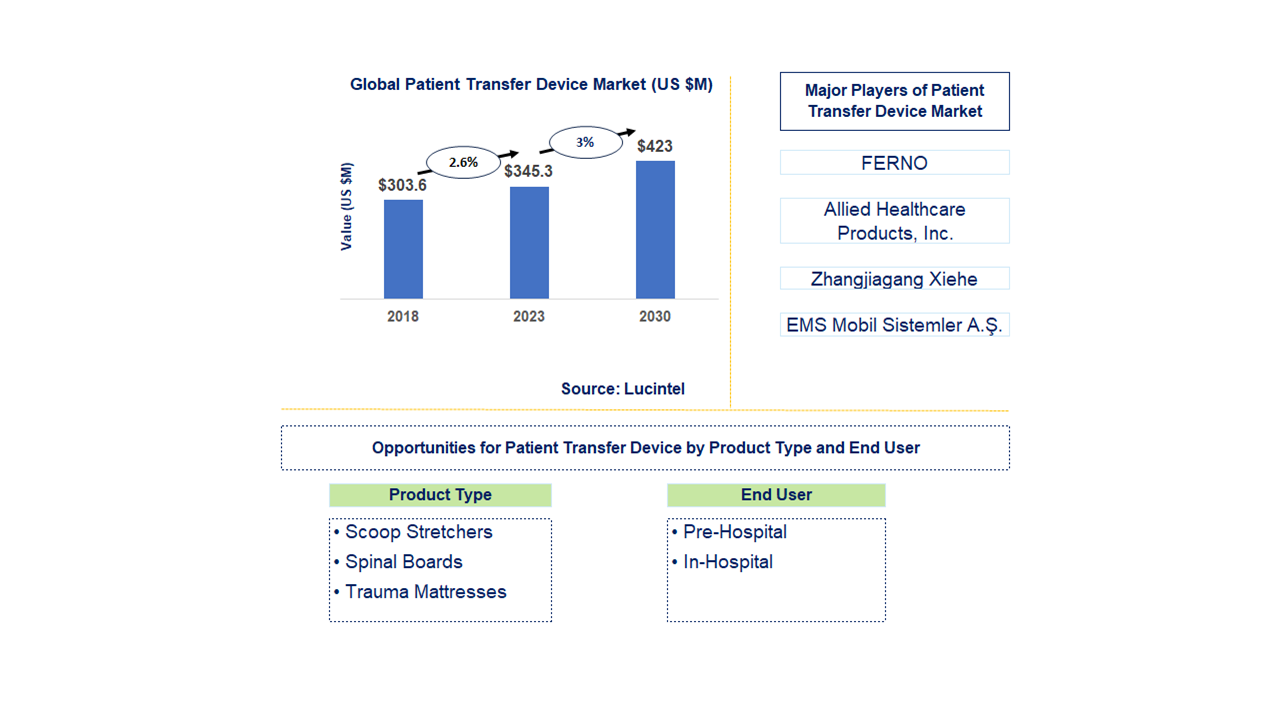
Emerging Trends in the Patient Transfer Device Market
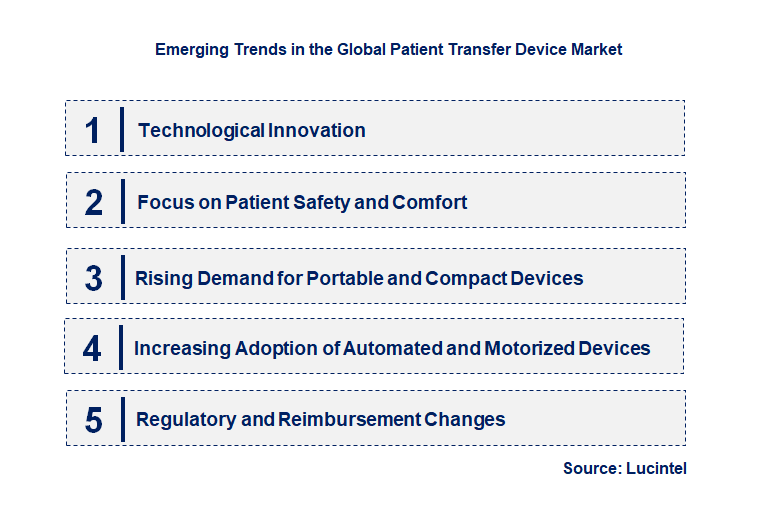
The patient transfer device market is experiencing rapid evolution driven by technological advancements, increasing healthcare demands, and a focus on patient safety and comfort. As healthcare facilities seek efficient, safe, and cost-effective solutions for patient mobility, innovative transfer devices are becoming essential. These developments are influenced by demographic shifts, regulatory changes, and a growing emphasis on infection control. The market is also witnessing a surge in automation and smart device integration, which enhances operational efficiency and patient outcomes. These trends collectively are transforming how healthcare providers approach patient transfer, leading to safer, more efficient, and patient-centered care environments.• Technological Innovation: Integration of smart technology and automation is revolutionizing patient transfer devices. Devices now feature sensors, IoT connectivity, and automated controls that improve safety and ease of use. These innovations enable real-time monitoring, reduce manual handling, and minimize injury risks for both patients and staff. The adoption of robotic and motorized transfer devices is increasing, offering precise, effortless transfers, especially for bariatric or critically ill patients. This trend enhances operational efficiency and patient safety, making transfers more reliable and less labor-intensive.
• Focus on Patient Safety and Comfort: There is a growing emphasis on designing transfer devices that prioritize patient safety, comfort, and dignity. Features such as adjustable height, padded surfaces, and ergonomic designs are becoming standard. Additionally, devices are being developed with infection control in mind, incorporating antimicrobial materials and easy-to-clean surfaces. This focus reduces the risk of injuries and infections, improving overall patient outcomes. Healthcare providers are increasingly adopting these advanced devices to ensure a better patient experience and comply with safety standards.
• Rising Demand for Portable and Compact Devices: The market is witnessing a shift towards lightweight, portable transfer devices that facilitate easy movement across different healthcare settings. Compact designs enable quick deployment in emergency situations and in confined spaces like ambulances or small hospital rooms. This trend is driven by the need for flexibility, rapid response, and cost-efficiency. Portable devices also support home healthcare and outpatient services, expanding the market beyond traditional hospital environments. Their ease of use and transportability are making them a preferred choice among healthcare providers.
• Increasing Adoption of Automated and Motorized Devices: Automation is transforming patient transfer by reducing manual effort and increasing safety. Motorized stretchers, lifts, and transfer chairs are gaining popularity due to their ability to perform smooth, controlled movements. These devices are especially beneficial for handling heavy or immobile patients, reducing staff injuries and fatigue. The integration of automation also allows for programmable transfer routines, improving consistency and efficiency. As hospitals aim to optimize workflows and enhance patient care, the adoption of automated transfer solutions is expected to grow significantly.
• Regulatory and Reimbursement Changes: Evolving regulations and reimbursement policies are influencing market dynamics. Governments and healthcare authorities are setting stricter safety and quality standards for patient transfer devices. Reimbursement incentives are encouraging healthcare providers to invest in advanced, compliant devices. This regulatory environment promotes innovation and adoption of safer, more effective transfer solutions. Additionally, increased funding and grants for healthcare infrastructure upgrades are supporting market growth. These changes are pushing manufacturers to develop compliant, high-quality products that meet new standards, ultimately improving patient safety and operational efficiency.
These emerging trends are reshaping the patient transfer device market by fostering innovation, enhancing safety and comfort, and promoting flexible, automated solutions. As technology advances and regulatory landscapes evolve, the market is poised for continued growth, driven by the need for safer, more efficient patient mobility solutions that meet the demands of modern healthcare environments.
Recent Developments in the Patient Transfer Device Market
The patient transfer device market is experiencing rapid innovation driven by technological advancements, increasing healthcare needs, and a focus on patient safety. As hospitals and care facilities seek efficient, safe, and ergonomic solutions, new devices and features are emerging. These developments aim to improve patient comfort, reduce caregiver strain, and streamline transfer procedures. The market‘s growth is also fueled by rising geriatric populations and expanding healthcare infrastructure worldwide, creating significant opportunities for manufacturers and healthcare providers alike.• Technological Integration in Transfer Devices: The integration of smart technology, such as sensors and automation, enhances safety and efficiency. These devices can monitor patient vitals during transfer, reduce manual handling, and provide real-time data to caregivers. This innovation minimizes injury risks for both patients and staff, improves transfer accuracy, and streamlines workflow. As a result, healthcare facilities benefit from reduced transfer times and enhanced patient safety, making these devices highly desirable in modern medical settings.
• Rise of Portable and Lightweight Devices: The demand for portable, lightweight transfer devices is increasing due to the need for mobility and ease of use in diverse healthcare environments. These devices facilitate quick transfers in emergency situations and are suitable for home care, long-term care, and hospitals. Their ergonomic design reduces caregiver fatigue and improves patient comfort. The portability factor also supports infection control by enabling easier cleaning and sterilization, thus broadening their application scope and market reach.
• Focus on Patient Safety and Comfort: Innovations aimed at improving patient safety and comfort are transforming the market. Features such as adjustable height, padded surfaces, and secure straps ensure stability and reduce discomfort during transfers. Enhanced safety mechanisms prevent falls and injuries, especially for vulnerable populations like the elderly or disabled. These improvements increase patient satisfaction, reduce liability risks for healthcare providers, and promote wider adoption of advanced transfer devices across various care settings.
• Adoption of Electric and Powered Transfer Devices: Electric and powered transfer devices are gaining popularity due to their ability to reduce manual effort and physical strain on caregivers. These devices offer smooth, controlled movements, making transfers safer and more comfortable for patients. They are particularly useful for bariatric patients and those with limited mobility. The adoption of powered devices is driven by technological advancements, regulatory support, and the need for ergonomic solutions, significantly expanding market opportunities and improving care quality.
• Growing Emphasis on Infection Control and Hygiene: The focus on infection prevention has led to the development of transfer devices with antimicrobial surfaces and easy-to-clean designs. These innovations help reduce cross-contamination risks in healthcare settings. Materials that resist bacterial growth and designs that facilitate thorough cleaning are increasingly preferred. This emphasis on hygiene not only enhances patient safety but also aligns with regulatory standards, encouraging healthcare providers to invest in advanced, infection-resistant transfer solutions, thereby expanding market demand.
The overall impact of these developments is a more efficient, safe, and patient-centered transfer device market. Innovations are driving growth, expanding application areas, and improving healthcare outcomes. As technology and safety standards evolve, the market is poised for continued expansion, benefiting patients, caregivers, and healthcare providers worldwide.
Strategic Growth Opportunities in the Patient Transfer Device Market
The patient transfer device market is experiencing rapid growth driven by increasing healthcare needs, technological advancements, and a focus on patient safety. As hospitals and care facilities seek efficient, ergonomic solutions for patient mobility, innovative transfer devices are becoming essential. The market offers significant opportunities for manufacturers to develop versatile, user-friendly, and cost-effective products that improve patient outcomes and staff efficiency. Strategic investments and product diversification are key to capturing market share in this expanding industry.• Growing Demand for Ergonomic and User-Friendly Transfer Devices: The increasing emphasis on patient safety and staff efficiency is driving demand for ergonomic transfer devices that reduce injury risk and ease patient movement. Innovations in design, lightweight materials, and automation are making devices more accessible and easier to operate, encouraging healthcare providers to adopt advanced solutions. This trend supports market expansion as facilities seek safer, more efficient transfer options.
• Rising Adoption of Powered and Automated Transfer Systems: The shift towards powered transfer devices, such as motorized stretchers and lifts, is driven by the need to minimize physical strain on healthcare workers and improve patient comfort. Automation enhances precision and safety during transfers, especially for bariatric or immobile patients. As technology advances and costs decrease, adoption rates are expected to rise, creating new growth avenues for manufacturers.
• Increasing Focus on Infection Control and Hygiene Standards: The COVID-19 pandemic highlighted the importance of infection prevention in healthcare settings. Transfer devices with antimicrobial surfaces, easy-to-clean components, and disposable parts are gaining popularity. These features help reduce cross-contamination risks, aligning with stringent hygiene standards. The market is poised for growth as healthcare providers prioritize infection control, prompting innovation in device materials and design.
• Expansion of Healthcare Infrastructure in Emerging Markets: Rapid urbanization and healthcare investments in developing countries are fueling demand for patient transfer devices. As these regions upgrade their healthcare facilities, there is a need for affordable, durable, and adaptable transfer solutions. Local manufacturers and global players are expanding their presence, creating opportunities for market penetration and growth in emerging markets.
• Integration of Smart Technology and IoT in Transfer Devices: The incorporation of IoT and smart sensors into transfer devices enables real-time monitoring, data collection, and predictive maintenance. These features improve device reliability, safety, and operational efficiency. As healthcare facilities adopt digital health solutions, smart transfer devices will become integral to patient management systems, driving innovation and market growth through enhanced functionality.
The overall market growth is driven by technological innovation, increasing healthcare infrastructure, and a focus on safety and hygiene. These opportunities collectively enhance patient care, reduce operational costs, and improve staff safety, positioning the patient transfer device market for sustained expansion and technological evolution.
Patient Transfer Device Market Driver and Challenges
The patient transfer device market is influenced by a variety of technological, economic, and regulatory factors that shape its growth and development. Advances in medical technology, increasing healthcare expenditure, and evolving safety standards are key drivers. Additionally, demographic shifts such as aging populations and the rising prevalence of chronic diseases contribute to market expansion. However, the market also faces challenges including high device costs, regulatory hurdles, and concerns over infection control. Understanding these drivers and challenges is essential for stakeholders to navigate the dynamic landscape effectively and capitalize on emerging opportunities while addressing potential barriers.The factors responsible for driving the patient transfer device market include:
• Technological Innovation: The development of advanced transfer devices such as powered stretchers, portable lifts, and ergonomic designs enhances patient safety and caregiver efficiency. Innovations driven by research and development improve device functionality, ease of use, and patient comfort, leading to increased adoption across healthcare settings. These technological advancements also enable integration with hospital information systems, improving workflow and data management. As hospitals seek to optimize patient care and reduce injury risks, the demand for innovative transfer devices continues to grow, fueling market expansion.
• Rising Healthcare Expenditure: Increasing investments in healthcare infrastructure and services globally are boosting demand for patient transfer devices. Governments and private sectors are allocating more funds toward modernizing healthcare facilities, which includes acquiring advanced patient transfer solutions. This financial support facilitates the procurement of high-quality devices, especially in developing regions where healthcare spending is rising rapidly. The focus on improving patient safety and staff efficiency further propels market growth, making healthcare expenditure a significant driver.
• Demographic Shifts and Aging Population: The global aging population is a major factor driving demand for patient transfer devices. Elderly patients often require assistance with mobility, increasing the need for specialized transfer equipment to prevent injuries and ensure safety. As the elderly demographic expands, hospitals, nursing homes, and home care services are investing more in transfer devices tailored to their needs. This demographic trend not only increases the volume of patients requiring transfer solutions but also encourages innovation in device design to cater to diverse mobility challenges.
• Increasing Prevalence of Chronic Diseases: The rising incidence of chronic conditions such as stroke, arthritis, and obesity necessitates frequent patient transfers within healthcare facilities. Patients with mobility impairments require specialized devices to facilitate safe and efficient movement, reducing the risk of injury to both patients and caregivers. The growing burden of chronic diseases globally is prompting healthcare providers to adopt advanced transfer devices, thereby expanding the market. This trend underscores the importance of adaptable and durable transfer solutions in modern healthcare.
The challenges facing the patient transfer device market include:
• High Device Costs: The advanced technology incorporated into modern patient transfer devices often results in high procurement and maintenance costs. Budget constraints in many healthcare facilities, especially in developing regions, limit the adoption of these devices. Additionally, the expense associated with training staff to operate sophisticated equipment can be a barrier. High costs may restrict market growth and lead to disparities in access to quality transfer solutions, impacting overall healthcare delivery.
• Regulatory and Safety Standards: Stringent regulatory requirements for medical devices pose significant hurdles for manufacturers. Compliance with safety, efficacy, and quality standards involves extensive testing and certification processes, which can delay product launches and increase costs. Variations in regulations across different regions further complicate market entry and expansion. Ensuring adherence to evolving standards is essential but challenging, potentially hindering innovation and market growth.
• Infection Control Concerns: The risk of cross-contamination and infection transmission through transfer devices is a critical concern, especially in the context of infectious disease outbreaks. Devices must be designed for easy cleaning and disinfection, which can increase manufacturing complexity and costs. Failure to meet infection control standards can lead to healthcare-associated infections, legal liabilities, and reputational damage. Addressing these concerns requires ongoing innovation and strict adherence to hygiene protocols, which can pose operational challenges.
The patient transfer device market is shaped by technological advancements, increasing healthcare investments, demographic changes, and the rising burden of chronic diseases. However, high costs, regulatory complexities, and infection control issues present significant hurdles. These drivers and challenges collectively influence market dynamics, with growth opportunities driven by innovation and demographic trends, while barriers such as costs and regulations require strategic navigation. Overall, the market‘s future depends on balancing technological progress with effective management of regulatory and safety concerns to meet the evolving needs of healthcare providers and patients.
List of Patient Transfer Device Companies
Companies in the market compete on the basis of product quality offered. Major players in this market focus on expanding their manufacturing facilities, R&D investments, infrastructural development, and leverage integration opportunities across the value chain. With these strategies patient transfer device companies cater increasing demand, ensure competitive effectiveness, develop innovative products & technologies, reduce production costs, and expand their customer base. Some of the patient transfer device companies profiled in this report include-• FERNO
• Allied Healthcare Products, Inc.
• Zhangjiagang Xiehe
• EMS Mobil Sistemler A.Ş.
• Drive DeVilbiss Healthcare
Patient Transfer Device Market by Segment
The study includes a forecast for the global patient transfer device market by product type, end use, and region.Patient Transfer Device Market by Product Type [Value from 2019 to 2035]:
• Scoop Stretchers
• Spinal Boards
• Trauma Mattresses
Patient Transfer Device Market by End Use [Value from 2019 to 2035]:
• Pre-Hospital
• In-Hospital
Patient Transfer Device Market by Region [Value from 2019 to 2035]:
• North America
• Europe
• Asia Pacific
• The Rest of the World
Country Wise Outlook for the Patient Transfer Device Market
The patient transfer device market has experienced significant growth driven by technological advancements, increasing healthcare needs, and a focus on patient safety and comfort. As healthcare systems evolve globally, countries are investing in innovative transfer solutions to improve efficiency and reduce injury risks for both patients and caregivers. Regulatory changes and rising healthcare expenditure further influence market dynamics, prompting manufacturers to develop smarter, more adaptable devices. The following summaries highlight recent developments in the United States, China, Germany, India, and Japan, reflecting their unique market trends and innovations.• United States: The US market has seen a surge in the adoption of automated and motorized patient transfer devices, driven by technological innovation and a focus on reducing caregiver injuries. Hospitals are increasingly integrating smart transfer systems with electronic health records, enhancing patient safety and operational efficiency. Regulatory agencies are emphasizing safety standards, encouraging manufacturers to develop compliant products. Additionally, there is a growing trend toward portable and lightweight devices suitable for emergency and home care settings. The US also witnesses increased investments in research and development to improve device ergonomics and automation features.
• China: China’s patient transfer device market is rapidly expanding due to rising healthcare infrastructure and government initiatives to modernize medical facilities. The country is witnessing increased adoption of cost-effective manual and semi-automated transfer devices, especially in rural and semi-urban areas. Local manufacturers are focusing on affordable, durable products to meet the growing demand. The government’s emphasis on healthcare reforms and hospital upgrades is fueling market growth. Additionally, technological advancements such as sensor integration and improved mobility features are gaining traction, aligning with China’s broader healthcare modernization goals.
• Germany: Germany’s market is characterized by a strong emphasis on safety, quality, and compliance with European standards. There is a notable shift toward advanced, ergonomic transfer devices that minimize physical strain on caregivers. The adoption of electric and semi-automatic transfer systems is increasing, especially in hospitals and long-term care facilities. Germany also leads in integrating digital technologies, such as IoT-enabled devices that facilitate real-time monitoring and maintenance. The focus on sustainable and environmentally friendly products is evident, with manufacturers developing eco-friendly materials and energy-efficient devices to meet strict environmental regulations.
• India: The Indian market is witnessing rapid growth driven by increasing healthcare infrastructure, rising geriatric populations, and government initiatives to improve healthcare access. Manual transfer devices remain prevalent due to cost considerations, but there is a rising demand for semi-automated and automated solutions in urban hospitals. Local manufacturers are expanding their product portfolios to include affordable, lightweight, and portable devices suitable for diverse healthcare settings. The government’s focus on rural healthcare and initiatives like Ayushman Bharat are expected to boost market penetration. Technological innovations such as foldable and modular transfer devices are gaining popularity to address space constraints.
• Japan: Japan’s market is characterized by high adoption of advanced, technologically integrated patient transfer devices, driven by an aging population and a focus on elder care. There is significant investment in robotic and semi-automated transfer systems that enhance safety and reduce caregiver burden. Japan emphasizes compact, space-saving designs suitable for small healthcare facilities and home care environments. The integration of AI and IoT technologies for monitoring and maintenance is increasingly common. Regulatory standards are stringent, ensuring high safety and quality levels. The market also sees a trend toward eco-friendly and energy-efficient devices, aligning with Japan’s sustainability goals.

Features of the Global Patient Transfer Device Market
Market Size Estimates: Patient transfer device market size estimation in terms of value ($M).Trend and Forecast Analysis: Market trends (2019 to 2025) and forecast (2026 to 2035) by various segments and regions.
Segmentation Analysis: Patient transfer device market size by product type, end use, and region in terms of value ($M).
Regional Analysis: Patient transfer device market breakdown by North America, Europe, Asia Pacific, and Rest of the World.
Growth Opportunities: Analysis of growth opportunities in different product type, end use, and regions for the patient transfer device market.
Strategic Analysis: This includes M&A, new product development, and competitive landscape of the patient transfer device market.
Analysis of competitive intensity of the industry based on Porter’s Five Forces model.

FAQ
Q1. What is the patient transfer device market size?Answer: The global patient transfer device market is expected to reach an estimated $640 million by 2035.
Q2. What is the growth forecast for patient transfer device market?
Answer: The global patient transfer device market is expected to grow with a CAGR of 3.9% from 2026 to 2035.
Q3. What are the major drivers influencing the growth of the patient transfer device market?
Answer: The major drivers for this market are the increasing use of advanced lifting equipment, the rising awareness of safe patient handling practices, and the growing demand for patient safety during transfers.
Q4. What are the major segments for patient transfer device market?
Answer: The future of the patient transfer device market looks promising with opportunities in the pre-hospital and in-hospital markets.
Q5. Who are the key patient transfer device market companies?
Answer: Some of the key patient transfer device companies are as follows:
• FERNO
• Allied Healthcare Products, Inc.
• Zhangjiagang Xiehe
• EMS Mobil Sistemler A.Ş.
• Drive DeVilbiss Healthcare
Q6. Which patient transfer device market segment will be the largest in future?Answer: Lucintel forecasts that, within the product type category, scoop stretcher is expected to witness the highest growth over the forecast period.
Q7. In patient transfer device market, which region is expected to be the largest in next 8 years?
Answer: In terms of region, APAC is expected to witness the highest growth over the forecast period.
Q8. Do we receive customization in this report?
Answer: Yes, Lucintel provides 10% customization without any additional cost.
Table of Contents
List of Figures
List of Tables
Methodology
- In-depth interviews of the major players in this market
- Detailed secondary research from competitors’ financial statements and published data
- Extensive searches of published works, market, and database information pertaining to industry news, company press releases, and customer intentions
- A compilation of the experiences, judgments, and insights of Lucintel’s professionals, who have analyzed and tracked this market over the years.


Buy Now
Choose a license that fits your team. Instant PDF delivery.
Prices exclude taxes. Instant delivery. Custom licensing available on request.
Key Questions
- • What are some of the most promising, high-growth opportunities for the patient transfer device market by product type (scoop stretchers, spinal boards, and trauma mattresses), end use (pre-hospital and in-hospital), and region (North America, Europe, Asia Pacific, and the Rest of the World)?
- • Which segments will grow at a faster pace and why?
- • Which region will grow at a faster pace and why?
- • What are the key factors affecting market dynamics? What are the key challenges and business risks in this market?
- • What are the business risks and competitive threats in this market?
- • What are the emerging trends in this market and the reasons behind them?
- • What are some of the changing demands of customers in the market?
- • What are the new developments in the market? Which companies are leading these developments?
- • Who are the major players in this market? What strategic initiatives are key players pursuing for business growth?
- • What are some of the competing products in this market and how big of a threat do they pose for loss of market share by material or product substitution?
- • What M&A activity has occurred in the last 5 years and what has its impact been on the industry? For any questions related to Patient Transfer Device Market, Patient Transfer Device Market Size, Patient Transfer Device Market Growth, Patient Transfer Device Market Analysis, Patient Transfer Device Market Report, Patient Transfer Device Market Share, Patient Transfer Device Market Trends, Patient Transfer Device Market Forecast, Patient Transfer Device Companies, write Lucintel analyst at email: helpdesk@lucintel.com. We will be glad to get back to you soon.


