
Report Feature
Outdoor Pest Control Devices Market Trends and Forecast
The technologies in the outdoor pest control devices market have seen dramatic changes in the last few years. The shift is from "chemical-based pest control methods" to "electric, battery-powered, and solar-powered pest control devices". The shift is because of the consumers' preference for environmentally friendly, energy-efficient, and sustainable solutions that provide effective pest management with minimal chemical use.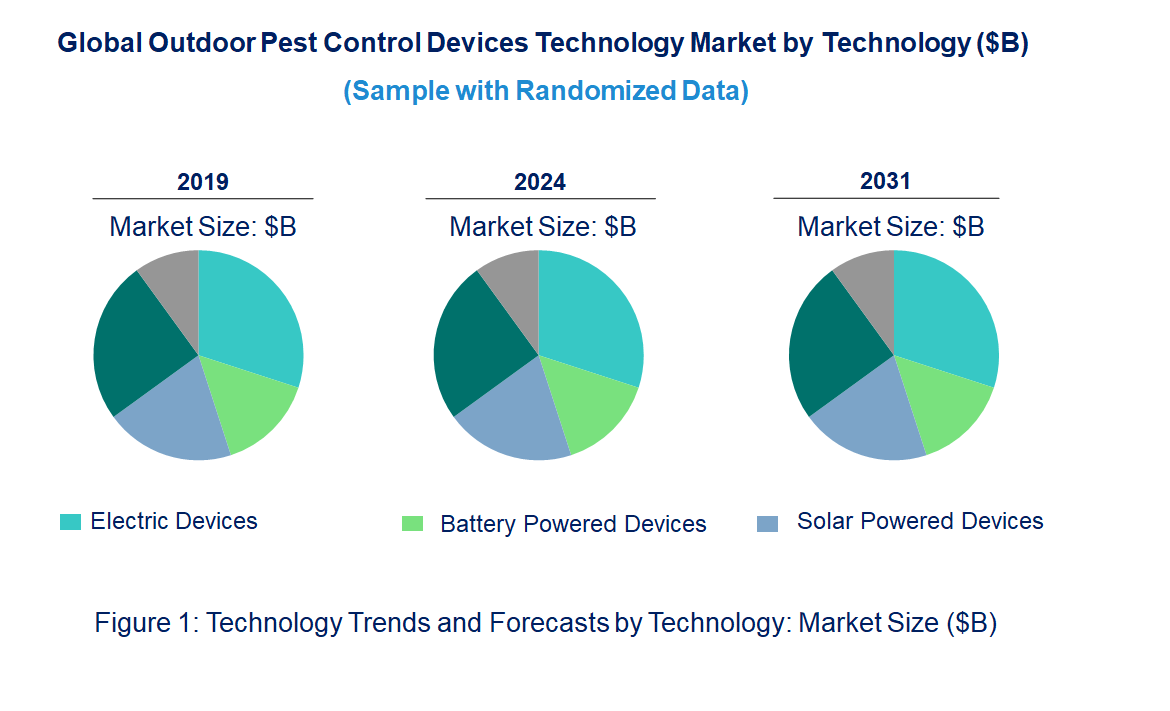

Emerging Trends in the Outdoor Pest Control Devices Market
The outdoor pest control devices market is witnessing several technological advancements and emerging trends transforming the way pests are managed in residential, commercial, and industrial environments. These trends concentrate on improving sustainability, user convenience, and efficiency. Below are five key emerging trends in the market:• Increase in Solar-Powered Devices: Solar-powered pest control devices are becoming increasingly popular because they are environmentally friendly and low-cost to run. These devices are popular in remote locations where electricity is hard to access. They provide an eco-friendly method of pest control while also reducing carbon footprints, particularly in residential and industrial areas.
• Advances in Battery-Powered Devices: Battery-operated outdoor pest control devices are portable and flexible, hence easy to use in different environments. It can easily be moved from one point to another and does not need to be fixed at any particular location. The innovation of long-life rechargeable batteries also increases the performance of such devices.
• Smart Technology and IoT Integration: A smart pest control device with IoT technology is changing the outdoor pest control market. These IoT-enabled devices can be controlled and monitored on mobile apps. They allow users to track pest activity, adjust their settings, and receive timely notifications. This trend is paving the way for more efficient and user-friendly pest control.
• Electric Devices for Targeted Control: Precise and targeted electric pest control devices are being designed for targeted pest management. Due to the efficiency of energy use, electric traps, and insect zappers have now been capable of attracting and eliminating unwanted pests. It is becoming increasingly popular in residential and commercial spaces to ensure precision for effective pest control.
• Chemical-Free Solutions: With pesticide environmental impacts at the epicenter of the debate, there is a wider demand for chemical-free pest control solutions. Electric, solar, or battery-operated outdoor pest control devices that eliminate the use of harmful chemicals are very popular. This growth trend is important in the residential sector, which is increasingly characterized by safety and sustainability concerns. The market is changing towards more sustainable, efficient, and user-friendly outdoor pest control devices. The emergence of solar-powered and battery-operated devices with smart technology integration is creating significant innovation and making pest control more environmentally friendly, cost-effective, and accessible to consumers and businesses alike.
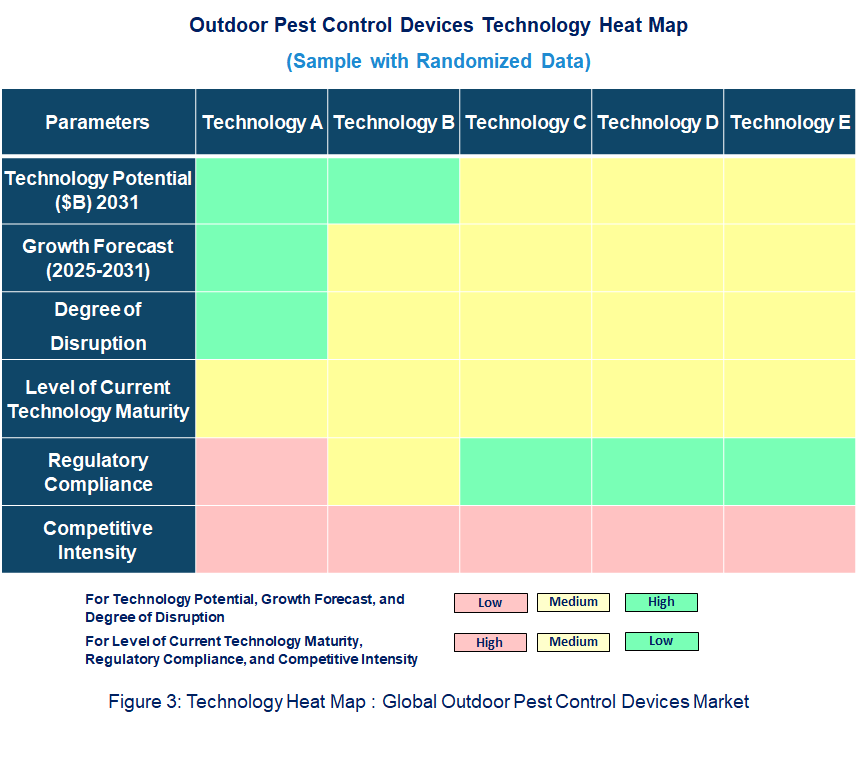
Outdoor Pest Control Devices Market : Industry Potential, Technological Development, and Compliance Considerations
These outdoor pest control devices are used to control pest populations in residential, agricultural, and commercial environments. They range from electronic repellents to traps and insecticides, but their main objective is to minimize the effects of disease spread by pests and damage to property, crops, or the environment.• Technology Potential: Thus, the outdoor pest control market is relatively vast with increasing consumer demand towards eco-friendly and non-toxic, efficient pest management solutions. Technological advancements are opening the door for smart pest control systems to monitor remotely, including automated traps, solar-powered devices, and IoT-connected solutions. Advancements in ultrasonic and pheromone-based repellents offer still more humane, non-chemical methods of pest management.
• Degree of Disruption: The market faces some disruption from natural and organic alternatives like biocontrols and botanical pesticides, as well as from smart home technologies integrating pest control systems. Conventional chemical-based methods are, however still dominant in many sectors; they are effective and cost-saving. Year-wise, smart and eco-friendly solutions are expected to gradually replace older technologies.
• Current Technology Maturity: The present maturity level of outdoor pest control technology can be said to be mature, especially in its components such as traps and repellents. However, automation, high-precision targeting, and AI integration are constantly being improved in the detection and control of pests.
• Regulation Compliance Regulatory compliance plays a key role in the outdoor pest control market, especially with reference to the use of chemicals, environmental safety, and consumer health. Each device and solution offered must comply with local and international standards, specifically as set by agencies such as the U.S.-based Environmental Protection Agency, or EPA, and within the EU, the REACH.
Recent Technological development in Outdoor Pest Control Devices Market by Key Players
Key players in the outdoor pest control devices market, such as Ecolab, Rollins, Inc., Olee International Pte Ltd., STV International Ltd, Rentokil Initial plc, MASSEY SERVICES, INC., Bell Labs, Bird B Gone LLC., Bird-X, Eaton, have been continually innovating their product offerings to meet the growing demand for sustainable pest control solutions. Some of the recent developments are as follows:• Ecolab: Ecolab launched advanced solar-powered pest control systems that provide environmentally sensitive pest management solutions for large industrial facilities. Such devices are designed to reduce the usage of chemical pesticides, focusing on eco-friendly pest prevention, which has enhanced Ecolab's reputation in sustainable pest management solutions.
• Rollins, Inc.: Rollins has been broadening its product line of electric and battery-powered pest control devices. The newly introduced products are more portable and reliable for residential and commercial pest management. Its gadgets are equipped with the most advanced sensors for better-directed pest control, hence very efficient and cost-effective.
• Olee International Pte Ltd.: Olee International has been always a pioneer in offering innovative, solar power pest control products. Their solar devices for residential and commercial use have become popular due to their efficiency, ease of use, and the least environmental impact.
• STV International Ltd: STV International has released a line of electric rodent traps and insect zappers that are built for indoor and outdoor use. The popularity of such products from consumers seeking chemical-free, high-efficiency solutions to managing pests around their homes and businesses is growing.
• Rentokil Initial plc: Rentokil has developed smart pest control solutions with integrated IoT and remote monitoring. The devices allow real-time alerts to the users for immediate action. This new development shows how Rentokil is developing high-tech and eco-friendly pest control for its customers, residential as well as commercial.
• MASSEY SERVICES, INC. Massey Services has expanded its selection of battery-powered devices for integrated pest management. Examples of these include rodent and insect traps that are particularly useful in applications where chemical treatments are not optimal. Growth in the residential market is being driven by the incorporation of battery technology.
• Bell Labs: Bell Labs is known for environmental sustainability and has recently introduced its low-energy electric pest control solutions while maximizing efficiency. Its products are long-lasting and effective against a variety of pests such as rodents, mosquitoes, and flies.
• Bird B Gone LLC: Bird B Gone has emphasized its way of providing solar-powered bird deterrent systems. These eco-friendly products serve to ward off pest birds from nesting in commercial and industrial buildings. The company has focused on solar-powered technology as part of the rising demand for sustainable solutions for pest management.
• Bird-X Bird-X has introduced several solar-powered and electric pest control devices for large applications to warehouses and agricultural sites, offering chemical-free, sustainable methods for pest control. It will minimize harm to the environment and non-target species.
• Eaton: Eaton has developed a new line of solar-powered, IoT-enabled outdoor pest control systems. The devices provide real-time data analytics and can be monitored remotely, ensuring efficient and responsive pest management, especially in commercial and industrial applications. The latest trends in the outdoor pest control devices market are sustainability, energy efficiency, and smart technology. Noted players have introduced the product lines solar powered and electricity operated battery-operated, along with advanced features such as IoT integration and real-time monitoring, to grab the growing demand for eco-friendly pest management systems.
Outdoor Pest Control Devices Market Driver and Challenges
Several drivers and challenges shape the outdoor pest control devices market, which influence product development, consumer preferences, and overall market growth. The following represent the drivers and challenges for this market. The factors responsible for driving the outdoor pest control devices market include:• Increasing Demand for Eco-Friendly Solutions Consumers and commercial companies are looking for chemical-free, ecological-friendly pest control solutions with the growth in awareness among people over the harmful effects of pesticides on both environmental and health levels. Hence, increasing demand will also be associated with such products that function on sunlight and battery operations.
• Technological Improvements in Device Efficiency Batteries, solar power, and electrical insecticide treatments have improved outdoor pest control devices as being much more efficient and more economical. Even more influential in attracting consumers are high-performance pest control solutions with minimal environmental impact.
• Residential and Commercial Pest Control Needs: With growing urbanization and industrialization, the demand for pest control in residential, commercial, and industrial markets is on the rise. This includes outdoor pest control devices, especially in locations where there is high foot traffic or food handling.
• Regulatory Pressure for Chemical-Free Pest Control: Governments and regulatory bodies are imposing stricter regulations on the use of chemical pesticides in view of environmental and health concerns. This is forcing manufacturers to develop and adapt non-chemical pest control technologies, such as electric, solar, and battery-powered devices. Challenges in the outdoor pest control devices market are:
• Costly High-Tech Devices: Although solar-power and electric pest control devices may provide long-term savings, advanced equipment can also cost a lot. Thus, it may limit the adoption of price-sensitive consumers and small businesses.
• Low Awareness and Acceptance of New Technologies: There is low awareness among some consumers and businesses about the effectiveness and advantages of modern outdoor pest control devices. Educating the market about these innovations is necessary for their widespread adoption.
• Competition from Traditional Chemical-based Pest Control Method: Chemical-based methods of pest control are popular because they are perceived as quick-to-result and relatively inexpensive. That keeps the competition for newer, more sustainable technologies challenging for companies to transition the market towards electric or solar-powered solutions. Major growth drivers for the outdoor pest control devices market include increasing demand for eco-friendly solutions, efficiency improvements in devices, and regulatory pressure. High initial costs, limited awareness of these products, and competition from traditional methods pose challenges to continued growth in the market.
List of Outdoor Pest Control Devices Companies
Companies in the market compete based on product quality offered. Major players in this market focus on expanding their manufacturing facilities, R&D investments, infrastructural development, and leverage integration opportunities across the value chain. With these strategies, outdoor pest control devices companies cater to increasing demand, ensure competitive effectiveness, develop innovative products & technologies, reduce production costs, and expand their customer base. Some of the outdoor pest control devices companies profiled in this report include.• Ecolab
• Rollins, Inc.
• Olee International Pte Ltd.
• STV International Ltd
• Rentokil Initial plc
• MASSEY SERVICES, INC.
Outdoor Pest Control Devices Market by Technology
• Disruption Potential of Pest Control Technologies: Electric, Battery Powered, and Solar Powered Devices are revolutionizing the Outdoor Pest Control Devices market. Electric devices are efficient for large areas with effective pest control and low energy use. Battery-powered devices are portable and ideal for areas without a power supply, while solar-powered devices are eco-friendly and cost-effective, eliminating the need for constant power sources. These technologies are transforming pest control, especially in residential, agricultural, and commercial applications, as driven by the demand for sustainable solutions.
• Competitive Intensity and Regulatory Compliance: The competition in the Outdoor Pest Control Devices market is strong across Electric, Battery Powered, and Solar Powered devices. Electric devices are effective but compete in terms of energy efficiency. Battery-powered devices are very competitive due to their portability, while solar-powered devices appeal to the environment-conscious consumer. For safety standards for electric devices, concern about the environment in disposing of the battery, and certifications for the solar panel, regulatory compliance must be strictly followed in all of these technologies.
• Technology Readiness by Type: Electric devices are mature and have mostly found their implementation; therefore, it is highly ready. Battery-powered devices are also well-established as they possess portability and flexibility. Solar-powered ones may be new, but efficiency and affordability are being developed rapidly. Competitive intensity is the highest in Electric and Battery Powered devices. Regulatory compliance is essential for all technologies, with a focus on safety and environmental impact. Key applications include residential control (Electric and Battery Powered), agriculture (Battery Powered), and eco-friendly solutions (Solar Powered).
Outdoor Pest Control Devices Market Trend and Forecast by Technology [Value from 2019 to 2031]:
• Electric Devices
• Battery Powered Devices
• Solar Powered Devices
Outdoor Pest Control Devices Market Trend and Forecast by Application [Value from 2019 to 2031]:
• Residential
• Commercial
• Industrial
• Livestock
• Others
Outdoor Pest Control Devices Market by Region [Value from 2019 to 2031]:
• North America
• Europe
• Asia Pacific
• The Rest of the World
• Latest Developments and Innovations in the Outdoor Pest Control Devices Technologies
• Companies / Ecosystems
• Strategic Opportunities by Technology Type
Features of the Global Outdoor Pest Control Devices Market
Market Size Estimates: Outdoor pest control devices market size estimation in terms of ($B). Trend and Forecast Analysis: Market trends (2019 to 2024) and forecast (2025 to 2031) by various segments and regions. Segmentation Analysis: Technology trends in the global outdoor pest control devices market size by various segments, such as application and technology in terms of value and volume shipments. Regional Analysis: Technology trends in the global outdoor pest control devices market breakdown by North America, Europe, Asia Pacific, and the Rest of the World. Growth Opportunities: Analysis of growth opportunities in different applications, technologies, and regions for technology trends in the global outdoor pest control devices market. Strategic Analysis: This includes M&A, new product development, and competitive landscape for technology trends in the global outdoor pest control devices market.Analysis of competitive intensity of the industry based on Porter’s Five Forces model.Table of Contents
Methodology
- In-depth interviews of the major players in this market
- Detailed secondary research from competitors’ financial statements and published data
- Extensive searches of published works, market, and database information pertaining to industry news, company press releases, and customer intentions
- A compilation of the experiences, judgments, and insights of Lucintel’s professionals, who have analyzed and tracked this market over the years.


Buy Now
Choose a license that fits your team. Instant PDF delivery.
Prices exclude taxes. Instant delivery. Custom licensing available on request.
Key Questions
- • What are some of the most promising potential, high-growth opportunities for the technology trends in the global outdoor pest control devices market by technology (electric devices, battery powered devices, and solar powered devices), application (residential, commercial, industrial, livestock, and others), and region (North America, Europe, Asia Pacific, and the Rest of the World)?
- • Which technology segments will grow at a faster pace and why?
- • Which regions will grow at a faster pace and why?
- • What are the key factors affecting dynamics of different technology? What are the drivers and challenges of these technologies in the global outdoor pest control devices market?
- • What are the business risks and threats to the technology trends in the global outdoor pest control devices market?
- • What are the emerging trends in these technologies in the global outdoor pest control devices market and the reasons behind them?
- • Which technologies have potential of disruption in this market?
- • What are the new developments in the technology trends in the global outdoor pest control devices market? Which companies are leading these developments?
- • Who are the major players in technology trends in the global outdoor pest control devices market? What strategic initiatives are being implemented by key players for business growth?
- • What are strategic growth opportunities in this outdoor pest control devices technology space?
- • What M & A activities did take place in the last five years in technology trends in the global outdoor pest control devices market?


