
Report Feature
Opto-MOSFET Relay Market Trends and Forecast
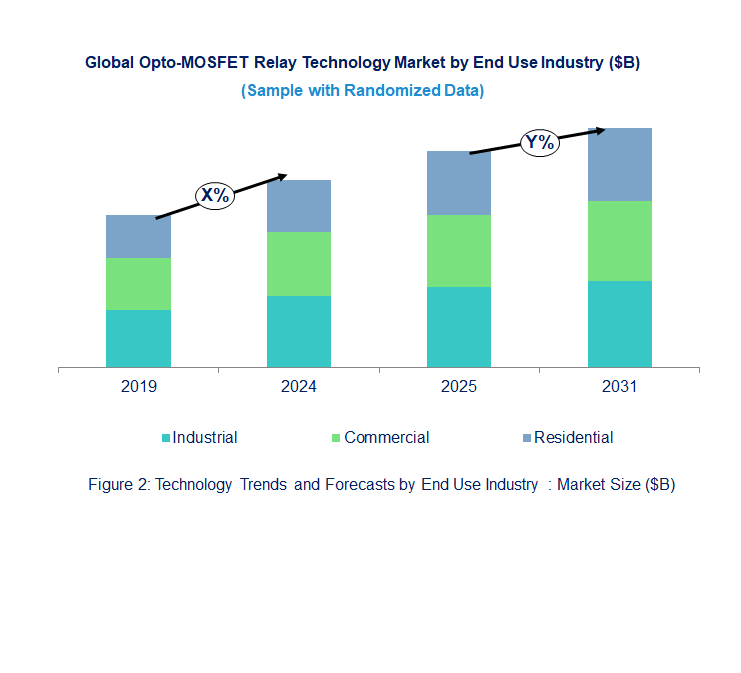
The technologies in the opto-MOSFET relay market have changed significantly over the past years. A trend of substitution from traditional electromechanical relays to solid-state solutions has been observed, particularly for applications demanding higher switching speeds and reliability. This substitution has led to the growing use of opto-MOSFET relays, which combine the advantages of optocoupling and MOSFET technology for efficient power control and signal isolation. Furthermore, the increasing adoption of AC/DC output relay configurations has enabled greater versatility in handling diverse input and output voltage types, meeting the growing demand in industrial, commercial, and residential applications. These technological improvements are driving the shift toward more compact, energy-efficient, and durable relay solutions that cater to a wider range of electronic devices and systems.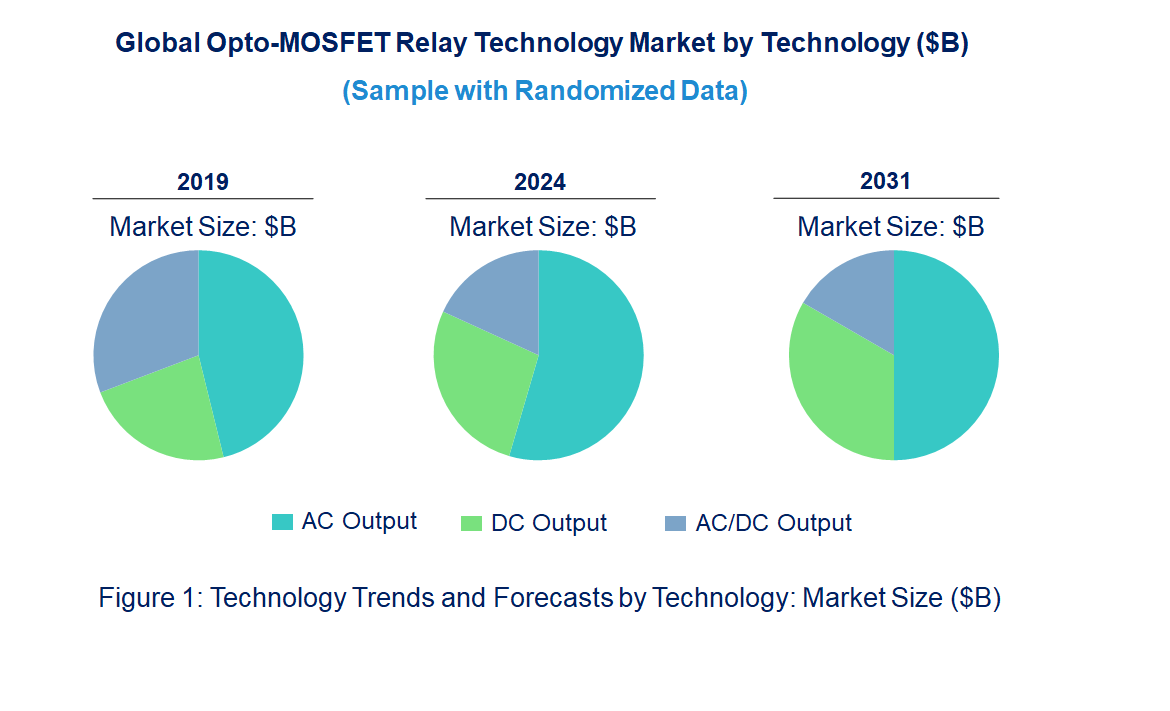
Emerging Trends in the Opto-MOSFET Relay Market
The opto-MOSFET relay market is experiencing significant trends driven by technological advancements and changing consumer preferences. Below are five key trends reshaping the market:• Growth in Industrial Automation and Robotics: As industries embrace more automated processes and robotics, the need for reliable, fast-switching, and efficient relays, including opto-MOSFET relays, has increased. They are highly used in industrial control systems, sensors, and automation applications, primarily for precise and high-speed switching.
• High Demand for Miniaturization and Compact Design: Electronics are trending toward miniaturization. The demand for small, compact relay designs is rising. Opto-MOSFET relays are being designed to take up less space while maintaining the same level of performance, making them ideal for use in smaller, more compact devices and systems.
• Focus on Energy Efficiency: Concerns over high energy consumption and its environmental impact are prompting the optimization of opto-MOSFET relays to reduce power consumption and increase efficiency. These relays are particularly useful in IoT devices and smart home systems, replacing traditional relays in sensitive power applications.
• Smart Devices and IoT: Opto-MOSFET relays are increasingly being integrated into smart devices and IoT systems. These relays enable remote control and automation of various devices, leading to increased demand for applications such as smart home systems, security devices, and industrial IoT.
• Multi-Output and Multi-Voltage Relays: There is an increasing need for versatile relay solutions that can support multiple outputs and handle both AC and DC voltages. The use of opto-MOSFET relays enables circuit designs to incorporate versatile solutions, facilitating their adoption in industrial, commercial, and residential applications. These trends reflect the growing use of opto-MOSFET relays as industrial automation, IoT, and energy-sensitive applications require compact, efficient, and flexible switching solutions. These trends are shaping the market to expand the scope and functionality of opto-MOSFET relay technology.
Opto-MOSFET Relay Market : Industry Potential, Technological Development, and Compliance Considerations
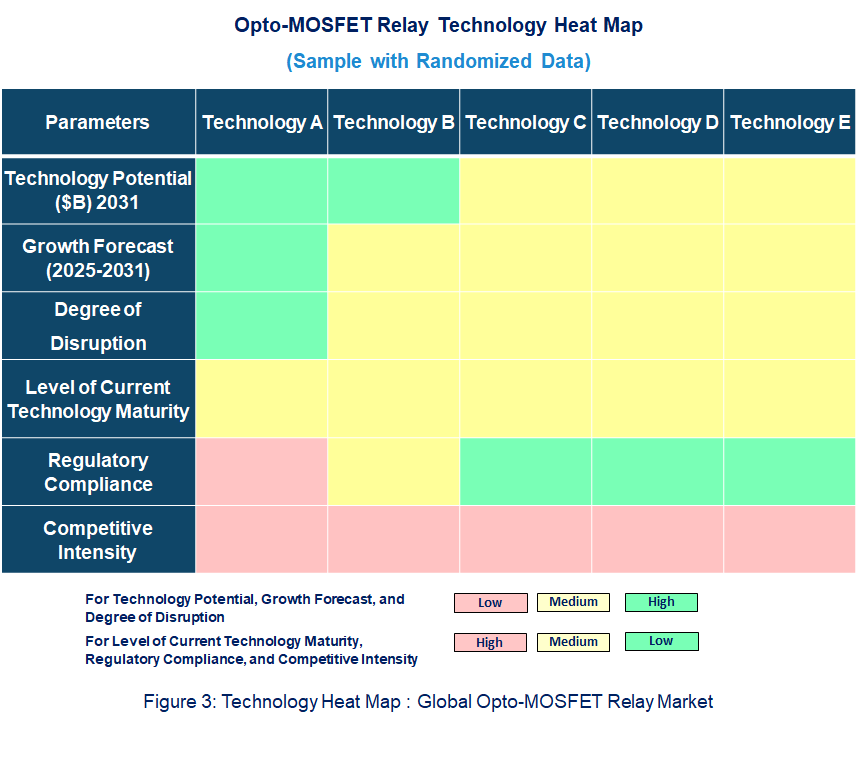
The opto-MOSFET relay market is a rapidly growing segment within the broader relay technology industry, driven by the increasing need for high-performance, low-power, and isolated switching solutions. Opto-MOSFET relays combine the advantages of opto-isolators and MOSFET (Metal-oxide-semiconductor field-effect transistor) technology to enable efficient and reliable electrical switching without direct electrical contact, offering enhanced isolation, speed, and miniaturization.• Technology Potential: The potential for opto-MOSFET relays is substantial, particularly in industries such as telecommunications, industrial automation, and consumer electronics. These relays provide key advantages over traditional mechanical relays, including faster switching speeds, reduced power consumption, and greater durability. Additionally, the integration of opto-isolation provides superior noise immunity and protection against electrical surges, making them ideal for sensitive applications. As IoT (Internet of Things) and smart devices proliferate, the demand for compact, energy-efficient, and isolated relays is expected to grow.
• Disruption Potential: Opto-MOSFET-based relays could disrupt traditional relay technologies, such as mechanical or electromechanical relays, with their more compact designs, faster switching times, and longer durability. This shift is expected to lead to cheaper, more reliable solutions across a wide range of systems.
• Maturity of Underlying Technology: Opto-MOSFET relay technology is mature, with several established manufacturers offering commercial solutions. However, innovation continues to focus on improving performance, integration, and lowering costs.
• Regulatory Compliance: Opto-MOSFET relays are subject to international standards for safety and environmental impact, including RoHS and UL certifications, ensuring product safety and environmental compatibility.
Recent Technological development in Opto-MOSFET Relay Market by Key Players
Leading companies in the opto-MOSFET relay market are innovating steadily to meet the increased demand for efficient, reliable, and compact relay solutions. Some of the latest key developments from market players include:• Panasonic Corporation: The company has expanded its portfolio of opto-MOSFET relays through miniaturization and high-speed switching. Panasonic’s recent product lines are designed to meet industrial environments, providing more robust and reliable solutions for industrial control systems.
• Toshiba Corporation: Toshiba has launched a new series of opto-MOSFET relays targeting automotive applications. These relays feature enhanced voltage handling and power control to address specific needs in the automotive electronics sector, particularly in battery management systems and electric vehicle charging infrastructure.
• OMRON Corporation: OMRON has developed opto-MOSFET relays with advanced thermal management and energy-saving features. These new relays are designed for high-precision industrial automation systems, where energy efficiency and reduced operational costs are critical.
• Vishay Intertechnology, Inc.: Vishay has been continuously developing the capabilities of its opto-MOSFET relays, such as higher isolation voltage and faster switching, targeting applications from industrial to consumer sectors. Their products are designed to enhance signal integrity and control in power-sensitive systems.
• Broadcom Inc.: Broadcom has incorporated opto-MOSFET relays into its diversified portfolio of semiconductor products, focusing on expanding the use of its relays in networking devices and communication networks. These relays support high-speed data transmission with energy efficiency and signal integrity.
• Renesas Electronics Corporation: Renesas has introduced opto-MOSFET relays with integrated protection features, making them suitable for use in sensitive electronic systems that require high reliability and minimal downtime. These relays are increasingly used in applications requiring enhanced circuit protection and long lifespan.
• IXYS Corporation: The opto-MOSFET relays developed by IXYS are rated for higher voltage and current, making them suitable for industrial and commercial applications. Their new product lines aim to improve switching reliability and power efficiency in industrial machinery, HVAC systems, and power supply applications.
• Crydom Inc.: Crydom has been focusing on making its opto-MOSFET relays more versatile for AC and DC applications. These relays are used in a broader range of industrial control and automation systems, offering greater flexibility in managing complex electrical circuits.
• Sharp Corporation: Sharp has developed opto-MOSFET relays specifically designed for automotive and home appliance applications. Low power consumption and compact design make them ideal for smart appliances and automotive power management systems.
• Littelfuse, Inc.: Littelfuse has expanded its opto-MOSFET relay family, focusing on industrial and residential applications. These relays offer improved surge protection and are increasingly used in energy-efficient applications, including smart grids, home automation, and renewable energy systems. These developments highlight the innovation of key players in meeting the requirements of various industries, especially in automation, automotive, and energy-efficient applications that require high-speed, reliable, and compact relays.
Opto-MOSFET Relay Market Driver and Challenges
Factors driving the opto-MOSFET relay market include the increasing demand for energy-efficient solutions and advancements in automation technology. However, some challenges faced by this market include high production costs and competition from alternative technologies. The factors responsible for driving the opto-MOSFET relay market include:• Demand for Energy Efficiency: Growing awareness of energy usage has led to higher demand for opto-MOSFET relays, which are more efficient and consume less power than traditional mechanical relays. These relays are increasingly used in energy-sensitive applications in smart home devices and IoT devices.
• Industrial Automation Growth: The growth in industrial automation, robotics, and process control systems is driving the need for robust and high-speed switching devices. Opto-MOSFET relays are perfect for such applications due to their ruggedness, fast switching time, and low power consumption.
• Increased Application in Smart and IoT Devices: Opto-MOSFET relays are being used more frequently in smart devices, sensors, and IoT systems. These relays enable remote switching and automation of home appliances, security systems, and industrial equipment, fueling market growth.
• Increasing Demand for Compact and Reliable Solutions: The miniaturization of electronic devices and the need for more compact and reliable components in various applications, such as consumer electronics, automotive, and telecommunications, is boosting the adoption of opto-MOSFET relays, which offer space-saving and efficient performance. Challenges in the opto-MOSFET relay market include:
• High Production Costs: The development of advanced opto-MOSFET relays with high performance and reliability often comes with high production costs. This makes it difficult to penetrate the market, especially in price-sensitive regions or among smaller manufacturers who may prefer more traditional relay solutions.
• Competition from Alternative Relay Technologies: While opto-MOSFET relays offer several advantages, such as faster switching speeds and greater reliability, they face competition from other solid-state technologies, including traditional MOSFET-based relays and mechanical relays. This competition may limit market share growth.
• Integration and Compatibility Issues: Introducing opto-MOSFET relays into legacy environments may be challenging due to compatibility issues with older equipment or the need for additional circuitry. These challenges delay adoption, especially in sectors where infrastructure upgrades are costly or complex. The opto-MOSFET relay market is a rapidly growing segment of the overall relay technology field. Opto-MOSFET relays combine the advantages of opto-isolators and MOSFET technology to enable efficient and reliable electrical switching without direct contact, providing improved isolation, speed, and miniaturization. With the increasing penetration of IoT and smart devices, the demand for compact, low-power, and isolated relays is expected to rise significantly.
List of Opto-MOSFET Relay Companies
Companies in the market compete based on product quality offered. Major players in this market focus on expanding their manufacturing facilities, R&D investments, infrastructural development, and leverage integration opportunities across the value chain. With these strategies, opto-MOSFET relay companies cater to increasing demand, ensure competitive effectiveness, develop innovative products & technologies, reduce production costs, and expand their customer base. Some of the opto-MOSFET relay companies profiled in this report include.• Panasonic Corporation
• Toshiba Corporation
• OMRON Corporation
• Vishay Intertechnology, Inc.
• Broadcom Inc.
• Renesas Electronics Corporation
Opto-MOSFET Relay Market by Technology
• Technology Readiness by Type for the Opto-MOSFET Relay Market: AC output relays are mature technologies widely available in industrial and consumer applications for reliable AC system control. DC output relays are becoming more popular due to the rise of DC-powered devices for automotive applications and solar energy. AC/DC output relays are the latest technology, offering solutions for both AC and DC control. Hybrid technologies are still under development, with companies refining designs for better switching capabilities, efficiency, and compatibility. The competition is strong, especially in AC/DC relays, but maintaining strict regulatory compliance is crucial to meeting global standards for safety, performance, and environmental impact.
• Competitive Intensity and Regulatory Compliance: The competitive intensity in the opto-MOSFET relay market is rising as manufacturers compete to provide versatile solutions, such as AC/DC output relays, that cater to a wide range of applications. Regulatory standards such as UL, CE, and RoHS ensure safety, environmental impact, and performance. Since AC/DC relays are dual-functional, they face more stringent regulatory scrutiny to meet both AC and DC safety requirements. EMI and insulation standards must also be followed to ensure compliance with global markets.
• Disruption Potential of Various Technologies in the Opto-MOSFET Relay Market: The opto-MOSFET relay market is undergoing disruption through innovations in AC output, DC output, and AC/DC output technologies. AC output relays are widely used for controlling AC loads in industrial automation and home appliances. DC output relays are gaining traction in applications requiring low-voltage DC control, such as renewable energy systems and automotive electronics. AC/DC output relays combine both functions, making them versatile in controlling both AC and DC circuits, accelerating the shift toward hybrid relays. These advancements are supporting the growth of energy-efficient and compact relay solutions across various sectors, including smart grids, electric vehicles, and IoT.
Opto-MOSFET Relay Market Trend and Forecast by Technology [Value from 2019 to 2031]:
• AC Output
• DC Output
• AC/DC Output
Opto-MOSFET Relay Market Trend and Forecast by End Use [Value from 2019 to 2031]:
• Industrial
• Commercial
• Residential
Opto-MOSFET Relay Market by Region [Value from 2019 to 2031]:
• North America
• Europe
• Asia Pacific
• The Rest of the World
• Latest Developments and Innovations in the Opto-MOSFET Relay Technologies
• Companies / Ecosystems
• Strategic Opportunities by Technology Type
Features of the Global Opto-MOSFET Relay Market
Market Size Estimates: Opto-MOSFET relay market size estimation in terms of ($B). Trend and Forecast Analysis: Market trends (2019 to 2024) and forecast (2025 to 2031) by various segments and regions. Segmentation Analysis: Technology trends in the global opto-MOSFET relay market size by various segments, such as end use and technology in terms of value and volume shipments. Regional Analysis: Technology trends in the global opto-MOSFET relay market breakdown by North America, Europe, Asia Pacific, and the Rest of the World. Growth Opportunities: Analysis of growth opportunities in different end uses, technologies, and regions for technology trends in the global opto-MOSFET relay market. Strategic Analysis: This includes M&A, new product development, and competitive landscape for technology trends in the global opto-MOSFET relay market. Analysis of competitive intensity of the industry based on Porter’s Five Forces model.Table of Contents
Methodology
- In-depth interviews of the major players in this market
- Detailed secondary research from competitors’ financial statements and published data
- Extensive searches of published works, market, and database information pertaining to industry news, company press releases, and customer intentions
- A compilation of the experiences, judgments, and insights of Lucintel’s professionals, who have analyzed and tracked this market over the years.


Buy Now
Choose a license that fits your team. Instant PDF delivery.
Prices exclude taxes. Instant delivery. Custom licensing available on request.
Key Questions
- • What are some of the most promising potential, high-growth opportunities for the technology trends in the global opto-mosfet relay market by technology (ac output, dc output, and ac/dc output), end use (industrial, commercial, and residential), and region (North America, Europe, Asia Pacific, and the Rest of the World)?
- • Which technology segments will grow at a faster pace and why?
- • Which regions will grow at a faster pace and why?
- • What are the key factors affecting dynamics of different technology? What are the drivers and challenges of these technologies in the global opto-MOSFET relay market?
- • What are the business risks and threats to the technology trends in the global opto-MOSFET relay market?
- • What are the emerging trends in these technologies in the global opto-MOSFET relay market and the reasons behind them?
- • Which technologies have potential of disruption in this market?
- • What are the new developments in the technology trends in the global opto-MOSFET relay market? Which companies are leading these developments?
- • Who are the major players in technology trends in the global opto-MOSFET relay market? What strategic initiatives are being implemented by key players for business growth?
- • What are strategic growth opportunities in this opto-MOSFET relay technology space?
- • What M & A activities did take place in the last five years in technology trends in the global opto-MOSFET relay market?


