
Report Feature
Microgreen Market Trends and Forecast
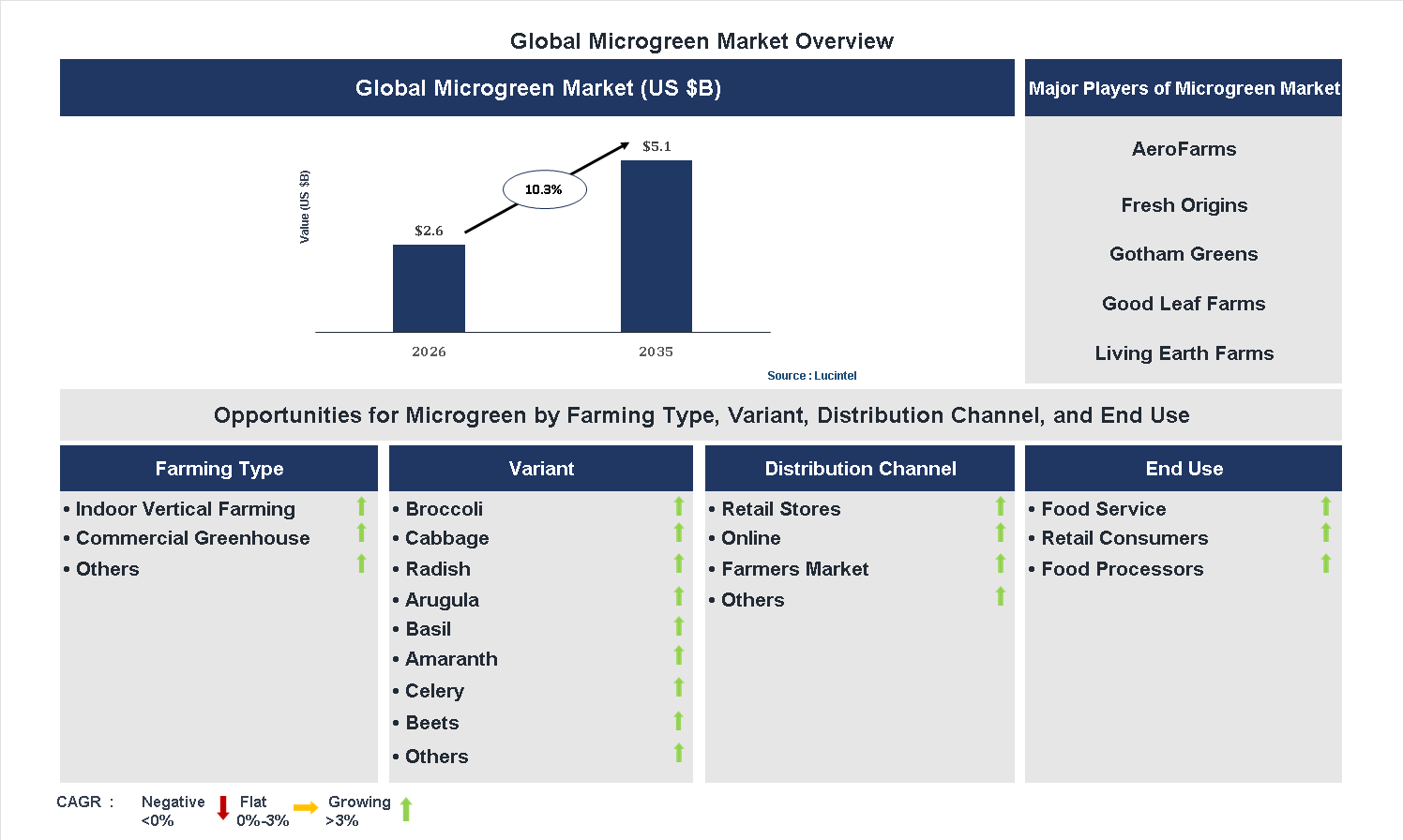
The future of the global microgreen market looks promising with opportunities in the food service, retail consumer, and food processor markets. The global microgreen market is expected to reach an estimated $5.1 billion by 2035 with a CAGR of 10.3% from 2026 to 2035. The major drivers for this market are the increasing demand for nutrient dense foods, the rising adoption of urban farming practices, and the growing preference for organic produce.• Lucintel forecasts that, within the farming type category, commercial greenhouse is expected to witness higher growth over the forecast period.
• Within the end use category, food service is expected to witness the highest growth.
• In terms of region, Europe is expected to witness the highest growth over the forecast period. Gain valuable insights for your business decisions with our comprehensive 150+ page report. Sample figures with some insights are shown below.
Emerging Trends in the Microgreen Market
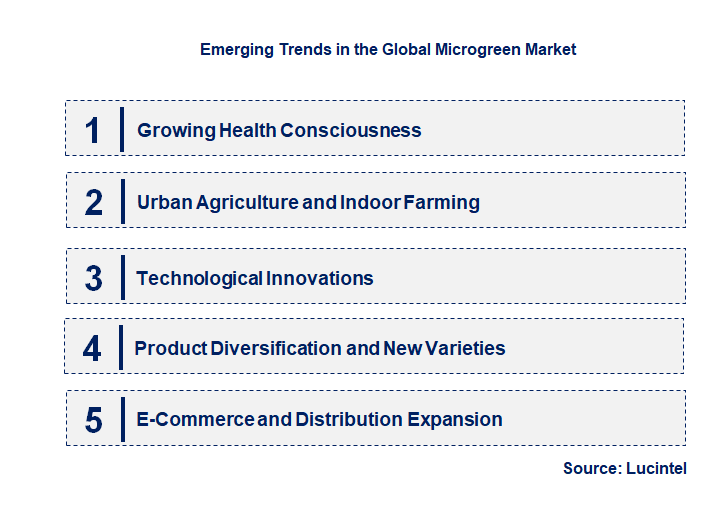
The microgreen market is experiencing rapid growth driven by increasing consumer awareness of health and wellness, urban agriculture initiatives, and the demand for fresh, nutrient-dense foods. As consumers seek sustainable and locally sourced produce, the industry is innovating with new varieties, cultivation techniques, and distribution channels. Technological advancements and changing consumer preferences are also shaping the landscape, making microgreens more accessible and popular across various sectors, including retail, foodservice, and home gardening. These developments are not only expanding market size but also redefining how microgreens are produced, marketed, and consumed, leading to a more dynamic and competitive industry.• Growing Health Consciousness: Increasing awareness of health benefits associated with microgreens is a key driver. Consumers are seeking nutrient-dense foods to improve overall wellness, which boosts demand for microgreens rich in vitamins, antioxidants, and minerals. This trend encourages producers to focus on organic and sustainable cultivation practices, appealing to health-conscious buyers. As a result, microgreens are becoming a staple in health-focused diets, cafes, and restaurants, expanding their market reach and encouraging innovation in product offerings.
• Urban Agriculture and Indoor Farming: The rise of urbanization has led to a surge in indoor farming and vertical gardening techniques for microgreens. These methods allow year-round production in limited spaces, reducing transportation costs and carbon footprint. Advanced hydroponic and aeroponic systems are making cultivation more efficient and scalable. This trend supports local food systems, enhances freshness, and appeals to consumers seeking sustainable, locally grown produce. It also opens new opportunities for small-scale farmers and entrepreneurs to enter the market with minimal investment.
• Technological Innovations: Automation, IoT, and data analytics are transforming microgreen cultivation. Smart sensors monitor environmental conditions, optimizing growth and resource use. Automated harvesting and packaging improve efficiency and reduce labor costs. These innovations enable producers to increase yield, quality, and consistency, meeting rising demand. Additionally, digital platforms facilitate direct-to-consumer sales, expanding market access. The integration of technology is making microgreen production more sustainable and scalable, attracting investment and fostering industry growth.
• Product Diversification and New Varieties: Market players are introducing a wider range of microgreen varieties, including exotic and heirloom types, to cater to diverse consumer preferences. This diversification enhances flavor profiles, nutritional content, and visual appeal, making microgreens more attractive for culinary applications. Innovative blends and organic options are also gaining popularity. Such variety encourages experimentation among chefs and home growers, broadening usage occasions and increasing overall consumption. This trend helps differentiate brands and creates new revenue streams within the market.
• E-commerce and Distribution Expansion: The growth of online retail platforms and direct-to-consumer models is significantly expanding market access. Consumers can now purchase microgreens conveniently from e-commerce sites, subscription boxes, and local delivery services. This trend reduces reliance on traditional retail channels and enables producers to reach niche markets and health-conscious consumers directly. Additionally, collaborations with supermarkets and foodservice providers are increasing distribution channels. The expansion of digital sales and distribution networks is making microgreens more accessible, fostering market growth and consumer engagement. These emerging trends are reshaping the microgreen market by enhancing production efficiency, expanding product offerings, and increasing consumer accessibility. The focus on health, sustainability, and technological integration is driving innovation and competitiveness, positioning microgreens as a vital component of modern, health-oriented food systems. These developments are not only fueling market expansion but also encouraging sustainable practices and consumer engagement, ensuring long-term industry growth.
Recent Development in the Microgreen Market
The microgreen market has experienced significant growth driven by increasing consumer awareness of health benefits, rising demand for organic produce, and expanding culinary applications. Innovations in cultivation techniques and the rise of urban farming have further propelled market expansion. As consumers seek nutritious, sustainable, and versatile ingredients, the industry is poised for continued development. These trends are creating new opportunities for producers, retailers, and investors, shaping the future landscape of the microgreen market.• Growing Consumer Awareness of Health Benefits: The increasing focus on healthy eating habits has boosted demand for microgreens, known for their dense nutrient content. Consumers are seeking fresh, organic options to enhance their diets, leading to expanded retail and foodservice sales. This trend encourages farmers to adopt sustainable practices and innovate in product offerings, ultimately driving market growth and encouraging wider adoption across various sectors.
• Rising Demand for Organic Microgreens: The shift towards organic produce is significantly impacting the microgreen market. Consumers prefer pesticide-free, non-GMO options, prompting growers to adopt organic cultivation methods. This demand boosts premium pricing and market differentiation, encouraging investment in organic farming infrastructure. As organic microgreens become more accessible, their popularity is expected to increase, further expanding market size and consumer base.
• Expansion of Culinary Applications: Microgreens are increasingly used in gourmet dishes, salads, and beverages, enhancing visual appeal and flavor profiles. Chefs and foodservice providers are incorporating microgreens to elevate menu offerings, which boosts demand in restaurants and catering services. This culinary versatility opens new revenue streams for growers and encourages innovation in product presentation, ultimately broadening the market’s reach and consumer interest.
• Innovations in Cultivation Techniques: Advances such as hydroponics, vertical farming, and automated systems are making microgreen production more efficient and scalable. These innovations reduce resource consumption and enable year-round cultivation, lowering costs and increasing supply. As a result, producers can meet rising demand more effectively, leading to market expansion and increased competitiveness, especially in urban and space-constrained environments.
• Rise of Urban Farming and Local Production: Urban farming initiatives are promoting local microgreen cultivation, reducing transportation costs and carbon footprint. This trend supports community engagement and provides fresh produce directly to consumers. The growth of urban farms enhances supply chain resilience and encourages small-scale entrepreneurs, fostering a more sustainable and accessible market. As urban farming gains momentum, it is expected to significantly influence market dynamics and regional growth. The recent developments in health awareness, organic demand, culinary innovation, cultivation technology, and urban farming are collectively transforming the microgreen market. These opportunities are driving increased production, expanding consumer bases, and fostering sustainable practices. As a result, the market is experiencing accelerated growth, greater diversification, and enhanced competitiveness. Overall, these developments are shaping a dynamic, resilient industry poised for continued expansion and innovation in the coming years.
Strategic Growth Opportunities in the Microgreen Market
The microgreen market is experiencing rapid expansion driven by increasing consumer awareness of health benefits, rising demand for fresh and organic produce, and growing popularity among chefs and food enthusiasts. Innovations in urban farming and sustainable agriculture practices further support market growth. As consumers prioritize wellness and sustainability, opportunities for product diversification, market penetration, and technological advancements are emerging. Companies that capitalize on these trends can establish a competitive edge and meet the evolving needs of health-conscious and environmentally aware customers.• Growing Consumer Demand for Organic and Healthy Food Options: The increasing awareness of health benefits associated with microgreens is driving demand among health-conscious consumers. People seek nutrient-dense, fresh, and organic produce, which microgreens provide in abundance. This trend is supported by rising interest in plant-based diets and functional foods. Retailers and farmers are expanding their offerings to meet this demand, creating opportunities for market growth through product innovation, branding, and targeted marketing strategies.
• Expansion of Urban Farming and Indoor Cultivation Techniques: Urbanization and limited arable land are fueling the adoption of vertical farming, hydroponics, and indoor cultivation for microgreens. These methods enable year-round production with minimal space and resource use, making microgreens accessible in metropolitan areas. Investment in advanced farming technologies and infrastructure is expected to boost supply chains, reduce costs, and increase availability, opening new markets and distribution channels for producers and retailers.
• Increasing Use of Microgreens in Culinary and Foodservice Sectors: Chefs and restaurants are increasingly incorporating microgreens into gourmet dishes, salads, and garnishes due to their visual appeal and flavor profiles. This trend enhances the market for premium microgreens and encourages product differentiation. Foodservice providers are seeking consistent, high-quality supplies, prompting growers to adopt quality control measures. The growing popularity of farm-to-table and organic dining experiences further amplifies demand, creating opportunities for specialized microgreen varieties and branding.
• Technological Innovations in Cultivation and Harvesting: Advances in automation, LED lighting, and hydroponic systems are improving microgreen cultivation efficiency and yield. These innovations reduce labor costs, optimize growth conditions, and enable scalable production. Additionally, smart sensors and data analytics facilitate precise monitoring and resource management. Such technological progress allows producers to meet increasing demand, expand product offerings, and improve sustainability, positioning the market for sustained growth and competitiveness.
• Rising Focus on Sustainability and Eco-Friendly Practices: Consumers and regulators are emphasizing sustainable agriculture, prompting microgreen producers to adopt eco-friendly practices such as organic farming, water conservation, and biodegradable packaging. These initiatives appeal to environmentally conscious buyers and can differentiate brands in a competitive market. Sustainability efforts also reduce operational costs and environmental impact, aligning with global trends toward responsible consumption. This focus supports long-term market stability and growth by fostering consumer trust and regulatory compliance. The overall impact of these growth opportunities is a dynamic and expanding microgreen market, driven by health, sustainability, technological innovation, and culinary trends. Companies that strategically leverage these opportunities can enhance their market share, meet consumer expectations, and contribute to sustainable agriculture practices. As these factors converge, the market is poised for continued growth and diversification, benefiting producers, consumers, and the environment alike.
Microgreen Market Driver and Challenges
The microgreen market is influenced by a variety of technological, economic, and regulatory factors that shape its growth trajectory. Advances in agricultural technology, increasing consumer awareness of health benefits, and supportive government policies are key drivers. Conversely, challenges such as supply chain complexities, high production costs, and regulatory hurdles pose significant obstacles. Understanding these drivers and challenges is essential for stakeholders aiming to capitalize on market opportunities and navigate potential risks effectively. As consumer preferences shift towards healthier, organic foods, and technological innovations improve cultivation methods, the market is poised for growth, albeit with certain challenges that need strategic management. The factors responsible for driving the microgreen market include:-• Technological Advancements: The integration of innovative cultivation techniques such as hydroponics, aeroponics, and automated systems has significantly increased efficiency and yield. These technologies enable year-round production, reduce resource consumption, and improve quality, making microgreens more accessible and affordable. As technology continues to evolve, farmers can optimize growth conditions, reduce labor costs, and expand production capacity, thereby fueling market growth.
• Rising Health Consciousness: Consumers are increasingly prioritizing health and wellness, seeking nutrient-dense, organic, and fresh produce. Microgreens are rich in vitamins, antioxidants, and phytochemicals, making them highly attractive to health-conscious buyers. This trend is driven by a growing awareness of diet-related health issues and the desire for clean-label, natural foods, which boosts demand across retail, foodservice, and home gardening sectors.
• Urbanization and Small-Scale Farming: Rapid urbanization has led to increased demand for locally sourced, fresh produce within city environments. Microgreens are ideal for urban farming due to their small space requirements and quick harvest cycles. This trend encourages the adoption of vertical farming and container-based cultivation, expanding market reach and providing opportunities for urban farmers and entrepreneurs.
• Supportive Regulatory Environment: Governments and regulatory bodies are increasingly promoting sustainable agriculture and organic farming practices through subsidies, grants, and favorable policies. These initiatives encourage microgreen cultivation by reducing barriers to entry and ensuring quality standards. Such regulatory support enhances market credibility and stimulates growth, especially in regions emphasizing eco-friendly farming.
• Growing E-commerce and Distribution Channels: The expansion of online grocery platforms and direct-to-consumer delivery services has made microgreens more accessible to a broader audience. E-commerce facilitates market penetration beyond traditional retail outlets, enabling producers to reach niche markets and health-focused consumers efficiently. This digital shift accelerates sales, increases brand visibility, and fosters innovation in marketing strategies. The challenges facing the microgreen market include:-
• Supply Chain Complexities: Microgreen cultivation involves delicate handling, rapid perishability, and specific storage requirements. Disruptions in supply chains, such as transportation delays or logistical inefficiencies, can lead to product spoilage and financial losses. Ensuring consistent quality and timely delivery remains a significant challenge, especially for small-scale producers seeking to scale operations.
• High Production Costs: Although microgreens require minimal space, the costs associated with high-quality seeds, controlled environment systems, and labor can be substantial. Investment in technology and infrastructure is often necessary to maintain year-round production, which can be prohibitive for new entrants or small farmers, limiting market expansion and profitability.
• Regulatory and Certification Barriers: Navigating food safety standards, organic certifications, and import-export regulations can be complex and time-consuming. Variations in regional policies may hinder market entry or expansion, especially for international trade. Compliance costs and bureaucratic hurdles can delay product launches and increase operational expenses, impacting overall market growth. The microgreen market is driven by technological innovations, health trends, urban farming, regulatory support, and digital distribution channels. However, it faces challenges related to supply chain management, high production costs, and regulatory compliance. These factors collectively influence market dynamics, requiring stakeholders to adopt strategic solutions to capitalize on growth opportunities while mitigating risks. The markets future will depend on how effectively these drivers are leveraged and challenges addressed, shaping a sustainable and innovative microgreen industry.
List of Microgreen Companies
Companies in the market compete on the basis of product quality offered. Major players in this market focus on expanding their manufacturing facilities, R&D investments, infrastructural development, and leverage integration opportunities across the value chain. With these strategies microgreen companies cater increasing demand, ensure competitive effectiveness, develop innovative products & technologies, reduce production costs, and expand their customer base. Some of the microgreen companies profiled in this report include-• AeroFarms
• Fresh Origins
• Gotham Greens
• Good Leaf Farms
• Living Earth Farms
• Farmbox Greens
• Chef’s Garden
• Bowery Farming
• Teshuva Agricultural Projects Ltd.
• Madar Farms
Microgreen Market by Segment
The study includes a forecast for the global microgreen market by farming type, variant, distribution channel, end use, and region.Microgreen Market by Farming Type [Value from 2019 to 2035]:
• Indoor Vertical Farming
• Commercial Greenhouse
• Others
Microgreen Market by Variant [Value from 2019 to 2035]:
• Broccoli
• Cabbage
• Radish
• Arugula
• Basil
• Amaranth
• Celery
• Beets
• Others
Microgreen Market by Distribution Channel [Value from 2019 to 2035]:
• Retail Stores
• Online
• Farmers Market
• Others
Microgreen Market by End Use [Value from 2019 to 2035]:
• Food Service
• Retail Consumers
• Food Processors
Microgreen Market by Region [Value from 2019 to 2035]:
• North America
• Europe
• Asia Pacific
• The Rest of the World
Country Wise Outlook for the Microgreen Market
The microgreen market has experienced significant growth globally, driven by increasing consumer awareness of health benefits, culinary innovation, and sustainable farming practices. As consumers seek nutrient-dense foods, the demand for microgreens has surged across various regions. Technological advancements, urban farming initiatives, and expanding distribution channels have further propelled market expansion. Countries are adopting innovative cultivation techniques and integrating microgreens into mainstream diets, reflecting a shift towards healthier lifestyles. This evolving landscape presents opportunities for producers and retailers to capitalize on the rising popularity of microgreens, shaping the future of the global food industry.• United States: The U.S. microgreen market has seen rapid growth, fueled by rising health consciousness and the popularity of organic produce. Urban farms and vertical farming techniques are increasingly adopted to meet demand in metropolitan areas. Major retailers and restaurants are incorporating microgreens into menus, boosting consumer accessibility. Innovations in hydroponic and aeroponic cultivation methods have improved yield and quality. Additionally, e-commerce platforms have expanded distribution channels, making microgreens more readily available nationwide. The market is expected to continue expanding as consumers prioritize nutritious, locally-sourced foods.
• China: Chinas microgreen market is experiencing rapid development, driven by urbanization and a growing middle class seeking healthy food options. The government’s support for sustainable agriculture and urban farming initiatives has facilitated market growth. Local producers are adopting advanced cultivation technologies, including hydroponics, to increase efficiency. Microgreens are increasingly used in traditional Chinese cuisine and modern fusion dishes, expanding their culinary appeal. Retail chains and online platforms are playing a vital role in distribution, making microgreens more accessible. The market is projected to grow steadily as consumer awareness of health benefits increases.
• Germany: In Germany, the microgreen market is characterized by a focus on organic and sustainable practices. Consumers are highly conscious of food quality and environmental impact, driving demand for locally-grown microgreens. Innovative urban farming projects and community-supported agriculture initiatives are prominent. The adoption of eco-friendly cultivation methods, such as soil-less farming, is common. Microgreens are popular among health-conscious consumers and chefs, often featured in gourmet dishes. The market benefits from strong regulatory support for organic farming and increasing interest in plant-based diets. Market growth is expected to continue as sustainability remains a priority.
• India: The Indian microgreen market is emerging, with increasing awareness of nutritional benefits and urban farming trends. Small-scale farmers and urban entrepreneurs are adopting microgreen cultivation to supplement income and meet local demand. The affordability and ease of cultivation make microgreens attractive in India’s diverse food culture. Growing health consciousness and the popularity of vegetarian diets are boosting demand. Government initiatives promoting sustainable agriculture and organic farming support market development. Retail outlets and online platforms are expanding their offerings of microgreens. The market is poised for rapid growth as consumer interest in healthy, fresh produce increases.
• Japan: Japan’s microgreen market is expanding, driven by a strong culture of culinary innovation and health consciousness. High-quality microgreens are favored in fine dining and home cooking, emphasizing aesthetics and nutrition. Advanced cultivation techniques, including controlled environment agriculture, are widely used to ensure product quality. The market benefits from a well-established organic and sustainable farming sector. Consumer preferences lean towards premium, locally-sourced microgreens, often integrated into traditional and modern Japanese cuisine. The growth is supported by government initiatives promoting sustainable food systems. Market prospects remain positive, with increasing demand for health-oriented, gourmet ingredients.

Features of the Global Microgreen Market
Market Size Estimates: Microgreen market size estimation in terms of value ($B). Trend and Forecast Analysis: Market trends (2019 to 2025) and forecast (2026 to 2035) by various segments and regions. Segmentation Analysis: Microgreen market size by various segments, such as by farming type, variant, distribution channel, end use, and region in terms of value ($B). Regional Analysis: Microgreen market breakdown by North America, Europe, Asia Pacific, and Rest of the World. Growth Opportunities: Analysis of growth opportunities in different farming types, variants, distribution channels, end uses, and regions for the microgreen market. Strategic Analysis: This includes M&A, new product development, and competitive landscape of the microgreen market. Analysis of competitive intensity of the industry based on Porter’s Five Forces model.
FAQ
Q1. What is the microgreen market size? Answer: The global microgreen market is expected to reach an estimated $5.1 billion by 2035. Q2. What is the growth forecast for microgreen market? Answer: The global microgreen market is expected to grow with a CAGR of 10.3% from 2026 to 2035. Q3. What are the major drivers influencing the growth of the microgreen market? Answer: The major drivers for this market are the increasing demand for nutrient dense foods, the rising adoption of urban farming practices, and the growing preference for organic produce. Q4. What are the major segments for microgreen market? Answer: The future of the microgreen market looks promising with opportunities in the food service, retail consumer, and food processor markets. Q5. Who are the key microgreen market companies? Answer: Some of the key microgreen companies are as follows:• AeroFarms
• Fresh Origins
• Gotham Greens
• Good Leaf Farms
• Living Earth Farms
• Farmbox Greens
• Chef’s Garden
• Bowery Farming
• Teshuva Agricultural Projects Ltd.
• Madar Farms Q6. Which microgreen market segment will be the largest in future? Answer: Lucintel forecasts that, within the farming type category, commercial greenhouse is expected to witness higher growth over the forecast period. Q7. In microgreen market, which region is expected to be the largest in next 5 years? Answer: In terms of region, Europe is expected to witness the highest growth over the forecast period. Q8. Do we receive customization in this report? Answer: Yes, Lucintel provides 10% customization without any additional cost.
Table of Contents
List of Figures
List of Tables
Methodology
- In-depth interviews of the major players in this market
- Detailed secondary research from competitors’ financial statements and published data
- Extensive searches of published works, market, and database information pertaining to industry news, company press releases, and customer intentions
- A compilation of the experiences, judgments, and insights of Lucintel’s professionals, who have analyzed and tracked this market over the years.


Buy Now
Choose a license that fits your team. Instant PDF delivery.
Prices exclude taxes. Instant delivery. Custom licensing available on request.
Key Questions
- • What are some of the most promising, high-growth opportunities for the microgreen market by farming type (indoor vertical farming, commercial greenhouse, and others), variant (broccoli, cabbage, radish, arugula, basil, amaranth, celery, beets, and others), distribution channel (retail stores, online, farmers market, and others), end use (food service, retail consumers, and food processors), and region (North America, Europe, Asia Pacific, and the Rest of the World)?
- • Which segments will grow at a faster pace and why?
- • Which region will grow at a faster pace and why?
- • What are the key factors affecting market dynamics? What are the key challenges and business risks in this market?
- • What are the business risks and competitive threats in this market?
- • What are the emerging trends in this market and the reasons behind them?
- • What are some of the changing demands of customers in the market?
- • What are the new developments in the market? Which companies are leading these developments?
- • Who are the major players in this market? What strategic initiatives are key players pursuing for business growth?
- • What are some of the competing products in this market and how big of a threat do they pose for loss of market share by material or product substitution?
- • What M&A activity has occurred in the last 7 years and what has its impact been on the industry? For any questions related to Microgreen Market, Microgreen Market Size, Microgreen Market Growth, Microgreen Market Analysis, Microgreen Market Report, Microgreen Market Share, Microgreen Market Trends, Microgreen Market Forecast, Microgreen Companies, write Lucintel analyst at email: helpdesk@lucintel.com. We will be glad to get back to you soon.


