
Report Feature
Magnesium Silicate Trends and Forecast
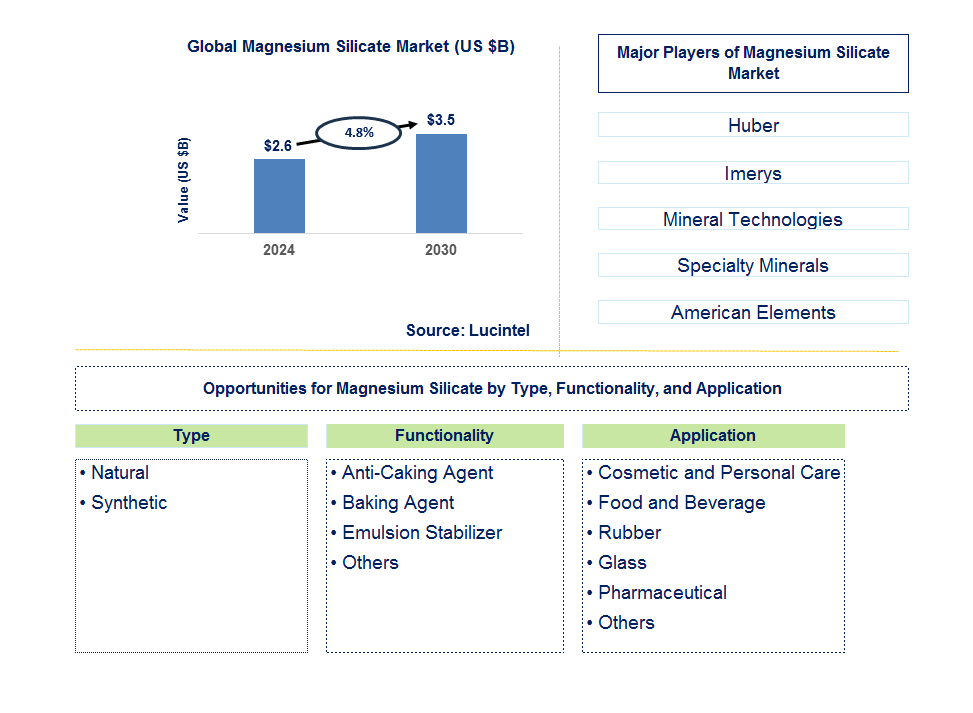
The future of the global magnesium silicate market looks promising with opportunities in the cosmetic and personal care, food and beverage, rubber, glass, and pharmaceutical markets. The global magnesium silicate market is expected to reach an estimated $3.5 billion by 2030 with a CAGR of 4.8% from 2024 to 2030. The major drivers for this market are rising demand for natural and organic cosmetics, increasing demand for men's cosmetics, and rising adoption in industrial insulation materials.• Lucintel forecasts that, within the type category, natural will remain the largest segment over the forecast period due to it's growing application in a variety of products, such as food additives, pharmaceuticals, industrial goods, and cosmetics.
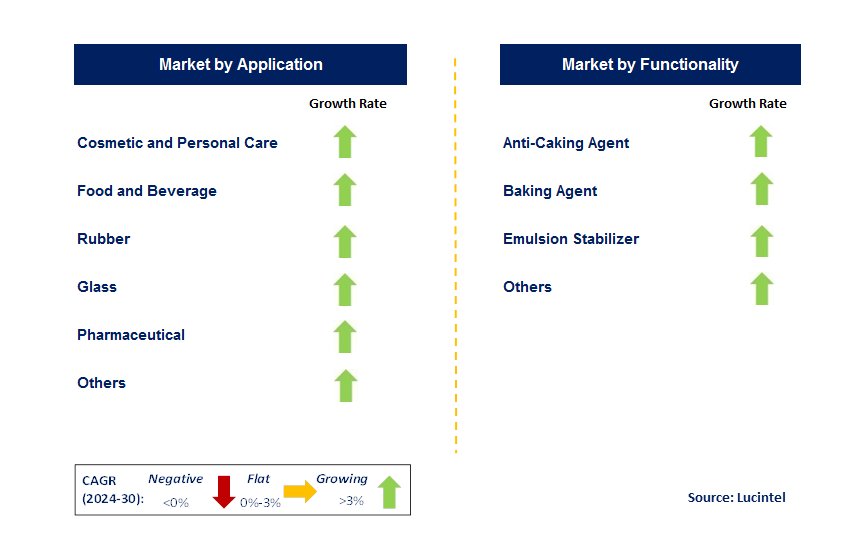
• Within the application category, cosmetic and personal care is expected to witness the highest growth due to the escalating demand for natural and organic component based cosmetics.
• In terms of region, APAC will remain the largest region over the forecast period due to growing need for magnesium silicate in a number of industries, including rubber, food and beverage, personal care, and cosmetics in the region. Gain valuable insights for your business decisions with our comprehensive 150+ page report.
Emerging Trends in the Magnesium Silicate Market
The magnesium silicate market is changing shape along with emerging trends driven by technological advances, consumer preferences, and the sustainability agenda. These trends will determine the future of the sector while impacting market dynamics.• Eco-friendly Production: Various companies are moving towards eco-friendly production methods for the extraction and processing of magnesium silicate. This implies that corporations are now employing environmentally sustainable practices to reduce pollution and waste generated through their actions, thereby meeting regulatory goals, such as waste reduction and improved energy efficiency.
• Penetration into Hi-Tech Areas: There is a rising demand for magnesol products in electronic devices, aerospace, and high-performance materials. Innovations in materials science have resulted in increased consumption of the mineral within these sectors, thereby enhancing their effectiveness.
• Growth in Cosmetic and Personal Care Uses: Due to its attributes as a bulking agent, anti-caking agent, and texture enhancer, there is an increasing demand for magnesium silicate in cosmetic and personal care formulations. This trend is driven by growing consumer consciousness and a preference for natural and safe ingredients.
• Development of Advanced Composites: In various industrial applications, magnesium silicate is now incorporated into advanced composites. The automotive, aerospace, and construction industries are increasingly using lightweight and durable composites that incorporate magnesium silicate.
• Regulatory Changes and Compliance: Stricter regulations regarding environmental impact and product safety have been observed in the industry, affecting the market. Consequently, companies have focused on ensuring compliance by having their products meet new regulatory requirements. Emerging trends reshaping the magnesium silicate market include sustainable production methods, high-tech applications, growth in cosmetic uses, advanced composite development, and shifting regulatory standards. These trends reflect a market that is increasingly driven by innovation, diverse application opportunities, and sustainability concerns.
Recent Developments in the Magnesium Silicate Market
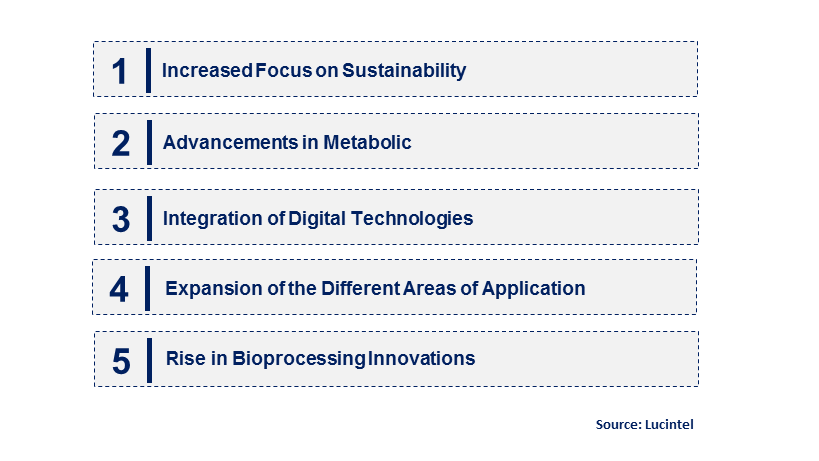
Key developments happening recently within this space have seen advancements in production technologies, as well as expanding applications and regulatory adaptations. Such changes drive growth, thus shaping what the future holds for this particular industry.• Advancement in Extraction Technologies: New extraction technologies have been developed to improve efficiency and reduce the environmental effects of producing magnesium silicate. The innovations involve more sustainable processes and sophisticated processing techniques that enhance product purity while minimizing waste generation.
• Expansion of Application Areas: Apart from traditional uses, magnesium silicate has found increased utilization in numerous other areas. For instance, it has been introduced among high-performance materials used today, which broadens its field of application beyond electronic devices and ceramics.
• Improved Product Quality and Purity: Recent advances aim to improve the quality and purity of magnesium silicate products. Refining processing techniques and adopting stringent measures of quality control in line with pharmaceutical standards, including high levels of purity required for high-tech applications, are key focuses.
• Investment in R&D: The magnesium silicate market has greatly benefited from significant investments in research and development, resulting in innovation. Among these new uses are improvements in production processes and the emergence of advanced materials tailored to meet changing market needs.
• Regulatory Compliance and Sustainability: Increasingly strict environmental regulations and sustainability requirements are being met by companies. For instance, production methods that are environmentally friendly, enhanced waste management techniques, and compliance with newly enacted laws governing this industry enhance their market positions. Recent key developments in the magnesium silicate market—including advancements in extraction technologies, expansion of applications, improved product quality, increased R&D investment, and regulatory compliance—are encouraging growth within the sector. These developments indicate how the current market focus is on innovative products that can sustainably serve a wide range of customers.
Strategic Growth Opportunities for Magnesium Silicate Market
Several strategic growth opportunities can be found within the magnesium silicate space, driven by advancements in technology, changing customer preferences, and an increase in areas where it can be used. Identifying such strategies could increase chances for company success by creating a better market profile.• Pharmaceutical Industry Expansion: One sector with significant demand is the pharmaceutical industry. The growing need for effective drugs has led to its use as an excipient and drug delivery system.
• Cosmetics and Personal Care: The demand for magnesium silicate in cosmetics and personal care products is growing. Opportunities exist in developing new formulations and products that utilize magnesium silicate's properties for texture enhancement and product stability.
• High-Performance Materials: There are increasing applications of magnesium silicate in high-performance materials like composites and ceramics. The growing need for lightweight but strong construction materials presents potential for growth within industries such as aerospace, automotive, and construction.
• Agricultural Applications: The use of magnesium silicate in farming, such as soil conditioning and as a component of fertilizers, creates opportunities for development. Innovations in agricultural applications can improve crop yields and soil health.
• Environmental Applications: Waste management systems can benefit from the use of magnesium silicate, among other applications. This highlights its role in creating mechanisms to combat environmental problems while promoting sustainability. Strategic growth opportunities in the magnesium silicate market include expansion into pharmaceuticals, cosmetics, high-performance materials, agriculture, and environmental applications. Leveraging these opportunities can drive market growth and support the development of innovative products and solutions.
Magnesium Silicate Market Driver and Challenges
The MgSiO3 market is influenced by various drivers and challenges, such as technological advancements, economic factors, and regulatory considerations. These factors must be understood to exploit the resultant business opportunities. The factors responsible for driving the magnesium silicate market include:• Technological Advancements: Innovations related to extraction methods that ultimately guarantee sustainable production of this mineral impact efficiency. Improvements in material science also broaden the applicability of this product, thereby increasing its market share, particularly in hi-tech industries.
• Rising Demand for Eco-Friendly Products: Consumer preference for environmentally friendly goods is driving up the usage of magnesium silicate. As a result, some green technologies adopt it, thus widening its scope of use and expanding markets.
• Growth in End-Use Industries: The expansion of industries such as pharmaceuticals, cosmetics, and advanced materials is boosting the demand for magnesium silicate. A wide range of applications benefits from its versatility, making it valuable.
• Investment in R&D: Major investments in research and development have led to innovation and improved quality. Various sectors continuously explore new ways and methods to produce better quality goods to enhance market adaptability.
• Regulatory Support for Sustainability: These regulations aim to encourage industries to be eco-friendly. Adherence to these regulations prompts market growth while enhancing competitiveness. Challenges in the magnesium silicate market include:
• High Production Costs: The profitability of this mineral can be hampered by high extraction and processing costs. Therefore, there must be investments in advanced technology and infrastructure to help manage costs by improving efficiencies.
• Complex Processing Requirements: Achieving better quality standards and meeting the processing requirements for MgSiO3 are very challenging. Such issues necessitate highly sophisticated technologies that address factors like purity, consistency, and product performance.
• Regulatory Compliance: Companies find it challenging to comply with stringent environmental and safety requirements. To avoid compromising market access or facing penalties, companies must navigate complex regulatory frameworks. Major drivers of the magnesium silicate market include technological advancements, rising demand for eco-friendly products, growth in end-use industries, investment in R&D, and regulatory support for sustainability. Challenges such as high production costs, complex processing requirements, and regulatory compliance impact market dynamics. Balancing these drivers and challenges is crucial for achieving success in the market.
List of Magnesium Silicate Companies
Companies in the market compete on the basis of product quality offered. Major players in this market focus on expanding their manufacturing facilities, R&D investments, infrastructural development, and leverage integration opportunities across the value chain. With these strategies magnesium silicate companies cater increasing demand, ensure competitive effectiveness, develop innovative products & technologies, reduce production costs, and expand their customer base. Some of the magnesium silicate companies profiled in this report include-• Huber
• Imerys
• Mineral Technologies
• Specialty Minerals
• American Elements
• Fengchen
• Airotech Minerals
• Spectrum Chemicals
• Neelkanth Finechem
• Maryland Lava
Magnesium Silicate by Segment
The study includes a forecast for the global magnesium silicate by type, functionality, application, and region.Magnesium Silicate Market by Type [Analysis by Value from 2018 to 2030]:
• Natural
• Synthetic
Magnesium Silicate Market by Functionality [Analysis by Value from 2018 to 2030]:
• Anti-Caking Agent
• Baking Agent
• Emulsion Stabilizer
• Others
Magnesium Silicate Market by Application [Analysis by Value from 2018 to 2030]:
• Cosmetic and Personal Care
• Food and Beverage
• Rubber
• Glass
• Pharmaceutical
• Others
Magnesium Silicate Market by Region [Shipment Analysis by Value from 2018 to 2030]:
• North America
• Europe
• Asia Pacific
• The Rest of the World
Country Wise Outlook for the Magnesium Silicate Market
The global market for magnesium silicate is evolving rapidly, driven by advancements in extraction techniques and increasing applications across various sectors. This summary highlights recent developments in key countries.• United States: For instance, there are recent advances involving high-purity magnesium silicate targeted at the pharmaceutical and cosmetic sectors. The emphasis on environmentally friendly methods of extraction is also growing. Additionally, this market is expanding due to innovative practices being used in areas such as ceramics for advanced technologies and composites. Firms are engaging in research aimed at improving product quality to meet strict regulatory requirements for both local industrial use and consumer products.
• China: Moreover, the Chinese magnesium silicate market has grown significantly due to its application growth within the construction and agricultural sectors. Among these are improved extraction techniques that result in better product quality while minimizing ecological footprints. The government of China plans to implement more stringent mining and processing rules, thus forcing domestic manufacturers to adopt sustainable practices.
• Germany: Germany takes the lead in recent innovations concerning this mineral, as it is mainly used for high-technology products like those in the aerospace and automotive industries. One of these improvements includes the addition of magnesium silicate in lightweight composites. Additionally, this country invests heavily in research aimed at making mineral extraction more efficient while promoting sustainability and technological advancements.
• India: In India, recent trends revolve around increasing capacities to meet high demand rates from the pharmaceutical and personal care sectors. Therefore, the current focus is on modernizing processing operations to avoid expenses incurred during product quality control. It is also important to identify more uses and markets for this mineral in India, including agriculture and construction.
• Japan: In Japan, recent developments have seen the use of magnesium silicate in electronics and high-performance materials increase. For instance, it has recently been incorporated into advanced semiconductor materials and energy-saving technologies. Furthermore, extraction methods are being improved to obtain purer products that support high-tech manufacturing industries and meet strict regulatory standards.

Features of the Global Magnesium Silicate Market
Market Size Estimates: Magnesium silicate market size estimation in terms of value ($B). Trend and Forecast Analysis: Market trends (2018 to 2023) and forecast (2024 to 2030) by various segments and regions. Segmentation Analysis: Magnesium silicate market size by type, functionality, application, and region in terms of value ($B). Regional Analysis: Magnesium silicate market breakdown by North America, Europe, Asia Pacific, and Rest of the World. Growth Opportunities: Analysis of growth opportunities in different types, functionalities, applications, and regions for the magnesium silicate market. Strategic Analysis: This includes M&A, new product development, and competitive landscape of the magnesium silicate market. Analysis of competitive intensity of the industry based on Porter’s Five Forces model.If you are looking to expand your business in this or adjacent markets, then contact us. We have done hundreds of strategic consulting projects in market entry, opportunity screening, due diligence, supply chain analysis, M & A, and more.

FAQ
Q1. What is the magnesium silicate market size? Answer: The global magnesium silicate market is expected to reach an estimated $3.5 billion by 2030. Q2. What is the growth forecast for magnesium silicate market? Answer: The global magnesium silicate market is expected to grow with a CAGR of 4.8% from 2024 to 2030. Q3. What are the major drivers influencing the growth of the magnesium silicate market? Answer: The major drivers for this market are rising demand for natural and organic cosmetics, increasing demand for men's cosmetics, and rising adoption in industrial insulation materials. Q4. What are the major segments for magnesium silicate market? Answer: The future of the magnesium silicate market looks promising with opportunities in the cosmetic and personal care, food and beverage, rubber, glass, and pharmaceutical markets. Q5. Who are the key magnesium silicate market companies? Answer: Some of the key magnesium silicate companies are as follows:• Huber
• Imerys
• Mineral Technologies
• Specialty Minerals
• American Elements
• Fengchen
• Airotech Minerals
• Spectrum Chemicals
• Neelkanth Finechem
• Maryland Lava Q6. Which magnesium silicate market segment will be the largest in future? Answer: Lucintel forecasts that natural will remain the largest segment over the forecast period due to it's growing application in a variety of products, such as food additives, pharmaceuticals, industrial goods, and cosmetics. Q7. In magnesium silicate market, which region is expected to be the largest in next 5 years? Answer: APAC will remain the largest region over the forecast period due to growing need for magnesium silicate in a number of industries, including rubber, food and beverage, personal care, and cosmetics in the region. Q8. Do we receive customization in this report? Answer: Yes, Lucintel provides 10% customization without any additional cost.
Table of Contents
Methodology
- In-depth interviews of the major players in this market
- Detailed secondary research from competitors’ financial statements and published data
- Extensive searches of published works, market, and database information pertaining to industry news, company press releases, and customer intentions
- A compilation of the experiences, judgments, and insights of Lucintel’s professionals, who have analyzed and tracked this market over the years.


Buy Now
Choose a license that fits your team. Instant PDF delivery.
Prices exclude taxes. Instant delivery. Custom licensing available on request.
Key Questions
- • What are some of the most promising, high-growth opportunities for the magnesium silicate market by type (natural and synthetic), functionality (anti-caking agent, baking agent, emulsion stabilizer, and others), application (cosmetic and personal care, food and beverage, rubber, glass, pharmaceutical, and others), and region (North America, Europe, Asia Pacific, and the Rest of the World)?
- • Which segments will grow at a faster pace and why?
- • Which region will grow at a faster pace and why?
- • What are the key factors affecting market dynamics? What are the key challenges and business risks in this market?
- • What are the business risks and competitive threats in this market?
- • What are the emerging trends in this market and the reasons behind them?
- • What are some of the changing demands of customers in the market?
- • What are the new developments in the market? Which companies are leading these developments?
- • Who are the major players in this market? What strategic initiatives are key players pursuing for business growth?
- • What are some of the competing products in this market and how big of a threat do they pose for loss of market share by material or product substitution?
- • What M&A activity has occurred in the last 5 years and what has its impact been on the industry? For any questions related to Magnesium Silicate Market, Magnesium Silicate Market Size, Magnesium Silicate Market Growth, Magnesium Silicate Market Analysis, Magnesium Silicate Market Report, Magnesium Silicate Market Share, Magnesium Silicate Market Trends, Magnesium Silicate Market Forecast, Magnesium Silicate Companies, write Lucintel analyst at email: helpdesk@lucintel.com. We will be glad to get back to you soon.


