
Report Feature
Inorganic Rheology Modifier Trends and Forecast
The future of the global inorganic rheology modifier market looks promising with opportunities in the paint & coating, cosmetic & personal care, and adhesive & sealant markets. The global inorganic rheology modifier market is expected to grow with a CAGR of 3.0% from 2024 to 2030. The major drivers for this market are the increasing demand for sustainable and eco-friendly products and the rising integration of nanotechnology in rheology modifiers.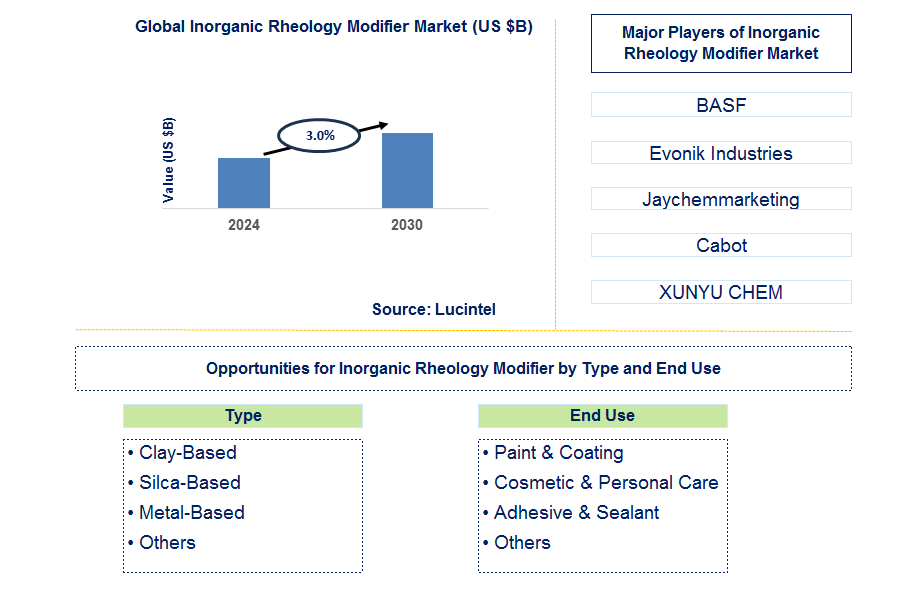
Country Wise Outlook for the Inorganic Rheology Modifier Market
Major players in the market are expanding their operations and forming strategic partnerships to strengthen their positions. Below image highlights recent developments by major inorganic rheology modifier producers in key regions: the USA, Chinese, Indian, Japanese, and German market.• United States: In the U.S., significant advancements in inorganic rheology modifiers are driven by the coatings and construction sectors, focusing on eco-friendly formulations. Companies are developing sustainable products that comply with stringent environmental regulations, enhancing product performance while reducing environmental impact.
• Chinese: China is witnessing rapid growth in the production of inorganic rheology modifiers, particularly for use in construction materials. Increased investments in infrastructure development and a shift towards high-quality construction products have spurred innovation and improved the functionality of these modifiers.
• German: Germany is emphasizing technological advancements in inorganic rheology modifiers, especially in automotive coatings and industrial applications. German manufacturers are focusing on improving the durability and performance of their products to meet the high standards set by the automotive industry.
• Indian: In India, the market for inorganic rheology modifiers is expanding due to the growing demand in the paint and coatings sector. Local manufacturers are innovating to enhance the performance of these modifiers, thereby catering to both domestic and international markets.
• Japanese: Japan's market is characterized by a strong emphasis on research and development in inorganic rheology modifiers. Companies are investing in new technologies to create high-performance additives that can meet the specific requirements of various industries, particularly in electronics and automotive sectors.
Emerging Trends in the Inorganic Rheology Modifier Market
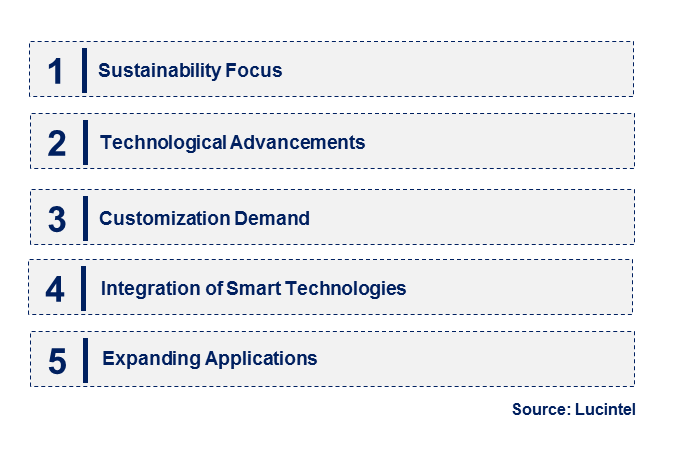
Emerging trends indicate significant shifts towards innovation and sustainability in the inorganic rheology modifier sector.• Sustainability Focus: Increasing pressure for eco-friendly products is driving manufacturers to develop sustainable inorganic rheology modifiers that are biodegradable and have reduced environmental footprints. This trend is crucial for compliance with global environmental regulations and consumer demand for green products.
• Technological Advancements: Innovations in formulation technologies are enhancing the performance of inorganic rheology modifiers, allowing for better viscosity control and improved stability. These advancements enable industries to create more efficient and effective formulations in various applications.
• Customization Demand: There is a growing demand for tailored rheology modifiers that meet specific application requirements. Manufacturers are increasingly focusing on producing customized solutions to cater to unique needs across industries like coatings, construction, and personal care.
• Integration of Smart Technologies: The incorporation of smart technologies, including IoT and AI, is emerging as a trend in the rheology modifier market. These technologies enable manufacturers to optimize production processes and improve product quality through real-time monitoring and adjustments.
• Expanding Applications: The versatility of inorganic rheology modifiers is leading to their adoption in new applications, including advanced materials and specialty chemicals. This expansion is opening new avenues for growth and innovation across various industrial sectors. The above trends are reshaping the inorganic rheology modifier market by encouraging sustainable practices, enhancing product performance, and broadening application scopes.
Recent Developments in the Inorganic Rheology Modifier Market
Key developments in the inorganic rheology modifier market are indicative of its dynamic nature and adaptability to industry demands.• Sustainable Product Development: Leading companies are investing in research to create environmentally friendly inorganic rheology modifiers. This focus aligns with global trends toward sustainability and regulatory compliance, appealing to environmentally conscious consumers.
• Innovative Formulations: Recent breakthroughs in formulation technology have resulted in the creation of high-performance modifiers that improve the viscosity and stability of end products. Such innovations are crucial for industries that demand superior performance from their materials.
• Collaborations and Partnerships: Strategic collaborations between manufacturers and research institutions are on the rise. These partnerships are fostering innovation, allowing for the development of advanced inorganic rheology modifiers that meet evolving market needs.
• Expansion of Production Facilities: Many companies are expanding their production capabilities to meet the increasing global demand for inorganic rheology modifiers. This expansion is essential for maintaining competitive advantage and responding to market growth.
• Focus on Performance Enhancement: Manufacturers are prioritizing performance enhancements in their product lines. This focus is leading to the development of modifiers that not only meet but exceed industry performance standards, driving customer satisfaction. These developments are significantly impacting the inorganic rheology modifier market by enhancing product quality, meeting regulatory requirements, and addressing consumer preferences.
Strategic Growth Opportunities for Inorganic Rheology Modifier Market
The inorganic rheology modifier market is witnessing several strategic growth opportunities across key applications.• Coatings Industry: The coatings industry represents a significant growth opportunity due to the increasing demand for high-performance, eco-friendly formulations. Innovations in inorganic rheology modifiers are crucial for enhancing the durability and aesthetic properties of coatings.
• Construction Sector: The construction sector is a major application area for inorganic rheology modifiers, driven by rising infrastructure projects. These modifiers improve the workability and stability of construction materials, making them essential for modern building applications.
• Personal Care Products: The demand for inorganic rheology modifiers in personal care products is on the rise. These modifiers enhance product texture and stability, catering to consumer preferences for high-quality personal care formulations.
• Plastics and Composites: The plastics and composites industries are exploring new applications for inorganic rheology modifiers. These additives improve process ability and mechanical properties, driving innovation in material science.
• Adhesives and Sealants: In the adhesives and sealants market, inorganic rheology modifiers play a crucial role in enhancing performance characteristics. The growth in the adhesive market presents significant opportunities for these modifiers to improve product efficacy. These growth opportunities are shaping the inorganic rheology modifier market by expanding its application scope and driving innovation across various industries.
Inorganic Rheology Modifier Market Driver and Challenges
The inorganic rheology modifier market is influenced by a range of drivers and challenges that shape its landscape. The factors responsible for driving the inorganic rheology modifier market include:• Increasing Demand for High-Performance Products: The push for superior product performance in industries such as coatings and construction is driving demand for advanced inorganic rheology modifiers. Manufacturers are compelled to innovate to meet these expectations, thereby stimulating market growth.
• Sustainability Regulations: Stringent environmental regulations are encouraging manufacturers to develop eco-friendly inorganic rheology modifiers. Compliance with these regulations not only satisfies consumer demand for sustainable products but also positions companies favorably in a competitive market.
• Technological Innovations: Advancements in formulation and manufacturing technologies are enabling the production of more efficient and effective inorganic rheology modifiers. This continuous innovation is essential for meeting the evolving needs of various industries.
• Global Infrastructure Development: Increased investments in infrastructure projects worldwide are boosting demand for inorganic rheology modifiers in construction materials. This trend presents significant growth opportunities for manufacturers in the market.
• Growing Personal Care Industry: The expanding personal care sector is driving the demand for high-quality formulations that incorporate inorganic rheology modifiers. This growth offers opportunities for product development and market expansion. Challenges in the inorganic rheology modifier market are:
• Raw Material Price Fluctuations: Volatility in the prices of raw materials used to produce inorganic rheology modifiers poses a challenge for manufacturers. This fluctuation can impact profit margins and production costs, affecting overall market stability.
• Regulatory Compliance: Meeting regulatory requirements for product safety and environmental impact can be a complex and costly process. Non-compliance can lead to legal issues and damage to brand reputation.
• Competition from Alternative Technologies: The emergence of alternative technologies and materials may pose challenges to the growth of inorganic rheology modifiers. Manufacturers must continuously innovate to maintain their competitive edge.
• Market Saturation: As the market matures, saturation may lead to increased competition among existing players. Companies must differentiate their products to remain relevant and attract new customers.
• Supply Chain Disruptions: Global supply chain disruptions, exacerbated by events such as the COVID-19 pandemic, can affect the availability of raw materials and production capabilities. This challenge can hinder market growth and stability. The interplay between these drivers and challenges is shaping the future of the inorganic rheology modifier market, driving innovation, and influencing strategic decisions among manufacturers.
List of Inorganic Rheology Modifier Companies
Companies in the market compete on the basis of product quality offered. Major players in this market focus on expanding their manufacturing facilities, R&D investments, infrastructural development, and leverage integration opportunities across the value chain. Through these strategies inorganic rheology modifier companies cater increasing demand, ensure competitive effectiveness, develop innovative products & technologies, reduce production costs, and expand their customer base. Some of the inorganic rheology modifier companies profiled in this report include-• BASF
• Evonik Industries
• Jaychemmarketing
• Cabot
• XUNYU CHEM
• Orisil
• OCI COMPANY
• ALTANA
• Tokuyama
• Wacker Chemie
Inorganic Rheology Modifier by Segment
The study includes a forecast for the global inorganic rheology modifier by type, end use, and region.Inorganic Rheology Modifier Market by Type [Analysis by Value from 2018 to 2030]:
• Clay-Based
• Silca-Based
• Metal-Based
• Others
Inorganic Rheology Modifier Market by End Use [Analysis by Value from 2018 to 2030]:
• Paint & Coating
• Cosmetic & Personal Care
• Adhesive & Sealant
• Others
Inorganic Rheology Modifier Market by Region [Analysis by Value from 2018 to 2030]:
• North America
• Europe
• Asia Pacific
• The Rest of the World
Inorganic Rheology Modifier Market Insights
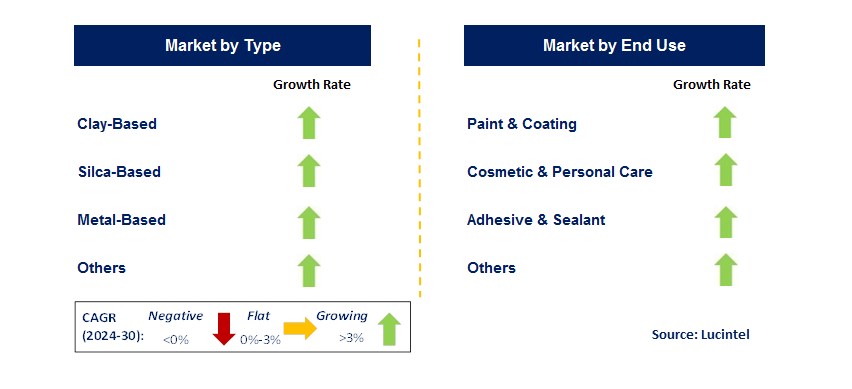
• Lucintel forecasts that, within the type category, clay-based is expected to witness the highest growth over the forecast period due to its various applications in paints, coatings, and drilling fluids owing to its features including excellent thixotropy and shear-thinning behavior.
• Within the end-use category, paint & coating is expected to witness the highest growth due to the growing use of inorganic rheology modifiers in this industry to modify paint compositions' viscosity and flow characteristics, guaranteeing even application, coverage, and leveling.
• In terms of regions, APAC is expected to witness the highest growth over the forecast period due to rapid industrialization, rising urbanization, and continual expansion of construction activities in the region.

Features of the Global Inorganic Rheology Modifier Market
Market Size Estimates: Inorganic rheology modifier market size estimation in terms of value ($B). Trend and Forecast Analysis: Market trends (2018 to 2023) and forecast (2024 to 2030) by various segments and regions. Segmentation Analysis: Inorganic rheology modifier market size by type, end use, and region in terms of value ($B). Regional Analysis: Inorganic rheology modifier market breakdown by North America, Europe, Asia Pacific, and Rest of the World. Growth Opportunities: Analysis of growth opportunities in different types, end uses, and regions for the inorganic rheology modifier market. Strategic Analysis: This includes M&A, new product development, and competitive landscape of the inorganic rheology modifier market. Analysis of competitive intensity of the industry based on Porter’s Five Forces model.If you are looking to expand your business in this or adjacent markets, then contact us. We have done hundreds of strategic consulting projects in market entry, opportunity screening, due diligence, supply chain analysis, M & A, and more.

FAQ
Q1. What is the growth forecast for inorganic rheology modifier market? Answer: The global inorganic rheology modifier market is expected to grow with a CAGR of 3.0% from 2024 to 2030. Q2. What are the major drivers influencing the growth of the inorganic rheology modifier market? Answer: The major drivers for this market are the increasing demand for sustainable and eco-friendly products and the rising integration of nanotechnology in rheology modifiers. Q3. What are the major segments for inorganic rheology modifier market? Answer: The future of the inorganic rheology modifier market looks promising with opportunities in the paint & coating, cosmetic & personal care, and adhesive & sealant markets. Q4. Who are the key inorganic rheology modifier market companies? Answer: Some of the key inorganic rheology modifier companies are as follows:• BASF
• Evonik Industries
• Jaychemmarketing
• Cabot
• XUNYU CHEM
• Orisil
• OCI COMPANY
• ALTANA
• Tokuyama
• Wacker Chemie Q5. Which inorganic rheology modifier market segment will be the largest in future? Answer: Lucintel forecasts that clay-based is expected to witness the highest growth over the forecast period due to its various applications in paints, coatings, and drilling fluids owing to its features including excellent thixotropy and shear-thinning behavior. Q6. In inorganic rheology modifier market, which region is expected to be the largest in next 5 years? Answer: APAC is expected to witness the highest growth over the forecast period due to rapid industrialization, rising urbanization, and continual expansion of construction activities in the region. Q.7 Do we receive customization in this report? Answer: Yes, Lucintel provides 10% customization without any additional cost.
Table of Contents
Methodology
- In-depth interviews of the major players in this market
- Detailed secondary research from competitors’ financial statements and published data
- Extensive searches of published works, market, and database information pertaining to industry news, company press releases, and customer intentions
- A compilation of the experiences, judgments, and insights of Lucintel’s professionals, who have analyzed and tracked this market over the years.


Buy Now
Choose a license that fits your team. Instant PDF delivery.
Prices exclude taxes. Instant delivery. Custom licensing available on request.
Key Questions
- • What are some of the most promising, high-growth opportunities for the inorganic rheology modifier market by type (clay-based, silca-based, metal-based, and others), end use (paint & coating, cosmetic & personal care, adhesive & sealant, and others), and region (North America, Europe, Asia Pacific, and the Rest of the World)?
- • Which segments will grow at a faster pace and why?
- • Which region will grow at a faster pace and why?
- • What are the key factors affecting market dynamics? What are the key challenges and business risks in this market?
- • What are the business risks and competitive threats in this market?
- • What are the emerging trends in this market and the reasons behind them?
- • What are some of the changing demands of customers in the market?
- • What are the new developments in the market? Which companies are leading these developments?
- • Who are the major players in this market? What strategic initiatives are key players pursuing for business growth?
- • What are some of the competing products in this market and how big of a threat do they pose for loss of market share by material or product substitution?
- • What M&A activity has occurred in the last 5 years and what has its impact been on the industry? For any questions related to Inorganic Rheology Modifier Market, Inorganic Rheology Modifier Market Size, Inorganic Rheology Modifier Market Growth, Inorganic Rheology Modifier Market Analysis, Inorganic Rheology Modifier Market Report, Inorganic Rheology Modifier Market Share, Inorganic Rheology Modifier Market Trends, Inorganic Rheology Modifier Market Forecast, Inorganic Rheology Modifier Companies, write Lucintel analyst at email: helpdesk@lucintel.com. We will be glad to get back to you soon.


