
Report Feature
Hang Glider Market Trends and Forecast
The future of the global hang glider market looks promising with opportunities in the recreational user and professional user markets. The global hang glider market is expected to reach an estimated $79 million by 2035 with a CAGR of 4.3% from 2026 to 2035. The major drivers for this market are the increasing popularity of adventure sports, the rising interest in affordable flying options, and the growing focus on sustainable recreation activities.• Lucintel forecasts that, within the type category, powered is expected to witness higher growth over the forecast period.
• Within the end use category, recreational user is expected to witness higher growth.
• In terms of region, APAC is expected to witness the highest growth over the forecast period. Gain valuable insights for your business decisions with our comprehensive 150+ page report. Sample figures with some insights are shown below.
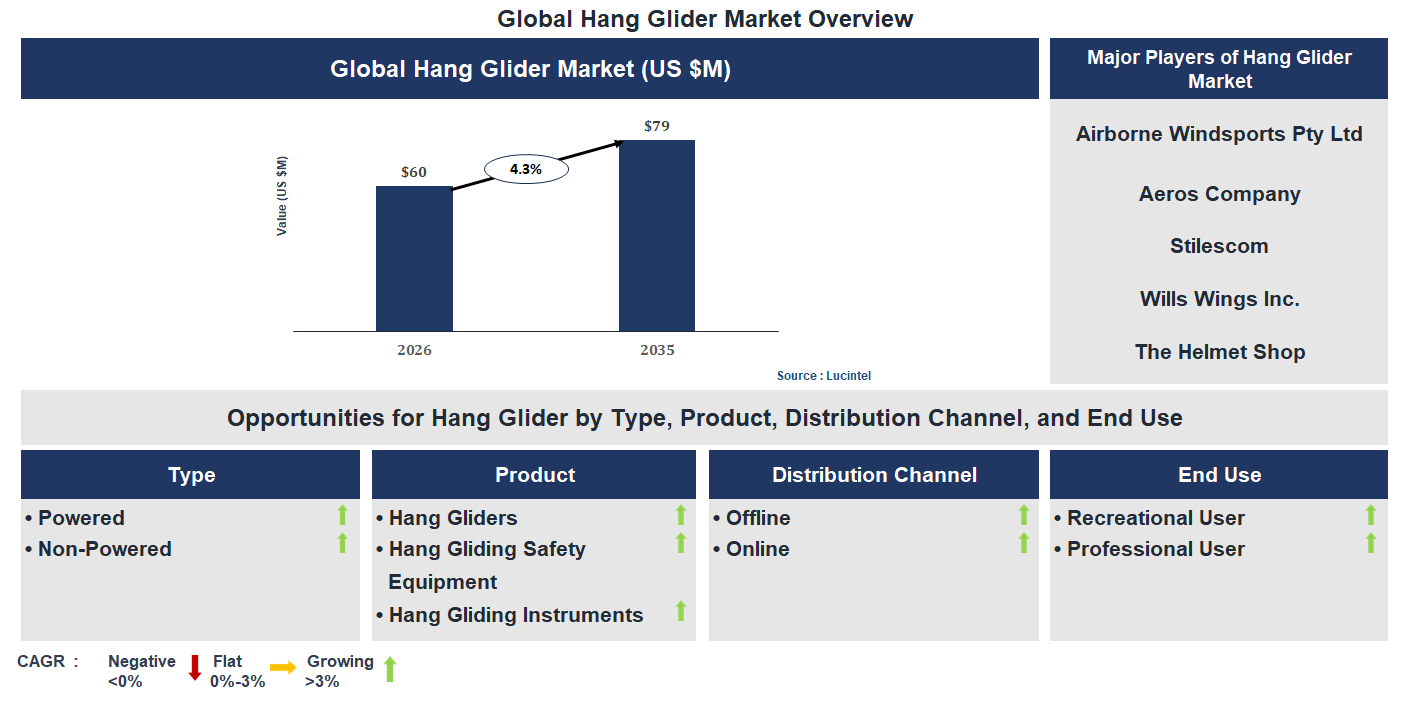
Emerging Trends in the Hang Glider Market
The hang glider market is experiencing significant transformation driven by evolving consumer preferences, technological progress, and environmental considerations. As enthusiasts seek safer, more efficient, and eco-friendly options, manufacturers are innovating to meet these demands. The markets growth is also influenced by increasing adventure tourism and rising awareness of outdoor sports. These developments are creating new opportunities and challenges, prompting industry players to adapt quickly. Understanding these emerging trends is crucial for stakeholders aiming to capitalize on the markets potential and stay competitive in a dynamic landscape.• Rising Popularity of Adventure Tourism: The increasing interest in adventure sports has expanded the hang glider market. Consumers are seeking unique outdoor experiences, leading to higher demand for hang gliding activities. This trend is supported by the growth of adventure tourism globally, which encourages operators to offer more hang gliding options. As a result, the market is witnessing a surge in new participants and increased investment in training facilities and equipment, fueling overall growth and expanding the market reach.
• Focus on Safety and Training: Safety concerns are paramount in the hang gliding industry. Manufacturers and operators are investing heavily in advanced safety features and comprehensive training programs. Enhanced safety protocols and user-friendly equipment are reducing accidents and boosting consumer confidence. This focus on safety is attracting a broader demographic, including beginners and recreational flyers, thereby expanding the market base. Improved safety standards also lead to regulatory support, fostering sustainable growth in the industry.
• Environmental Sustainability Initiatives: Growing environmental awareness is influencing the hang glider market. Manufacturers are adopting eco-friendly materials and sustainable manufacturing practices to reduce carbon footprints. Additionally, there is a push towards designing more energy-efficient gliders that require less maintenance and have lower environmental impacts. These initiatives appeal to environmentally conscious consumers and align with global sustainability goals, helping the industry to position itself as a responsible and forward-thinking sector, which can lead to increased market acceptance and regulatory support.
• Customization and Personalization: Consumers are increasingly seeking personalized hang gliding experiences. Manufacturers are offering customizable options such as tailored designs, adjustable components, and specialized training packages. This trend enhances user satisfaction and loyalty, allowing brands to differentiate themselves in a competitive market. Personalization also enables operators to cater to specific customer preferences, whether for recreational, competitive, or training purposes, thereby broadening the market scope and encouraging repeat business.
• Digital Integration and Marketing: The integration of digital platforms is transforming how the hang glider market operates. Virtual reality (VR) experiences, online booking systems, and social media marketing are making the sport more accessible and appealing. Digital tools facilitate better training, safety monitoring, and customer engagement. These innovations help reach a wider audience, especially younger demographics, and foster community building among enthusiasts. As digital adoption accelerates, it is expected to significantly boost market visibility, customer acquisition, and overall industry growth. These emerging trends are collectively reshaping the hang glider market by making it safer, more sustainable, personalized, and accessible through digital channels. They are expanding the consumer base, encouraging innovation, and positioning the industry for sustained growth in a competitive environment.

Recent Developments in the Hang Glider Market
The hang glider market is experiencing significant growth driven by technological advancements, increasing adventure tourism, and rising consumer interest in outdoor sports. Innovations in design and materials are enhancing safety and performance, attracting more enthusiasts. The expanding global tourism industry is also boosting demand for recreational activities like hang gliding. Additionally, rising awareness of eco-friendly sports and the affordability of entry-level gliders are broadening the market base. These developments are shaping a dynamic landscape with promising opportunities for manufacturers and service providers alike.• Technological Innovations in Hang Glider Design: Advancements in lightweight materials and aerodynamics are improving safety, maneuverability, and performance, making hang gliding more accessible and appealing to a broader audience. These innovations are enabling manufacturers to produce more durable and efficient gliders, which attract both beginners and experienced pilots. As safety features improve, regulatory approval processes become smoother, encouraging market growth. The enhanced performance capabilities are also opening new avenues for competitive sports and record-setting flights, further expanding the market scope.
• Rising Adventure Tourism and Recreational Activities: The global surge in adventure tourism is significantly boosting demand for hang gliding experiences. Travel destinations are increasingly offering hang gliding as a key attraction, drawing thrill-seekers worldwide. This trend is supported by the growth of adventure sports festivals and organized tours, which provide structured experiences for novices and experts alike. The expanding tourism infrastructure in emerging markets is also facilitating access to hang gliding, contributing to market expansion. Overall, this trend is elevating the profile of hang gliding as a mainstream recreational activity.
• Increasing Consumer Awareness and Participation: Growing awareness of outdoor sports and health benefits is encouraging more individuals to participate in hang gliding. Social media and adventure sports marketing are playing vital roles in promoting the sport’s excitement and safety. Entry-level and training programs are making the sport more accessible to amateurs, increasing participation rates. The rise in pilot training schools and clubs is also fostering a community-driven growth model. This increased participation is expanding the customer base and driving demand for beginner-friendly equipment and experiences.
• Market Expansion in Emerging Economies: Emerging economies are witnessing rapid urbanization and rising disposable incomes, leading to increased interest in adventure sports like hang gliding. Governments and private sectors are investing in sports infrastructure and training facilities, creating new opportunities for market players. The affordability of entry-level gliders and training programs is making the sport accessible to a broader demographic. This expansion is not only increasing sales but also diversifying the market, paving the way for regional growth hubs and new competitive landscapes.
• Technological Integration and Safety Enhancements: The integration of advanced technology such as GPS, flight data recorders, and safety sensors is transforming the hang gliding experience. These innovations improve navigation, accident prevention, and real-time monitoring, boosting safety standards. Enhanced safety features are reducing risks, encouraging more participants and regulatory approvals. Moreover, digital platforms for training and virtual simulations are improving pilot skills and confidence. This technological evolution is fostering trust and expanding the market by attracting a wider audience seeking safer, more reliable experiences. These developments are collectively transforming the hang glider market into a more innovative, accessible, and global industry. Technological advancements, tourism growth, increased awareness, emerging market expansion, and safety improvements are driving higher demand and participation. As a result, the market is experiencing sustained growth, attracting new entrants, and fostering innovation. This dynamic environment promises long-term opportunities for stakeholders, positioning hang gliding as a prominent outdoor adventure sport worldwide.
Strategic Growth Opportunities in the Hang Glider Market
The hang glider market is experiencing steady growth driven by increasing adventure tourism, rising interest in extreme sports, and technological advancements in lightweight materials. Consumers seek innovative, safe, and affordable options for recreational flying, prompting manufacturers to develop new designs and improve safety features. Market expansion is also fueled by rising awareness of outdoor activities and government initiatives promoting adventure sports. This environment presents numerous opportunities for industry players to innovate, diversify offerings, and capture new customer segments, ensuring sustained growth and competitive advantage.• Growing Popularity of Adventure Tourism and Extreme Sports: The increasing popularity of adventure tourism and extreme sports worldwide is significantly boosting demand for hang gliding activities. Enthusiasts seek new, exhilarating experiences, prompting operators to expand offerings and improve infrastructure. This trend attracts a broader demographic, including younger consumers and thrill-seekers, creating a lucrative market for manufacturers and service providers. As safety and accessibility improve, more participants are expected to engage in hang gliding, further fueling market growth.
• Technological Innovations in Lightweight and Durable Materials: Advances in materials science are enabling the development of lighter, stronger, and more durable hang gliders. Innovations such as carbon fiber composites and advanced fabrics enhance performance, safety, and ease of handling. These improvements attract both beginners and experienced pilots by offering better control and comfort. Manufacturers investing in R&D to incorporate cutting-edge materials are poised to gain competitive advantages, expand product lines, and meet evolving customer expectations, thereby driving market expansion.
• Increasing Focus on Safety and Training Programs: The emphasis on safety standards and comprehensive training programs is transforming the hang glider market. Enhanced safety features, certification processes, and professional training courses reduce risks and build consumer confidence. Governments and industry bodies are promoting standardized safety protocols, encouraging more people to participate. This focus on safety not only attracts new users but also fosters trust among existing enthusiasts, supporting sustained market growth and encouraging innovation in safety equipment and instructional services.
• Rising Investment in Infrastructure and Commercial Operations: Investment in dedicated hang gliding parks, training centers, and organized tours is expanding the market’s reach. Commercial operators are developing scenic flight experiences and adventure packages to attract tourists and local enthusiasts. Improved infrastructure facilitates easier access and safer flying conditions, boosting participation rates. These developments create new revenue streams for industry players and stimulate regional economic growth, positioning the market for long-term expansion through increased accessibility and professionalized services.
• Expansion into Emerging Markets with Untapped Potential: Emerging economies with growing middle-class populations and increasing interest in outdoor activities present significant growth opportunities. Governments in these regions are promoting adventure sports to boost tourism, while local operators seek to introduce affordable hang gliding experiences. Market entry strategies such as partnerships and localized product offerings can accelerate adoption. As awareness and infrastructure develop, these markets are expected to become key growth drivers, enabling global industry players to diversify their portfolios and expand their geographic footprint. These growth opportunities collectively position the hang glider market for robust expansion by attracting new participants, fostering innovation, and expanding infrastructure. Emphasizing safety, technological advancements, and emerging markets will enable industry stakeholders to capitalize on evolving consumer preferences and tourism trends. As a result, the market is set to experience sustained growth, increased competitiveness, and broader adoption of hang gliding as a popular outdoor activity worldwide.
Hang Glider Market Driver and Challenges
The hang glider market is influenced by a variety of technological, economic, and regulatory factors that shape its growth and development. Advances in materials and design have enhanced safety and performance, attracting more enthusiasts and commercial operators. Economic conditions, such as disposable income levels and tourism trends, directly impact market demand. Regulatory frameworks govern safety standards and airspace usage, affecting operational ease and market expansion. Additionally, environmental concerns and technological innovations continue to drive market evolution. Understanding these drivers and challenges is essential for stakeholders aiming to capitalize on opportunities and navigate potential obstacles within this dynamic industry. The factors responsible for driving the hang glider market include:• Technological Innovations: The development of lightweight, durable materials like carbon fiber and advanced fabrics has significantly improved hang glider performance and safety. Innovations in aerodynamics and control systems have made flying more accessible and enjoyable, attracting a broader customer base. These technological advancements reduce manufacturing costs and enhance user experience, fueling market growth. As technology continues to evolve, manufacturers can offer more efficient, safer, and affordable products, expanding market reach globally.
• Growing Adventure Tourism: Increasing interest in adventure sports and experiential tourism has boosted demand for hang gliding activities. Travelers seek unique, adrenaline-pumping experiences, prompting tourism operators to include hang gliding in their offerings. This trend is supported by rising disposable incomes and a desire for novel outdoor activities. The expansion of adventure tourism destinations and marketing efforts further contribute to market growth, attracting both recreational flyers and commercial operators.
• Regulatory Support and Safety Standards: Governments and aviation authorities are establishing clear safety standards and regulations for hang gliding activities. These regulations ensure safer operations, build consumer confidence, and facilitate market expansion. Certification processes and licensing requirements help maintain industry credibility. Supportive regulatory environments encourage new entrants and promote the development of training centers, thereby fostering overall market growth.
• Increasing Investment and Partnerships: Investment from private firms, venture capitalists, and industry players is fueling market development. Strategic partnerships between manufacturers, training schools, and tourism operators enhance distribution channels and service offerings. Funding for research and development leads to innovative products and improved safety features. These collaborations and investments accelerate market penetration and technological progress, creating a more robust industry landscape.
• Rising Awareness and Training Programs: Enhanced awareness about hang gliding as a safe and thrilling sport, coupled with organized training programs, has expanded the user base. Educational initiatives and safety campaigns attract new enthusiasts, especially in emerging markets. The availability of certified training centers and experienced instructors ensures safer experiences, encouraging more participation. This increased awareness and education drive demand for equipment and services, supporting overall market growth. The challenges facing the hang glider market include:
• Stringent Regulatory Frameworks: While regulations promote safety, overly strict or inconsistent policies can hinder market growth. Licensing, airspace restrictions, and safety compliance requirements may increase operational costs and limit accessibility for new entrants. Navigating complex regulatory environments across different regions can delay product launches and restrict market expansion, especially in emerging markets with evolving aviation laws.
• High Manufacturing and Maintenance Costs: Producing high-quality, safe hang gliders involves significant investment in advanced materials and technology. Maintenance and safety inspections add ongoing expenses for operators and users. These costs can limit affordability and restrict market penetration, particularly in price-sensitive regions. Additionally, fluctuations in raw material prices impact manufacturing costs and profit margins.
• Environmental and Weather Constraints: Hang gliding is highly dependent on favorable weather conditions, such as wind speed and thermal activity. Unpredictable weather patterns and environmental concerns, like airspace restrictions due to environmental protection zones, can limit flying days and operational windows. These factors reduce revenue opportunities for commercial operators and can discourage new participants from entering the market. The hang glider market is shaped by technological advancements, tourism growth, supportive regulations, investments, and increased awareness, all driving its expansion. However, challenges such as regulatory complexities, high costs, and environmental constraints pose significant hurdles. Balancing innovation and safety with cost-efficiency and environmental considerations will be crucial for sustainable growth. Stakeholders must navigate these factors carefully to capitalize on emerging opportunities and mitigate risks, ensuring a resilient and thriving industry.
List of Hang Glider Companies
Companies in the market compete on the basis of product quality offered. Major players in this market focus on expanding their manufacturing facilities, R&D investments, infrastructural development, and leverage integration opportunities across the value chain. With these strategies hang glider companies cater increasing demand, ensure competitive effectiveness, develop innovative products & technologies, reduce production costs, and expand their customer base. Some of the hang glider companies profiled in this report include-• Airborne Windsports Pty Ltd
• Aeros Company
• Stilescom
• Wills Wings Inc.
• The Helmet Shop
• ICARO 2000
• North Wing
• Flight Design
• Moyes Delta Gliders
• Apco Aviation
Hang Glider Market by Segment
The study includes a forecast for the global hang glider market by type, product, distribution channel, end use, and region.Hang Glider Market by Type [Value from 2019 to 2035]:
• Powered
• Non-Powered
Hang Glider Market by Product [Value from 2019 to 2035]:
• Hang Gliders
• Hang Gliding Safety Equipment
• Hang Gliding Instruments
Hang Glider Market by Distribution Channel [Value from 2019 to 2035]:
• Offline
• Online
Hang Glider Market by End Use [Value from 2019 to 2035]:
• Recreational User
• Professional User
Hang Glider Market by Region [Value from 2019 to 2035]:
• North America
• Europe
• Asia Pacific
• The Rest of the World
Country Wise Outlook for the Hang Glider Market
The hang glider market has experienced notable shifts driven by technological innovations, increasing recreational demand, and evolving safety standards across the globe. As outdoor activities gain popularity, countries are investing in advanced designs and sustainable materials to enhance user experience and safety. Market players are also expanding their distribution channels and focusing on eco-friendly manufacturing processes. These developments reflect a broader trend towards more accessible, safer, and environmentally conscious hang gliding experiences. The following summaries highlight recent key advancements and market dynamics in the United States, China, Germany, India, and Japan.• United States: The US market has seen significant growth due to rising interest in adventure sports and outdoor recreation. Innovations include lightweight, high-performance materials and improved safety features. Several startups are introducing beginner-friendly models, expanding the customer base. Additionally, government agencies and private organizations are promoting hang gliding through events and training programs, boosting market visibility. The adoption of eco-friendly manufacturing practices is also gaining traction, aligning with sustainability goals.
• China: China’s hang glider market is rapidly expanding, driven by increasing domestic tourism and adventure sports popularity. Local manufacturers are investing in R&D to develop cost-effective, durable models suitable for beginners and experienced pilots alike. The government’s support for outdoor sports infrastructure and recreational activities is further fueling growth. E-commerce platforms are playing a vital role in distribution, making hang gliders more accessible nationwide. Moreover, collaborations with international brands are enhancing technological standards and safety protocols.
• Germany: Germany remains a key player in the European hang glider market, with a focus on high-quality, precision-engineered products. Recent developments include the integration of advanced aerodynamics and lightweight composites to improve performance. The country’s strong safety regulations and certification standards ensure consumer confidence. There is also a growing emphasis on sustainable manufacturing practices, including the use of recyclable materials. Germany’s active hang gliding clubs and training centers continue to promote the sport, fostering innovation and community engagement within the market.
• India: The Indian hang glider market is witnessing a surge in popularity, especially among youth and adventure enthusiasts. Recent advancements include the introduction of affordable, easy-to-operate models tailored for beginners. Government initiatives promoting adventure tourism and sports infrastructure development are contributing to market growth. Local manufacturers are focusing on safety enhancements and training programs to build consumer trust. Additionally, the rise of adventure tourism hubs in regions like Himachal Pradesh and Uttarakhand is creating new opportunities for market expansion and increased participation.
• Japan: Japan’s market is characterized by a focus on technological innovation and safety. Recent developments include the adoption of advanced materials such as carbon fiber to improve durability and performance. The country’s strong safety standards and certification processes ensure high-quality products. There is also a growing interest in eco-friendly hang gliding options, with manufacturers exploring sustainable materials and energy-efficient manufacturing. Japan’s active hang gliding community and organized events continue to promote the sport, while collaborations with international brands are enhancing technological exchange and market competitiveness.

Features of the Global Hang Glider Market
Market Size Estimates: Hang glider market size estimation in terms of value ($M). Trend and Forecast Analysis: Market trends (2019 to 2025) and forecast (2026 to 2035) by various segments and regions. Segmentation Analysis: Hang glider market size by various segments, such as by type, product, distribution channel, end use, and region in terms of value ($M). Regional Analysis: Hang glider market breakdown by North America, Europe, Asia Pacific, and Rest of the World. Growth Opportunities: Analysis of growth opportunities in different types, products, distribution channels, end uses, and regions for the hang glider market. Strategic Analysis: This includes M&A, new product development, and competitive landscape of the hang glider market. Analysis of competitive intensity of the industry based on Porter’s Five Forces model.
FAQ
Q1. What is the hang glider market size? Answer: The global hang glider market is expected to reach an estimated $79 million by 2035. Q2. What is the growth forecast for hang glider market? Answer: The global hang glider market is expected to grow with a CAGR of 4.3% from 2026 to 2035. Q3. What are the major drivers influencing the growth of the hang glider market? Answer: The major drivers for this market are the increasing popularity of adventure sports, the rising interest in affordable flying options, and the growing focus on sustainable recreation activities. Q4. What are the major segments for hang glider market? Answer: The future of the hang glider market looks promising with opportunities in the recreational user and professional user markets. Q5. Who are the key hang glider market companies? Answer: Some of the key hang glider companies are as follows:• Airborne Windsports Pty Ltd
• Aeros Company
• Stilescom
• Wills Wings Inc.
• The Helmet Shop
• ICARO 2000
• North Wing
• Flight Design
• Moyes Delta Gliders
• Apco Aviation Q6. Which hang glider market segment will be the largest in future? Answer: Lucintel forecasts that, within the type category, powered is expected to witness higher growth over the forecast period. Q7. In hang glider market, which region is expected to be the largest in next 8 years? Answer: In terms of region, APAC is expected to witness the highest growth over the forecast period. Q8. Do we receive customization in this report? Answer: Yes, Lucintel provides 10% customization without any additional cost.
List of Figures
List of Tables
Methodology
- In-depth interviews of the major players in this market
- Detailed secondary research from competitors’ financial statements and published data
- Extensive searches of published works, market, and database information pertaining to industry news, company press releases, and customer intentions
- A compilation of the experiences, judgments, and insights of Lucintel’s professionals, who have analyzed and tracked this market over the years.


Buy Now
Choose a license that fits your team. Instant PDF delivery.
Prices exclude taxes. Instant delivery. Custom licensing available on request.
Key Questions
- • What are some of the most promising, high-growth opportunities for the hang glider market by type (powered and non-powered), product (hang gliders, hang gliding safety equipment, and hang gliding instruments), distribution channel (offline and online), end use (recreational user and professional user), and region (North America, Europe, Asia Pacific, and the Rest of the World)?
- • Which segments will grow at a faster pace and why?
- • Which region will grow at a faster pace and why?
- • What are the key factors affecting market dynamics? What are the key challenges and business risks in this market?
- • What are the business risks and competitive threats in this market?
- • What are the emerging trends in this market and the reasons behind them?
- • What are some of the changing demands of customers in the market?
- • What are the new developments in the market? Which companies are leading these developments?
- • Who are the major players in this market? What strategic initiatives are key players pursuing for business growth?
- • What are some of the competing products in this market and how big of a threat do they pose for loss of market share by material or product substitution?
- • What M&A activity has occurred in the last 5 years and what has its impact been on the industry? For any questions related to Hang Glider Market, Hang Glider Market Size, Hang Glider Market Growth, Hang Glider Market Analysis, Hang Glider Market Report, Hang Glider Market Share, Hang Glider Market Trends, Hang Glider Market Forecast, Hang Glider Companies, write Lucintel analyst at email: helpdesk@lucintel.com. We will be glad to get back to you soon.


